Central Vietnam · Travel
Da Nang (Đà Nẵng): What to Do, Where to Stay, How Long
Da Nang travel guide: the best things to do, whether to stay in Da Nang or Hoi An, a 2–4 day plan with Hue, what to eat and when the rains usually come.
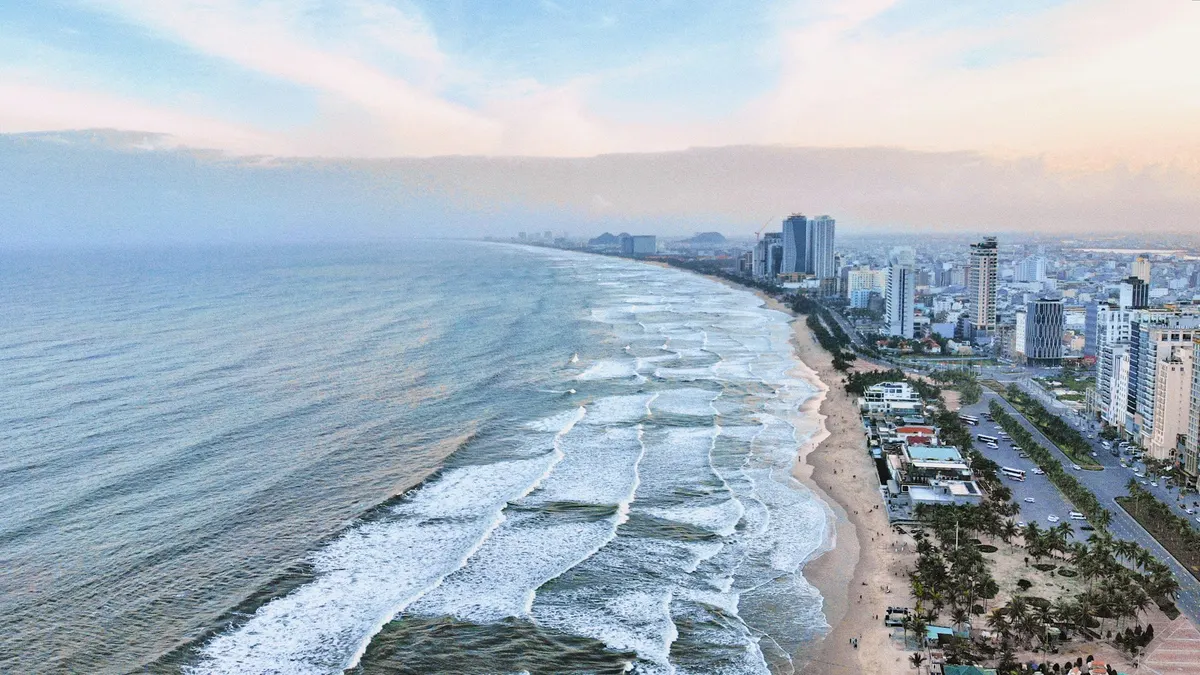
Give Da Nang two to four days: one or two for My Khe beach, the Son Tra peninsula, the Museum of Cham Sculpture and the Marble Mountains, the rest for Hoi An, 29 km away, and a train ride to Hue. Stay in Da Nang for the beach and short airport transfers, or in Hoi An if the old town is the point of your trip. As of June 2026 MICHELIN recognised 47 places to eat in Da Nang, 23 of them Bib Gourmand, according to the city’s tourism portal; in the rainy season check whether Son Tra is open, as it was closed to visitors from 10 November 2026.
Da Nang (Đà Nẵng) sits on the coast of Central Vietnam, where the Han (Hàn) River meets the sea. Most visitors arrive here without planning to: its airport is the main gateway to the region, and the city lies between two places people come for, the old port of Hoi An to the south and the former imperial capital of Hue to the north. What surprises many of them is that Da Nang itself is pleasant to stay in. It is a modern city with a long sandy beach, a forested peninsula on its doorstep and a museum devoted to the sculpture of the Cham kingdom.
Da Nang suits travellers who want comfort, a beach and short transfers: families, people combining a few days by the sea with sightseeing, and anyone using it as a base for day trips. It suits less well those looking for old streets and timber houses. Hoi An (Hội An) and Hue (Huế) do that far better, and Da Nang makes no attempt to compete. This guide explains how the city came to look the way it does, what is worth your time, what to eat, and how to fit two to four days around it.
Da Nang at a glance
| Region | Central Vietnam, on the coast at the mouth of the Han River |
| Status | City governed directly by the central government; since 1 July 2025 it includes the former Quang Nam (Quảng Nam) province (Hoi An, My Son) |
| Size | About 11,860 km² and about three million people after the 2025 merger |
| Known for | My Khe (Mỹ Khê) beach, Son Tra (Sơn Trà) peninsula, Marble Mountains (Ngu Hanh Son), Museum of Cham Sculpture, Dragon Bridge |
| How long | Two days for the city; three to four with Hoi An and Hue |
| Best time | Roughly February/March to August; the wettest, stormiest months are about September to December |
| Getting there | Da Nang International Airport, about 5 km from the centre; North–South railway |
| Local dishes | Mi Quang (Mì Quảng), banh trang cuon thit heo (bánh tráng cuốn thịt heo), bun cha ca (bún chả cá), banh xeo (bánh xèo) |
How did a small port become a city of three million?
The name Da Nang is usually traced to a Cham word said to mean “great river”, a reminder that this coast belonged to the Champa kingdom before it became Vietnamese. Under the Nguyen (Nguyễn) dynasty the bay became the court’s chosen contact point with the West. In 1835 Emperor Minh Mang (Minh Mạng) decreed that Western ships could anchor only at Cua Han (Cửa Hàn), the mouth of the Han River, which made Da Nang a key trading port for the region, according to the city’s tourism portal. As Da Nang grew, Hoi An’s silting river port faded, a story our Hoi An guide tells from the other side.
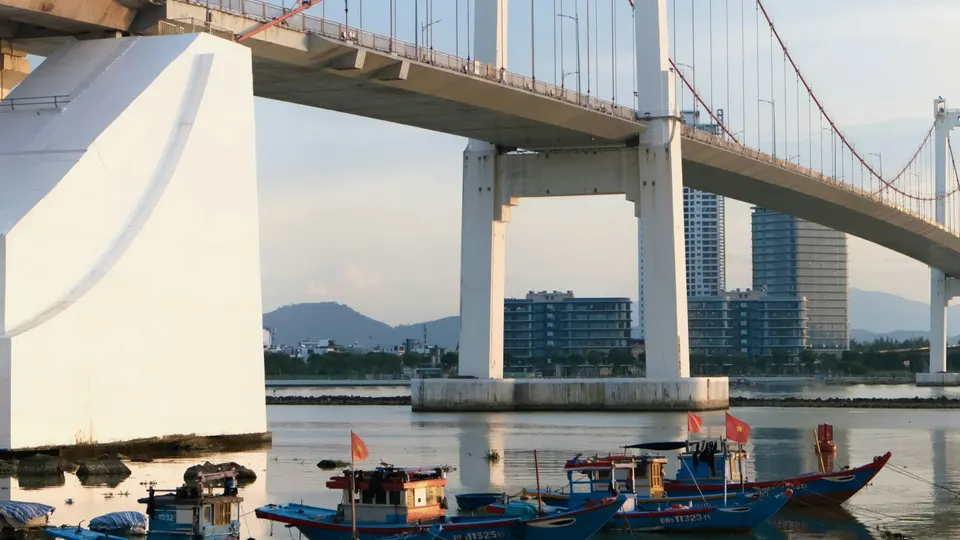
The same bay made Da Nang a target. France began its conquest of Vietnam with an attack on Da Nang in 1858. Thirty years later, on 3 October 1888, the French took legal control of the town as a concession, separated from Quang Nam and run as a small colony under the name Tourane, as the historian Sunny Le Galloudec describes it. A century on, the city’s coast had another foreign landing: on 8 March 1965 the US 9th Marine Expeditionary Brigade came ashore at Da Nang, officially to defend its air base, and the Americans built up a large military base here.
After 1975 Da Nang was part of Quang Nam–Da Nang province until 1 January 1997, when it was split off as a city under the central government. In 2025 the map was redrawn again. Under Resolution 202/2025/QH15 the whole of Da Nang city and Quang Nam province merged into a new city called Da Nang, with about 11,860 km² and just over three million people, operating from 1 July 2025 (Resolution 202/2025/QH15). Viet Nam News notes that the new city inherits both of the old province’s UNESCO sites, Hoi An Ancient Town and My Son Sanctuary. In practice almost nothing changed for visitors. Hoi An is still Hoi An. But the “city” of Da Nang now stretches from the beach resorts far inland, and older maps still show Quang Nam.
How is Da Nang laid out?
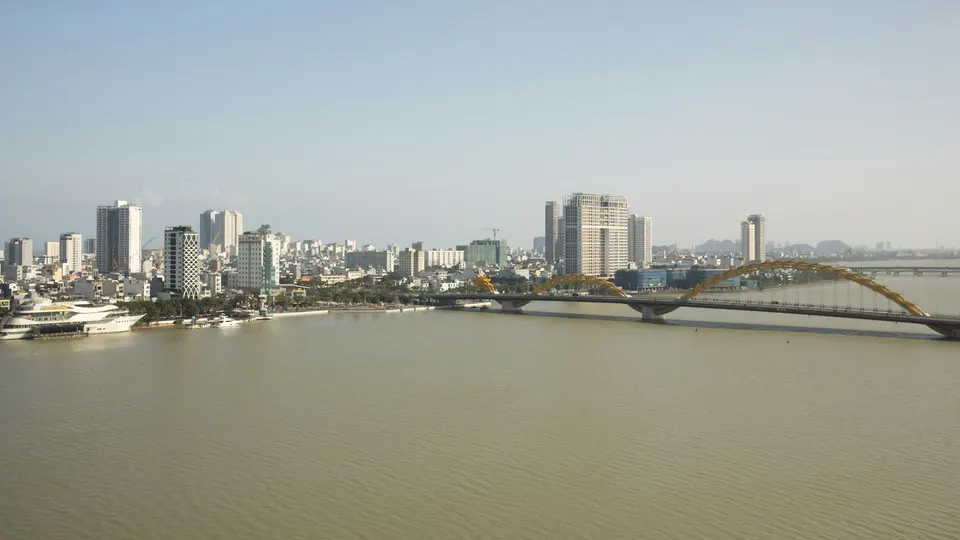
Once you understand four landmarks, the city is easy to read. The Han River runs north through the centre and splits the city in two. The old commercial core, with the Han market, the Cham museum and many local eateries, sits on the west bank, while the beach districts lie on the east bank, joined by a series of bridges. The best known of these is the Dragon Bridge (Cau Rong (Cầu Rồng)). It is 666 m long and opened in 2013, and on weekend and public holiday evenings the dragon’s head breathes fire and then water at 9 pm, according to the city’s tourism portal.
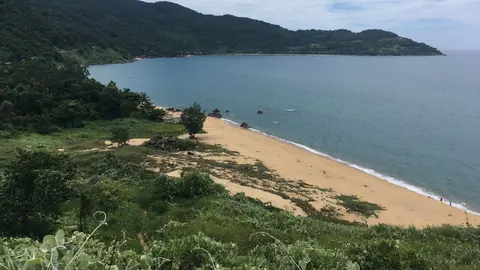
North-east of the centre, the Son Tra peninsula rises to a 696 m peak and closes off the bay. It is about 10 km from the city centre and largely forested, and much of it is a nature reserve. Its best-known residents are red-shanked douc langurs, colourful monkeys that Viet Nam News reports number more than 1,300 in the reserve. The species is listed as Critically Endangered, and rangers removed more than 400 snares from the reserve in 2024 (Viet Nam News). That pressure is worth keeping in mind on the peninsula: drive slowly, do not feed the monkeys, and stay on the roads and marked paths.
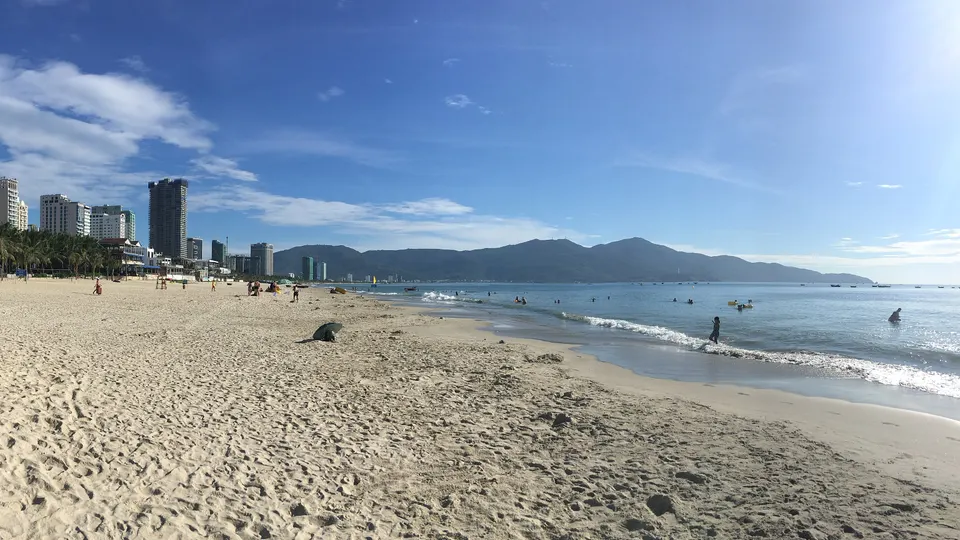
From the foot of Son Tra, My Khe beach runs south for about 10 km towards the Marble Mountains, according to the Vietnam News Agency. Most of what visitors call “Da Nang beach” is this one long stretch, lined with hotels on the city side. Near its southern end, about 8 km from the centre, the Marble Mountains (Ngu Hanh Son, “Five Elements Mountains”) rise from the flat coastal plain. These are five limestone and marble outcrops named after the five elements of Eastern philosophy (metal, wood, water, fire and earth), with caves and pagodas inside.
Beyond all four, the Hai Van (Hải Vân) Pass climbs over the mountains to the north on the way to Hue. It has its own guide: see crossing the Hai Van Pass.
What is worth your time in Da Nang?
You do not need to see everything. These are the sights that explain the place best, and why.
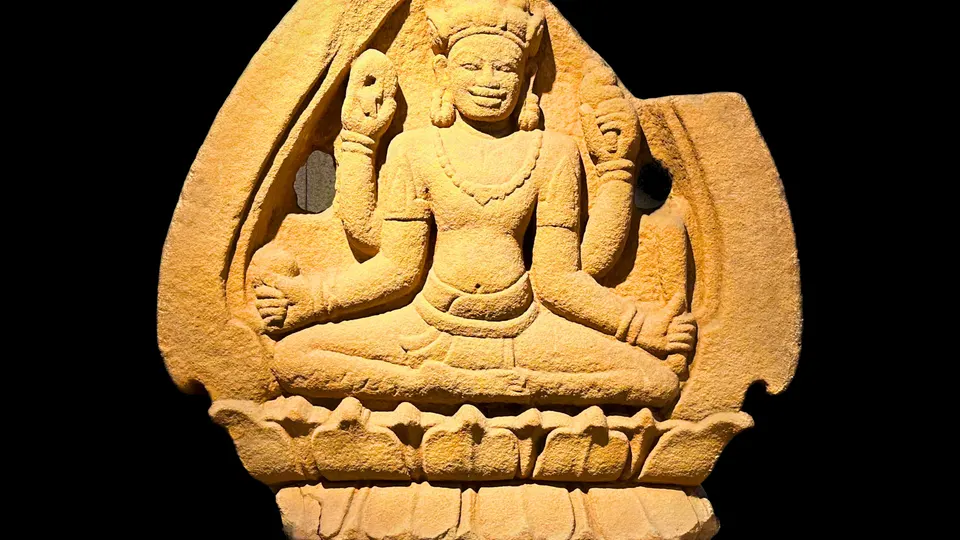
The Museum of Cham Sculpture (Bảo tàng Điêu khắc Chăm) is the best introduction to the civilisation that built My Son and the brick towers you will see along this coast. The building dates from 1915 and was put up with support from the French School of the Far East (EFEO), whose archaeologist Henri Parmentier played a major part. Its galleries are named after the sites where the sculptures were found, among them My Son, Tra Kieu (Trà Kiệu) and Dong Duong (Vietnam National Authority of Tourism). The collection spans roughly the 5th to the 15th century and includes six national treasures, among them the Tra Kieu and My Son E (Mỹ Sơn E)1 pedestals and the Dong Duong pedestal. In 2023 the city recognised the building itself as a historical relic. Go before My Son if you can. The temples there are ruins, and many of their finest carvings are here.
The Marble Mountains reward a morning. Vietnam made the site a special national relic in January 2019, and Viet Nam News counts nine caves and 14 pagodas across the five peaks, plus about 78 inscriptions carved into the cliffs (ma nhai) that the city is now promoting for international heritage recognition. At the foot of the mountains is Non Nuoc (Non Nước), a stone-carving village about 400 years old whose craft was listed as national intangible heritage in 2014. Its workshops sit along the road below the mountains. Expect steps, uneven cave floors and heat; there is also a lift to the top. Our guide to the Marble Mountains sets out the order of stops, the ticket and lift prices and how long to allow.
Son Tra is best seen early in the day. A road loops around the peninsula past forest, coves and viewpoints to Linh Ung (Linh Ứng) Pagoda and the large white statue known in English as “Lady Buddha”, which looks out over the sea. The peninsula’s forest is also where the langurs live. Access is controlled: automatic scooters cannot use the road up to Ban Co peak, the forest routes keep fixed hours, and the city closes the whole peninsula to visitors in heavy rain: it was shut from 8 to 14 October 2026 and again from the afternoon of 10 November 2026 “until further notice” because of landslide and flash-flood risk, VTV and Bao Van Hoa reported. Our guide to the Son Tra peninsula sets out the open roads, a half-day loop and how to watch the langurs responsibly.
My Khe is a city beach in the real sense, a broad sweep of sand a few minutes from most hotels. It takes on a party atmosphere in summer and is busiest in June.
Ba Na (Bà Nà) Hills, in the mountains west of the city, began as a French resort town in 1919. Today it is a European-style theme park on Chua (Chúa) Mountain, reached by cable car, with a recreated French village. Its Golden Bridge, a walkway held up by two giant stone hands, became a social-media sensation in 2018. The air up there is cool. Treat it as an entertainment park, not as heritage, and decide accordingly. Our guide to Ba Na Hills and the Golden Bridge covers tickets, the cable car, fog and crowds, and who will enjoy the day.
What should you eat in Da Nang?
Da Nang’s everyday food is the cooking of the old Quang Nam–Da Nang area, and since 2024 the city has been covered by the MICHELIN Guide, many of whose picks here are modest local shops. Mi Quang is the dish to start with. According to the MICHELIN Guide, its story begins in Quang Nam, where Chinese merchants’ egg noodles were adapted locally. Today the wide noodles are made from rice flour, sometimes tinted with turmeric, and come with shrimp, pork, chicken, fish or beef, herbs, banana flower, peanuts and a toasted sesame rice cracker to break over the top (MICHELIN Guide). It can also be served almost dry, like a noodle salad. Our guide to mi Quang explains the little broth, the noodle-making villages and how to eat it, and in Hoi An, now also part of Da Nang, the town’s own noodle dish is cao lau.
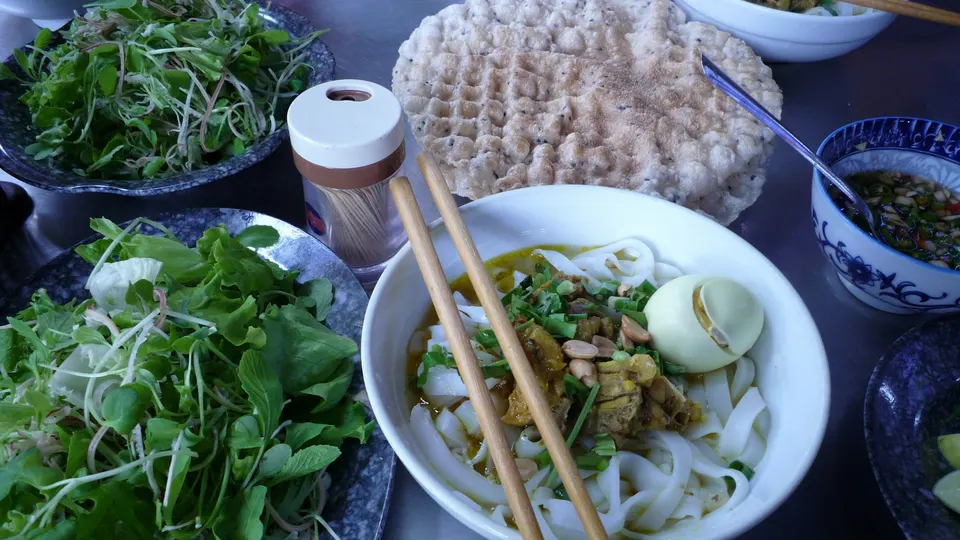
Three other dishes are worth looking for:
- Banh trang cuon thit (Bánh tráng cuốn thịt) heo: boiled pork wrapped at the table in rice paper with herbs, dipped in mam nem (mắm nêm), a pungent fermented anchovy sauce. It is a hands-on meal and a local favourite.
- Bun cha ca: rice noodles with fried and steamed fishcakes in a broth that is sweet with a hint of sourness.
- Banh xeo: crisp pancakes, wrapped at the table in rice paper with herbs and pickles.
Da Nang’s 2026 MICHELIN list also includes several shops serving Hue-style beef noodle soup, so you can try bun bo Hue here before you reach Hue. For which area to eat in at which time of day, with more verified addresses, see where to eat in Da Nang. The cards below are either MICHELIN Guide picks we checked on the guide’s own listing pages, or a local favourite recommended by at least two Vietnamese newspapers.
Da Nang, Hoi An or both: where should you base yourself?
Hoi An has been part of Da Nang city since July 2025, but the two make very different bases, and the choice shapes a trip to Central Vietnam more than any single sight. Da Nang is the practical one: the national tourism authority puts the airport about five kilometres from the city centre, 29 km from Hoi An Ancient Town and 98 km from Hue, and notes that the city hosts some of Vietnam’s top luxury resorts. Hoi An is the atmospheric one, a small trading town you experience on foot.
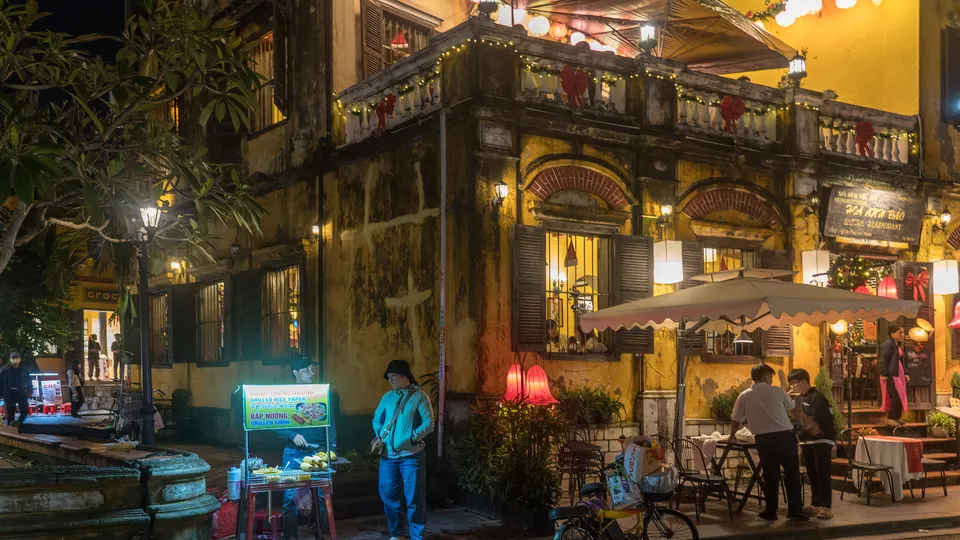
The case for sleeping in Hoi An is the old town at the hours a day trip misses. The town’s heritage centre says one entrance ticket covers your whole stay, up to three days, and that the core streets are closed to motor traffic from 9:00 to 21:30 in summer and to 21:00 in winter (Hoi An heritage centre). On the 14th and 15th days of each lunar month residents light houses, restaurants and streets with lanterns, with folk performances from 6 pm, Viet Nam News reports. Our Hoi An guide covers the ticket and the lantern nights in detail.
| Your trip | Best base | Why |
|---|---|---|
| A night or two between flights | Da Nang | Airport about 5 km from the centre |
| Beach days, families, a resort stay | Da Nang | My Khe runs about 10 km south from Son Tra, with hotels along the city side |
| Old town, lanterns, My Son | Hoi An | One ticket covers up to three days; core streets closed to motor traffic from 9:00 into the evening |
| Four days or more, with Hue | Two bases: Hue, then Hoi An or Da Nang | Hue is 98 km from the airport; the heritage train to Da Nang takes about three hours |
| September to December | Either, with flexible bookings | Both were hit by floods in late October 2025 (see below) |
For five days, our Hue, Hoi An and Da Nang plan uses two bases; for a full week in the Centre, our one-week Vietnam itinerary uses two bases, Hue and then Hoi An, and visits Da Nang on the way back to the airport. If you would rather have the beach, swap the Hoi An nights for Da Nang and make the old town a day or evening trip. If you are thinking of months rather than days, our guide to living in Da Nang as a digital nomad compares the areas to live in, visa options and the storm season.
How to plan two to four days from Da Nang
Da Nang works because everything is close. A realistic plan:
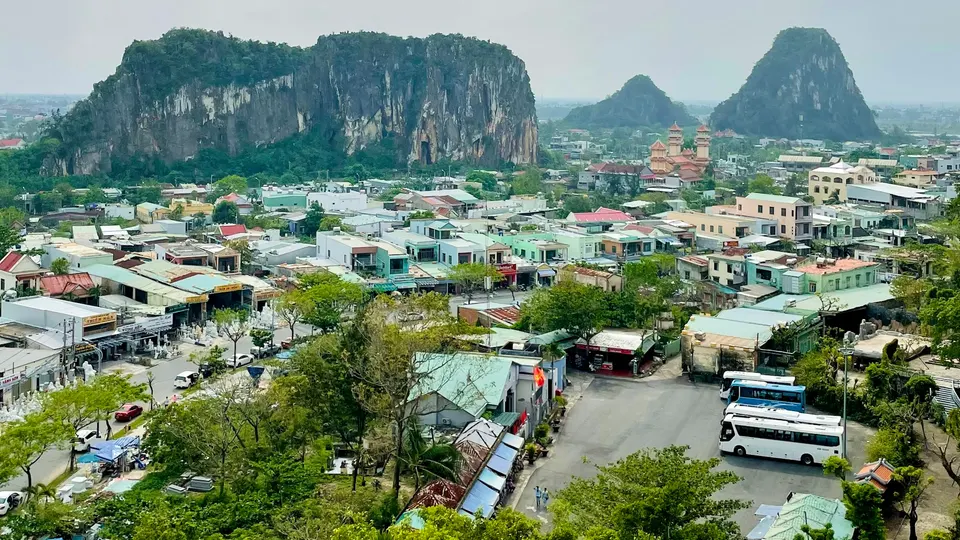
- Day 1: the city. Start at the Museum of Cham Sculpture, then have mi Quang for lunch in the centre. In the afternoon visit the Marble Mountains and Non Nuoc, and end on My Khe at sunset. On a weekend, add the Dragon Bridge show at 9 pm.
- Day 2: Son Tra and the sea. Drive or ride around Son Tra in the cool of the morning, stopping at Linh Ung Pagoda, and spend the afternoon on the beach. Or spend the day at Ba Na Hills if that appeals.
- Day 3: Hoi An. Hoi An is about 29 km from Da Nang airport, so a day trip is easy, but an overnight stay lets you see the old town early and in the evening. My Son can be added from Hoi An; our Hoi An guide covers both.
- Day 4: Hue. Take the Central Heritage Connection tourist train, which has run between Da Nang and Hue since March 2024. It takes about three hours, with morning and afternoon departures in each direction, and passes the Hai Van Pass area with views over Lang Co (Lăng Cô) bay (Tuoi Tre). Many travellers stay on in Hue rather than returning. Timetables change, so check before you go. A restored steam train was test-run over the Hai Van Pass in early October 2026, but no commercial launch or fares had been announced when we checked in November 2026 (Thanh Nien, 6 October 2026).
With more time, keep heading north: beyond Hue lie the caves of Phong Nha, in Quang Tri (Quảng Trị) province since July 2025 (formerly Quang Binh).
When is the best time to visit Da Nang?
Da Nang follows Central Vietnam’s own weather calendar rather than the North’s or the South’s (see our Central Vietnam guide). The broad pattern is a sunny, increasingly hot first half of the year and a wet, stormy last third. Sources draw the boundaries differently. Vietnam’s national tourism authority describes nearby Hoi An as rainy from September to January, with tropical storms that “hit Central Vietnam hard” from September, while its Da Nang page calls March–May and September–October ideal and November to February the rainy season. Da Nang’s tourism low season is generally reckoned as September to December.
The real risk is a few weeks of extreme rain. Between 22 and 29 October 2025, downpours across the central provinces caused floods and landslides that killed 11 people in Da Nang, and the Thu Bon (Thu Bồn) River at Hoi An rose above its 1964 record (VnExpress International). If you travel from September to December, keep plans flexible, follow local warnings and avoid the mountain roads and the Hai Van Pass in heavy rain. For beach weather, aim for late spring and summer, when My Khe is at its liveliest. For walking around Hoi An and Hue without the worst of the heat, spring is the most comfortable.
How do you get to Da Nang?
By air. Da Nang International Airport is unusually close to the city, about 5 km from the centre and 29 km from Hoi An Ancient Town. Domestic flights use Terminal 1 and international flights Terminal 2 (vietnam.travel). That makes Da Nang the natural place to fly into for Hoi An too. Transfers by taxi, ride-hailing app or pre-booked car are straightforward.

By train. Da Nang is a stop on the North–South railway between Hanoi and Ho Chi Minh (Hồ Chí Minh) City, and the section north to Hue is one of the most scenic on the line. Besides the regular trains, the tourist service to Hue described above runs twice daily in each direction. Heading south, the same main line continues down the coast towards Quy Nhon (Quy Nhơn) and Nha Trang.
By road. Hoi An is a short drive south. Hue is a few hours north, either through the Hai Van tunnel or over the pass itself. Many travellers choose the pass for the views and take the tunnel or train when the weather is bad; our guide to getting from Hue to Hoi An compares the options, including the heritage train and its stop at Lang Co.
Where to eat in Đà Nẵng
MICHELIN Guide pick
Mỳ Quảng Sứa Hồng Vân
Đà Nẵng · Hải Châu ward (former Hải Châu district)
59 Lê Hồng Phong Street
A Bib Gourmand in the MICHELIN Guide: a busy, no-frills mì Quảng shop with an orange-red broth made with shrimp.
Order: Mì Quảng with jellyfish (sứa), which gives the shop its name, or with pork, shrimp, meatballs and quail egg.
Listed in: MICHELIN Guide Vietnam 2026 · checked November 2026
MICHELIN Guide pick
Quê Xưa
Đà Nẵng · Hòa Cường ward (former Hải Châu district)
165–167 Núi Thành Street
Bib Gourmand in the MICHELIN Guide. A lively two-floor local restaurant whose menu centres on Đà Nẵng's two signature dishes, so you can try both in one sitting.
Order: Mì Quảng and bánh tráng cuốn thịt heo (boiled pork wrapped in rice paper with herbs, dipped in fermented anchovy sauce).
MICHELIN lists this restaurant as Quê Xưa (Hòa Cường); this card means the address at 165–167 Núi Thành Street.
Listed in: MICHELIN Guide Vietnam 2026 · checked November 2026
MICHELIN Guide pick
Bún Chả Cá 109
Đà Nẵng · Hải Châu ward (former Hải Châu district)
109 Nguyễn Chí Thanh Street
Bib Gourmand in the MICHELIN Guide for bún chả cá, Đà Nẵng's fishcake noodle soup, with house-made fried and steamed fishcakes in a sweet-sour broth of pineapple and tomato.
Order: Bún chả cá; add crab cake or extra fish if you are hungry.
Listed in: MICHELIN Guide Vietnam 2026 · checked November 2026
MICHELIN Guide pick
Bánh Xèo Bà Dưỡng
Đà Nẵng · Hòa Cường ward (former Hải Châu district)
280/23 Hoàng Diệu Street, at the end of the alley
Listed in the MICHELIN Guide: a long-running alley shop for crisp bánh xèo pancakes and grilled pork skewers, wrapped in rice paper with herbs and pickles.
Order: Bánh xèo and nem lụi (pork skewers) with the minced-pork and peanut dipping sauce.
Listed in: MICHELIN Guide Vietnam 2026 · checked November 2026
Local favourite
Chợ Cồn (Cồn Market) · Chợ Cồn
Đà Nẵng · City centre (former Hải Châu district)
Corner of Hùng Vương and Ông Ích Khiêm streets
Central Đà Nẵng's market since 1940, built on a former sand dune. Its food court and outdoor stalls gather the city's snacks in one place, which makes it the easiest way to taste several local dishes at once.
Order: Bún mắm nêm, bánh tráng cuốn thịt heo, a plate of mixed small cakes (bánh bèo, bánh bột lọc and others), and kem bơ (avocado ice cream).
Recommended by: VnExpress (2026), Tuổi Trẻ (2025) · checked November 2026
Addresses and details can change; check before you go. We do not accept payment for listings.
Frequently asked questions
Should I stay in Da Nang or Hoi An?
Stay in Da Nang for the beach, resorts and an airport about 5 km from the centre; stay in Hoi An if the old town is the point of your trip, since one ticket covers up to three days. With four days or more, many travellers split their nights between Hue and Hoi An or Da Nang.
Is Quang Nam province still separate from Da Nang?
No. Under Resolution 202/2025/QH15, Quang Nam and Da Nang merged into a single city called Da Nang, which began operating on 1 July 2025. Older maps and signs may still show Quang Nam.
How do I get from Da Nang to Hue?
The Central Heritage Connection tourist train, running since March 2024, takes about three hours and crosses the Hai Van Pass area. Regular North–South trains and road transfers also link the two cities.
Is Ba Na Hills the same as the Golden Bridge?
Yes, the Golden Bridge held up by giant stone hands is part of Ba Na Hills, a resort and theme park on a mountain west of the city that began as a French hill station in 1919. It is reached by cable car.
When is the rainy season in Da Nang?
Roughly the last third of the year. Tropical storms can reach Central Vietnam from September, and heavy rain and floods are most common in October and November; official tourism advice for Da Nang extends the showery season into the early months of the year.
Key sources
- Resolution 202/2025/QH15 on the reorganization of provincial-level administrative divisions · LuatVietnam (text of the National Assembly resolution, 12 June 2025)
- Endangered langur rescued from snare in Sơn Trà reserve · Viet Nam News, 1 October 2025
- Museum of Cham Sculpture · Vietnam National Authority of Tourism
- What is Da Nang's mi Quang? · MICHELIN Guide, 30 June 2024
- A year under water: Record floods sweep Vietnam from megacities to tourist hubs in 2025 · VnExpress International, 25 December 2025
- A traveller's guide to Vietnam's airports · Vietnam National Authority of Tourism (vietnam.travel)
- Announcement of the visiting in Hoi An Ancient Town · Hoi An Centre for Cultural Heritage Management and Preservation, 28 January 2026
- Steam train linking Hue, Da Nang expected to launch in October · Tuổi Trẻ News, 17 September 2026
All 29 sources and further reading
- Đà Nẵng tạm dừng tham quan bán đảo Sơn Trà do nguy cơ sạt lở · VTV, 9 October 2026
- Đà Nẵng tạm dừng hoạt động tham quan bán đảo Sơn Trà từ chiều 10.11 · Báo Văn Hóa, 10 November 2026
- Tàu hơi nước bất ngờ xuất hiện trên đèo Hải Vân · Thanh Niên, 6 October 2026
- New Đà Nẵng designated a key economic power · Viet Nam News, 4 July 2025
- Da Nang history · Đà Nẵng Fantasticity (Đà Nẵng city tourism portal)
- Creating a “Micro-Colony” Within a Protectorate: The Example of the French Concession of Tourane (Đà Nẵng), 1884–1889 · Sunny Le Galloudec, The Russian Journal of Vietnamese Studies, 2021
- U.S. Marines Arrive at Da Nang, South Vietnam · U.S. Department of Defense Vietnam War Commemoration
- The Son Tra Peninsula · Đà Nẵng Fantasticity (Đà Nẵng city tourism portal)
- Appealing My Khe · Vietnam News Agency (Vietnam Pictorial), 30 August 2019
- Ngu Hanh Son mountains recognized as Vietnam's special national relic · Tuổi Trẻ News, 22 January 2019
- Marble Mountains calls for support to promote world heritage · Viet Nam News, 30 September 2026
- Cham Sculpture museum recognised as historical relic · The Nation (from VietnamPlus), 26 November 2023
- The Dragon Show · Đà Nẵng Fantasticity (Đà Nẵng city tourism portal)
- How to explore and enjoy Ba Na Hills · Vietnam National Authority of Tourism (vietnam.travel)
- Da Nang · Vietnam National Authority of Tourism (vietnam.travel)
- 5 Must-Try MICHELIN Street Eats in Da Nang · MICHELIN Guide, 14 March 2025
- Complete guide to MICHELIN-recognized restaurants in Da Nang 2026 · Đà Nẵng Fantasticity (Đà Nẵng city tourism portal), June 2026
- Weather and climate in Vietnam · Vietnam National Authority of Tourism (vietnam.travel)
- Turning rainy season into tourism opportunity · VietnamPlus, 1 September 2026
- Heritage train route launched to connect Huế, Đà Nẵng · Viet Nam News, 26 March 2024
- Exploring enchanting Hội An as night falls · Viet Nam News, 9 October 2018
Keep exploring
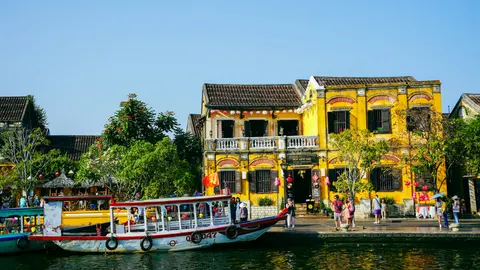 Central Vietnam · Travel Hoi An (Hội An): How Many Days, What to See, When to Go How many days Hoi An needs, what the 80,000 or 120,000 dong ticket covers, lantern nights, where to eat, beaches, flood months and getting there from Da Nang.
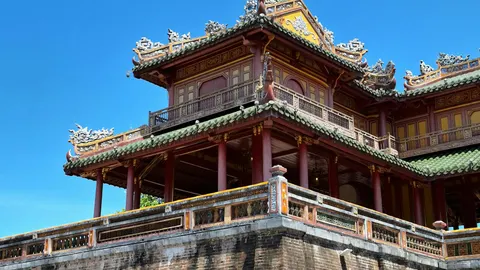 Central Vietnam · Travel Hue (Huế): How Many Days, What to See, 2026 Tickets How many days Hue needs, which Citadel sights and royal tombs to pick, 2026 ticket prices, the flood months to avoid and where to eat in the old royal capital.
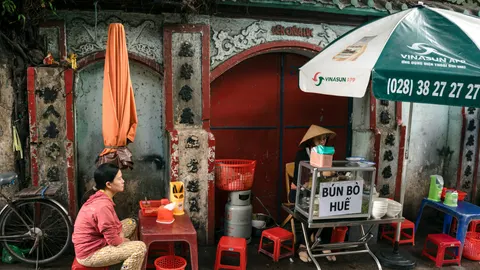 Central Vietnam · Food Bun Bo Hue (Bún Bò Huế): Dac Biet, How to Order and Cook Bun bo Hue explained: what a dac biet bowl holds, how Hue cooks make the lemongrass and shrimp paste broth, what hot dieu mau does, and Hue vs Saigon bowls.
 Central Vietnam · Travel Ba Na Hills (Bà Nà): Worth It? Tickets and How to Get There Is Ba Na Hills worth it? Tickets as of November 2026, opening hours, Golden Bridge fog and crowds, and how to get there from Da Nang or Hoi An by taxi or bus.
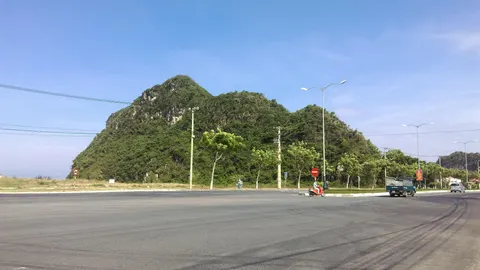 Central Vietnam · Travel Marble Mountains (Ngu Hanh Son): What to See, How Long Marble Mountains (Ngu Hanh Son), Da Nang: what to see on Thuy Son in order, dated ticket, lift and Am Phu prices, how long to allow and the route to Hoi An.
 Central Vietnam · Travel Son Tra (Sơn Trà): Is It Open, Lady Buddha, How to Visit Is Son Tra open? Status after the 10 November 2026 rain closure, how past closures ended, which vehicles can go up, the Lady Buddha, douc langurs and a route.