All three regions · Food
Che (Chè) by Region: Which to Try in Hanoi, Hue and Saigon
Vietnamese che compared: Hanoi's gentle bean and lotus che, Hue's trays of 20 small bowls, Saigon's coconut milk and ice, why they differ and how to order.
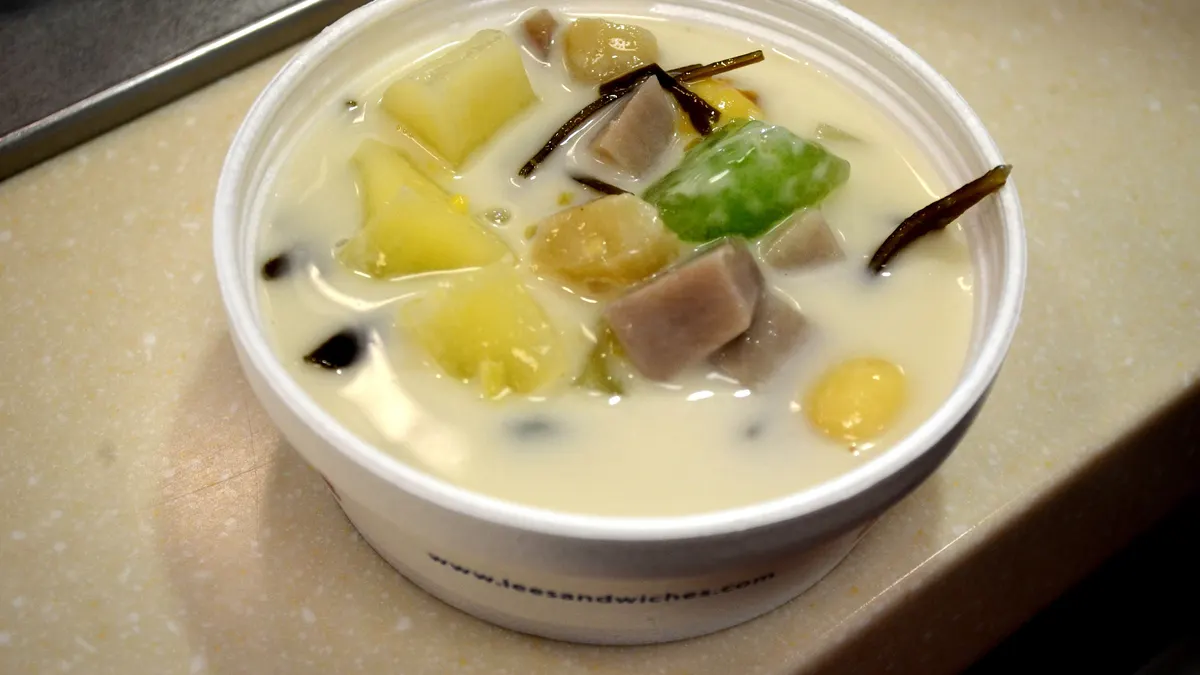
Order che (chè) at a stall in Hanoi and you are likely to get something quiet: a glass of black beans or lotus seeds in light syrup, perhaps with a hint of pomelo-flower scent, or in winter a hot bowl of sticky rice and ginger. In Hue (Huế), the former imperial capital in Central Vietnam, che is a spectacle of variety, and the classic way to eat it is a tray of twenty or so small bowls shared at a riverside stall in the evening; as of July 2026, VnExpress International still put three che shops on its budget food tour of the city. In Ho Chi Minh City and the Mekong Delta, che comes richer and colder: beans, taro and tapioca under a pour of coconut milk and crushed ice, alongside Chinese, Thai-style and Khmer sweets.
All of these are che. This guide compares the three regional styles side by side, explains why they differ, and ends with what to say when you order. For the same North–Centre–South story told through a noodle soup, see our pho by region guide; for more regional dishes, browse the Vietnamese food hub.
Che by region at a glance
| Hanoi and the North | Hue and the Centre | Saigon and the Mekong Delta | |
|---|---|---|---|
| Overall character | Gently sweet, few bright colours | Huge variety; thick and soupy kinds side by side | Rich and sweet, colourful, many toppings |
| Typical base | Sugar or treacle syrup; pomelo-flower or jasmine scent | Sugar syrup; some thick, pudding-like kinds | Sugar syrup with plenty of coconut milk |
| Signature che | Che do den (black bean), che sen (lotus seed), che ba cot (chè bà cốt), che con ong (chè con ong), che kho (chè kho) | Che hat sen (chè hạt sen), che nhan boc hat sen (longan around lotus seed), che bot loc heo quay (roast pork in tapioca), che dau van (chè đậu ván), che bap (chè bắp) | Che ba ba (chè bà ba), che thung (chè thưng), che chuoi (chè chuối), che dau trang (chè đậu trắng), che Thai (chè Thái), che khuc bach (chè khúc bạch) |
| Hot or iced | Cool in summer, hot in the cold months | Hot in winter, iced in summer | Often over ice |
| How it is served | A glass or small bowl of one kind | Many small bowls on a tray to share | A tall glass or bowl, often mixed (thap cam) |
| Outside influences | Chinese-origin winter sweets (banh troi tau (bánh trôi tàu), luc tau xa) | The Nguyen (Nguyễn) court and Hue’s alley stalls | Chinese (Cho Lon), Thai and Khmer sweets |
| Ritual and season | Che kho and che con ong at Tet (Tết); banh troi banh chay (bánh trôi bánh chay) at Tet Han thuc (Tết Hàn thực) | Che offered at festivals and ancestral rites | Tet Han thuc hardly observed |
The table shows the common pattern. Every big city now sells almost every kind, and the sections below give the exceptions.
What is che?
Che is a family, not a dish. Vietnam’s national tourism authority describes it as “any traditional sweet soup, beverage, pudding or any other custard-like dessert”, with a water or coconut-cream base, served hot or cold, and filled out with beans and pulses, rice and grains, tubers, fruit and jellies. Each kind takes its name from what follows the word che: che do den is black-bean che, che bap corn che, che buoi (chè bưởi) pomelo che.
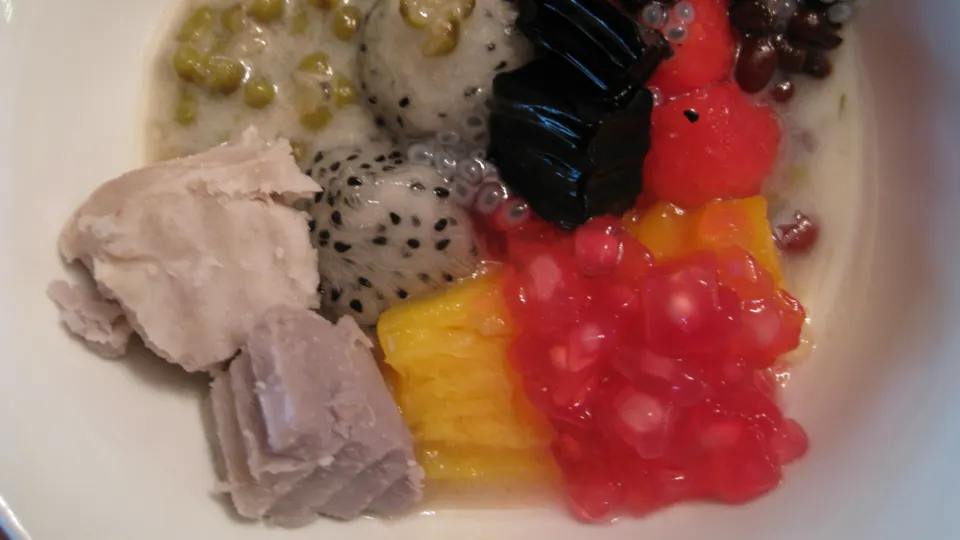
Two warnings help newcomers. First, the word also means tea: many northerners, especially in Hanoi, call tea che or nuoc che (nước chè), while the rest of the country mostly says tra (trà), as Tap chi Cong Thuong (Tạp chí Công Thương), the trade ministry’s magazine, notes. Second, not everything called che is a sweet soup: in the North, che lam (chè lam) is a sticky-rice cake with peanuts and ginger, and che kho is a thick, pressed mung-bean sweet that Hanoi families make for Tet.
Hanoi and the North: few ingredients, gentle sweetness
Hanoi’s che is restrained. The owner of Che Muoi Sau (Chè Mười Sáu), a family business that has sold che since about 1958, describes Hanoi che as “elegant and mildly sweet, without the bright colours of che from other regions”, and says that although many southern kinds came north from the 1990s, his family kept selling the city’s traditional menu: lotus and coconut, mung beans, black beans, banh troi banh chay and che kho (Tuoi Tre).
The shop is still trading. Tuoi Tre reported in July 2025 that the family split into two shops in 2024, both called Che Muoi Sau: the owner and his wife now sell on Lo Duc (Lò Đúc) Street, and relatives keep the original at 16 Ngo Thi Nham (Ngô Thì Nhậm). In September 2026 VietNamNet still described the nearly 50-year-old shop as busy.
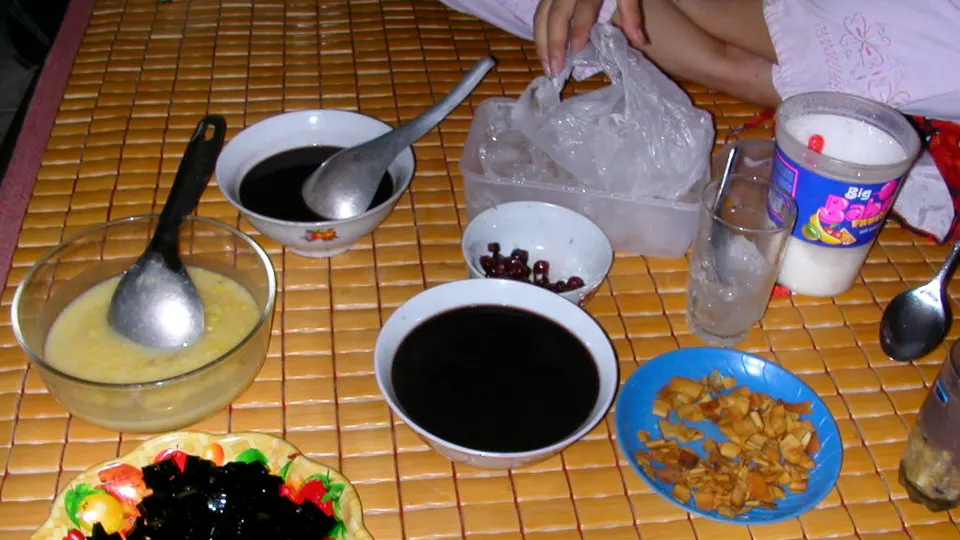
The details are in the scent and the texture. Hanoi’s city portal lists the classics: che ba cot of glutinous rice, treacle and ginger; che do den, black beans cooked with treacle or sugar; che con ong, glutinous rice cooked with treacle and ginger until it is sticky enough to serve on a plate; che hoa cau (chè hoa cau), sifted mung beans often eaten with xoi vo (xôi vò) (crumbly sticky rice); and che sen long nhan (chè sen long nhãn), lotus seeds with longan, scented with jasmine. Several are finished with pomelo-flower essence (nuoc hoa buoi (nước hoa bưởi)).
The cold season shapes the menu. The MICHELIN Guide notes that cassava che is especially loved in the North in the chilly year-end months, and Znews lists Hanoi’s hot winter che: che ba cot, hot black-bean che, banh troi tau (large glutinous rice dumplings in warm ginger syrup), luc tau xa (a mung-bean sweet soup whose name comes from Cantonese) and chi ma phu (chí mà phù), a hot black-sesame soup. The last three show a Chinese thread in Hanoi’s sweets. If you are visiting the capital, our Hanoi guide covers the Old Quarter streets where these shops cluster.
Hue: a tray of small bowls
Hue is where che becomes a cuisine of its own. VnExpress describes two streams: che cung dinh (chè cung đình), the elaborate, court-style kinds such as che ngu (chè ngự), lotus seed, chè nhãn bọc hạt sen (longan wrapped around lotus seeds), mon sap vang (môn sáp vàng) (a local yellow taro) and chè bột lọc heo quay, and che hem (chè hẻm), the cheap, filling “alley che” of mung beans, corn, black beans, pomelo and mixed bowls, sold from full pots in narrow lanes to students who come back for several glasses (VnExpress).
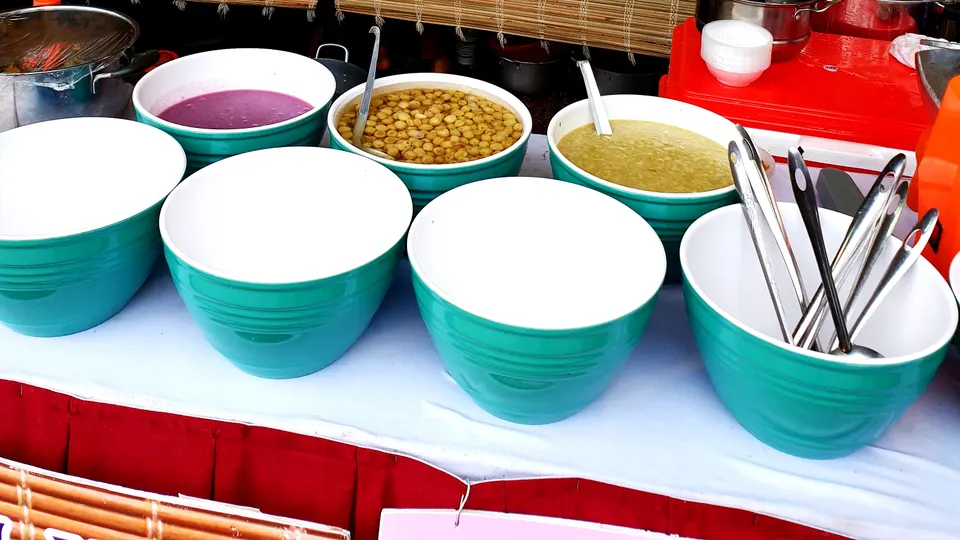
The way to eat it is the tray. Znews describes a typical mam che Hue (mâm chè Huế) of 20 dishes, with most shops offering at least 10, and two or three people sharing a ten-bowl tray; the stalls near Truong Tien (Trường Tiền) Bridge and along Tran Hung Dao (Trần Hưng Đạo) Street open from about 5 pm. Hue’s tourism portal lists more than 20 varieties, “both thick and soupy”, and Tuoi Tre (Tuổi Trẻ), quoting Vietnam’s tourism administration, mentions a 36-dish che menu. Treat these as signs of range rather than a fixed count.
The one che that surprises visitors is chè bột lọc heo quay: diced roast pork, skin and meat, wrapped in tapioca dough and served in sugar syrup. VnExpress notes it is eaten warm or at room temperature and never iced, and a Phu Nu (Phụ Nữ) writer admits it is a speciality for some and an ordeal for others. Hue people eat che year-round, hot in winter and iced in summer. For the court kitchens behind the “royal” label, see our guide to Hue royal cuisine; for the city itself, our Hue guide.
Saigon and the Mekong Delta: coconut milk and ice
In the South, che is richer. Writing about a family in Vinh Long (Vĩnh Long), in the Mekong Delta, Saigon Giai Phong (Sài Gòn Giải Phóng) calls coconut milk the ingredient southern sweets cannot do without, poured over mung-bean, white-bean, black-bean, corn and tuber che, and made from the dried, mature coconuts that families grow themselves (Saigon Giai Phong). Our Ben Tre guide covers the province best known for its coconuts, since July 2025 part of Vinh Long province.
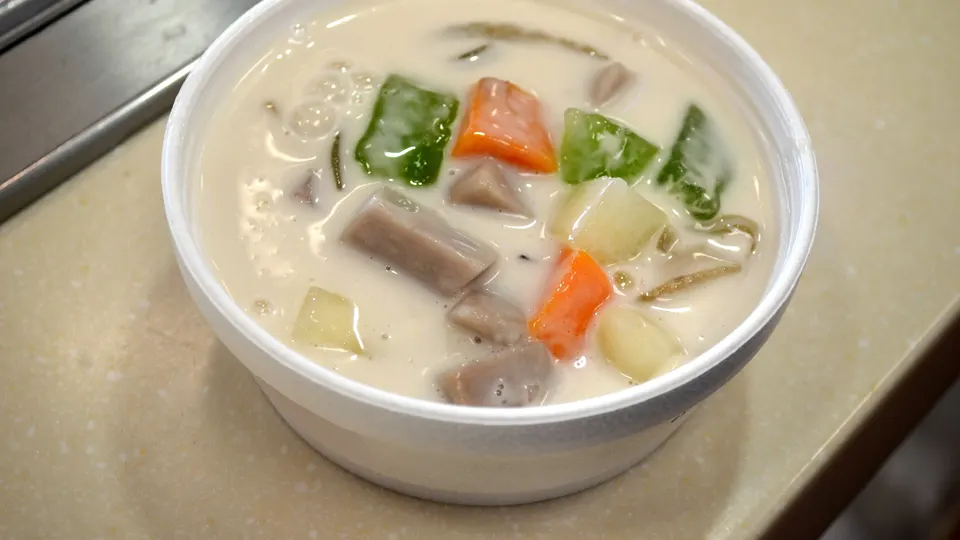
The southern classics show it. Che ba ba, which VnExpress calls typically southern, combines sweet potato or pumpkin, cassava, taro, tapioca and mung beans in coconut milk; che thung and che chuoi (banana with tapioca pearls in coconut milk) are among the “typical southern sweet soups” Vietcetera found at a Ben Thanh (Bến Thành) Market stall founded in 1968. Many are served over ice in a tall glass, and a mixed glass, che thap cam (chè thập cẩm), lets you have a bit of everything.
Not every Saigon shop follows the pattern. Tatler Asia notes that Che Hien Khanh (Chè Hiển Khánh), a family shop of more than 60 years, sweetens its che with cane-sugar syrup and jasmine rather than the rock sugar or coconut milk of many southern shops. Our Ho Chi Minh City guide and Mekong Delta guide cover the places these che come from.
Why che differs between the regions
Three things explain most of the difference: who cooked it, what grew nearby, and who settled where.
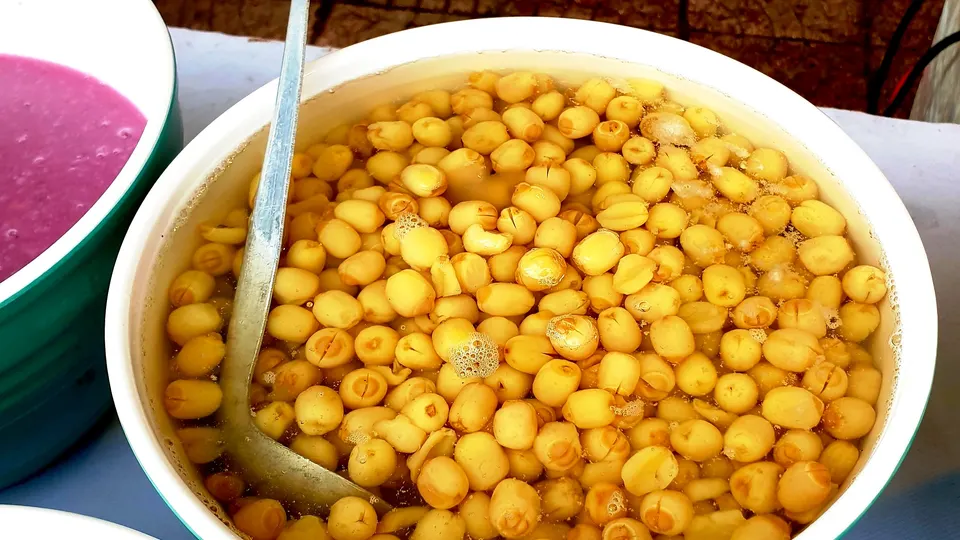
- A court in Hue. VnExpress International notes that che was an indispensable dessert for kings and royal families under the Nguyen dynasty (1802–1945), and Tuoi Tre, quoting Vietnam’s tourism administration, says che was also eaten by all classes and offered at festivals and ancestral rites. Some individual “royal” che are attributed rather than documented: Hue’s tourism portal, for example, says the roast-pork che was “often prepared exclusively for the king’s enjoyment” before becoming everyday food (Kham pha Hue). Read such claims as tradition, not court records. The tray of small bowls follows the same habit of many small portions seen in Hue’s savoury cakes.
- Harvests. Hue’s che follows local produce: the tourism portal says corn che is best in spring and early summer, made with corn from Con Hen (Cồn Hến) islet, and lotus-seed che in midsummer. The South’s coconut groves explain its coconut milk.
- Climate. Hanoi has a real winter, so hot che of sticky rice, ginger and cassava belongs to the cold months; the South is warm all year, so ice is the default.
- Migration. Chinese communities brought medicinal sweet soups to both Hanoi and Cho Lon, and Saigon later adopted Thai-style and Cambodian che, covered in the next section.
Chinese, Thai and Khmer che in the South
Ho Chi Minh City’s sweet soups are a map of its communities. In Cho Lon, the old Chinese quarter, Tuoi Tre describes shops with dozens of che cooked by Chinese-Vietnamese families for generations: hot ga tra (hột gà trà) (eggs cooked with herbs, a little tea and rock sugar), sam bo luong (sâm bổ lượng) with more than ten ingredients such as water chestnut, seaweed, longan, lotus seed and Job’s tears, black-sesame che, almond tofu and herbal jelly. The paper adds that the che was first served without ice, which was added later to suit customers.
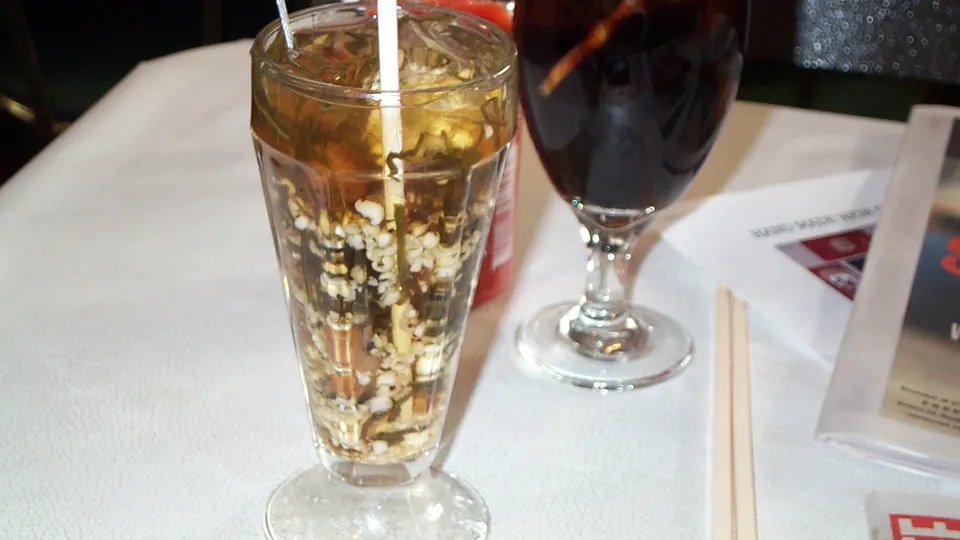
Other newcomers are more recent. Che khuc bach, cubes of jelly with lychee or longan syrup and almonds, is “believed to have started in Ho Chi Minh City’s Chinese community”, according to the MICHELIN Guide (MICHELIN Guide). Che Thai (“Thai che”) piles durian, jackfruit, longan and several jellies with milk; VnExpress International found a whole street of che Thai shops on Nguyen Tri Phuong (Nguyễn Tri Phương) Street in former District 10. And Vietcetera describes a Cambodian che shop in former District 10 that has sold Khmer sweet soups such as a squash, egg and milk dessert for more than 40 years.
Che through the year: Tet, Tet Han thuc and the seasons
Che is also a ritual food, and the ritual calendar differs by region. On the third day of the third lunar month, Tet Han thuc (the “cold food” festival), many northern families make banh troi (bánh trôi) and banh chay (bánh chay), small glutinous rice balls, for the ancestors’ altar. According to a food artisan quoted by Tuoi Tre, the custom is strongest in the North, simpler in the Centre, where families usually offer fruit, and hardly observed in the South (Tuoi Tre).
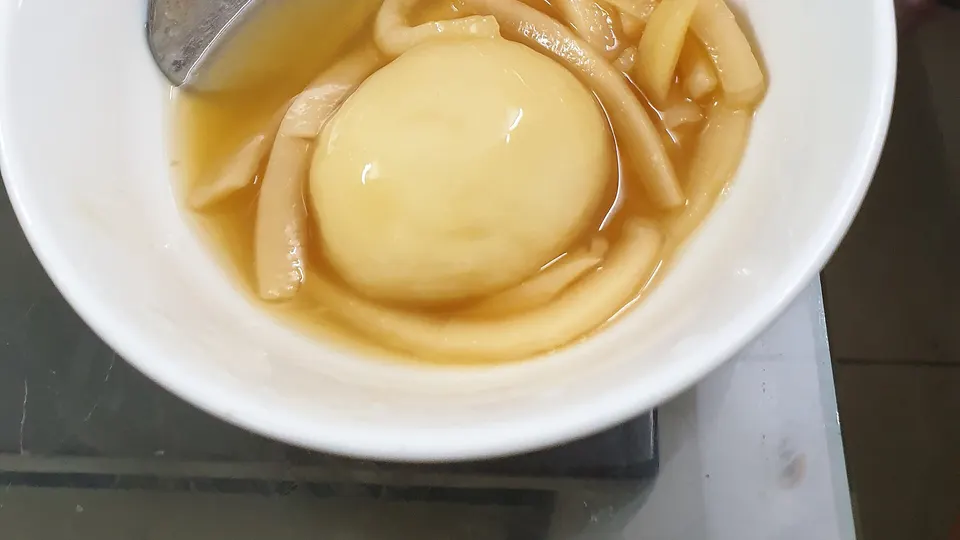
The festival’s origin is debated. It is usually linked to the Chinese custom of eating cold food in memory of Jie Zitui (Gioi Tu Thoi), but the researcher Phan Cam Thuong (Phan Cẩm Thượng), cited in the same article, notes that the cake once eaten was a fried one, and that Vietnamese families make the offering to their ancestors, not to the Chinese hero; another writer sees the rice balls simply as a cooling treat for the start of the hot season. In the South the rice-ball idea appears as che troi nuoc (chè trôi nước): balls filled with mung-bean paste in ginger syrup, with sesame and coconut cream, which Vietnam’s tourism authority says is eaten on special occasions.
Tet itself brings its own che in Hanoi: Che Muoi Sau sells most che kho, che con ong and xoi vo in the days around the Lunar New Year. Our guide to Tet in the three regions explains the rest of the holiday table. At Mid-Autumn the sweet of the season is a cake rather than a che: see our guide to Vietnamese mooncakes, baked banh nuong and sticky banh deo. Seasons matter elsewhere too: Vietnam’s tourism authority recommends che bap, corn che, in Hoi An, where it is made with locally grown corn.
How to order che
Most che is ladled from pots or glass jars at a stall, so you can point. A few words help.
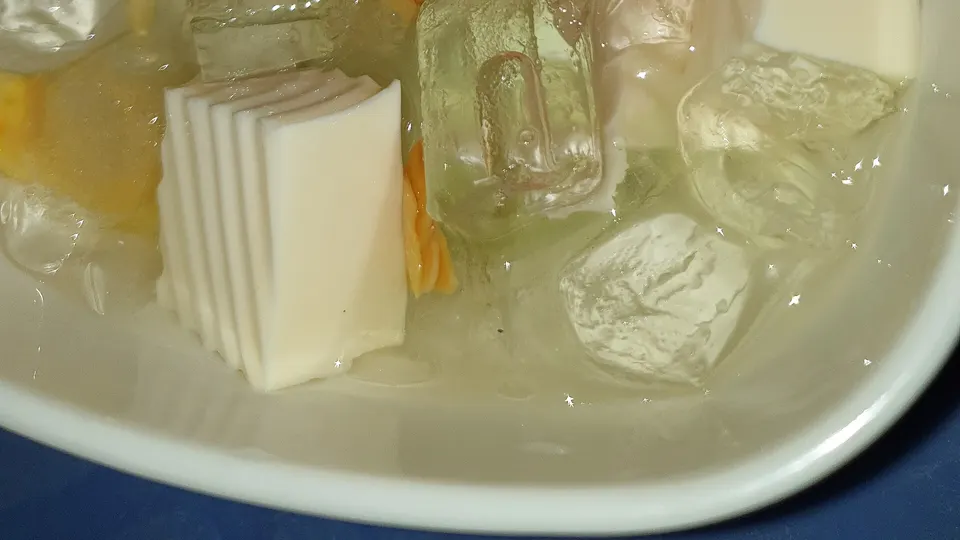
- Hot or cold. Che nong (Chè nóng) is hot; che da (chè đá) or che lanh (chè lạnh) is cold, with ice. In Hanoi in winter and in Hue, ask whether a kind is best hot; Hue’s roast-pork che is never served iced.
- Less sweet. Say it duong (ít đường) (less sugar). Che is sweeter than most Western desserts, and southern che especially so.
- A mix. Che thap cam means “assorted”: the vendor builds a glass from several pots. In Hue, order a tray of small bowls instead; two or three people can share ten.
- Eating it. Stir the glass so the ice, syrup and coconut milk mix, then use the long spoon; in tall glasses, many people drink the liquid through a straw and spoon up the solids.
- When. Che is a snack at any hour, but Hue’s riverside che stalls are an evening outing: VnExpress International noted in July 2026 that the city’s che shops fill up from late afternoon onward.
Which che suits you
Choose by taste, not by which region claims the best che.
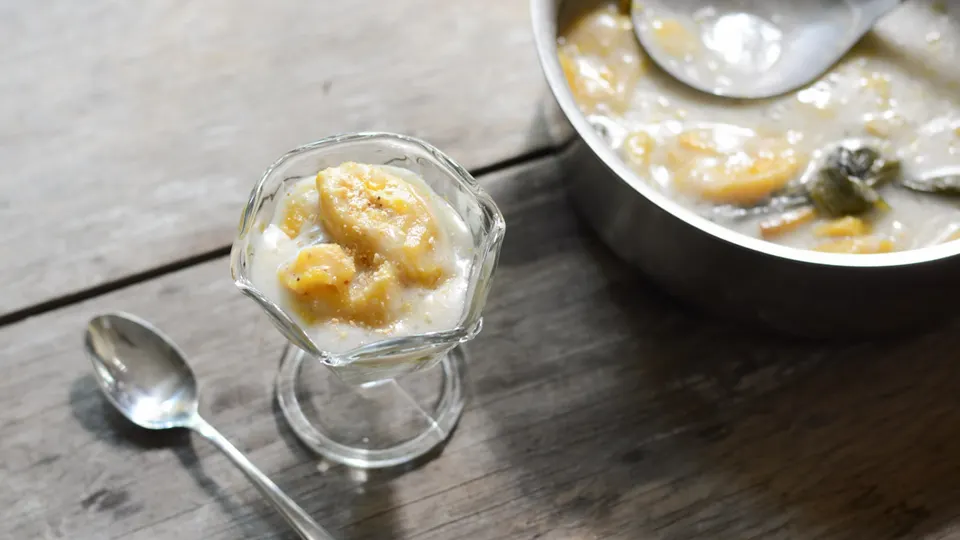
- You find desserts too sweet: Hanoi’s black-bean, mung-bean or lotus che, ideally scented with pomelo flower or jasmine, or a hot bowl of che ba cot in winter.
- You want to try many things at once: a Hue tray of small bowls, with lotus seed, longan, taro and, if you are brave, roast pork in tapioca.
- You love coconut and ice: a southern glass of che ba ba, che chuoi or che thap cam.
- You like herbal, less sugary flavours: Cho Lon’s Chinese che, from black sesame to sam bo luong.
- You want fruit: che Thai in Saigon, or che buoi, the pomelo-pith che the MICHELIN Guide called the crown jewel of Vietnamese sweet soups in December 2025.
The shops below are verified addresses in all three regions: local favourites recommended by Vietnamese and international press and Hue’s tourism portal, plus one restaurant the MICHELIN Guide names for its che buoi, which is in the 2026 MICHELIN Guide Vietnam (checked November 2026).
Where to try chè in Hanoi, Huế and Ho Chi Minh City
Local favourite
Chè Mười Sáu
Hanoi · Hai Bà Trưng ward (former Hai Bà Trưng district)
16 Ngô Thì Nhậm Street
A family chè business that goes back to a street vendor who carried chè on a shoulder pole from around 1958–60, and has sold at No. 16 since the early 1980s. Tuổi Trẻ describes it as still selling traditional Hanoi chè rather than following southern trends; VietNamNet reported in September 2026 that the shop, now nearly 50 years old, still draws crowds.
Order: Chè sen dừa (lotus and coconut), đỗ đen or đỗ xanh in summer; bánh trôi tàu in the cold months; chè kho around Tết.
The family now runs two shops: the original at 16 Ngô Thì Nhậm, and a separate shop on Lò Đúc Street opened by the founder's son-in-law. This card means the Ngô Thì Nhậm address.
Recommended by: Tuổi Trẻ (2025), VietNamNet (republished by Vietbao) (2026) · checked November 2026
Local favourite
Chè Hẻm
Huế · South bank of the Hương River (former Phú Hội ward)
1 Kiệt 29 (alley 29) Hùng Vương Street
Its name means 'alley chè', the everyday side of Huế's sweet-soup tradition. Listed by VnExpress International in 2026 and by Huế's tourism portal, and named by Tuổi Trẻ back in 2014 as one of the city's chè addresses.
Order: A glass of mixed chè, or chè bột lọc heo quay (the tourism portal lists the shop for it).
Recommended by: VnExpress International (2026), Khám phá Huế (Huế tourism portal), Tuổi Trẻ (from the Vietnam National Administration of Tourism) (2014) · checked November 2026
Local favourite
Chè Mợ Tôn Đích
Huế · Citadel side of the Hương River, near Trường Tiền Bridge (former Phú Hòa ward)
Đinh Tiên Hoàng Street, on the riverside stretch near Trường Tiền Bridge
An evening chè shop known for roast-pork chè. The owner told VnExpress in 2022 that her grandmother opened it around 1975 and had learned the pork chè inside the Imperial Citadel; the shop also sells trays of small bowls for tasting many kinds.
Order: Chè bột lọc heo quay, or a tray of small bowls to share.
Sources give two different house numbers on Đinh Tiên Hoàng Street (3/3 in VnExpress International, July 2026; 20 in Huế's tourism portal and VnExpress, 2022), so no number is shown; look for the shop by name on the riverside stretch near Trường Tiền Bridge.
Recommended by: VnExpress International (2026), Khám phá Huế (Huế tourism portal), VnExpress (republished by Bắc Ninh TV) (2022) · checked November 2026
Local favourite
Chè Hiển Khánh
Ho Chi Minh City · Former District 3
718 Nguyễn Đình Chiểu Street
A family chè shop of more than 60 years that, unlike many southern shops, sweetens its chè with cane-sugar syrup and jasmine rather than rock sugar or coconut milk, according to Tatler Asia (2025). Vietnam's national tourism site recommends it for chè khúc bạch.
Order: Chè khúc bạch, or one of the jasmine-scented bean chè.
Recommended by: Tatler Asia (2025), Vietnam National Authority of Tourism (vietnam.travel) · checked November 2026
Local favourite
Chè Hà Ký
Ho Chi Minh City · Chợ Lớn (former District 5)
138 Châu Văn Liêm Street
A Chinese-style chè shop in Chợ Lớn that started as a small stall and serves its chè hot or cold. Tuổi Trẻ named it among Chợ Lớn's Chinese chè shops in 2019; Vietcetera called it a symbol of Chinese culture in Saigon in 2024.
Order: Chè mè đen (black sesame) or cao quy linh (herbal jelly), hot or cold.
Only Vietcetera (2024) gives the house number, 138; Tuổi Trẻ (2019) places the shop on Châu Văn Liêm Street in former District 5 without a number. Check the shop sign on Châu Văn Liêm.
Recommended by: Vietcetera (2024), Tuổi Trẻ (2019) · checked November 2026
MICHELIN Guide pick
Hoa Túc
Ho Chi Minh City · Sài Gòn ward (former District 1)
74/7 Hai Bà Trưng Street
A Vietnamese restaurant in the 2026 MICHELIN Guide Vietnam, set in a former opium refinery. MICHELIN's December 2025 guide to Vietnamese desserts names it as the place to find chè bưởi, the pomelo-pith chè with mung beans and coconut milk. It is a sit-down restaurant, not a chè stall.
Order: Chè bưởi for dessert, if it is on the menu that day.
Listed in: MICHELIN Guide, MICHELIN Guide (2025) · checked November 2026
Addresses and details can change; check before you go. We do not accept payment for listings.
Frequently asked questions
Is che served hot or cold?
Both. Hanoi favours hot che such as che ba cot and banh troi tau in the cold months and cool bean or lotus che in summer; Hue eats che hot in winter and iced in summer; Saigon often serves che over ice. A few kinds are never iced, such as Hue's roast-pork che.
Is che the same as tea?
Not as a dessert, but the word is shared: many northerners, especially in Hanoi, also call tea che (nuoc che), while elsewhere tea is usually tra. Context makes it clear: a che stall sells sweet soups, not tea.
Why is there pork in Hue che?
Che bot loc heo quay wraps diced roast pork, skin and meat, in a chewy tapioca dough and serves it in sugar syrup. Hue's tourism portal says it was once a royal dessert; today it is a city speciality that some visitors love and others find hard going.
What is che Thai?
Che Thai ('Thai che') is a southern favourite of fruit such as durian, jackfruit and longan with several kinds of jelly and milk over ice. In Ho Chi Minh City a cluster of shops on Nguyen Tri Phuong Street in former District 10 is known for it.
Is che vegetarian?
Most che is plant-based: beans, tubers, seeds, fruit, jelly, sugar and coconut milk. Exceptions include Hue's roast-pork che and egg che (hot ga tra) in Cho Lon's Chinese shops; vegans should also note that che Thai and che khuc bach contain milk.
Key sources
- Quán chè Mười Sáu vắt qua hai thế kỷ: Nhà mình vẫn bán chè Hà Nội · Tuổi Trẻ, 15 Jul 2025
- Tại sao Tết Hàn thực lại phải ăn bánh trôi bánh chay? · Tuổi Trẻ, 11 Apr 2024
- Lạc giữa thiên đường chè người Hoa – Chợ Lớn · Tuổi Trẻ, 17 Jun 2019
- Nét duyên chè Huế · VnExpress, 14 Jan 2013
- Ngọt bùi hương vị cốt dừa · Sài Gòn Giải Phóng, 14 Jul 2024
- Roasted Pork Sweet Soup · Khám phá Huế (Huế tourism portal)
- A Guide to Vietnamese Desserts (and Exactly Where to Find Them) · MICHELIN Guide, 12 Dec 2025
- Che: a guide to Vietnam's sweet dessert soups · Vietnam Tourism (vietnamtourism.com), updated 9 Aug 2026
All 25 sources and further reading
- 5 quán ăn vặt đông khách ở phường Hai Bà Trưng, Hà Nội, có món giá 15.000 đồng · VietNamNet (republished by Vietbao), 15 Sep 2026
- Hấp dẫn chè Huế · Tuổi Trẻ (source: Vietnam National Administration of Tourism), 7 Oct 2014
- Món chè bà ba đậm chất Nam Bộ · VnExpress, 23 Aug 2021
- A food tour of Hue for under $8 · VnExpress International, 4 Jul 2026
- 5 Hue dishes certain to satisfy nighttime cravings · VnExpress International, 26 Mar 2022
- The sweetest street in Saigon, thanks to Thailand · VnExpress International, 16 Oct 2018
- Roasted pork in sweet soup puts Hue shop on the map · VnExpress (republished by Bắc Ninh TV), 2022
- No như ăn… chè Huế · Znews (from Phụ Nữ), 13 Jun 2022
- Những món chè nóng đặc trưng mùa đông Hà Nội · Znews, 9 Nov 2019
- Từ vựng trong ẩm thực Việt Nam: một chữ 'chè' gây nhiều bối rối · Tạp chí Công Thương, 30 Apr 2019
- Snack foods – a special stroke in the picture of Hà Nội cuisine · Hanoi People's Committee portal (VGP), 5 Sep 2010
- Dazzled by Huế's sweet soups · Khám phá Huế (Huế tourism portal), from Huế Ngày Nay
- TOP tasty Vietnamese treats to satisfy your sweet tooth · Vietnam National Authority of Tourism (vietnam.travel)
- 15 dreamy desserts to try in Vietnam · Vietnam National Authority of Tourism (vietnam.travel)
- For Those Having A Sweet Tooth: Chè Spots You Must Try in Saigon · Vietcetera, 23 Oct 2024
- Legacy 50: 5 dining spots over 50 years old in Saigon · Tatler Asia, 12 May 2025
- Chè · Wikipedia
Keep exploring
 Central Vietnam · Food Hue (Huế) Royal Cuisine: What to Eat and Where to Try It Hue royal cuisine explained: what Nguyen court cooking was, how banh beo, banh nam and banh bot loc differ, and when 2026 palace banquets ran in Hue.
 North · Central · South · Culture Tet (Tết) 2027 by Region: North, Central, South Compared How Tet differs in North, Central and South Vietnam: peach vs mai, banh chung vs banh tet, fruit trays, pickles, first visitors, plus the Tet 2027 dates.
 North · Central · South · Food Hanoi vs Saigon Pho (Phở): Differences and How to Order Hanoi vs Saigon pho: a clear, spare Northern broth or a sweeter Southern bowl with herbs and sauces, plus Central styles, 2026 prices and MICHELIN picks.
 Central Vietnam · Travel Hue (Huế): How Many Days, What to See, 2026 Tickets How many days Hue needs, which Citadel sights and royal tombs to pick, 2026 ticket prices, the flood months to avoid and where to eat in the old royal capital.