South Vietnam · Culture
Don Ca Tai Tu (Đờn Ca Tài Tử): Where to Hear It in 2026
Where to hear don ca tai tu in 2026: free weekend shows in Can Tho, Wednesday club nights in Saigon, Bac Lieu's options, and what the southern music is.
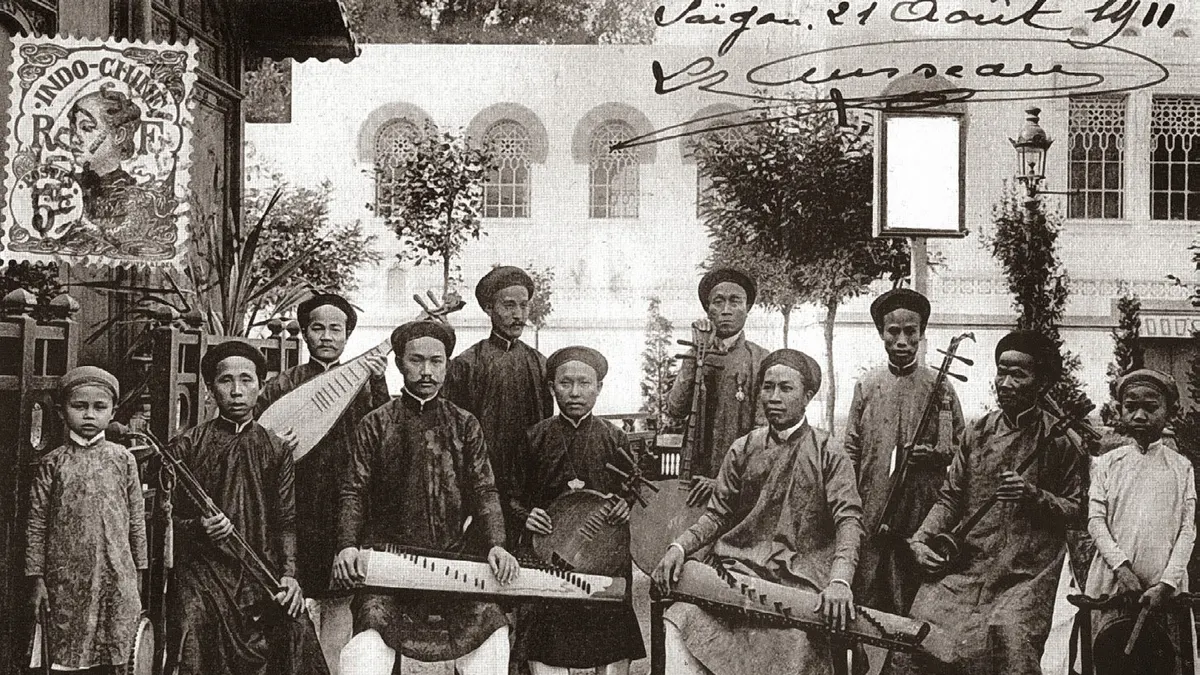
The most reliable places to hear don ca tai tu, the amateur chamber music of southern Vietnam, are Can Tho and Ho Chi Minh City. For the rest of 2026 Can Tho is staging a free hour-long show on a boat at Cai Rang floating market at 6am on Saturdays and Sundays and a free Saturday show at 7pm on Ninh Kieu Wharf, Vietnam News reported in September 2026, while in Saigon the Gia Dinh club has played for the public every Wednesday evening in Binh Thanh ward, according to SGGP in January 2026. Bac Lieu, the music’s cradle, is worth the trip for enthusiasts, but check first whether its memorial complex has reopened.
Don (Đờn) ca tai tu (tài tử) is the traditional chamber music of southern Vietnam. A handful of musicians sit together, often at home, with a moon-shaped lute, a zither and a fiddle; a singer joins in; and together they play a body of old tunes learned by ear. UNESCO inscribed the “Art of Đờn ca tài tử music and song in southern Viet Nam” on its Representative List of the Intangible Cultural Heritage of Humanity in 2013, describing an art with “both scholarly and folk roots” set among “the land and rivers of the Mekong Delta region” (UNESCO).
This guide, part of our Vietnamese culture hub, explains what the music is, why it grew out of Hue’s court music but sounds so different, how it gave birth to cai luong (cải lương) theatre, and where you can hear it on a trip through the Mekong Delta or Ho Chi Minh City.
Don ca tai tu vs ca Hue vs cai luong at a glance
| Don ca tai tu | Ca Hue (Ca Huế) | Cai luong | |
|---|---|---|---|
| Region | South (Nam Bo): Mekong Delta, Ho Chi Minh City and the Southeast | Central: Hue | South |
| What it is | Chamber music: a small group plays and sings classical tunes | Chamber singing with a small string ensemble | Staged musical theatre |
| Took shape | Late 19th–early 20th century | Around the 17th century | Early 20th century, out of don ca tai tu (đờn ca tài tử) |
| Setting | Homes, Tet (Tết), death anniversaries, weddings, festivals, clubs | Small rooms for a few listeners; now tourist boats on the Perfume River | Theatres and touring troupes |
| Core sound | Don kim (Đờn kìm), don tranh (đờn tranh), don co (đờn cò) with a singer; song lang clapper | Four or five strings and a few singers | The same tunes and vong co (vọng cổ), plus costumes, makeup and acting |
| Recognition | UNESCO Representative List, 2013 | Vietnam’s national intangible heritage list, 2015 | — |
What is don ca tai tu?
Don means to play an instrument and ca means to sing. UNESCO describes a repertoire based on “twenty principal songs and seventy-two classical songs”, played on the moon-shaped lute, two-string fiddle, sixteen-string zither, pear-shaped lute, monochord, bamboo flute and percussion, and performed at “festivals, death anniversary rituals and celebrations”. It is passed on orally, by imitation, from masters to students, and UNESCO notes that a musician needs at least three years just to learn the basic techniques and modes.
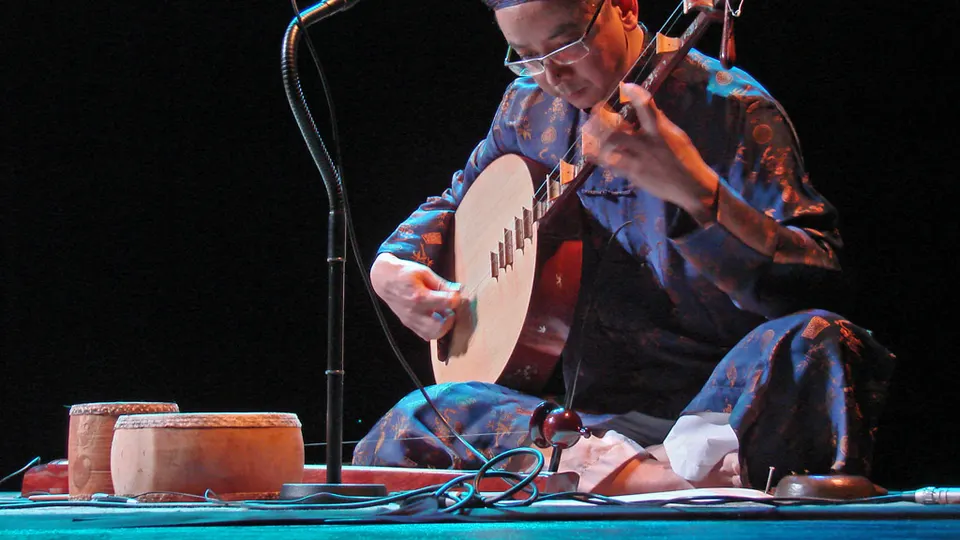
“Tai tu” is debated. It is usually translated as “amateur”: people who play for love, not money. Nhan Dan (Nhân Dân) notes that the music was first played by farmers in the same community to relax after work. But the musicologist Tran Van Khe (Trần Văn Khê) insisted the word means “a person with talent”, not a dabbler, and that players who never performed for a living were still expected to train hard. Both points are true: don ca tai tu is not a profession, but it is not casual either.
It is social first. Southern papers describe musicians playing at home, at gatherings, at weddings and engagements and at festivals; many clubs still meet on fixed days of the lunar month. Tran Van Khe remembered his family holding a khai don, the first playing of the year, at the ancestral house on the second day of Tet, with relatives and neighbours crowding in; our Tet guide explains the festival itself.
Where did don ca tai tu come from?
Most Vietnamese accounts agree on three roots: Hue’s court music, the ritual music (nhac le (nhạc lễ)) of southern temples and village rites, and folk song and poetry. In a 2006 essay, Tran Van Khe wrote that the genre took shape in the South in the late 19th and early 20th centuries, after court musicians of the Nguyen (Nguyễn) dynasty who had joined the Can Vuong (Cần Vương) resistance carried Hue’s chamber music south, stopping in Quang Binh (Quảng Bình), Quang Tri (Quảng Trị) and Quang Nam (Quảng Nam) on the way; in the South the tunes changed and many pieces drifted from their original forms (Tuoi Tre).
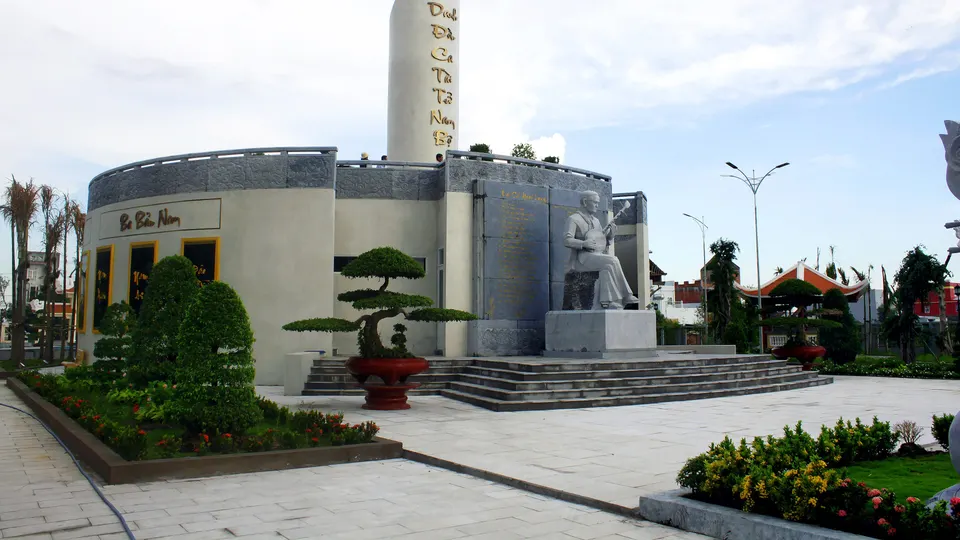
Bac Lieu (Bạc Liêu) is called its cradle. Vietnam (Việt Nam) News and SGGP both name Bac Lieu, on the delta’s southern coast, as one of the birthplaces of the movement. According to Saigoneer, the musician Le Tai Khi (Lê Tài Khí), known as Nhac Khi (Nhạc Khị), led an ensemble there in the 1890s and grouped the genre’s 20 classic pieces into four categories. Bac Lieu was also home to Cao Van Lau (1890–1938), whose song Dạ cổ hoài lang (1919) is regarded as the first vong co.
The music also travelled abroad early. Tai tu musicians played at the 1889 Paris world’s fair, and a 2013 study in a Hue research journal argues that these tours gave artists the confidence to perform publicly back home, which pushed the music onto the stage.
How is don ca tai tu played?
A fixed repertoire, freely played. The heart of the music is the 20 ban to (bản tổ), the “ancestor pieces”. Tran Van Khe listed them in four groups: six Bac (Bắc) pieces (such as Luu thuy truong (Lưu thủy trường)), three Nam pieces (Nam xuan (Nam xuân), Nam ai, Nam dao (Nam đảo)), four Oan (Oán) or “lament” pieces (such as Tu dai oan (Tứ đại oán)) and seven large pieces (bai lon (bài lớn), such as Xang xe (Xàng xê)). Every serious player learns these by heart from a teacher; SGGP describes Bac Lieu masters who know about 20 of them.
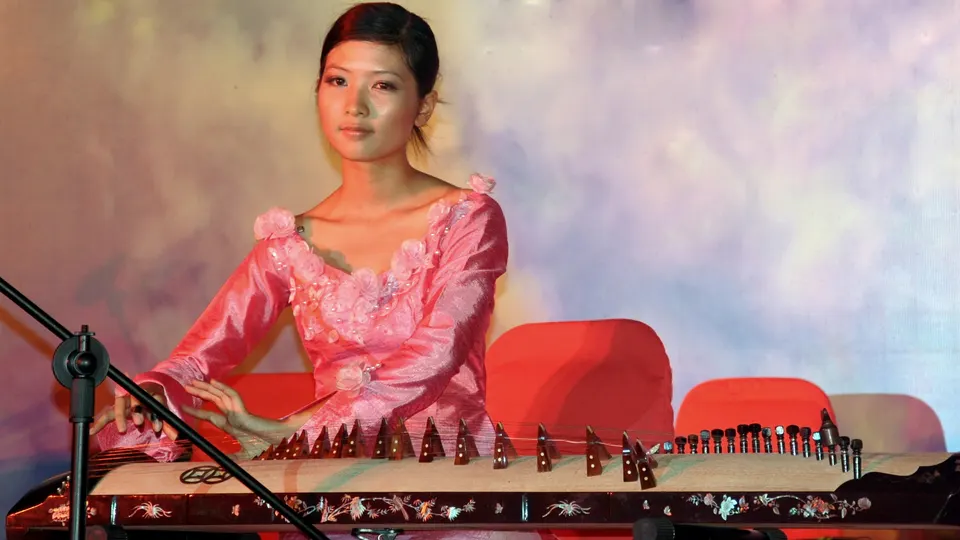
A small band. The core instruments are the don kim (moon-shaped lute; the dan nguyet (đàn nguyệt) of the North), the don tranh (zither) and the don co (two-string fiddle). Other common instruments are the don doc huyen (đờn độc huyền) or don bau (đờn bầu) (monochord), don ty ba (đờn tỳ bà) (pear-shaped lute), don tam (đờn tam), and the sao (sáo) and tieu (tiêu) flutes. Many groups also use a guitar whose fingerboard has been scalloped between the frets (ghi-ta phim lom (phím lõm)) so it can bend notes like a Vietnamese lute; Nhan Dan notes it has largely taken the place of the don bau.
The beat comes from a small clapper. The song lang, a small clapper, is struck at key points of the rhythm. Groups can be two players, three (zither, lute and fiddle), or the five-instrument ngu tuyet (ngũ tuyệt). Tran Van Khe noted it is rare to play without a singer.
| Instrument | What it is | Place in the group |
|---|---|---|
| Don kim | Moon-shaped lute (dan nguyet in the North) | Core |
| Don tranh | 16-string zither | Core |
| Don co | Two-string fiddle | Core |
| Don doc huyen or don bau | Monochord | Common, now often replaced by the scalloped guitar |
| Don ty ba | Pear-shaped lute | Common |
| Sao and tieu | Bamboo flutes | Common |
| Ghi-ta phim lom | Guitar with scalloped frets, so it can bend notes | Very common today |
| Song lang | Small clapper | Marks the beat; struck at key points of the rhythm |
How is it different from ca Hue, ca tru and cai luong?
From ca Hue, it kept the chamber format but changed the feel. Ca Hue is the refined chamber singing of the former imperial capital, made for a small room and a few attentive listeners. Don ca tai tu shares that scale and some of the old tunes, but it belongs to homes, family occasions and village gatherings in the South, and many of the old Hue tunes changed on their way south.
Ca tru is the North’s chamber art, and works differently. Ca tru is sung poetry from northern Vietnam, performed by three people: a singer who keeps time on clappers or a small wooden box, and two musicians on a three-string lute and a drum, as UNESCO describes it. The voice and the poem lead; in don ca tai tu a group of strings carries the tune and the singer joins in. UNESCO put ca tru on its list of heritage in need of urgent safeguarding in 2009, and don ca tai tu on the Representative List in 2013.
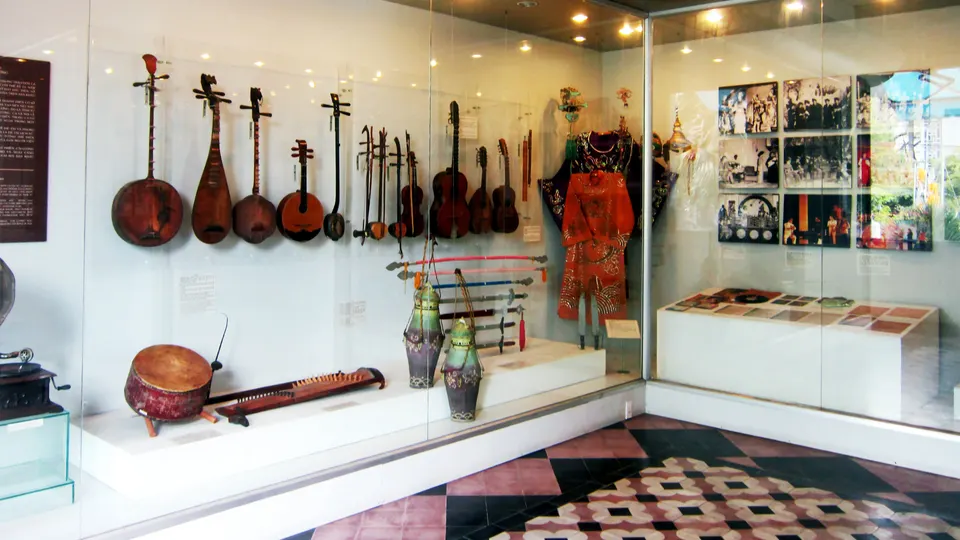
Cai luong grew out of it. Around the turn of the 20th century, groups began to sing tai tu tunes with gestures and roles, a style called ca ra bo (bộ) (“singing with acting”). Public stage performances of nhac tai tu (nhạc tài tử) and ca ra bo then led to a new theatre form, cai luong (“reformed” theatre), according to a 2013 study by Nguyen Duc Hiep (Nguyễn Đức Hiệp) and Nguyen Le Tuyen (Nghien cuu va Phat trien). Cai luong needs a stage, costumes, makeup and acting; don ca tai tu needs only players and listeners. Hence the southern saying Tran Van Khe quoted: coi cải lương, nghe đờn ca tài tử, “watch cải lương, listen to đờn ca tài tử”.
Vong co links them. Cao Van Lau’s Dạ cổ hoài lang (1919), a song about a wife longing for her husband who is away at war, grew into vong co, which is sung both at tai tu sessions and in cai luong; the 2026 Cai Rang (Cái Răng) programme, for example, mixes the classical pieces with vong co in cycles of 8, 16 and 32 beats.
What has changed since the UNESCO listing?
More clubs, fewer living settings. The listing on 5 December 2013 in Baku brought festivals, seminars, school clubs and teaching programmes across the South. Ho Chi Minh City counted 84 tai tu clubs with more than 1,220 members in 2023, Vietnam News reported; Ca Mau province, which now includes Bac Lieu, counted 750 clubs with more than 5,000 members in January 2026 (Vietnam News), and Can Tho more than 500 clubs and groups in October 2026 (VietnamPlus). Nhan Dan names Bac Lieu, Binh Duong (Bình Dương), Tien Giang (Tiền Giang) and Ho Chi Minh City as the places with the most practitioners.
The worries are real. Twelve years after the listing, Bao Van hoa (Báo Văn hóa) reported that urbanisation, the changing rural way of life, a shortage of successor artisans and fragmented teaching methods threaten transmission, that teaching quality varies by locality, and that experts want the art to live in communities rather than only in festivals and shows (Bao Van hoa). Bac Lieu has also started teaching Dạ cổ hoài lang and the classical pieces to schoolteachers so the music can reach children.
New province names. UNESCO counted 21 southern provinces and cities where the art is practised. Since the reorganisation of 1 July 2025 several of them sit inside larger units: Bac Lieu is now part of Ca Mau (Cà Mau) province, Tien Giang of Dong Thap (Đồng Tháp), Binh Duong of Ho Chi Minh City, Ben Tre (Bến Tre) of Vinh Long (Vĩnh Long), and Soc Trang (Sóc Trăng) and Hau Giang (Hậu Giang) of Can Tho (Cần Thơ) city, according to the government portal. Local names such as Bac Lieu are still what musicians and signs use.
Where can visitors hear don ca tai tu today?
The most dependable places in late 2026 are Can Tho and Ho Chi Minh City, where free shows and club evenings run on fixed days. Elsewhere in the delta the music is mostly heard at festivals, family occasions and club meetings rather than on a public timetable.

| Where | What and when | Reported by |
|---|---|---|
| Cai Rang floating market, Can Tho | Free 60-minute show on a traditional cargo boat from 6am, Saturdays and some Sundays | Bao Van hoa (6 Sep 2026), Vietnam News (14 Sep 2026) |
| Ninh Kieu Wharf, Can Tho | Free show at 7pm on Saturdays | Vietnam News (14 Sep 2026) |
| Cai Khe Trade Centre, Can Tho | Tai tu and cai luong evening on the last Sunday of each month, from 25 Oct 2026 | Bao Van hoa (26 Oct 2026) |
| Binh Thanh ward, Ho Chi Minh City | Gia Dinh club performances every Wednesday evening | SGGP (18 Jan 2026) |
| Bac Lieu, Ca Mau province | Memorial complex of don ca tai tu and Cao Van Lau; restoration still under way in March 2026 | Nhan Dan (19 Mar 2026) |
Can Tho has the most regular programme. In September 2026 the city announced free shows “for the rest of the year”: a 60-minute performance at Cai Rang floating market at 6am on weekends, a Saturday show at 7pm on Ninh Kieu (Ninh Kiều) Wharf, and Dạ Cổ Cầm Thi, a free cai luong programme for young audiences at Tay Do (Tây Đô) Theatre on Sunday nights (Vietnam News). Bao Van hoa adds that the Cai Rang show takes place on a ghe bau (bầu), a traditional cargo boat, in the middle of the market, with announcements in Vietnamese and English; it runs every Saturday and on some Sundays. Since 25 October 2026 the Cai Khe (Cái Khế) ward club has also staged a programme of more than 90 minutes, with the classical pieces, vong co and cai luong excerpts, at the Cai Khe Trade Centre on the last Sunday evening of each month, Bao Van hoa reported. The city’s clubs also hold hour-long monthly exchanges on open-air stages in its wards and communes (VietnamPlus, October 2026).
Ho Chi Minh City has the largest number of clubs. One of them, the Gia Dinh (Gia Định) club, founded around 2001–2002, holds performances for the public every Wednesday evening at the Traditional House of Binh Thanh (Bình Thạnh) ward, 6B Phan Dang Luu (Phan Đăng Lưu) Street, the Saigon daily SGGP reported in January 2026. The city’s culture department has also planned outdoor performances at cultural centres, parks and residential areas; these are community events rather than tourist shows, so ask your hotel or a local cultural centre what is on.
On the river islets of Ben Tre, such as Con Quy (Cồn Quy) in the Tien (Tiền) River, don ca tai tu is part of what day visitors are shown; enjoy it as an introduction arranged for guests.
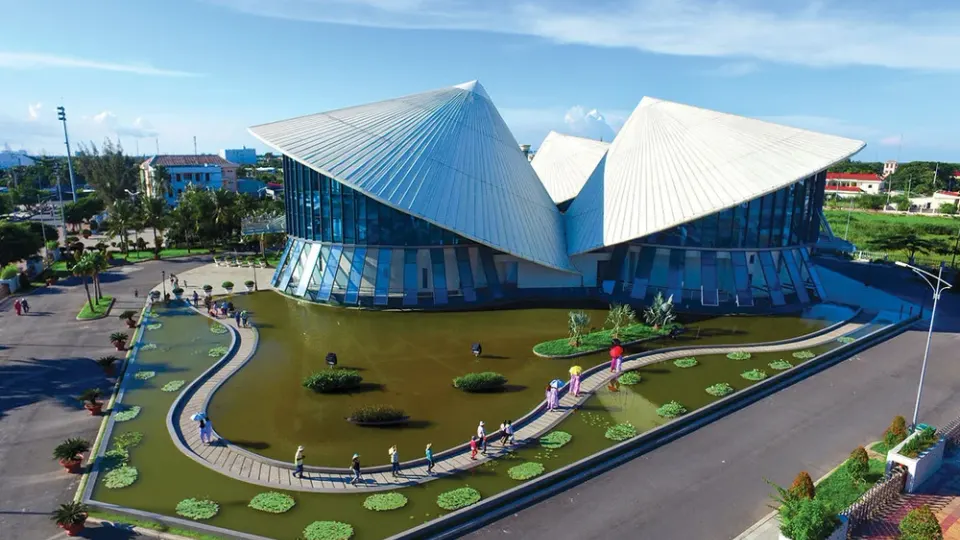
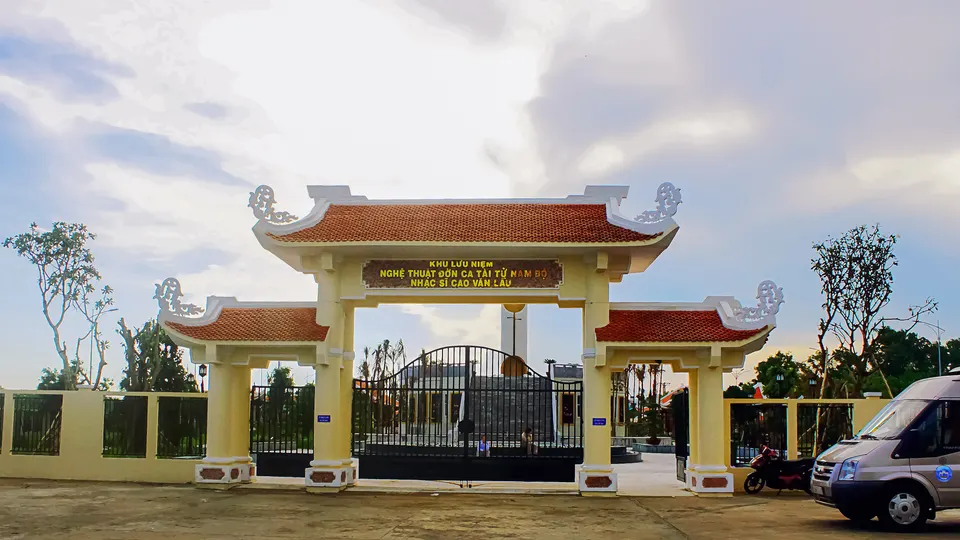
Bac Lieu has the memorial complex of don ca tai tu and Cao Van Lau on Ninh Binh (Ninh Bình) Street; check that its restoration has finished before you go (see below).
Bac Lieu has other ways in while the memorial is closed. In 2026 the Bac Lieu Prince’s House (Nha Cong tu Bac Lieu) has run acoustic music performances and don ca tai tu exchanges to encourage visitors to stay overnight, Vietnam News reported on 1 June 2026. Elsewhere in Ca Mau province, visitors to the Huong rung U Minh (“Scent of the U Minh forest”) event on 10 May 2026 could join don ca tai tu exchanges, and the provincial Children’s House ran a free tai tu class in Bac Lieu ward in summer 2026, Dai bieu Nhan dan reported in October 2026. Ask locally what is on during your dates.
How should you visit and listen respectfully?
The most rewarding trip for a music lover is Bac Lieu, now a ward of Ca Mau province. The memorial complex of tai tu music and Cao Van Lau, built in 2008 on more than 12,500 square metres, has an auditorium and an exhibition hall; Cao Van Lau was buried there in 1976, and the site became a national historical and cultural site in 2014. In July 2025 Ca Mau announced a renovation of the auditorium so it could host tai tu and cai luong performances, due to finish at the end of 2025 (Vietnam News), and in March 2026 Nhan Dan reported that the province had ordered agencies to speed up the restoration. We found no report of its reopening by mid-November 2026, so check that it is open before you plan around it.
- Listen, do not talk. This is music for listening; the singer is improvising and the players are following each other closely.
- Ask before filming close up, especially at a club or family gathering.
- Know what you are hearing. A boat show or garden set is a staged introduction; a club evening or a family death anniversary is the music in its own setting.
- Learn a few Southern words. A polite da, the Southern “yes”, goes a long way at a club evening; our guide to Vietnamese phrases by region lists the everyday words you will hear in the South.
- Learn one tune. Listening for Dạ cổ hoài lang or the sad Nam ai gives you a thread to follow.
For the rest of the region, start from our South Vietnam hub.
Frequently asked questions
Where can I hear don ca tai tu in Saigon?
In Ho Chi Minh City the Gia Dinh club holds public performances every Wednesday evening at the Traditional House of Binh Thanh ward, 6B Phan Dang Luu Street, SGGP reported in January 2026. Other clubs play at cultural centres and parks as community events, so ask your hotel or a local cultural centre what is on.
Do I need to speak Vietnamese to enjoy the Cai Rang floating market show?
No. The free don ca tai tu show on a ghe bau cargo boat at Cai Rang floating market in Can Tho has a programme introduction recorded in both Vietnamese and English, Bao Van hoa reported in September 2026. The music itself needs no translation: listen for the lute, zither and fiddle following the singer.
Is it worth going to Bac Lieu for don ca tai tu?
For enthusiasts, yes: Bac Lieu, now part of Ca Mau province, is the home of Cao Van Lau and his memorial complex, although its restoration was still being pushed forward in March 2026 and we found no report of its reopening by mid-November 2026. In 2026 the Bac Lieu Prince's House has also hosted don ca tai tu exchanges, Vietnam News reported in June 2026.
Which should I choose as a first-timer: the Cai Rang boat show or a club evening?
The Cai Rang boat show in Can Tho is the easiest start: free, about 60 minutes, at 6am on weekends. A club evening, such as the Gia Dinh club's Wednesdays in Ho Chi Minh City or the Cai Khe programme of more than 90 minutes on the last Sunday evening of each month in Can Tho, shows the music in its own setting.
What does 'tai tu' mean in don ca tai tu?
Don means to play an instrument, ca means to sing, and tai tu is usually translated as amateur: people who play for pleasure, not for a living. The musicologist Tran Van Khe argued that tai tu really means a person of talent, because players still trained seriously.
Key sources
- Art of Đờn ca tài tử music and song in southern Viet Nam · UNESCO Intangible Cultural Heritage
- Decision of the Intergovernmental Committee: 8.COM 8.31 · UNESCO Intangible Cultural Heritage
- Đờn ca tài tử trong không gian văn hóa Nam bộ (Trần Văn Khê) · Tuổi Trẻ (15 January 2006)
- Hát bội, đờn ca tài tử và sự hình thành cải lương từ cuối thế kỷ 19 đến đầu thế kỷ 20 (Nguyễn Đức Hiệp, Nguyễn Lê Tuyên) · Tạp chí Nghiên cứu và Phát triển, Huế (2013)
- Bài toán trao truyền và phát huy di sản Đờn ca tài tử Nam Bộ sau 12 năm được UNESCO ghi danh · Báo Văn hóa (5 December 2025)
- Free traditional performing arts offered in Cần Thơ · Việt Nam News (14 September 2026)
- Cà Mau upgrades memorial complex of tài tử music · Việt Nam News (17 July 2025)
- Ca trù singing · UNESCO Intangible Cultural Heritage (List in Need of Urgent Safeguarding, 2009)
All 25 sources and further reading
- Cà Mau: Night tourism seen as key driver for local growth · Việt Nam News, 1 June 2026
- Cà Mau khơi dậy nguồn lực văn hóa, tạo động lực phát triển bền vững · Đại biểu Nhân dân, 28 October 2026
- Google tôn vinh đờn ca tài tử · Nhân Dân (5 December 2023)
- Đờn ca tài tử: Có hiểu thì mới yêu · Tuổi Trẻ
- Trang sử mới của đờn ca tài tử · Tuổi Trẻ (2014)
- Trăm năm vọng lại tiếng đờn – Bài 1: Còn thương hai tiếng tài tử · Sài Gòn Giải Phóng (2022)
- Đờn ca tài tử ngân vang giữa chợ nổi Cái Răng · Báo Văn hóa (6 September 2026)
- Theatre offers tài tử performances in Cần Thơ · Việt Nam News (8 June 2024)
- Mekong Delta seeks to popularise traditional art · Việt Nam News (20 July 2024)
- New HCM City project to promote tài tử clubs · Việt Nam News (16 December 2023)
- Đờn Ca Tài Tử Captures the Soul of Southern Vietnam in Every Melody, Every Word · Saigoneer (22 February 2025)
- Names and administrative centers of 34 provinces and centrally-run cities specified · Vietnam Government Portal (15 April 2025)
- Điểm hẹn của những người yêu thích nghệ thuật truyền thống · Sài Gòn Giải Phóng (18 January 2026)
- Cần Thơ ra mắt chương trình biểu diễn nghệ thuật phục vụ du lịch · Báo Văn hóa (26 October 2026)
- Cần Thơ nâng tầm chất lượng câu lạc bộ, giữ "lửa" nghệ thuật đờn ca tài tử · VietnamPlus / TTXVN (14 October 2026)
- Đờn ca tài tử tiếp tục tỏa sáng · Nhân Dân (19 March 2026)
- Cà Mau strives to promote tài tử music · Việt Nam News (14 January 2026)
Keep exploring
 South Vietnam · Travel Mekong Delta: Which Area to Visit and Where to Base Which part of the Mekong Delta to visit and where to base: Can Tho, Ben Tre or Chau Doc, Cai Rang market hours, seasons, where to eat, new province names.
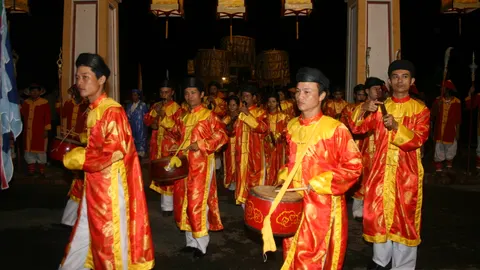 Central Vietnam · Culture Hue Court Music (Nhã Nhạc) and Ca Hue: Where to Hear Them Where to hear Hue court music (nha nhac) and ca Hue: Imperial City venues, Perfume River boats, how the two differ, UNESCO status and how to pick a show.
 South Vietnam · Travel Can Tho (Cần Thơ): Where to Stay and What to Do in 1–2 Days Can Tho in 1-2 days: stay by Ninh Kieu wharf, take the 5 am boat to Cai Rang (100,000 dong shared, Aug 2026), see Binh Thuy house, eat banh xeo and hu tieu.
 South Vietnam · Travel Ho Chi Minh City (Saigon): How Many Days and What to See Ho Chi Minh City (Saigon) explained: the 2025 merger and new wards, how many days to stay, Metro Line 1, Long Thanh airport, palace and museum tickets.