South Vietnam · Travel
Cu Chi Tunnels (Củ Chi): Ben Duoc or Ben Dinh, and Tickets
Ben Duoc or Ben Dinh? What the Cu Chi tunnels were, from 1946 to 1975, their relic and UNESCO status, and how to visit from Ho Chi Minh City by road or river.
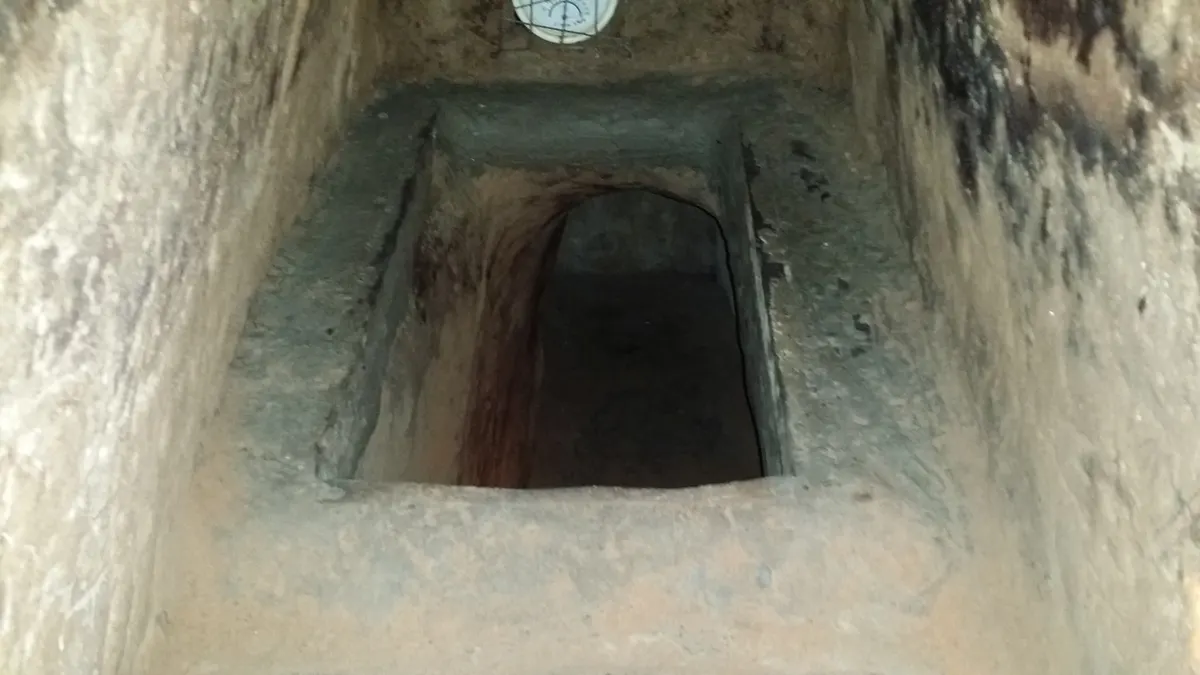
Pick Ben Duoc if you want a quieter visit with the memorial temple and can reach it by public bus, and Ben Dinh if you are on a group tour or arriving by river boat; most visitors see only one, as the two sites are about 13 km apart. As of July 2026 VnExpress gave the Ben Duoc entrance fee as 35,000 dong for Vietnamese and 85,000 dong for foreign visitors, and on 15 July 2026 Vietnam added the tunnels to UNESCO’s World Heritage Tentative List, the first step towards a nomination.
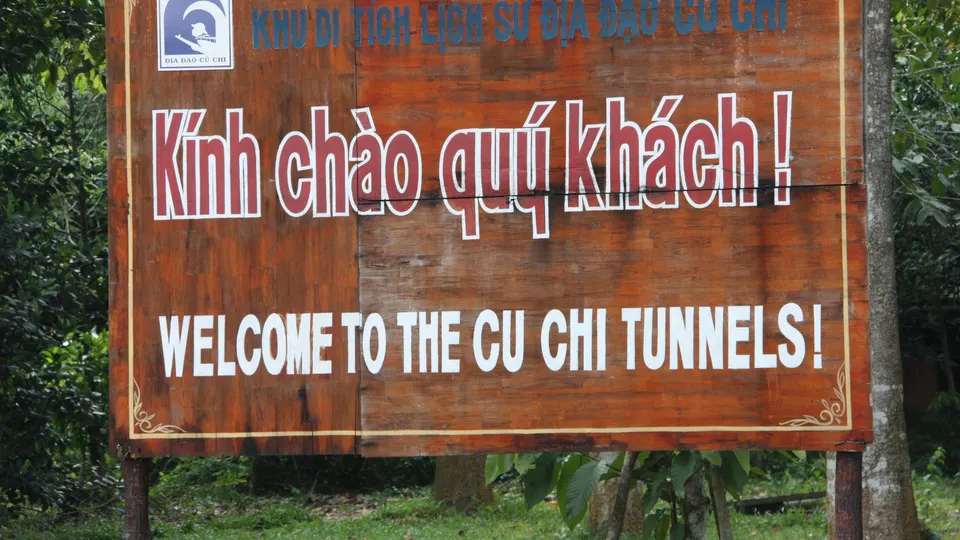
The Cu Chi (Củ Chi) Tunnels (Địa đạo Củ Chi, “the Cu Chi underground passages”) are the classic day trip from Ho Chi Minh City: a network of narrow tunnels dug by hand into the laterite soil north-west of the city, where guerrillas and villagers sheltered, stored weapons and fought through two wars. Today two short sections are preserved for visitors, at Ben Duoc (Bến Dược) and Ben Dinh (Bến Đình), and the whole site has been a special national relic since a Prime Minister’s decision of 23 December 2015 (SGGP).
This guide is for travellers who want to choose between the two sites, understand what they are looking at, and decide how much of the experience, from crawling underground to the shooting range, is for them. It sits within our wider guide to Southern Vietnam.
Cu Chi Tunnels at a glance
| Where | About 70 km north-west of central Ho Chi Minh City, between the Saigon and Vam Co Dong (Vàm Cỏ Đông) rivers |
| Admin (since July 2025) | Ho Chi Minh City. Cu Chi district was abolished with the district level; Ben Duoc is in An Nhon Tay (An Nhơn Tây) commune (formerly Phu My Hung (Phú Mỹ Hưng) commune), Ben Dinh in Nhuan Duc (Nhuận Đức) commune |
| The two sites | Ben Dinh: former Cu Chi district Party committee base, busier. Ben Duoc: former Saigon–Gia Dinh (Gia Định) regional command base, quieter, with the Ben Duoc Memorial Temple. About 13 km apart |
| Length | More than 200 km to “several hundred kilometres” in total, depending on the source; about 4 km preserved at the two sites |
| Dates | Begun in 1946 (some sources say 1948); greatly expanded 1961–1965; used until 1975 |
| Status | Special national relic (decision of 23 December 2015); on Vietnam’s UNESCO Tentative List since 15 July 2026 |
| Getting there | Road about 1.5–2 hours; public bus to Ben Duoc, speedboat tours to Ben Dinh (see how to get to Cu Chi) |
| Tickets | Ben Duoc 35,000 VND (Vietnamese) / 85,000 VND (foreign visitors), VnExpress, July 2026; Ben Dinh 110,000 VND in Vietnam Airlines’ undated guide |
| Hours | 7 am–5 pm daily, according to Vietnam Airlines’ guide; night tour on full-moon nights only |
| How long | Half a day to a full day including travel |
| Best time | Dry season, roughly December to April; early morning or later afternoon to avoid crowds and the worst heat |
What were the Cu Chi Tunnels, and why were they dug here?
The tunnels began as hiding places. According to the description Vietnam submitted to UNESCO in July 2026, digging started in 1946, in the war against the French, in Tan Phu Trung (Tân Phú Trung) and a neighbouring commune, as secret shelters; by 1947 two tunnels had been joined into an inter-commune system about 17 km long. Vietnam (Việt Nam) News, in a 2021 feature, dates the first network to 1948 and describes it as short, simple paths used to hide documents, weapons and resistance members (Vietnam News). Treat “the late 1940s” as the safe answer.
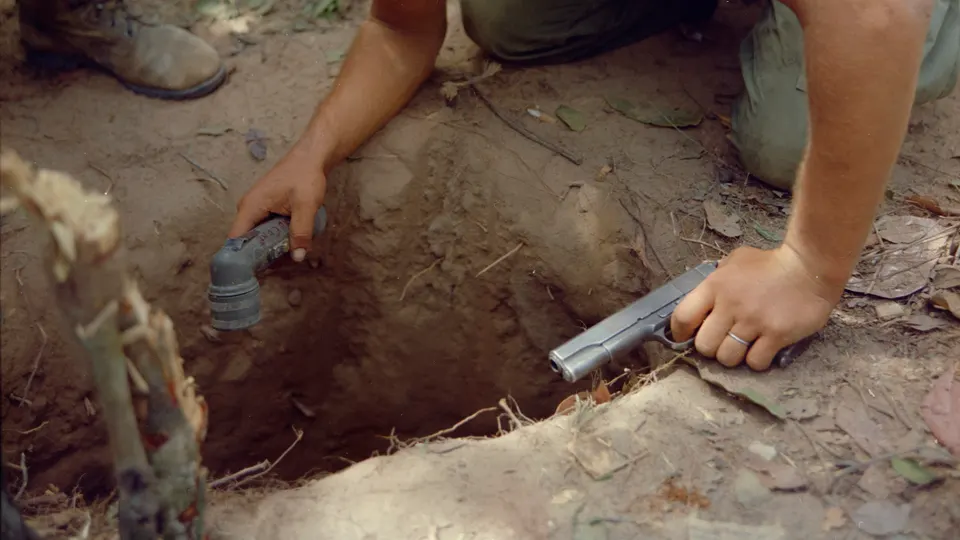
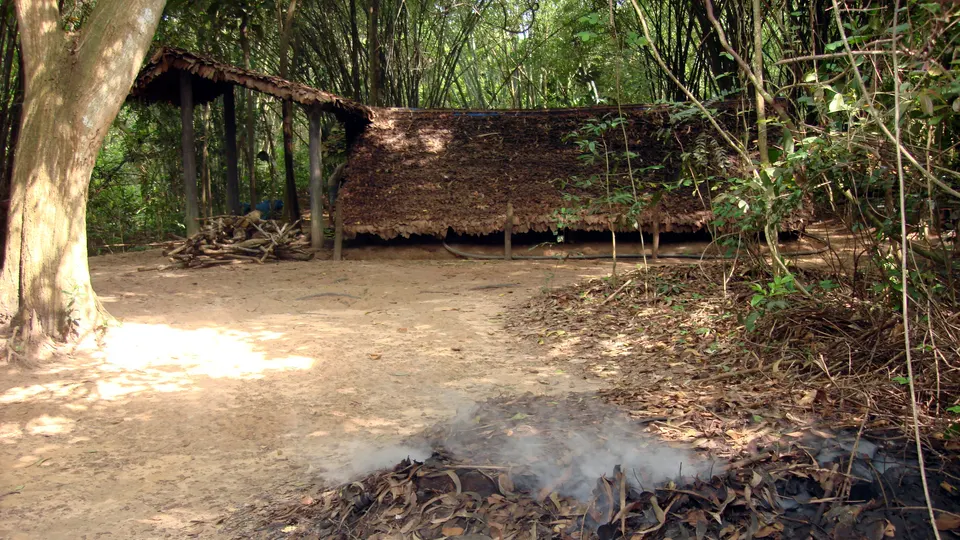
The place made the tunnels possible. Cu Chi lies on low hills and forest between the Saigon and Vam Co Dong rivers, and its lateritic soil, the UNESCO description notes, was well suited to digging. It was also within reach of Saigon. From 1961, when the Saigon–Gia Dinh Military Region command chose Cu Chi as an operating area, the tunnels were widened and reinforced into a fortified network across the district, which the UNESCO description calls an “underground village”. Leaders and local forces lived and worked underground; some sections had two or three levels, with stairs down to secret vaults and many exits to the Saigon River. Some passages were so narrow that people had to turn sideways.
The network became a target for American and allied forces. Vietnam News describes water pumped into the tunnels, dogs, bombing and chemical defoliants; the large operations Crimp (1966) and Cedar Falls (1967) were aimed at the area. American units trained small-statured soldiers, nicknamed “tunnel rats”, to search the passages, and the network served as a staging area for attacks on Saigon, including during the 1968 Tet Offensive, History.com notes. The tunnels stayed in use until 1975.
How long are they? No one figure is agreed. Vietnamese press reports usually say “more than 200 km”, many travel guides and the military region’s newspaper say about 250 km, and the 2026 UNESCO description says current studies put the whole system at “several hundred kilometres”. What you can visit is far smaller: the preserved sections at Ben Duoc and Ben Dinh together measure about 4 km.
Ben Duoc or Ben Dinh: which site should you visit?
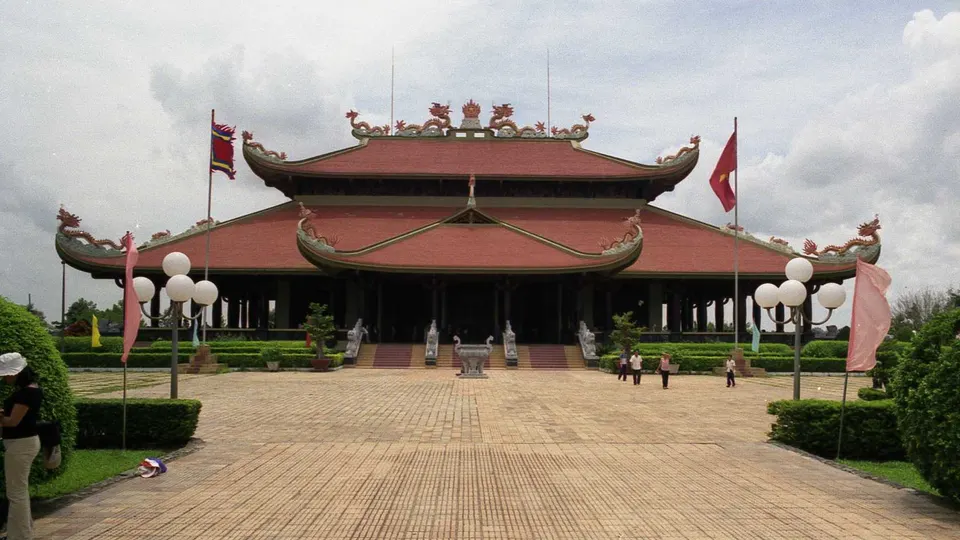
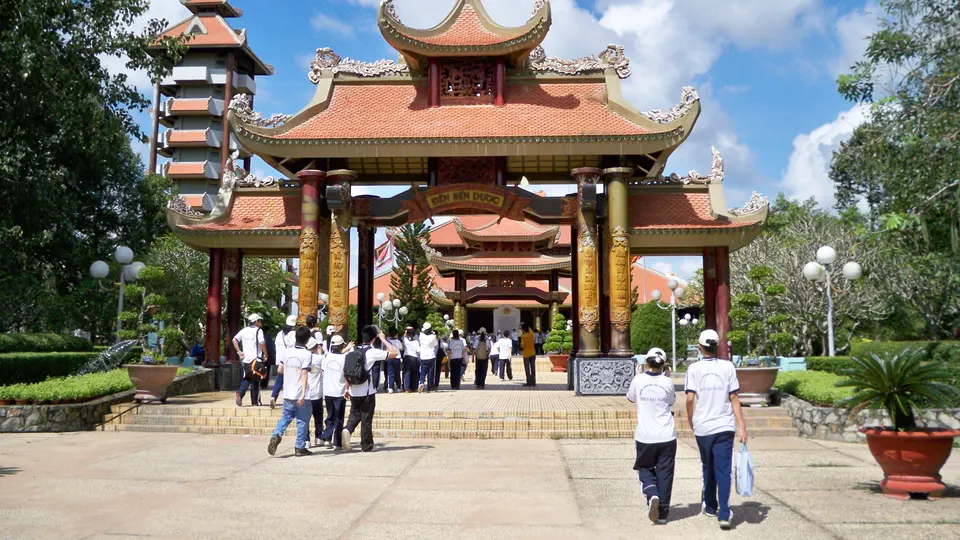
Both sites belong to the same relic and show the same kind of tunnels, traps and bunkers. The difference is who used them and what has been built around them. Ben Dinh was the base of the Cu Chi district Party committee from 1961 to 1975; Ben Duoc was the base of the Saigon–Gia Dinh regional Party committee and military command. VnExpress puts the two about 13 km apart and describes the memorial temple and nine-storey memorial tower at Ben Duoc (VnExpress).
| Ben Dinh | Ben Duoc | |
|---|---|---|
| Wartime role | Cu Chi district Party committee base, 1961–1975 | Saigon–Gia Dinh regional Party committee and military command base |
| Commune today | Nhuan Duc | An Nhon Tay (formerly Phu My Hung) |
| Site area (UNESCO) | About 6.7 ha, along Provincial Road 15 and the Saigon River | About 8.4 ha, between the Saigon River and the Thai Thai stream |
| Tunnel levels | Three, the first about 3.4 m down | Three, at about 4 m, 6 m and 7–10 m |
| Also there | A combat mound and small round ventilation holes that still show traces of bamboo pipes | Ben Duoc Memorial Temple and its memorial tower |
| Feel | The busier site, according to Vietnam Airlines’ guide | Less touristy, according to the same guide; Rough Guides finds it more spacious, with fewer foreign visitors |
| From the city | The closer of the two, and the one most tours use (Rough Guides) | About 15 km further on (Rough Guides); where public bus 79 goes |
| Ticket, foreign visitor | 110,000 VND (Vietnam Airlines, undated) | 85,000 VND (VnExpress, July 2026); Vietnam Airlines lists 90,000 VND |
| On site | Crawl section of about 140 m, 10–15 minutes (Rough Guides) | Start at the memorial temple, then an electric shuttle of about 1 km to the tunnel area (VnExpress, 2026) |
Common vs exception: Ben Dinh is where the crowds are. If you want fewer people and time for the memorial, choose Ben Duoc, and check which of the two sites a tour actually visits before you book.
What will you actually see and do?
A visit is a guided walk along forest paths between the tunnel entrances. People’s Army Newspaper describes the usual programme: guides showing a camouflaged entrance barely wide enough for a pair of shoulders, statues of Cu Chi fighters, weapons, an underground spike trap, and a taste of the food the fighters ate (People’s Army Newspaper). At Ben Dinh, the UNESCO description adds, small round ventilation holes still show traces of the bamboo pipes that once carried air below. Underground, the network held dining and meeting rooms, infirmaries for the wounded, food stores, wells and cooking areas, the UNESCO description notes. Vietnam Airlines’ guide says a short documentary is usually shown before you go in; at Ben Duoc, VnExpress describes a recreated “liberated zone” of 1961–1972 with a sand-table model, a 3D film and hands-on rural activities.
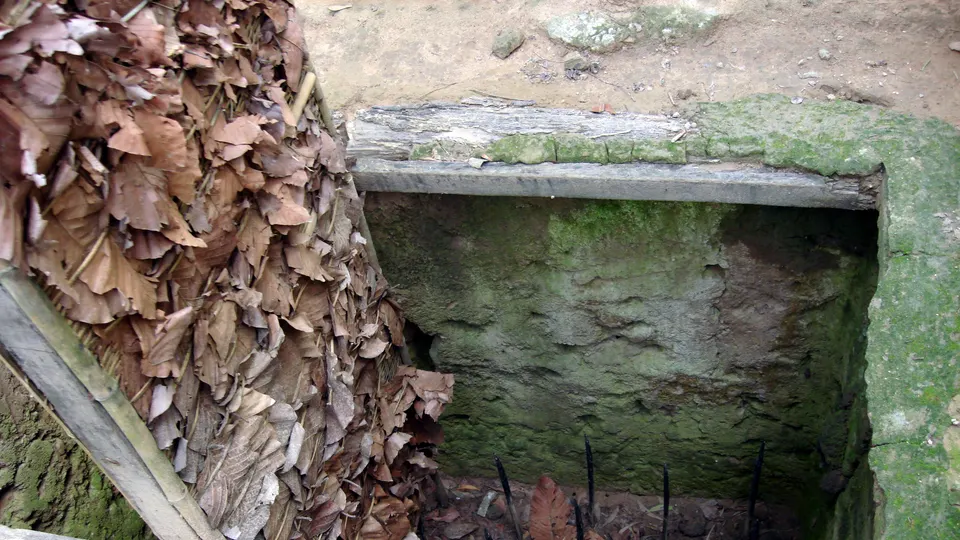
Then comes the part most people remember: a crawl through a short stretch of tunnel. Be clear about what this is. Most visitors use sections that have been widened for them; the original passages are much tighter, and at Ben Duoc the UNESCO description gives the first level as just 62 cm wide and 104 cm high. VnExpress International notes that braver visitors can try a small section in its original form. Either way you crawl on hands and knees in heat and dust.
The food you will be offered is usually steamed cassava (khoai mi (mì)), the root that kept people alive in the war years. VnExpress describes it steamed with coconut milk and dipped in crushed peanuts. Vietnam Airlines’ guide suggests not eating it on an empty stomach and minding the peanuts if you have an allergy. For a proper meal, most visitors eat back in the city; see our food hub for southern dishes worth seeking out.
Tradition vs today: for older Vietnamese visitors and veterans the tunnels are a place of memory. For a younger generation they have become a history day out: after the 2025 film Địa đạo: Mặt trời trong bóng tối (literally “Tunnels: the sun in the dark”), VietNamNet reported tour operators selling out Cu Chi tours to young domestic travellers.
After dark. The relic site also runs a night programme, Trang chien (Trăng chiến) khu (“War-zone moon”). Launched in August 2023, it first took visitors in March 2024, from 6 pm to 8:40 pm, with a sand-table model and 3D film of Operation Cedar Falls and staged scenes of villagers digging tunnels, weaving and pounding rice by moonlight, Saigon Giai Phong (Sài Gòn Giải Phóng) reported. In April 2025 Vietnam News said it runs only on the 15th day of each lunar month, the full-moon night, and draws nearly 200 visitors a night; a 2024 report by Vietnam Economic News gave the price as 399,000 VND per person, and VnExpress still quoted 399,000 VND in July 2026, with the film from 6 pm and the performance from 7:30 to 8:30 pm. Check dates and price with the relic site before planning around it.
What do the special relic status and UNESCO listing mean?
Vietnam ranks its heritage in tiers, and “special national relic” (di tích quốc gia đặc biệt) is the top one. The Cu Chi Tunnels received it under Decision 2367/QD (QĐ)-TTg of 23 December 2015; some reports date it to 2016, when the certificate was handed over. Tuoi Tre (Tuổi Trẻ) counts it among only four special national relics in the expanded Ho Chi Minh City.
The UNESCO bid has been building since 2020, when the city asked the Ministry of National Defence for its approval to prepare a dossier. On 15 July 2026 the Viet Nam National Commission for UNESCO submitted the Cu Chi Tunnels to the World Heritage Tentative List, proposing about 15.1 ha at Ben Duoc and Ben Dinh under criteria (iv) and (vi) (UNESCO). A tentative listing is an inventory of sites a country intends to nominate; it is not World Heritage status, and a full nomination dossier and a decision by the World Heritage Committee would still have to follow. If the site is eventually inscribed, Vietnam News notes, it would be the first World Heritage Site in southern Vietnam.
How do you get there from central Ho Chi Minh City?
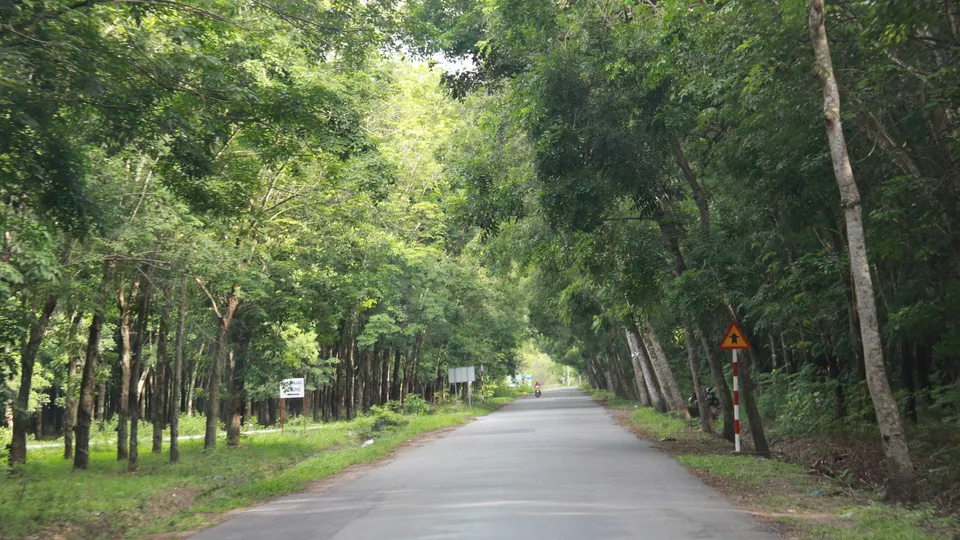
Most visitors go by road: the tunnels are about 70 km from the city centre, roughly 1.5 to 2 hours each way by car, taxi or tour bus via National Route 22 and Provincial Road 15, according to Vietnam Airlines’ guide. The public bus (13, then 79) is the cheap, slow option and goes to Ben Duoc; speedboat tours on the Saigon River land at Ben Dinh. Because the way you travel often decides which site you see, our guide to getting to Cu Chi by tour, speedboat or public bus compares the options with times, fares and booking tips.
Many tours pair the tunnels with the Cao Dai (Cao Đài) Holy See in Tay Ninh, further north-west, in one long day. If you have another free day, compare this with a trip into the Mekong Delta or to the coast at Vung Tau, or see our guide to day trips from Saigon. With a week in the south, our one-week itinerary gives the tunnels a day between Saigon and the Mekong Delta; for more ideas across the country, see our travel hub.
How much are tickets, and when is it open?
Tickets are cheap, but published prices do not agree, so treat these as a guide. On 10 July 2026 VnExpress gave the entrance fee at Ben Duoc as 35,000 VND for Vietnamese and 85,000 VND for foreign visitors (VnExpress). Vietnam Airlines’ undated guide lists 110,000 VND at Ben Dinh and 90,000 VND at Ben Duoc, with the temple included in the Ben Duoc ticket, and opening hours of 7 am to 5 pm daily.
| Item | Price | Source and date |
|---|---|---|
| Ben Duoc entrance | 35,000 VND Vietnamese / 85,000 VND foreign | VnExpress, July 2026 |
| Ben Dinh entrance | 110,000 VND | Vietnam Airlines, undated |
| Shooting range | 50,000–60,000 VND per bullet | Vietnam Airlines, undated |
| Night tour (full-moon nights) | 399,000 VND | VnExpress, July 2026 |
| High-tech agriculture park near Ben Duoc | 35,000 VND | VnExpress, July 2026 |
Group tours usually include admission and a guide, but not lunch, Rough Guides notes, so check what your tour covers before paying again at the gate. Because the site closes at 5 pm, set off early if you travel independently.
What does a realistic half-day look like?
A half-day trip is mostly travel: on a typical tour that leaves the city at 8 am, Rough Guides says half-day trips are back around 3 pm, while trips that add the Cao Dai temple run until about 6 pm (Rough Guides). That leaves roughly two to three hours at the site. A plan built from the steps VnExpress describes at Ben Duoc:
- Leave early. Set off by about 7:30 am by car or take an 8 am tour; the road takes roughly 1.5 to 2 hours.
- Memorial temple first (Ben Duoc). Start at the Ben Duoc Memorial Temple, then take the electric shuttle about 1 km to the tunnel area.
- Guided tunnel walk. Follow the guide past entrances, traps and underground rooms; decide on the spot how far to crawl. At Ben Dinh the main crawl section is about 140 m and takes 10 to 15 minutes, according to Rough Guides.
- Liberated-zone area. See the sand-table model and 3D film, and taste the steamed cassava.
- Optional extras. The shooting range, a zipline or the agriculture park, all paid separately.
- Back by mid-afternoon. Leave before the 5 pm closing; the drive back takes 1.5 to 2 hours depending on traffic.
At Ben Dinh the order differs (there is no temple), but the core of guided walk, crawl and cassava is the same. Arriving before about 9 am or after about 2 pm, as Vietnam Airlines suggests, avoids the biggest groups.
Is it for you? Heat, tight spaces and the shooting range
The tunnels are not for everyone, and you can enjoy the visit without going underground. Vietnam Airlines’ guide warns that they are hot and cramped and suggests starting with a short section of about 20 metres if you are unsure. A South China Morning Post review quoted by VnExpress International called them “definitely not for claustrophobia sufferers or anyone in white clothing”. Wear clothes you do not mind getting dirty, closed shoes and insect repellent, and carry water.
Health and access. VnExpress, in its July 2026 guide, says the visitor tunnels are lit but some stretches are so narrow that you have to crouch or crawl close to the ground, and it does not recommend the crawl for people with claustrophobia, asthma or heart conditions. Vietnam Airlines notes that some passages are only 60 to 80 cm wide even after widening. We found no official information on wheelchair access; the visit is a walk on forest paths, and everything except the crawl can be seen above ground.
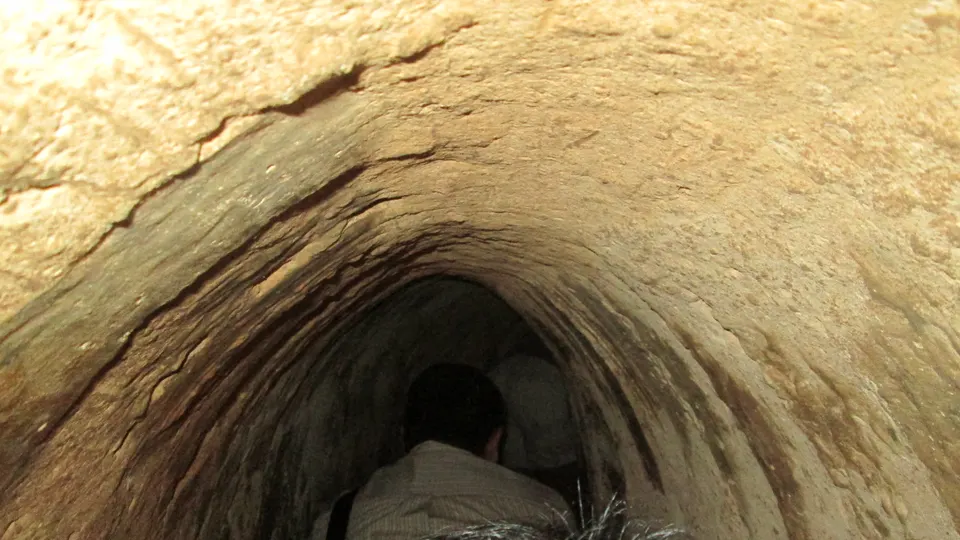
Timing. The dry season, roughly December to April, keeps the paths from turning to mud. Arriving early, before about 9 am, or after about 2 pm avoids the biggest groups and the midday heat.
The shooting range. Near the relic area there is a sports shooting range run under the national defence system, where visitors can pay to fire wartime-type weapons such as the AK-47 or M16 after a safety briefing, at animal-shaped targets in a designated area, according to VnExpress; paintball is offered too. Vietnam Airlines’ guide says it is charged separately, per bullet, and hearing protection is provided. Some visitors see it as part of the experience; others find it jarring at a war memorial. It is entirely optional.
A note on perspective. The tunnels are presented from the Vietnamese revolutionary side, as a story of ingenuity and sacrifice, and the guided route reflects that. Reactions differ: some reviewers, quoted by Hanoi Times, find the staged elements “gimmicky” and recommend pairing the trip with Ho Chi Minh City’s War Remnants Museum for a fuller picture.
How do you visit respectfully?
Remember what the ground is: a battlefield and, for many Vietnamese, a place of remembrance. The Ben Duoc Memorial Temple, whose first phase opened on 19 December 1995, honours more than 45,000 fallen fighters (liet si (liệt sĩ)) of the Saigon–Gia Dinh region, and its ceramic wall panels were recognised as the largest ceramic painting in Vietnam in 2005 (Bao Quan khu 7).
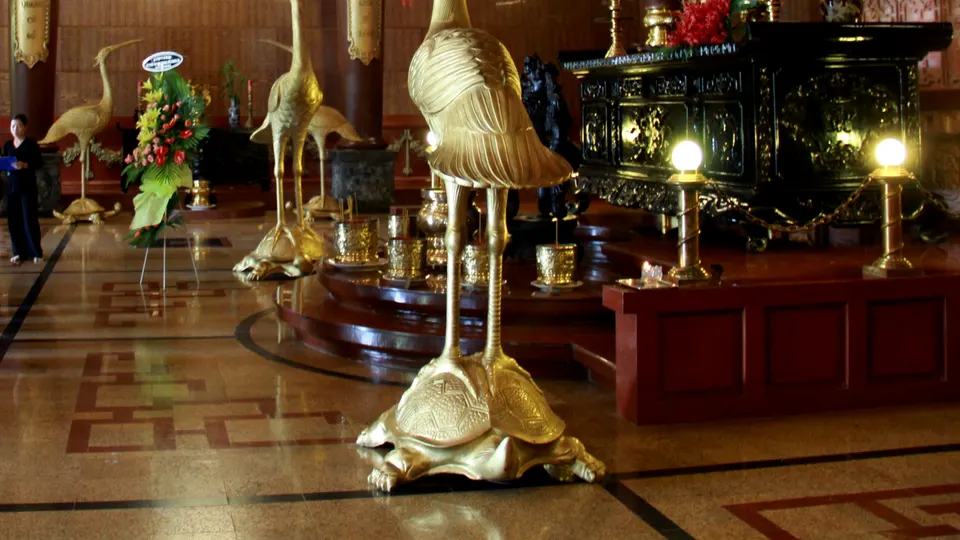
- At the temple, dress as you would for any Vietnamese temple, with shoulders and knees covered, speak quietly and ask before photographing people who are praying or making offerings.
- On the paths, stay with your guide and on marked routes, and do not climb on or into structures that are not part of the visitor route.
- With veterans and older visitors, you may meet people for whom this is personal; follow their lead rather than treating the site as a playground.
- At the range and in photos, keep the tone in mind: posing with weapons next to memorials or graves is likely to offend.
Before you go: pick your site (Ben Dinh for the classic tour, Ben Duoc for fewer people and the temple), check what your tour includes, carry small notes for tickets and extras, start early to beat the heat and the 5 pm closing, and decide in advance whether the crawl and the shooting range are for you.
A verified stop on the way: sugarcane juice on National Route 22
Local favourite
Nước mía Vườn Cau · Quán nước mía Vườn Cau
Ho Chi Minh City · Former Tan Thong Hoi commune (former Cu Chi district), on the road between the city centre and the tunnels
National Route 22 (Quốc lộ 22), Tân Thông Hội
A roadside sugarcane-juice garden that Thanh Nien profiled in December 2023 and VnExpress's July 2026 Cu Chi Tunnels guide suggests as a stop; it is on the main road you take back to the city, not at the tunnel sites.
Order: Durian sugarcane juice (nuoc mia sau rieng) with a plate of steamed cassava (khoai mi hap).
Sources agree on National Route 22 in Tan Thong Hoi but not on a house number, so we leave it out: check the location in a map app before you go.
Recommended by: Thanh Niên (2023), VnExpress (2026) · checked November 2026
Addresses and details can change; check before you go. We do not accept payment for listings.
Frequently asked questions
Should I visit Ben Duoc or Ben Dinh?
Ben Dinh is the site most tours use and is busier; Ben Duoc was the regional military command base, is usually quieter and includes the Ben Duoc Memorial Temple. The two are about 13 km apart, so most visitors pick one.
Are the Cu Chi Tunnels a UNESCO World Heritage Site?
No. Vietnam submitted the Cu Chi Tunnels to UNESCO's Tentative List on 15 July 2026, the first step towards a nomination. A full dossier and a decision by the World Heritage Committee would still have to follow.
Can claustrophobic people visit the Cu Chi Tunnels?
Yes. The forest paths, entrances, traps and exhibits can be seen above ground. Most crawling sections have been widened for visitors, and you can try a short section or skip it entirely.
Is the shooting range compulsory?
No. The shooting range is a separate activity, charged per bullet. You can visit the tunnels without it.
How much is a Cu Chi Tunnels ticket, and how long should I allow?
VnExpress gave the Ben Duoc entrance fee in July 2026 as 35,000 VND for Vietnamese and 85,000 VND for foreign visitors; Vietnam Airlines' undated guide lists 110,000 VND at Ben Dinh and opening hours of 7 am to 5 pm. The shooting range and night tour cost extra. Allow half a day including roughly 1.5 to 2 hours each way by road.
Key sources
- Cẩm nang du lịch địa đạo Củ Chi 2026 từ A-Z · VnExpress, 10 July 2026
- The Cu Chi tunnels · Rough Guides
- Cu Chi Tunnels (Tentative List, ref. 7038, submitted 15/07/2026) · UNESCO World Heritage Centre
- Xin ý kiến lập hồ sơ di tích địa đạo Củ Chi thành Di sản Thế giới · Sài Gòn Giải Phóng, 9 September 2020
- Historic Củ Chi Tunnels site seeks UNESCO World Heritage Site recognition · Việt Nam News, 28 February 2021
- 48 giờ ở 'đất thép' Củ Chi · VnExpress, 11 April 2025
- Kỳ quan đất thép Củ Chi · Báo Quân khu 7, 20 December 2020
- Cu Chi Tunnels: a legendary land · People's Army Newspaper (Quân đội Nhân dân)
All 21 sources and further reading
- Cu Chi Tunnels · History.com, updated 28 May 2025
- Lưu dấu di sản · Sài Gòn Giải Phóng, 16 February 2021
- Bảo tồn, phát huy giá trị di sản ở 'siêu đô thị' TP.HCM · Tuổi Trẻ, 25 November 2025
- Vietnam's Cu Chi Tunnels a top underground destination · VnExpress International, 15 September 2018
- Cu Chi Tunnels travel guide · Vietnam Airlines
- Phim Địa đạo gây sốt, khách đổ xô đặt tour khám phá Củ Chi · VietNamNet, 11 April 2025
- Cu Chi shines in SCMP's best tunnel tours in the world · Hanoi Times
- HCM City prepares to operate new wards, communes · Việt Nam News, 6 June 2025
- Du lịch khắp TP.HCM với tuyến xe buýt 0 đồng · Znews, 11 July 2026
- Khai trương tuyến tàu du lịch đường sông Bạch Đằng - Địa đạo Củ Chi · Sài Gòn Giải Phóng, 10 July 2020
- Gần 100 du khách tham quan tour đêm 'Trăng chiến khu' · Sài Gòn Giải Phóng, 18 March 2024
- War movie draws visitors to Củ Chi Tunnels historic site · Việt Nam News, 18 April 2025
- Củ Chi Tunnels open more night tours · Vietnam Economic News (Công Thương), 18 April 2024
Keep exploring
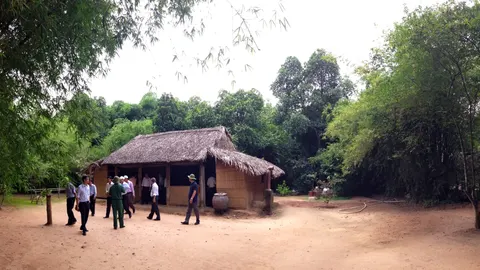 South Vietnam · Travel How to Get to Cu Chi Tunnels: Tour, Speedboat or Bus How to get from Saigon to the Cu Chi tunnels: tour, speedboat to Ben Dinh, buses 13 and 79 to Ben Duoc, or Grab, with dated fares and 2026 bus rules.
 South Vietnam · Travel Ho Chi Minh City (Saigon): How Many Days and What to See Ho Chi Minh City (Saigon) explained: the 2025 merger and new wards, how many days to stay, Metro Line 1, Long Thanh airport, palace and museum tickets.
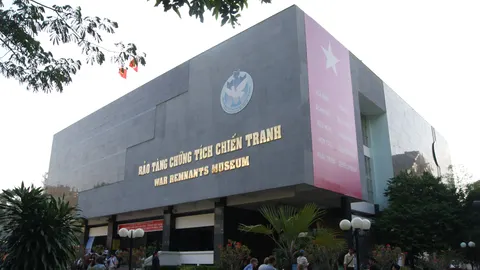 South Vietnam · Travel War Remnants Museum Saigon: What to Expect and How Long War Remnants Museum in Saigon: the official route floor by floor, 2–3 hours, whether to bring children, 60,000 dong tickets since October 2026, a half-day plan.
 South Vietnam · Travel Mekong Delta: Which Area to Visit and Where to Base Which part of the Mekong Delta to visit and where to base: Can Tho, Ben Tre or Chau Doc, Cai Rang market hours, seasons, where to eat, new province names.