All three regions · Travel
Vietnam in One Week: Which Region to Pick, 3 Routes
7 days in Vietnam? Pick North, Centre or South. Day-by-day routes, transfer times, 2026 train and ticket prices, and a table to choose by month and airport.

Yes, one week is enough for Vietnam if you pick one region, the North, the Centre or the South, and fly into that region’s own airport instead of crossing the whole country. Which one to choose depends mostly on your travel month and on whether you want karst scenery, imperial history or river life. As of November 2026, travellers to the South should also check their airport: the new Long Thanh airport near Ho Chi Minh City is expected to open on 24 December 2026, VietnamPlus reported on 30 October 2026.
Seven days is a good length for Vietnam if you treat it as a week in one region rather than a sample of the whole country. Each of the three regions has a capital-sized gateway airport, two or three places that belong together, and transfers short enough to leave most of each day for seeing things. This page gives three complete day-by-day plans, one for the North, one for the Centre and one for the South, and a table to help you pick between them by month, pace and arrival airport.
The plans sequence places that have their own detailed guides on this site, so follow the links for what to see at each stop. For seasons, transport and other planning topics, start at our Vietnam travel planning hub.
North, Centre or South at a glance: which week suits you?
Read across for each route. The months come from the Vietnam National Authority of Tourism (VNAT); the transfer times are the ones quoted in the day-by-day sections below, where the sources are named.
| North | Centre | South | |
|---|---|---|---|
| The week | Hanoi, Ninh Binh (Ninh Bình), Ha Long (Hạ Long) or Lan Ha (Lan Hạ) Bay (or Sa Pa instead of the bay) | Hue (Huế), the Hai Van (Hải Vân) Pass, Hoi An (Hội An), My Son (Mỹ Sơn), Da Nang (Đà Nẵng) | Saigon, the Cu Chi (Củ Chi) Tunnels, the Mekong Delta (Ben Tre (Bến Tre), Can Tho); optional Phu Quoc (Phú Quốc) |
| Fly into | Noi Bai (Hanoi) | Da Nang: 29 km from Hoi An Ancient Town, 98 km from Hue | Tan Son Nhat (Ho Chi Minh City), 8 km from the centre |
| Best months | Ha Long Bay April–June and September–November; Hanoi April–June and September–December | Spring and summer; Hue is cool and rainy September–February, and Hoi An has heavy rain and some floods September–November | Dry December–April; Phu Quoc stormy July–September |
| Pace | Two long road days (Ninh Binh, Ha Long), one night on a boat | Gentlest: short transfers, two bases | One long road day into the delta, a dawn start for the floating market |
| Suits | Limestone karst scenery, the capital’s food and history, a cruise | Imperial history, an old trading town, a scenic pass or train ride, some beach | Big-city energy, war history, river life; a beach finish |
| Main risk | Summer storms can stop boats in the bay | Autumn rain and floods on the central coast | Wet-season afternoon showers from May to November |
How to decide. If your dates are fixed, start from the “best months” row; our guide to the best time to visit Vietnam by region explains each season in detail. If your dates are flexible, choose by interest, then go in that region’s good season. If you are flying in on a cheap fare to one airport, the route that starts there saves you a domestic flight.
Why not see all of Vietnam in seven days?
Because the country is long and the time goes on transfers. The North–South railway between Hanoi and Ho Chi Minh City is 1,726 km long, Nhan Dan (Nhân Dân) reports, and the journey from Hanoi takes more than 30 hours (VOV). That is a wonderful trip in itself, but it uses up a seventh of a one-week holiday.
Flying is quicker but not quick. Vietnam Airlines gives an average flight time of about 2 hours 5 minutes between Ho Chi Minh City and Hanoi, a distance of over 1,700 km. Add the ground time: VNAT says Noi Bai airport is about 27 km from downtown Hanoi and usually about an hour from the city centre, and that the 8 km from Tan Son Nhat to central Ho Chi Minh City can take 50 minutes or more in traffic. With check-in and waiting, each hop between regions costs most of a day. A seven-day trip that tries to cover North, Centre and South needs at least two such hops, which leaves roughly four days for actual sightseeing.
The seasons are the second problem. The regions do not share one calendar: when Ha Long Bay is in its autumn best, Hoi An is in its wettest months, and when the South is dry in winter, Hanoi and Sa Pa are cool and misty. A whole-country week almost always puts one region in its off season. If you have two weeks or more, a north-to-south route such as our two-week Vietnam itinerary makes sense; with one, choose a region and see it properly.
Seven days in the North: Hanoi, Ninh Binh and Ha Long Bay
The northern week is about limestone: the karst towers of Ninh Binh on land and the same kind of landscape drowned by the sea at Ha Long and Lan Ha Bay, with Hanoi as the base at both ends. Fly into Noi Bai; there is no need to change hotels more than three times.

- Day 1: Arrive in Hanoi. Settle into the Old Quarter and walk around Hoan Kiem (Hoàn Kiếm) Lake in the evening.
- Day 2: Hanoi. The Temple of Literature, the Imperial Citadel and the Ba Dinh (Ba Đình) area in the morning; food in the Old Quarter later.
- Day 3: To Ninh Binh. Ninh Binh (since July 2025 also covering the former Ha Nam (Hà Nam) and Nam Dinh (Nam Định) provinces) is about 100 km from Hanoi, and VNAT calls it “perfect for a weekend stopover” (VNAT). Visit the old capital of Hoa Lu (Hoa Lư), then take the Tam Coc (Tam Cốc) boat, a round trip of about two hours. Stay the night, so you can be on the water early or late the next day.
- Day 4: Trang An (Tràng An), back to Hanoi. Trang An’s three boat routes take about two to four hours, according to VNAT, and it lies about 20 minutes from Tam Coc. Return to Hanoi in the late afternoon.
- Day 5: To Ha Long Bay or Lan Ha Bay. Sources give different road times from Hanoi: Vietnam Airlines’ travel guide says about 165 km and 2.5–3 hours by private car (3–3.5 hours by shuttle or limousine), while the bay’s official information site gives about 1.5 hours via the Hanoi–Hai Phong (Hải Phòng) expressway. Board a boat for one night. Lan Ha Bay, off Cat Ba (Cát Bà) island in Hai Phong, is the quieter alternative; our Ha Long Bay or Lan Ha Bay guide explains how to choose.
- Day 6: Morning on the bay, back to Hanoi. Check your boat’s return time when you book, and spend the evening on Hanoi’s street food.
- Day 7: Hanoi and departure. West Lake, a museum or a last walk, then the drive to Noi Bai; allow about an hour.
The Sa Pa variant. If you prefer mountains and rice terraces to a cruise, swap days 5–7. VNAT suggests the night train or the expressway from Hanoi to Lao Cai (Lào Cai), then a short transfer up to the town; VnExpress put the road trip at 3.5 to 4 hours on the Hanoi–Lao Cai expressway, with Sa Pa nearly 40 km beyond Lao Cai city. After Ninh Binh, travel up from Hanoi on the night of day 4 by train or early on day 5 by road, spend days 5 and 6 in Sa Pa with a night in a valley homestay, and return to Hanoi on day 7 for an evening or next-morning flight. This gives Sa Pa two nights, the minimum our Sa Pa guide recommends; if you want a third, make Ninh Binh a day trip. For a gentler, closer taste of the hills, one or two nights in a Thai stilt-house homestay in Mai Chau, southwest of Hanoi, can take the place of the bay instead.
Seven days in the Centre: Hue, the Hai Van Pass, Hoi An and My Son
The central week has the shortest transfers of the three and the most history per kilometre: the former imperial capital at Hue, the Hai Van mountain pass, the old trading port of Hoi An and the Cham temple towers of My Son. Fly into Da Nang, which VNAT places 29 km from Hoi An Ancient Town and 98 km from Hue, and use two bases: Hue, then Hoi An.

- Day 1: Arrive in Da Nang, go north to Hue. Transfer by road, or take the afternoon heritage train if your flight lands in time (see day 4).
- Day 2: The Hue Citadel. Allow at least half a day inside the walls of the Imperial City, then walk the streets of the old Citadel. Our Hue guide explains what you are looking at.
- Day 3: The tombs and the Perfume River. Thien Mu (Thiên Mụ) Pagoda and two contrasting imperial tombs south of the city make a full day.
- Day 4: Over the Hai Van Pass to Hoi An. Cross by road with a stop at the summit, or take the Hue–Da Nang heritage train along the coast. Tuoi Tre (Tuổi Trẻ) News reported in September 2026 that the train takes about three hours, with departures from Hue at 7:45 am and 2:25 pm and from Da Nang at 7:50 am and 3:00 pm, and that a steam train on the route was being planned (Tuoi Tre News). Timetables change, so check before you book. Our Hai Van Pass guide compares the pass road, the tunnel and the train.
- Day 5: Hoi An. See the old town early in the morning, before the tour groups, and again in the evening when the lanterns are lit. Hoi An has been part of Da Nang city since July 2025, when the former Quang Nam (Quảng Nam) province merged into it.
- Day 6: My Son and the countryside. Leave early for the My Son Sanctuary, inland from Hoi An, while it is cool. Spend the afternoon cycling out to the rice fields or at the beach.
- Day 7: Da Nang and departure. The Marble Mountains or My Khe (Mỹ Khê) beach on the way to the airport.
Shorter on history, longer on beach? Drop day 3 and spend the extra day by the sea in Da Nang or near Hoi An, or, with children, on a theme-park day at Ba Na Hills, whose cable car climbs to the Golden Bridge. If you arrive in Hue by train from the north, run the plan as written and fly out of Da Nang.
Seven days in the South: Saigon, Cu Chi and the Mekong Delta
The southern week mixes Vietnam’s biggest city with the wartime tunnels north-west of it and the waterways of the Mekong Delta to the south-west. Fly into Tan Son Nhat. The delta needs at least one night if you want to see a floating market at dawn.

- Day 1: Arrive in Ho Chi Minh City (Saigon). Stay in the centre and walk the boulevards in the cooler evening.
- Day 2: Saigon. Museums and colonial buildings in the morning, Cho Lon (Chợ Lớn) and its markets in the afternoon, and plenty of eating.
- Day 3: The Cu Chi Tunnels. The tunnels are about 70 km from the city. Vietnam Airlines’ travel guide gives about 1.5 to 2 hours each way by taxi or private car, about 2.5 to 3 hours by bus, and 1 to 1.5 hours by speedboat on the Saigon River, and describes Ben Duoc (Bến Dược) as less touristy than the crowded Ben Dinh (Vietnam Airlines). A morning visit leaves the afternoon free in the city. Our Cu Chi Tunnels guide helps you pick a site.
- Day 4: Into the delta. Drive to Ben Tre (since July 2025 part of Vinh Long (Vĩnh Long) province), about two hours from the city according to VNAT, for a river boat ride, a coconut candy workshop, orchards and a lunch of fried elephant-ear fish rolled in rice paper. Continue to Can Tho, the delta’s main city, for the night: VnExpress gives nearly 170 km and three to four hours by day from Ho Chi Minh City.
- Day 5: Cai Rang (Cái Răng) at dawn, back to Saigon. VnExpress gives 5 to 7 am as the ideal time for the floating market. Take a small boat into the canals afterwards, then return to the city in the afternoon. Our Mekong Delta guide explains what the market is like today and where else to stay.
- Days 6–7: Saigon, or Phu Quoc. Stay in the city for its cafes (cafés) and food, or fly to Phu Quoc for two beach days: Vietnam Airlines gives an average flight of about one hour for the roughly 300 km. Phu Quoc has been part of An Giang province since July 2025 and has its own international airport, so you can often fly home from there. VNAT describes July to September on the island as stormy, so keep the beach finish for the dry months.
Which month suits which week?
Match the route to the month you can travel. Vietnam’s regions have different rainy seasons, so in most months at least one of the three weeks is in good shape. VNAT says March to May offers the best weather countrywide (VNAT); outside spring, the choice matters more.

| Months | North (Hanoi, Ha Long, Sa Pa) | Centre (Hue, Hoi An) | South (Saigon, Mekong) |
|---|---|---|---|
| December–February | Cool and misty; Sa Pa chilly | Hue still cool and rainy | Best: dry season |
| March–May | Good; Sa Pa near-perfect in late April | Good: after Hue’s rainy season | Good: dry until May |
| June–August | Ha Long stormy, hot and humid | Good: outside the rainy months | Wet season, sporadic rain |
| September–November | Best for Ha Long; Hanoi good | Heavy rain, some floods in Hoi An | Wet season until November |
All entries are from VNAT’s weather guide: Hanoi best April–June or September–December; Ha Long April–June or September–November, stormy June–August; Sa Pa chilly and misty December–March; Hue cool, rainy and cloudy September–February; Hoi An “a lot of rain and even a few small floods” September–November; Ho Chi Minh City and the Mekong Delta dry December–April and wet May–November.
What it means for your week. In autumn, the North week is the safe choice and the Centre week the risky one. In the northern winter, go south. In summer the Centre is outside its rainy months, while northern boat trips depend on the weather: when Typhoon Wipha approached in July 2025, Quang Ninh’s authorities suspended all tourist boats in Ha Long Bay, Tuoi Tre News reported, and a cruise company told guests to change their plans or ask for their deposits back. Whatever the month, keep one flexible day in any plan that includes a boat.
Before you book: a practical checklist
Most of what goes wrong on a one-week trip is timing: a flight into the wrong city, a cruise in a storm, a train sold out before a holiday. Check these before you pay.
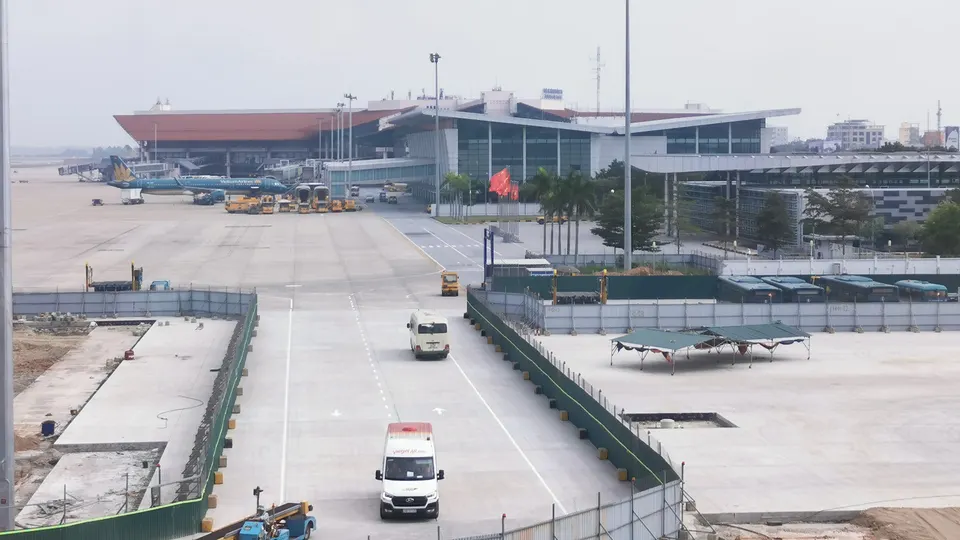
- Fly into your region’s airport. Use Noi Bai for the North, Da Nang for the Centre and Tan Son Nhat for the South, and avoid an extra domestic flight on day 1. In the South, check which airport your ticket uses: the new Long Thanh (Long Thành) International Airport, in Dong Nai (Đồng Nai), is now expected to begin commercial operations at midnight on 24 December 2026, VietnamPlus reported on 30 October 2026, later than the 1 December start first planned. In July 2026 Vietnam Airlines planned to move four international routes there in the first phase (to Beijing, Hong Kong, Guangzhou and Manila), while Tan Son Nhat keeps its domestic network and short- and medium-haul international routes (Tuoi Tre News).
- Check Tet (Tết). The Lunar New Year falls on Saturday 6 February 2027, and the official holiday runs from 4 to 10 February 2027, according to the Ha Tinh (Hà Tĩnh) provincial portal. Transport books out before it and many shops close in the first days.
- Book boats with a weather policy. Ha Long and Lan Ha cruises, the Phu Quoc island boats and the Mekong boat trips all depend on the weather; choose operators who refund or rebook when sailings are suspended.
- Check timetables close to the date. Train times, including the Hue–Da Nang heritage train, change; the times on this page are those reported in 2026.
- Keep the last afternoon free. Plan nothing that could make you miss the flight home, especially after a boat night or a road day.
If you have more than a week, the next step is to add a second region, flying between them; until then, one region seen properly will give you more of Vietnam than three regions seen from airports.
Prices and dates to check (as of November 2026). These change often, so confirm them before you pay. Prices are in Vietnamese dong (VND).
- Hue–Da Nang heritage train: a through ticket costs 207,000 dong on weekdays and 231,000 dong at weekends, for a journey of about three hours, VnEconomy reported in March 2026.
- Ha Long Bay sightseeing fees: VnExpress’s Ha Long guide, updated in June 2026, lists 240,000 to 290,000 dong per person for a day route and 540,000 to 590,000 dong for one night on the bay; on overnight cruises the fee may already be in the price.
- Hoi An Ancient Town ticket: a notice from Hoi An’s heritage management office dated 28 January 2026 lists two tickets, 80,000 dong (the town plus three monuments) and 120,000 dong (the town plus five sites, one of them a museum), with children under 16 exempt.
- Long Thanh airport: expected to open for commercial flights on 24 December 2026, VietnamPlus reported on 30 October 2026.
Frequently asked questions
How much is the Hue to Da Nang heritage train?
A through ticket on the Hue–Da Nang heritage train costs 207,000 dong on weekdays and 231,000 dong at weekends, VnEconomy reported in March 2026. The trip takes about three hours, with departures from Hue at 7:45 am and 2:25 pm and from Da Nang at 7:50 am and 3:00 pm.
How much is the Ha Long Bay sightseeing fee?
VnExpress's Ha Long Bay guide, updated in June 2026, lists 240,000 to 290,000 dong per person for a day route and 540,000 to 590,000 dong for one night on the bay. On an overnight cruise the fee may already be included, so ask the operator what the price covers.
How much is the Hoi An Ancient Town ticket?
Hoi An's heritage management office listed two tickets in January 2026: 80,000 dong for the town plus three monuments, and 120,000 dong for the town plus five sites including a museum. Children under 16 are exempt.
Which airport should I fly into for Saigon once Long Thanh opens?
Tan Son Nhat keeps its full domestic network and its short- and medium-haul international routes, Tuoi Tre News reported in July 2026, so most one-week trips to Saigon and the Mekong Delta still start there. Long Thanh, in Dong Nai, is expected to open on 24 December 2026, VietnamPlus reported in October 2026; check which airport your ticket names.
Key sources
- Announcement of the visiting in Hoi An Ancient Town · Hoi An heritage management office (hoianheritage.danang.gov.vn), 28 January 2026
- Weather and climate in Vietnam · Vietnam National Authority of Tourism (vietnam.travel)
- A guide to boat tours in Ninh Binh · Vietnam National Authority of Tourism (vietnam.travel)
- Vietnam's North-South Railway named one of the world's most scenic routes · VOV, 7 July 2026
- Cu Chi Tunnels · Vietnam Airlines travel guide
- Steam train linking Hue, Da Nang expected to launch in October · Tuổi Trẻ News, 17 September 2026
- Vietnam's Long Thanh airport to launch with 4 int'l routes in December · Tuổi Trẻ News, 31 July 2026
- Tết Nguyên đán 2027, công chức, viên chức được nghỉ 7 ngày liên tục · Hà Tĩnh Provincial Portal (hatinh.gov.vn), 9 October 2026
All 23 sources and further reading
- Long Thanh Airport set to begin commercial operations on December 24 · VietnamPlus, 30 October 2026
- Tuyến tàu du lịch Huế - Đà Nẵng giảm giá vé, tăng ưu đãi dịp lễ · VnEconomy, 12 March 2026
- Cẩm nang du lịch vịnh Hạ Long · VnExpress, 12 July 2023 (updated 12 June 2026)
- A traveller's guide to Vietnam's airports · Vietnam National Authority of Tourism (vietnam.travel)
- Day-tripping in the Mekong Delta · Vietnam National Authority of Tourism (vietnam.travel)
- Sapa · Vietnam National Authority of Tourism (vietnam.travel)
- Tàu Thống Nhất dẫn đầu danh sách những chuyến tàu hỏa đẹp nhất thế giới năm 2025 · Nhân Dân, 19 June 2025
- Flights from Ho Chi Minh City to Hanoi · Vietnam Airlines
- Flights from Ho Chi Minh City to Phu Quoc · Vietnam Airlines
- Hanoi to Halong Bay · Vietnam Airlines travel guide
- Đường đến Hạ Long · Vịnh Hạ Long – Di sản thiên nhiên thế giới (halongbay.com.vn)
- Cẩm nang du lịch Lào Cai · VnExpress, 21 February 2024
- Cẩm nang du lịch Cần Thơ · VnExpress, 31 August 2018 (updated 29 April 2026)
- Ha Long Bay tourist boats banned from departing as typhoon Wipha nears · Tuổi Trẻ News, 20 July 2025
- Names and administrative centers of 34 provinces and centrally-run cities specified · Government of Viet Nam online newspaper (baochinhphu.vn), 15 April 2025
Keep exploring
 North · Central · South · Travel 2-Week Vietnam Itinerary: Route, Flights or Night Train 14 days in Vietnam from Hanoi to the Mekong: day-by-day route, which legs to fly or take by train, train times and fares as of November 2026, and what to drop.
 North Vietnam · Travel Hanoi: How Many Days, What to See and When to Go Hanoi travel guide for 2026: how many days and where to stay, Noi Bai airport, walking-street hours, the new low-emission zone, Train Street and where to eat.
 South Vietnam · Travel Ho Chi Minh City (Saigon): How Many Days and What to See Ho Chi Minh City (Saigon) explained: the 2025 merger and new wards, how many days to stay, Metro Line 1, Long Thanh airport, palace and museum tickets.
 Central Vietnam · Travel Hai Van Pass (Hải Vân): Road, Tunnel or Train, Hue–Da Nang How to cross the Hai Van Pass between Hue and Da Nang by motorbike, car, tunnel or train, why the ridge divides Vietnam, and what to know about Hai Van Quan.