All three regions · Travel
Vietnam Sleeper Bus: Is It Safe, What It Costs, How to Book
Is a Vietnam sleeper bus safe and worth it? Seat-belt fines, city-centre limits and fares as of November 2026, berths vs cabins, and bus vs train or flight.
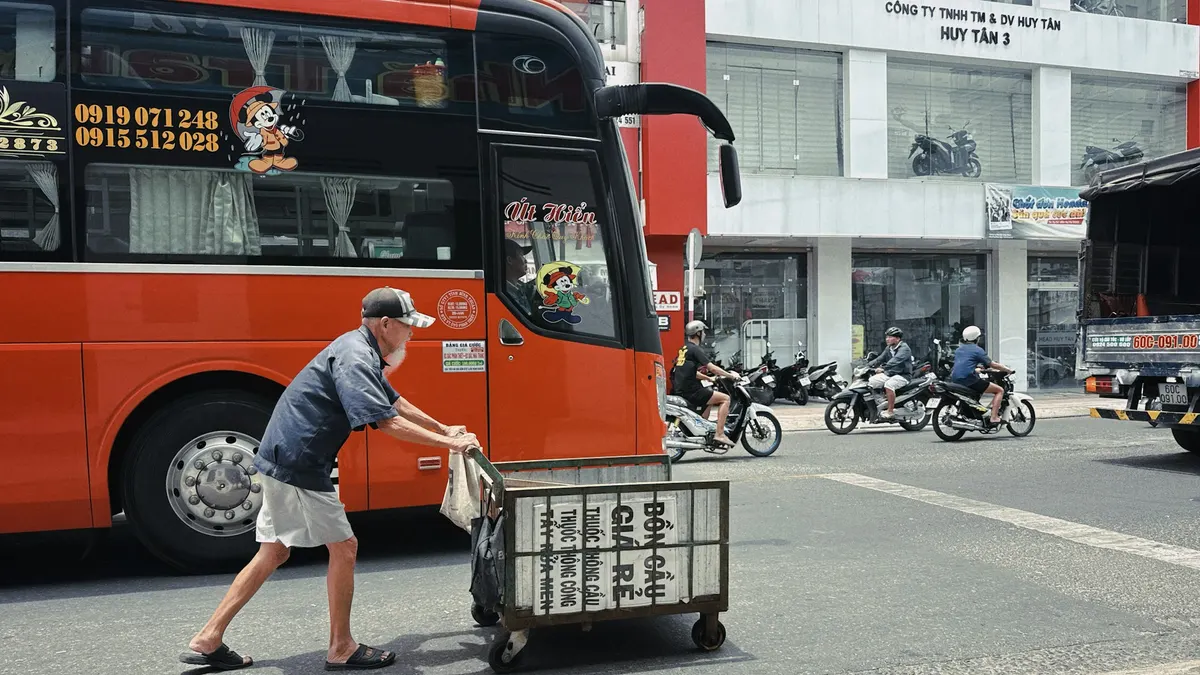
A sleeper bus is the cheapest way to cover a long distance overnight in Vietnam, and it is reasonably safe if you choose an established operator and wear the seat belt, which the law requires of passengers too. As of November 2026, a national safety standard that would tighten the rules for sleeper coaches was still a draft and no ban on mountain roads had been adopted, so the rules on this page still apply (VOV). You lie in a reclining berth on a two-deck coach, usually for 6 to 14 hours, and save a hotel night; it is the budget option rather than the most comfortable one, so on routes with a good night train or a short flight, those usually win.
This page explains the two kinds of sleeper bus, what the ride is actually like, the safety rules that apply in 2026, why big sleepers can no longer drive into central Saigon and, at rush hour, central Hanoi, how to book, and on which routes a sleeper beats the train or a flight. For every way of getting around the country, start with our guide to getting around Vietnam. Fares and times come from dated press and official sources; they change, so check again when you book.
Which should you take? Sleeper bus, limousine, train or flight at a glance
Start with the kind of transport, then check the route. Fares are from the dated sources named in the text; where no recent source gives one, we leave it out.
| Option | Typical cost | Time | Comfort | Who it suits |
|---|---|---|---|---|
| Standard sleeper bus | Saigon–Da Lat about 200,000–450,000 dong (VnExpress, Mar 2026) | One night, about 6–14 h | Single berth for people under about 180 cm; few toilets | Solo budget travellers on routes without a railway |
| Cabin (“VIP”) sleeper | 550,000–750,000 dong per cabin (VnExpress International, Nov 2023) | Same as a standard sleeper | Two-person cabin with curtain or door; short for over about 170 cm | Couples who want privacy at a bus price |
| Limousine van | Check the listing; no recent dated fare in our sources | Day trips of a few hours | Few large seats, no beds | Shorter legs such as Hanoi–Sa Pa by day |
| Night train | Varies by class; Tet 2027 tickets on sale since 5 September 2026 (VOV) | Hanoi–Hue about 12–14 h | Four-berth compartment with a lockable door | Travellers on the Hanoi–Hue–Da Nang line and to Lao Cai |
| Flight | Varies by date | Hanoi–Hue about 1 h; Hanoi–Saigon about 2 h 10 min | Seat only, but short | Anyone short of time or crossing the country |
Route times below are one way and come from the source and date shown.
| Route | Sleeper bus | Train | Flight | Our pick |
|---|---|---|---|---|
| Hanoi ↔ Hue | About 12–14 h (Vietnam Airlines guide) | About 12–14 h overnight (same guide) | About 1 h (same guide) | Night train if you can get a berth; fly if time matters; bus if the train is full or price decides |
| Hanoi ↔ Sa Pa | Overnight sample 22:00 → 04:00; about 5.5–7 h by day (Vietnam Airlines guide) | Night train to Lao Cai, then about 35 km by road | No airport | Night train or a daytime limousine van; the sleeper is the budget choice and arrives before dawn |
| Saigon ↔ Da Lat | 5–6 h, about 200,000–450,000 dong (VnExpress, Mar 2026) | No railway | Short flight to Lien Khuong airport | Sleeper for budget travellers; fly with three days or less |
| Hanoi ↔ Saigon | Not sensible end to end | More than 30 h (VOV, Jul 2026) | About 2 h 10 min non-stop (Vietnam Airlines) | Fly; break overland trips into one-night legs |
How to decide. Take a sleeper bus when the trip is one night long, there is no railway or the night train is sold out, and saving money or a hotel night matters more than sleep. Take the night train on the Hanoi–Hue–Da Nang line and to Lao Cai if you can get a berth: our Reunification Express guide explains classes and booking. Fly when the ground trip would take more than one night or you are short of time.
What kinds of sleeper bus are there?
Vietnamese operators run two main types, and the name on a booking site tells you which. A standard sleeper (“giuong nam”) has 32, 34 or 44 single berths in three rows on two levels, while a cabin sleeper, often sold as “VIP”, “cabin” or “phong” (room), has 22 enclosed cabins, 11 a side on two levels, VnExpress International reported (VnExpress International).
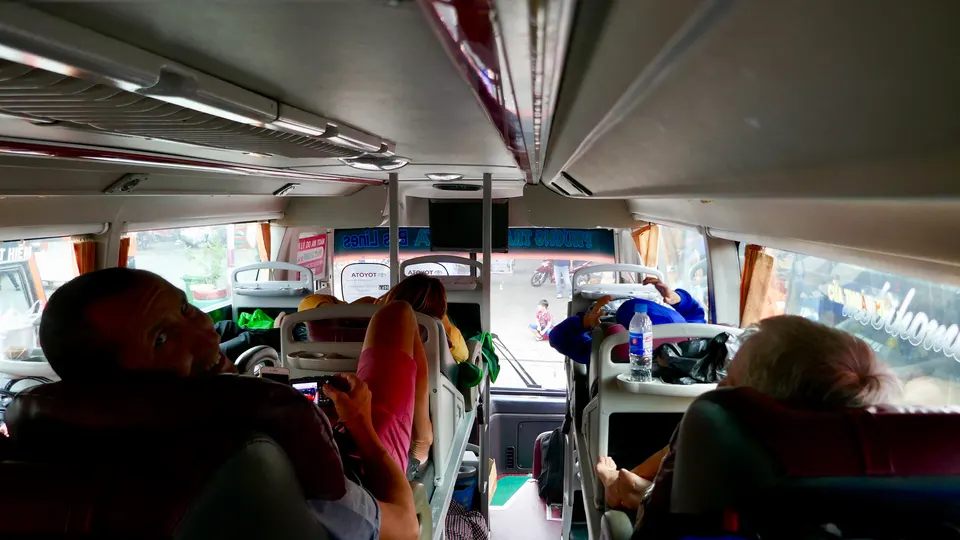
Standard sleeper. Each berth is a reclining seat-bed with a cushion and blanket, curtains on some buses and drinking water; some have USB ports or screens. The berths are designed for travellers under about 180 cm, according to both VnExpress International and Vietnam Airlines’ guide, and taller visitors quoted by VnExpress said they could not stretch their legs. Vietnam Airlines’ guide suggests a lower berth if you get motion sickness.
Cabin sleeper. Each cabin takes two adults up to about 170 cm, VnExpress International says, and typically has a screen, a charging point and a massage mattress; some cabin buses have a toilet, and pick-up and drop-off are often included. A cabin is priced per cabin, so it suits couples. In November 2023 VnExpress International put standard berths at 250,000–300,000 dong and cabins at 550,000–750,000 dong per cabin; Vietnam Airlines’ undated guide gives lower cabin fares, so treat both as rough guides.
What about “limousine”? In Vietnam the word usually means a smaller van or coach with a few large seats on routes of a few hours, not a sleeper, though some cabin sleepers use it in their brand names. The booking platform Vexere lists limousine, sleeper, seater and cabin buses as separate categories, so check the vehicle type before you pay.
What is an overnight sleeper bus ride like?
Expect a long, stop-start night with some rules that surprise first-timers. The two most consistent are about shoes and luggage: you take your shoes off and put them in a plastic bag at the door, and large bags go in the hold while you keep a small bag with you, according to Vietnam Airlines’ sleeper bus guide (Vietnam Airlines).
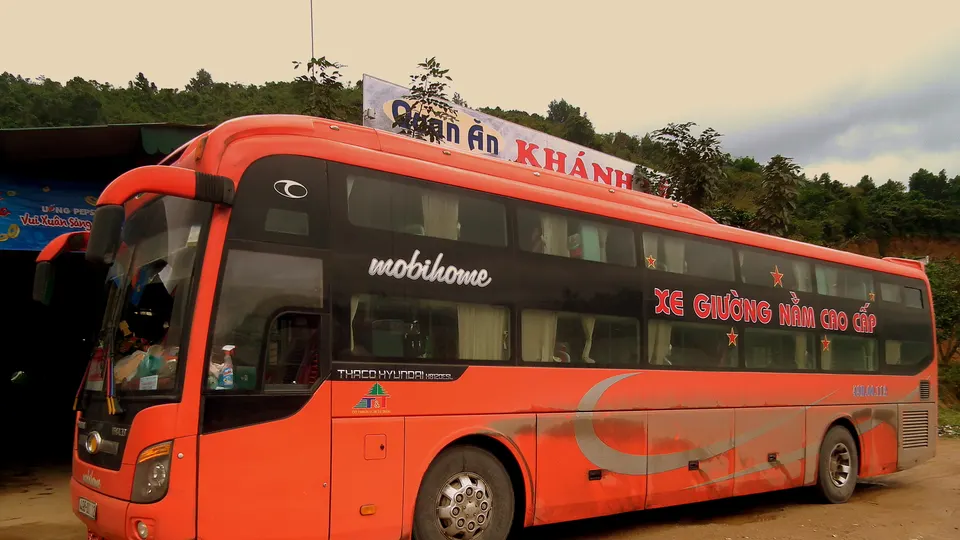
Boarding. A conductor checks your ticket and berth number, hands you a bag for your shoes and stows big luggage underneath. Keep passport, money, phone, medicine and a charger in the bag at your berth.
Toilets and stops. Most standard sleepers have no toilet; only some cabin buses do. Instead the bus stops every few hours at roadside restaurants and service stops, which on the Hanoi–Hue run sell meals such as pho and banh mi, Vietnam Airlines’ Hanoi–Hue guide notes. A British traveller quoted by VnExpress International in 2023 had no toilet on board for a 20-hour Hanoi–Hoi An trip, while another said drivers always stopped for food and toilets.
Unplanned stops and night driving. Buses often stop to pick up passengers and parcels along the way, which makes the trip longer than the timetable; a Canadian traveller told VnExpress the stops were the main drawback. Sleep can be broken: one traveller quoted by VnExpress woke at midnight to a crew member shouting along the aisle. Night buses also arrive very early: one overnight Hanoi–Sa Pa service in Vietnam Airlines’ sample timetable leaves at 22:00 and arrives at 04:00. Plan where you will wait until check-in.
Bring. An eye mask, earplugs, a warm layer for the air conditioning, water and snacks, and a power bank. Vietnam Airlines’ Hanoi–Hue guide advises checking operators’ rules on strong-smelling food and pets before you travel.
Are sleeper buses in Vietnam safe?
They are regulated and widely used, but they carry more risk than a train or a plane, and the government is tightening the rules. Vietnam had 15,288 sleeper coaches in service at the end of 2025, and the Ministry of Construction noted that most serious accidents happen between midnight and morning, when visibility is low and drivers react more slowly (Bao Xay Dung).
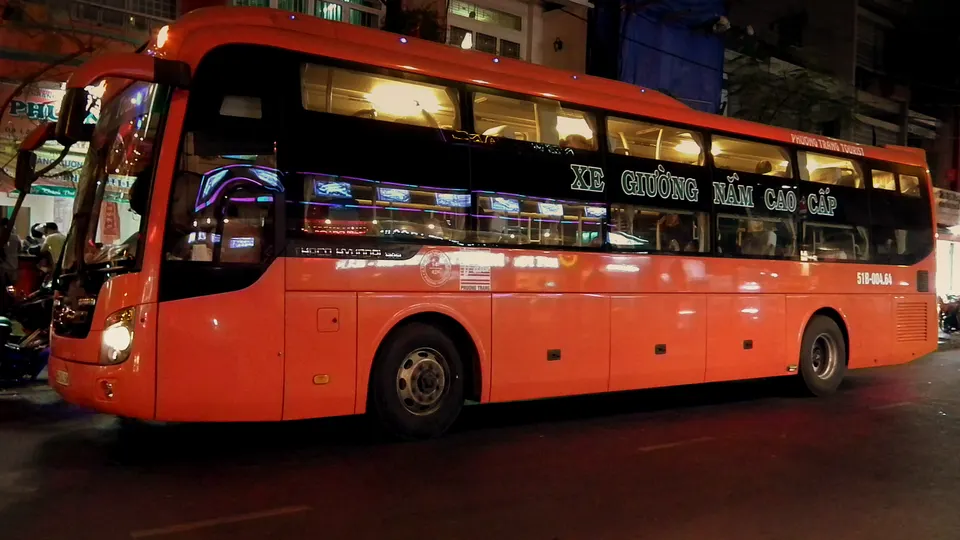
Seat belts are compulsory. Under Decree 168/2024, a passenger who does not fasten an available seat belt while the vehicle is moving can be fined 350,000–400,000 dong, and a driver who carries unbelted passengers 800,000–1,000,000 dong, Bao Lao Cai summarised in August 2025. Berths have belts; use yours even when lying down, though the ministry notes that two-point belts protect a lying passenger less well in a frontal crash.
Driving hours. Under Article 64 of the 2024 Law on Road Traffic Order and Safety, commercial drivers may drive no more than 4 hours without a break, 10 hours a day and 48 hours a week, and coach drivers must rest at least 15 minutes after each 4 hours, VOV explained in June 2026. So a 12-hour night run needs a second driver or a long rest stop.
Mountain roads. In January 2026 a meeting chaired by Deputy Prime Minister Tran Hong Ha ordered a technical standard for double-decker sleepers on mountain roads, and a draft decree proposed banning them from steep Class III and IV mountain roads after a transition period; officials did not yet agree on the details, Bao Thanh Tra reported. In March 2026 police and the construction ministry began test runs on north-western highways 6, 4D (the road up to Sa Pa), 4E and 12. The ministry said a full ban would have a very large impact and needed more assessment, and on 8 November 2026 VOV described a new national vehicle safety standard covering sleeper coaches as still a draft. We found no adopted ban by mid-November 2026. On 18 October 2026 a sleeper bus with 20 passengers caught fire and burned out on Route 4D on its way to Sa Pa; VietnamPlus reported no casualties.
What this means for you. On mountain routes such as Hanoi–Sa Pa, a daytime limousine van or the night train avoids a double-decker on mountain bends at night; our Hanoi to Sa Pa guide compares them. On any route, an established operator and a fastened belt are the simple precautions. Our page on road safety in Vietnam covers the rest of the road picture.
Can sleeper buses drive into Hanoi and Saigon?
Not freely. Both big cities keep large sleeper coaches out of their centres for much of the day, which is why your bus may leave from a coach station on the edge of town or send a smaller vehicle to collect you.
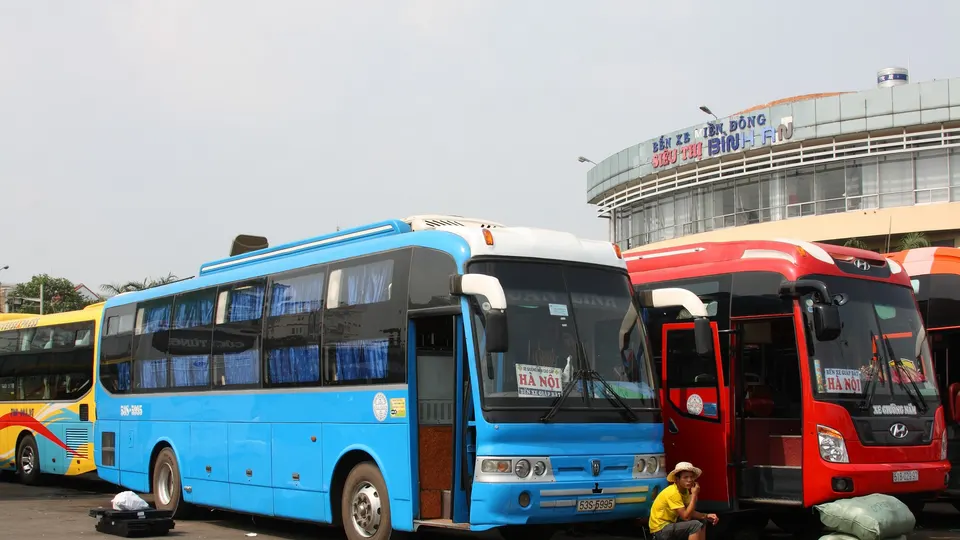
Saigon. Since 10 January 2023 sleeper coaches have been barred from the inner city from 6:00 to 22:00, inside a ring formed by Highway 1, Nguyen Van Linh, Vo Chi Cong, Mai Chi Tho and the Hanoi Highway; they may use the access corridors to the Mien Dong (Miền Đông) and Mien Tay (Miền Tây) coach stations at any time, according to the government’s policy portal. In May 2026 the city consulted on a draft that would also keep coaches of more than 29 seats out of the inner city from 6:00 to 22:00, Tien Phong reported; it was still a draft when reported. Note that Saigon has two eastern stations called Mien Dong, the old one and the new one in Thu Duc, so read the station name on your ticket; our Saigon to Da Lat guide explains which routes use which.
Hanoi. Under a city decision issued in January 2026, sleeper coaches and contract coaches with 28 or more seats may run inside Hanoi’s restricted central zone only outside rush hours unless the city police approve, VnEconomy reported. From 16 March 2026 those rush hours are 6:00–9:00 and 16:00–19:30 (Nhan Dan). Long-distance buses use coach stations such as My Dinh (Mỹ Đình), Giap Bat and Gia Lam, though many operators also gather passengers at their own offices in the city, CafeF reported in October 2026.
What it means for you. If a ticket promises pick-up “in the Old Quarter” or “in District 1”, ask whether a transfer vehicle takes you to the main bus, and allow time for it. Before an early-morning arrival, check where the bus will set you down; on routes into Saigon this may be a station far from the centre, and a ride-hailing app is the easy way on (see our guide to Grab and other apps).
How do you book a sleeper bus in Vietnam?
Book with the operator, at the coach station or through a large booking platform, and get a ticket that names the operator, departure point, berth and plate number. Vietnam Airlines’ guide lists three ways: the operator’s office, its hotline, and online ticket sites such as Vexere.

Operator websites and hotlines. The big operators sell their own tickets. FUTA Bus Lines, better known as Phuong Trang (Phương Trang), sells intercity tickets on its own site and through a booking hotline, 1900 6067, and lists routes to Da Lat, Nha Trang, Da Nang, Hue and Hanoi (site checked November 2026). Operators’ sites are often in Vietnamese only. For one route in detail, see our Saigon to Nha Trang guide.
At the coach station. Ticket counters at official stations sell for the operators based there, and the price is posted. Buy at the operator’s own counter, not from someone who approaches you in the car park.
Booking platforms. Vexere, which calls itself Vietnam’s largest bus ticket app, has an English site and sells limousine, sleeper, seater and cabin tickets for, by its own count, 2,000 to 3,000 operators; it accepts e-wallets and Apple Pay and advertises a 150% refund if the trip does not run, without stating the conditions on its home page (checked November 2026). Hotels and travel agents can also book for you. Whichever you use, save the operator’s phone number.
Watch out for disguised services. Since 10 August 2026, Decree 218/2026 bars “contract” vehicles, which are licensed only for chartered trips, from selling individual seats, running fixed timetables and picking up passengers at their offices or on the street (VOV). A “bus” sold seat by seat from a shopfront that is really a contract van falls into this grey area; a fixed-route operator listed at the station is the safer choice.
When to book. VnExpress International advises booking standard berths 2–3 days ahead for the berth and time you want, and cabins in advance; Vietnam Airlines’ guide adds that peak seasons and popular routes need earlier booking. Around Tet, book much earlier and expect higher fares: for Tet 2026, Saigon’s Mien Dong station let operators to the Central Highlands and the centre raise fares by up to 40% and then up to 60% on the busiest days, Tuoi Tre reported. For Tet 2027, whose peak travel period runs from 29 January to 17 February 2027, rail tickets went on sale on 5 September 2026, VOV reported, so compare the train before you settle for a bus. Our Tet 2027 travel guide covers the next holiday.
Which routes suit a sleeper bus, and when is the train better?
The sleeper bus makes most sense on one-night routes that the railway does not serve or where a flight is awkward, and least sense on the main north–south rail line, where the night train does the same job with more room.
Good sleeper routes.
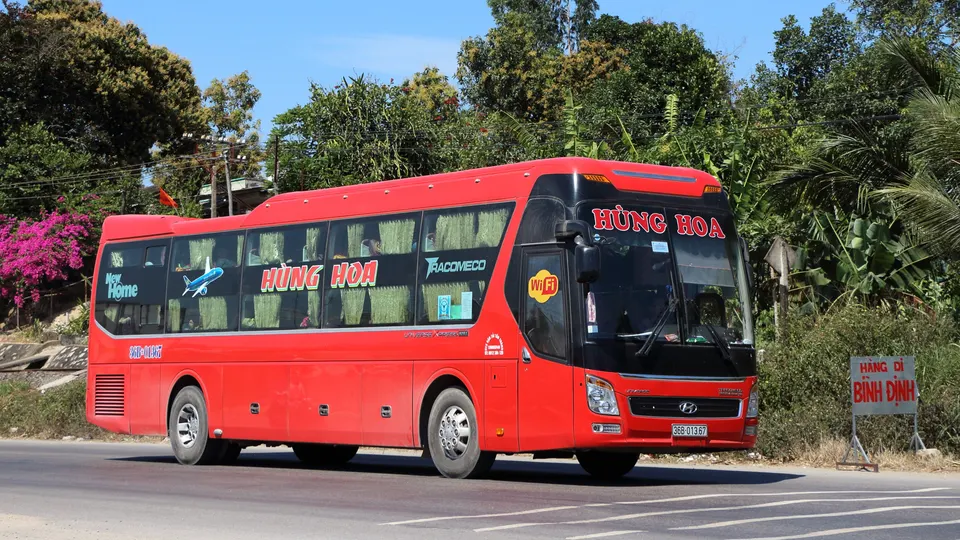
- Saigon to Da Lat. No railway, and the coach is the traditional way up: VnExpress names Phuong Trang, Thanh Buoi, Tan Quang Dung and An Anh Limousine among operators, with fares of about 200,000–450,000 dong and 5–6 hours on the road in March 2026. Night buses cross the passes in the dark, so a day coach is the better view.
- Hanoi to Phong Nha and Dong Hoi. An overnight bus saves a hotel night but delivers you before dawn; our Phong Nha guide compares it with the flight and train.
- Mountain trips in the north, such as Sa Pa and Ha Giang, have many buses, but read the safety section above: a daytime van or the night train to Lao Cai is the lower-risk way to Sa Pa.
Where the train usually wins. Hanoi–Hue and Hanoi–Da Nang take about 12–14 hours by bus or train, but a four-berth train compartment has a lockable door and room to move, VOV notes. Choose the bus there only if the train is full or price is all that matters.
Where to fly. Hanoi–Saigon is more than 30 hours by train and much longer by road, against about 2 hours 10 minutes in the air; break overland trips into one-night legs or fly.
Common mistakes and documented problems
Most bad sleeper bus stories in the Vietnamese press come down to a few avoidable situations: overloaded buses, unlicensed operators and travellers caught out by early arrivals or holiday prices.
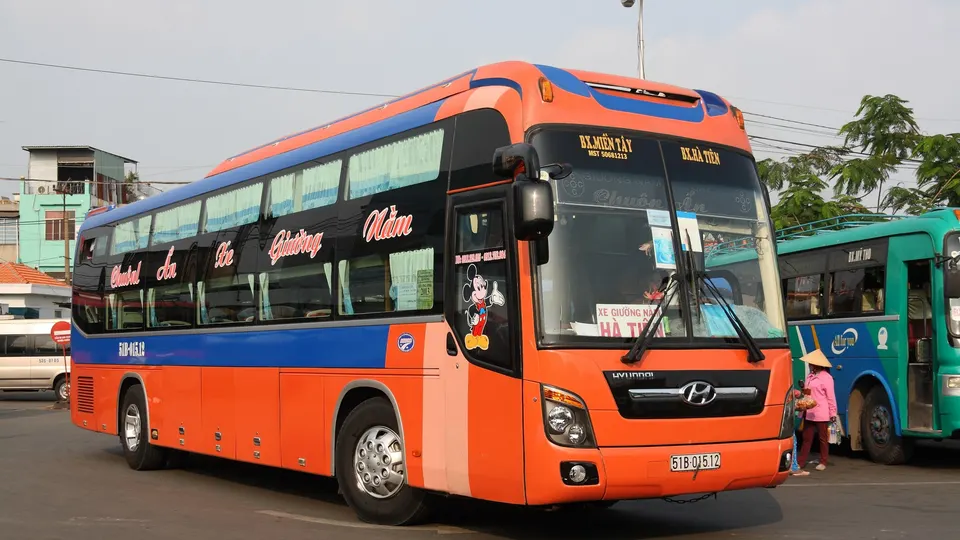
- Boarding an overloaded bus. Highway police regularly stop sleepers carrying extra passengers, especially before Tet. On 3 February 2026 a sleeper licensed for 46 was caught with 53 on the Cam Lam–Nha Trang expressway; the driver was fined 10.5 million dong and the owner 42 million (Tuoi Tre News). In another case on the Vinh Hao–Phan Thiet expressway, PLO reported more than 10 berths with two people each and passengers lying in the aisle. If the bus is clearly overloaded, with people on the floor, wait for the next one.
- Buying from a stranger or an unmarked bus. Hanoi’s main coach stations ran at only 30–36% of capacity in the first nine months of 2026 partly because of unofficial buses and roadside pick-up points (“xe du, ben coc”), CafeF reported. Book through the operator, the station or a platform, and match the plate number on your ticket.
- Not wearing the belt. It is the law for passengers too, and the fine is yours to pay.
- Ignoring the arrival time. Night buses often arrive between about 4 and 6 am. Book your room from the night before, or plan a coffee shop or the station to wait in.
- Travelling at Tet without a booking. Tickets sell out and fares rise by up to 40–60% on some routes, as above.
- Relying on an old guide. City-centre rules, operators and pick-up points changed in 2023, 2026 and again in August 2026 for contract vehicles.
Before you board: a checklist
A few checks before you pay and before you board deal with most of the risks.
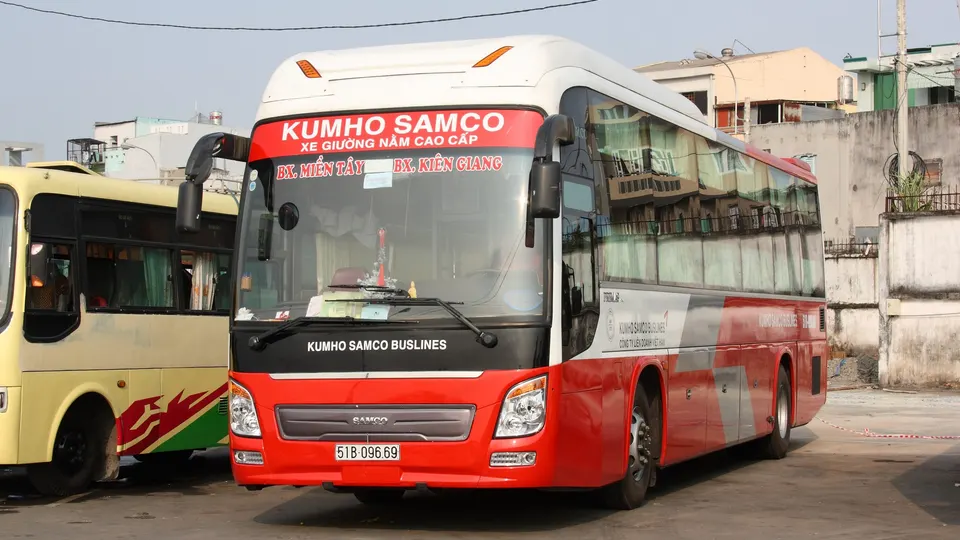
- Pick the right mode first: night train on the rail line if there is a berth, flight for Hanoi–Saigon, sleeper bus for one-night routes without a railway or when price decides.
- Choose the type: a lower berth in a standard sleeper if you are on your own and under about 180 cm, a cabin if you are a couple and do not mind a short bed.
- Book with a named operator on its site, at the station counter or on Vexere, and save the ticket with the plate number, berth, departure point and operator’s phone.
- Check the pick-up and drop-off points: in Saigon by day and in central Hanoi at rush hour, big sleepers cannot reach the centre.
- Pack a small bag for your berth with documents, money, phone, charger, medicine, water and a warm layer; your shoes go in a plastic bag.
- On board, find your berth, fasten the belt, and get off if the bus is clearly overloaded.
- Plan the arrival: book the room from the night before or know where you will wait, and have mobile data for a ride-hailing app (our SIM and eSIM guide explains the options). More planning pages are in our Vietnam travel hub.
Frequently asked questions
Is a sleeper bus or the train better from Hanoi to Hue?
The night train, if you can get a berth. Both take about 12 to 14 hours, but a four-berth train compartment has more room and a lockable door; take the sleeper bus when the train is full or price decides.
How much does a sleeper bus ticket cost in Vietnam?
VnExpress put Saigon to Da Lat at about 200,000 to 450,000 dong in March 2026. In November 2023 VnExpress International quoted 250,000 to 300,000 dong for a standard berth and 550,000 to 750,000 dong per two-person cabin, so check current fares on the operator's site or Vexere.
Is a cabin or VIP sleeper bus worth the extra cost?
For a couple, often yes: a cabin is priced per cabin, holds two people and usually has a curtain or door, a screen and a charging point. It is short for anyone over about 170 cm, so tall travellers may be better off in a standard berth or on the train.
Can a sleeper bus pick me up in Hanoi's Old Quarter or central Saigon?
Not with the big bus itself during the day in Saigon, and not at rush hour in central Hanoi. Operators often collect passengers with smaller transfer vehicles or ask you to come to the coach station, so read the pick-up point on your ticket.
Do I need to book a sleeper bus in advance for Tet 2027?
Yes, book well ahead and expect higher fares: for Tet 2026, Saigon's Mien Dong coach station allowed fare rises of up to 40 to 60 percent on the busiest days. Rail tickets for Tet 2027 went on sale on 5 September 2026, so if you prefer the train, look now.
Key sources
- Vietnam's two sleeper bus options for tourists · VnExpress International, 11 November 2023
- Foreign tourists debate quality of Vietnam sleeper buses · VnExpress International, 8 November 2023
- Complete Guide to Sleeper Buses in Vietnam · Vietnam Airlines travel guide (undated, checked November 2026)
- Hơn 15.000 xe giường nằm hoạt động, Bộ Xây dựng đưa ra loạt giải pháp bảo đảm an toàn · Báo Xây dựng (Ministry of Construction), 11 March 2026
- Nâng chuẩn an toàn xe khách: Bài toán lộ trình và chi phí · VOV, 8 November 2026
- Hà Nội hạn chế xe vận tải, xe chở khách lưu thông nội đô · Nhân Dân, 17 March 2026
- Siết chặt quản lý xe hợp đồng và bổ sung quy định về đón, trả khách · VOV, 23 June 2026
- Sleeper bus driver, owner fined over $2,000 for carrying excess passengers in south-central Vietnam · Tuổi Trẻ News, 3 February 2026
All 26 sources and further reading
- Hanoi to Hue: pros and cons of traveling by flight, train, sleeper bus · Vietnam Airlines travel guide (undated, checked November 2026)
- Xe khách giường nằm 2 tầng không được hoạt động ở miền núi nếu không đáp ứng quy chuẩn · Báo Thanh tra, 27 January 2026
- 8h ngày 5/9 ngành đường sắt mở bán vé tàu Tết Đinh Mùi 2027 · VOV, 4 September 2026
- Quy định tài xế lái xe liên tục 4 giờ phải nghỉ: Những đối tượng nào buộc phải áp dụng · VOV, 27 June 2026
- Cả tài xế lẫn khách đều bị phạt nếu không thắt dây đai an toàn · Báo Lào Cai, 9 August 2025
- Xe khách chở 20 người cháy rụi trong đêm trên đường lên Sa Pa · VietnamPlus (VNA), 19 October 2026
- Hà Nội siết hoạt động của nhiều phương tiện giao thông đường bộ trong giờ cao điểm · VnEconomy, 6 January 2026
- Từ 10/1, TPHCM cấm xe giường nằm vào nội đô · Government of Viet Nam (xaydungchinhsach.chinhphu.vn), 2 January 2023
- TPHCM dự kiến cấm ô tô tải trên 1 tấn, xe khách trên 29 chỗ vào nội đô từ 6-22h · Tiền Phong, 14 May 2026
- Vì sao ba bến xe lớn Hà Nội chỉ chạy hơn 30% công suất? · CafeF, 17 October 2026
- Vexere: bus, limousine, sleeper and cabin tickets · Vexere (official site, checked 14 November 2026)
- FUTA Bus Lines (Phương Trang) online booking · FUTA Bus Lines (official site, checked 14 November 2026)
- 5 cung đường lên Đà Lạt khi sân bay Liên Khương đóng cửa · VnExpress, 6 March 2026
- Phạt 'kịch khung' xe giường nằm nhồi khách nằm chung giường · Pháp Luật TP.HCM (PLO)
- Vé xe Tết TP.HCM về miền Đông tăng không quá 60%, miền Tây không quá 40% · Tuổi Trẻ, 26 January 2026
- Hanoi to Sapa travel guide · Vietnam Airlines travel guide (undated, checked November 2026)
- Vietnam's North-South railway named one of the world's most scenic routes · VOV, 7 July 2026
- Flights from Hanoi to Ho Chi Minh City · Vietnam Airlines (route page, checked November 2026)
Keep exploring
 North · Central · South · Travel Getting Around Vietnam in 2026: Plane, Train, Bus or Grab How to get around Vietnam in 2026: plane vs train vs sleeper bus by route, Grab vs Green SM (Xanh SM), Long Thanh airport and motorbike licence rules.
 North · Central · South · Travel Reunification Express: Which Sections, Class, How to Book Reunification Express train: which Hanoi–Saigon sections to ride or fly, soft vs hard sleeper, booking on dsvn.vn or VNeID, and Tet 2027 trains and fares.
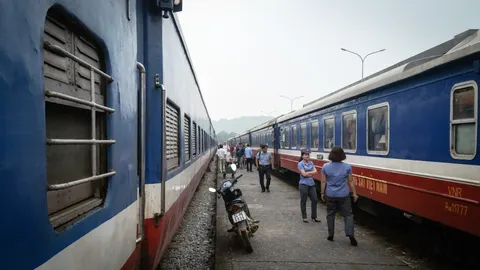 North Vietnam · Travel Hanoi to Sapa: Train, Sleeper Bus or Van – Which to Book? Hanoi to Sapa as of November 2026: night train to Lao Cai, sleeper bus, limousine van or car compared by time and fare, plus the transfer, road works and Tet.
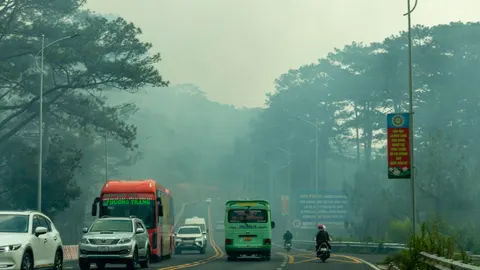 Central Vietnam · Travel Saigon to Da Lat in 2026: Fly, Sleeper Bus or Car? Saigon to Da Lat as of November 2026: flight vs sleeper bus vs limousine vs car on cost, time and effort, with Prenn pass works and expressway status.