Central Vietnam · Travel
Hue Imperial City (Đại Nội): Which Ticket and How Long
Hue Imperial City (Dai Noi) in November 2026: which ticket to buy, single or with the tombs, how long to stay, opening hours, night events and what is restored.
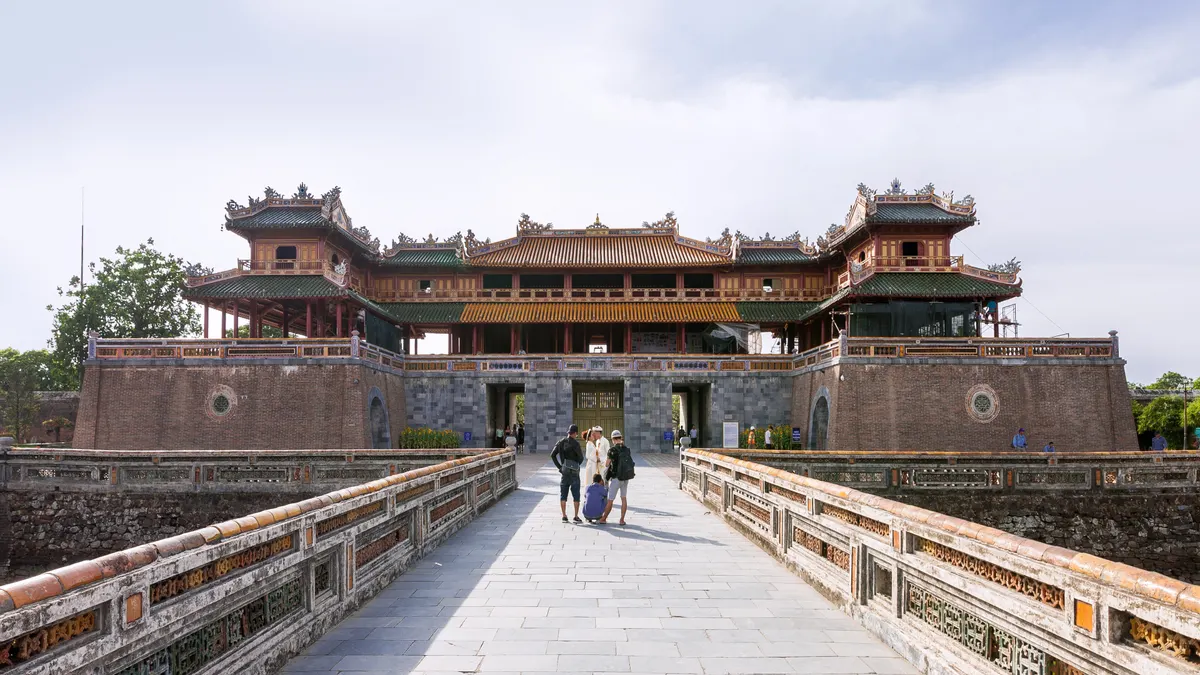
As of November 2026, a single adult ticket to the Hue (Huế) Imperial City, known locally as Dai Noi (Đại Nội), costs 200,000 dong, the price the city kept unchanged for 2026, and a visit to its main buildings takes about two hours; give it half a day if you want to see the quieter corners too. If you are also going to the royal tombs, buy a combined ticket at your first site: 420,000 dong with two tombs, 530,000 dong with the three main tombs, or 600,000 dong for every site over five days.
The Imperial City is the walled royal precinct at the heart of the Nguyen (Nguyễn) dynasty’s Citadel, part of the Complex of Hue Monuments that UNESCO listed in 1993 (UNESCO). Our Hue city guide explains why so much of it is open lawn and what the layout means; this page is the practical companion: which ticket to buy, when it opens, how long to stay, a route through the gates and halls, what has been restored since 2024, and the mistakes that cost visitors time. Hue has been a centrally governed city since 1 January 2025, though signs and older maps may still say Thua Thien Hue (Thừa Thiên Huế).
Hue Imperial City at a glance
| What it is | The walled royal precinct (Hoang Thanh (Hoàng Thành)) inside the Hue Citadel, with the Forbidden Purple City at its core |
| Size | Each side a little over 600 m; four gates, entry by the Meridian Gate (Ngo Mon (Ngọ Môn)) |
| Adult ticket (2026) | 200,000 dong; child 7–12: 40,000 dong; under 7: free |
| Combined tickets | With two main tombs 420,000; with Minh Mang (Minh Mạng), Tu Duc (Tự Đức) and Khai Dinh (Khải Định) 530,000; all sites 600,000 (five days) |
| Opening hours | About 7 am to 5.30 pm daily (Vietnam Airlines’ guide; no dated official timetable found) |
| How long | About 2 hours for the main axis; half a day for the whole enclosure |
| Restored recently | Thai Hoa (Thái Hòa) throne hall (completed November 2024), Kien Trung (Kiến Trung) palace (reopened 2024) |
| Still missing | Can Chanh (Cần Chánh) hall (rebuilding, target November 2027 as of November 2026), Dai Cung Mon (Đại Cung Môn) gate (four-year project, start announced for November 2026) |
| Best months | February to April, according to Vietnam’s national tourism authority |
Which ticket should you buy for the Imperial City in 2026?
Buy the single ticket if the Imperial City is the only paid site on your plan, and a combined ticket if you will see at least two of the three main royal tombs as well. The price list comes from the fee resolution of the People’s Council of what was then Thua Thien Hue province, in force since 1 January 2023 (Resolution 22/2022). For 2026 the city kept every single-site price and the two- and three-site route tickets unchanged, kept the four-site ticket and added an all-sites ticket, Bao Van Hoa reported in December 2025.
| Your plan | Ticket | Adult | Child 7–12 | Valid |
|---|---|---|---|---|
| Imperial City only | Single | 200,000 dong | 40,000 dong | one visit |
| Imperial City + two of Minh Mang, Tu Duc, Khai Dinh | Three-site route | 420,000 dong | 80,000 dong | up to 2 days |
| Imperial City + Minh Mang, Tu Duc and Khai Dinh | Four-site ticket | 530,000 dong | 100,000 dong | ask at the counter |
| Imperial City + all the other paid sites, over several days | All-sites ticket | 600,000 dong | 120,000 dong | 5 days from purchase |
Sources: Resolution 22/2022 for single and route prices and the two-day route validity; Bao Van Hoa (Báo Văn Hóa), 27 December 2025, for the 2026 four-site and all-sites tickets. Tuoi Tre confirmed the 200,000 and 40,000 dong single prices in August 2025.
The arithmetic. The three-site ticket saves 80,000 dong on single tickets (200,000 plus two tombs at 150,000), and the four-site ticket saves 120,000 dong. If you are not going to the tombs, no combination helps you. The three main tombs are those of Minh Mang, Tu Duc and Khai Dinh; which to pair, and the tombs-only two-site tickets, are covered in our guide to which Hue royal tombs to visit.
Who pays less. Children under 7 enter free. From 2026 Hue widened reductions for older people, poor households and students in Hue, and made organised school trips free; promotional discounts during festivals are capped at 50 percent, Bao Van Hoa reported. The one reduction open to international visitors is by train: as of November 2026, a valid ticket on the Hue–Da Nang heritage train or the Hue–Phong Nha tourist train gives 50 percent off one visit to the Imperial City, the Royal Antiquities Museum or one of three other royal tombs within seven days of the trip, domestic and foreign passengers alike, VietnamPlus reported on 4 November 2026. Otherwise an adult from abroad should expect to pay the full price.
Free days. Under Hue’s current fee resolution, 55/2025, the heritage sites are free for Vietnamese citizens on 26 March (Hue’s liberation day), 19 August, 2 September, 23 November (Vietnam Heritage Day) and the first day of Tet, Dai Bieu Nhan Dan reported in March 2026. Since 2025 Tet entry has been free on the first day only, instead of three days. These are crowded days, and the announcements do not include foreign visitors.
Not included. The Hue Royal Antiquities Museum has its own ticket, 50,000 dong for adults under the 2022 fee schedule.
When is the Imperial City open, and can you visit at night?
By day, yes, every day; at night, only during announced events. Vietnam Airlines’ travel guide gives 7 am to 5.30 pm daily. The official Hue Monuments Conservation Centre website could not be opened for this guide and we found no dated official timetable, so treat the closing time as approximate and arrive well before 4 pm if you want a full visit.
Night openings in 2026 were events, not a schedule. For Festival Hue, the “Mystical Imperial Palace” (Hoang cung huyen ao (Hoàng cung huyền ảo)) programme opened the Imperial City free on the nights of 25 to 28 April 2026, with a guard-changing ceremony at the Meridian Gate, projections and a lantern dance at the bridge, and court re-enactments in front of Thai Hoa palace (Viet Nam News). The Imperial City also opened in the evening over the Hung Kings holiday in late April, Saigon Times reported. In 2027 those holidays fall on 16–18 April and 30 April – 3 May; our Vietnam in April guide covers the dates and what to book.
Regular evenings are planned, not yet running. In September 2026 the Hue Monuments Conservation Centre said it aimed to start night-time activities in the Imperial City in the fourth quarter of 2026, with art lighting and cultural services, but gave no nights, hours or prices, Bao Van Hoa reported; VnEconomy described the same Q4 target on 13 September 2026 as a plan still being drafted and piloted. As of 20 November 2026 we found no announced nightly schedule. Daytime events still run: from 20 to 23 November 2026 the Imperial City hosts court and folk games for Vietnam Heritage Day, VietnamPlus reported. Ask your hotel or check the centre’s announcements the week you travel. The royal banquet dinners staged in the Imperial City’s court theatre are a separate, booked experience, described in our guide to Hue royal cuisine.
How long should you spend in the Imperial City?
About two hours for the main sights, and half a day for the whole enclosure. Vietnam’s national tourism authority (VNAT) says the courtrooms, administrative buildings and religious structures take about two hours and that a guide helps you get more from the visit (VNAT); its city page suggests spending a day around the Citadel as a whole.
| Time you have | What fits |
|---|---|
| 1.5 hours (our suggestion) | The central axis only: Meridian Gate, the bridge, Thai Hoa palace, a look into the Forbidden Purple City and Kien Trung palace, then out |
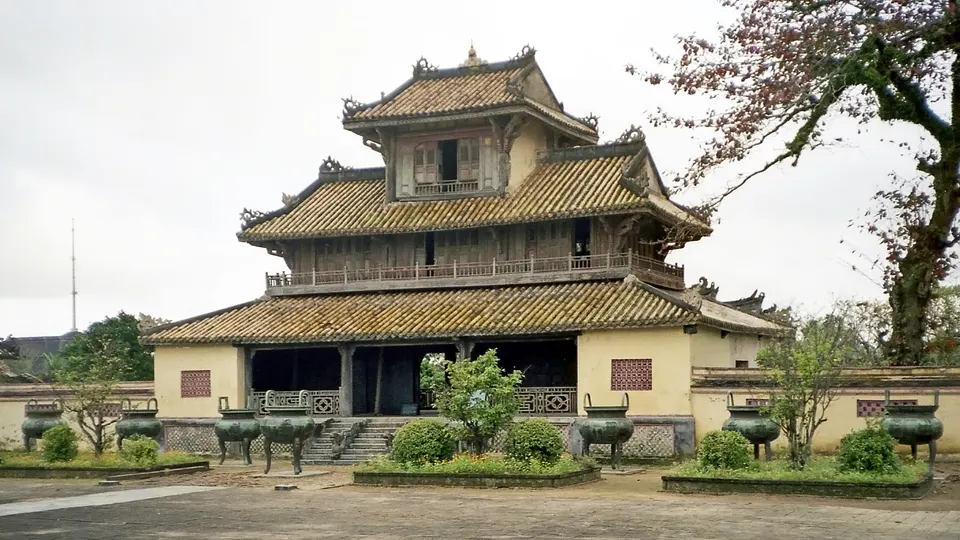
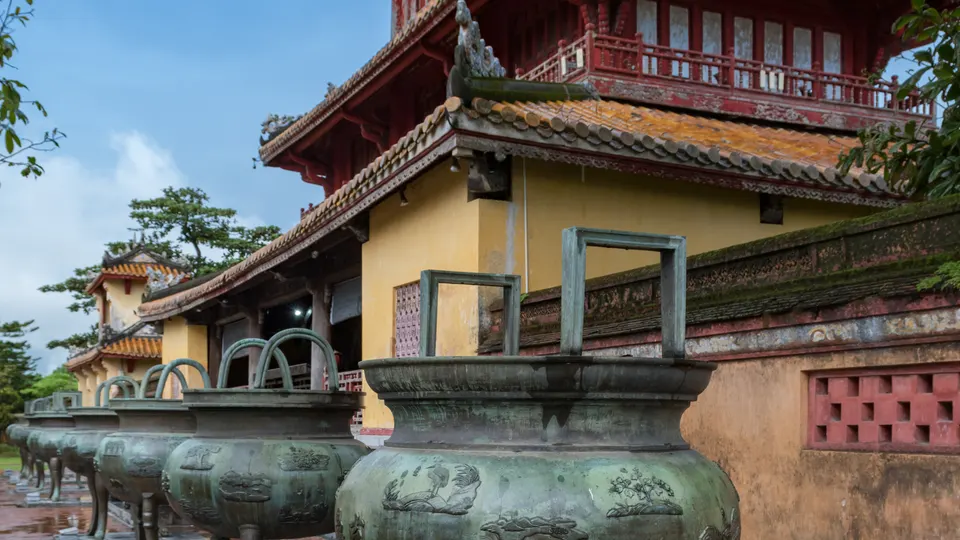
| 2–3 hours | The axis plus the dynastic temple courtyard with the Nine Dynastic Urns and Hien Lam Cac (Hiển Lâm Các) pavilion |
| Half a day | All of the above plus the residences, gardens and exhibitions, at an easy pace with breaks in the shade |
The walls are a little over 600 m on each side, so the enclosure is bigger than it looks from the gate, and distances add up on hot paving. If you plan the Imperial City and two tombs on one day, keep the Imperial City to the morning and the tombs to the afternoon; our Hue itinerary for 1, 2 or 3 days shows how the rest of the city fits around it.
What is the best route through the Imperial City?
Walk it from south to north along the ceremonial axis, then loop back past the temples. The plan follows the order of the court itself, from public ceremony to the emperor’s private world.
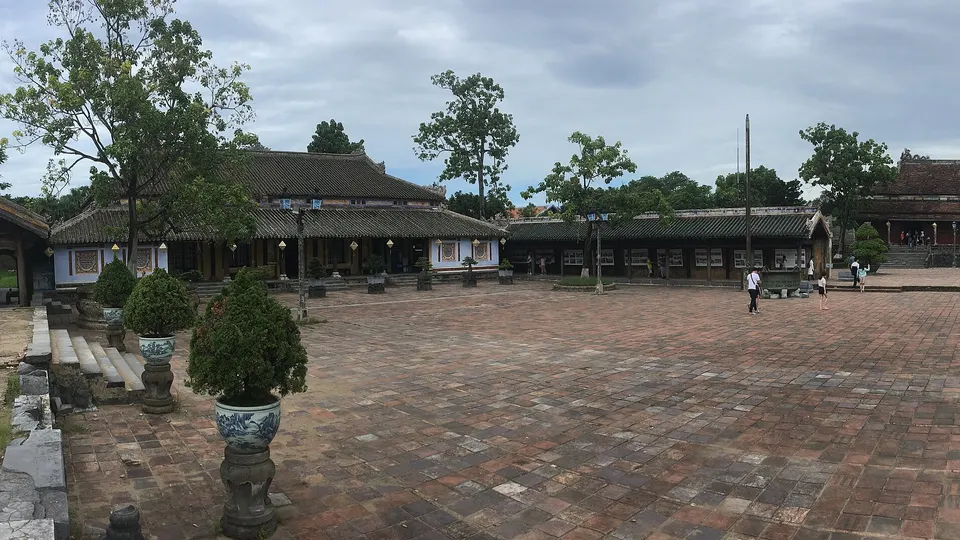
- Meridian Gate (Ngo Mon). The main entrance. Its central passage was kept for the emperor and important envoys and was normally closed; above it stands the Five Phoenix pavilion (lau Ngu Phung (lầu Ngũ Phụng)), built on 100 ironwood pillars. Here, on 30 August 1945, the last emperor, Bao Dai (Bảo Đại), abdicated (VOV).
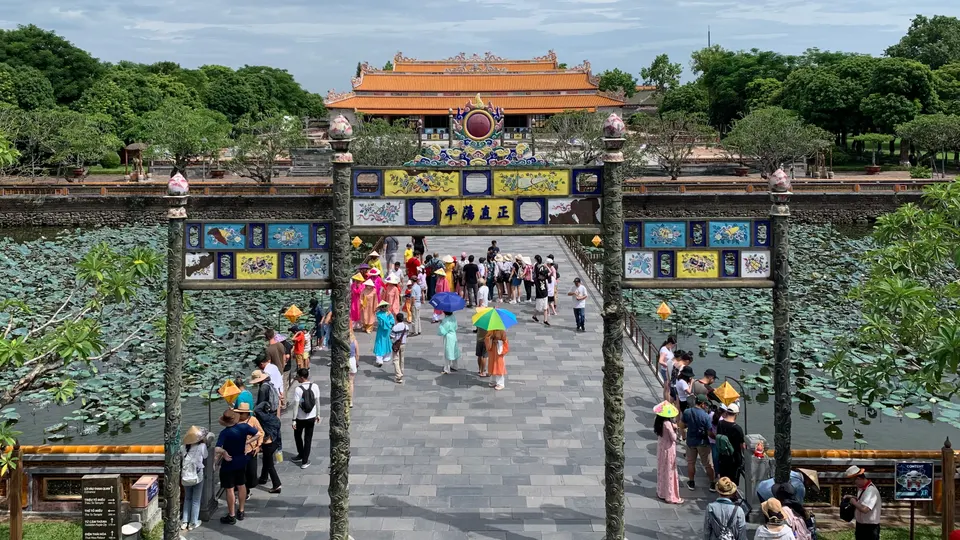
- The bridge and lotus ponds. The paved causeway leads straight across the water to the throne hall; this is where the April 2026 night programme staged its lantern dance.
- Thai Hoa palace. The throne hall, where the Nguyen court held its great audiences. The Nguyen throne, a national treasure since 2015, went back on display here on 4 June 2026 after conservation.
- The Forbidden Purple City (Tu Cam Thanh (Tử Cấm Thành)). Behind the throne hall, the inner enclosure of the emperor’s family, about 1,230 m around, which once held some 50 buildings. You pass the foundations of its main gate, Dai Cung Mon, the two long side halls, the empty site of Can Chanh hall and the rebuilt Kien Trung palace.
- The temples and the urns. Then visit the dynastic temple courtyard: The Mieu (Thế Miếu), the temple of the Nguyen emperors, with the nine bronze dynastic urns in front of it, cast between 1835 and 1837 under Minh Mang and carrying 162 relief images, and Hien Lam Cac pavilion facing them.
- The residences. If you have time, add the quieter residential palaces such as Dien Tho (Diên Thọ), then leave by the east gate, Hien Nhan (Hiển Nhân), also spelled Hien Nhon, which VOV notes serves as the visitors’ exit.
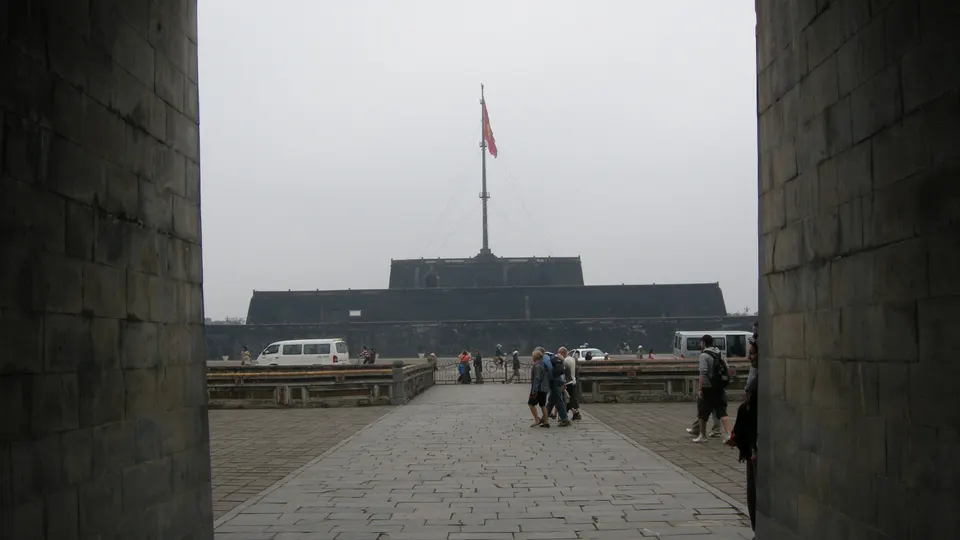
The VNAT itinerary also suggests coming back to the area in front of the Meridian Gate in the late afternoon, when the gate is lit and the open ground fills with local families flying kites.
What has been restored, and what is still ruined?
A good deal has come back since 2024, but the Forbidden Purple City is still a work in progress. Fighting in 1947 and 1968 destroyed much of the Imperial City, and rebuilding a hall takes years and large budgets, so the result in 2026 is a mix of finished palaces, scaffolding and lawns.
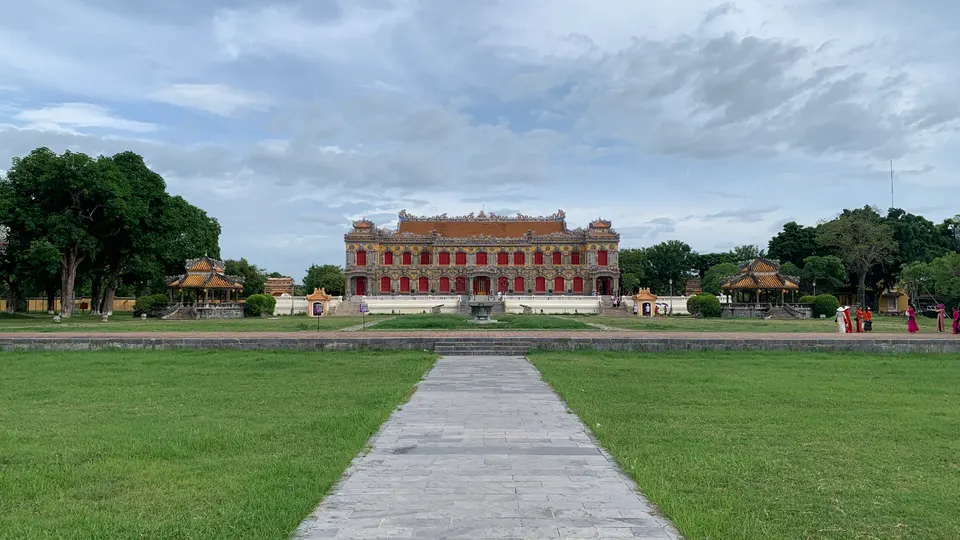
Restored and open. Thai Hoa palace was restored from late 2021 at a cost of nearly 129 billion dong; visitors could enter again from Tet 2024, and the province announced the project complete on 23 November 2024, nine months ahead of schedule, Bao Van Hoa reported. Kien Trung palace, built in 1921–1923 under Khai Dinh and destroyed in 1947 down to its foundations, was rebuilt from 2019 for more than 123 billion dong and reopened at Tet 2024, Sai Gon Giai Phong reported. VietnamPlus describes its style as a blend of Italian Renaissance, French and traditional Vietnamese architecture.
Under reconstruction. Can Chanh hall, which Vietnam Airlines’ guide calls the centre of court life in the Forbidden Purple City, has been rebuilt since April 2025 for about 200 billion dong; its timber frame is made in a workshop and assembled on site (Bao Van Hoa). The completion date has moved: in March 2026 Bao Van Hoa gave April 2029, or late 2028 if the work ran ahead, while Nhan Dan reported on 1 November 2026 that the main frame had largely taken shape and the hall was due to be finished for Vietnam Heritage Day, 23 November 2027. The area stays open to visitors during the work, Nhan Dan noted, but expect hoardings there.
Still a foundation. Dai Cung Mon, the main gate of the Forbidden Purple City built in 1833, was destroyed in 1947 and survives only as a foundation. Its restoration, budgeted at more than 64 billion dong, was due to break ground in November 2026 and run to 2030, Dai Bieu Nhan Dan reported in October 2026; by 20 November 2026 we had found no report that work had started. Nhan Dan added that part of the original foundation will be kept on view under glass in the rebuilt gate.
Tradition vs today. What you see is a court complex being reassembled, not a palace that was kept. Some halls look freshly lacquered, others weathered, and the open grass between them marks buildings that may never return. That gap is part of what the Imperial City shows, and it is why the same walk can look different from one year to the next.
What should you wear, and how should you behave?
Dress as you would for a temple. Vietnam Airlines’ guide asks visitors to dress modestly, especially in sacred areas such as the Forbidden Purple City (Vietnam Airlines).
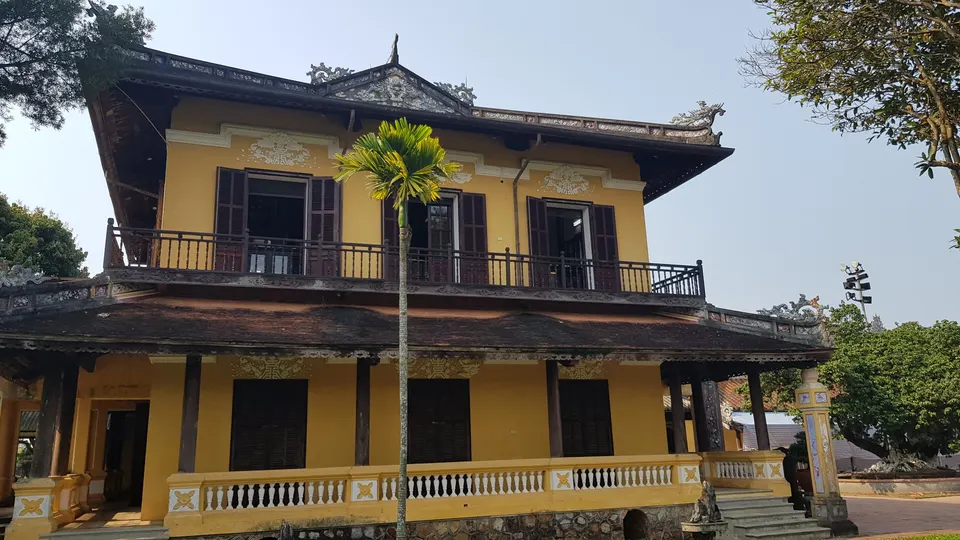
- Cover shoulders and knees, and carry a light layer if you are in shorts for the heat.
- Be quiet in the temples and follow any sign that closes an interior or bans photography.
- Do not climb on balustrades, urns or foundations; the foundations are part of the monument, not seating.
- Bring a hat, water and comfortable shoes. Most of the walk is in full sun on stone and brick.
What mistakes do visitors make at the Imperial City?
Most come from treating it as one building near the gate rather than a walled precinct with its own route and timetable.
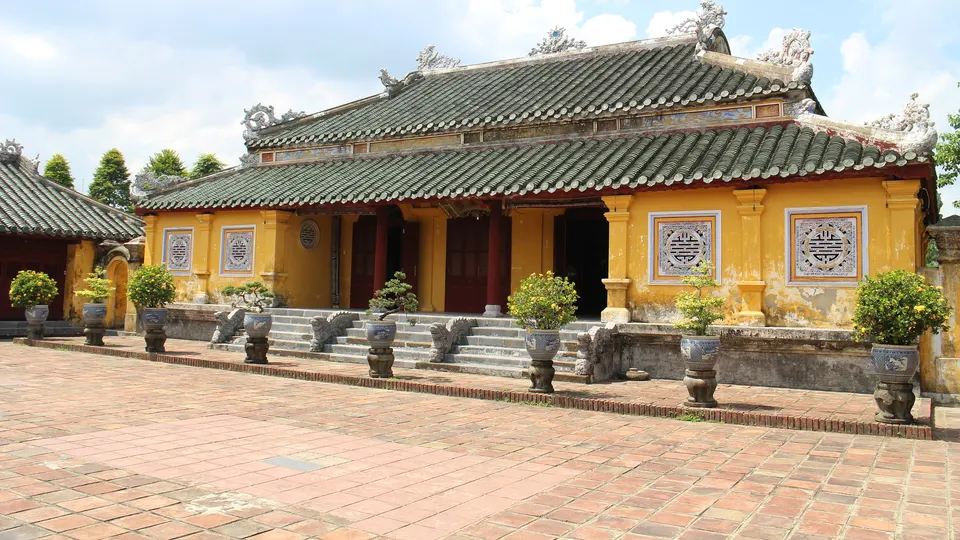
- Buying single tickets, then going to the tombs. Decide on the day plan first; the three- and four-site tickets only pay off if you buy them at your first site.
- Assuming the free holidays include you. They are announced for Vietnamese citizens, and they are the busiest days of the year.
- Arriving after lunch in summer. Opening at about 7 am gives you cooler air and time to spare before the afternoon closing.
- Turning back at Thai Hoa. The throne hall is near the front; Kien Trung and the temple courtyard, where the urns stand, are further in and much quieter.
- Expecting a complete palace. Can Chanh and Dai Cung Mon are being rebuilt, so parts of the Forbidden Purple City are fenced or empty.
- Ignoring the flood season. On 28 October 2025 floodwater surrounded a corner of the Imperial City (VnExpress International); from about September to December check the forecast and our Vietnam weather by month guide, and keep a spare half day.
Before you go: a short checklist
The visit is simple once the ticket and time of day are settled; these steps cover the rest.
- Choose your ticket by your plan: single (200,000 dong) for the Imperial City alone, three-site (420,000) with two tombs, four-site (530,000) with Minh Mang, Tu Duc and Khai Dinh, all-sites (600,000) for three or more days.
- Go at opening time, about 7 am, and allow two hours, or half a day for the whole enclosure.
- Walk south to north: Meridian Gate, Thai Hoa palace, the Forbidden Purple City and Kien Trung, then the temples and urns, and out by the east gate.
- Dress modestly and bring water, a hat and good shoes.
- Check for events the week you travel: night openings and free days are announced shortly before.
- Plan the rest of the day: a quick banh khoai lunch or a salt coffee near the Citadel (see the cards below), more choice in our guide to where to eat in Hue, an evening of Hue court music, and more of the region from our Central Vietnam hub.
Where to eat and drink near the Imperial City
Local favourite
Bánh khoái Hồng Mai
Huế · North bank (former Phú Hậu ward, now Phú Xuân ward)
110 Đinh Tiên Hoàng Street
A north-bank shop for banh khoai, Hue's small crisp rice-flour pancake, that keeps a short menu of banh khoai and nem lui; VnExpress recommended it in June 2026 and Hue city's tourism portal lists it at this address. A simple lunch before or after the Imperial City.
Order: Banh khoai (filled with shrimp, pork, bean sprouts and egg) and a few nem lui skewers.
Several banh khoai shops share Dinh Tien Hoang Street. This card means the shop at number 110.
Recommended by: VnExpress (2026), Khám phá Huế (Hue city tourism portal) · checked November 2026
Local favourite
Cà phê Muối (Citadel shop) · Cà phê Muối
Huế · Citadel area, north bank
142 Đặng Thái Thân Street
The Citadel-area branch of the salt-coffee cafe whose first shop opened at 10 Nguyen Luong Bang in 2014; Hue city's tourism portal (February 2025) describes it in a garden a street's width from the Imperial Citadel, and VnExpress International (2023) lists this address. A shaded stop after the walk.
Order: Ca phe muoi (salt coffee), iced; stir the salted cream through before drinking.
Many cafes copy the name. This card means the shop at 142 Dang Thai Than; the owners' first shop is at 10 Nguyen Luong Bang.
Recommended by: Khám phá Huế (HueCIT) (2025), VnExpress International (2023) · checked November 2026
Addresses and details can change; check before you go. We do not accept payment for listings.
Frequently asked questions
Is the Royal Antiquities Museum included in the Hue Imperial City ticket?
No. The Hue Royal Antiquities Museum has its own ticket, 50,000 dong for adults under the official fee schedule, and it is not part of the Imperial City or royal tomb combinations.
Do I get a discount on the Imperial City ticket if I arrive by train?
Yes, if you ride one of Hue's tourist trains. As of November 2026, passengers with a valid ticket on the Hue–Da Nang heritage train or the Hue–Phong Nha tourist train get 50 percent off entry to the Imperial City or one of four other sites within seven days of the trip, foreign visitors included, VietnamPlus reported on 4 November 2026.
What time does the Hue Imperial City open and close?
About 7 am to 5.30 pm every day, according to Vietnam Airlines' travel guide; we found no dated official timetable. Arrive before 4 pm if you want time for the Forbidden Purple City and the temples.
Which route should I walk through the Imperial City?
Enter by the Meridian Gate, walk north across the bridge to Thai Hoa palace and into the Forbidden Purple City as far as Kien Trung palace, then loop back past The Mieu temple and the Nine Dynastic Urns. Leave by the east gate, Hien Nhan, which serves as the visitors' exit.
What should I wear to the Hue Imperial City?
Clothes that cover shoulders and knees, as for a temple, plus a hat, water and comfortable shoes. Vietnam Airlines' guide asks visitors to dress modestly, especially in the Forbidden Purple City.
Key sources
- Complex of Hué Monuments · UNESCO World Heritage Centre
- Nghị quyết 22/2022/NQ-HĐND: mức thu phí tham quan di tích lịch sử văn hóa Huế (official fee schedule) · Hội đồng nhân dân tỉnh Thừa Thiên Huế (People's Council), in force 1 January 2023
- Huế to offer immersive night tour of imperial heritage · Việt Nam News, 27 March 2026
- 3 days in Hue for culture seekers · Vietnam National Authority of Tourism (vietnam.travel)
- A close look at the four gates into the Hue Imperial Citadel · VOV, 12 September 2024
- Điện Cần Chánh đang được tu bổ, phục hồi như thế nào? · Báo Văn Hóa, 4 March 2026
- Hoàng thành Huế · Vietnam Airlines travel guide, checked 12 November 2026
- A year under water: Record floods sweep Vietnam from megacities to tourist hubs in 2025 · VnExpress International, 25 December 2025
All 28 sources and further reading
- Mở rộng đối tượng miễn, giảm phí tham quan di tích Huế từ năm 2026 · Báo Văn Hóa, 27 December 2025
- Huế sắp khởi công phục hồi, tu bổ di tích Đại Cung Môn và điện Thoại Thánh · Đại biểu Nhân dân, 1 October 2026
- Ngày 26/3, đông đảo du khách tham quan miễn phí quần thể di tích Cố đô Huế · Đại biểu Nhân dân, 26 March 2026
- Huế miễn phí vé tham quan di tích cho người Việt dịp 19/8 và Quốc khánh 2/9 · VietnamPlus, 15 August 2026
- Mở cửa đón khách tham quan điện Thái Hòa sau 3 năm trùng tu · Báo Văn Hóa, 23 November 2024
- Hai công trình quan trọng trong khu di sản Huế mở cửa đón du khách · VietnamPlus, 7 February 2024
- Điện Kiến Trung đón khách tham quan miễn phí 3 ngày tết · Sài Gòn Giải Phóng, 9 February 2024
- Hoàn thành phục chế bảo vật quốc gia Ngai vua triều Nguyễn · Báo Văn Hóa, 3 June 2026
- Nine dynasty urns in Hue recognized as UNESCO Memory of the World · Vietnam Government News (baochinhphu.vn), 9 May 2024
- Hue Citadel · Vietnam National Authority of Tourism (vietnamtourism.vn)
- Vé tham quan di sản Huế: Đắt hay xứng đáng từng đồng? · Tuổi Trẻ, 15 August 2025
- Huế hướng đến khai thác văn hóa đêm thường xuyên tại Đại Nội · Báo Văn Hóa, 3 September 2026
- Di sản Huế đón hàng nghìn du khách tham quan miễn phí ngày đầu năm · Báo Văn Hóa, 29 January 2025
- Huế phát triển du lịch đêm bên sông Hương · The Saigon Times (Tuổi Trẻ), 28 April 2026
- Hue · Vietnam National Authority of Tourism (vietnam.travel)
- Thành phố Huế chính thức trực thuộc Trung ương từ 1/1/2025 · VnEconomy, 30 November 2024
- Hồi sinh cung điện cổ ở Hoàng thành Huế · Nhân Dân, 1 November 2026
- Huế giảm 50% vé tham quan di tích cho khách đi tàu hỏa di sản · VietnamPlus, 4 November 2026
- Huế rộn ràng sắc màu văn hóa với chuỗi hoạt động đặc sắc trong tháng 11 · VietnamPlus, 14 November 2026
- Huế đánh thức kinh tế đêm từ không gian di sản · VnEconomy, 13 September 2026
Keep exploring
 Central Vietnam · Travel Hue (Huế): How Many Days, What to See, 2026 Tickets How many days Hue needs, which Citadel sights and royal tombs to pick, 2026 ticket prices, the flood months to avoid and where to eat in the old royal capital.
 Central Vietnam · Travel Hue Royal Tombs (Lăng tẩm Huế): Which to Visit, Which Ticket Which Hue royal tombs to visit in November 2026: Minh Mang, Tu Duc or Khai Dinh, the right ticket or combo, opening times and half-day routes in the best order.
 Central Vietnam · Travel Hue (Huế) in 1, 2 or 3 Days: Itineraries and Tickets Hue in 1, 2 or 3 days: what to see in each, the order that works, 2026 ticket prices and combined passes, opening hours, festival seasons and flood months.
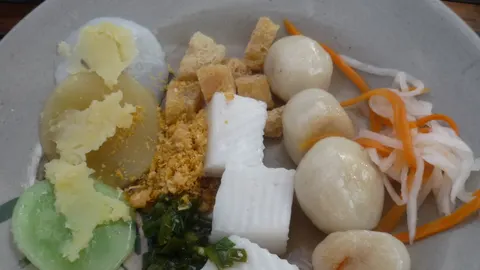 Central Vietnam · Food Hue (Huế) Royal Cuisine: What to Eat and Where to Try It Hue royal cuisine explained: what Nguyen court cooking was, how banh beo, banh nam and banh bot loc differ, and when 2026 palace banquets ran in Hue.