South Vietnam · Culture
Ba Chua Xu (Bà Chúa Xứ) at Nui Sam: 2027 Dates, How to Visit
Ba Chua Xu temple at Nui Sam, Chau Doc: 2027 festival dates (27 May to 1 June), the UNESCO-listed rites night by night, when crowds peak and how to visit.
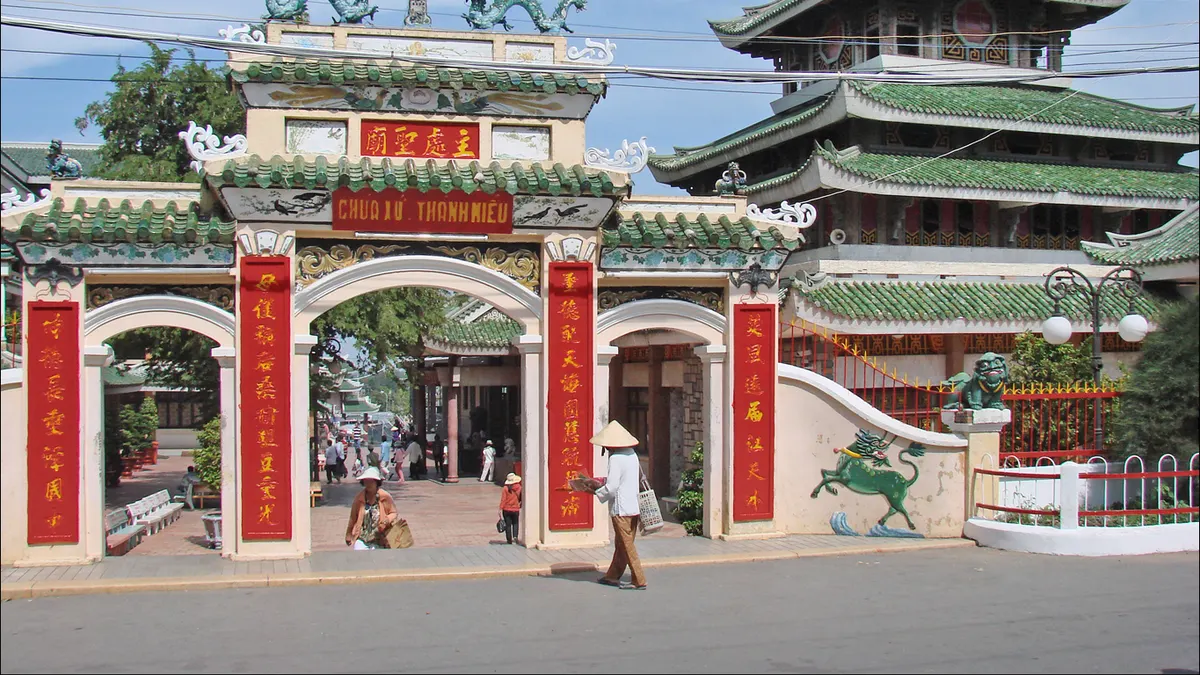
The Ba Chua Xu (Bà Chúa Xứ) temple, home of the “Lady of the Realm”, a Mother Earth goddess, stands at the foot of Sam Mountain (Nui Sam) near Chau Doc (Châu Đốc), on the Cambodian border in the Mekong Delta, and its festival in 2027 falls from Thursday 27 May to Tuesday 1 June, the 22nd to 27th of the fourth lunar month. It is a working temple visited all year: the ward around it recorded more than 5.3 million visitors and pilgrims from January to late October 2026, Nhan Dan reported on 28 October 2026. In festival week a run of rites carries her statue down from the hill, bathes and re-dresses her at midnight and honours the mandarin who opened this frontier, while hundreds of thousands of pilgrims queue with incense, fruit and roast pork. UNESCO added the festival to its Representative List of the Intangible Cultural Heritage of Humanity in December 2024, noting that it is observed by the Kinh, Khmer, Cham and Hoa communities together (UNESCO).
This page is the festival in depth: what each rite is, when it happens in 2027, how the legends and the scholarship differ, and how to take part without getting in the way. For the town itself, the Cham villages, Tra Su forest and food, start with our Chau Doc and Sam Mountain guide; for the wider region, see the South Vietnam hub.
Ba Chua Xu festival at a glance
| What | Festival of the Lady of the Realm (Via Ba Chua Xu Nui Sam, the goddess’s “feast day” at Sam Mountain), a Mother Earth goddess believed to grant protection, prosperity, health and peace |
| Where | Ba Chua Xu temple at the foot of Sam Mountain, Vinh Te ward, Chau Doc area, An Giang province (since July 2025 including the former Kien Giang) |
| When | 22nd–27th day of the fourth lunar month; main night rites 25th into 26th |
| 2027 dates | Thursday 27 May to Tuesday 1 June 2027 (two Vietnamese lunar calendars checked 17 November 2026; official programme not yet announced) |
| Status | National monument (temple) since 1980; national intangible heritage (festival) since 2014; UNESCO Representative List, 4 December 2024 |
| Who takes part | Kinh, Khmer, Cham and Hoa communities, plus pilgrims from across the South |
| Crowds | More than 5.3 million visitors and pilgrims to Vinh Te ward, January to late October 2026; pilgrimage season from the first to the fourth lunar month, busiest at Tet, weekends and holidays |
| What visitors see | The statue procession, three nights of performances, offerings and incense; the bathing itself happens behind a curtain |
What is the Ba Chua Xu festival, and why did UNESCO list it?
At its heart it is a village cult that grew into the largest pilgrimage festival of southern Vietnam. People come to pray for a lucky and healthy year, to ask the Lady for protection and prosperity, and to come back and give thanks when a wish has been granted. UNESCO describes the festival as religious ceremonies, music and dance offered in gratitude to a Mother Earth goddess, with a palanquin procession, a bathing ceremony in which the statue’s clothes and jewellery are changed, and the preparation and presentation of offerings. A management board coordinates the festivities, and rituals are passed on in families and communities by taking part.
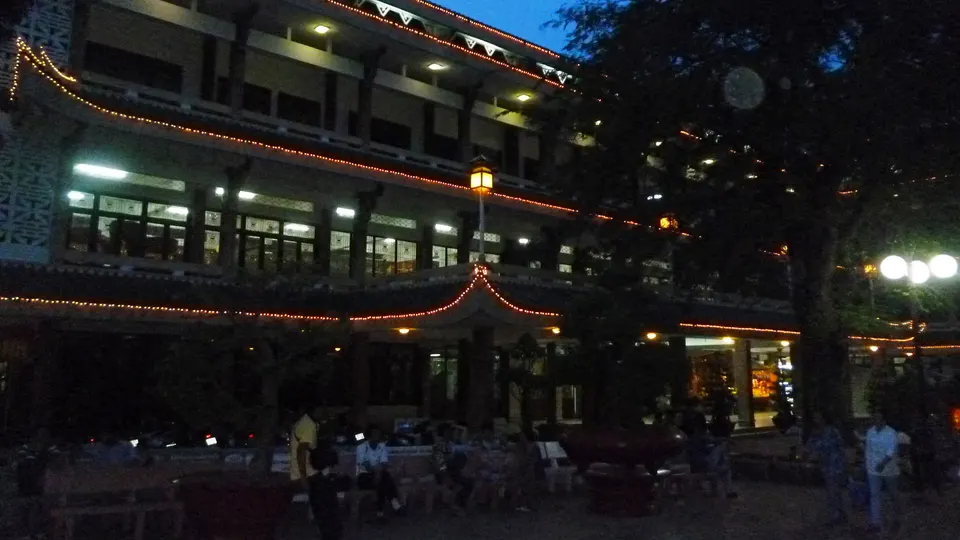
The recognition came in steps. The temple, in Vinh Te (Vĩnh Tế) ward, has been a national monument since 1980 and the festival was listed as national intangible heritage in 2014; on 4 December 2024 UNESCO’s committee, meeting in Asuncion, Paraguay, inscribed it on the Representative List (Viet Nam News). It was the second southern tradition on that list after the amateur chamber music don ca tai tu in 2013. UNESCO’s file stresses what makes it unusual: each of the four communities contributes to a key part of the event, and the festival celebrates the role of women in society and the ancestors who settled the land.
So what for the visitor: this is not a staged heritage show. The rites belong to the temple’s management board and the local community, and the province builds a public programme of performances and fairs around them. You are a guest at someone else’s religious feast.
Who is the Lady of the Realm, and where did her statue come from?
The legends. Several stories explain how the goddess came to sit at the foot of the hill, and they disagree on dates and details; Bao Van Hoa (Báo Văn Hóa) counted four versions in 2025. In the most widely told one, a statue stood on a sandstone base on the summit. Invaders tried to carry it off but it grew too heavy to move. Later the villagers could not lift it either, until a medium, speaking as the Lady, told them that only nine young virgin women, freshly bathed, could carry her. They set off down the slope, and when the statue became immovable again at the foot of the mountain, people took it as her chosen place and built a shrine there. VOV places the story in the 18th century. Another legend links her to the digging of the nearby Vinh Te Canal: when the work stalled, Chau Thi Te (Châu Thị Tế), the wife of the mandarin in charge, is said to have prayed to the statue, and the work went well afterwards.
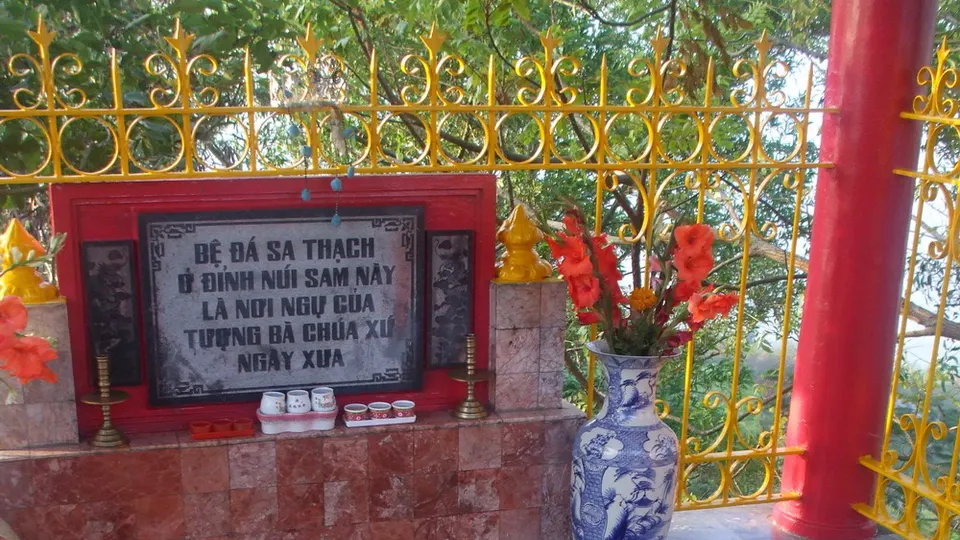
What researchers say. The statue is sandstone, about 1.48 m tall, and the stone does not come from the surrounding hills. Tien Phong (Tiền Phong) reported in 2013 that the French archaeologist Louis Malleret described it in 1941 as a seated Vishnu-type deity of around the late sixth century; the writer Son Nam (Sơn Nam) thought it was originally a male Khmer statue later painted and dressed as a woman, and the historian Tran Van Dung (Trần Văn Dũng) saw a male figure in a royal pose whose head was carved later from different stone (Tien Phong). These readings are debated, and they do not change the faith of worshippers.
Why it matters: the layers help explain the festival. If the scholars are right, a stone figure from the delta’s pre-Vietnamese past was re-dressed as a Vietnamese goddess and is now honoured alongside a Nguyen-dynasty mandarin; that is the kind of shared, many-layered sacred site UNESCO’s file describes. It is also why her clothes matter so much: Viet Nam News notes that her crown and robes, usually of velvet, are replaced every month.
What happens on each day of the festival?
The rites follow the same order every year. Dates below are lunar days of the fourth month, with the 2027 Gregorian date from Vietnamese lunar calendars (Bao Lam Dong and Xem Lich Am put the 22nd on 27 May and the 26th on 31 May 2027). Times are those given by the national tourism authority and the press; the temple can adjust them, so check the programme on arrival (Vietnam National Authority of Tourism).
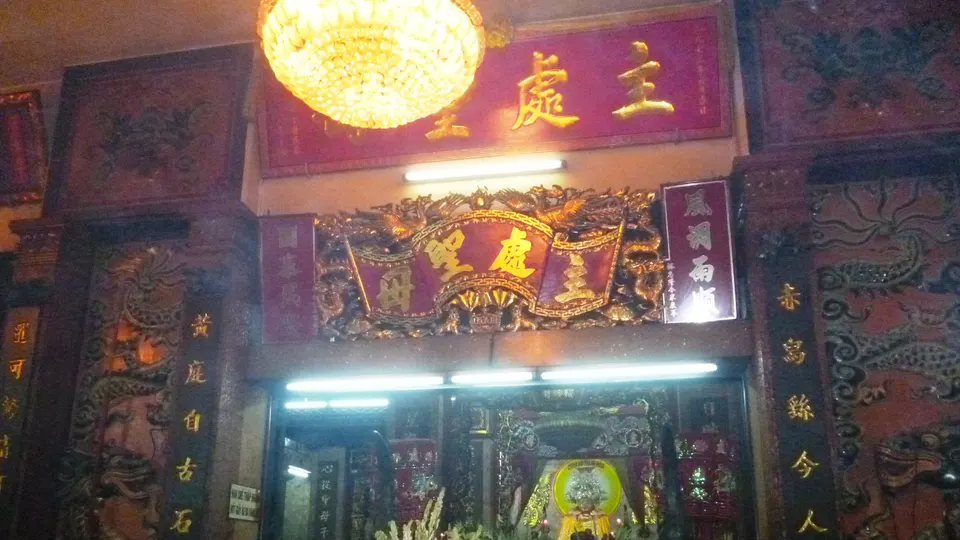
| Rite | Lunar date and time (2027 date) | What happens |
|---|---|---|
| Opening and statue procession (le phuc hien ruoc tuong Ba) | 22nd, held in the evening in 2025 (Thu 27 May 2027) | Re-enactment of the legend: the statue is carried from the old stone pedestal on the summit down to the temple. In 2025 the procession stretched over 2 km and the walk from the summit was over 4 km. |
| Bathing the goddess (tam Ba) | Night of the 23rd into the 24th, from around midnight (night of Fri 28 to Sat 29 May) | Candles, incense, wine and tea are offered; selected women then bathe the statue behind a curtain with water scented with jasmine and cinnamon and change her robes and jewellery. It lasts about an hour. |
| Fetching the decrees (thinh sac) | 24th, afternoon; 3 p.m. per the tourism authority (Sat 29 May) | A procession goes to the tomb of Thoai Ngoc Hau and brings the royal decrees honouring him and his two wives to the temple, to thank him for opening the land. |
| Midnight offering (tuc yet) | From midnight on the 25th into the early 26th (night of Sun 30 to Mon 31 May) | The main offering rite of the festival, with incense, votive paper and prayers. |
| Drum rite and opera (xay chau) | After the tuc yet, same night | A drum takes the place of the altar table; the master of ceremonies sprinkles water with a willow branch, and three drumbeats open a performance of hat boi, classical Vietnamese opera, with prayers for good weather and a good life. |
| Main sacrifice (chanh te) | 4 a.m. on the 26th (Mon 31 May) | A solemn rite similar to the tuc yet. |
| Returning the decrees (hoi sac) | 27th, afternoon (Tue 1 June) | The decrees are carried back to Thoai Ngoc Hau’s tomb, closing the festival. |
Common vs exception. The order is stable, but the public programme around it changes every year. In 2026, for instance, Nhan Dan (Nhân Dân) listed events from 31 May to 12 June (the 15th to the 27th of the lunar month), the opening ceremony fell on the evening of 6 June, the 21st, and the province added three nights of performances and fireworks and a street parade. In 2020, during the pandemic, the procession and bathing were held with no more than 30 people and the other rites were kept inside the temple’s management board, Tuoi Tre (Tuổi Trẻ) reported.
How do Kinh, Khmer, Cham and Hoa share one festival?
Honestly, the sources are better at saying that they share it than how. UNESCO states that each community contributes to a key component of the event, but its summary does not say which part belongs to whom, and the Vietnamese press articles we checked describe the festival as a blend of the Mother-goddess worship of the Kinh, Khmer, Cham and Hoa without dividing up the rites. We have not found a source that does, so we will not guess.
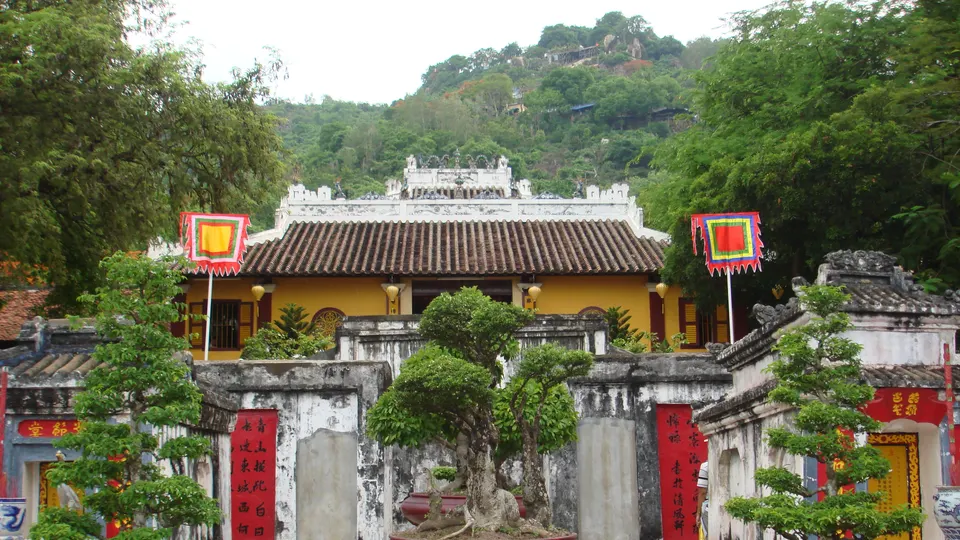
What is clear is why the four meet here. Chau Doc is a border town where Kinh, Khmer, Cham and Hoa people have long lived side by side; the Chau Doc guide linked above explains that history. The festival’s own rites reflect it: scholars date the statue long before Vietnamese settlement, while the thinh sac and hoi sac honour Thoai Ngoc Hau, the Nguyen (Nguyễn) mandarin who, in Viet Nam News’s words, protected the south-western border, and his two wives.
So what: read the festival as a meeting ground rather than the property of one group. Be wary of any guide, including tour leaflets, that confidently assigns each rite to a particular community without a source.
When should you go: festival week or pilgrimage season?
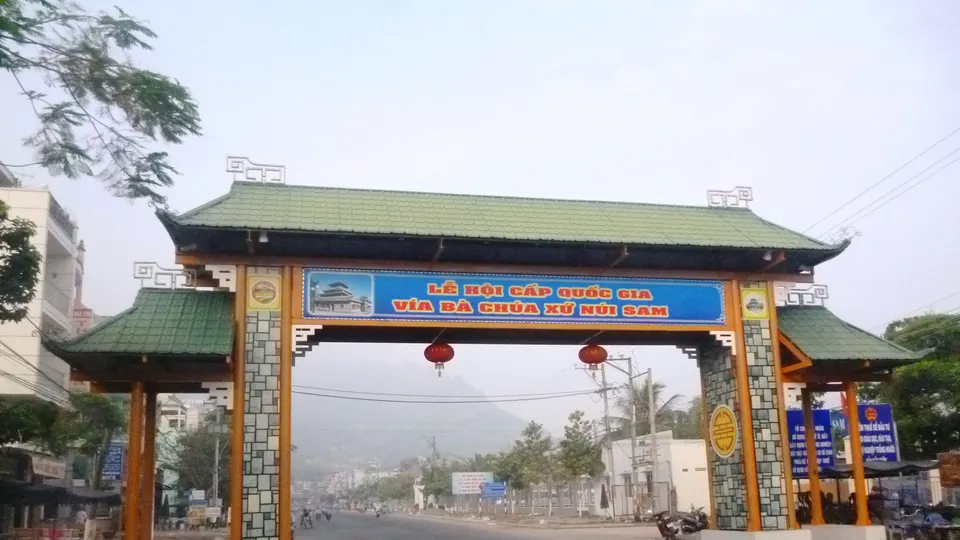
The festival is only the peak of a long season. Pilgrims start arriving at the beginning of the first lunar month, just after Tet (Tết), the Lunar New Year, and keep coming until the end of the fourth, with the biggest crowds on public holidays and weekends (Nhan Dan). On the first day of Tet 2024 alone the Sam Mountain national tourist area received more than 300,000 visitors, Nhan Dan reported. In 2022 Tuoi Tre described hundreds of people squeezing in to make offerings at the full moon of the first lunar month (ram thang Gieng), which a monk it quoted called the biggest full moon of the year.
| Period (2027, by our calculation) | What it is like | Good for |
|---|---|---|
| Tet and the first lunar month (Tet on 6 February 2027; first full moon about 20 February) | Very crowded, traffic jams on the roads to the mountain | Seeing the pilgrimage at its most devotional, if you can cope with crowds |
| Weekdays in the second to fourth lunar months (roughly March to May 2027) | Pilgrims every day, but fewer than at weekends and holidays | Seeing the temple and offerings without the crush |
| Festival, 27 May to 1 June 2027 | Rites, procession, performances, the densest crowds; rain possible | Watching the procession and night rites |
| Rest of the year | Ordinary temple days | A quieter visit combined with the rest of Chau Doc |
In 2027 the festival straddles a weekend: the bathing rite falls on Friday night into Saturday and the midnight tuc yet on Sunday night, so expect the heaviest crowds then. Rain is possible too: the 2025 procession set off in a heavy downpour, the An Giang provincial portal reported. Our weather by month guide gives the wider picture, and if you plan to come at Tet, read our Tet 2027 travel guide on transport and closures, and our guide to Tet in the three regions for what the holiday means.
How has the festival changed, and what problems should you know about?
Tradition vs today. The rites are those of a local temple cult, but the scale is now national. VOV describes how the temple grew from a simple bamboo shrine; Viet Nam News says it was renovated several times until its 1972 redesign. Today the ward around the temple counted about 4.55 million visitors by 14 July 2026, Tap chi Cong Thuong (Tạp chí Công Thương) reported, and more than 5.3 million by late October, already above its target for the year. Tuoi Tre describes it as a national-level festival with two parts, the rites (le) and the public festivities (hoi).
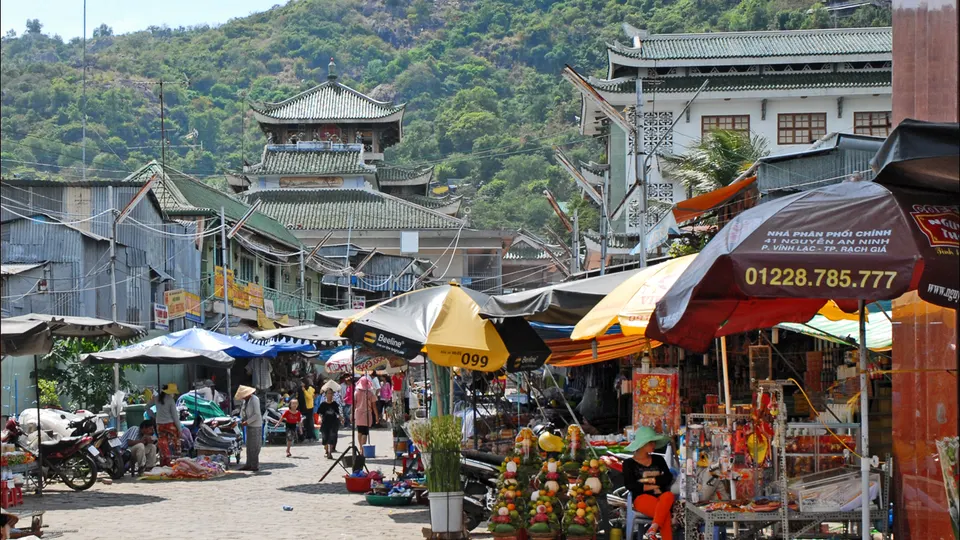
Management after the merger. Since 1 July 2025 the temple has been in Vinh Te ward of the enlarged An Giang province, which absorbed the former Kien Giang province (Vietnam Government Portal). In 2026 the province gave the ward the job of organising the festival for the first time, with the neighbouring Chau Doc ward helping with logistics, Bao Van Hoa reported; inspection teams checked food safety and whether goods and services displayed their prices, and a hotline and Zalo groups took complaints.
Commercialisation and touts. The authorities themselves name the problems. In March 2026 Nhan Dan reported the province’s aim to stop overcharging for parking and to end touts (co moi) who pull visitors towards particular businesses, and asked traders to post prices and sell at them; it also described traffic diversions, designated car parks, police patrols and cameras and a 24-hour steering committee (Nhan Dan). The security plan for June 2026 also targeted bag snatching, theft, fraud and overcharging. Older reports show what that means in practice: in 2015 Tuoi Tre described touts stepping into the road to steer visitors to car parks and guesthouses, offering sets sold at several times the stall price, and fortune-tellers on the mountain who pressured visitors into expensive rituals.
How do you take part respectfully?
Treat the temple as a working place of worship that happens to be famous. The etiquette for Vietnamese temples applies in full (Viet Nam News): modest clothes with sleeves to the elbow and trousers or skirts below the knee, no see-through or sleeveless tops, hat off when you enter.
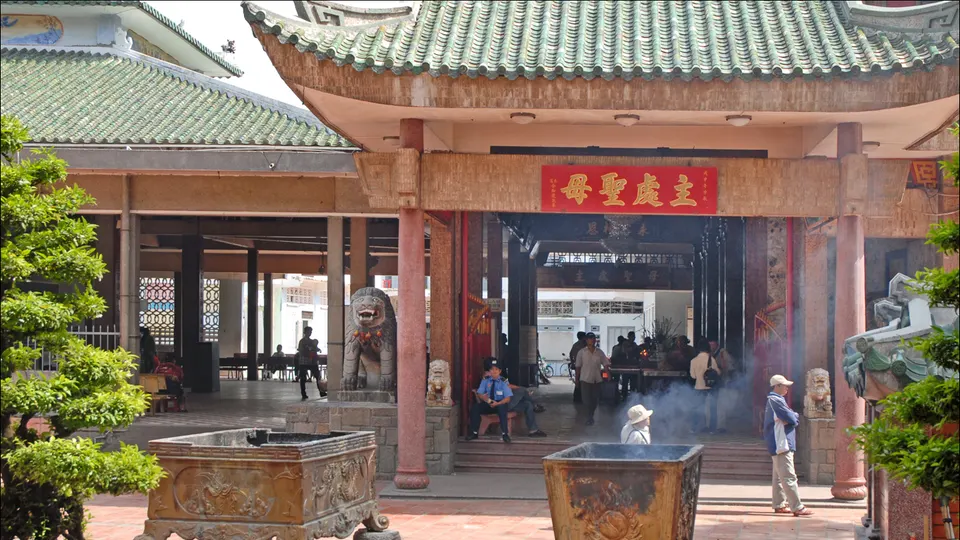
- Offerings: you do not need to bring any. If you want to, fresh flowers or fruit are enough, and one stick of incense is plenty. Pilgrims prepare larger offerings in the main hall and then wait their turn, so do not push to the altar.
- Photos: ask before filming a ritual or a person at prayer, obey no-photo signs and do not photograph the inner altar. The bathing is deliberately hidden behind a curtain; do not try to film it.
- Processions: never step between a procession and people kneeling in prayer, and give way to palanquins and drum teams.
- Money and touts: buy incense and offerings from stalls that display prices, park only in signed car parks, and walk away from anyone offering to “fix” your fortune for a fee.
- Night rites: the bathing and tuc yet run past midnight in dense crowds, and the 2026 security plan targeted bag snatching and theft. Keep valuables close and agree a meeting point with your group.
How do you visit Ba Chua Xu temple at Nui Sam?
The temple sits at the foot of Sam Mountain in Vinh Te ward near Chau Doc, in An Giang province; it is a working temple that pilgrims visit throughout the year, and the festival is only its busiest week. The national tourism site puts Chau Doc about five hours by road from Ho Chi Minh City, or reachable by river boat along the Mekong from Cambodia, and counts around 200 religious sites on the slopes of Sam Mountain (vietnam.travel). Chau Doc fits naturally at the end of a route through the delta: our Mekong Delta guide gives the overview and our Mekong Delta itinerary shows how to fit it into a longer route.
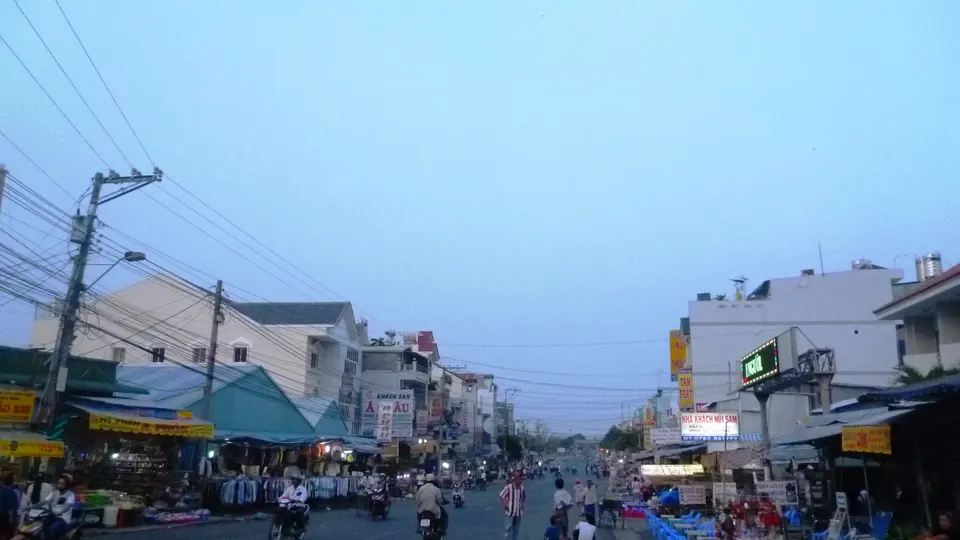
On site. A cable car opposite the temple carries visitors up the mountain to the summit shrine where, by tradition, the statue once stood; in January 2023 VnExpress quoted a full ticket at 150,000 dong, with free rides for children under 1.2 m and people over 70, so check the current price at the gate. By October 2026 the ward had added QR codes at heritage sites that explain their history and a camera system at the temple that counts visitors by day and week, Nhan Dan reported.
Which kind of visit suits you? The table sets the festival nights against an ordinary day, using the 2027 dates and the documented crowd patterns above.
| Visit | What you can see | Crowds | What to plan |
|---|---|---|---|
| Procession evening, 22nd (Thu 27 May 2027) | The statue carried down from the summit to the temple, in the open air | Large; in 2025 the procession stretched over 2 km and set off in a heavy downpour | The easiest rite to watch; bring rain gear and keep to the roadside |
| Night rites, bathing (night of 28–29 May) and tuc yet (night of 30–31 May 2027) | Offerings, drums and classical opera; the bathing itself is hidden behind a curtain | The densest of the year, past midnight, on a weekend in 2027 | A room booked well ahead, a meeting point for your group, valuables kept close |
| Tet and the first lunar month (from 6 February 2027) | Pilgrims queuing with incense and offerings | Very heavy: on the fourth day of Tet 2026 the 500 m approach road took about 40 minutes | Arrive outside the documented peaks (around 9–10 a.m. and 3–5 p.m. in 2026), or choose another day |
| Ordinary weekday outside Tet and festival week | The temple, altar and offerings, plus the cable car and hill shrines | Pilgrims every day, but fewer than at weekends and holidays | Combine with the rest of Chau Doc in a day |
Timing the crowds. Znews reported that on the fourth and fifth days of Tet 2026 the access road was jammed at times, worst around 9–10 a.m. and 3–5 p.m., that some visitors gave up and prayed outside the gate, and that the main hall was packed even at 2 a.m. Nhan Dan says the heaviest days of the season are public holidays and weekends. In practice that means a weekday, outside Tet and festival week, is the calm way to see the temple; a festival visit is about the atmosphere, not about getting close to the altar.
What to check before you go:
- The dates. The festival follows the lunar calendar. For 2027, Vietnamese lunar calendars give 27 May to 1 June; confirm the official programme from An Giang province or Vietnamese press in April or May 2027, because the public events usually start several days earlier.
- A bed. In festival week and at Tet, book well ahead. Some pilgrims simply sleep in the temple’s rear courtyard, Nhan Dan noted in 2026; that is not a plan for visitors.
- Your night. Decide which rite you want to be near: the procession on the 22nd is the easiest to watch; the bathing and the midnight tuc yet are the most crowded.
- The rest of the trip. Combine the temple with the Cham villages, the floating fish farms and Tra Su forest, all covered in our Chau Doc guide, and find other festivals and customs in our culture hub.
Frequently asked questions
When is the Ba Chua Xu festival at Nui Sam in 2027?
The Ba Chua Xu festival runs from the 22nd to the 27th day of the fourth lunar month, which is Thursday 27 May to Tuesday 1 June 2027 according to Vietnamese lunar calendars. The bathing rite falls on the night of 28 to 29 May and the main midnight rites on 30 to 31 May; the official programme, usually longer, had not been published by mid-November 2026.
What time of day is Ba Chua Xu temple least crowded?
There is no reliably quiet hour at Tet or in festival week: on the fourth day of Tet 2026 the approach road was most jammed around 9 to 10 a.m. and 3 to 5 p.m., and the main hall was still packed at 2 a.m., Znews reported. Outside those peaks, weekdays are calmer than weekends and public holidays, according to Nhan Dan.
Can tourists watch the bathing ceremony at Ba Chua Xu temple?
The bathing itself is done by a selected group of women behind a curtain, so visitors do not see the statue being washed. You can be in the temple grounds that night, but expect dense crowds and follow the instructions of the temple staff.
Is the Ba Chua Xu statue a man or a woman?
To worshippers she is the Lady of the Realm. Researchers disagree about the stone figure: the archaeologist Louis Malleret described it in 1941 as a Vishnu-type deity of around the late sixth century, and other writers saw a male figure later dressed as a goddess.
What should I wear to visit Ba Chua Xu temple?
Dress as for any Vietnamese temple: covered shoulders, sleeves to the elbow and trousers or skirts below the knee, with your hat off inside. Ask before photographing people at prayer.
Key sources
- Festival of Bà Chúa Xứ Goddess at Sam Mountain · UNESCO Intangible Cultural Heritage (inscribed 2024, 19.COM 7.b.16)
- Southern festival wins UNESCO recognition · Việt Nam News, 5 December 2024
- Ba Chua Xu Temple Festival · Vietnam National Authority of Tourism (vietnamtourism.vn)
- An Giang giữ gìn phát huy giá trị di sản lễ hội vía Bà Chúa Xứ núi Sam · Nhân Dân, 7 June 2026
- Giữ gìn và lan tỏa giá trị Di sản Lễ hội Vía Bà Chúa Xứ Núi Sam · Nhân Dân, 5 March 2026
- Bí ẩn tượng Bà Chúa Xứ: Tượng đàn ông hay đàn bà? · Tiền Phong, 24 June 2013
- Temple etiquette keeps visitors in sacred harmony · Việt Nam News, 26 March 2026
- Chau Doc · Vietnam National Authority of Tourism (vietnam.travel)
All 29 sources and further reading
- Di sản Lễ hội Vía Bà Chúa Xứ núi Sam được UNESCO ghi danh · Đại Đoàn Kết, 4 December 2024
- Thousands of visitors join the Procession of Ba Chua Xu Statue on Sam Mountain in An Giang · An Giang provincial portal, May 2025
- Sắp diễn ra Lễ hội Vía Bà Chúa Xứ núi Sam 2026 · Báo Văn Hóa, 4 June 2026
- Lễ hội Vía Bà Chúa Xứ núi Sam: Di sản sống động kết nối cộng đồng · Báo Văn Hóa, 30 January 2025
- Thousands of visitors flock to Southern Việt Nam's largest spiritual festival · Việt Nam News, 6 June 2026
- An Giang Province embraces spiritual tourism · Việt Nam News, 16 February 2025
- UNESCO recognition ceremony for Bà Chúa Xứ Goddess Festival · VOV, 19 March 2025
- Phường Vĩnh Tế (An Giang): Phát huy lợi thế đô thị di sản, mở rộng hội nhập quốc tế · Tạp chí Công Thương, 15 September 2026
- An Giang: Khu du lịch quốc gia Núi Sam đón hơn 300.000 du khách ngày đầu năm mới · Nhân Dân, 10 February 2024
- Xô bồ chèo kéo khách tại chùa Bà núi Sam · Tuổi Trẻ, 7 March 2015
- Lễ hội Bà Chúa Xứ Núi Sam, An Giang · Tuổi Trẻ, 1 June 2025
- Các nghi lễ của lễ hội Bà chúa Xứ núi Sam tổ chức không quá 30 người · Tuổi Trẻ, 12 May 2020
- Cúng rằm tháng giêng ở vùng Bảy Núi và Núi Sam · Tuổi Trẻ, 15 February 2022
- Thousands congregate at goddess temple in Vietnam's Mekong Delta on Lunar New Year's Day · Tuổi Trẻ News, 2 February 2022
- A Temple Of Answers: The Living Faith Behind Bà Chúa Xứ Worship · Vietcetera, 11 September 2025
- Names and administrative centers of 34 provinces and centrally-run cities specified · Vietnam Government Portal, 15 April 2025
- Âm Dương lịch ngày 27 tháng 05 năm 2027 (lunar calendar) · Báo Lâm Đồng
- Đưa công nghệ số phục vụ du khách · Nhân Dân, 28 October 2026
- Đội nắng 40 phút viếng miếu Bà Chúa Xứ dịp Tết · Znews, 21 February 2026
- Cáp treo núi Sam hút khách dịp Tết · VnExpress, 23 January 2023
- Âm lịch ngày 31/5/2027 (lunar calendar) · Xem Lịch Âm
Keep exploring
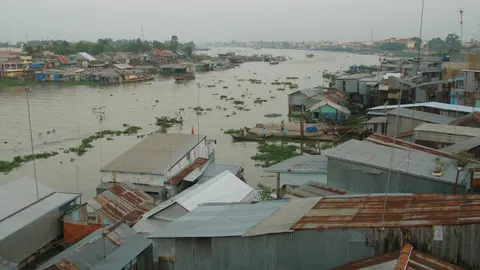 South Vietnam · Travel Chau Doc (Châu Đốc): What to See in 2 Days, and When to Go Plan Chau Doc by the Cambodian border: Sam Mountain and its UNESCO-listed Ba Chua Xu festival, Cham villages, Tra Su forest, bun ca, flood season.
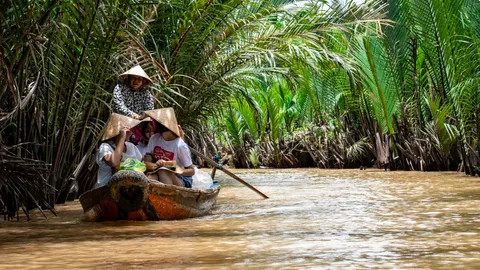 South Vietnam · Travel Mekong Delta: Which Area to Visit and Where to Base Which part of the Mekong Delta to visit and where to base: Can Tho, Ben Tre or Chau Doc, Cai Rang market hours, seasons, where to eat, new province names.
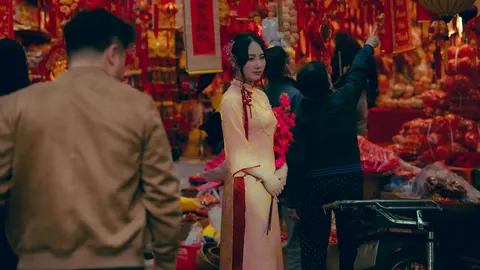 North · Central · South · Culture Tet (Tết) 2027 by Region: North, Central, South Compared How Tet differs in North, Central and South Vietnam: peach vs mai, banh chung vs banh tet, fruit trays, pickles, first visitors, plus the Tet 2027 dates.
 South Vietnam · Travel Mekong Delta in 2, 3 or 4 Days: Routes from Saigon Mekong Delta routes from Saigon for 2, 3 or 4 days: Can Tho and Cai Rang at dawn, Chau Doc and Tra Su in flood season, Soc Trang's pagodas, 2026 roads.