South Vietnam · Culture
Chau Phong Cham Brocade: How to Visit the Weaving Village
Chau Phong's Cham brocade, national heritage since 2023: how it is woven, how it differs from My Nghiep and lanh My A, and how to visit from Chau Doc.
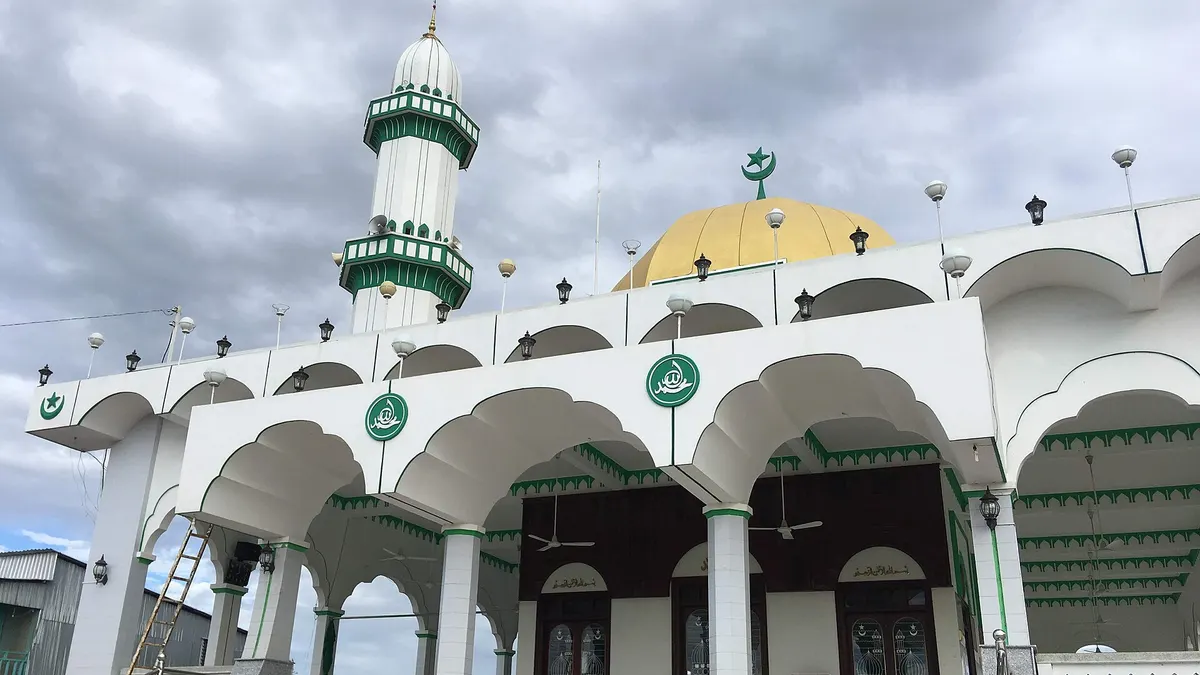
Chau Phong brocade (thổ cẩm Chăm Châu Phong) is the patterned, hand-woven cloth of the Cham Muslim community in Chau Phong (Châu Phong) commune, across the Hau River from Chau Doc in An Giang, and it is one of the few Cham crafts in the Mekong Delta you can still watch on a working loom. Vietnam’s Ministry of Culture, Sports and Tourism listed it as national intangible heritage by Decision 480/QD (QĐ)-BVHTTDL of 6 March 2023 (Nhan Dan). As of October 2026 it is kept alive by a few family workshops and a small tourism cooperative, and it makes an easy half-day trip from Chau Doc.
This guide explains what the listing covers, how the cloth is woven, how it differs from the Cham brocade of the central coast and from Tan Chau’s black lanh My A silk, and how to see it without treating a working village as a show. For the wider Cham story, start with our guide to Champa heritage, or browse more Vietnamese culture guides.
Chau Phong brocade at a glance
| Chau Phong Cham brocade | |
|---|---|
| Where | Chau Phong commune, An Giang, across the Hau River from Chau Doc (formerly part of Tan Chau town) |
| Who weaves | Cham Muslim families, mostly women; 5,646 Cham in 1,269 households live in the commune’s Chau Giang, Phum Soai and Hoa Long hamlets (VietnamPlus, October 2026) |
| Status | National intangible heritage, Decision 480/QD-BVHTTDL, 6 March 2023; announced in Tan Chau on 10 December 2023 |
| Technique | Pattern made on the loom by alternating ground and pattern heddles, 8–12 heddle frames per motif |
| Typical motifs | Water waves, clouds, squares, stripes, lanterns, mulberry flowers, hammock and shuttle patterns |
| What you can buy | Checked scarves, sarongs, bags, hats; about 50,000–300,000 dong an item (Tuoi Tre News, August 2025) |
| Getting there | About 5 minutes by road from Chau Doc over the Chau Doc bridge, open since 23 April 2024 |
| Time to allow | Visitors stay about 2 hours on average (VietnamPlus, October 2026); allow longer with a meal |
What makes Chau Phong brocade a national heritage craft?
The national listing is specific: it covers “the traditional craft of brocade weaving of the Cham people of Chau Phong commune”, not Cham weaving in general. The decision came first, in March 2023; the ceremony followed on the evening of 10 December 2023 in Tan Chau, where the provincial culture department announced it together with a second listing, the life-cycle rites of the Cham Islam community (Bao Quoc te). That is why many reports date the recognition to December 2023.
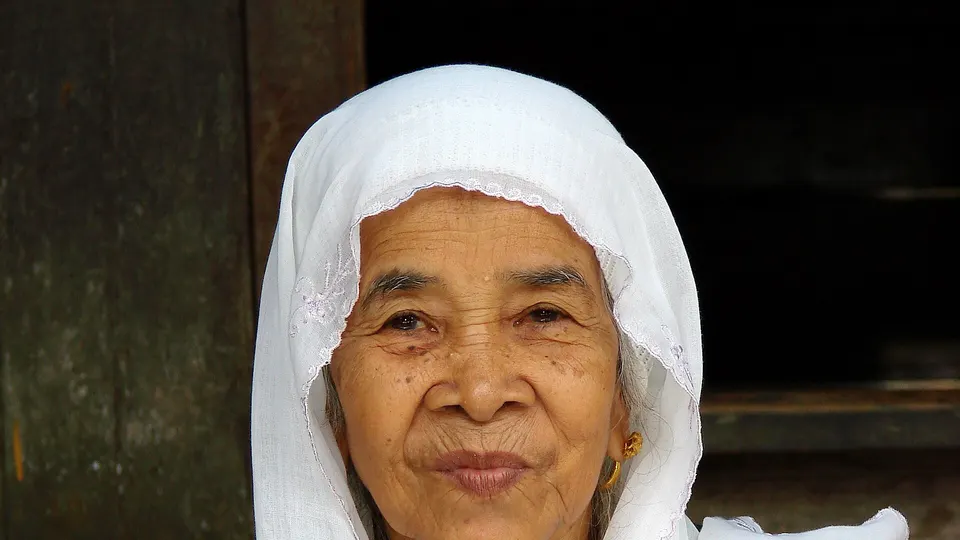
How old is it? The sources disagree. At the 2023 ceremony, a deputy chair of Tan Chau’s people’s committee said the craft appeared in An Giang with the first Cham settlers in the early 18th century. Researchers cited by Nhan Dan in 2024, and later reports by VietnamPlus and the police newspaper CAND, place its start in the early 19th century, and Tuoi Tre News quotes the commune simply as saying it has existed “for over 100 years”. Treat “more than a century, possibly much older” as the safe reading.
What the ministry recognised is a living practice tied to community life. The cloth is woven for everyday clothes and for religious use, including the life-cycle ceremonies of Cham families in An Giang, and the skills pass mainly by doing: girls watch older weavers, then learn to spin, match colours and set up the loom. VietNamNet met a fourth-generation weaver, Saphia, in 2025 who began at seven with her grandmother and was teaching her granddaughter.
How is Chau Phong brocade woven?
Everything is done by hand: spinning and rewinding the yarn, soaking, dyeing, winding bobbins, setting up the warp and, last, weaving. The warp is the hard part. The weaver has to work out the position, number and colour of every lengthwise thread and arrange them on the loom so that, as the shuttle passes, the motif appears exactly as planned (VietnamPlus).
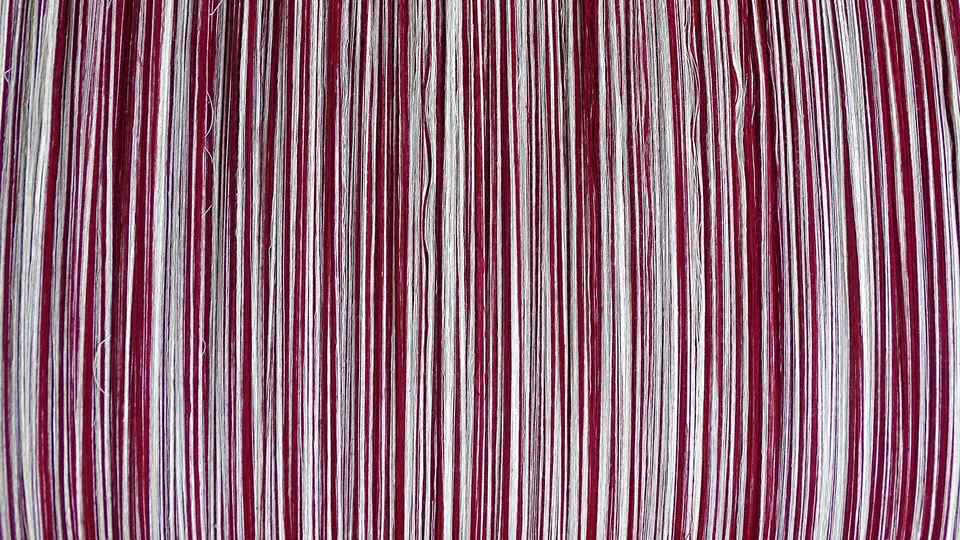
The loom carries two sets of heddles. Ground heddles lift the basic warp threads to make the plain body of the cloth; pattern heddles lift only the threads that form the motif. The weaver alternates between them so the pattern stands out instead of sinking into the ground. The more complex the motif, the more heddle frames it needs, and threading them can take an experienced artisan up to three days:
| Motif | Heddle frames | What it looks like |
|---|---|---|
| Mulberry flower (bong dau) | 12 | Small repeating flowers |
| Chain links (mat xich) | 10 | Interlocking links |
| Hammock (mac vong) | 9 | Net-like diagonal mesh |
| Shuttle and fan (con thoi, canh quat) | 8 | Spindle and fan shapes |
Source: VietnamPlus (October 2026) and Nhan Dan (September 2024), which give the same counts.
Why this matters to you: it is the opposite of ikat, where bundles of yarn are tied and dyed before weaving so the pattern is already in the thread. In Chau Phong the pattern is made on the loom, row by row. Because the silk and thread are fine and break easily, weavers use string heddles instead of wire ones, which packs the threads closer and gives a smooth, firm face. Weavers rewind bought yarn onto small spools and choose thread grades 20, 30 or 40 for the texture they want, CAND reported in December 2025. Natural dyes from bark, turmeric and mac nua fruit give reds, yellows, oranges and purples, and locals say the cloth gets softer and glossier the longer it is used.
How is it different from My Nghiep brocade and lanh My A?
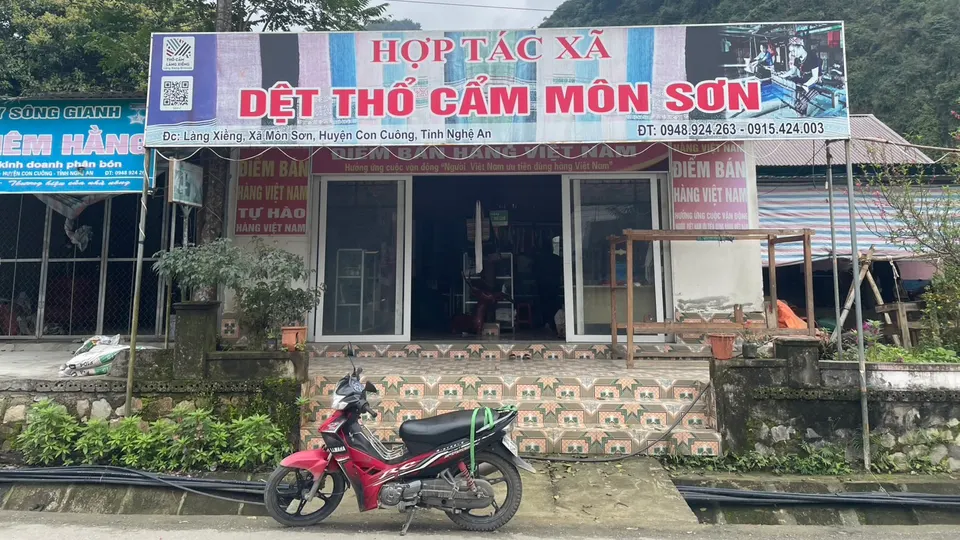
Three textiles get confused in travel writing. Chau Phong brocade belongs to the Cham Muslims of the Mekong Delta; My Nghiep brocade is woven by the Cham of the south-central coast; lanh My A is not brocade at all but the plain black silk of Tan Chau’s silk workshops, a short drive away.
| Chau Phong brocade | My Nghiep brocade | Lanh My A silk | |
|---|---|---|---|
| Where | Chau Phong commune, An Giang (Mekong Delta) | My Nghiep village, Ninh Phuoc commune, Khanh Hoa (south-central coast) | Former Long Chau ward, Tan Chau, An Giang |
| Made by | Cham Muslim families | Cham weavers, many in the My Nghiep cooperative | A handful of Tan Chau silk workshops |
| Look | Colourful geometric and floral patterns | Patterned brocade with old Cham motifs | Plain, glossy black satin, no pattern |
| How | Hand loom, ground and pattern heddles, 8–12 frames | Hand looms in two sizes, large ones for complex old motifs | Pure silk in satin weave, dyed black with mac nua fruit |
| Heritage status | National intangible heritage (2023) | See our Champa heritage guide | Provincial craft village; no national listing found as of November 2026 |
| Best for | Scarves, bags, a weaving visit | Seeing Cham coastal culture near Phan Rang | A rare, expensive length of silk |
Bao Van hoa (Báo Văn hóa) described My Nghiep in October 2026 as a village where weavers use large and small looms and still weave many old motifs entirely by hand, while also making souvenirs for visitors (Bao Van hoa). For the black silk, see our guide to lanh My A silk and how it is dyed: the mix-up comes from both crafts sharing the old Tan Chau address, and the national heritage listing announced in Tan Chau in 2023 was for Cham brocade, not lanh My A.
Why did the looms go quiet, and what is changing?
Older residents remember a time when more than 90% of households in the village had a loom and traders queued for orders; cheaper factory cloth then copied the best-selling designs, and young people left for city jobs, Nhan Dan reported in January 2026. Chau Phong cloth once sold beyond the village, as far as Cambodia, Thailand and Malaysia, according to VietnamPlus.
The decline is visible nearby. In Da Phuoc, another Cham village close to Chau Doc, Nhan Dan found in September 2024 that only one family, the weaver Romah’s, still worked its looms, and most of the scarves in her shop were bought in from elsewhere. That is the main reason to go to Chau Phong rather than Da Phuoc if you want to see weaving.
Tradition vs today. Chau Phong’s answer has been to tie the looms to tourism. The artisan Mohamad, born in 1968, began making bags, backpacks, hats and key rings for visitors in 2000, when sarongs and checked scarves were hard to sell in new markets. His workshop in Phum Soai hamlet now keeps just over 10 looms and employs about 15–20 local people at around 150,000 dong a day (VietnamPlus, October 2026). In October 2024 he became head of the Chau Phong Cham village community tourism cooperative (Nhan Dan counted 12 members, VietnamPlus 11), which links weaving with a beef curry kitchen, a beef sausage maker, Rappana drumming and visits to the mosque and old houses. The commune welcomed about 10,000 visitors in 2025, who stayed on average only about two hours, and its plan to 2030 aims for 60,000 visitors a year, including a pilot “one day as a Cham resident” tour.
How do you get to Chau Phong from Chau Doc?
By road, it is now a hop. The 667-metre Chau Doc bridge across the Hau River opened on 23 April 2024, cutting the trip between Tan Chau and Chau Doc to about 5 minutes from about 30 by ferry, and the Chau Giang ferry retired after 30 years of service (VnExpress). A Grab car or motorbike from central Chau Doc is the simplest option. If you are coming from Can Tho, see Can Tho to Chau Doc by bus or car.

By water it is slower but more scenic: you can combine Chau Doc’s floating fish-farm houses with a crossing to the Cham side, and the commune is planning a “heritage journey along the Hau River” boat programme linking the two. Agree the route, time and price with the boatman first.
| Option | Time from central Chau Doc | Best for | Check before you go |
|---|---|---|---|
| Grab car or taxi over the bridge | About 5 minutes on the bridge, plus town traffic | Families, rainy days, a booked workshop visit | Ask the driver to wait or book the return |
| Motorbike or bicycle | Similar, by the bridge | Independent travellers who ride confidently | Only ride if you are licensed and insured |
| Boat from the riverfront | Longer; agreed with the boatman | Combining the fish-farm rafts and the village | Route, duration and price are negotiated |
| Tour from a Chau Doc hotel | Half a day | First-timers who want a weaver expecting them | That the weaving visit is included, not just the mosque |
Address note: since 1 July 2025 An Giang has absorbed Kien Giang and the district level has been abolished in the new two-tier system (Vietnam Government Portal), so older guides that say “Chau Phong, Tan Chau town” now simply mean Chau Phong commune, An Giang.
What can you see, try and buy in Chau Phong?
A typical visit is a workshop, a mosque and a meal. At a weaving house you can watch yarn being rewound and the shuttle passing, try a few rows yourself and see a restored Cham wedding room, VietnamPlus reported in October 2026. The cooperative also serves halal food such as tung lo mo, a Cham beef sausage, and curry, and some visits include Rappana drums.
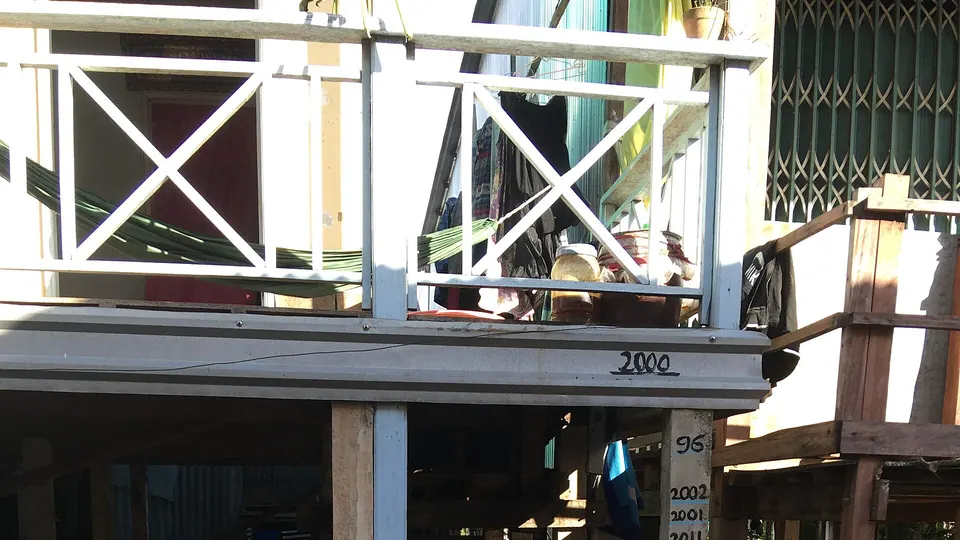
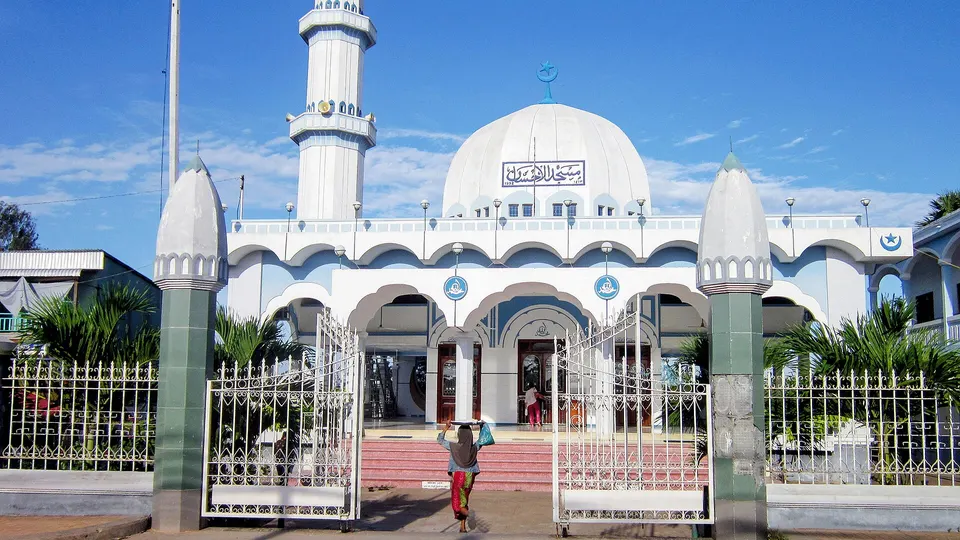
The village landmark is the Mubarak mosque, recognised as a national historical and cultural relic in 1989 and the only mosque in An Giang with that status, VOV World notes; it was first built in 1750 and rebuilt in concrete in the 1960s. The wooden stilt houses around it are the other thing to look at.
What to buy, and what to expect to pay:
- Checked scarves (khan ran) and sarongs are the traditional products; VietNamNet quoted about US$2.40–8.20 for these at Saphia’s workshop in September 2025.
- Bags, backpacks, hats and wallets are the newer tourist lines; Tuoi Tre News reported 50,000–300,000 dong an item in August 2025 (Tuoi Tre News).
- Hand-woven or bought in? Ask to see the loom a piece came from. Shops in the area can sell factory-made scarves next to their own weaving, as Nhan Dan found in Da Phuoc.
Prices change, so treat these as a guide, pay the maker directly and expect larger pieces, such as wedding outfits, to cost more.
How do you visit Chau Phong respectfully?
Chau Phong is a working village and a Muslim community, not a theme park. Muslims pray five times a day, at dawn, noon, afternoon, late afternoon and evening, each prayer lasting about 10 to 20 minutes, a Mubarak worshipper told VOV World, and the mosque holds a weekly sermon at Friday noon (VOV World). Plan your mosque visit between prayers.
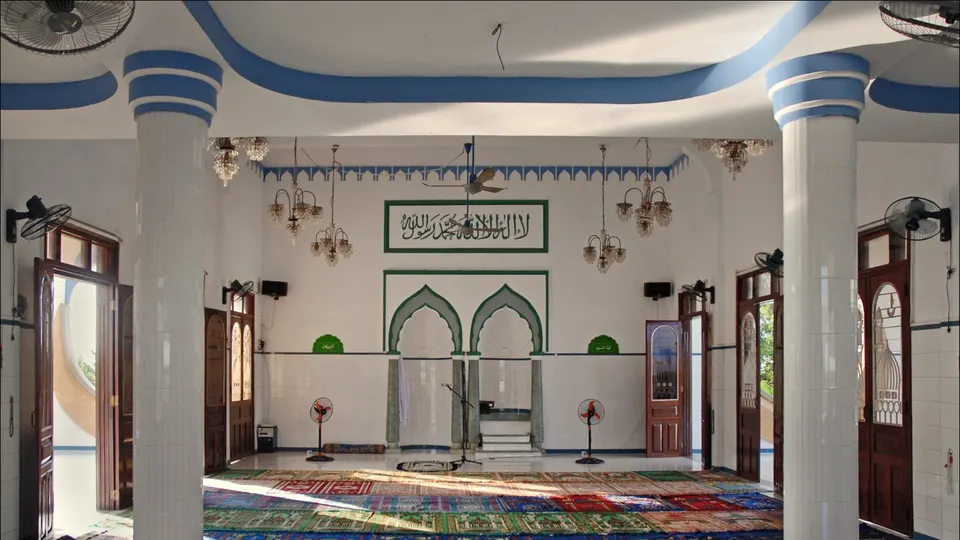
- Dress modestly: cover shoulders and knees, and bring a scarf if you hope to enter a mosque. Take off your shoes where you see others’ shoes at the door.
- Ask before you photograph weavers and, especially, women and elders. Workshops are family homes.
- Book the weaving visit. Workshops are family businesses, so a hotel or tour operator in Chau Doc can arrange a time with the workshop or the cooperative.
- Buy something, if you can. The cooperative exists because looms survive only when the cloth sells.
- Combine it well: a morning at Chau Phong pairs easily with the floating rafts and Sam Mountain in Chau Doc, or a stop on a longer Mekong Delta itinerary. If your trip falls in the fourth lunar month, Chau Doc is crowded for the Ba Chua Xu festival, so book ahead.
Frequently asked questions
Is Chau Phong Cham brocade a UNESCO heritage craft?
No, it is on Vietnam's own national list. The culture ministry added the Cham brocade weaving of Chau Phong commune to the national intangible heritage list by Decision 480 on 6 March 2023, and the listing was formally announced in Tan Chau on 10 December 2023.
How do I get from Chau Doc to the Chau Phong weaving village?
Cross the Hau River on the Chau Doc bridge, open since 23 April 2024, which takes about 5 minutes by car, motorbike or Grab; the old Chau Giang ferry took around 30 minutes. A boat from Chau Doc is the slower, more scenic option, with route and price agreed in advance.
Can tourists try weaving in Chau Phong?
Yes. The Mohamad weaving workshop in Phum Soai hamlet and the Chau Phong community tourism cooperative let visitors watch the looms and try weaving, often combined with the Mubarak mosque and a halal meal. Arrange a time ahead through a Chau Doc hotel or tour operator.
How much does Cham brocade cost in Chau Phong?
Tuoi Tre News reported in August 2025 that scarves, hats, bags and outfits from Chau Phong sold for about 50,000 to 300,000 dong an item. Prices change, so ask the maker before you choose.
Is Chau Phong brocade the same as lanh My A silk?
No. Chau Phong brocade is colourful, patterned Cham weaving; lanh My A is the plain black silk satin dyed with mac nua fruit in Tan Chau's old silk ward. Both come from the former Tan Chau area, which is why they are often mixed up.
Key sources
- Gắn kết du lịch để giữ nghề truyền thống (Nghề dệt thổ cẩm Chăm Châu Phong: Bảo tồn và phát triển du lịch) · Nhân Dân (11 January 2026)
- Nghi lễ vòng đời và nghề dệt thổ cẩm người Chăm là di sản văn hoá phi vật thể Quốc gia · Báo Quốc tế (10 December 2023)
- Di sản dệt thổ cẩm độc đáo hơn 100 năm tuổi của người Chăm ở An Giang · VietnamPlus / TTXVN (6 October 2026)
- Làng Chăm Châu Phong: Điểm đến hấp dẫn trên hành lang du lịch sông Mekong · VietnamPlus / TTXVN (17 October 2026)
- Cầu Châu Đốc thông xe · VnExpress (23 April 2024)
- In southern Vietnam, over-100-year-old Cham brocade weaving craft captivates tourists · Tuoi Tre News (28 August 2025)
- Mubarak mosque, a distinctive heritage site in An Giang province · VOV World (23 January 2026)
- Giữ hồn thổ cẩm Mỹ Nghiệp · Báo Văn hóa (8 October 2026)
All 12 sources and further reading
- Bảo tồn và phát huy nghề dệt thổ cẩm của đồng bào Chăm tại An Giang · Nhân Dân (19 September 2024)
- Cham family keeps five generations of brocade weaving alive · VietNamNet (1 September 2025)
- Exploring the Cham brocade weaving village of Chau Phong in An Giang · CAND (People's Police Newspaper) English (31 December 2025)
- Names and administrative centers of 34 provinces and centrally-run cities specified · Vietnam Government Portal
Keep exploring
 Central Vietnam · Culture Champa Heritage: Which Cham Towers to See, and When Which Cham towers are ruins and which still hold rites, when Kate falls (main rites 10 Oct 2026), My Son's 2026 fee, the Cham museum and respectful visits.
 South Vietnam · Travel Chau Doc (Châu Đốc): What to See in 2 Days, and When to Go Plan Chau Doc by the Cambodian border: Sam Mountain and its UNESCO-listed Ba Chua Xu festival, Cham villages, Tra Su forest, bun ca, flood season.
 South Vietnam · Culture Lanh My A Silk (Lãnh Mỹ A): How It's Dyed, How to Spot It Lanh My A, Tan Chau's black silk: how mac nua fruit dyes it in about 100 baths, why only a couple of workshops remain, how to spot the real thing, and visiting.