Central Vietnam · Culture
Champa Heritage: Which Cham Towers to See, and When
Which Cham towers are ruins and which still hold rites, when Kate falls (main rites 10 Oct 2026), My Son's 2026 fee, the Cham museum and respectful visits.
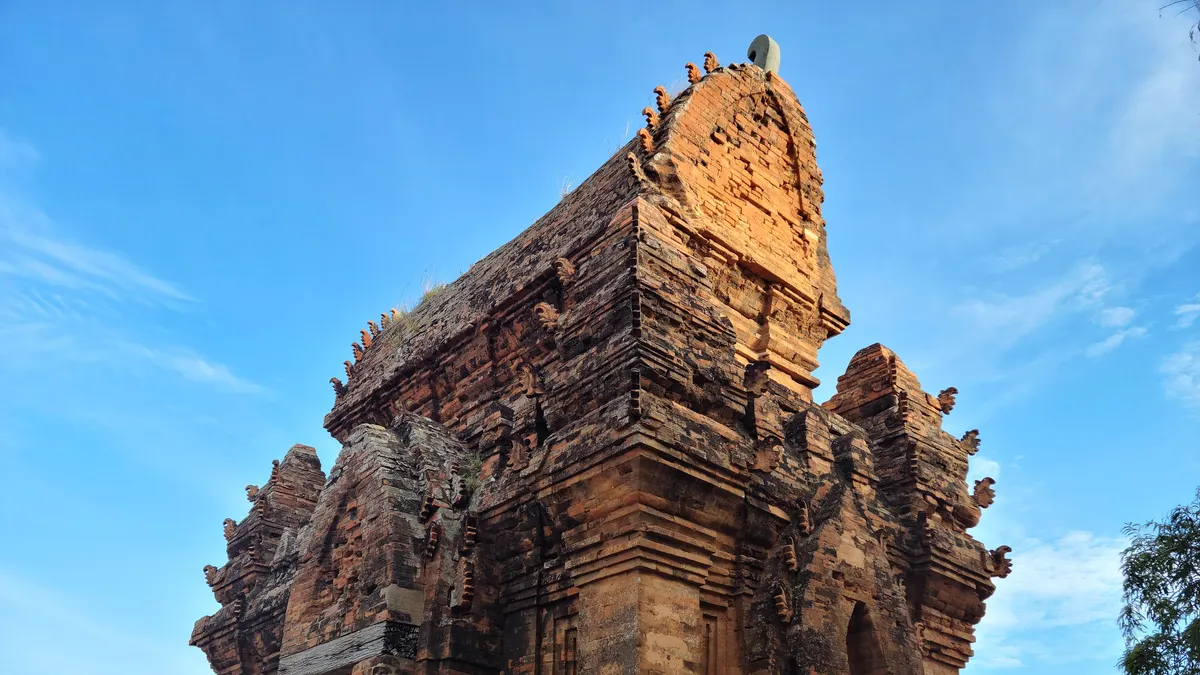
If you can see only a few Cham sites, pair the Museum of Cham Sculpture in Da Nang and the ruins of My Son with Po Klong Garai and Po Rome near Phan Rang, where Cham priests still hold rites. Time a southern trip for Kate: in 2026 the main temple rites took place on 10 October. As of February 2026, Da Nang’s People’s Council had set the My Son sightseeing fee at 40,000 dong per visit, the same for Vietnamese and foreign visitors.
Champa heritage is what survives in Vietnam of Champa (Cham Pa (Chăm Pa)), the coastal realm of the Cham (nguoi Cham (người Chăm)) that ruled much of the central and southern coast for well over a thousand years before the Vietnamese expanded south. You can see it in three forms: brick tower-temples strung along the coast from Da Nang (Đà Nẵng) to Phan Thiet (Phan Thiết), the sculpture in museums, and the living Cham community, whose festivals, pottery and weaving continue today. The best-known site, My Son (Mỹ Sơn), reflects a culture that “owed its spiritual origins to Indian Hinduism” and built temples “above all” to Shiva between the 4th and 13th centuries (UNESCO).
The key to reading any Cham site is one question: is it a ruin, or is it still a temple? Most towers in the north of the old realm are now heritage sites, while several in the far south still host Cham rites. This guide sits within our Vietnamese culture hub and ties together the site guides in our Central Vietnam section, so you can choose which places to see and know how to behave when you get there.
Champa heritage at a glance
Place names follow the provincial merger of 1 July 2025: the former Quang Nam (Quảng Nam) is now part of Da Nang city, Binh Dinh (Bình Định) part of Gia Lai, Ninh Thuan (Ninh Thuận) part of Khanh Hoa (Khánh Hòa) and Binh Thuan (Bình Thuận) part of Lam Dong (Bao Phap Luat).
| Site | Where now (former province) | What survives | Date (as sources give it) | Worship today |
|---|---|---|---|---|
| My Son | Da Nang city (former Quang Nam) | 71 standing monuments in eight groups, many ruined | 4th–13th century | Heritage site; unauthorised rituals not allowed |
| Museum of Cham Sculpture | Central Da Nang | Sandstone sculpture from many Cham sites | Sculpture of the 5th–15th century; museum founded 1915 | No (museum) |
| Thap Doi (Tháp Đôi) | Quy Nhon (Quy Nhơn), Gia Lai (former Binh Dinh) | Two towers, about 20 m and 18 m | Late 12th century | Not documented in our sources |
| Banh It (Bánh Ít) | Tuy Phuoc Bac (Tuy Phước Bắc) commune, Gia Lai (former Binh Dinh) | Four towers on a hill | Late 11th–early 12th century | Ceremonies no longer regularly held |
| Po Nagar | Nha Trang, Khanh Hoa | Four large towers on the upper level; main tower about 23 m | 8th–13th century | Yes: Cham and Vietnamese worshippers |
| Po Klong Garai | Near Phan Rang, Khanh Hoa (former Ninh Thuan) | Main tower, fire tower and gate tower | Late 13th–early 14th century | Yes: Cham Ba (Cham Bà)-la-mon (môn) rites and Kate (Katê) |
| Po Rome | Near Phan Rang, Khanh Hoa (former Ninh Thuan) | One of the latest Cham towers | 17th century | Yes: Kate and other annual rites |
| Po Sah Inu (Inư) | Phan Thiet, Lam Dong (former Binh Thuan) | Tower group with a main tower | Not covered by our sources | Yes: main rites of Kate in the former Binh Thuan |
What was Champa, and when did it exist?
Champa grew up along the central and southern coast of today’s Vietnam. Britannica dates its formation to CE 192, during the break-up of China’s Han dynasty, and Chinese records first knew it as Lin-yi (Lam Ap (Lâm Ấp)). Over the centuries it came under Indian cultural influence, which is why its temples honour Shiva, Vishnu and other Hindu gods, and why Mahayana Buddhism also took root in the north of the realm.
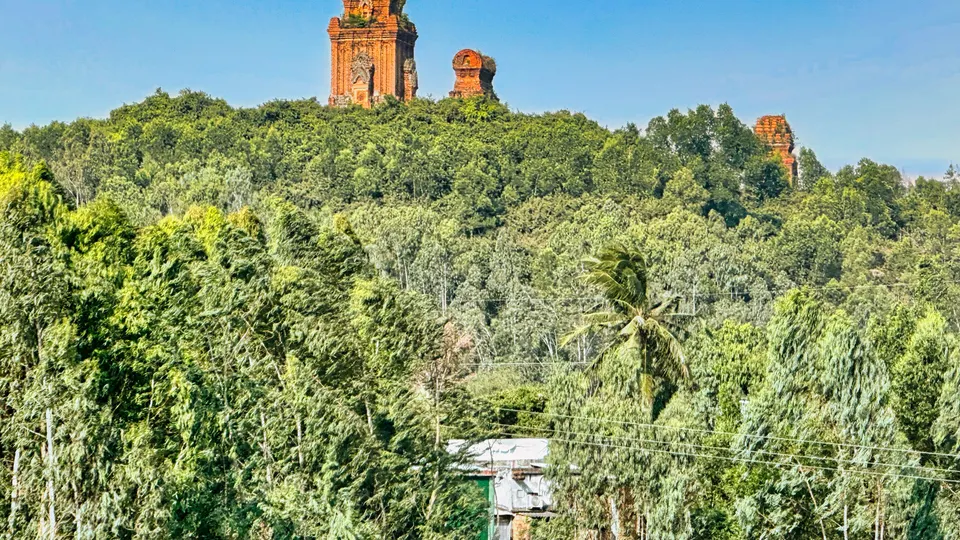
It was probably not one kingdom in the modern sense. The Vietnamese scholar Tran Ky Phuong (Trần Kỳ Phương) describes Champa as “a federation of several regions”, each centred on a river mouth and port: Amaravati on the Thu Bon (Thu Bồn) River (around My Son and the river’s mouth at Hoi An), Vijaya on the Con (Côn) River (around Quy Nhon), Kauthara on the Cai (Cái) River (Nha Trang) and Panduranga on the Dinh River (Phan Rang) (Asia Research Institute). That model explains why the towers cluster near river mouths and why their styles differ from one region to the next.
When it ended is debated. Vietnamese expansion pushed the frontier south step by step; the period that Chinese and Vietnamese sources call Chiem Thanh (Chiêm Thành) closes in 1471 in Tran Ky Phuong’s chronology. Britannica says Champa was “entirely absorbed in the 17th century”, while other historians, such as Edyta Roszko in a 2019 NYU Shanghai lecture, date the formal incorporation of Panduranga, the last Cham territory, to 1832 under the Nguyen (Nguyễn) dynasty. Read “Champa” on a museum label as a span of roughly the 2nd century to somewhere between the 17th and 19th centuries, depending on how you define its end.
Who are the Cham today, and what do they believe?
The Cham are one of Vietnam’s officially recognised ethnic minorities, and they are very much present: the 2019 survey counted 178,948 people. Most live on the south-central coast in the former Ninh Thuan and Binh Thuan provinces, the old heartland of Panduranga, while Muslim Cham communities live in An Giang, Tay Ninh and Ho Chi Minh City, among other places. Their language belongs to the Austronesian (Malayo-Polynesian) family, related to Malay rather than to Vietnamese, and Cham families traditionally trace descent through the mother’s line (Nhan Dan).
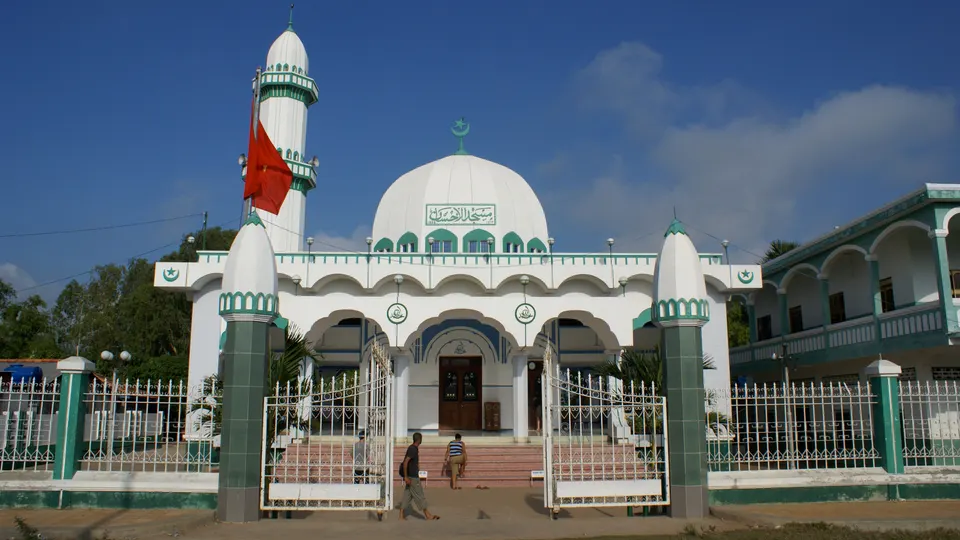
Religion is where outsiders most often oversimplify. Scholars and community members usually distinguish three groups, and the labels themselves are contested:
- Ba (Bà)-la-mon (Chăm Bà-la-môn, also called Ahier). The Vietnamese name means “Brahman”, but researchers note it is a label, not a sign that its followers are Brahmans. It is a Cham religion that blends Hindu elements with ancestor veneration and local deities, and its priests serve the towers at festivals such as Kate.
- Bani (Cham Bani (Chăm Bàni)). Bani communities in Khanh Hoa and Lam Dong have absorbed Islamic elements, with the Qur’an recited in their rites, but keep distinctly Cham customs. Whether Bani is a form of Islam or a separate Cham religion is debated, including among Bani themselves; a 2022 study in the Journal of Southeast Asian Studies traces disputes over how it is written on identity cards.
- Cham Islam (Cham (Chăm) Islam). Mainly Sunni Muslims, found in the Mekong Delta around Chau Doc (Châu Đốc) in An Giang, in Ho Chi Minh City and in some villages of the former Ninh Thuan. For the Cham Muslim villages and mosques across the river from Chau Doc, see our Chau Doc and Tra Su guide and the wider Mekong Delta guide.
The difference shows in the calendar. The Bani month of Ramuwan (Ramưwan), which starts in the ninth month of the Islamic calendar, opens with families visiting and tending graves to invite the ancestors home; Bani worshippers then keep a short fast of a few days at their temples, while the Cham Islam community in the same area fasts for the whole month at the mosque, according to Nhan Dan (Nhân Dân) in 2025. Same people, same villages, different practice: a reason never to describe “the Cham religion” in the singular.
Which Cham towers can you visit, and which are still in use?
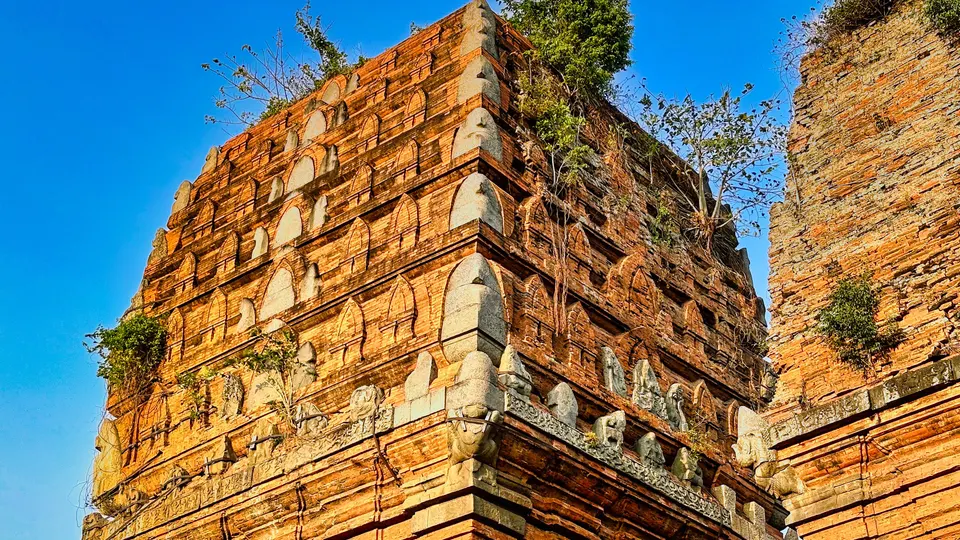
At the heart of a Cham temple stands the main tower, the kalan, a brick tower with a shrine room inside; at Banh It and Po Klong Garai it is joined by a gate tower and a fire tower. The surviving sites fall into two groups that feel very different on the ground: ruins kept as heritage, and towers where Cham priests still perform rites.
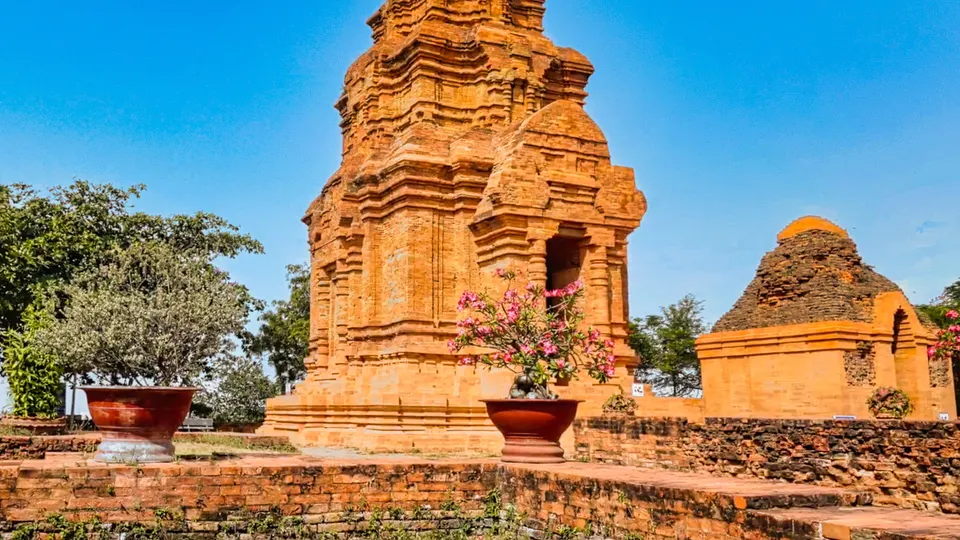
In the north of the old realm, the towers are heritage sites. My Son, in a valley inland from Hoi An (Hội An), was Champa’s main religious centre and holds the largest group of ruins; it is managed as a heritage site, and the visitor rules forbid unauthorised rituals. Around Quy Nhon, the former Binh Dinh province had eight tower complexes with 14 towers still standing, according to VietNamNet, including Thap Doi in town and Banh It on a hill to the north, where Vietnam (Việt Nam) News reports that traditional Cham ceremonies are no longer regularly held. Our Quy Nhon guide covers the towers there in detail.
What My Son costs. On 11 February 2026 Da Nang’s People’s Council set the sightseeing fee for My Son at 40,000 dong per person per visit, the same for Vietnamese and foreign visitors, with free entry for children under 16, students and Vietnamese citizens aged 60 and over, Bao Van hoa reported. The same paper reported that day that the My Son management board, which had charged 100,000 dong for Vietnamese and 150,000 dong for foreign visitors, services included, for about ten years, was studying a single price of 250,000 dong, so check the price at the gate before you go.
Po Nagar in Nha Trang is a shrine that changed hands without closing. The towers on Cu Lao (Cù Lao) hill, dated to the 8th–13th centuries, honour the goddess Po Nagar, “Mother of the Land”, and today Vietnamese and Cham worshippers pray there together. Vietnamese settlers took the goddess into their own worship as Thien Y A Na (Thiên Y A Na); our Nha Trang guide explains how, and in Hue she is the Holy Mother of the Hon Chen temple on the Perfume River.
In the south, near Phan Rang, the towers are still Cham temples. Po Klong Garai, on Trau (Trầu) hill in today’s Do Vinh (Đô Vinh) ward, was built in the late 13th to early 14th century and honours King Po Klong Garai, whom Cham tradition credits with building irrigation works. It became a special national monument in 2016, and it still hosts Cham Ba-la-mon rituals and Kate (VietnamPlus). Po Rome, also in the former Ninh Thuan, dates from the 17th century and is one of the last towers the Cham built; the community remembers King Po Rome for irrigation and religious harmony, and the tower hosts Kate and other annual rites, according to the Khanh Hoa tourism portal. Further south, Po Sah Inu above Phan Thiet is where the main Kate rites of the former Binh Thuan province take place.
The pattern follows history. Panduranga, around Phan Rang and Phan Thiet, was the last Cham territory to be incorporated into Vietnam, and it is where most Cham live today, so it is where the temples kept their priests and congregations. Po Sah Inu is the easiest of these to add to a beach trip: it stands on Ba Nai (Bà Nài) hill in Phan Thiet, and our Mui Ne and Phan Thiet guide fits it into a stay with the dunes and the fishing harbour.
Why start at the Museum of Cham Sculpture?
Because many of the towers you visit are bare inside, and many of the finest statues, altars and pedestals from Cham sites are now in the Museum of Cham Sculpture (Bảo tàng Điêu khắc Chăm) on the west bank of the Han (Hàn) River in Da Nang. It was established in late 1915 with major contributions from the French archaeologist Henri Parmentier, and its sculpture dates from the 5th to the 15th century, including the Tra Kieu (Trà Kiệu), My Son E (Mỹ Sơn E)1 and Dong Duong (Đồng Dương) pedestals (Vietnam News).
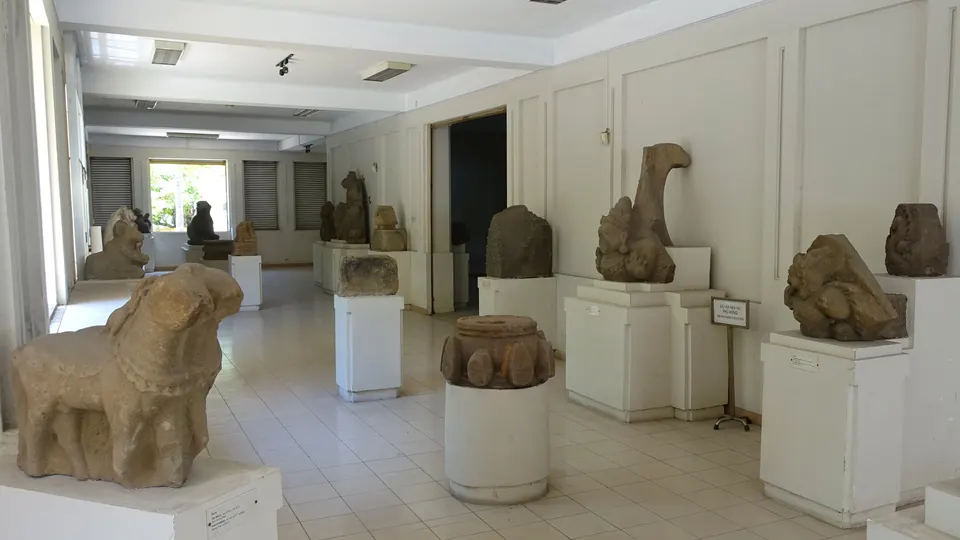
The main galleries are named after the places where the pieces were found, My Son, Tra Kieu, Dong Duong and Thap Mam (Tháp Mắm) in Binh Dinh, according to the Vietnam National Authority of Tourism, so you can compare regional styles side by side before you see the sites themselves. The contrast also works in reverse: at Po Klong Garai, whose statue of the deified king was recognised as a national treasure in 2024, the temple is still in use.
The museum stands at No. 2, 2/9 Street in Hai Chau ward, and it was among the Da Nang museums that opened free of charge for the National Day holiday on 2 September 2026, VOV reported.
What is Kate, and can visitors attend?
Kate (also written Kate or Ka-te) is the largest festival of the Cham Ba-la-mon community. It falls in the seventh month of the Cham calendar, which in recent years has meant October: 18–20 October in 2017, and 20–22 October in 2025. VietNamNet describes it as a time when the Cham give thanks to deified kings and mandarins (Pokal), village spirits (Po Play) and ancestors (Mu Kay), and the Ministry of Culture, Sports and Tourism announced its recognition as national intangible heritage at Po Klong Garai during the 2017 festival (VietNamNet). The Kate of the Cham in Binh Thuan was added separately in April 2022.
In 2026 Khanh Hoa’s Kate programme ran from 5 to 12 October, with the main rites at Po Klong Garai and Po Rome on 10 October and the first Bau Truc Cham pottery festival in Ninh Phuoc commune on 10–12 October, Bao Van hoa reported; VOV described the procession for the goddess’s robes setting off on 9 October. In Lam Dong, Kate at Po Sah Inu ran from 9 to 12 October 2026, according to Vietnam News. The dates move with the Cham calendar, so check each year’s programme before you book.
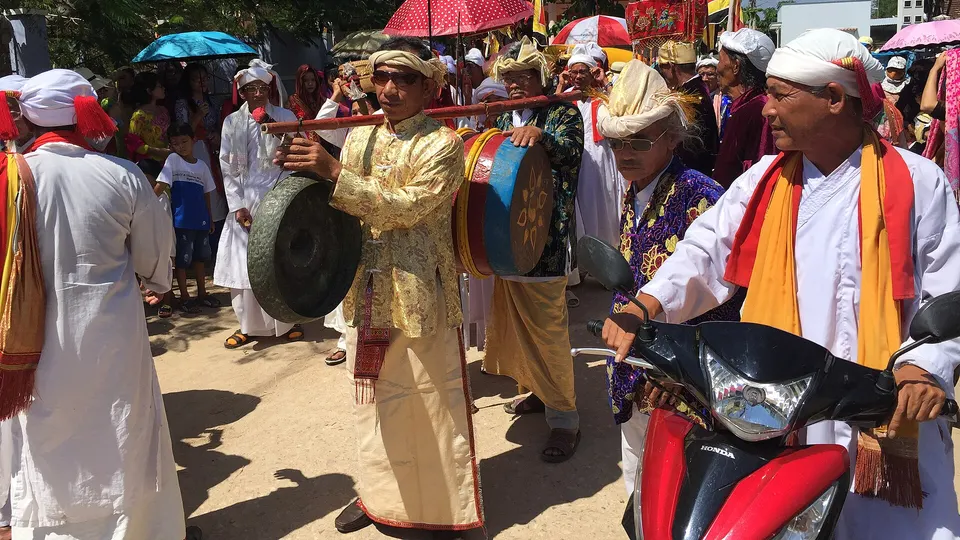
How it unfolds. Kate is celebrated at the towers, in villages and in family homes. In the former Ninh Thuan, the 2025 programme opened with a procession carrying the robes of the goddess Po Inu Nugar (Po Inư Nưgar), kept by the neighbouring Raglai community, to her temple at Huu Duc (Hữu Đức) village, with rites at Po Klong Garai and Po Rome and celebrations in villages and families, according to Bao Van hoa (Báo Văn hóa). At Po Sah Inu in Phan Thiet the central rite is the robing of the goddess’s statue; the festival there was revived in 2005, Nhan Dan reports.
Tradition and today. The temple rites, led by Cham priests, now sit alongside art programmes and other events planned by the provincial culture department, and those public events are where most visitors spend their time. Not every Cham family takes part in the same way: Kate belongs to the Ba-la-mon community, while Bani families mark their own calendar around Ramuwan. Visitors are welcome at the public parts; the temple rites are worship, not a show.
How are Bau Truc pottery and My Nghiep brocade changing?
Two Cham crafts near Phan Rang are the easiest way to meet the living culture outside festival time. Bau Truc (Bàu Trúc) pottery is made mainly by women, who shape each piece by hand without a wheel, walking around the clay as they build it up. The pieces are left unglazed and fired in the open for seven to eight hours with firewood and straw. In 2022 UNESCO inscribed the “art of pottery-making of Cham people” in Bau Truc and Binh Duc (Bình Đức) villages on its List of Intangible Cultural Heritage in Need of Urgent Safeguarding, citing urbanisation, the cost of raw materials, ageing artisans and young people’s reluctance to learn (UNESCO). Vietnam had already listed the craft as national heritage in 2017.
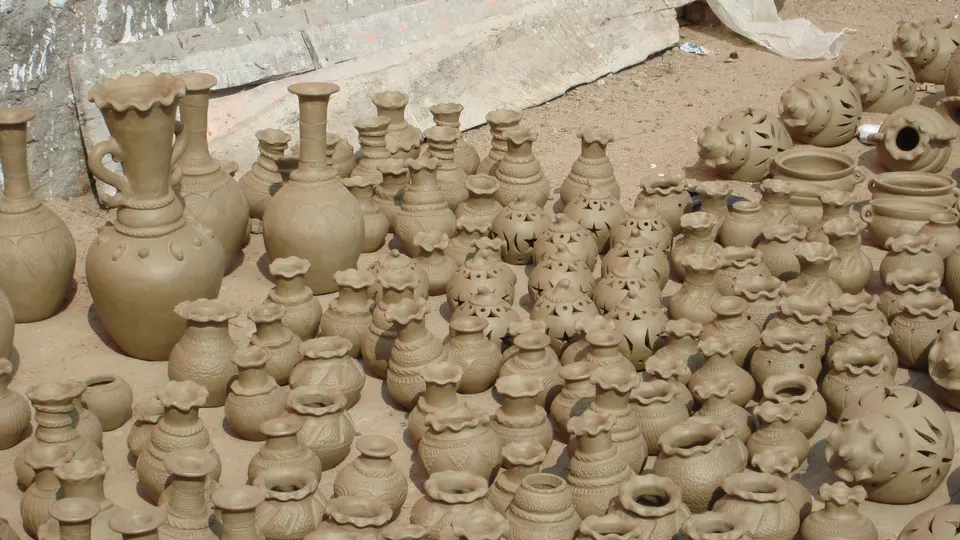
The “urgent” label is the point: this is a craft under pressure, not a museum piece. Vietnam News reports that more than 500 families live in Bau Truc, now in Ninh Phuoc (Ninh Phước) commune, and that about 85 per cent make pottery; the Ministry has approved a project to turn the village into a community-tourism hub linked with My Nghiep (Mỹ Nghiệp). Buying directly from the potters is one way visitors help keep it viable.
My Nghiep brocade (thổ cẩm Mỹ Nghiệp), also in Ninh Phuoc commune, is woven entirely by hand, mostly by women. VOV reported in August 2026 that about 400 households keep the craft and that artisans preserve nearly 30 traditional motifs, while older cloth was mostly black and white and newer pieces use more colours. Tourists now buy most of what is woven, and local Cham customers order less often: a clear case of a household craft turning into a heritage product. Further south, the Cham Muslim weavers of Chau Phong (Châu Phong) in An Giang have their own brocade tradition, listed as national heritage in 2023; our guide to Chau Phong Cham brocade explains how it is woven and how to visit.
How do you visit Cham heritage respectfully?
Treat every tower as a temple, even when it is a ruin, because for many Cham it remains sacred ground. Da Nang’s tourism portal asks My Son visitors to wear “neat, modest, and respectful clothing”, not to touch, climb or carve on brick walls and stone steles, and not to perform unauthorised rituals or offerings (Da Nang Fantasticity). Those rules are a sensible baseline everywhere.
- At living temples (Po Klong Garai, Po Rome, Po Sah Inu, Po Nagar), cover shoulders and knees, follow any instructions from staff or priests, and do not touch offerings.
- At Kate, watch the rites from the edge, keep paths clear for the priests and processions, and ask before photographing people, especially priests and elders.
- In villages, remember you are visiting people’s homes and workplaces. Buy pottery and brocade directly, and do not treat Cham dress or ceremonies as a photo backdrop.
- At mosques in An Giang, dress modestly, ask before entering and avoid prayer times.
- Mind the words. “Cham” is a people, not a period: avoid calling the culture “lost”, and avoid labelling all Cham as Hindu or Muslim.
A simple route through the coast: start with the museum in Da Nang and My Son, add the towers around Quy Nhon, see Po Nagar in Nha Trang, and finish near Phan Rang, where Po Klong Garai, Po Rome, Bau Truc and My Nghiep show Cham heritage as a living culture rather than a ruin.
Frequently asked questions
Are the Cham people Hindu or Muslim?
Both, and neither label fits every family. In Khanh Hoa and Lam Dong many Cham follow Ba-la-mon (Ahier), a Hindu-influenced religion centred on ancestors and Cham deities, others follow Bani, which has absorbed Islamic elements, and the Cham of the Mekong Delta are Sunni Muslims.
Can tourists attend the Kate festival?
Yes. Visitors can watch the processions, the rites at Po Klong Garai, Po Rome and Po Sah Inu and the art programmes; in 2026 the main rites near Phan Rang were held on 10 October. Kate is a religious festival, so stay out of the way of offerings and ask before photographing people.
How much does it cost to visit My Son?
In February 2026 Da Nang's People's Council set the My Son sightseeing fee at 40,000 dong per visit for Vietnamese and foreign visitors alike, with children under 16 and students free. The My Son management board was also studying a single 250,000 dong ticket, so check the gate price before you go.
Which Cham site should I see first?
Start with the Museum of Cham Sculpture in Da Nang, because many of the finest statues and altars from My Son, Tra Kieu and Dong Duong are there rather than at the sites. Then see My Son for the ruins and Po Klong Garai or Po Rome near Phan Rang for towers that are still Cham temples.
Do I need to dress modestly at Cham towers?
Yes. Da Nang's tourism portal asks My Son visitors to wear neat, modest clothing and not to touch or climb the brick walls, and at working temples such as Po Klong Garai, Po Rome, Po Sah Inu and Po Nagar you should cover shoulders and knees and leave offerings alone.
Key sources
- My Son Sanctuary · UNESCO World Heritage Centre
- Decision of the Intergovernmental Committee 17.COM 7.A.3: Art of pottery-making of Chăm people · UNESCO Intangible Cultural Heritage (2022)
- Cultural Resource and Heritage Issues of Historic Champa States in Vietnam (Trần Kỳ Phương) · Asia Research Institute, National University of Singapore, Working Paper 75 (2006)
- Dân tộc Chăm · Nhân Dân (24 October 2022)
- Khám phá vẻ đẹp di sản tháp Chăm ở Khánh Hòa · VietnamPlus (15 July 2025)
- Ministry recognises Cham festival as intangible cultural heritage · VietNamNet (22 October 2017)
- National Treasures on display in Đà Nẵng City · Việt Nam News (20 November 2025)
- My Son Sanctuary · Đà Nẵng tourism portal (Đà Nẵng Fantasticity, 26 September 2025)
All 32 sources and further reading
- Thống nhất mức thu phí tham quan tại các công trình văn hóa, bảo tàng · Báo Văn hóa, 11 February 2026
- Thêm nhiều sản phẩm mới tại Mỹ Sơn · Báo Văn hóa, 11 February 2026
- Lễ hội Katê 2026: Để di sản bước ra khỏi tháp Chăm · Báo Văn hóa, 3 October 2026
- Khánh Hòa rộn ràng Lễ hội Katê, bảo tồn, lan tỏa sắc màu văn hóa Chăm · VOV, 10 October 2026
- Katê Festival celebrates vibrant heritage of Chăm people · Việt Nam News (October 2026 festival; article undated on page)
- Đà Nẵng miễn phí vé tham quan các bảo tàng trong Ngày Quốc khánh 2/9 · VOV, 1 September 2026
- Champa · Encyclopaedia Britannica
- Talk abstract: Edyta Roszko on Champa and the Vietnamese coast · NYU Shanghai Center for Global Asia (14 November 2019)
- Praxis and policy: Discourse on Cham Bani religious identity in Vietnam (William B. Noseworthy and Phạm Thị Thanh Huyền) · Journal of Southeast Asian Studies 53(4), Cambridge University Press (2022)
- Độc đáo Lễ hội Ramưwan của đồng bào Chăm Ninh Thuận · Nhân Dân (20 March 2025)
- Lễ hội Katê của người Chăm Bình Thuận trở thành Di sản văn hóa phi vật thể quốc gia · Nhân Dân (4 April 2022)
- Po Rome Tower · Khánh Hòa provincial tourism portal
- Restoration work highlights value of unique Cham towers · Việt Nam News (12 October 2012)
- Cham towers in Binh Dinh province · VietNamNet (18 March 2020)
- Bánh Ít Tower: preserving a millennium-old Chăm heritage in Gia Lai · Việt Nam News (14 September 2025)
- Seven additional national intangible cultural heritages recognized · Vietnam National Authority of Tourism (26 June 2017)
- Lễ hội Katê của dân tộc Chăm là Di sản văn hóa phi vật thể quốc gia · Báo Văn hóa (26 August 2019)
- Khánh Hòa: Nhiều hoạt động đặc sắc tại Lễ hội Katê năm 2025 · Báo Văn hóa (14 October 2025)
- Bàu Trúc pottery village to become a model for community-based tourism · Việt Nam News
- Preserving UNESCO-recognised Cham pottery-making craft · VOV (4 December 2022)
- Thổ cẩm Chăm Mỹ Nghiệp: Từ ngôn ngữ văn hóa đến sản phẩm du lịch độc đáo · VOV (9 August 2026)
- Nghi lễ vòng đời và nghề dệt thổ cẩm người Chăm là di sản văn hoá phi vật thể quốc gia · Báo Quốc tế (10 December 2023)
- Museum of Cham Sculpture · Vietnam National Authority of Tourism
- Cả nước chính thức còn 34 tỉnh, thành phố · Báo Pháp Luật Việt Nam (12 June 2025)
Keep exploring
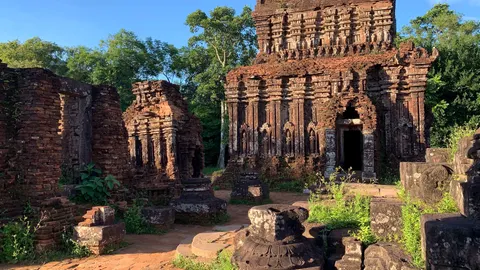 Central Vietnam · Travel My Son (Mỹ Sơn): Is It Worth It, Tickets and How to Visit Is My Son worth a half day from Hoi An? Ticket prices as of 2026, the best months and hours, and how to read the Cham towers, war damage and restoration.
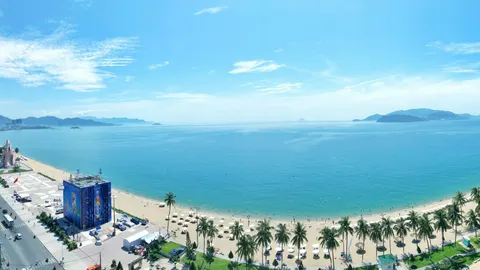 Central Vietnam · Travel Is Nha Trang Worth It? What to See, Eat and When to Go Is Nha Trang worth visiting? The bay and Hon Mun reefs, Po Nagar Cham towers, mud baths, fish-cake noodles, the January-August dry season and 2026 flood risks.
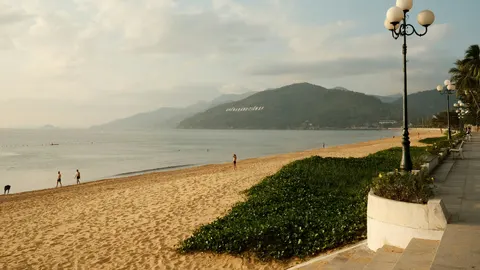 Central Vietnam · Travel Quy Nhon (Quy Nhơn): Is It Worth It and How Many Days? Is Quy Nhon worth it, and for how many days? Cham towers, Ky Co and Eo Gio, where to eat banh xeo, flights and the dry season, checked November 2026.
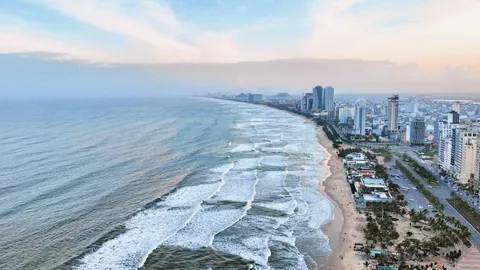 Central Vietnam · Travel Da Nang (Đà Nẵng): What to Do, Where to Stay, How Long Da Nang travel guide: the best things to do, whether to stay in Da Nang or Hoi An, a 2–4 day plan with Hue, what to eat and when the rains usually come.