All three regions · Culture
Mid-Autumn 2027 in Vietnam (Tet Trung Thu): Where to Go
Tet Trung Thu, Vietnam's Mid-Autumn Festival, by region: Hang Ma lanterns in Hanoi, Hoi An and Hue, Saigon's Cholon lantern street, and the 2027 date.
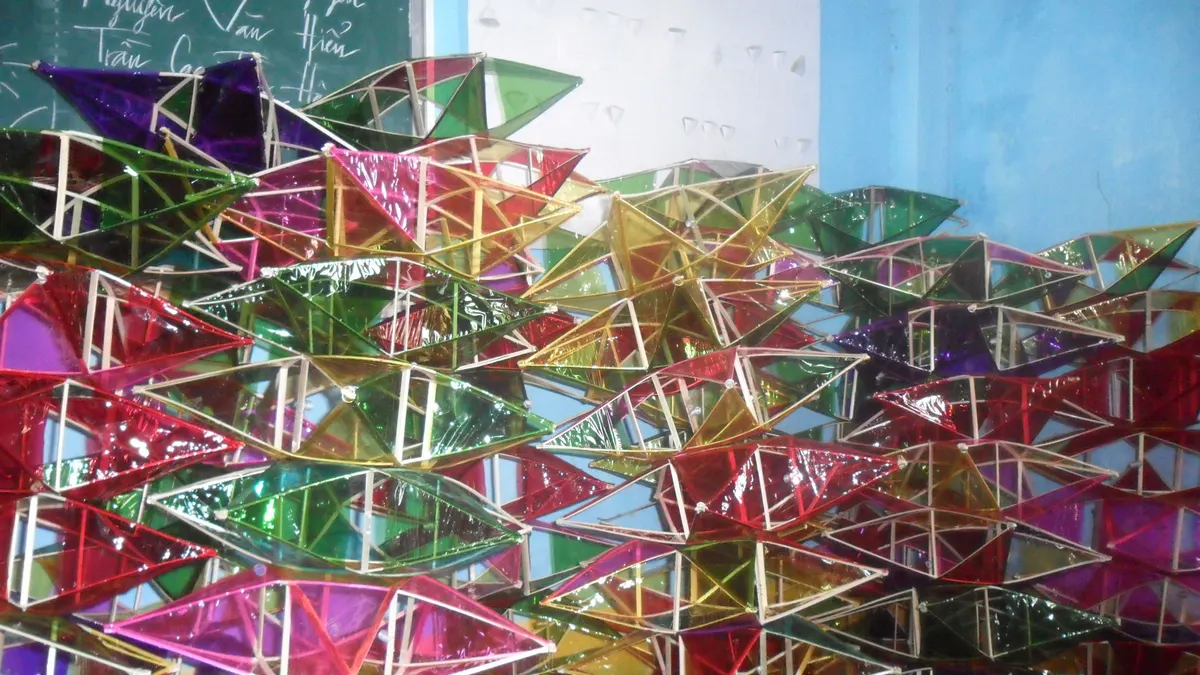
Tet Trung Thu (Tết Trung Thu), the Mid-Autumn Festival, falls on the full moon of the eighth lunar month, and in Vietnam it belongs to children. The next one falls on Wednesday 15 September 2027, the 15th day of the eighth lunar month in the Hong Kong Observatory’s 2027 calendar table (checked November 2026); it is not a public holiday, and the lantern streets and parades fill the evenings for two to four weeks before the full moon. Children carry star-shaped lanterns through the streets, follow the lion dancers and share out a tray of mooncakes and fruit once the moon is up; the national tourism authority calls it simply the “Children’s Festival” (Vietnam National Authority of Tourism). Many East Asian communities celebrate the same full moon, but the Vietnamese version has its own legends, toys and customs.
This guide explains what the festival is, then compares how it looks in the North, the Centre and the South, from Hanoi’s toy street to Saigon’s lantern street, and ends with the 2027 date and how to join in. It sits in our Vietnamese culture by region section; for the other big lunar festival, see Tet in North, Central and South Vietnam. Schedules and prices below come from dated Vietnamese press reports, with their dates.
What is Tet Trung Thu, and why is it a children’s festival?
Tet Trung Thu means “mid-autumn festival”. It is usually traced to the farming year: the autumn full moon came in cool weather, with the harvest near or done, a good time to gather. Bao Van Hoa (Báo Văn Hóa) notes that under the Ly (Lý) dynasty the capital, Thang Long (Thăng Long), already celebrated it with water puppets and lantern processions, and that it grew lavish at the palace of the Trinh lords in the Le–Trinh period.
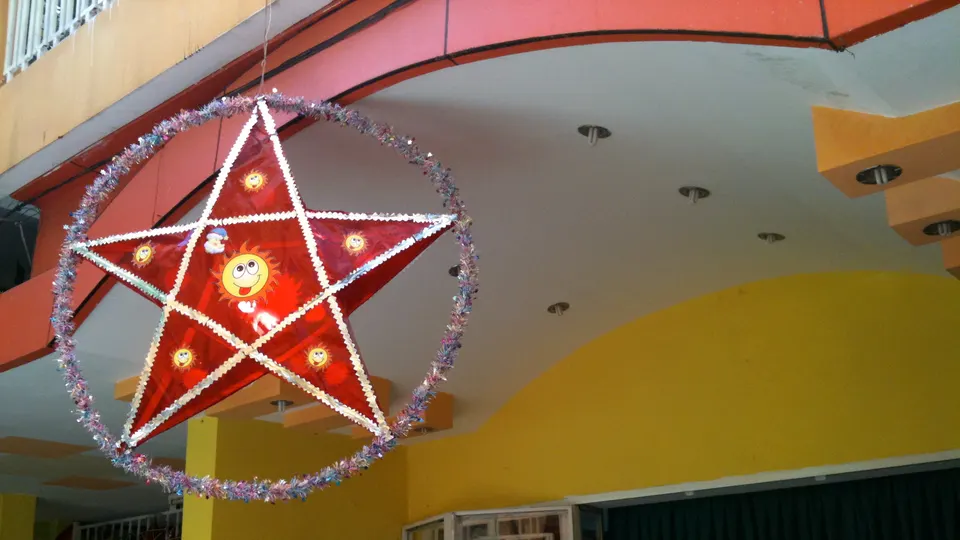
Why children. The scholar Phan Ke Binh (Phan Kế Bính), in his book on Vietnamese customs, already called it tet tre em, “the children’s festival”, Nhan Dan (Nhân Dân) recalls. After 1945 the festival fell at the start of the school year, and parents put toys on the festive tray as wishes for their children’s studies. Today kindergartens and schools hold their own Mid-Autumn parties, and residential groups organise lantern parades and gifts for the children of the street.
The legend children hear. The best-known story is not the Chinese moon goddess but Cuoi (Cuội), a man who clung to a magic banyan tree as it floated up to the moon; the dark shape on the full moon is said to be Cuoi sitting under his tree. The moon lady, Hang Nga (Hằng Nga), is the other figure children know from the story.
What else happens. Bao Van Hoa lists the customs that build the evening: lantern processions (ruoc den (rước đèn)), lion dances, the star lantern (den ong sao (đèn ông sao)) and breaking the tray (pha co (phá cỗ)), when the children are allowed to eat the offerings. Older people also remember hat trong quan (hát trống quân), a sung exchange between young men and women that once made the festival a time for courtship, according to Nhan Dan.
How does Mid-Autumn differ in the North, the Centre and the South?
The shared core is the same in every region: the full moon, the tray of mooncakes and fruit, lanterns and lion dances for children. What changes is the showcase each region is known for, and who builds it.
| North | Centre | South | |
|---|---|---|---|
| Signature place | Hang Ma street and the Old Quarter, Hanoi | Hoi An old town; central Hue | Luong Nhu Hoc lantern street, Cholon (Saigon) |
| Lanterns | Star lanterns, revolving lanterns, carp lanterns; papier-mache masks and toys | Silk lanterns of Hoi An; children’s lantern procession | Thousands of lanterns, traditional and LED, sold and displayed in one street |
| Big set piece | Hanoi’s lantern parade around Hoan Kiem Lake; Tuyen Quang’s giant lantern models (Thanh Tuyen festival) | Hoi An’s four-day programme (12th–15th lunar day); Hue’s street lion-dance procession | Cholon lantern street with ward-run opening; Phan Thiet’s schoolchildren’s parade (last reported 2019) |
| Dances | Lion dance; Tay “cat lion” in the far north | Lion, unicorn and dragon dances; the Thien Cau (heavenly dog) dance in Hoi An | Lion dance in Cholon and across the city |
| Tray | Banh nuong, banh deo, persimmons, bananas with com (young green rice) | Fruit, mooncakes and tea set out for gods and ancestors, then broken by children | Mooncakes and a five-fruit tray on the altar |
| 2025–2026 dates we found | Hanoi parade 25 Sep 2026; Thanh Tuyen 19–25 Sep 2026 | Hoi An 3–6 Oct 2025; Hue procession 4 Oct 2025 | Cholon lantern street 24 Sep–6 Oct 2025 |
Reading the table. The difference is less about belief than about scale and who organises. In Hanoi, the Old Quarter’s trade streets sell the toys and the ward runs the parade. In Tuyen Quang, residents’ groups build large lantern models for a night parade. In Hoi An the whole old town becomes the stage, and in Saigon the festival concentrates in Cholon, the old Chinese-Vietnamese commercial district, which Tuoi Tre (Tuổi Trẻ) calls the long-standing cradle of lantern making and trade.
Hanoi and the North: Hang Ma, the lantern parade and Tuyen Quang’s giant lanterns
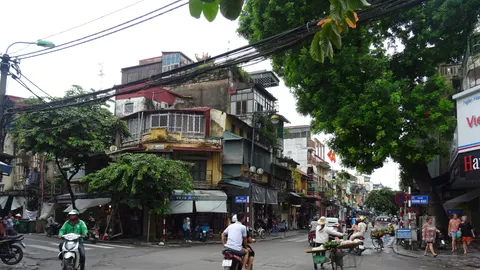
In Hanoi, the festival starts on Hang Ma (Hàng Mã), a votive-paper street in the Old Quarter that fills with lanterns and toys weeks before the full moon; our guide to the Old Quarter’s trade streets explains why this street sells paper goods at all. The national tourism authority also points visitors to neighbouring Luong Van Can (Lương Văn Can) for toys.
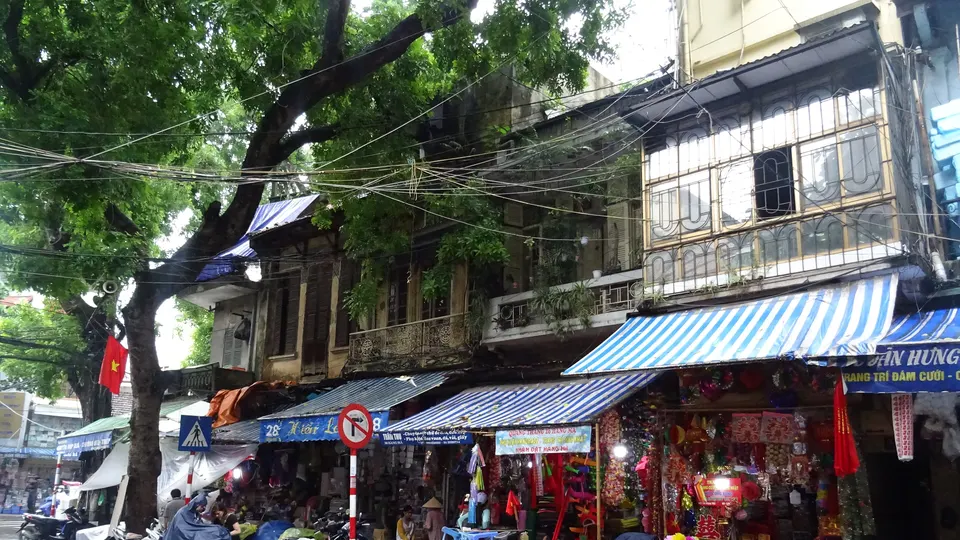
What is on sale. In August 2022 Nhan Dan found star lanterns at 15,000 to 100,000 dong depending on size, alongside papier-mache masks (mat na giay boi (mặt nạ giấy bồi)), small drums, to he (tò he) figures moulded from coloured rice dough, revolving lanterns (den keo quan (đèn kéo quân)), whose paper figures turn in the heat of a candle, and lion heads. That year Vietnamese-made traditional toys pushed back the Chinese toys that had dominated the stalls for years.
The parade. The Old Quarter now runs a whole season of events. In 2026, Hoan Kiem (Hoàn Kiếm) ward held its “Lưu trăng phố cổ” (“keeping the moon in the Old Quarter”) programme from 28 August to 30 September, with a Mid-Autumn fair on Hang Ma and at Dong Xuan (Đồng Xuân) market, and on the full-moon evening of 25 September a lantern parade of 14 blocks around Hoan Kiem Lake, with a paper scholar figure and copies of the lake’s Writing Brush Tower (VietnamPlus). Families with small children also go to the Vietnam Museum of Ethnology, where village troupes have played water puppets at Mid-Autumn; see our Hanoi water puppet guide.
Tuyen Quang’s Thanh Tuyen festival. The North’s most spectacular Mid-Autumn is not in Hanoi but in Tuyen Quang (Tuyên Quang). Around 2004, households and residential groups began building paper-and-bamboo lantern models for the Mid-Autumn procession; the province made it a provincial festival in 2014, VietnamPlus reports. The models are built by the residents’ groups themselves, often with money and labour the residents contribute, and the festival holds three Vietnam records, including the most large lantern models in one Mid-Autumn night and the largest pair of revolving lanterns, Nhan Dan wrote in September 2026. It is held before the full moon: in 2026 it ran from 19 to 25 September, with the main parade night of 40 selected models on 20 September in Minh Xuan ward, five days before the full moon. It is also weather-dependent. Bao Lao Cai (Báo Lào Cai) reported that it was cancelled in 2024 after Typhoon Yagi and again in 2025 after storm No. 10. Since July 2025 Tuyen Quang province also includes the former Ha Giang (Hà Giang) province, the land of the Ha Giang Loop.
What goes on the Mid-Autumn tray, and which mooncakes?
The tray (mam co Trung thu (mâm cỗ Trung thu)) is the centre of the family evening. Families set out mooncakes, fruit and sweets, wait for the moon to rise, and then let the children break the tray. Nhan Dan calls the two mooncakes the “soul” of the tray (Nhan Dan), and Phan Ke Binh described the tray headed by a “moon cake” among fruit and sweets dyed bright green, red, white and yellow.
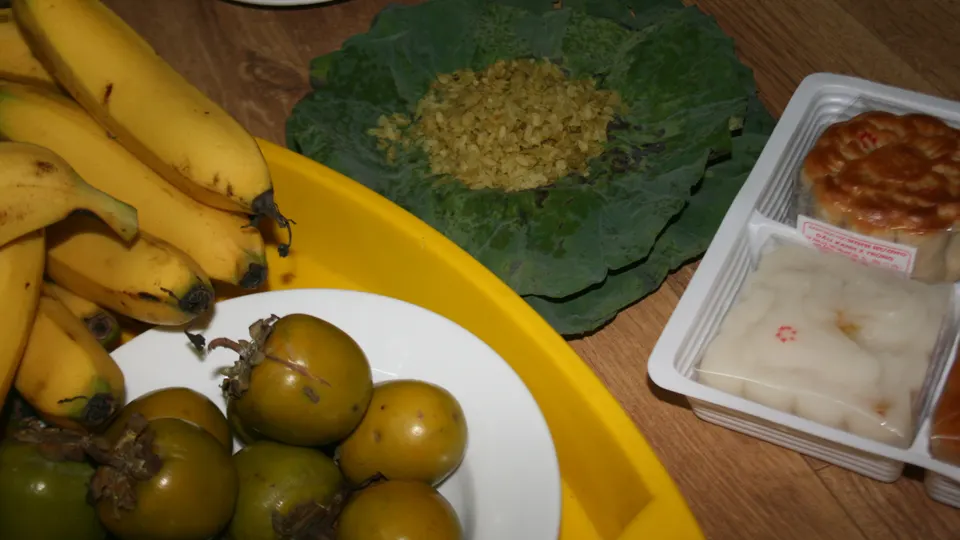
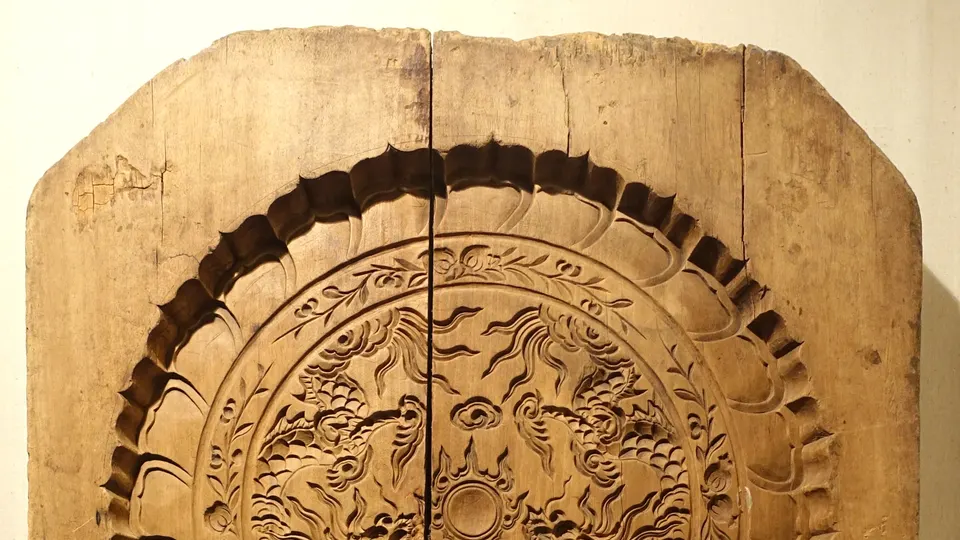
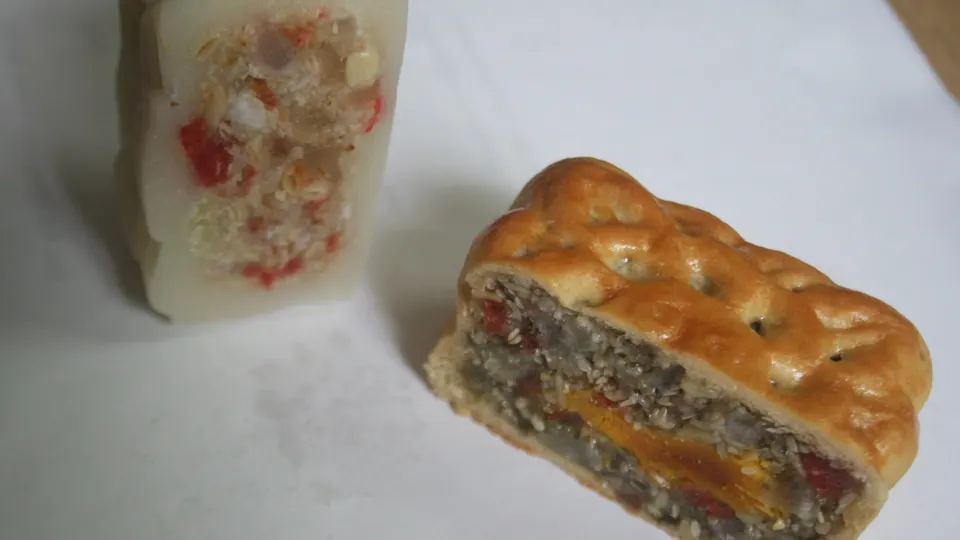
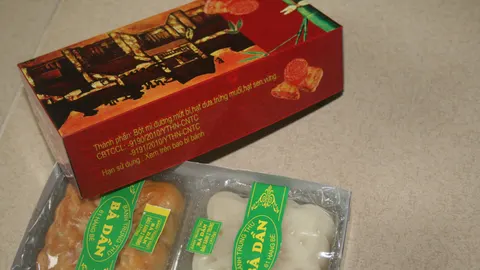
Banh nuong and banh deo. Banh nuong (bánh nướng) is the baked cake with a shiny golden crust; banh deo (bánh dẻo) is the soft, white sticky-rice cake. Both come with sweet fillings such as mung bean or lotus seed, or a “mixed” filling (thap cam) that can include lotus seeds, pork fat, lime leaves and Chinese sausage, often around a salted egg yolk. Families give them to relatives, friends and neighbours in the weeks before the festival as wishes for reunion and luck, Vietnam Airlines’ guide notes. Bao Van Hoa notes the modern turn: unusual fillings, less sugar, smaller cakes and ever more decorative boxes.
The rest of the tray. The national tourism authority describes a five-fruit tray placed on the ancestral altar with the cakes; Vietnam Airlines’ guide adds offerings to Tho Cong (Thổ Công), the household earth god. In Hanoi a family tray can include persimmons and bananas eaten with com (cốm), the young green rice flakes of the season. How the two cakes are made, what goes into the mixed filling and when and where to buy them is in our guide to Vietnamese mooncakes, banh nuong vs banh deo.
Hoi An and Hue: the Centre’s lantern town and lion-dance city
In the Centre, Hoi An (Hội An) turns its whole old town into a Mid-Autumn stage. In 2025 the programme ran for four days, from 3 to 6 October (the 12th to 15th of the eighth lunar month): a full-moon gala with lion, unicorn and dragon dances in Hoi An Park on the 4th, a lantern-lit old-town night on the 5th and a children’s lantern procession through the streets on the 6th, with the Thien Cau (Thiên Cẩu), or heavenly dog, dance and an activity space at the Museum of Folk Culture, according to the newspaper Thuong hieu & Cong luan.
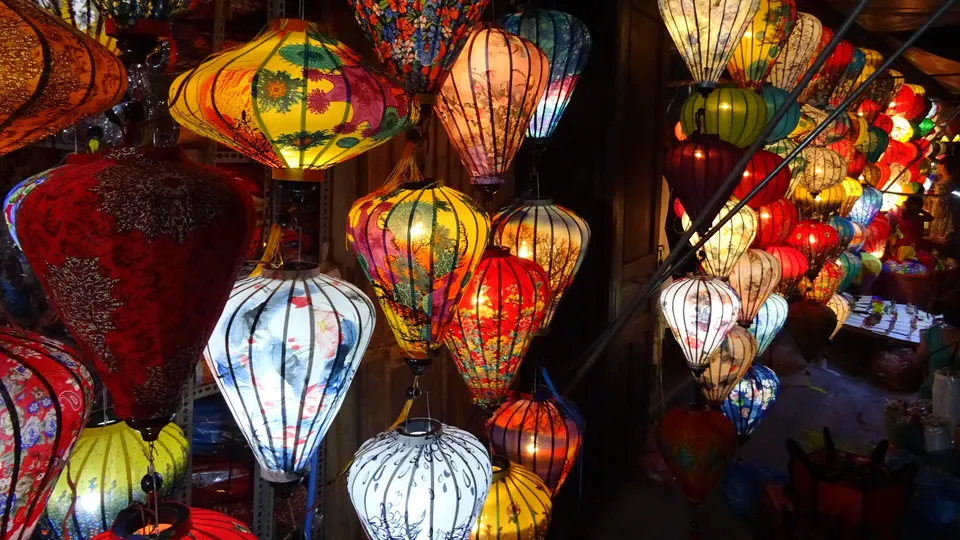
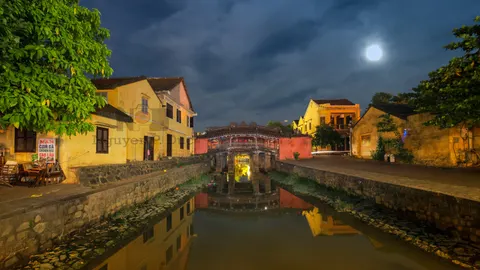
At home in Hoi An. Da Nang’s tourism portal describes households setting out fruit, mooncakes and tea for the gods, ancestors and wandering souls; the children fold their hands before the tray and then share it out. Older artisans use the festival to teach young people how to make lion heads and lanterns. Hoi An lights its old town with lanterns on the 14th of every lunar month, so the Mid-Autumn night overlaps with its famous monthly evening; our guide to the Hoi An full moon night covers the boats, crowds and tickets, and our Hoi An guide the rest of the town.
Hue. The former imperial capital is a lion-dance city. On the evening of 4 October 2025, lion-dance troupes performed through central Hue, from the Nghenh Luong Dinh (Nghênh Lương Đình) pavilion on the Perfume River along Le Duan and Tran Hung Dao streets and over Gia Hoi bridge to Trinh Cong Son park (Bao Van Hoa). Hue also makes lion heads: in 2011 VnExpress described a Hue workshop that builds them from the second to the eighth lunar month for the Mid-Autumn market and sends them to dealers in Hanoi and Saigon.
Saigon and the South: the Cholon lantern street
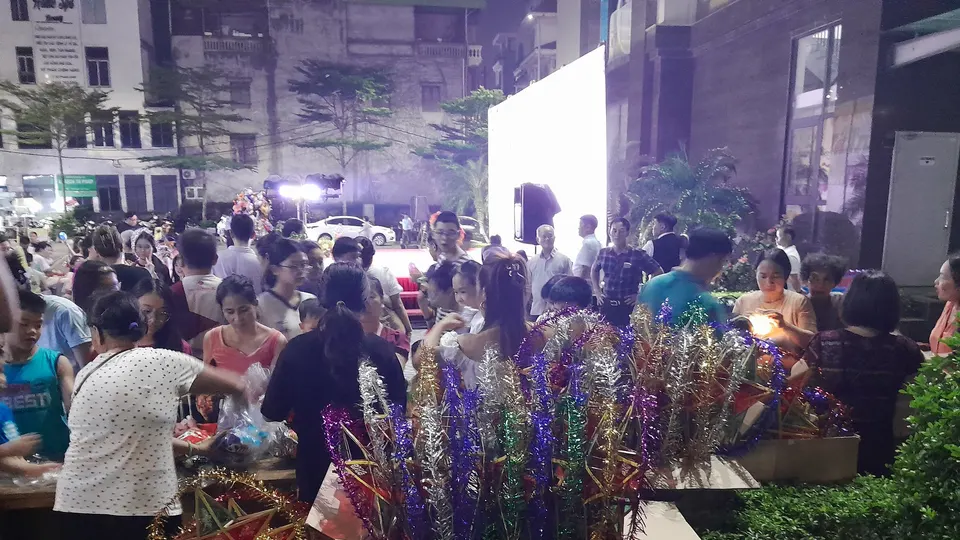
In Saigon the place to go is Cholon (Cho Lon), the Chinese-Vietnamese quarter, and above all Luong Nhu Hoc (Lương Nhữ Học) street, where shops and stalls hang thousands of lanterns for weeks before the festival. In 2025 the lantern street opened officially on 24 September and ran to 6 October in Cho Lon ward, formerly District 5, with star, carp, revolving and flying-dragon lanterns next to electronic ones (Tuoi Tre).
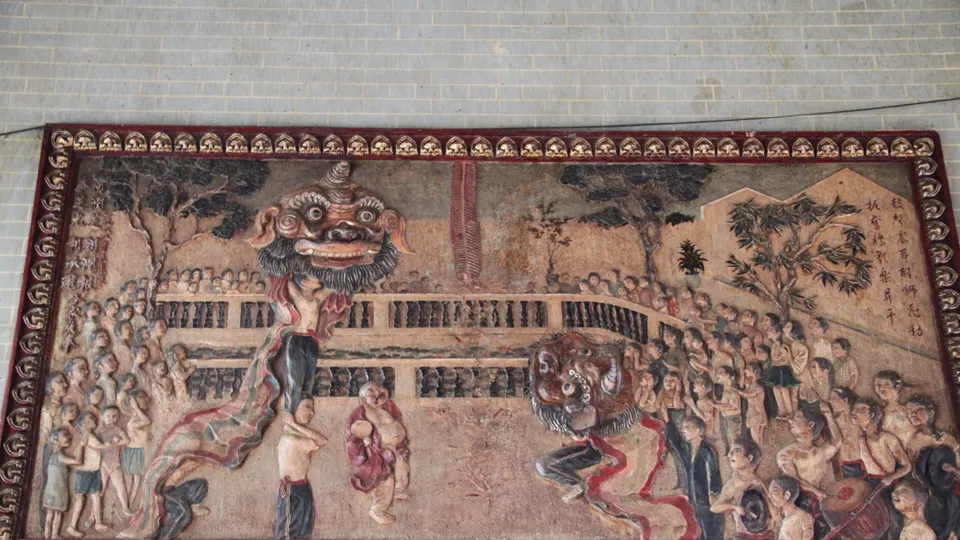
What to expect. Tuoi Tre found lanterns from 20,000 dong in mid-September 2025, with LED lanterns and cartoon characters of the moment among the traditional star, carp and jade-rabbit shapes, and the street busiest on weekend evenings between about 7 and 10 pm. Vietnam Airlines’ guide also names neighbouring Nguyen Trai (Nguyễn Trãi) street. Cholon has a mooncake history of its own: VnExpress notes that tin mooncake boxes became the norm there in the 1950s, before cardboard and then plastic took over. For the rest of the city, see our Ho Chi Minh City guide.
Phan Thiet. On the coast east of Saigon, the city of Phan Thiet (Phan Thiết) used to stage one of Vietnam’s largest lantern parades: about 2,800 pupils from more than 30 schools marched in 2019, and the Vietnam Record Book Centre listed it as the country’s largest. The 2020 parade was called off because of Covid-19, SGGP reported, and we found no report of a full parade since, so check locally before planning around it. Phan Thiet has been part of Lam Dong (Lâm Đồng) province since July 2025; our Mui Ne guide covers the area.
Lion, unicorn or heavenly dog: what are the dances?
The drums of the lion dance (mua lan (múa lân)) are the sound of the Mid-Autumn evening. Troupes perform in front of shops and houses, in street parades and on festival stages, and children follow them from door to door. The creature is usually called the lan (lân), a mythical beast often translated as “unicorn”, but performers also dance the su tu (sư tử), the lion, and the two are often named together as lan su.
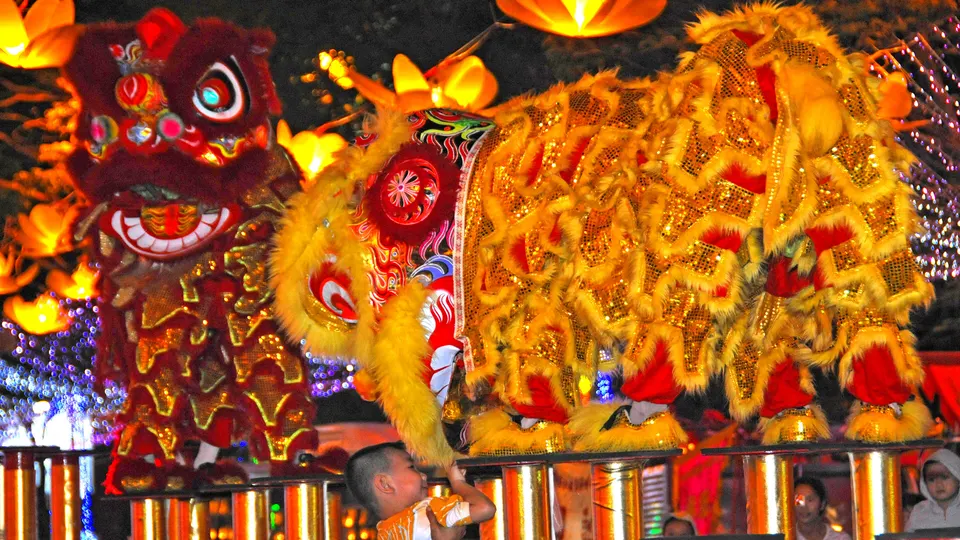
Styles. An exhibition on old Mid-Autumn traditions in Ho Chi Minh City in September 2026 described two lineages that shaped Vietnamese lion dance: a northern lion that leans towards acrobatics and copying a lion’s natural movements, and a southern lion with a more ritual role, tied to blessings and congratulations (VnExpress). The same exhibition showed northern lion heads and the “cat lion” (su tu meo (sư tử mèo)) of the Tay (Tày) people of Lang Son (Lạng Sơn). In the Centre, Hoi An adds the Thien Cau, or heavenly dog, dance.
Taking part. Troupes dance in front of shops and houses and through the streets, and spectators sometimes hand money to the lion, as in the photo above. As a visitor you are a spectator: give the dancers and drummers room, and keep children clear of their path.
Handmade or plastic: how has the festival changed?
The star lantern is the symbol of the festival: the national tourism authority describes the most popular lantern as a star made with red cellophane. Traditionally it is made from thin bamboo strips covered with coloured “kieng (kiếng)” paper, the material VnExpress’s 2026 exhibition shows in its old lanterns. Families once made them at home, and craft villages made them by the thousand.
The craft villages. In Saigon, the Phu Binh (Phú Bình) lantern village in former District 11 once had about a hundred households making lanterns; by 2022 only about 20 still did, Nhan Dan reported, and one maker said plastic and battery lanterns were “sold all over the street” (Nhan Dan). In Hue, a lion-head maker told VnExpress in 2011 that cheap plastic lion heads from China were hurting the trade.
The return of the old toys. The pressure has not gone one way. In 2022, Nhan Dan found Vietnamese traditional toys back in favour on Hang Ma, and Hanoi’s Old Quarter programmes, Tuyen Quang’s lantern models and Hoi An’s workshops all put handmade lanterns and lion heads at their centre. Even in Tuyen Quang, makers now design with computers: a workshop owner told Nhan Dan in 2026 that his team uses AI to develop designs, then builds them with traditional materials, and that groups now choose smaller but more refined models. On the street, expect both: bamboo-and-cellophane stars next to LED lanterns and plastic cartoon characters.
Packaging and gifts. Mooncakes, once wrapped simply or sold in tins, now come in elaborate gift boxes; Bao Van Hoa notes the trend to smaller, less sweet cakes in decorative boxes.
When is Mid-Autumn 2027, and how can visitors join in?
The next Mid-Autumn Festival falls on Wednesday 15 September 2027, the 15th day of the eighth lunar month, with the 14th on Tuesday 14 September (Hong Kong Observatory). About two months after Mid-Autumn, the Khmer of the Mekong Delta hold their own moon festival, Ok Om Bok, with flattened rice, river lanterns and boat races.
Plan your dates.
- It is not a day off. Offices and shops stay open; everything happens in the evenings.
- Go early rather than late. Hang Ma and the Cholon lantern street are busy for two to four weeks before the full moon, and many parades fall a few days before it: Tuyen Quang’s main night was five days early in 2026, and Hoi An’s programme ran from the 12th to the 15th in 2025.
- Check the programme for your city. Ward and city programmes are announced only a few weeks ahead, and storms can cancel them, as in Tuyen Quang in 2024 and 2025.
Where to go.
- Hanoi: Hang Ma and the Old Quarter in the evenings before the full moon; the lantern parade around Hoan Kiem Lake on the night itself.
- Hoi An: the old town over the four festival days, especially the children’s lantern procession.
- Hue: the street lion-dance procession, if your dates match.
- Saigon: Luong Nhu Hoc street in Cholon on a weekday evening if you want to avoid the weekend crush.
- Tuyen Quang: the Thanh Tuyen festival, if you can combine it with a trip to the far north.
How to behave.
- Ask before photographing children at school and neighbourhood parties; these are community events, not shows.
- Do not touch offerings on a family or temple tray before it has been “broken”; wait to be offered.
- Buy a lantern or a box of mooncakes. A handmade star lantern or a box from a local bakery is the simplest way to take part, and a mooncake box is a welcome gift if you are invited to a Vietnamese home.
- Mind the crowds and flames. The lantern streets are packed on weekend evenings; keep children close, and choose battery lanterns for small children rather than candles.
Frequently asked questions
Is the Mid-Autumn Festival a public holiday in Vietnam?
No. Offices, shops and transport run normally. The celebrations happen in the evenings, in neighbourhoods, schools and old quarters, so a visitor loses nothing by being there on a working day.
When is Tet Trung Thu in 2027?
On Wednesday 15 September 2027, the 15th day of the eighth lunar month. Many towns hold their main parades a day or a few days earlier, so look up the programme for the city you are in.
Where is the best place to see the Mid-Autumn Festival in Vietnam?
For lanterns and toys, Hang Ma street in Hanoi or the Luong Nhu Hoc lantern street in Saigon's Cholon. For an old town lit by lanterns, Hoi An. For giant lantern models, the Thanh Tuyen festival in Tuyen Quang, when it is held.
What is the difference between banh nuong and banh deo?
Banh nuong is the baked mooncake with a golden crust; banh deo is the soft, white sticky-rice cake. A Vietnamese Mid-Autumn tray usually has both, often with the same mixed or mung-bean filling.
Is the Mid-Autumn Festival only for children?
It is known as the children's festival, but adults run it: families set out the tray and give mooncakes as gifts, and neighbourhoods build the lanterns and organise the parades and lion dances.
Key sources
- Vietnam's magical Mid-autumn Festival · Vietnam National Authority of Tourism (vietnam.travel)
- Đưa biểu tượng văn hóa Thăng Long vào 14 khối rước đèn Trung thu bên Hồ Gươm · VietnamPlus (VNA), 25 September 2026
- Tết Trung thu: truyền thống và lịch sử · Nhân Dân, 10 September 2022
- Quảng diễn Lân - Sư - Rồng phục vụ cộng đồng dịp Tết Trung thu · Báo Văn Hóa, 5 October 2025
- Phố lồng đèn, không gian Trung thu rực rỡ giữa lòng Chợ Lớn chính thức khai hội · Tuổi Trẻ, 24 September 2025
- Ký ức Trung thu xưa · VnExpress, 7 September 2026
- Giữ ánh sáng lồng đèn truyền thống · Nhân Dân, 6 September 2022
- Gregorian-Lunar Calendar Conversion Table, 2027 · Hong Kong Observatory
All 21 sources and further reading
- Nguồn gốc và ý nghĩa Tết Trung Thu ở Việt Nam · Báo Văn Hóa, 23 September 2025
- Sinh hoạt cộng đồng Tết Trung thu · Nhân Dân, 10 September 2022
- Mid-Autumn Festival in Vietnam · Vietnam Airlines travel guide
- Đồ chơi 'nội' phủ đỏ phố Hàng Mã trước Tết Trung thu · Nhân Dân, 21 August 2022
- Lễ hội Thành Tuyên: Từ thú vui rước đèn đến sản phẩm du lịch độc đáo · VietnamPlus (VNA)
- Sức dân làm nên mùa hội Thành Tuyên · Nhân Dân, 12 September 2026
- Dừng tổ chức lễ hội Trung thu lớn nhất Tuyên Quang · Báo Lào Cai, 5 October 2025
- Names and administrative centers of 34 provinces and centrally-run cities specified · Vietnam Government Portal, 15 April 2025
- Phố cổ Hội An có gì mới lạ trong dịp Tết Trung thu 2025 · Thương hiệu & Công luận, 2025
- The Hoi An Mid-Autumn Festival · Da Nang Fantasticity (Da Nang tourism portal), 17 August 2025
- Đệ nhất nghề lân sư xứ Huế · VnExpress, 4 September 2011
- Phố lồng đèn rộn ràng đón Trung thu sớm, bạn trẻ và gia đình nô nức check-in · Tuổi Trẻ, 14 September 2025
- Dừng tổ chức một trong những lễ hội Trung thu lớn nhất Việt Nam · Sài Gòn Giải Phóng, 31 August 2020
Keep exploring
 North · Central · South Vietnamese Culture by Region: Accents, Festivals and Customs How accents, festivals, customs and everyday habits differ between North, Central and South Vietnam, explained for travellers and expats.
 North · Central · South · Culture Tet (Tết) 2027 by Region: North, Central, South Compared How Tet differs in North, Central and South Vietnam: peach vs mai, banh chung vs banh tet, fruit trays, pickles, first visitors, plus the Tet 2027 dates.
 Central Vietnam · Culture Hoi An (Hội An) Full Moon Nights: 2026–2027 Dates and Tips Hoi An's full moon night falls on the 14th lunar day each month. Dates for 2026–2027, what really happens, lantern boats and fares, crowds, floods and how to plan.
 North Vietnam · Culture Hanoi's 36 Streets: What the Names Mean and How to Walk Them What Hanoi's 36 streets really were, which Hang streets still sell what their names say, where the guild temples stand, and a self-guided Old Quarter walk.
 North · Central · South · Food Banh Nuong vs Banh Deo: Which Vietnamese Mooncake to Buy Banh nuong vs banh deo, Vietnam's baked and sticky mooncakes: crust, thap cam filling, 2026 prices, safety checks and when to buy before Mid-Autumn 2027.