South Vietnam · Culture
Ok Om Bok (Oóc Om Bóc): Khmer Moon Festival and Boat Races
Ok Om Bok, the Khmer moon festival of the Mekong Delta: the flattened-rice moon rite, lanterns, ghe ngo boat races and 2026 dates in Can Tho and Vinh Long.
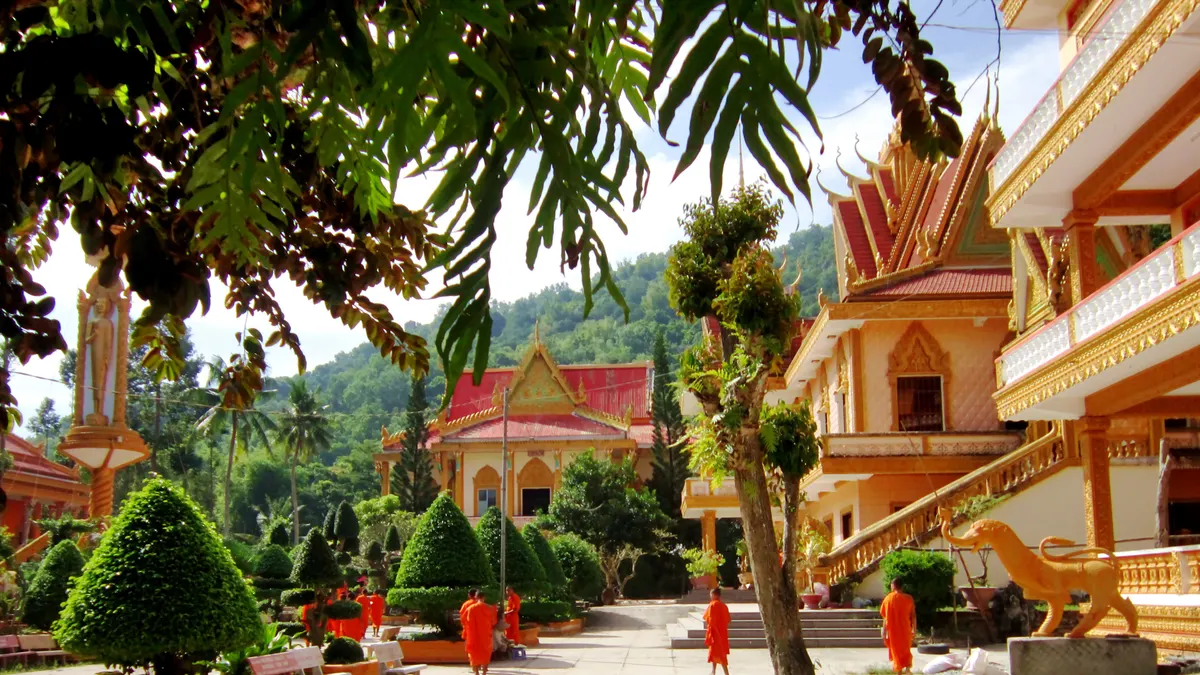
Ok Om Bok, in Vietnamese Ooc Om Boc (Oóc Om Bóc), is the moon festival of the Khmer people of the Mekong Delta. At the full moon of the 10th month of their calendar, after the rice harvest, families and pagodas lay out offerings for the moon, an elder feeds the children flattened young rice, and the next day the rivers fill with long racing canoes. The name itself describes the rite: “ok” means to feed by hand and “om bok” is flattened rice (VietnamPlus).
This guide explains the rite, the lanterns and the ghe ngo boat races, the heritage listings, how the festival differs from the Mid-Autumn Festival, and the 2026 dates in Can Tho and Vinh Long. For the pagodas where it all happens, and a route to them from Can Tho, see our guide to the Khmer pagodas of Soc Trang and Tra Vinh; for other living traditions, our Vietnamese culture section.
What is Ok Om Bok?
Ok Om Bok is one of the three great festivals of the Khmer of southern Vietnam, with Chol Chnam Thmay (New Year) in April and Sene Dolta (the ancestor festival). The Khmer see the moon as a god who governs the weather and the harvest, and the festival thanks it at the turn of the seasons: the rains end, the dry season begins and the rice is in, VietnamPlus explains. Nhan Dan (Nhân Dân) describes the moon as “the god of earth and water, lord of the harvest”, and notes that the origin of the rite is not fully known; one story told with it is the Buddhist tale of a rabbit who gave its life and was placed on the moon.
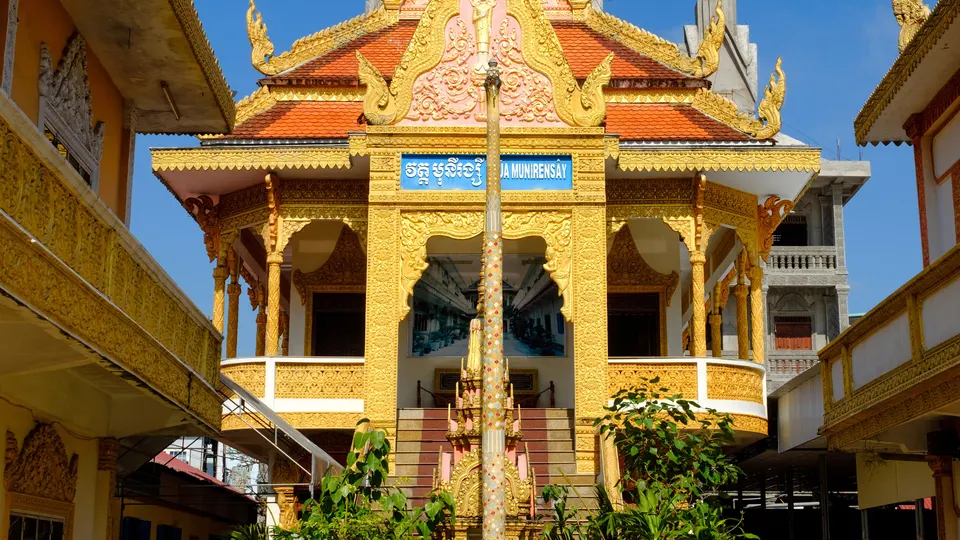
Where it is celebrated. The Khmer communities are concentrated in Soc Trang (Sóc Trăng), since July 2025 part of Can Tho (Cần Thơ) city, and Tra Vinh (Trà Vinh), now part of Vinh Long (Vĩnh Long) province, with others in An Giang and Ca Mau, under the merger plan published by the Vietnam Government Portal. The rite takes place in pagoda courtyards and in front of houses; the boat races, organised by the provinces, are the public face of the festival. Kinh and Chinese-Vietnamese neighbours join in as well, according to the national tourism authority.
Tradition and today. The core is still a household and pagoda rite. Around it, the provinces now run a full festival week with an opening gala, trade fairs, music and sports. In 2025 Can Tho held the festival for the first time as a merged city, Dai Bieu Nhan Dan (Đại biểu Nhân dân) reported, with the moon rite at Kh’leang pagoda and the races on the Maspero River in Soc Trang.
Ok Om Bok at a glance
| What | Where to see it | |
|---|---|---|
| When | Full moon of the 10th month of the Khmer calendar (Ka Dak); in recent years in November | Dates are set each year by Can Tho city and Vinh Long province |
| Moon rite | Offerings to the moon on the evening before the full moon; children fed flattened rice | Pagoda courtyards and homes; public rites at Kh’leang pagoda (Soc Trang) and Ao Ba Om (Tra Vinh) |
| Lanterns | Wind lanterns released into the sky, water lanterns floated on the river | Pagodas; the Maspero River in Soc Trang; Ao Ba Om |
| Boat races | Ghe ngo long canoes, each crew from one pagoda | Maspero River (Can Tho city); Lang The River (Vinh Long province) |
| Heritage status | National intangible heritage: Tra Vinh’s Ok Om Bok (2014), Soc Trang’s ghe ngo race festival (2022) | – |
| 2026 dates | Vinh Long races 21–22 Nov, Can Tho races 23–24 Nov, Vinh Long’s Ok Om Bok night 24 Nov | See the 2026 section below |
What happens at the moon rite, and why flattened rice?
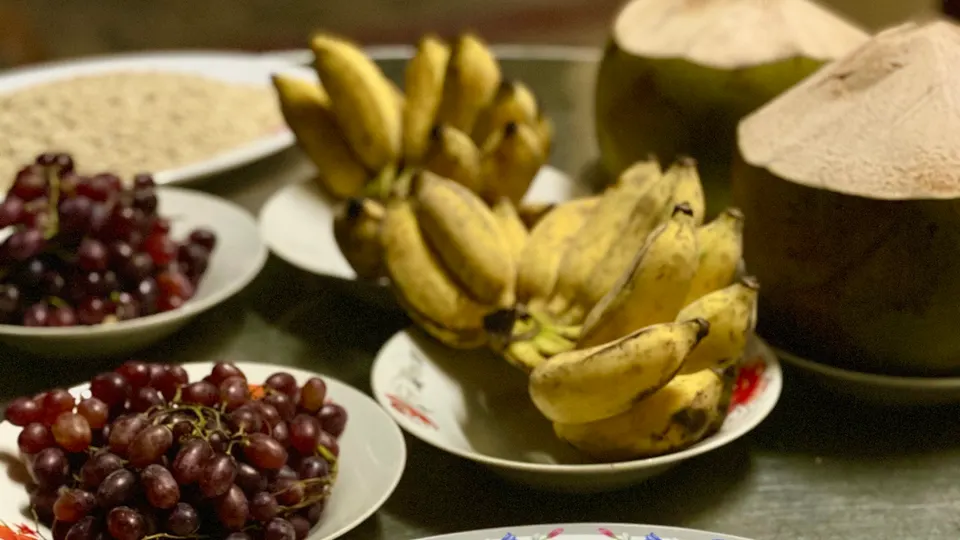
The rite is held on the evening of the 14th day, before the moon is at its fullest, in a pagoda courtyard or in front of a house. Families build an altar of bamboo poles decorated with flowers and leaves and lay out flattened young rice, sweet potatoes, taro, cassava, bananas, coconuts, sugarcane, fruit and cakes. Each offering carries a meaning: the flattened rice stands for filial gratitude and thanks to the grain that feeds people, the sugarcane for striving upwards and the coconut for sweetness (Nhan Dan).
The children’s wishes. People sit cross-legged facing the moon while an elder lights incense and candles and prays for good rain and a peaceful year. Then the children come forward. The elder puts a handful of flattened rice into each child’s mouth, pats the child’s back and asks what they wish for; a clear, polite answer is believed to bring luck in the coming year, the national tourism authority writes. VietnamPlus adds that the children’s wishes are taken as a spur for the adults’ work in the year ahead. After the rite, families share the offerings, and the children play and sing in the moonlight, sometimes until dawn. Families prepare for about a month, and the bamboo gate of the altar can carry a betel vine with 12 leaves for the 12 months and a cluster of seven areca nuts for the seven days of the week.
How com dep is made. Com dep (cốm dẹp), flattened sticky rice, is the one offering no Ok Om Bok altar goes without. In Khmer villages of the former Tra Vinh, Nhan Dan described the process in 2025: the rice is sifted and soaked overnight, roasted in a clay pot over a slow charcoal fire until the grains pop, then pounded flat by two people taking turns with wooden pestles in a wooden mortar, and winnowed to remove the husks. It is eaten mixed with coconut water, grated coconut and sugar. Families once made it only for the moon offering; today it is sold all year, but the festival is still its season. If you visit a Khmer home at Ok Om Bok, you are likely to be offered some; our com dep guide compares it with Hanoi’s green com and lists where to see it pounded, and Soc Trang families also wrap it into a sweet banh tet com dep for the moon offering.
Wind lanterns and water lanterns
After the moon rite, the night belongs to lights. At Khmer pagodas people release paper lanterns into the sky and float lights on the river, which are believed to sweep away darkness, impurity and sadness from the village (Vietnam National Authority of Tourism). In Vietnamese they are called den gio (đèn gió), “wind lanterns”, and den nuoc (đèn nước), “water lanterns”: the first honour the god of the wind, the second the god of the river, VietnamPlus explains.
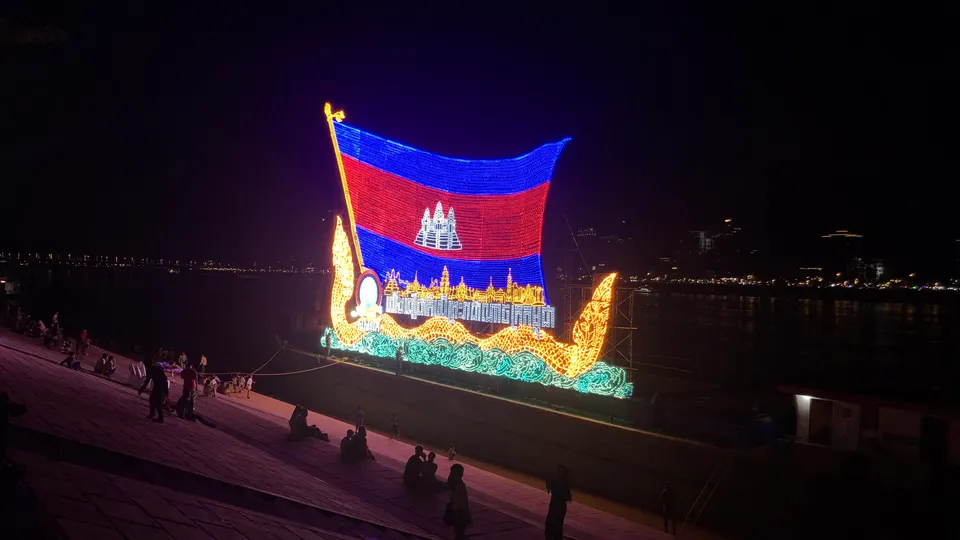
Loi Protip. The festival version of the water lantern is the Loi Protip, a lit float set on the river at night. Can Tho’s programme includes a Loi Protip show on the Maspero River together with Ca Hau boat performances, the army newspaper Quan Doi Nhan Dan reported for 2025. In Vinh Long, the floating-lantern show is the climax of the Ok Om Bok night at the Ao Ba Om pond; in 2025 Viet Nam News described it as a ritual of gratitude to the gods of earth and water.
Tradition and today. In villages the lanterns are still released from pagodas and riverbanks by families. The large illuminated floats are a newer, festival-scale form, built for crowds and television. Both happen on the same nights, so a visitor can see the public show in town and smaller lights on village canals.
Ghe ngo: the Khmer long-boat races
The ghe ngo (ghe Ngo) is a long, narrow Khmer racing canoe kept at the pagoda. Each pagoda, or its village, fields a crew, and the race is said to send off the water god after the rainy season, according to VietnamPlus. Modern boats are 30 to 31 metres long, up from 22 to 27 metres in the past, and carry 55 to 60 people with 25 pairs of paddlers; a team counts 70 to 80 members including reserves, Nhan Dan reported in 2024.
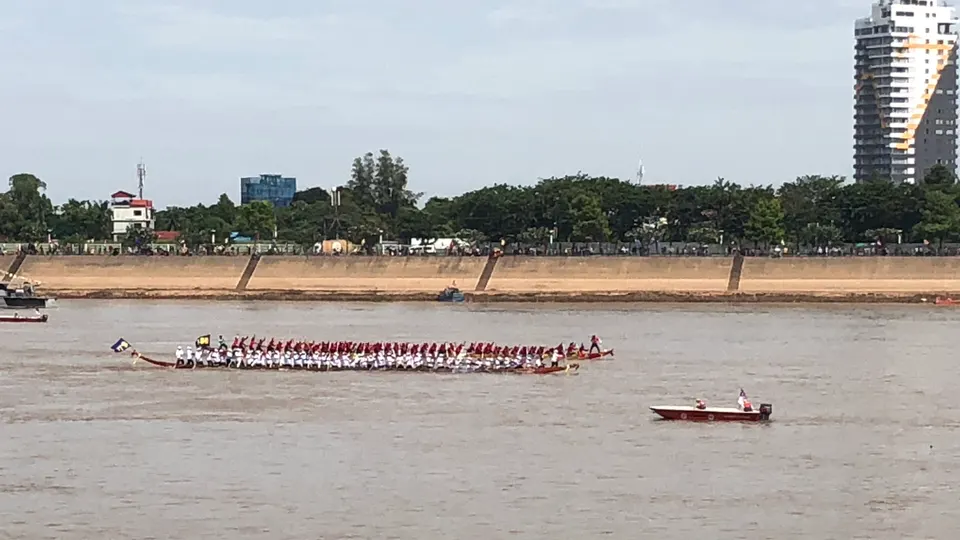
How a crew works. Three people steer the race: a leader in the bow, usually a respected and well-off member of the community who runs the training, the ceremonies and the team’s expenses; a signaller with a whistle or gong who sets the rhythm for the paddlers; and a steersman at the stern. Crews train for months, usually on land in front of the pagoda before they take to the water, Bao Van Hoa (Báo Văn Hóa) wrote in 2022. Before the 2026 races, women’s crews at pagodas in Ca Mau and Can Tho trained from 4 pm, and a Vinh Long pagoda’s crew of nearly 100 timed its sessions to the tide (Bao Van Hoa).
Where the races come from. Nobody knows for sure. Nhan Dan records three popular stories: a princess fleeing down a river by boat, the practical need for boats that could carry many people at once, and a naval victory. Treat all three as legend.
The race today. In Soc Trang the course runs along the Maspero River through the town centre, between the Cau Quay and Cau Cao bridges, with temporary stands for several thousand spectators. Soc Trang hosted the first Mekong Delta Khmer ghe ngo festival in 2013, and by 2024 the race drew 60 teams and nearly 7,200 participants. In 2025, 61 men’s and women’s teams raced in Can Tho, 13 of them from Ca Mau, over 1,200 metres for men and 1,000 metres for women, watched by tens of thousands of people on both banks. For 2026, 82 teams have registered: 66 men’s and 16 women’s. The women’s and men’s teams of Tum Nup pagoda in Can Tho won the city title in 2023, 2024 and 2025.
Is Ok Om Bok national heritage?
Yes, through two separate listings. In 2014 the Ministry of Culture, Sports and Tourism recognised the Ok Om Bok festival of the Khmer in Tra Vinh as national intangible cultural heritage (Quan Doi Nhan Dan). In January 2022 it added the Khmer ghe ngo race festival of Soc Trang to the same national list, by Decision 74/QD-BVHTTDL of 12 January 2022, Nhan Dan reported; Bao Van Hoa reported the listing in February 2022.
Why two listings. The first covers the festival as a whole as it is practised in Tra Vinh, rite and lanterns included; the second covers the boat race festival of Soc Trang, which grew into the biggest public event of the season. Since the 2025 merger both sit in larger units, Vinh Long province and Can Tho city, and both now organise the festival under those names. The race festival has also held a Vietnam record for the largest number of ghe ngo and athletes, Dai Bieu Nhan Dan noted.
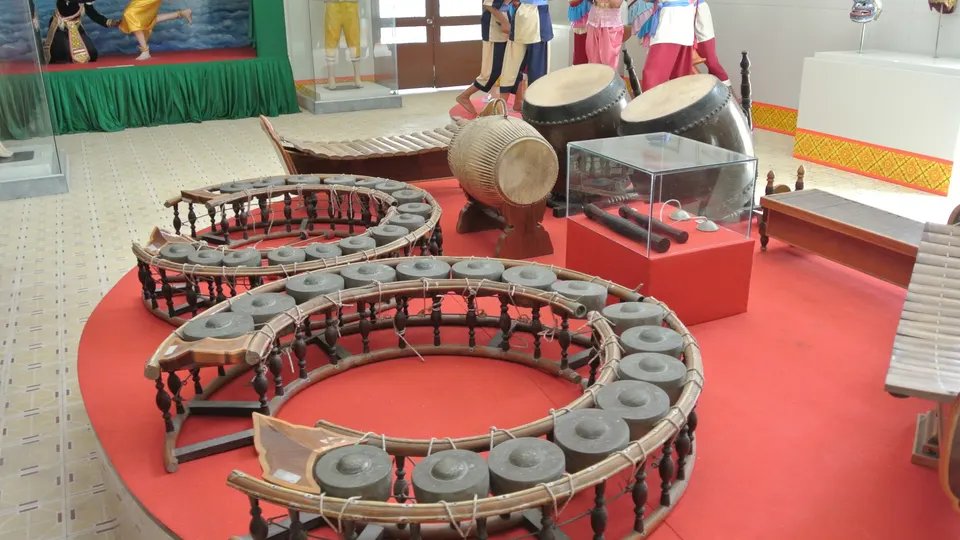
What else the festival keeps alive. Ok Om Bok weeks are also a stage for Khmer music, dance and theatre. Vinh Long’s 2026 week includes a festival of Khmer five-tone ensembles (ngu am (ngũ âm)) of gongs, drums and xylophones, a Khmer costume contest and a Southern amateur music festival; Can Tho’s includes a festival of du ke, the Khmer popular theatre. For the southern amateur music tradition, see our guide to don ca tai tu.
How is Ok Om Bok different from the Mid-Autumn Festival?
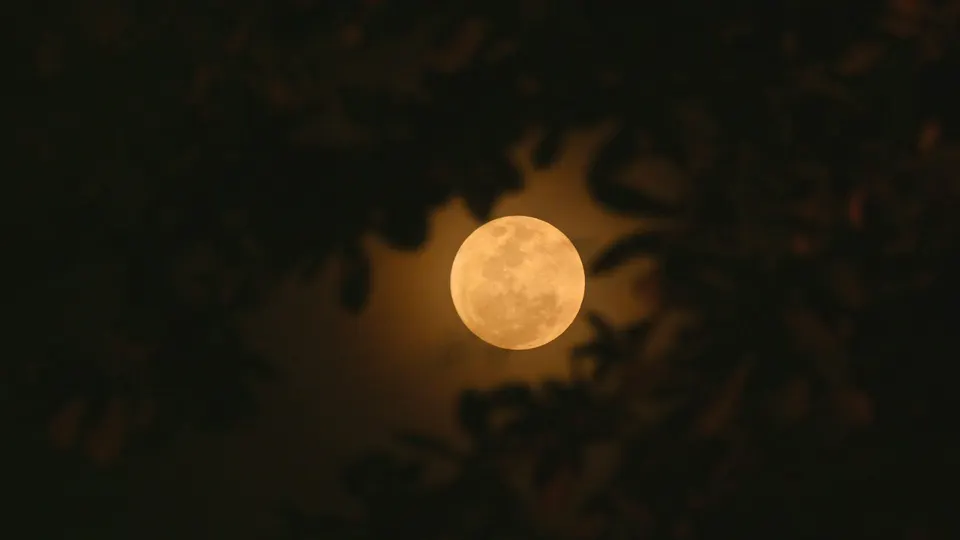
Both are full-moon festivals with children at their centre, and both use lanterns, so visitors often mix them up. They differ in date, community and meaning. In 2026 the Mid-Autumn full moon fell on 25 September, while the 15th day of the 10th lunar month falls on 23 November (Hong Kong Observatory), the date the Ok Om Bok events of 2026 are built around.
| Ok Om Bok | Mid-Autumn (Tet Trung Thu) | |
|---|---|---|
| Who | The Khmer community of the Mekong Delta, around its Theravada pagodas | Families and neighbourhoods across Vietnam |
| When | Full moon of the 10th month of the Khmer calendar; November in 2025 and 2026 | 15th day of the eighth lunar month; 25 September in 2026 |
| Meaning | Thanks to the moon for the harvest as the rains end | A children’s festival of reunion under the autumn moon |
| Food | Flattened rice (com dep), coconut, bananas, tubers, sugarcane | Mooncakes (banh nuong, banh deo) and fruit |
| Children | An elder feeds them flattened rice and asks their wishes | They parade lanterns, follow the lion dancers and break the tray |
| Lights | Wind lanterns released, water lanterns floated | Star and carp lanterns carried through the streets |
| Big public event | Ghe ngo races on the Maspero and Lang The rivers | Lantern streets and parades in Hanoi, Hoi An and Saigon |
The calendar is not quite the Vietnamese one. Vietnamese press usually dates Ok Om Bok to “the 15th of the 10th lunar month”, but VietnamPlus places it on the 14th and 15th of Ka Dak, the 10th month of the Khmer calendar, and the two do not always run in step. In 2025 the Hong Kong Observatory’s lunar table put the 15th of the 10th month on 4 December, yet Can Tho held the moon rite at Kh’leang pagoda on 4 November and the races on 4 and 5 November. Always go by the dates the organisers announce, not by a lunar calendar app. For the Mid-Autumn side, see our guide to the Mid-Autumn Festival by region.
Ok Om Bok 2026: dates and where to see it
There are two main centres in 2026, and their dates do not clash, so you can see both. Vinh Long province runs a culture, sports and tourism week from 18 to 24 November, with the boat races on 21 and 22 November and its Ok Om Bok night at Ao Ba Om on 24 November (VietnamPlus). Can Tho city opens its festival on 22 November and races on 23 and 24 November in Soc Trang.
| Date (2026) | What | Where |
|---|---|---|
| 17–19 Nov | Khmer costume contest | Ao Ba Om, Tra Vinh (Vinh Long province) |
| 18 Nov, 8 pm | Opening of Vinh Long’s Ok Om Bok week | Tra Vinh regional cultural centre, Nguyet Hoa ward |
| 20–23 Nov | Khmer five-tone ensemble festival | Ao Ba Om |
| 21–22 Nov | Vinh Long ghe ngo races: 1,200 m and 1,000 m men, 1,000 m mixed relay | Lang The River, Binh Phu commune, new 4,000-seat covered stand |
| 22 Nov, evening | Opening of Can Tho’s Ooc Om Boc and ghe ngo festival | Bach Dang Square, Phu Loi ward, Soc Trang |
| 23–24 Nov | Can Tho ghe ngo races, 82 teams | Maspero River, Phu Loi and Soc Trang wards |
| 24 Nov, 7 pm | Vinh Long’s Ok Om Bok night: moon rite, procession of pagodas around the lake, floating lanterns | Ao Ba Om |
| Not yet announced | Can Tho’s moon rite; Loi Protip lanterns and Ca Hau boats | Kh’leang pagoda; Maspero River |
Can Tho (Soc Trang). The opening is on the evening of 22 November in Bach Dang Square, and the expanded city race runs on 23 and 24 November on the Maspero River, according to Dai Bieu Nhan Dan and Nhan Dan. The moon rite is held at Kh’leang pagoda and the water-lantern show on the Maspero, but the published plan gives no times for them, so check locally. The festival week also marks Vietnam Heritage Day (23 November) and Vietnam Culture Day (24 November), with fairs and exhibitions. Soc Trang is a day trip from central Can Tho; our Can Tho city guide covers where to stay.
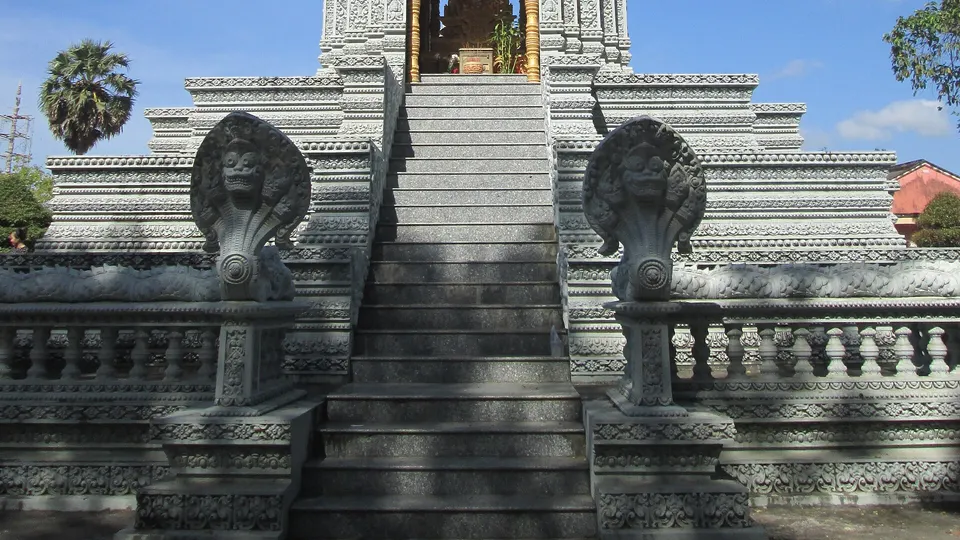
Vinh Long (Tra Vinh). From 2026 the races move from the Long Binh River in Tra Vinh ward, where they were held in 2025, to the Lang The River in Binh Phu commune, beside a Khmer pagoda, at a new 4,000-seat covered stand, VOV reported in October 2026. The Ok Om Bok night on 24 November at Ao Ba Om, a pond beside Ang pagoda, is the best chance to see the moon rite, a pagoda procession and floating lanterns in one place.
Elsewhere. An Giang province, which now includes former Kien Giang, has its own Khmer communities and races; in 2024 Kien Giang expected 200,000 to 250,000 visitors to its festival week, Tuoi Tre News reported. For a wider plan of the delta, see our Mekong Delta itinerary and the Mekong Delta travel guide.
Was 2025 different? Yes, earlier: Can Tho’s festival ran from 3 to 5 November 2025 and Vinh Long’s races were on 3 and 4 November. That is why dates from older articles mislead.
How to take part respectfully
Ok Om Bok is a religious festival as well as a party. The rite happens at working pagodas, and the races are a matter of village pride. Viet Nam News’ guide to temple etiquette sets out the basics for any pagoda: sleeves to the elbow, trousers or skirt below the knee, hat off, voices low, and ask before photographing a ritual (Viet Nam News).
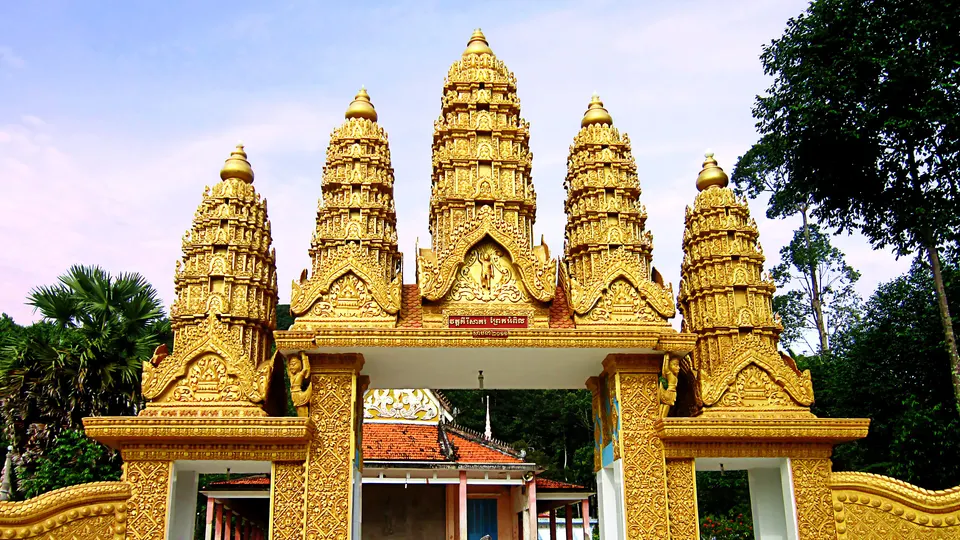
At the moon rite.
- Stay at the edge. The courtyard belongs to the families and monks; watch from the side and let the elder and the children have the space in front of the altar.
- Do not touch the offerings. They are shared after the rite; wait until you are offered something.
- Accept com dep if offered. Guests in Khmer homes are traditionally offered it at Ok Om Bok.
- Ask before photographing, especially the children being fed.
At the races.
- Arrive early. Tens of thousands of people lined the Maspero in 2025; the stands and the best stretches of bank fill from the morning.
- Keep clear of the crews. Boats are launched and carried by the teams; do not stand on the landing steps or in their way.
Plan ahead.
- Check the programme a week before. Times are set by Can Tho city and Vinh Long province and can change, for example with the weather.
- Book rooms early in Soc Trang or Tra Vinh, or stay in Can Tho and come in for the day.
- Season. November is the start of the dry season in the delta; see our guide to the best time to visit Vietnam, and our South Vietnam hub for the rest of the region. For the delta’s other great festival, see the Ba Chua Xu festival in Chau Doc.
Frequently asked questions
When is Ok Om Bok in 2026?
The full moon of the 10th lunar month falls on 23 November 2026. Can Tho's ghe ngo races in Soc Trang are on 23 and 24 November after an opening on the evening of 22 November; Vinh Long's races are on 21 and 22 November and its Ok Om Bok night at Ao Ba Om on 24 November.
Where can I watch the ghe ngo boat races?
The best-known course is the Maspero River in central Soc Trang, now in Can Tho city. Vinh Long province races on the Lang The River in Binh Phu commune, near Tra Vinh, from 2026 at a new 4,000-seat covered stand. An Giang province holds races too, and pagoda crews travel between provinces to compete.
Can tourists join the Ok Om Bok moon rite?
Yes, as quiet guests. The rite is held in pagoda courtyards and at public venues such as Kh'leang pagoda in Soc Trang and Ao Ba Om in Tra Vinh. Dress as for a temple visit, stay at the edge, ask before photographing and accept com dep if it is offered.
What is com dep?
Com dep is flattened young sticky rice: the grains are roasted in a clay pot until they pop, pounded flat in a wooden mortar and mixed with coconut water, grated coconut and sugar. It is the essential offering of Ok Om Bok and the snack children are fed at the rite.
Is Ok Om Bok the same as the Mid-Autumn Festival?
No. Mid-Autumn falls on the 15th day of the eighth lunar month and is a children's lantern festival across Vietnam. Ok Om Bok is the Khmer community's thanksgiving to the moon about two months later, with flattened rice, lanterns on the water and boat races.
Key sources
- Lễ hội Ok Om Bok: Khi con người hòa mình với thiên nhiên · VietnamPlus (VNA), 31 October 2026
- Về Sóc Trăng xem đua ghe Ngo, vui hội Oóc om bóc · Nhân Dân (e-magazine), 20 November 2024
- Ooc-om-bok Festival · Vietnam National Authority of Tourism, checked 16 November 2026
- Sôi nổi những nhịp chèo trước mùa lễ hội Ok Om Bok – đua ghe Ngo 2026 · Báo Văn Hóa, 11 November 2026
- Khmer ethnic group's festival becomes national intangible heritage · Quân đội Nhân dân, 6 September 2014
- Gregorian-Lunar Calendar Conversion Table, 2026 · Hong Kong Observatory
- Vĩnh Long tổ chức Tuần lễ Văn hóa, Thể thao và Du lịch gắn với Lễ hội Ok Om Bok · VietnamPlus (VNA), 12 October 2026
- Temple etiquette keeps visitors in sacred harmony · Việt Nam News, 2026
All 22 sources and further reading
- Bảo tồn, phát huy di sản văn hóa qua Lễ hội Oóc Om Bóc – Đua ghe Ngo Cần Thơ · Đại biểu Nhân dân, 7 November 2026
- TP Cần Thơ ban hành kế hoạch tổ chức các hoạt động Ngày Văn hóa Việt Nam và Lễ hội Oóc Om Bóc – Đua ghe Ngo năm 2026 · Báo Cần Thơ, 3 August 2026
- Tôn vinh Lễ hội Oóc Om Bóc – Đua ghe Ngo và nét đẹp văn hóa Khmer · Nhân Dân, 15 October 2026
- Khán đài đua ghe Ngo 4.000 chỗ sẵn sàng phục vụ lễ hội Ok Om Bok 2026 · VOV, 17 October 2026
- Giữ nghề làm cốm dẹp của đồng bào Khmer · Nhân Dân, 12 November 2025
- Moon Offering Ceremony at the 2025 Ooc Om Boc festival in Can Tho · Nhân Dân (English), 5 November 2025
- Ok Om Bok – Ngo boat racing festival in 2025 kicked off in Can Tho · Quân đội Nhân dân, 4 November 2025
- Sôi động Giải đua ghe Ngo TP Cần Thơ 2025 · Báo Văn Hóa, 5 November 2025
- TP Cần Thơ lần đầu tổ chức Lễ hội Oóc Om Bóc – Đua ghe Ngo · Đại biểu Nhân dân, 28 October 2025
- Lễ hội đua ghe Ngo của cộng đồng Khmer Sóc Trăng · Báo Văn Hóa, 2 February 2022
- Vĩnh Long celebrates Ok Om Bok Festival · Việt Nam News, 3 November 2025
- Week-long moon worshipping festival celebrates Khmer culture in Vietnam's Mekong Delta · Tuổi Trẻ News, 16 November 2024
- Gregorian-Lunar Calendar Conversion Table, 2025 · Hong Kong Observatory
- Names and administrative centers of 34 provinces and centrally-run cities specified · Vietnam Government Portal, 15 April 2025
Keep exploring
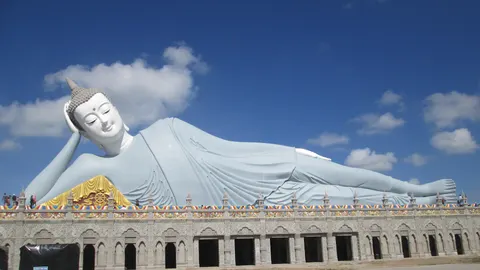 South Vietnam · Culture Khmer Pagodas in Soc Trang and Tra Vinh: Which to Visit Khmer pagodas of Soc Trang and Tra Vinh: Bat, Kh'leang, Som Rong, Ang and Hang pagodas, what the carvings mean, Ok Om Bok 2026, etiquette, a route from Can Tho.
 North · Central · South · Culture Mid-Autumn 2027 in Vietnam (Tet Trung Thu): Where to Go Tet Trung Thu, Vietnam's Mid-Autumn Festival, by region: Hang Ma lanterns in Hanoi, Hoi An and Hue, Saigon's Cholon lantern street, and the 2027 date.
 South Vietnam · Travel Can Tho (Cần Thơ): Where to Stay and What to Do in 1–2 Days Can Tho in 1-2 days: stay by Ninh Kieu wharf, take the 5 am boat to Cai Rang (100,000 dong shared, Aug 2026), see Binh Thuy house, eat banh xeo and hu tieu.
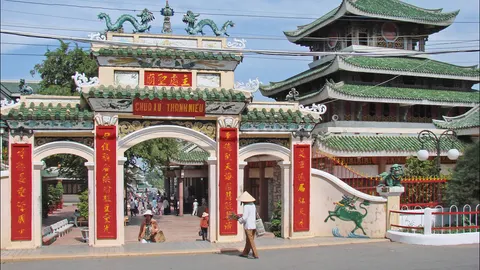 South Vietnam · Culture Ba Chua Xu (Bà Chúa Xứ) at Nui Sam: 2027 Dates, How to Visit Ba Chua Xu temple at Nui Sam, Chau Doc: 2027 festival dates (27 May to 1 June), the UNESCO-listed rites night by night, when crowds peak and how to visit.
 South Vietnam · Food Com Dep (Cốm Dẹp): Khmer Rice Flakes and Where to Try Them Com dep, the Khmer flattened sticky rice of the Mekong Delta: how it is made and eaten, how it differs from Hanoi com, and where to see it in November 2026.