All three regions · Food
Pho Bo vs Pho Ga: Beef vs Chicken Pho, Which to Order
Pho bo vs pho ga: beef or chicken pho? Broth, cuts, hours and a table for which bowl to order in Hanoi and Saigon, with MICHELIN 2026 shops for each.
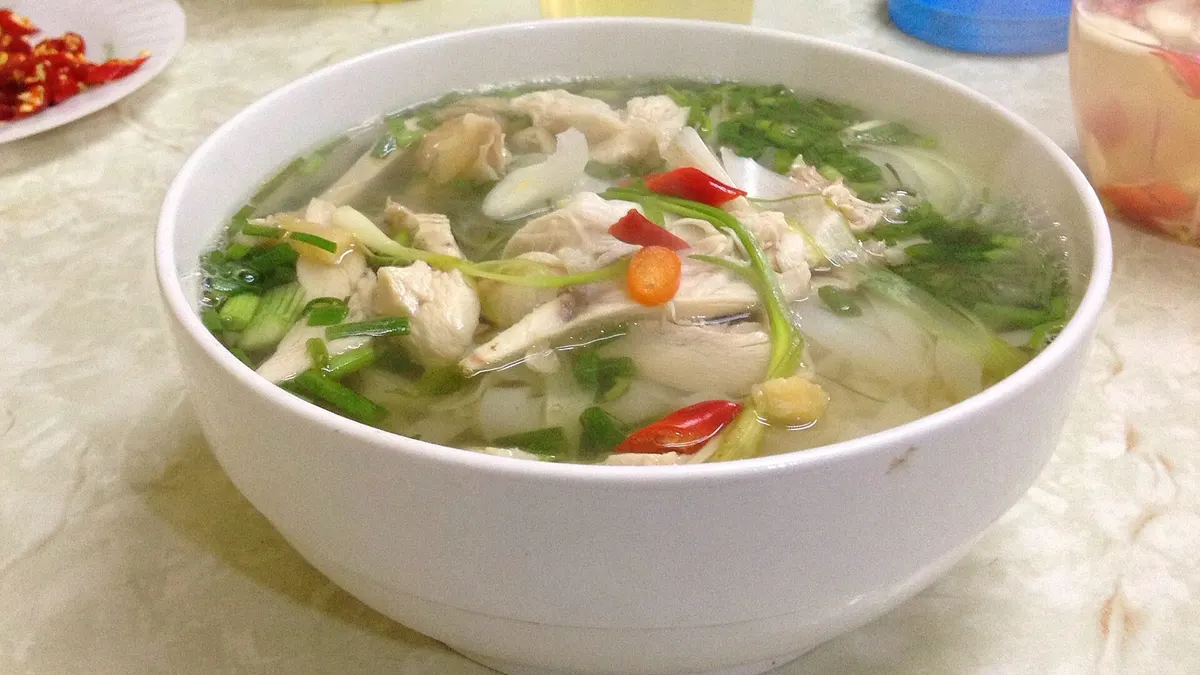
Pho bo (phở bò), beef pho, and pho ga (phở gà), chicken pho, are the same soup built on two different stocks. Beef pho is the original, deeper and usually spiced with cinnamon and star anise, with a choice of cuts from rare to well done; chicken pho is lighter and more fragrant, topped with chicken by the part and shredded lime leaf, and it only appeared in Hanoi in 1939.
Both are served in Hanoi and Saigon, and each city treats them a little differently. Our Hanoi vs Saigon pho guide explains why the whole bowl changes between North and South. This page stays with the other choice you face at the counter: beef or chicken, what each one is, how to order it, and where to try both. For the rest of the country’s dishes, start at our Vietnamese food hub.
Pho bo vs pho ga at a glance
| Pho bo (beef) | Pho ga (chicken) | |
|---|---|---|
| Broth | Beef bones, often with beef, simmered for many hours | Chicken bones and the boiled bird; some well-known shops add pork bones |
| Aromatics | Charred onion and ginger, usually cinnamon and star anise; a few old shops use no spices | Ginger, shallot and coriander; traditional Hanoi cooks leave out cinnamon and star anise |
| What goes on top | Beef by the cut: rare, well-done, flank, brisket, tendon, tripe, meatballs | Chicken by the part: breast, thigh, wing, plus unlaid eggs and giblets |
| Signature garnish | Spring onion and onion | Finely shredded lime leaf, spring onion, coriander |
| House variations | Tai lan: beef seared in a wok with garlic before it goes in | Pho ga tron: dry noodles tossed with chicken, sauce, herbs and peanuts |
| At a Hanoi table | Lime, chilli, pickled garlic, fried dough sticks | Lime, chilli, garlic vinegar, fried dough sticks |
| At a Saigon table | Herbs, bean sprouts, hoisin, chilli sauce; a darker, sweeter broth | Varies: some shops add herbs, and cinnamon and star anise to the broth; Northern-style shops keep lime leaf and skip hoisin |
| A typical order | Pho bo tai chin: rare and well-done beef | Pho ga dui: chicken thigh |
| Typical hours (examples) | Some well-known shops open only in the morning; a few night stalls | The listed chicken shops run from early morning into the evening |
| When it appeared | Early 20th century | 1939, in Hanoi |
The table shows common patterns, not rules. Each one is explained, with its exceptions, below.
What goes into a bowl of pho bo?
The test of a beef pho shop is its broth. A Saigon shop that cooks Northern-style pho told Tuoi Tre (Tuổi Trẻ) in December 2025 that it simmers beef bones and beef for 16 to 20 hours, gets its sweetness from the bones and a little dried sa sung (sá sùng), a marine worm, rather than sugar, and keeps cinnamon, star anise and cardamom in the background (Tuoi Tre). Those warm spices are what most people taste as “pho”.
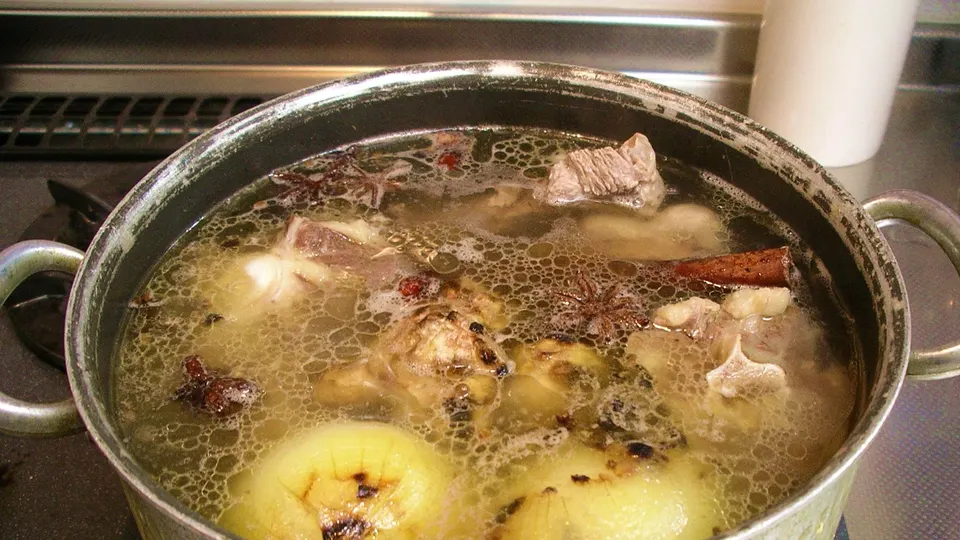
Not every shop follows that pattern. Pho Suong (Phở Sướng), a three-generation shop in an Old Quarter alley, simmers ox leg bones for 14 to 15 hours with ginger and fish sauce and no cinnamon or star anise at all, VietNamNet reported in 2023. So a beef broth can be spiced or plain; what it always has is the long simmer.
Then comes the choice that makes beef pho what it is: the cut. Vietnam’s national tourism board lists the usual menu as rare beef, flank, brisket, tripe, tendon and meatballs. Rare slices cook in the hot broth at the table, well-done beef is boiled in advance and sliced, and some shops sear the beef first. MICHELIN’s inspectors describe the signature bowl at Pho Bo Phu Gia in Saigon as topped with wok-seared garlic beef instead of raw slices. Each cut changes the bowl’s texture, which is why regulars order by cut rather than simply asking for “beef”.
What goes into a bowl of pho ga?
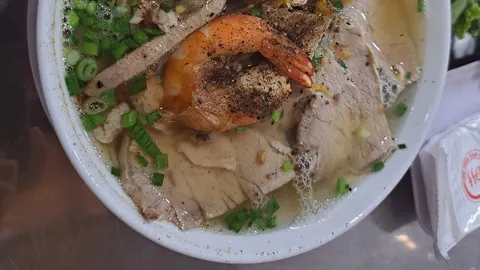
Chicken pho starts from a different idea: the bird, not the bones, is the star. A traditional Hanoi recipe in VnExpress uses a hen of about 2 kg that has laid one or two clutches of eggs, extra chicken bones, ginger, shallots, coriander root and seed, grilled onion and sa sung, and states plainly that traditional Hanoi pho ga uses no cinnamon or star anise (VnExpress). The chicken is poached, plunged into iced water to tighten the skin, torn into pieces and finished with lime leaf. The broth is served with garlic vinegar, lime, chilli and, if you like, fried dough sticks.
The garnish that marks pho ga is lime leaf (la chanh (lá chanh)), cut into hair-thin threads. Trinh Quang Dung (Trịnh Quang Dũng), the pho historian, lists it with spring onion and coriander as part of the classic Hanoi bowl, along with free-range chicken with white meat and crisp golden skin and the rich, soft unlaid eggs (trung non (trứng non)) that come from inside the hen. VOV adds that the chicken is boiled so the skin keeps its yellow colour, and describes the broth as more refined and much less fatty than beef broth.
What goes on top is chosen by the part: breast, thigh or wing, with liver, gizzard, eggs or blood on request. Several of Hanoi’s MICHELIN-listed shops also sell pho ga tron (phở gà trộn), a dry bowl. VietNamNet describes one version as blanched noodles tossed with sliced chicken, herbs, roasted peanuts and a savoury sauce, and another with bean sprouts and fried shallots.
Here too, practice varies. The owner of Pho Ga Nguyet (Phở Gà Nguyệt), a MICHELIN Bib Gourmand in Hanoi, told VietNamNet in 2025 that her broth is simmered from pork bones for about half a day. In Saigon, MICHELIN credits the chicken pho at Pho Mien Ga Ky Dong to a broth of chicken and pork bones. And a Hanoi-born owner in Saigon uses only roosters, because, he told Tuoi Tre in 2026, a rooster’s thigh is bigger and not tough. Hens are the classic, but not the only, choice.
Why does chicken pho exist? Hanoi, 1939
Beef pho took shape in northern Vietnam in the early 20th century, and for its first decades pho meant beef. Chicken pho came later. In his 2017 series on pho for Tuoi Tre, Trinh Quang Dung dates its appearance to 1939, when there were two days a week, Monday and Friday, on which no beef was sold, and notes that there were no refrigerators to keep beef over (Tuoi Tre). He made the same point in VnEconomy in 2009, and Vietnam’s national tourism board also dates the invention of chicken pho to 1939.
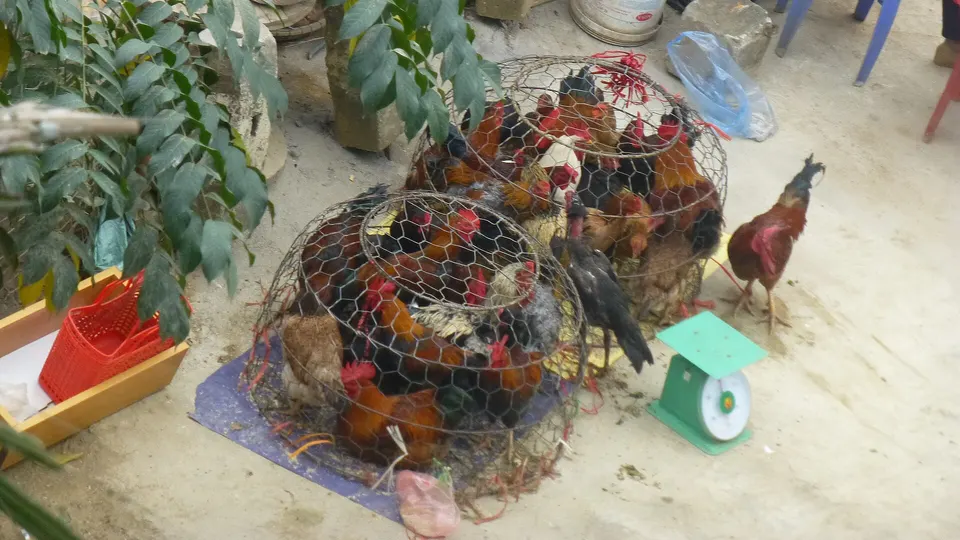
Why there was no beef on those days is less clear. Trinh Quang Dung says the cause is not known and points to a long background: under the old monarchy the slaughter of buffalo and cattle, the draught animals of rice farming, was always restricted. Vietcetera’s 2025 essay on pho makes a similar point, that beef was expensive because cattle were the farmer’s working capital, and quotes the writer Vu Bang (Vũ Bằng) on the two days a week, Friday and Monday, that annoyed Hanoi’s pho lovers. English-language retellings often turn this into a formal colonial “beef ban”. We could not confirm that wording in a source we were able to open, so treat it as a likely but unproven explanation.
What is well documented is the reaction. Critics said chicken broth could never match beef, and many beef pho cooks hung up their knives and closed on beef-free days rather than serve it, Trinh Quang Dung writes. Chicken pho survived anyway. The tourism board says it “caused ructions for a while”; today, VOV notes, it is as popular as the beef version.
How do Hanoi and Saigon cook each bowl?
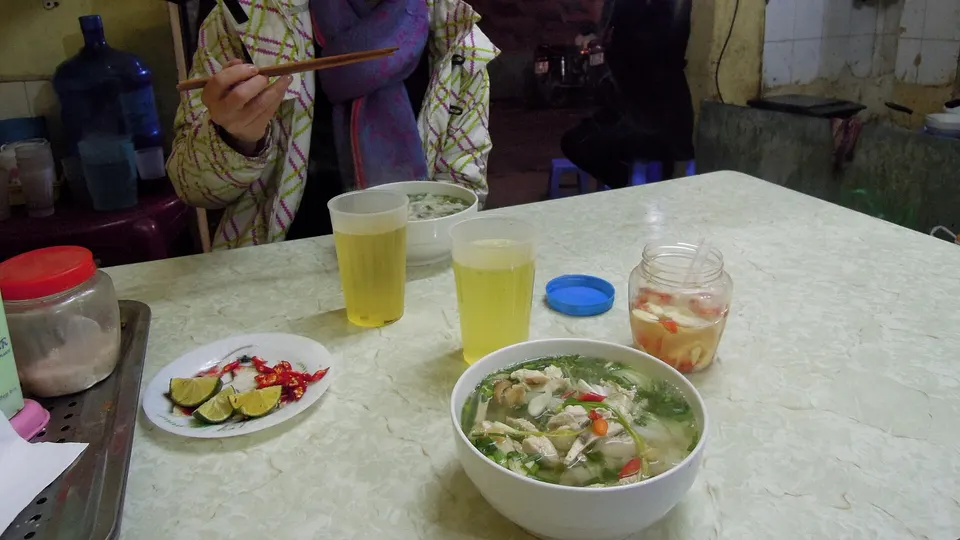
In Hanoi, both bowls are kept plain so you taste the broth. VnExpress International says Hanoi diners rarely use herbs or hoisin, believing they blur the broth, and add at most a squeeze of lime or garlic-chilli vinegar, while Southern pho typically comes with hoisin, chilli sauce, bean sprouts, basil and sawtooth herb, and a darker, sweeter broth that some cooks sweeten with rock sugar or daikon (VnExpress). That describes beef pho most closely, but the same habits shape chicken pho in each city.
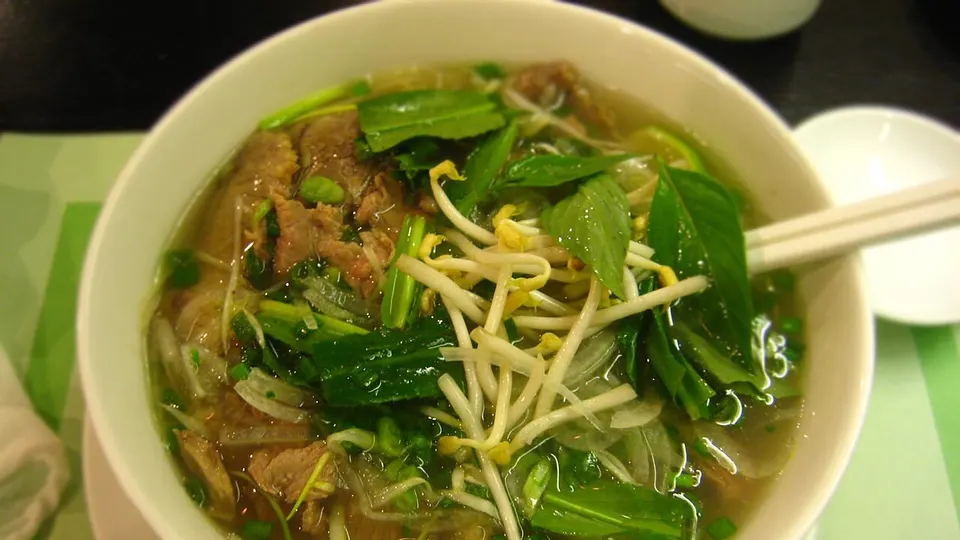
- Hanoi pho bo: clear broth, beef, spring onion; lime, chilli, pickled garlic and fried dough sticks on the table. Our guide to Hanoi pho styles covers the city’s other pho dishes, from pho cuon, beef rolled in sheets of pho noodle, to pho tron, a dry pho, and the Hanoi travel guide shows where the food streets are.
- Hanoi pho ga: the plainest bowl of all, with lime leaf, spring onion and coriander, garlic vinegar and lime. The famous shops sell thigh, breast and wing separately and add giblets or eggs to order; the Old Quarter food guide has two of them, street by street.
- Saigon pho bo: a sweeter broth with a plate of herbs and bean sprouts and bottles of hoisin and chilli sauce. Our guide to Vietnamese herbs names what is on that plate.
- Saigon pho ga: the VnExpress recipe notes that Southern and some regional versions put cinnamon and star anise in chicken broth, which Hanoi cooks do not, and at Ky Dong (Kỳ Đồng), Saigon’s MICHELIN Bib Gourmand for chicken pho, Saigoneer describes the bowl garnished with chopped herbs and onion. The shop began as a hu tieu ga (hủ tiếu gà), chicken noodle soup, cart in the late 1970s; Saigoneer says its founder added pho and changed her recipe in the 1980s because Northern and Central customers found her Southern flavours too sweet. Our hu tieu guide explains that Southern noodle soup.
Saigon also has Hanoi-style chicken pho. A Tuoi Tre profile from June 2026 describes a Saigon shop run by a Hanoian that serves a clear, boneless chicken pho with fried dough sticks, pickled garlic, chilli sauce, lime and shredded lime leaf, with no hoisin and no herb plate. For the wider city, see our Ho Chi Minh City guide and where to eat in Saigon.
How to order: beef cuts and chicken parts
Order by naming the meat, then the cut or part. Many shops cook only one kind of pho, so the sign often tells you which: MICHELIN describes Pho Ga Nguyet as a chicken pho specialist and Pho Bo Phu Gia as specialising in beef noodle soup. Some, such as Pho Ga Huyen Huong in Hanoi, offer both.
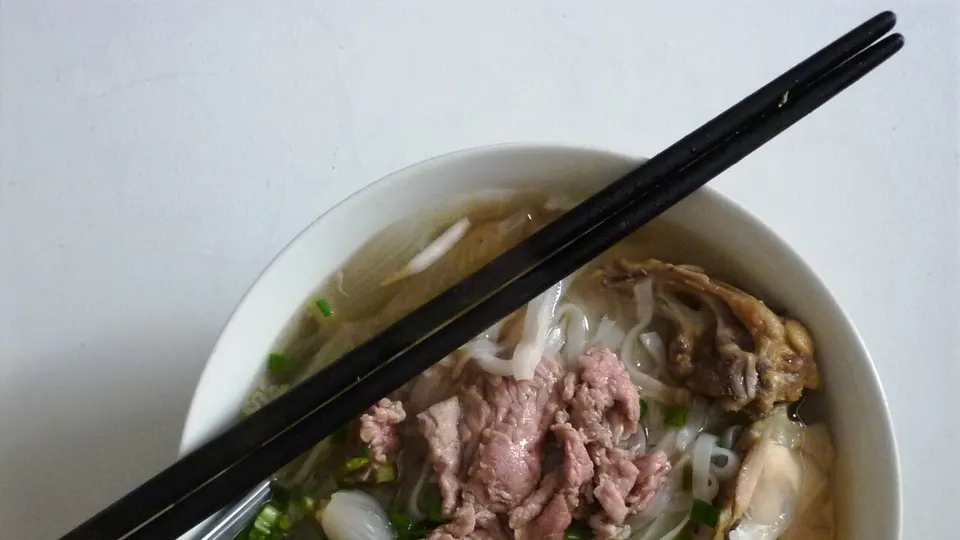
At a beef pho shop (pho bo):
- Tai (tái): thin slices of rare beef, cooked by the hot broth.
- Chin (chín): beef boiled in advance and sliced, well done.
- Nam (nạm): flank. Gau (gầu): brisket, the fattier cut; at Pho Lam (Phở Lâm) in Hanoi, VietNamNet reports, it is the top seller and often sells out early.
- Gan (gân): tendon. Sach (sách): tripe. Bo vien (bò viên): beef meatballs.
- Combinations: cuts are combined freely, for example tai chin (tái chín), tai gau (tái gầu) or gau nam (gầu nạm).
- Tai lan (tái lăn): beef seared in a wok, often with garlic, before it goes into the bowl.
- Dac biet (đặc biệt): the “special”, a bowl with several toppings.
At a chicken pho shop (pho ga):
- Luon (lườn): breast, the leanest and usually the cheapest bowl. Dui (đùi): thigh, the cut MICHELIN’s inspectors single out at Pho Ga Nguyet. Canh (cánh): wing.
- Trung non: unlaid eggs. Long me (lòng mề): giblets; at a chicken shop gan is liver and me (mề) is gizzard.
- Pho ga tron: the dry version, with sauce, herbs and peanuts.
- Dac biet here means chicken with the extras: VietNamNet lists unlaid eggs, liver, gizzard, blood and pork balls in one Hanoi shop’s special bowl (VietNamNet).
If the words will not come, point at the next table’s bowl. Our Vietnamese phrases by region guide covers the polite basics for ordering and paying.
When to eat pho bo and pho ga: morning or late night?
Pho is eaten at any hour in Hanoi, but shops keep very different hours, and the pattern partly follows the meat. Some well-known beef specialists are morning shops that sell out: VnExpress International’s June 2026 weekend guide to Hanoi pho says Pho Lam on Hang Vai (Hàng Vải) street opens only from around 6 to 10 a.m. The chicken pho shops in MICHELIN’s 2026 selection, by contrast, stay open into the evening: Ky Dong in Saigon, for example, is listed from 5.30 a.m. to 10.30 p.m. (MICHELIN Guide).
| Shop | City | Bowl | Hours given by the source |
|---|---|---|---|
| Pho Lam, Hang Vai street | Hanoi | Beef | About 6 to 10 a.m. (VnExpress International, June 2026) |
| Pho ganh Hang Chieu | Hanoi | Beef | Night only, from around 10 p.m. (VnExpress International, November 2025) |
| Pho Gia Truyen, Bat Dan street | Hanoi | Beef | 6 to 11 a.m. and 5 to 9.30 p.m. (MICHELIN) |
| Pho Ga Huyen Huong | Hanoi | Chicken, also beef | 6 a.m. to 9 p.m. (MICHELIN) |
| Pho Ga Nguyet | Hanoi | Chicken | 6.30 a.m. to midnight (MICHELIN) |
| Pho Bo Phu Gia | Saigon | Beef | 6 to 11 a.m. and 5 to 9 p.m. (MICHELIN) |
| Pho Mien Ga Ky Dong | Saigon | Chicken | 5.30 a.m. to 10.30 p.m. (MICHELIN) |
MICHELIN hours are as its listings showed them on 13 November 2026 (Pho Gia Truyen on 22 November 2026); hours change, so check on the day.
Treat this as a pattern, not a rule. Beef pho has its own night culture: VietnamPlus wrote in 2020 that Hanoians eat pho at any hour, even at midnight, and that the night shops are there for late-shift workers, and the Hang Chieu (Hàng Chiếu) stall in the place cards below cooks beef only after dark. What the listings do show is a practical rule of thumb. For beef, go in the morning, before the popular cuts run out, or find a night stall; for pho at dinner time, the chicken shops are the safer bet. Our Vietnamese breakfast guide explains the morning side of the day.
Common mistakes when ordering pho bo or pho ga
Most ordering mistakes come from treating beef and chicken pho as the same menu with a different meat. They are two kitchens, with their own words and hours.
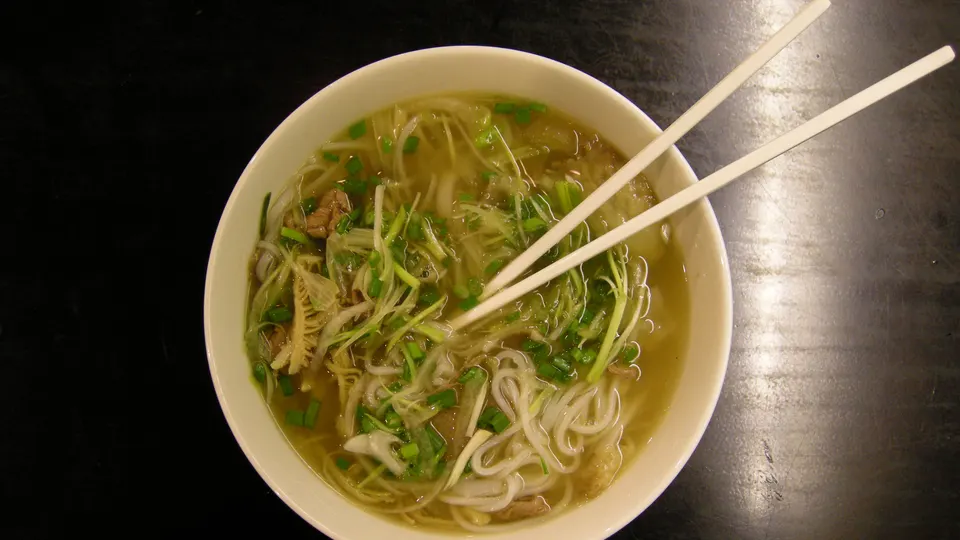
- Mixing up “gan” and “gan”. Without accents, gan (gân) (tendon) and gan (liver) are spelled the same, and English menus, even official ones, often write tendon as “gan”. At a beef shop “gan” will be read as tendon; at a chicken shop it means liver. If you care, point or say gan bo (gân bò) (beef tendon).
- Ordering beef at a chicken shop. Specialists cook one stock. Look at the sign: “pho ga” over the door means chicken, and the beef option, if there is one, is the exception (MICHELIN Guide).
- Expecting a herb plate everywhere. Hanoi bowls, beef or chicken, rarely come with herbs or hoisin, and Northern-style shops in Saigon often leave them out on purpose. Taste the broth first, then add lime or chilli.
- Assuming chicken pho is pure chicken. Several respected shops build their chicken broth partly or wholly on pork bones. If you avoid pork, ask before you order.
- Trusting an old MICHELIN sticker. Listings change every June. Pho Tu Lun at 34 Au Trieu, a beef shop with a Bib Gourmand from 2023 to 2025, was not in the 2026 Bib Gourmand list announced on 4 June 2026 (CafeF, 8 June 2026), while Pho Gia Truyen on Bat Dan street kept its place. Check the shop on MICHELIN’s own site, not the sign on the wall.
- Arriving at the wrong hour. Famous beef shops sell out of popular cuts, as Pho Lam’s brisket often does early in the day, and some close in the afternoon, as Pho Bo Phu Gia in Saigon does between 11 a.m. and 5 p.m. The hours table above shows which bowls you can still find in the evening.
Pho bo or pho ga: which should you choose?
Choose by what you want from the bowl, not by which is more “real”: both are standard pho in both cities, and neither region’s version is more authentic.
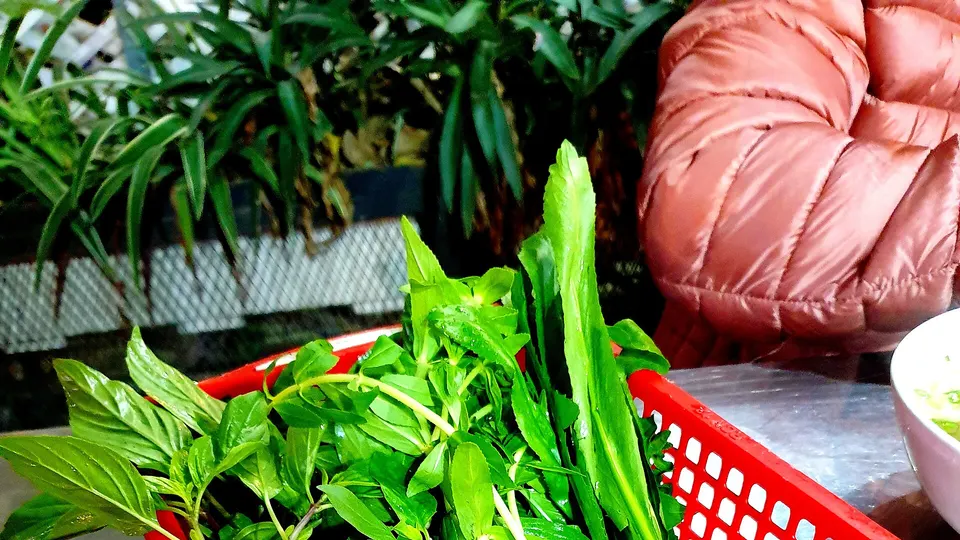
Use this table if you are standing between two shops and need to decide fast. It is built from the broths, hours and shops described above.
| Your situation | Order | Why | Where to try it |
|---|---|---|---|
| First morning in Hanoi | Pho bo tai or chin (rare or well-done beef) | The original bowl, at its busiest before 11 a.m. | Pho Gia Truyen, Bat Dan street |
| Dinner or late evening | Pho ga | The listed chicken shops stay open into the evening; Pho Ga Nguyet until midnight | Pho Ga Nguyet, Pho Ga Huyen Huong (to 9 p.m.) |
| Late night in the Old Quarter | Pho bo at a night stall | Some Hanoi beef stalls cook only after dark | Pho ganh Hang Chieu |
| You want a lighter, less fatty bowl | Pho ga | Shorter-cooked broth, no cinnamon or star anise in the Hanoi style | Pho Ga Huyen Huong |
| You avoid beef | Pho ga, after asking | Chicken shops may still use pork bones | Pho Mien Ga Ky Dong (chicken and pork bones) |
| You want to compare textures | Pho bo, choosing the cut | Beef shops sell by the cut, from rare to brisket and wok-seared tai lan | Pho Bo Phu Gia, Saigon (tai lan or the brisket dac biet) |
| Saigon, but you want Northern roots | Pho bo | Founded by a pho seller from 1930s Hanoi, adapted to Saigon with bean sprouts | Pho Cao Van |
| Two people, one meal | One beef, one chicken | Shops price both in the same range | Pho Ga Huyen Huong serves both |
- Choose pho bo if you want the classic: a deeper, spiced broth and a choice of textures from tender rare beef to chewy tendon. It is the better bowl for a first morning in Hanoi, when the beef shops are at their busiest.
- Choose pho ga if you want something gentler and more fragrant, if beef is off your menu, or if it is late: several of Hanoi’s MICHELIN-listed chicken pho shops serve until the evening or midnight.
- Try both at one table at a shop that offers both, or order one beef and one chicken bowl between two people at neighbouring shops.
- In Saigon, decide first between Southern style (sweeter, herbs and sauces) and Northern style (plain, lime leaf, pickled garlic), then between beef and chicken. The place cards below include one of each.
What a bowl costs in 2026. Price is not a reason to choose between them: shops price beef and chicken bowls in the same range and charge more for special cuts. In Hanoi the common price has risen to about 50,000 to 60,000 dong a bowl, from 30,000 to 35,000 before, with special bowls up to 100,000 dong, VTC News reported (republished by CafeF on 9 November 2026); in central Ho Chi Minh City Tuoi Tre put the floor for a breakfast bowl of pho or bun above 60,000 dong in July 2026. At the top end, Pho Ga Huyen Huong, new to MICHELIN’s Selected list in 2026, charges 90,000 dong for breast meat up to 160,000 dong for a special bowl, VietNamNet reported in June 2026. In July 2026 Hanoi also announced a plan to prepare a dossier on pho for UNESCO, Bao Dau tu reported.
Whichever you order, taste the broth before you season it. That habit works for both bowls in both cities.
Where to try pho bo and pho ga in Hanoi and Saigon
MICHELIN Guide pick
Phở Gà Huyền Hương · Phở gà Huyền Hương
Hanoi · Hoàn Kiếm ward, near Hoàn Kiếm Lake
20 Bảo Khánh Street
A chicken phở shop newly added to the 2026 MICHELIN Guide Vietnam (VietNamNet counts it among nine new Selected entries that year). The inspectors describe a rich, hearty chicken broth, generous portions and waits at peak times; it also offers a beef option, so a pair can try both bowls at one table.
Order: Phở gà with breast or the special bowl (with unlaid eggs, liver, gizzard and blood), or phở gà trộn, the dry version with herbs and roasted peanuts.
Listed in: MICHELIN Guide Vietnam 2026, VietNamNet (2026) · checked November 2026
MICHELIN Guide pick
Phở Gia Truyền (Bát Đàn) · Phở gia truyền Bát Đàn
Hanoi · Old Quarter, Hoàn Kiếm ward
49 Bát Đàn Street
A beef-only shop with a Bib Gourmand in the 2026 MICHELIN Guide Vietnam. The inspectors call it one of Hanoi's most iconic eateries and an example of the Northern approach: three choices of beef, each bowl made to order at the counter. It is the classic place to taste pho bo the Hanoi way before trying a chicken shop.
Order: Rare flank, medium-rare round or well-done brisket, with quẩy (fried dough) or an egg yolk added. The listing gives two sittings, 06:00–11:00 and 17:00–21:30 daily (checked 22 November 2026).
Gia truyền simply means 'family recipe' and many shops use the name; this card means the shop at 49 Bát Đàn listed by MICHELIN.
Listed in: MICHELIN Guide Vietnam 2026 · checked November 2026
Local favourite
Phở gánh Hàng Chiếu (Phở 54 Hàng Chiếu) · Phở gánh Hàng Chiếu
Hanoi · Old Quarter, Hoàn Kiếm ward, at the corner of Hàng Chiếu and Hàng Đường
54 Hàng Chiếu Street
A late-night beef phở stall, the opposite of Hanoi's morning shops: VnExpress International (November 2025) says it opens around 10 p.m., simmers fresh beef bones daily and serves tái lăn (wok-seared beef), brisket, flank and well-done cuts. Vietnam Airlines' night-food guide lists it at No. 54.
Order: Phở tái lăn, or a mixed bowl of brisket and flank; arrive before 11 p.m. if you want the scarcest cut.
Night only. Hours in the sources differ (around 10 p.m. to early morning), so check on the day.
Recommended by: VnExpress International (2025), Vietnam Airlines travel guide, Znews (2020) · checked November 2026
MICHELIN Guide pick
Phở Miến Gà Kỳ Đồng · Phở miến gà Kỳ Đồng
Ho Chi Minh City · Xuân Hòa ward (former District 3), in an alley off Kỳ Đồng Street
14/5 Bis Kỳ Đồng Street
A chicken phở shop with a Bib Gourmand in the 2026 MICHELIN Guide Vietnam. The inspectors credit a broth slow-cooked from chicken and pork bones for 3–4 hours; Saigoneer traces the shop to a hủ tiếu gà cart of the late 1970s whose founder added phở in the 1980s for Northern and Central customers.
Order: Phở gà; miến (glass noodles) with chicken is the alternative. The MICHELIN listing gives 05:30–22:30 daily and cash only (re-checked 13 November 2026).
Listed in: MICHELIN Guide Vietnam 2026, Saigoneer (2023) · checked November 2026
MICHELIN Guide pick
Phở Bò Phú Gia (Nhiêu Lộc) · Phở bò Phú Gia
Ho Chi Minh City · Nhiêu Lộc ward (former District 3)
146E Lý Chính Thắng Street
A beef-only shop in the 2026 MICHELIN Guide Vietnam. Its signature phở tái lăn is topped with wok-seared garlic beef instead of raw slices cooked by the broth; the inspectors suggest the brisket-based đặc biệt and dipping quẩy (fried dough) in the broth.
Order: Phở tái lăn, or phở đặc biệt for brisket. The listing gives two sittings, 06:00–11:00 and 17:00–21:00, cash only (re-checked 13 November 2026).
The Phú Gia name is also used by other shops; this card means the Saigon shop at 146E Lý Chính Thắng listed by MICHELIN.
Listed in: MICHELIN Guide Vietnam 2026, Tuổi Trẻ (2025) · checked November 2026
Local favourite
Phở Cao Vân
Ho Chi Minh City · Mạc Đĩnh Chi Street (former Đa Kao ward, District 1)
25 Mạc Đĩnh Chi Street
Northern-rooted beef phở in the South: the founder sold phở in Hanoi in the 1930s, moved south around 1947 and moved the shop to Mạc Đĩnh Chi in 1961 (Báo Đầu Tư, 2014). Tatler Asia (2025) describes a broth cooked over a live fire and served with bean sprouts, a good bowl for seeing how Hanoi phở adapted in Saigon.
Order: Phở bò with the cut of your choice.
Sources differ on the fuel (firewood in Báo Đầu Tư, charcoal in Tatler Asia).
Recommended by: Tatler Asia (2025), Báo Đầu Tư (2014) · checked November 2026
Addresses and details can change; check before you go. We do not accept payment for listings.
Frequently asked questions
Should I order beef or chicken pho on my first visit to Hanoi?
Order beef pho first if you are out in the morning: it is the original bowl, and Hanoi shops such as Pho Gia Truyen on Bat Dan Street serve it by the cut. Chicken pho is the better first choice for a late meal or if you do not eat beef; neither is more authentic, since chicken pho has been standard in Hanoi since 1939.
How much is a bowl of pho in Hanoi and Saigon in 2026?
In Hanoi a common bowl of pho now costs about 50,000 to 60,000 dong, up from 30,000 to 35,000 a few years ago, VTC News reported in November 2026; in central Ho Chi Minh City a breakfast bowl starts above 60,000 dong, Tuoi Tre reported in July 2026. Famous shops charge more: Pho Ga Huyen Huong in Hanoi asks 90,000 to 160,000 dong a bowl.
Is pho ga lighter than pho bo?
Usually yes. Chicken broth is cooked for less time and, in Hanoi, without cinnamon and star anise, and VOV describes it as more refined and much less fatty than the beef version. No reliable source gives calorie figures, so treat 'lighter' as a matter of taste rather than nutrition.
Can I get Hanoi-style pho ga in Saigon?
Yes. Some Saigon shops are run by Hanoians and serve chicken pho the Northern way, with lime leaf, fried dough sticks and pickled garlic and no hoisin or herb plate. Southern-style shops may add herbs and onion, and some put cinnamon and star anise in the broth.
What does dac biet mean on a pho menu?
Dac biet means 'special': the house bowl with several toppings. What it contains varies by shop, from mixed beef cuts or brisket at a beef shop to chicken with liver, gizzard and unlaid eggs at a chicken shop, so ask or point if you want to know.
Key sources
- Giá hàng quán tăng rồi khó giảm: xăng dầu chỉ là một phần câu chuyện · Tuổi Trẻ, 14 July 2026
- Phở Việt - Kỳ 2: Từ phở bò đến phở gà · Tuổi Trẻ (Trịnh Quang Dũng), 9 December 2017
- Cách làm phở gà Hà Nội truyền thống · VnExpress (Bùi Thủy), 18 August 2023
- Phở bò Phát Tài phở gà Phát Lộc: Tôn trọng khẩu vị miền Nam nhưng muốn gìn giữ hương vị Bắc · Tuổi Trẻ, 6 December 2025
- 5 quán phở gà Michelin ở Hà Nội: Có nơi bị chê đắt vẫn đông kín khách · VietNamNet, 25 June 2026
- Hanoi and Saigon, the pho divide explained · VnExpress International, 27 December 2025
- Phở Gà Nguyệt · MICHELIN Guide Vietnam 2026
- Phở Miến Gà Kỳ Đồng · MICHELIN Guide Vietnam 2026
All 28 sources and further reading
- Giá tô phở chỉ tăng dù giá đầu vào giảm, người bán lãi có nào? · VTC News, via CafeF, 9 November 2026
- Quán phở gà đắt nhất nhì Hà Nội bất ngờ được Michelin gọi tên · VietNamNet, 6 June 2026
- Hà Nội đưa di sản phở vào hành trình sáng tạo tài sản trí tuệ · Báo Đầu tư, 24 July 2026
- Trăm năm phở Việt · VnEconomy (T.Q. Dũng), 25 January 2009
- The story of Vietnamese pho · Vietnam Tourism (Vietnam National Authority of Tourism)
- "Đá bát phở không?" · Vietcetera (Gấm Võ), 22 October 2025
- Ăn phở thì thịt gà trống là ngon nhất · Tuổi Trẻ, 14 June 2026
- Foreign tourist tries two chicken pho eateries, prefers cheaper one · VietNamNet, 11 October 2025
- Delicate chicken pho in Hanoi · VOV (Voice of Vietnam), 7 December 2021
- Phở Bò Phú Gia (Nhiêu Lộc) · MICHELIN Guide Vietnam 2026
- Hẻm Gems: The 40-Year-Old Phở Gà in Kỳ Đồng, Now Michelin-Approved · Saigoneer, 16 June 2023
- Quán phở Sướng 3 đời ở phố cổ Hà Nội khiến 'vua đầu bếp' nhớ món ăn mẹ nấu · VietNamNet, 29 September 2023
- Beef brisket pho draws crowds to Hanoi's beloved 30-year-old eatery · VietNamNet, 2 August 2025
- A summer 'phở' crisis in heart of Hà Nội · Việt Nam News, 1 August 2026
- Weekend guide to Hanoi's Michelin pho eateries · VnExpress International, 26 June 2026
- Must-try pho shops in Hanoi opened at night only · VietnamPlus, 12 December 2020
- Phở Gia Truyền (Hoàn Kiếm) · MICHELIN Guide Vietnam 2026 (Bib Gourmand)
- Cùng dính lùm xùm vệ sinh, huyền thoại phở phố cổ 'bay màu' khỏi Michelin… · CafeF, 8 June 2026
- Phở Gà Huyền Hương · MICHELIN Guide Vietnam 2026
- Pho · Wikipedia (background; cites Trịnh Quang Dũng, 2010)
Keep exploring
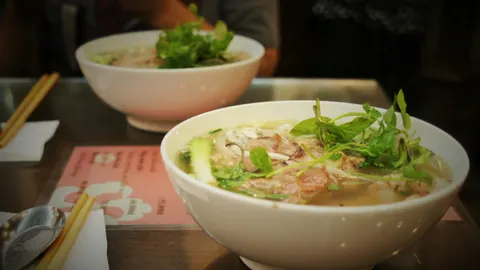 North · Central · South · Food Hanoi vs Saigon Pho (Phở): Differences and How to Order Hanoi vs Saigon pho: a clear, spare Northern broth or a sweeter Southern bowl with herbs and sauces, plus Central styles, 2026 prices and MICHELIN picks.
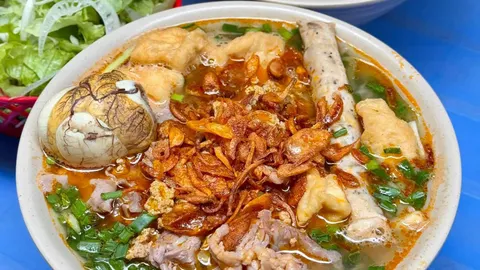 North · Central · South · Food Hanoi Breakfast Food: What to Eat and When, North to South Hanoi breakfast food: pho, banh cuon, xoi, bun rieu, chao and banh mi, an hour-by-hour guide to when stalls open and sell out, plus Hue and Saigon breakfasts.
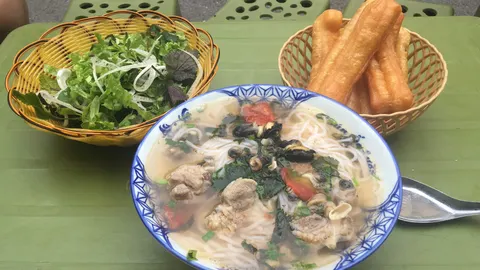 North Vietnam · Food Where to Eat in Hanoi Old Quarter: Best Restaurants 2026 Where to eat in Hanoi Old Quarter, re-checked November 2026: MICHELIN 2026 picks and local favourites by street, dish and time of day, plus a one-day plan.
 South Vietnam · Food Hu Tieu (Hủ Tiếu): Which Style to Order and Where in Saigon Which hu tieu to order in Saigon: Nam Vang, My Tho or Sa Dec, dry or in broth, how it differs from pho, what a bowl costs in 2026 and where to eat it.