North Vietnam · Food
Hanoi Pho Styles (Phở Hà Nội): What to Order and Where
Hanoi pho styles decoded: what tai, chin, nam and gau mean, pho tai lan, pho cuon and pho tron, and which Hanoi pho shops to try, incl. 2026 MICHELIN picks.
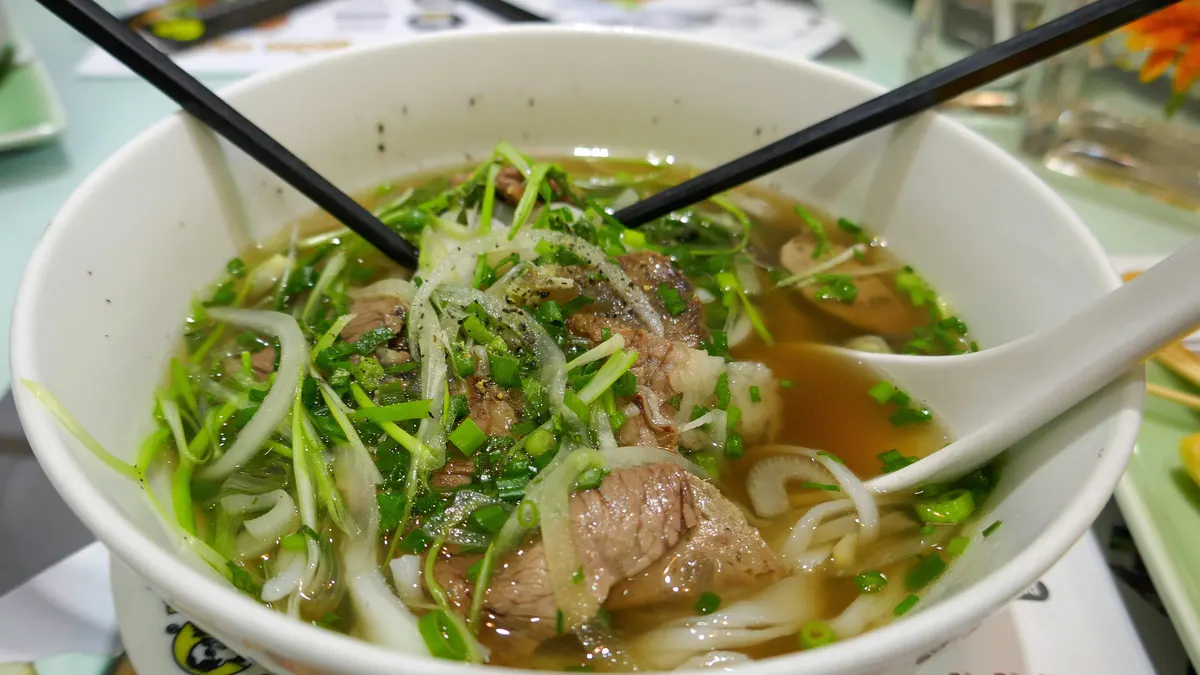
In Hanoi you order beef pho by the cut, tai (rare), chin (well-done), nam (flank) or gau (fatty brisket), or pick one of the city’s own styles: seared-beef pho tai lan, wine-stewed sot vang, cold pho cuon rolls, dry pho tron and stir-fried pho xao. As of November 2026, two Old Quarter beef counters, Pho Gia Truyen at 49 Bat Dan (Bát Đàn) and Pho Khoi Hoi (Phở Khôi Hói) at 50 Hang Vai, hold a Bib Gourmand in the 2026 MICHELIN Guide Vietnam, and both are cash only. This guide decodes the words on a Hanoi pho board, explains what each style is and where it comes from, and shows how to pick a shop; for how the Hanoi bowl differs from Saigon’s and where pho itself began, start with our Hanoi vs Saigon pho guide.
Pho matters in Hanoi in a way that is now official. The Ministry of Culture, Sports and Tourism added Hanoi pho to the national intangible cultural heritage list in August 2024, by a ministry decision (No. 2328) (Nhan Dan), and the decision was formally presented to the city and its pho makers on 29 November 2024, at the opening of the Hanoi Food Culture Festival in Thong Nhat Park, Bao Van Hoa reported. VTV put the number of pho shops in Hanoi at about 700, mostly in the central districts. This page sits in our North Vietnam section; the rest of the city’s food is covered in the food hub.
Hanoi pho styles at a glance
| Style | What it is | Soup or dry | Where it comes from |
|---|---|---|---|
| Pho bo (beef pho) | Rice noodles, beef by the cut, clear broth | Soup | The classic Hanoi and Nam Dinh bowl, early 20th century |
| Pho ga (chicken pho) | Chicken by the part, lighter broth | Soup | Hanoi; compared in our pho bo vs pho ga guide |
| Pho tai lan | Beef seared with garlic in a hot pan, then into the bowl | Soup | Pho Thin, 13 Lo Duc, from 1979 |
| Pho sot vang | Beef and tendon stewed in a wine sauce with spices | Soup | Hanoi shops; often one item on a beef menu |
| Pho cuon | Uncut pho sheets rolled around stir-fried beef and herbs, with a dip | Dry, cold | Ngu Xa, by Truc Bach Lake, around 2000 (debated) |
| Pho tron | Pho tossed with sauce, herbs and peanuts, beef or chicken | Dry (sometimes broth on the side) | Hanoi; many versions |
| Pho xao, pho chien phong | Stir-fried pho; pho sheets fried until puffed, topped with beef | Dry, hot | Sold at pho cuon shops |
| Pho chua | Sour-sweet cold noodles with roast pork and duck | Dry | Lang Son (and Cao Bang) |
How to order Hanoi beef pho: the words on the board
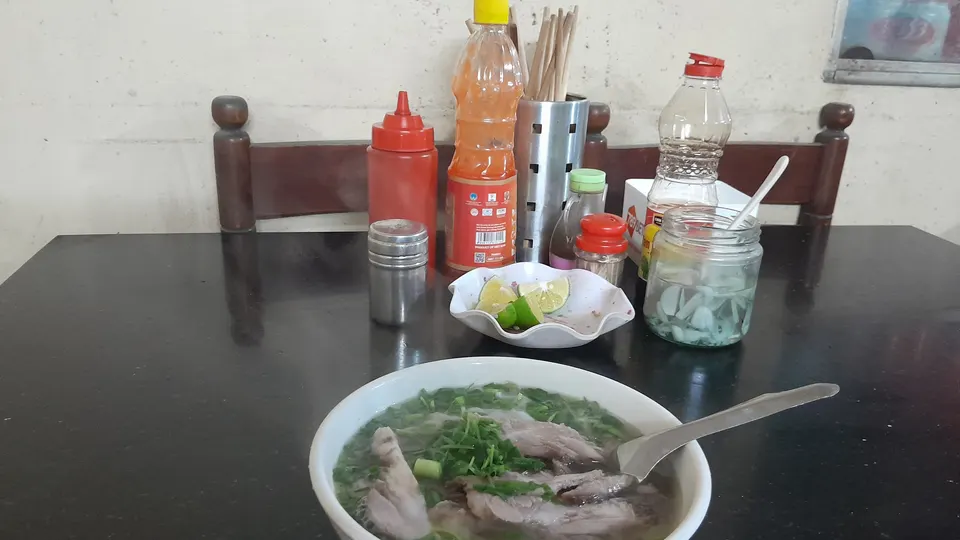
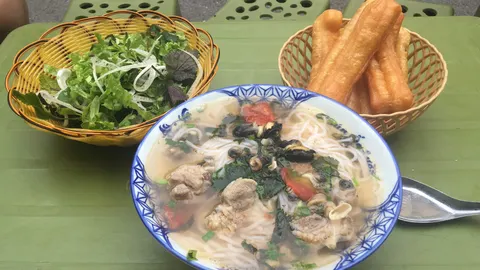
Most traditional Hanoi pho shops sell one thing, beef pho or chicken pho, and the only real decision is the cut. You say the cut, sometimes two together, and the cook builds the bowl in front of you. At the most famous counter, 49 Bat Dan, the MICHELIN Guide describes the choice as rare flank, medium-rare round or well-done brisket, each bowl made to order, with fried dough or an egg yolk as extras (MICHELIN Guide).
| Say | What arrives | Good to know |
|---|---|---|
| Tai (tái) | Thin slices of raw beef that cook in the hot broth | The default for many Hanoians; eat it quickly while it is pink |
| Chin (chín) | Well-done boiled beef, usually brisket | Firmer and milder |
| Tai chin, tai nam (tái nạm) | Rare beef plus well-done beef or flank | The usual way to get two textures |
| Nam | Flank, cooked | Leaner, a little chewy |
| Gau (gầu) | Fatty brisket | Rich; VnExpress singles out the gau at Old Quarter shops |
| Gan (gân) | Tendon, soft or crunchy | Shops may list “gan gion” (crunchy tendon) |
| Bap, loi bap (lõi bắp) | Beef shank, the core of the shank | A premium cut at some shops |
| Sot vang (sốt vang) | Beef stewed in wine sauce | See below |
| Xao lan (xào lăn), tai lan | Beef seared in a pan before it goes into the bowl | See below |
Menus at the shops VietNamNet surveyed in 2024 combine these words in different ways: tai, chin, tai nam, gau, gan gion, sot vang, xao lan, loi (shank) and suon nhu (soft-stewed ribs). The cut list at Pho Khoi Hoi on Hang Vai is especially long; its MICHELIN listing mentions beef heel muscle and says you can ask for your beef cooked as you like. At most traditional shops the bowl comes with spring onion and little else, and the table holds chilli, lime and garlic vinegar; our pho bo vs pho ga guide covers the chicken side of the board, ordered by the part of the bird.
What “pho gia truyen” means
You will see the words “pho gia truyen (phở gia truyền)”, family-recipe pho, on signs all over Hanoi. VietNamNet uses the term for shops that have made pho for more than two generations, and Nhan Dan notes that such family brands, mostly in the old central districts, usually specialise in either beef or chicken, not both (VietNamNet). Nothing stops a new shop from painting the same words on its sign, though.
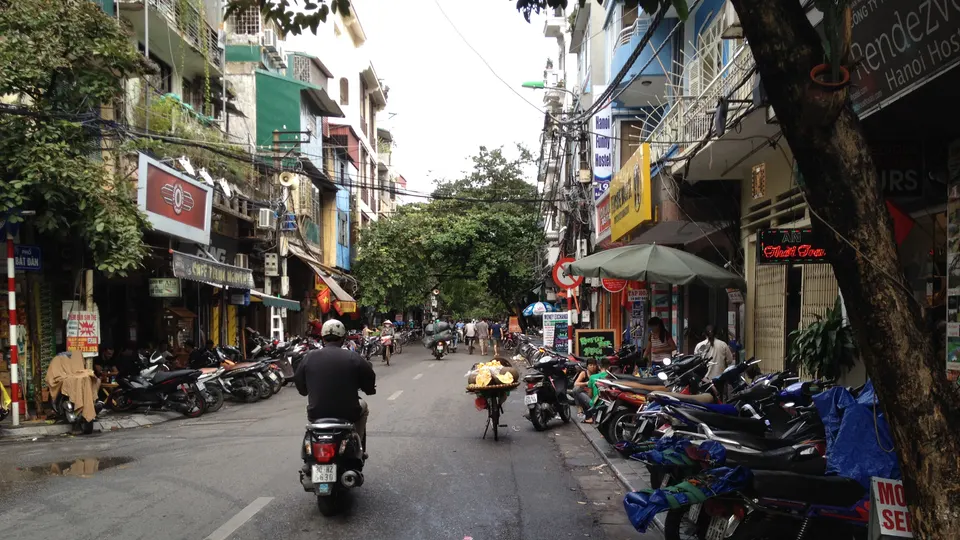
The shop most people mean by the name is Pho Gia Truyen at 49 Bat Dan, a Bib Gourmand in the 2026 MICHELIN selection. The Bat Dan style is part of the experience: in VietNamNet’s 2024 description you queue, order and pay at the counter, then carry your own bowl to a seat, and the queue is longest from about 8.30 to 9.30am. The shop also closes for about a month each summer: CafeF reported a break from 1 July to 1 August 2026, while the owners opened the first overseas branch in Melbourne on 3 July, Tuoi Tre News reported. A VnExpress writer in 2015 praised its clear broth scented with brisket and flank as “đúng chất phở Hà Nội”, true Hanoi pho. Other old family shops trade on the same reputation, so go by the house number on our place cards and on the Old Quarter food map, not by the sign.
Tai lan and sot vang: when the beef is cooked first
Two Hanoi styles cook the beef before it meets the broth. In pho tai lan (phở tái lăn), thin slices of beef are tossed for a few seconds in a very hot pan with garlic, then laid on the noodles and covered with broth; the result is smokier and richer than the classic clear bowl. It is the speciality of Pho Thin (Phở Thìn) at 13 Lo Duc (Lò Đúc), where Nguyen Trong Thin developed it from 1979, and in September 2026 CafeF found the shop still crowded despite repeated price rises, with a regular bowl at 100,000 VND and its tai lan meat “stir-fried first and then put in the bowl” (CafeF).
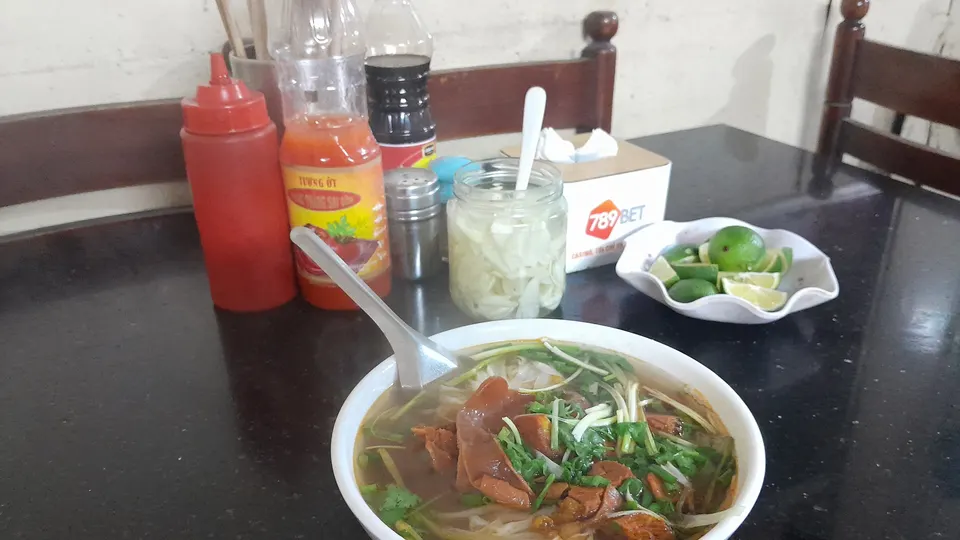
The name is also a lesson in copies. VietNamNet reported in 2023 that dozens of shops across Hanoi use the Pho Thin Lo Duc name; the founder said only 24 outlets were franchised, and the original sells nothing but tai lan and asks you to pay before you sit. Pho sot vang (phở sốt vang) goes further: beef, often with tendon, is stewed in a wine sauce with spices before being served over pho noodles. VnExpress described one Old Quarter version with soft tendon fragrant with cinnamon and star anise, and today sot vang appears as one line on many beef menus rather than as a shop’s only dish.
Pho cuon and pho tron: Truc Bach’s dry pho
Pho cuon (phở cuốn) uses the same rice batter as pho, but as whole, uncut sheets wrapped around stir-fried beef, coriander, lettuce and herbs, then dipped in a fish-sauce dip with garlic and chilli. It is eaten cold, with no broth. Hanoi’s tourism department traces it to Ngu Xa (Ngũ Xã) Street beside Truc Bach (Trúc Bạch) Lake, where a noodle-soup seller who ran out of broth rolled the beef in uncut sheets instead (Hanoi Tourism). Ngu Xa was once a bronze-casting village; today it is better known for streets of pho cuon shops.

Who that seller was is genuinely disputed. In August 2004 VnExpress wrote that pho cuon had appeared only about two years earlier, at the corner of Ngu Xa and Nguyen Khac Hieu streets, thought up by a shop owner named Viet who was bored of soup pho. Viet Nam News in 2017 credited Hoang Thi Xuan, a noodle-soup seller in the old village who ran out of broth one night. Hanoi Times quotes Vu Thi Chinh of the Chinh Thang shop, who says she started rolling pho in summer 2000 after watching customers sweat over hot bowls. All three point to the same street around the same years, which is as far as the evidence goes.
Pho tron (phở trộn), “mixed pho”, is the other dry bowl: noodles tossed with sliced beef or chicken, herbs, roasted peanuts and a sweet-savoury dressing. Accounts differ on the broth: Vietcetera says a small bowl often comes on the side, Vietnam Airlines’ guide says none is served, so expect either. Hanoians often eat the chicken version, and VietNamNet found one Old Quarter owner who said her dressing was inspired by Lang Son’s sour pho. For how these sheet noodles relate to Vietnam’s other noodles, see our guide to Vietnamese noodles.
Pho xao, fried pho and sour pho
The pho cuon shops of Ngu Xa usually sell a hot, dry menu too. Pho xao (phở xào) is pho noodles stir-fried with beef, onion and greens; pho chien phong (phở chiên phồng) is pho sheets fried until they puff into crisp pillows, then topped with stir-fried beef and vegetables in a thick sauce, a cold-weather and late-night favourite according to Vietcetera. VietNamNet’s 2025 round-up of pho cuon shops lists stir-fried, egg-fried and crispy pho alongside the rolls.
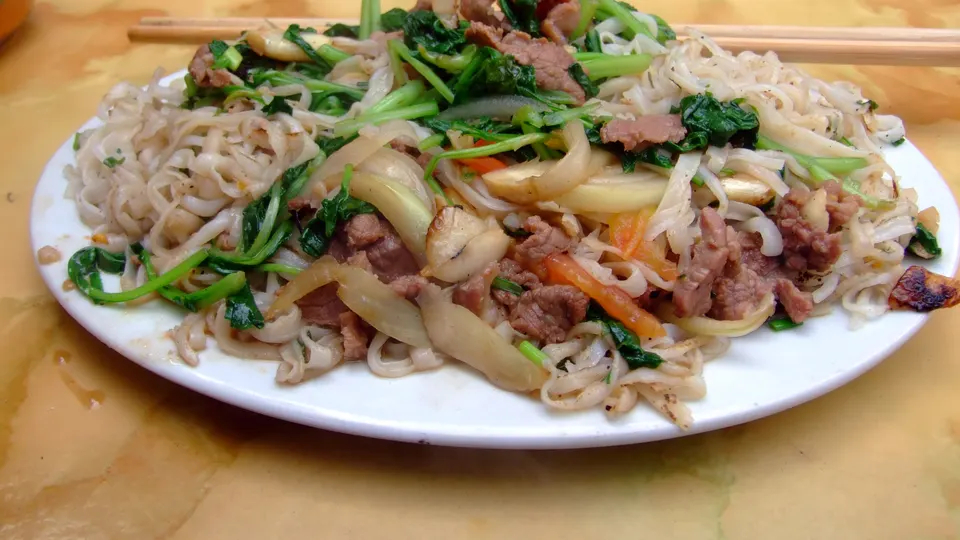
Two names on Hanoi signs point to other provinces. Pho Nam Dinh claims the lineage of Nam Dinh, pho’s likely birthplace, which became part of Ninh Binh province in July 2025; its pho was listed as national heritage alongside Hanoi’s in 2024, and Van Cu (Vân Cù) is one of three villages there considered its home. Pho chua (phở chua), sour pho, is a cold dish of chewy noodles in a sweet-sour sauce with roast pork and duck, fried taro or sweet potato, cucumber and peanuts. Viet Nam News traces it to Lang Son, on the Chinese border, and VietNamNet to Lang Son and Cao Bang (VietNamNet); it is pho in name and noodle, not in broth.
How to pick a pho shop in Hanoi
There is no official ranking of pho shops, but the documented habits of Hanoi eaters give a reliable checklist. Vietnam Airlines’ travel guide advises going early, from about 5.30 to 7am, when the broth is freshest, and treating a busy stall as a good sign; VietNamNet’s 2024 survey found queues at the best-known shops in the 8 to 9.30am rush, and one Dong Da (Đống Đa) shop handing out numbers.
Which bowl, and where? The four shops on our place cards cover the main styles:
| If you want | Order | Shop | Good to know (dated) |
|---|---|---|---|
| The classic clear-broth beef bowl | Rare flank, medium-rare round or well-done brisket | Pho Gia Truyen, 49 Bat Dan | Bib Gourmand 2026; daily 6–11am and 5–9.30pm, cash only (MICHELIN, checked Nov 2026); about 50,000–60,000 VND a bowl in August 2024 (VietNamNet) |
| To choose your own cuts and doneness | Tai nam, gau, gan or a mix | Pho Khoi Hoi, 50 Hang Vai | Bib Gourmand 2026; daily 6am–9pm, cash only (MICHELIN, checked Nov 2026) |
| A richer, smoky bowl | Pho tai lan | Pho Thin, 13 Lo Duc | Regular bowl 100,000 VND in September 2026 (CafeF); pay before you sit |
| No soup: cold rolls | Pho cuon, then pho xao or crispy pho | Chinh Thang, 7 Mac Dinh Chi | Rolls come in sets of 10 (VietNamNet, April 2025); limited seating, Truc Bach area |
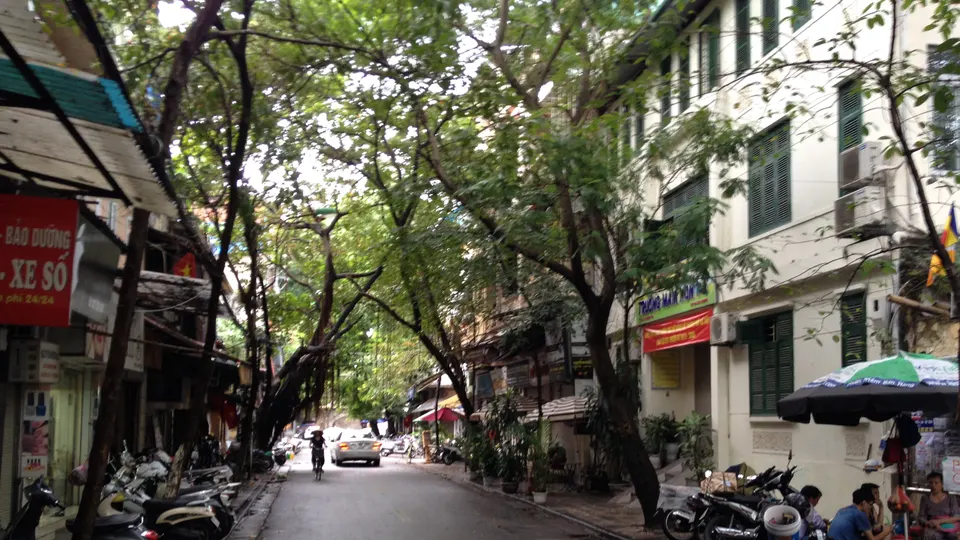
- One dish on the board is a good sign. Family shops tend to sell beef or chicken pho, not both, and not a long menu of other dishes.
- Check the address, not the name. “Gia truyen”, “Pho Thin” and other famous names are copied; the original is at the house number.
- Go in the morning. Many traditional beef shops are busiest from breakfast to mid-morning, and 49 Bat Dan closes between 11am and 5pm (MICHELIN listing, checked 20 November 2026). Pho is also eaten late at night, especially chicken pho.
- Expect to serve yourself or pay first at the busiest counters, and carry cash: the MICHELIN listing for 49 Bat Dan says cash only.
- Taste the broth before you add anything. Chefs asked by the MICHELIN Guide in 2026 said to smell and taste first, add garlic vinegar to beef pho and lime to chicken pho a little at a time, and dip fried dough sticks (quay) for only three to five seconds (MICHELIN Guide). Some traditional beef shops put out no lime at all.
For a first morning, order tai nam at a counter in the Old Quarter, add a little garlic vinegar, and then walk to the Old Quarter streets the shops are named after. Save pho cuon and pho xao for an evening by Truc Bach Lake, and see our Hanoi city guide for the rest of the trip.
Where to try Hanoi's pho styles
MICHELIN Guide pick
Phở Gia Truyền · Phở gia truyền Bát Đàn
Hanoi · Old Quarter, Hoàn Kiếm ward
49 Bát Đàn Street
The best-known 'gia truyền' (family-recipe) phở counter in Hanoi and a Bib Gourmand in the 2026 MICHELIN Guide Vietnam: Northern-style beef phở, each bowl made to order at the counter. You order and pay at the counter and carry your own bowl, as VietNamNet described in 2024.
Order: Rare flank, medium-rare round or well-done brisket; add quẩy (fried dough sticks) or an egg yolk.
Cash only, according to the MICHELIN listing. Closes for about a month each summer (1 July to 1 August in 2026, CafeF). Many shops use the words 'Phở Gia Truyền'; this card means No. 49 Bát Đàn.
Listed in: MICHELIN Guide Vietnam 2026, VietNamNet (2024), CafeF (2026) · checked November 2026
MICHELIN Guide pick
Phở Khôi Hói
Hanoi · Old Quarter, Hoàn Kiếm ward
50 Hàng Vải Street
A Bib Gourmand in the 2026 MICHELIN Guide Vietnam and the place to practise the cut vocabulary: the listing notes many cuts, including less common ones such as beef heel muscle, and you can say how you want the beef cooked. The name means 'bald head', after the owner.
Order: Beef phở with your choice of cuts and doneness, for example tái nạm.
Cash only, according to the MICHELIN listing.
Listed in: MICHELIN Guide Vietnam 2026 · checked November 2026
Local favourite
Phở Thìn Lò Đúc
Hanoi · Lò Đúc Street (former Hai Bà Trưng district)
13 Lò Đúc Street
The home of phở bò tái lăn: beef seared with garlic in a hot pan before it goes into the bowl, developed by Nguyễn Trọng Thìn from 1979. The original shop sells only tái lăn and asks you to pay before you sit (VietNamNet, 2023); CafeF found it still crowded in September 2026, with a regular bowl at 100,000 VND.
Order: Phở bò tái lăn.
Dozens of shops across Hanoi use the Phở Thìn name and only some are franchised by the founder. This card is the original at 13 Lò Đúc; Phở Thìn Bờ Hồ is a different shop.
Recommended by: VietNamNet (2023), CafeF (2026) · checked November 2026
Local favourite
Phở Cuốn Chính Thắng
Hanoi · Trúc Bạch / Ngũ Xã area (former Ba Đình district)
7 Mạc Đĩnh Chi Street
One of the Ngũ Xã shops behind phở cuốn: its owner, Vũ Thị Chinh, told Hanoi Times she started rolling phở sheets around beef and herbs in summer 2000. VietNamNet (2025) lists it for traditional phở cuốn with lightly sautéed beef and a house dipping sauce.
Order: Phở cuốn; the menu also has fried and crispy phở.
Several Ngũ Xã shops claim to have invented phở cuốn; this card does not settle the debate.
Recommended by: VietNamNet (2025), Hanoi Times · checked November 2026
Addresses and details can change; check before you go. We do not accept payment for listings.
Frequently asked questions
What does tai chin mean on a Hanoi pho menu?
Tai chin means a bowl with both rare beef (tai), which finishes cooking in the hot broth, and well-done beef (chin). Other common words are nam (flank), gau (fatty brisket) and gan (tendon), and they can be combined, such as tai nam.
Is Pho Thin on Lo Duc still open, and how much is a bowl?
Yes. In September 2026 CafeF found the original Pho Thin at 13 Lo Duc still crowded, with a regular bowl of pho tai lan (beef seared with garlic before it goes into the broth) at 100,000 VND. Dozens of shops copy the Pho Thin name, so check the house number.
Is pho cuon the same as pho?
Pho cuon uses the same rice noodle, but as whole uncut sheets rolled around stir-fried beef and herbs, eaten cold with a fish-sauce dip rather than as soup. It started in the Ngu Xa area by Truc Bach Lake around 2000.
Is the Bat Dan pho shop the only pho gia truyen?
No. 'Pho gia truyen' simply means family-recipe pho and many Hanoi shops use the words. The famous one is at 49 Bat Dan Street, a Bib Gourmand in the 2026 MICHELIN Guide Vietnam (checked 20 November 2026), so check the house number.
What time should I eat pho in Hanoi?
Go early: traditional beef shops are busiest from breakfast to mid-morning, and 49 Bat Dan's morning sitting runs from 6 to 11am before it closes until 5pm, according to its MICHELIN listing (checked 20 November 2026). It also closes for about a month each summer, from 1 July to 1 August in 2026 (CafeF).
Key sources
- Phở Hà Nội trở thành Di sản Văn hoá phi vật thể quốc gia (Hanoi pho becomes national intangible heritage) · Nhân Dân, 12 August 2024
- Phở Gia Truyền (Hoàn Kiếm) · MICHELIN Guide Vietnam 2026
- Phở Hà Nội là di sản quốc gia, quán nào đông nghẹt khách, xếp hàng lấy số? (Hanoi pho is national heritage: which shops have queues?) · VietNamNet, 13 August 2024
- Phở Thìn Lò Đúc 5 năm tăng giá 5 lần (Pho Thin Lo Duc raised prices five times in five years) · CafeF, 7 September 2026
- Pho rolls – an attraction of Hanoi cuisine · Hanoi Department of Tourism, 7 August 2019
- Hanoi food tour: five unconventional pho dishes to try · VietNamNet, 10 May 2026
- How to Eat Pho Like a Local, According to Vietnamese Chefs · MICHELIN Guide, 30 April 2026
- "Pho" of Hanoi, Nam Dinh recognised as national intangible cultural heritage · VTV (Vietnam Television) / VNA, 14 August 2024
All 23 sources and further reading
- Công bố quyết định ghi danh Phở Hà Nội là Di sản văn hoá phi vật thể quốc gia (decision on Hanoi pho announced) · Báo Văn Hóa, 29 November 2024
- "Phở Nam Định" trở thành Di sản văn hóa phi vật thể quốc gia (Nam Dinh pho becomes national heritage) · Báo Văn Hóa, 12 August 2024
- Phở Khôi Hói · MICHELIN Guide Vietnam 2026
- Ma trận phở Thìn Lò Đúc khắp Hà Nội (the maze of Pho Thin Lo Duc shops across Hanoi) · VietNamNet, 2 March 2023
- Phở cuốn làng Ngũ Xã (pho rolls of Ngu Xa village) · VnExpress, 5 August 2004
- Nét đặc trưng của món phở bò phố cổ (what marks Old Quarter beef pho) · VnExpress, 6 August 2015
- Stories add spice to two Hà Nội specialties · Việt Nam News, 20 June 2017
- Over-20-year-old pho cuon eatery · Hanoi Times
- Top 5 pho cuon spots in Hanoi that locals and tourists love · VietNamNet, 23 April 2025
- You Think You Know Pho? These Variations Say Think Again · Vietcetera, 18 July 2025
- What Is Pho Vietnamese Food? A Complete Guide to Vietnam's Iconic Dish · Vietnam Airlines travel guide
- Đã rõ lý do Phở Bát Đàn đóng cửa suốt 1 tháng (why Pho Bat Dan closed for a month) · CafeF, 31 July 2026
- Hanoi's family-recipe pho 49A Bat Dan opens first overseas outlet in Australia · Tuổi Trẻ News, 6 July 2026
- A summer 'phở' crisis in heart of Hà Nội · Việt Nam News, 1 August 2026
- Bảo vệ và phát huy giá trị di sản văn hóa phi vật thể Phở Hà Nội (protecting Hanoi pho heritage) · Báo Đầu tư, 1 December 2024
Keep exploring
 North · Central · South · Food Hanoi vs Saigon Pho (Phở): Differences and How to Order Hanoi vs Saigon pho: a clear, spare Northern broth or a sweeter Southern bowl with herbs and sauces, plus Central styles, 2026 prices and MICHELIN picks.
 North · Central · South · Food Pho Bo vs Pho Ga: Beef vs Chicken Pho, Which to Order Pho bo vs pho ga: beef or chicken pho? Broth, cuts, hours and a table for which bowl to order in Hanoi and Saigon, with MICHELIN 2026 shops for each.
 North Vietnam · Food Where to Eat in Hanoi Old Quarter: Best Restaurants 2026 Where to eat in Hanoi Old Quarter, re-checked November 2026: MICHELIN 2026 picks and local favourites by street, dish and time of day, plus a one-day plan.
 North Vietnam · Travel Hanoi: How Many Days, What to See and When to Go Hanoi travel guide for 2026: how many days and where to stay, Noi Bai airport, walking-street hours, the new low-emission zone, Train Street and where to eat.