South Vietnam · Living
Where to Live in Saigon as an Expat: Areas, Floods, Metro
Where to live in Saigon as an expat: Thao Dien, District 1, Phu My Hung or Binh Thanh by commute and flood risk, plus ward names, metro passes and hospitals.

Most expats moving to Saigon choose between four areas: Thao Dien (Thảo Điền) for villas, international schools and the metro, former District 1 for city life on foot, Phu My Hung (Phú Mỹ Hưng) for a planned family suburb in the south, and Binh Thanh (Bình Thạnh) for apartments one or two metro stops from the centre. Choose by your daily route and by whether the street floods: as of November 2026 the city is in its year-end high-tide season, and on the evening of 9 November a high tide flooded many streets and alleys, Tien Phong reported. Then check whether Metro Line 1 reaches you and pick a hospital before you need one.
This guide is part of our living in Vietnam hub and is written for residents rather than visitors; for the city’s history, food and sights, start with our Ho Chi Minh City guide. The city is also far bigger than it was: since 1 July 2025 it includes the former provinces of Binh Duong and Ba Ria–Vung Tau and has more than 14 million people (DTiNews). Visas, work permits and police registration follow national rules, which our guide to living in Hanoi explains in full; this page covers what is specific to Saigon, and every rule and figure carries its date.
Living in Saigon at a glance
| Topic | What to know (source, date) | What to do |
|---|---|---|
| Areas | Thao Dien, former District 1, Phu My Hung, Binh Thanh; districts abolished and wards renamed from 1 July 2025 (Resolution 1685) | Use the new ward name on leases and forms |
| Rain | Rainy season usually about May to October or November (Hydro-Meteorological Agency, April 2026) | Expect short, heavy afternoon and evening storms |
| Tides | About five tide surges forecast from late October to December 2026, the next on 25 to 27 November, high water around 5–7 am and 5–7 pm (VietnamPlus, October 2026) | Check the street on a high-tide evening before signing |
| Metro | Line 1, Ben Thanh–Suoi Tien, 14 stations, open since 22 December 2024 (VnEconomy) | Live near a station if you work along the line |
| Fares | 6,000–20,000 dong per trip as of December 2025 (BBW); monthly pass 300,000 dong (VnEconomy, November 2024) | Buy passes in the HURC app or at machines |
| Healthcare | Few hospitals have dedicated services for foreign patients (VietnamPlus, October 2026) | Pick a hospital or clinic near home in your first weeks |
| Paperwork | National rules: work permit, residence card, 12-hour residence declaration (see our Hanoi guide) | Ask your landlord to declare your address |
Which area of Saigon should you live in?
Choose by your daily route first: Saigon’s traffic, rain and the Saigon River make a short trip on the map a long one at rush hour. Since 1 July 2025 the city has no districts, only 168 commune-level units, and the areas people still call District 1 or District 2 are now wards created by Resolution 1685 (LuatVietnam).
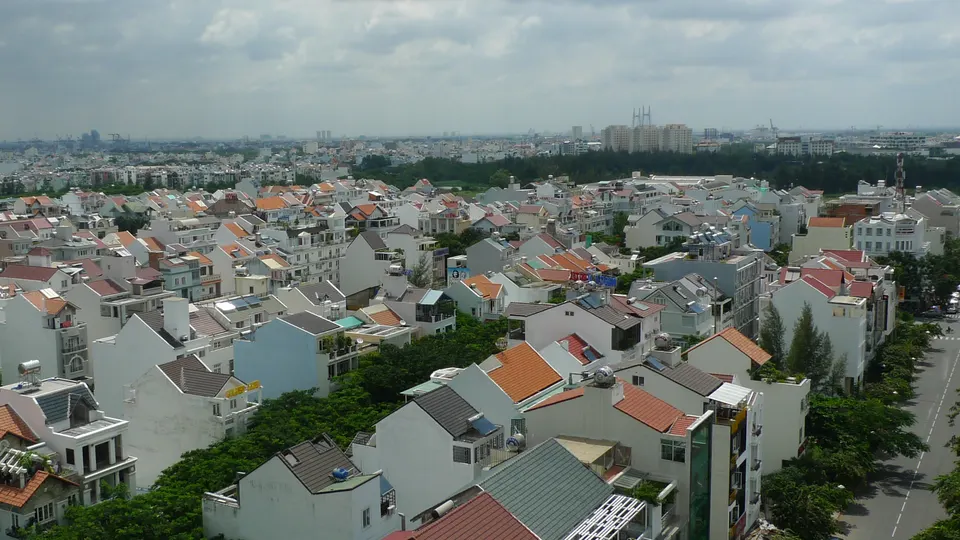
| Area | Ward since July 2025 | Living there | Metro Line 1 | Best for | Think twice if |
|---|---|---|---|---|---|
| Thao Dien (former District 2) | An Khanh ward (with Thu Thiem and most of An Phu) | Villas, apartments, international schools, cafes; the city’s largest expat community | Thao Dien and An Phu stations | Families, long stays, remote workers | You want everyday Vietnamese street life or a quick trip to District 3 |
| Former District 1 | Saigon, Ben Thanh, Tan Dinh and Cau Ong Lanh wards | Offices, colonial streets, nightlife, serviced apartments | Ben Thanh, Opera House and Ba Son stations | Singles and couples who work in the centre and want to walk | You need quiet, space or parking |
| Phu My Hung (former District 7) | Mostly Tan Hung ward; southern edge in Tan My ward | A planned suburb with wide streets, parks and many East Asian families | None | Families working in the south of the city | You work in the centre or in Thu Duc |
| Binh Thanh | Gia Dinh, Binh Thanh, Binh Loi Trung, Thanh My Tay and Binh Quoi wards | Riverside towers and dense local neighbourhoods next to the centre | Van Thanh Park and Tan Cang stations | Apartment living one or two stops from District 1 | You pick a street far from a station |
Thao Dien. Thao Dien is home to Ho Chi Minh City’s largest expat community, with more than 20,000 residents, mainly expats, VnExpress International reported in 2024. A 2024 study in the Kyoto Review of Southeast Asia describes large villas with plenty of family room, a mainly European foreign community and 17 English-medium international schools in the area. Since July 2025 Thao Dien, Thu Thiem and most of An Phu form An Khanh ward, so a lease may give either name.
Former District 1. The old centre is now four wards: Saigon ward (the former Ben Nghe area around Dong Khoi street), Ben Thanh ward (including the backpacker streets), Tan Dinh and Cau Ong Lanh. It suits people whose office is in the centre; our guide to where to stay in Saigon describes each part street by street, including the noisy corners to avoid.
Phu My Hung. This planned urban area in the south of the city was built from 1997 by a Taiwanese developer for foreign residents. In 2015 foreigners made up 56% of its residents, mainly from South Korea, Japan, Taiwan, Singapore and China, a share that fell to 31% after COVID-19, the Kyoto Review study found; it lists nine international schools. The same study says bad traffic from the city centre made it less attractive as a long-term home. Most of it now lies in Tan Hung ward, with the southern edge in Tan My ward.
Binh Thanh. The former district north and east of the centre is now five wards, from Gia Dinh to Binh Quoi. It mixes riverside apartment towers with ordinary city neighbourhoods, and its two metro stations put the centre one or two stops away.
When does Saigon flood: rain and high tides
Saigon floods in two different ways, and residents plan around both. The rainy season in the South usually runs from about May to October or November, depending on the area, the national Hydro-Meteorological Agency says; in April 2026 it forecast that this year’s season might start late and end early (SGGP). Rainy-season storms often arrive in the afternoon or evening, and when heavy rain falls fast it can flood low-lying roads, as forecasters warned on 29 May 2026 (VTC News).
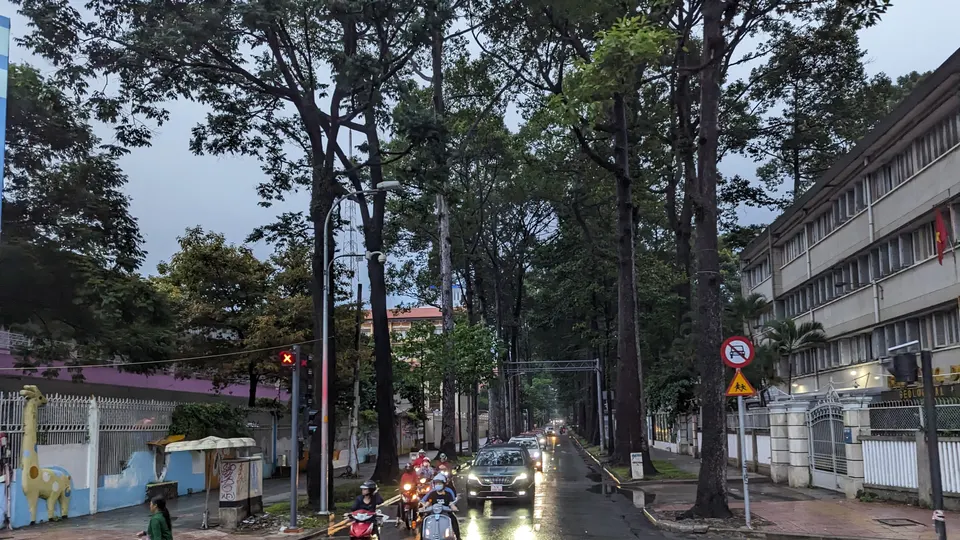
High tides from October to December. Late in the year the river itself rises. The Southern Hydro-Meteorological Station forecast the highest tide of 2026 for 27 to 29 October, above alarm level III at several gauges, and the city told authorities not to let people or vehicles cross deep floodwater, Tien Phong reported. For late October to the end of 2026 forecasters expected about five tide surges of a few days each, including 10 to 12 and 25 to 27 November and two in December, with high water around 5 to 7 am and 5 to 7 pm, exactly when people go to work and school (VietnamPlus). When heavy rain falls during a tide peak, drains cannot empty; on 11 October 2026 streets flooded in Tan Thuan, Tan Hung and Tan My wards, the former District 7 area, the same report noted.
What this means for where you live. On the evening of 9 November 2026 a high tide flooded many roads and alleys; that morning the gauge at Thu Dau Mot was already about 4 cm above alarm level III, and the forecasters warned that low-lying and riverside areas were most at risk (Tien Phong, 10 November 2026). Before you sign a lease, ask neighbours or the building manager whether the lane floods, look at the street during a tide surge, and prefer a ground floor that sits above street level. For the national picture of seasons, see our Vietnam weather by month guide; if you are still choosing a city, our guide to living in Da Nang covers the central coast and its different storm season.
| Period (2026) | What happens | Typical hours |
|---|---|---|
| About May to October or November | Rainy season: short, heavy storms | Afternoon and evening |
| 27 to 29 October | Highest tide of the year forecast | Around 5–7 am and 5–7 pm |
| 10 to 12 November, 25 to 27 November | Tide surges forecast | Around 5–7 am and 5–7 pm |
| December | Two more tide surges forecast | Check the latest bulletin |
Does Metro Line 1 help a resident?
Yes, if you live and work along it. Metro Line 1, the city’s first, opened on 22 December 2024 and runs 19.7 km with 14 stations, three underground and eleven elevated, from Ben Thanh in the centre to Suoi Tien in the east; at launch trains ran from about 5 am to 10 pm (VnEconomy). It is still the only metro line, so District 3, former District 7 and Cholon have no station.
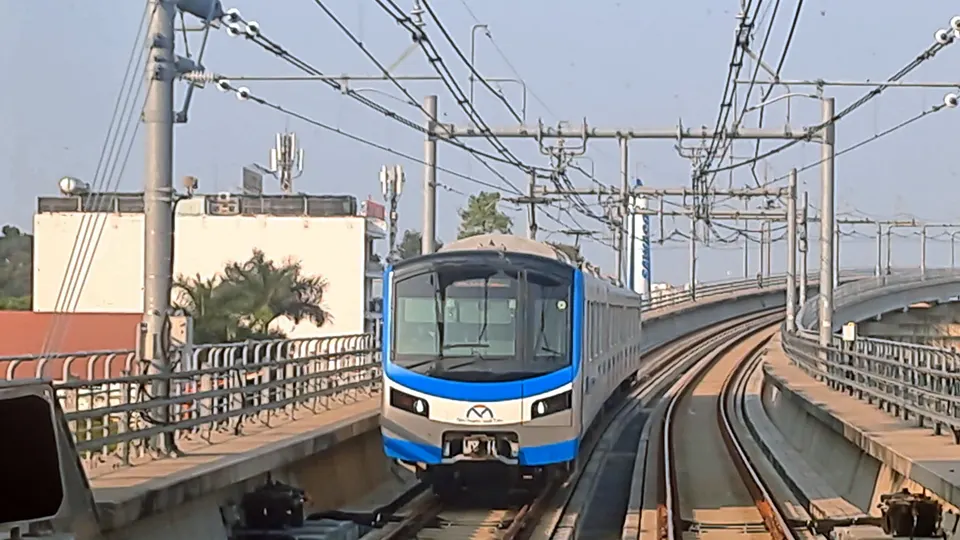
Stations by area. Ben Thanh, the Opera House and Ba Son are underground in former District 1; Van Thanh Park and Tan Cang are in Binh Thanh; Thao Dien and An Phu serve Thao Dien, and the line continues through Thu Duc to the national university and Suoi Tien, Tien Phong’s station list shows. Five stations, including Van Thanh Park and Thao Dien, have parking for motorbikes and cars, so you can ride to the train.
Fares and passes. When fares were set in November 2024, a single trip cost 7,000 to 20,000 dong in cash or 6,000 to 19,000 dong paid electronically, depending on distance; a one-day pass 40,000 dong, a three-day pass 90,000 dong, a monthly pass 300,000 dong and a student monthly pass 150,000 dong, VnEconomy reported. Fares were still 6,000 to 20,000 dong per trip in December 2025, when the line had carried nearly 19 million passengers in its first year (BBW). Since 1 November 2025 the counters at Thao Dien, An Phu and three other stations no longer sell paper tickets; buy from the machines or pay with a bank card or e-wallet in the operator’s HURC app, Tuoi Tre reported.
Buses and the rest. Dozens of electric bus routes now link directly to metro stations, Tuoi Tre News reported in January 2026. For everything else residents use ride-hailing apps and motorbikes; a local phone number makes all of this easier, and our guide to SIM cards and eSIMs explains the registration rules.
Where do expats in Saigon get medical care?
Find a hospital or clinic near home in your first weeks, because only a small number of the city’s hospitals have built dedicated services for international patients, VietnamPlus reported in October 2026. The Australian Consulate-General keeps a list of hospitals and clinics with their wards, opening hours and whether English is spoken (DFAT); it states that it does not endorse any of them, but it is a useful starting point.
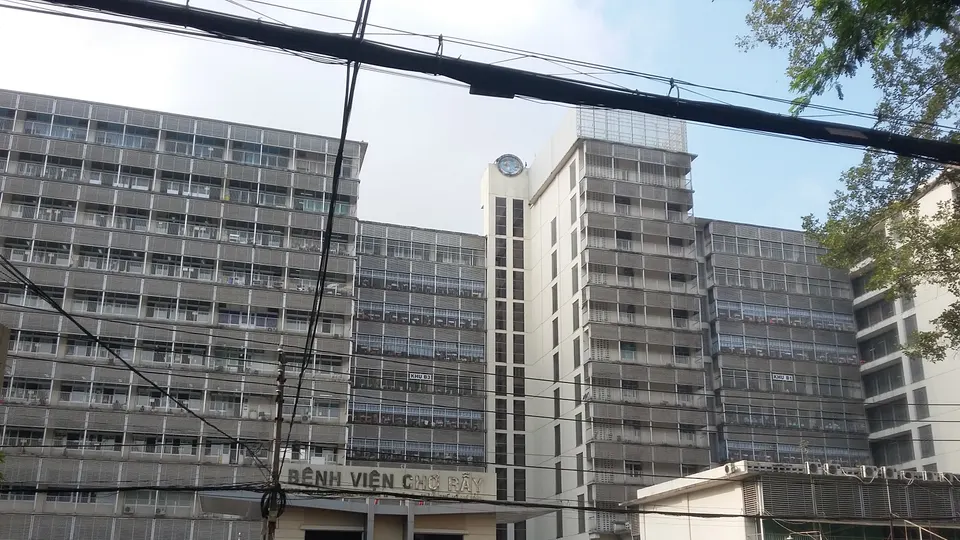
| Area | Examples on the July 2026 list | Notes from the list |
|---|---|---|
| Thao Dien (An Khanh ward) | Family Medical Practice, District 2 centre; a Victoria Healthcare clinic | 24-hour emergency and English at Family Medical Practice |
| Binh Thanh (Thanh My Tay ward) | Vinmec Central Park International Hospital | 24-hour emergency, English |
| Phu My Hung area (Tan My and Tan Hung wards) | FV (Franco-Vietnamese) Hospital, Tam Duc Heart Hospital, a Family Medical Practice clinic | 24-hour emergency at FV and Tam Duc |
| Cholon (Cho Lon ward) | Cho Ray Hospital, the large public hospital | 24-hour emergency, listed as Vietnamese-speaking only |
What to do. Check which hospitals your insurance bills directly, register at one clinic for routine care, and save its address and emergency number in your phone. If you go to a public hospital, bring someone who speaks Vietnamese; our guide to Vietnamese accents by region explains why Southern speech may sound different from what you learned in class.
Your first 30 days in Saigon, step by step
Do things in this order and most problems never happen. The plan uses only the rules and practices described above and in our Hanoi guide.

- Before you fly: confirm the right visa and work permit with your employer or sponsor; the rules are national and set out in our Hanoi guide. A tourist e-visa lets you look around, not live here.
- Days 1 to 3: stay somewhere short term in the area you are considering. The hotel declares your stay to the police; keep your passport ready. Get a local phone number in your own name and sort out cash and cards with our guide to money in Vietnam.
- Days 3 to 14: test the real commute at rush hour, on Metro Line 1 if you can. Buy a pass from a machine or in the HURC app, since some stations no longer sell paper tickets at the counter (Tuoi Tre). Eat around each area in the evening; our guide to where to eat in Saigon helps.
- Before signing a lease: see the street after a heavy rain and, between October and December, on a high-tide evening. Use the new ward name in the address and agree in writing what the rent includes. To see how budgets differ between cities, use our cost of living comparison of Hanoi, Da Nang and Saigon.
- Moving in: ask the landlord to declare your residence to the ward police within 12 hours, and again every time you move.
- Weeks 2 to 4: with your employer, complete the work permit and then the temporary residence card; keep copies of your passport, visa, permit and lease together.
- Health: choose a hospital or clinic near home, check your insurance, and save the number.
- Weekends: the enlarged city now reaches the coast, and our guide to Vung Tau covers the nearest beach trip.
Living in Saigon rewards people who plan around water and traffic rather than cold. Arrive in the dry months if you can, choose your area by the commute and the street’s flood history, live near a metro station if your work allows it, and give the paperwork time; then the afternoon storms and the year-end tides become part of the rhythm rather than surprises.
Frequently asked questions
Is Thao Dien or District 7 better for families in Ho Chi Minh City?
Both were built up around foreign residents and have international schools. Thao Dien has villas, a larger mainly European community and two metro stations; Phu My Hung in former District 7 is a planned suburb with many Korean, Japanese and Taiwanese families but no metro and a longer road trip to the centre.
When is the next high tide flood in Saigon?
In October 2026 the Southern Hydro-Meteorological Station expected tide surges on 10 to 12 November and 25 to 27 November and two more in December 2026, with high water around 5 to 7 am and 5 to 7 pm. Low-lying and riverside streets are most at risk, so check the latest bulletin before you travel at those hours.
Can I still buy a paper metro ticket at Thao Dien station?
No. Since 1 November 2025 the counters at Thao Dien, An Phu, Binh Thai, Thu Duc and High-Tech Park stations on Metro Line 1 no longer sell paper tickets, so use the ticket machines or pay by bank card or e-wallet in the HURC app.
Which hospitals in Saigon have 24-hour emergency care in English?
The Australian Consulate-General's July 2026 list shows 24-hour emergency care with English at the Family Medical Practice centre in An Khanh ward (Thao Dien) and at Vinmec Central Park International Hospital in Thanh My Tay ward (Binh Thanh). The consulate does not endorse any hospital on the list.
Key sources
- Danh sách đơn vị hành chính cấp xã tại TP.HCM từ 01/7/2025 (Resolution 1685/NQ-UBTVQH15: Ho Chi Minh City's new wards and communes) · LuatVietnam, June 2025
- Ho Chi Minh City becomes most populous locality after merger · DTiNews (Dân Trí), 13 June 2025
- HCMC's largest expat hub Thao Dien named among world's coolest neighborhoods · VnExpress International, 1 October 2024
- Mùa mưa 2026 có thể đến muộn, kết thúc sớm (the 2026 rainy season may start late and end early) · Sài Gòn Giải Phóng (SGGP), 18 April 2026
- Thành phố Hồ Chí Minh trước nguy cơ ngập kéo dài cuối năm do triều cường (HCMC faces prolonged year-end flooding from high tides) · VietnamPlus (VNA), 26 October 2026
- Vietnam's first metro line put into commercial operation · VnEconomy, 22 December 2024
- Metro số 1 TPHCM ngừng bán vé giấy tại 5 nhà ga (paper tickets end at five Metro Line 1 stations) · Tuổi Trẻ (Saigon Times), 30 October 2025
- Contact list: hospitals, Vietnam (July 2026) · Australian Consulate-General Ho Chi Minh City (DFAT)
All 19 sources and further reading
- Ho Chi Minh City creates Con Dao special district, new Saigon ward · VietNamNet, 17 June 2025
- Khu đô thị Phú Mỹ Hưng thuộc phường nào sau sáp nhập? (which wards Phu My Hung belongs to after the merger) · Thư Viện Nhà Đất, 10 July 2025
- Phu My Hung and Thao Dien: Built for foreigners in Ho Chi Minh City · Kyoto Review of Southeast Asia, Issue 39, 2024
- Cảnh báo mưa lớn gây ngập cục bộ vào chiều tối nay tại TP.HCM (heavy rain may cause local flooding in HCMC this evening) · VTC News, 29 May 2026
- TPHCM khẩn cấp ứng phó mưa giông, đỉnh triều 'khủng' cuối tháng 10 (HCMC prepares for storms and the year's highest tide in late October) · Tiền Phong, 4 October 2026
- Triều cường đầu tháng 10 âm lịch ở TPHCM vượt báo động 3 (high tide in HCMC above alarm level 3) · Tiền Phong, 10 November 2026
- Đi metro Bến Thành - Suối Tiên: cách gửi xe máy, lên xuống tàu nhanh nhất (stations and park-and-ride on Metro Line 1) · Tiền Phong, 2 December 2024
- TP.HCM chính thức chốt giá vé tàu metro 1 (Metro Line 1 fares confirmed) · VnEconomy, 23 November 2024
- Metro Bến Thành - Suối Tiên vận chuyển gần 19 triệu lượt hành khách sau một năm (nearly 19 million trips in the first year) · BBW (Beacon Media), 18 December 2025
- Ho Chi Minh City gets boost in public transport · Tuổi Trẻ News, 6 January 2026
- Ho Chi Minh City eyes internationally standardised service ecosystem to boost medical tourism · VietnamPlus (VNA), 21 October 2026
Keep exploring
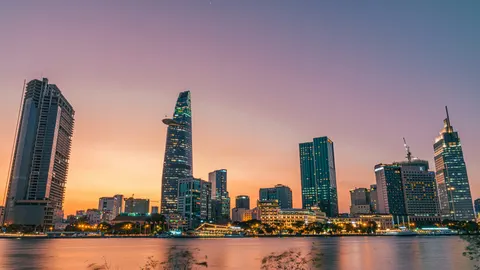 South Vietnam · Travel Ho Chi Minh City (Saigon): How Many Days and What to See Ho Chi Minh City (Saigon) explained: the 2025 merger and new wards, how many days to stay, Metro Line 1, Long Thanh airport, palace and museum tickets.
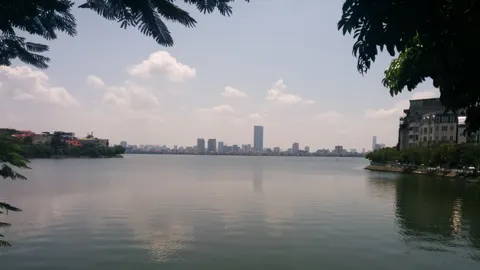 North Vietnam · Living Living in Hanoi as an Expat: Where to Live, Which Visa Where to live in Hanoi as an expat: West Lake, Ba Dinh, Old Quarter or Cau Giay compared, which visa and residence card you need, winter air, first month.
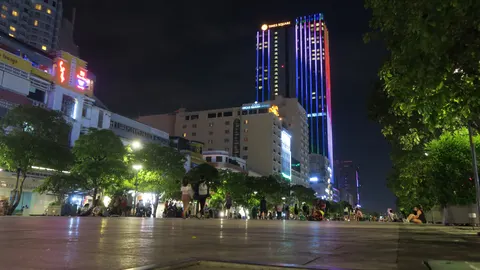 South Vietnam · Travel Where to Stay in Saigon: District 1, 3 or Binh Thanh Where to stay in Saigon: District 1 for a first visit, District 3 for calm, Binh Thanh or Thao Dien for long stays, plus new ward names, metro and airport links.
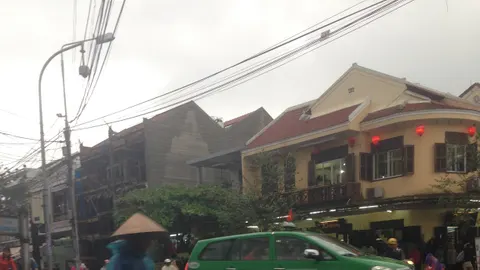 North · Central · South · Travel Vietnam Weather by Month: What to Expect in Each Region Vietnam weather month by month for Hanoi, Hoi An, Nha Trang, Da Lat, Saigon and Phu Quoc: official averages, typhoon season, 2027 holidays and El Nino outlook.