North Vietnam · Travel
How Many Days for the Ha Giang Loop? 3, 4 or 5-Day Plans
How many days for the Ha Giang Loop? Day-by-day 3, 4 and 5-day plans, why 2 days is rushed, Lung Cu weekend rules as of November 2026 and buses from Hanoi.
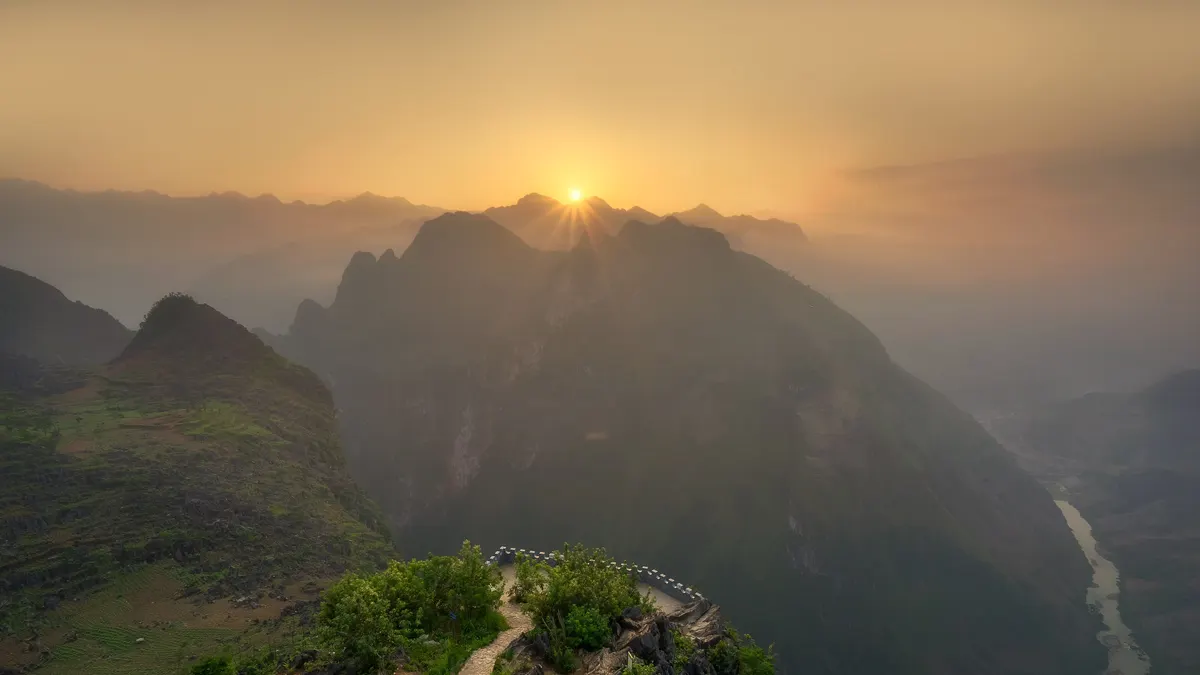
Four days is the right length for the Ha Giang Loop (Hà Giang Loop) for most people, and three days is the realistic minimum; five days suits travellers who want a day off the bike at Lung Cu (Lũng Cú) and the Nho Que (Nho Quế) river. As of November 2026 the weekday matters too: until 28 February 2027 the last stretch of road to the Lung Cu flagpole is closed to passenger vehicles on Saturdays and Sundays, so the best plans put Lung Cu on a weekday. Two days can be done, but only by riding long, tired hours on mountain roads.
This page sets out what fits into each length, day by day, using distances published by Vietnamese press and the national tourism authority. For what you will see on the way, from the Ma Pi Leng (Mã Pí Lèng) pass to the Hmong king’s palace, start with our Ha Giang Loop destination guide. Ha Giang has been part of Tuyen Quang (Tuyên Quang) province since 1 July 2025, under Resolution 202/2025/QH15 (LuatVietnam); the loop and the town keep the old name.
Ha Giang Loop length at a glance: 2 to 5 days
The distances below are the ones the sources give; actual riding time is far longer than the kilometres suggest, because the road climbs, bends and stops at viewpoints all day.
| Days | Nights on the loop | Riding per day | What you can fit | What you give up | Who it suits |
|---|---|---|---|---|---|
| 2 | Dong Van | About 175 km, two hard days | Quan Ba, Yen Minh, Dong Van, Ma Pi Leng | Lung Cu or the Nho Que, rest, daylight margin | Only those with no other option, by car or with a driver |
| 3 | Yen Minh, Dong Van | About 70 to 100 km, then 150+ km on the last day | The main road, Lung Cu, Ma Pi Leng viewpoints, Meo Vac | Nho Que boat, Du Gia; a very long last day | Fixed schedules in the dry season |
| 4 | Yen Minh, Dong Van, Du Gia (or Bao Lam) | About 70 to 110 km | All the main sights, the Nho Que side road, a valley night | Little; days of about 70 to 110 km | Most first-timers, easy-rider guests |
| 5 | Yen Minh, Dong Van ×2, Du Gia | About 70 to 110 km, plus one short Lung Cu day | A day at Lung Cu and the old quarter without packing, the Nho Que boat, a Sunday market | Time elsewhere in the North | Slow travellers, photographers, rainy months |
The loop itself is roughly 350 km from Ha Giang city and back. The time from Hanoi comes on top: see the section on getting there below.
The 3-day plan: the classic minimum
Three days is what VnExpress’s Ha Giang handbook gives as the minimum, with five days the more relaxed choice (VnExpress). It works, but it puts the hardest riding on the last day.
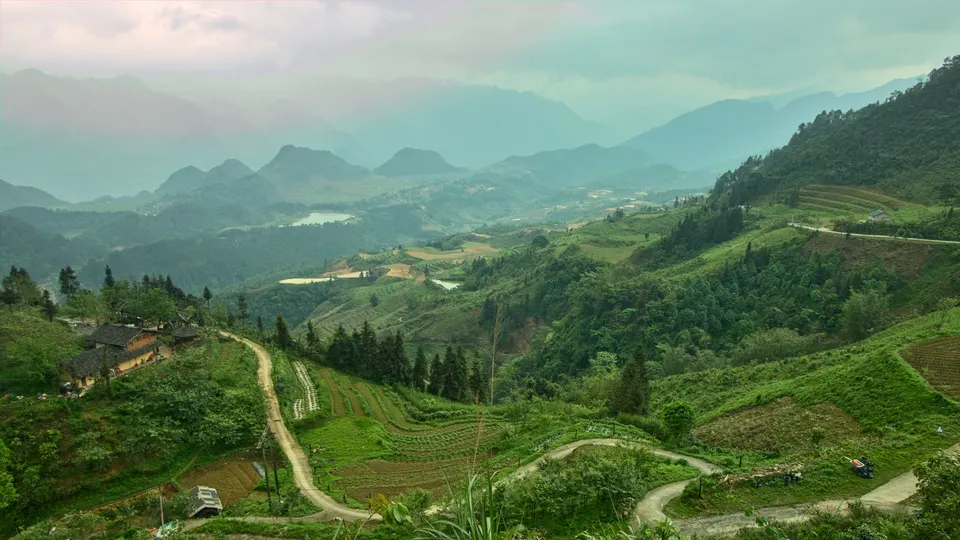
Day 1: Ha Giang city to Yen Minh (Yên Minh). About 40 km to the Heaven’s Gate at Quan Ba (Quản Bạ), then about 30 km on to Yen Minh, VnExpress’s handbook says. Lonely Planet puts the day at about 90 km with detours. This is the gentlest day, which is useful if you arrived on a night bus.
Day 2: Yen Minh to Dong Van (Đồng Văn), with Lung Cu. About 45 km on the main road, past the Vuong family palace. Lung Cu, the flagpole near Vietnam’s northernmost point, is a detour of about 24 to 25 km each way from Dong Van, so the day grows to about 100 km; on a Saturday or Sunday the last stretch to the flagpole is closed to passenger vehicles until the end of February 2027 (see below). Sleep in Dong Van.
Day 3: Dong Van, Ma Pi Leng, Meo Vac (Mèo Vạc) and back to Ha Giang. Ma Pi Leng is the stretch between Dong Van and Meo Vac, 24 km by the national tourism authority’s count and about 30 km by VnExpress’s. From Meo Vac it is more than 150 km back to Ha Giang city. You see the pass from the viewpoints, but there is rarely time to go down to the river, and the last hours are where tired riders and drivers make mistakes.
Who it suits. Travellers with a fixed schedule in a dry month, riding behind a driver or in a car. For how the three-day trip compares with four days for each way of riding, see our guide to easy rider, self-ride or car tours on the Ha Giang Loop.
The 4-day plan: the one most people should pick
Lonely Planet calls four days the most common length for the loop. The extra night breaks the long return in two, and most four-day plans spend it in the rice valley of Du Gia (Du Già) or, in the national tourism authority’s version, at Bao Lam on the eastern road.
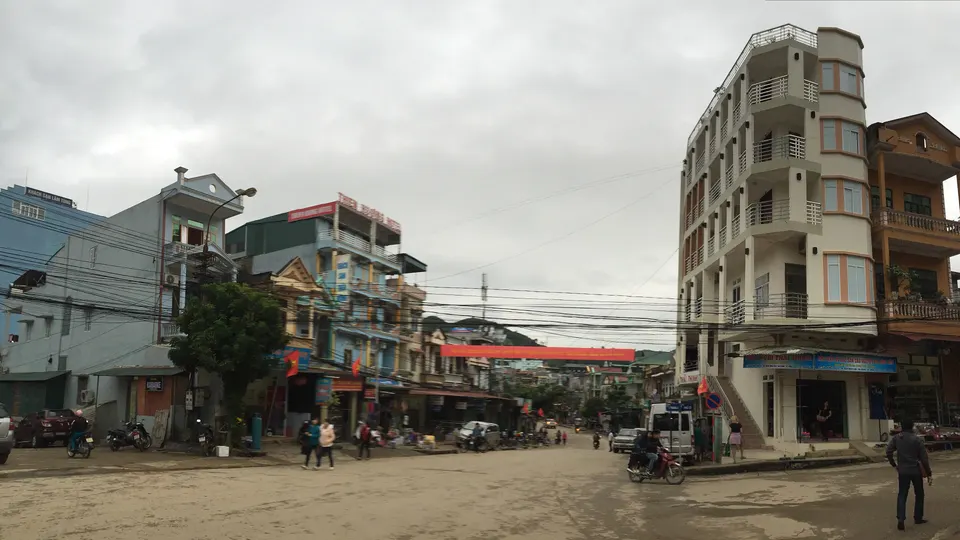
Days 1 and 2 are as in the three-day plan: Ha Giang to Yen Minh, then Yen Minh to Dong Van with the Lung Cu detour.
Day 3: Dong Van over Ma Pi Leng to Meo Vac, then Du Gia. Ride the pass in the morning, when the national tourism authority’s Vietnamese guide says skies are usually clearer, and take the side road down towards the Nho Que river if you have time. From Ma Pi Leng to Du Gia is roughly 80 km more, Lonely Planet says. Most overnight visitors sleep in homestays in the commune centre, according to VnExpress.
Day 4: Du Gia to Ha Giang city. About 70 km, VnExpress says, which leaves the afternoon free for the bus back to Hanoi or a rest in town.
Tuoi Tre (Tuổi Trẻ) News published a four-day version in 2023 that goes straight to Dong Van on day one, sleeps in a Hmong village near Meo Vac on day two and in Du Gia on day three, with days of about 95 to 110 km (Tuoi Tre News). The official four-day plan instead returns along the Gam river on National Road 34 via Bao Lam and Bac Me, a stretch with fewer passes. Either way, the point of four days is the same: every day ends before dark.
The 5-day plan: Lung Cu, the Nho Que and a slower pace
Five days is the four-day route with one more night in Dong Van. It turns Lung Cu, the old quarter and, if the dates fall right, the Sunday market into a day without packing up.
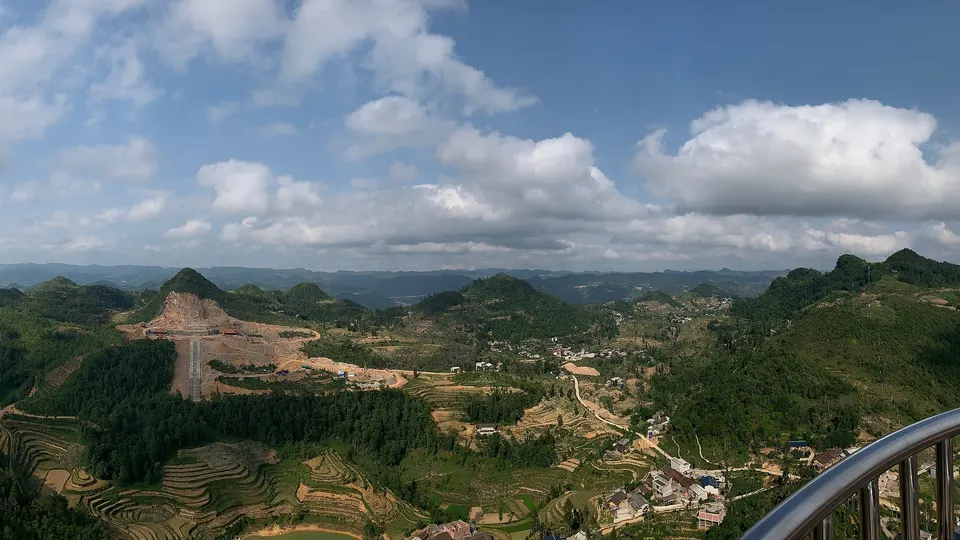
Day 1: Ha Giang to Yen Minh. As above.
Day 2: Yen Minh to Dong Van via the Nine-Bend pass and Sa Phin, without the Lung Cu detour, so you arrive early.
Day 3: Lung Cu and Dong Van. The national tourism authority allows about three hours for the Lung Cu detour on its own (Vietnam Tourism); with a whole day you can take your time at the flagpole and the villages around it, and spend the evening in the old quarter. Sleep in Dong Van again.
Day 4: Ma Pi Leng, the Nho Que river and Du Gia. The road from the top down to the boat dock on the Nho Que takes about an hour one way, and the boat up to the Tu San gorge about 20 minutes, according to VnExpress’s Meo Vac handbook. That is the half-day the shorter plans have to skip. Continue through Meo Vac to Du Gia.
Day 5: Du Gia to Ha Giang city, about 70 km.
Who it suits. Photographers, slower travellers, anyone visiting in the rainy months who wants a spare day built in, and travellers who want to time a Sunday market.
Can you do the Ha Giang Loop in 2 days?
You can, but it is a different trip. With roughly 350 km in two days you ride about 175 km a day on mountain roads, and something has to go: usually Lung Cu, the Nho Que, or both.
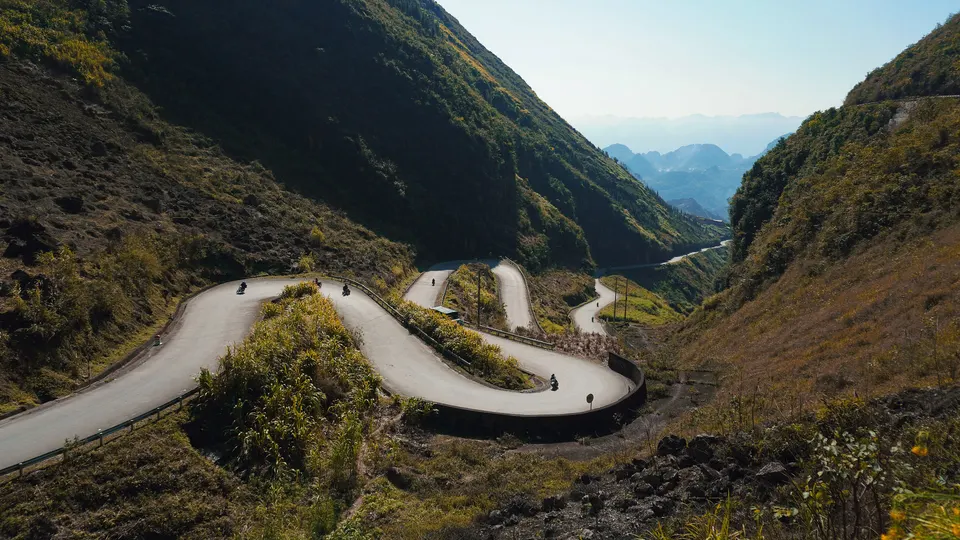
What a two-day loop looks like. Day 1: Ha Giang city to Dong Van through Quan Ba and Yen Minh, about 115 km by VnExpress’s segment distances. Day 2: Ma Pi Leng, Meo Vac and more than 150 km back to Ha Giang. VnExpress’s Dong Van handbook puts Dong Van alone about 150 km and 3 to 5 hours from Ha Giang city, depending on transport (VnExpress), before any stops.
Why it is rushed. The national tourism authority’s advice for the loop is to ride in daylight and stop after dark; on a two-day schedule, a slow morning or a closed road pushes the last stretch towards dusk. Tiredness is the other problem: two full days in the saddle on hairpins such as the Tham Ma slope are hard on a pillion passenger, never mind a rider. If two days is all you have, go by car or with an experienced driver, leave very early both mornings, and drop Lung Cu rather than ride the last hour in the dark.
Getting there from Hanoi: add one or two days
The loop starts in Ha Giang city, about 300 km from Hanoi. Vietnam Airlines’ travel guide gives 5 to 7 hours by limousine van or shuttle bus, 6 to 9 hours by local bus and 5 to 8 hours by private car, with departures from My Dinh and some pick-ups in the Old Quarter (Vietnam Airlines). The guide is undated and not fully consistent, so treat the hours as a range.
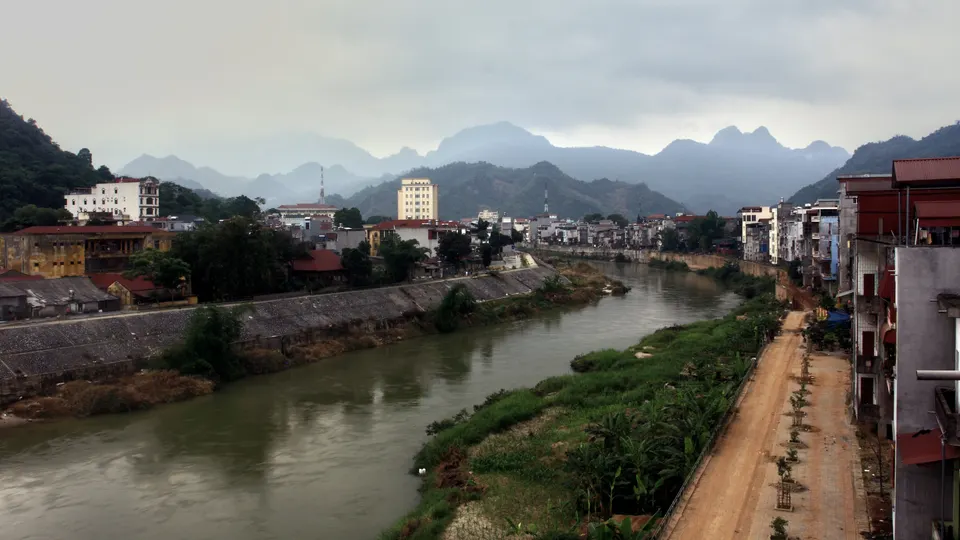
VnExpress’s handbook lists buses from My Dinh, Luong Yen, Yen Nghia and Gia Lam stations at almost any hour, at 200,000 to 300,000 dong one way (handbook updated 21 April 2026). Night buses leave in the evening and arrive in the early hours; Lonely Planet says operator buses often arrive around 3 a.m.
What it means for your total. A night bus out saves a day but starts your first ride short of sleep; a day bus and a night in Ha Giang city is the safer pattern. Add one day for a night bus out and a day bus back, or two days if you travel by day both ways, so a four-day loop becomes a five- or six-day trip from Hanoi. For how buses and other transport fit across the country, see getting around Vietnam, and for a wider route, our two-week Vietnam itinerary.
Markets, rain and crowds: how they change the plan
The calendar matters as much as the number of days. Three things shift the best plan: the Sunday markets, the rainy season and the autumn peak.

Sunday markets. Dong Van’s market is on Sunday morning, VnExpress says, and Meo Vac’s market is held every Sunday in the town centre, already busy by 6:30 a.m., according to Nhan Dan; Vietnam Airlines’ guide says it starts around 5 a.m. and peaks around 7 a.m. Because both fall on the same morning, you can see only one. Count back from your start day so that Saturday night is in Dong Van or Meo Vac; in a three-day loop that means starting on a Friday. Some smaller markets rotate instead: the Pho Cao market near Dong Van is held every six days, from early morning until about midday. The Khau Vai “love market” near Meo Vac happens only once a year, on the 27th day of the third lunar month.
Rain. On the plateau most rain falls from May to October, according to VnExpress, and summer storms close roads: in June 2024 a 700 m stretch of National Road 4C near Meo Vac went under water and police helped about 400 foreign tourists through. In those months, choose four or five days rather than three, so a closed pass costs you a spare day rather than a night ride. The national tourism authority notes that afternoon showers are common in June, another reason to ride early.
Crowds and the Lung Cu rules. Autumn is buckwheat season and the busiest time: the 12th buckwheat flower festival opened in Dong Van on 25 October 2026, with events running to the end of December, VOV reported. From 15 October 2026 to 28 February 2027, passenger vehicles may not drive the stretch from the border guard post up to the Lung Cu flagpole on Saturdays and Sundays, and from 17 October they are barred from Lo Lo Chai (Lô Lô Chải) village every day; the commune’s own motorbike taxis and residents are exempt, and all of Lung Cu’s more than 1,000 rooms were booked before the festival opened (Bao Van Hoa). Until the end of February, put Lung Cu on a weekday and book rooms in Dong Van early; our Ha Giang Loop month-by-month guide has the full season calendar.
Choosing your number of days: a quick checklist
Most decisions come down to how you ride, when you go and how much of the trip you want to spend on the bike.
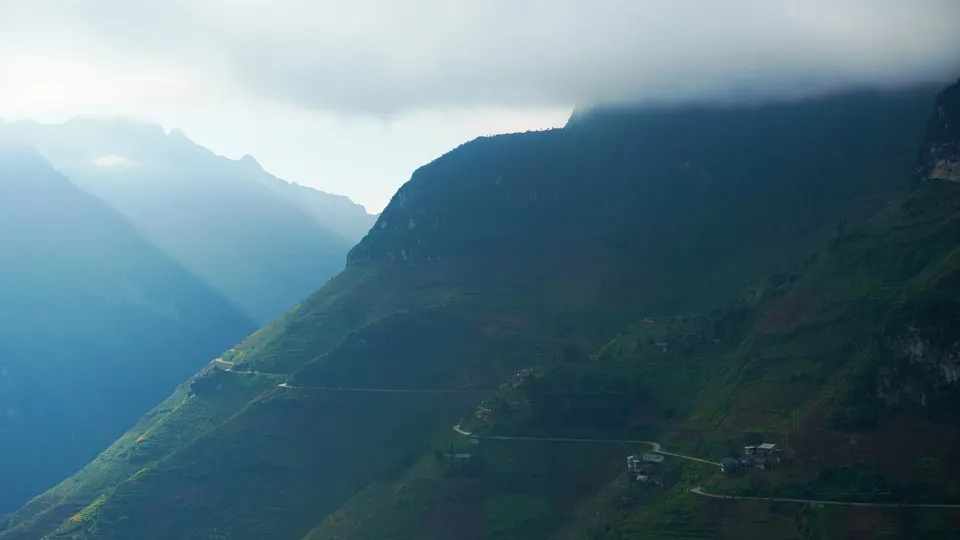
- First time on the loop, dry season: four days, with Du Gia on the third night.
- Riding yourself: four days at least; short days in daylight matter more when you are the one steering.
- Rainy season (May to October): four or five days, with one day you could lose to a closed road (VietnamNet).
- You want the Nho Que boat and Lung Cu without hurrying: five days.
- Fixed schedule, dry month, with a driver: three days, and accept the long last day.
- Two days only: by car or with an experienced driver, early starts, and drop a detour rather than ride after dark.
Then add the bus days, check which day of the week you will be in Dong Van or Meo Vac, and keep one spare day whatever the season. If you have a week in the mountains, the loop pairs well with Sa Pa or with Cao Bang and Ban Gioc Waterfall to the east; for the wider region, start at our North Vietnam hub.
Frequently asked questions
Is the buckwheat flower festival still on in Ha Giang?
Yes. The 12th buckwheat flower festival opened in Dong Van on 25 October 2026 and its events run to the end of December, VOV reported. Rooms fill fast in this season, so book Dong Van and Lung Cu ahead and allow four or five days rather than three.
Is the road to the Lung Cu flagpole still closed at weekends?
Yes, as of November 2026. Passenger vehicles may not drive the last stretch from the border guard post up to the Lung Cu flagpole on Saturdays and Sundays until 28 February 2027, Bao Van Hoa reported; the commune's own motorbike taxis are exempt. The easiest fix is to put the Lung Cu detour on a weekday.
How much is the bus from Hanoi to Ha Giang?
VnExpress's Ha Giang handbook, updated in April 2026, lists fares of 200,000 to 300,000 dong one way from My Dinh, Luong Yen, Yen Nghia and Gia Lam stations. Allow 5 to 9 hours each way, which adds one or two days to the loop.
Which day should I start the loop to catch a Sunday market?
On a three- or four-day loop, a Friday start puts Saturday night in Dong Van for the Sunday market. It also puts the Lung Cu detour on a Saturday, so until the end of February 2027 plan on a local motorbike taxi for the last stretch, or start Monday to Wednesday if Lung Cu matters more than the market.
Key sources
- Cẩm nang du lịch Hà Giang · VnExpress (updated 21 April 2026)
- Cẩm nang du lịch Đồng Văn · VnExpress (updated 23 March 2026)
- The Ha Giang loop: a four-day road trip · Vietnam National Authority of Tourism (vietnam.travel)
- A specific itinerary to travel Vietnam's Ha Giang in four days · Tuổi Trẻ News, 24 February 2023
- Hà Nội đi Hà Giang · Vietnam Airlines travel guide
- Police assist 400 foreign tourists stranded by floods in Ha Giang · VietnamNet, 12 June 2024
- Resolution 202/2025/QH15 on the reorganization of provincial-level administrative divisions · National Assembly of Vietnam, 12 June 2025 (LuatVietnam English)
- Lũng Cú kín phòng lưu trú trước ngày hội hoa tam giác mạch · Báo Văn Hóa, 24 October 2026
All 15 sources and further reading
- Ấm nồng sớm chợ phiên vùng cao Mèo Vạc · Nhân Dân, 22 October 2021
- Cung đường Hà Giang: nơi thiên nhiên và văn hóa hòa quyện · Vietnam National Authority of Tourism (vietnam.travel)
- Cẩm nang du lịch Mèo Vạc · VnExpress (updated 4 February 2025)
- Du lịch Du Già khởi sắc · VnExpress, 6 October 2022
- Chợ Mèo Vạc · Vietnam Airlines travel guide
- How to tackle Vietnam's amazing Ha Giang Loop · Lonely Planet (updated 2 April 2026)
- Khai mạc Lễ hội hoa Tam giác mạch năm 2026 · VOV, 26 October 2026
Keep exploring
 North Vietnam · Travel Ha Giang (Hà Giang) Loop: What to See and How to Ride Safely What to see on the Ha Giang Loop, from Ma Pi Leng and Lung Cu to Dong Van's old quarter, and how to ride it safely under the 2026 tour and licence rules.
 North Vietnam · Travel Ha Giang Loop: Easy Rider, Self-Ride or Car? Which to Book Easy rider, self-ride or car on the Ha Giang Loop? As of November 2026: the April safety rules, tour prices, licence checks and Lung Cu road closures.
 North Vietnam · Travel Ha Giang Loop (Hà Giang): Best Time to Go in 2026–27 When to do the Ha Giang Loop: best months, the 2026 buckwheat festival, Lung Cu road rules to February 2027, Tet 2027 crowds, winter cold and landslide risk.