All three regions · Travel
2-Week Vietnam Itinerary: Route, Flights or Night Train
14 days in Vietnam from Hanoi to the Mekong: day-by-day route, which legs to fly or take by train, train times and fares as of November 2026, and what to drop.
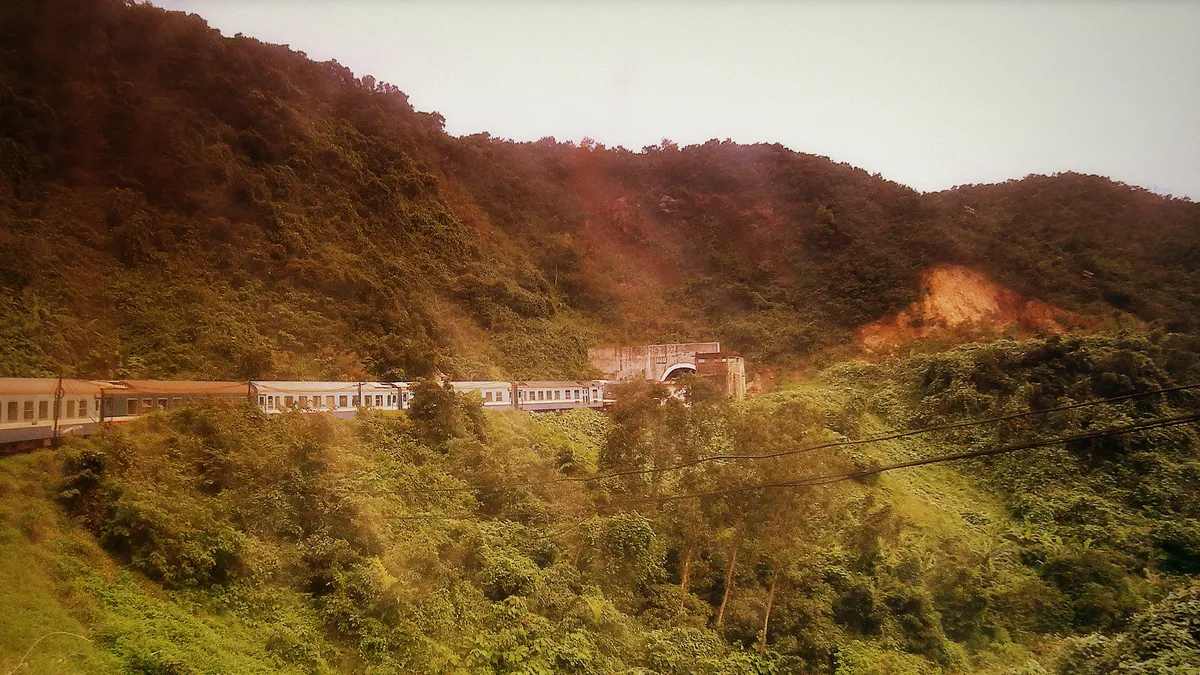
Two weeks is enough to travel the length of Vietnam once, from Hanoi in the North to the Mekong Delta in the South, if you accept three long transfers and choose one landscape per region rather than trying to tick off everything. As of November 2026, Vietnam Railways runs five daily pairs of North–South trains on its timetable for 17 August to 30 December 2026, and the flights for the two longest legs take about an hour each, so the plan below flies Hanoi–Hue and Da Nang–Saigon and keeps the train for the scenic Hai Van Pass. This plan does exactly that: Hanoi, one karst landscape (Ha Long (Hạ Long) Bay, Lan Ha (Lan Hạ) Bay or Ninh Binh), the old imperial capital of Hue (Huế), the trading port of Hoi An (Hội An), Ho Chi Minh City (Saigon) and a night in the delta. Vietnam’s national tourism authority names March to May as the best weather countrywide (VNAT), and outside spring at least one region will be in its rainy season, so the route below comes with season swaps and a list of what to drop when energy runs low.
Travel times and timetables quoted here come from the airline, the railway press and official tourism pages, with their dates. They change, so check them again when you book. For the wider picture, start at our Vietnam travel planning hub.
The 14-day route at a glance
Read down the days; the last column is the only kind of travel that day. The table assumes you fly into Hanoi and out of Ho Chi Minh City; the same plan works in reverse.
| Day | Where you are | Night | How you move that day |
|---|---|---|---|
| 1 | Arrive in Hanoi | Hanoi | Airport to the Old Quarter |
| 2 | Hanoi | Hanoi | On foot |
| 3 | Ha Long Bay or Lan Ha Bay (or Ninh Binh) | On a boat (or Tam Coc) | Road from Hanoi |
| 4 | Back to Hanoi (or stay in Ninh Binh) | Hanoi (or night train south) | Road, or train from Ninh Binh |
| 5 | Hue | Hue | Flight from Hanoi (or arrive by night train) |
| 6 | Hue | Hue | Local |
| 7 | Over the Hai Van (Hải Vân) Pass to Hoi An | Hoi An | Heritage train or car |
| 8 | Hoi An | Hoi An | On foot or bicycle |
| 9 | Hoi An, My Son (Mỹ Sơn) or the beach | Hoi An | Local |
| 10 | Fly to Ho Chi Minh City | Saigon | Flight from Da Nang (Đà Nẵng) |
| 11 | Saigon | Saigon | Metro, ride-hailing, on foot |
| 12 | Can Tho (Cần Thơ) in the Mekong Delta | Can Tho | Road from Saigon |
| 13 | Cai Rang (Cái Răng) floating market at dawn, back to Saigon | Saigon | Boat, then road |
| 14 | Fly home | – | Airport |
Days 1–2: Hanoi
Start slowly. Day 1 is arrival and a walk around Hoan Kiem (Hoàn Kiếm) Lake and the Old Quarter; day 2 is the city’s history, from the Imperial Citadel of Thang Long (Thăng Long) to the Temple of Literature, with time to eat. Two nights is the minimum here; our Hanoi travel guide suggests two to three days and explains why the Old Quarter streets are named after the goods once sold there.

Hanoi is also where you set the pace for the whole trip. If you land after a long-haul flight, keep day 1 free of bookings, because the next two days start early. Northern food is a reason to stay put for an evening: clear-broth pho (phở), bun cha (bún chả) and egg coffee all belong to this city, and Hanoi is the reference point for how the rest of the country’s versions differ.
Days 3–4: Ha Long Bay, Lan Ha Bay or Ninh Binh?
Pick one of the North’s two karst landscapes, not both. Ha Long Bay, in Quang Ninh (a centrally governed city since 1 September 2026, formerly a province), is the classic overnight cruise; the bay’s management board gives about 1 hour 30 minutes from Hanoi by the expressway via Hai Phong (Hải Phòng) and about 2 hours from Noi Bai (Nội Bài) airport (Ha Long Bay Management Board). Lan Ha Bay, off Cat Ba (Cát Bà) island in Hai Phong, is the same limestone seascape with fewer boats; our guide to Ha Long and Lan Ha explains how to choose. VnExpress, in a guide updated in June 2026, lists the bay’s sightseeing ticket at 240,000–290,000 VND a person for a day route and 540,000–590,000 VND for one night on the water; some cruises include the overnight fee, so ask before you pay.

Ninh Binh is the land version: rowing boats through caves and rice fields at Trang An (Tràng An) and Tam Coc. The national tourism authority puts it about 100 km from Hanoi, calls it “perfect for a weekend stopover” and says Tam Coc’s shorter, roughly two-hour boat trip suits travellers with less time. Since July 2025 Ninh Binh province also covers the former Ha Nam (Hà Nam) and Nam Dinh (Nam Định) provinces. Rough Guides gives about 2 hours 15 minutes by train from Hanoi and up to 2 hours by car, and notes that both cities are on the North–South railway. That matters for this route: from Ninh Binh you can look for a southbound night train instead of going back to Hanoi. Our Ninh Binh guide compares the boat trips.
How to decide. Choose the bay if a night on the water is the point of your trip and you travel in spring or autumn. Choose Ninh Binh in summer storm season, if you want to save the return trip to Hanoi, or if you would rather sleep on land. In July 2025, as Typhoon Wipha approached, Quang Ninh’s waterway authority suspended all tourist boats in Ha Long Bay, and a cruise company told guests to change their plans or ask for their deposits back.
Day 5: Hanoi to Hue, flight or overnight train?
This is the first of the trip’s three long transfers, and the one with a real choice. Vietnam Airlines’ own travel guide puts the flight at about one hour and the train at about 12 to 14 hours, with most train journeys running overnight, so you may miss the coastal scenery (Vietnam Airlines). Sleeper buses take about as long as the train. Hue’s Phu Bai (Phú Bài) airport is about 15 km from the city centre, the same guide says.

The Reunification Express (tau Thong Nhat (tàu Thống Nhất)) is the North–South line’s through train, and the evening departures are the ones that suit this leg: in the timetable VnEconomy published for summer 2026, SE3 left Hanoi at 19:20 and SE1 at 21:45, which brings you into Hue the next morning. The train makes sense if you want the experience, if it saves a hotel night, or if you are coming from Ninh Binh. Fly if you sleep badly on the move, if the trip is already tight, or if you are travelling with small children. Book trains on the railway’s official ticket site, dsvn.vn, or at stations.
Days 5–6: Hue, the imperial capital
Hue, on the Perfume River, was the capital of the Nguyen (Nguyễn) emperors from 1802 to 1945, and its Citadel, tombs and pagodas need two full days: one inside the walls, one along the river for Thien Mu (Thiên Mụ) Pagoda and two contrasting royal tombs. If you arrive by morning train, day 5 is a near-full day; if you fly, aim for a morning flight. Our Hue guide explains why so much of the Imperial City is open lawn and which tombs to pair.

Hue is now a centrally governed city whose boundaries were left unchanged in the July 2025 merger, so older maps and signs may still say Thua Thien Hue (Thừa Thiên Huế). It is also the stop most exposed to the weather on this route: the national tourism authority describes Hue as cool, rainy and cloudy from September to February, and floods are possible in the autumn months. In that season, keep Hue to two nights and book rooms you can cancel.
Day 7: Hue to Hoi An over the Hai Van Pass
The Hai Van Pass, where the mountains meet the sea between Hue and Da Nang, is the most scenic short leg of the trip, and the one where the mode of transport changes what you see. The Kết nối di sản miền Trung (Central Heritage Connection) tourist train has run between Hue and Da Nang since 26 March 2024: two return trips a day, leaving Hue at 7:45 am and 2:25 pm, taking about three hours through the pass, with fares from VND150,000 in September 2026 (Tuoi Tre News). From Da Nang station you continue by taxi or ride-hailing car to Hoi An.
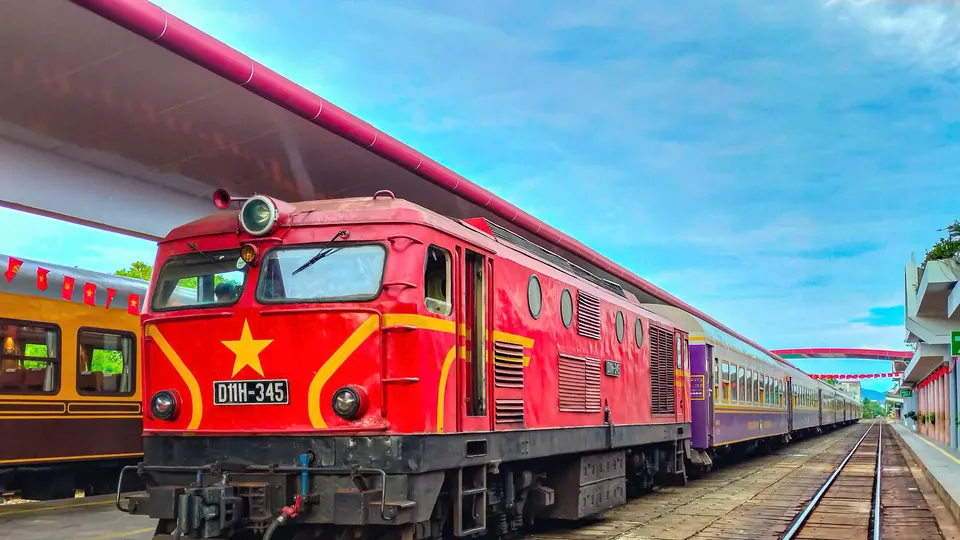
By road, you can hire a car or join a tour over the old pass road, with stops at the summit gate of Hai Van Quan (Hải Vân Quan) and the Lang Co (Lăng Cô) lagoon, or go through the road tunnel when you simply need to get across. Our Hai Van Pass guide compares the pass road, tunnel and train in detail, including riding it by motorbike. In heavy rain or fog, skip the pass road and take the train or the tunnel.
Days 7–9: Hoi An, Da Nang and a day out
Give Hoi An three nights. The old town is best early in the morning and in the evening, after the day visitors leave; on the full day in between you can take a boat on the Thu Bon (Thu Bồn) River, cycle to the craft villages, spend a morning at the Cham towers of My Son, or go to the beach. Our Hoi An guide covers the old-town ticket, lantern nights and what floods mean for the town.
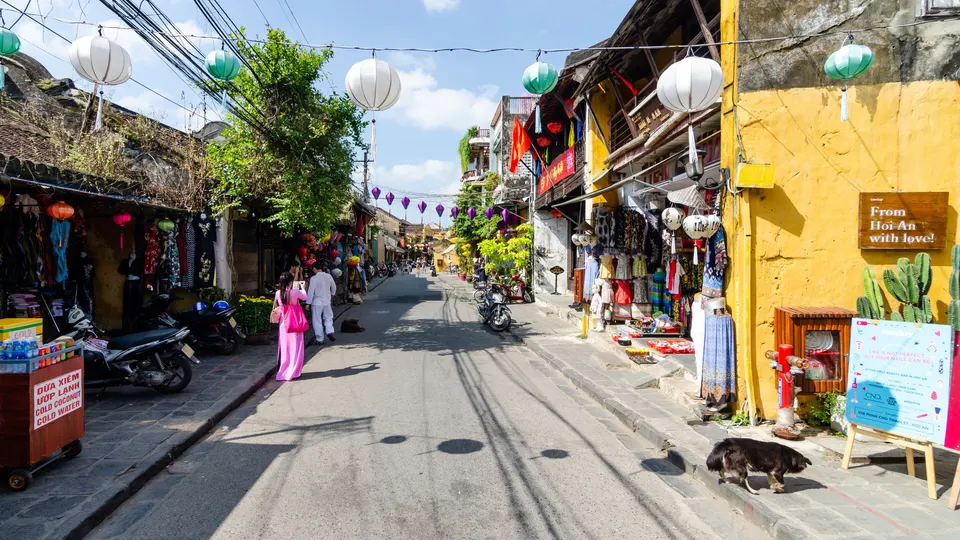
Hoi An has been part of Da Nang city since 1 July 2025, when the former Quang Nam (Quảng Nam) province merged into it, and in practice Da Nang is your airport. The national tourism authority puts Da Nang airport about 5 km from the city centre and 29 km from Hoi An Ancient Town, and Vietnam Airlines estimates about 40 to 60 minutes by taxi, private car or bus between the two. On day 10, leave Hoi An in the morning for a flight south; if you would rather see Da Nang’s beach and Marble Mountains, spend the last night there instead.
Days 10–13: Saigon and the Mekong Delta
The second long transfer is a flight. Vietnam Airlines gives a direct Da Nang–Ho Chi Minh City flight time of around 55 minutes, while the scheduled times on its timetable page run from about 1 hour 20 to 1 hour 35 minutes, so plan on roughly an hour and a half from take-off to arrival at the gate, plus airport time. Spend days 10 and 11 in Ho Chi Minh City, which most Vietnamese still call Saigon (Sài Gòn): the old centre, Cho Lon (Chợ Lớn), a market and plenty of eating, or a half-day to the Cu Chi (Củ Chi) tunnels. Our Ho Chi Minh City guide explains the city’s 2025 expansion and how to get around, including Metro Line 1.

On day 12 go south to Can Tho (since July 2025 also covering the former Soc Trang (Sóc Trăng) and Hau Giang (Hậu Giang) provinces). VnExpress International puts it about 170 km from Ho Chi Minh City and 2 to 4 hours by road (VnExpress International). Stay the night so you can be on the water at Cai Rang floating market at dawn on day 13, then return to Saigon in the afternoon. If one more transfer feels like too much, the coconut country of Ben Tre (since July 2025 part of Vinh Long (Vĩnh Long) province), about 85 km from the city, works as a day trip instead. Our Mekong Delta travel guide explains how the floating markets are changing and where else to base yourself. Can Tho is also the home of purple banh tet, the Mekong version of the Tet rice cake; our guide to banh chung vs banh tet explains how it differs from the Northern square cake.
Transfers at a glance: flight, train or road for each leg
These are the five moves that shape the trip. Times are as stated by the source on the date shown; they change with timetables and traffic.
| Leg | Options | Time (source, date) | Choose it if… |
|---|---|---|---|
| Hanoi → Ha Long Bay | Shuttle bus, car or tour transfer by expressway | About 1 h 30 min from Hanoi, about 2 h from Noi Bai airport (Ha Long Bay Management Board, updated Nov 2024) | You want a night on a boat |
| Hanoi → Ninh Binh | Train, car or bus | About 2 h 15 min by train, up to 2 h by car, 2.5–3 h by bus (Rough Guides) | You want to continue south by rail from there |
| Hanoi → Hue | Flight; night train; sleeper bus | Flight about 1 h; train or sleeper bus about 12–14 h (Vietnam Airlines guide). Summer 2026 evening trains: SE3 19:20, SE1 21:45 (VnEconomy, Apr 2026) | Fly when time or sleep matters; train when it saves a night |
| Hue → Da Nang / Hoi An | Heritage train; car over the pass; car through the tunnel | Train about 3 h, from Hue 7:45 and 14:25 (Tuoi Tre (Tuổi Trẻ) News, Sep 2026); Da Nang to Hoi An about 40–60 min by road (Vietnam Airlines guide) | Train for views without driving; pass road for the summit stop in dry weather |
| Da Nang → Ho Chi Minh City | Flight; day-and-night train | Flight about 55 min in the air, 1 h 20–1 h 35 scheduled (Vietnam Airlines); train SE21 leaves Da Nang 07:55, arrives 04:35 next day (VnEconomy, Apr 2026) | Fly; the train is for rail enthusiasts with time to spare |
| Ho Chi Minh City → Can Tho | Bus or car | About 170 km, 2–4 h (VnExpress International, Jan 2025) | Stay one night to see Cai Rang at dawn |
The railway runs five pairs of North–South trains, SE1/2 to SE9/10, plus shorter routes such as Hanoi–Da Nang and Ho Chi Minh City–Da Nang, according to the April 2026 schedule reported by VnEconomy (VnEconomy). In its summer 2026 sale the railway offered 5–10% off some tickets bought 20 or more days ahead and added a 5–7% surcharge within two days of departure, so buy rail tickets early once your dates are fixed. For trains running from 17 August to 30 December 2026 the offer is 5–15% off some long-distance tickets bought at least 10 days ahead and 10% off the return leg of a round trip, An Ninh Thu Do reported on 5 July 2026. Tet 2027 train tickets went on sale on 5 September 2026, with a peak period from 29 January to 17 February 2027, according to VOV.
How to change the route by season
The order Hanoi → Hue → Hoi An → Saigon → Mekong works all year; what changes is how many nights each region deserves and how much slack you build in. Use the best time to visit Vietnam by region for the full season picture and Vietnam weather by month for what your travel month brings in each region; the table below shows only what to change in this itinerary.

| Travel months | North (Hanoi, Ha Long, Ninh Binh) | Centre (Hue, Hoi An) | South (Saigon, Mekong) | What to change |
|---|---|---|---|---|
| March–May | Warm, clear and sunny from April | Warm to hot, sunny | Dry until May | Nothing: the route as written |
| June–August | Hot, humid; Ha Long stormy | Warm to hot, sunny | Sporadic rain | Prefer Ninh Binh, or book a cruise with a clear weather policy |
| September–November | Cool, clear, sunny | Rainy season; floods possible | Sporadic rain | Add the second karst stop up north, cut Hue–Hoi An to 3–4 nights, book refundable, keep a buffer day, take the train or tunnel instead of the pass road in rain |
| December–February | Cool to cold, misty | Hue still rainy; Hoi An drying out from February | Dry and sunny | Pack layers for Hanoi and the bay, give the South an extra day, check whether your dates touch Tet (Tết) |
Weather summaries: Vietnam National Authority of Tourism. In the autumn months the railway itself can stop: in late October 2025 floodwater rose above the track in Hue and the line through the city was closed for about three days before trains resumed at reduced speed (Vietnam News). It happened again in October 2026, when more than 800 mm of rain in three days flooded parts of Hue and streets in Da Nang, according to an AP report carried by The Star on 20 October 2026. That is why an autumn version of this plan flies the long legs and keeps one unbooked day near the centre.
Running low on energy? What to drop first
A north-to-south trip is tiring because of the transfers, not the sightseeing. If you know you travel slowly, or you are already tired by day 6, cut in this order, and keep the core of each region. If you only have a week in total, do not compress this route: pick one region with our one-week Vietnam itineraries.

- The second karst stop. If you were tempted to do both Ha Long and Ninh Binh, don’t: pick one and spend the spare day in Hanoi.
- The night train. Fly Hanoi–Hue instead; a full night’s sleep is worth more than the train story on a tight trip.
- The Mekong overnight. Replace Can Tho with a day trip to Ben Tre, and you gain a full day in Saigon. You lose Cai Rang at dawn.
- The pass road. Take the heritage train or the tunnel and keep the Hai Van views from the window.
- One Hoi An day out. Skip My Son or the beach and simply stay in town.
Do not cut below two nights in Hue or in Hoi An: with less, the transfer eats most of your time there. And keep a half-day spare before your flight home, because the last day is the one you cannot move.
Common mistakes, and a checklist before you book
Most of the problems travellers run into on this route are about logistics rather than sights. These are the ones the sources document.
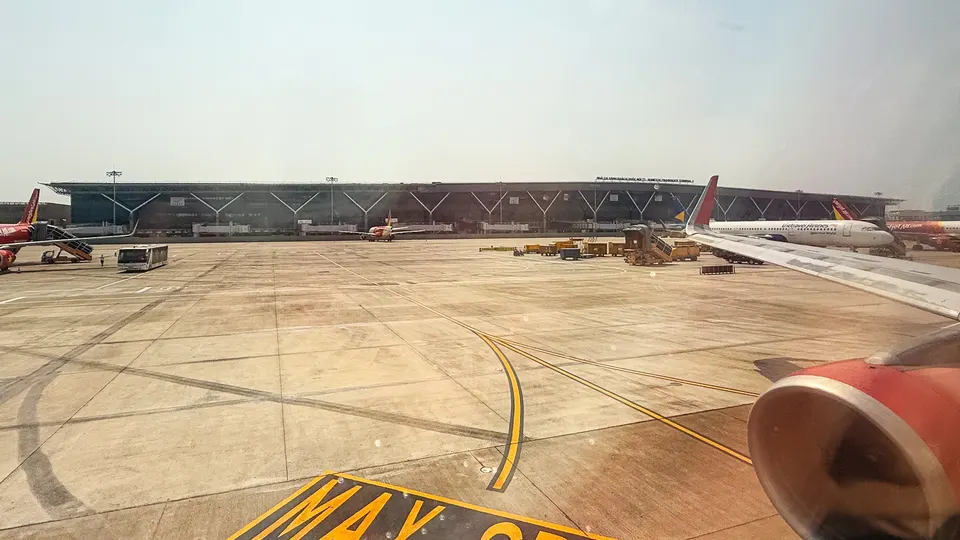
- Going to the wrong terminal in Saigon. Since August 2025 Vietnam Airlines and most domestic carriers have used the new Terminal 3 at Tan Son Nhat (Tân Sơn Nhất) airport, while Vietjet stayed at Terminal 1 (VnExpress International). Some guides still describe only a domestic T1 and an international T2, so check your ticket.
- Assuming you fly home from Tan Son Nhat after Christmas. Long Thanh (Long Thành) International Airport is expected to begin commercial operations at midnight on 24 December 2026, with Vietnam Airlines planning a Long Thanh–Hanoi route and some international services, VietnamPlus reported on 30 October 2026. If your trip ends after that date, check which Saigon airport your ticket names.
- Expecting coastal views from the night train. Most of the Hanoi–Hue journey runs in the dark. The scenic coast on this route is the Hue–Da Nang section, which you can ride by day.
- Booking a Ha Long cruise with no weather policy. Tourist boats can be suspended at short notice when storms approach.
- Day-tripping the Mekong and expecting a floating market. Cai Rang is a dawn market; from Saigon you need a night in Can Tho to see it.
- No buffer on the central coast in autumn. Floods can close the railway for days, as they did in Hue in October 2025; refundable bookings and a spare day make them an inconvenience rather than a lost leg.
Before you book: check whether you need a visa and, if so, apply through the official portal in good time (our Vietnam e-visa guide explains the steps); decide your season and check the table above; fly the two longest legs unless the train is the point; book the heritage train and North–South trains on dsvn.vn once dates are fixed; check which Saigon terminal your airline uses; and leave the last half-day before your international flight empty.
Frequently asked questions
Is two weeks enough to see Vietnam from north to south?
Two weeks is enough for one line through Vietnam, Hanoi to the Mekong Delta, if you fly Hanoi–Hue and Da Nang–Ho Chi Minh City and pick one karst landscape in the North. It is not enough to add the northern mountains such as Sa Pa or Ha Giang without cutting a region.
Do I need to book Vietnam trains in advance for a two-week trip?
Book once your dates are fixed, on the official site dsvn.vn or at stations. For trains running from 17 August to 30 December 2026 Vietnam Railways gives 5–15% off some long-distance tickets bought at least 10 days ahead, and Tet 2027 train tickets have been on sale since 5 September 2026, with the peak period from 29 January to 17 February 2027.
Can I still travel through Hue and Hoi An in October or November?
Yes, but treat Hue and Hoi An as the weak link: in October 2026 more than 800 mm of rain in three days flooded parts of Hue and streets in Da Nang, and in late October 2025 floods closed the railway through Hue for about three days. Keep central bookings refundable and leave a buffer day.
Which airport will I fly home from Saigon in December 2026?
Long Thanh International Airport in Dong Nai is expected to begin commercial operations at midnight on 24 December 2026, with Vietnam Airlines and Vietjet planning routes there (VietnamPlus, 30 October 2026). If your trip ends after that date, check whether your ticket names Long Thanh or Tan Son Nhat.
How much is the Ha Long Bay ticket?
VnExpress, updated June 2026, lists the Ha Long Bay sightseeing ticket at 240,000–290,000 VND a person for a day route and 540,000–590,000 VND for one night on the bay. Some cruises include the overnight fee in their price, so ask before you pay.
Key sources
- Weather and climate in Vietnam · Vietnam National Authority of Tourism (vietnam.travel)
- Hanoi to Hue: pros and cons of traveling by flight, train, sleeper bus · Vietnam Airlines travel guide
- Ngành đường sắt mở bán vé tàu khách, tăng chuyến chuẩn bị cho cao điểm hè 2026 · VnEconomy, 11 April 2026
- Steam train linking Hue, Da Nang expected to launch in October · Tuổi Trẻ News, 17 September 2026
- Đường đến Hạ Long · Hạ Long Bay Management Board (halongbay.com.vn), updated 7 November 2024
- North-South Railway reopens through Huế after days of flood disruption · Việt Nam News, 31 October 2025
- Mekong Delta travel guide · VnExpress International, 19 January 2025
- 5 carriers move domestic flights to Ho Chi Minh City airport's new terminal · VnExpress International, 18 August 2025
All 24 sources and further reading
- Are there flights from Ho Chi Minh to Hoi An? · Vietnam Airlines travel guide
- Flights from Da Nang to Ho Chi Minh City · Vietnam Airlines
- Vé tàu trực tuyến (official ticket sales) · Vietnam Railways (dsvn.vn)
- Vietnam Railway, an incredible train journey · Vietnam National Authority of Tourism (vietnam.travel)
- Ha Long Bay tourist boats banned from departing as typhoon Wipha nears · Tuổi Trẻ News, 20 July 2025
- A guide to boat tours in Ninh Binh · Vietnam National Authority of Tourism (vietnam.travel)
- How to get from Hanoi to Ninh Binh · Rough Guides
- A traveller's guide to Vietnam's airports · Vietnam National Authority of Tourism (vietnam.travel)
- Complex of Huế Monuments · UNESCO World Heritage Centre
- Names and administrative centers of 34 provinces and centrally-run cities specified · Government of Viet Nam online newspaper (baochinhphu.vn), 15 April 2025
- Vietnam adds Quang Ninh and Bac Ninh to its centrally governed cities · VietnamNet, 25 August 2026
- Đường sắt mở bán vé sau Hè, giảm 10-15% vé khứ hồi · An Ninh Thủ Đô, 5 July 2026
- 8h ngày 5/9 ngành đường sắt mở bán vé tàu Tết Đinh Mùi 2027 · VOV, 4 September 2026
- Long Thanh airport set to begin commercial operations on December 24 · VietnamPlus (VNA), 30 October 2026
- Vietnam mobilises troops after heavy rains trigger flash floods and raise risks of landslides · The Star (AP), 20 October 2026
- Cẩm nang du lịch vịnh Hạ Long · VnExpress, updated 12 June 2026
Keep exploring
 Central Vietnam · Travel Da Nang (Đà Nẵng): What to Do, Where to Stay, How Long Da Nang travel guide: the best things to do, whether to stay in Da Nang or Hoi An, a 2–4 day plan with Hue, what to eat and when the rains usually come.
 North Vietnam · Travel Cat Ba (Cát Bà): Ferry, Cable Car and What to Do, 2026 Cat Ba island in 2026: ferry and cable car times to cross from Hai Phong, the national park and its rare langurs, wartime caves and forts, and crab noodles.
 North · Central · South · Food Hanoi Breakfast Food: What to Eat and When, North to South Hanoi breakfast food: pho, banh cuon, xoi, bun rieu, chao and banh mi, an hour-by-hour guide to when stalls open and sell out, plus Hue and Saigon breakfasts.
 North · Central · South · Travel Vietnam in One Week: Which Region to Pick, 3 Routes 7 days in Vietnam? Pick North, Centre or South. Day-by-day routes, transfer times, 2026 train and ticket prices, and a table to choose by month and airport.