Central Vietnam · Travel
Buon Ma Thuot (Buôn Ma Thuột): What to Do and When to Go
Planning Buon Ma Thuot? The World Coffee Museum, a coffee farm, E De longhouses, Buon Don without elephant rides, the March 2027 festival and how to get there.
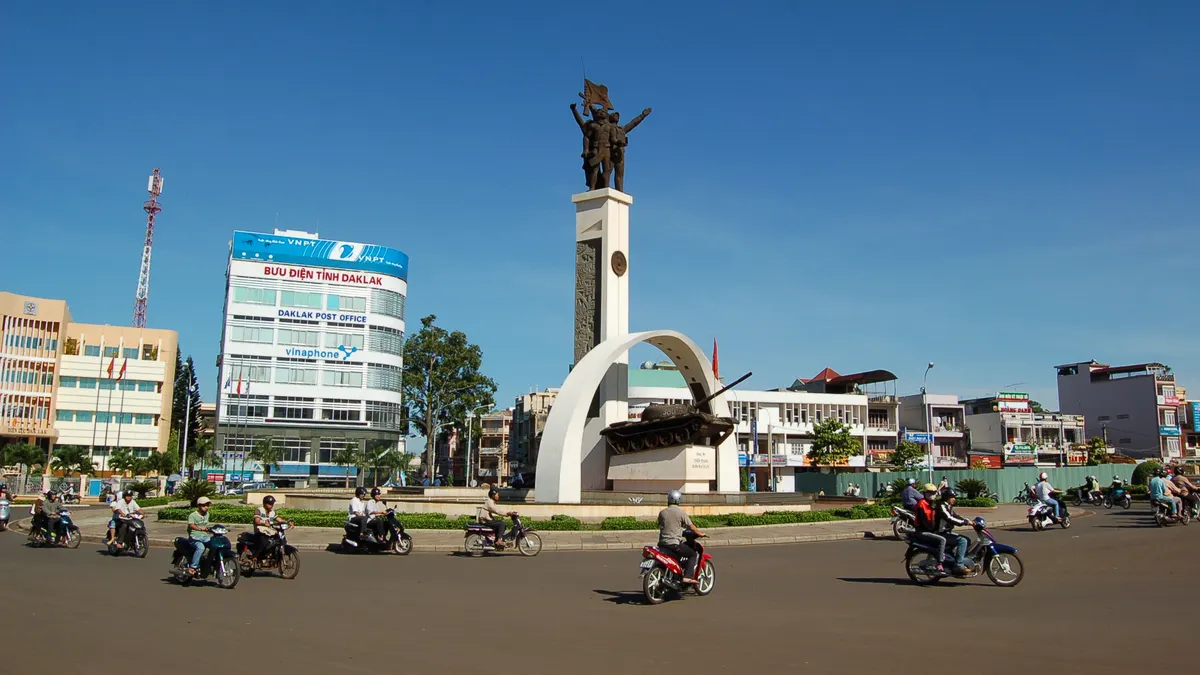
Buon Ma Thuot (Buôn Ma Thuột) is worth two or three days if you want to see where Vietnam’s coffee comes from: the World Coffee Museum, a working robusta farm, E De (Ê Đê) longhouses inside the city and a day trip to the elephant villages or waterfalls. As of November 2026, the 10th Buon Ma Thuot Coffee Festival is planned for March 2027, with the opening set for 8 March at 10 March Square, although the programme was still a draft awaiting approval (VietnamPlus). Go in the dry season, roughly November to April, and do not expect elephant rides: the main sites have ended them.
The city is the largest in Vietnam’s Central Highlands (Tay Nguyen (Tây Nguyên)), a high plateau of red volcanic soil a long way inland from the beaches of the Central Vietnam coast. Most Vietnamese know it for one thing: coffee. Much of the robusta that makes Vietnam the world’s second-largest coffee producer is grown on the family smallholdings around the city.
The coffee is the reason to come, but it is not the only one. This is also the homeland of the E De people, whose longhouses and gong music survive inside the city limits, and the starting point for Buon Don’s elephant villages and the Serepok River waterfalls. This guide explains why coffee took over this plateau, what a visitor can actually see of it, and how to fit in the E De side of the story.
Buon Ma Thuot at a glance
| Region | Central Highlands, Central Vietnam; centre of Dak Lak (Đắk Lắk) province (since July 2025 including the former Phu Yen (Phú Yên) province) |
| Known for | Robusta coffee, the World Coffee Museum, E De longhouses and gong culture |
| Coffee scale | Dak Lak: about 213,000–217,000 ha of coffee, roughly 30% of Vietnam’s coffee area |
| UNESCO | Space of Gong Culture in the Central Highlands: proclaimed 2005, on the Representative List since 2008 |
| Best time | Dry season, roughly November to April; coffee harvest roughly October to December |
| Coffee Festival | Every two years, in March; as of November 2026 the 10th edition is planned for March 2027, opening 8 March |
| Getting there | About 1 hour by air from Ho Chi Minh City, about 1 h 45 min from Hanoi; around 8 hours by bus from Ho Chi Minh City |
| Local dishes | Bun do (red noodle soup), ga nuong (grilled chicken), com lam (rice cooked in bamboo) |
Why does the Central Highlands grow most of Vietnam’s coffee?
Start with the ground. The Central Highlands lie at roughly 600 to 1,500 metres and hold about two million hectares of fertile basalt soil formed by ancient volcanic eruptions, according to Vietnam Airlines’ Heritage magazine. A 2017 Vietnam News Agency report put the region’s share of Vietnam’s basalt soil at about three quarters, and said the plateau then had close to 90% of the country’s coffee area and produced about 93% of its beans. Soil, climate and altitude are exactly what French planters studied before choosing the area for robusta (Coffea canephora, called ca phe voi (cà phê vối) locally).
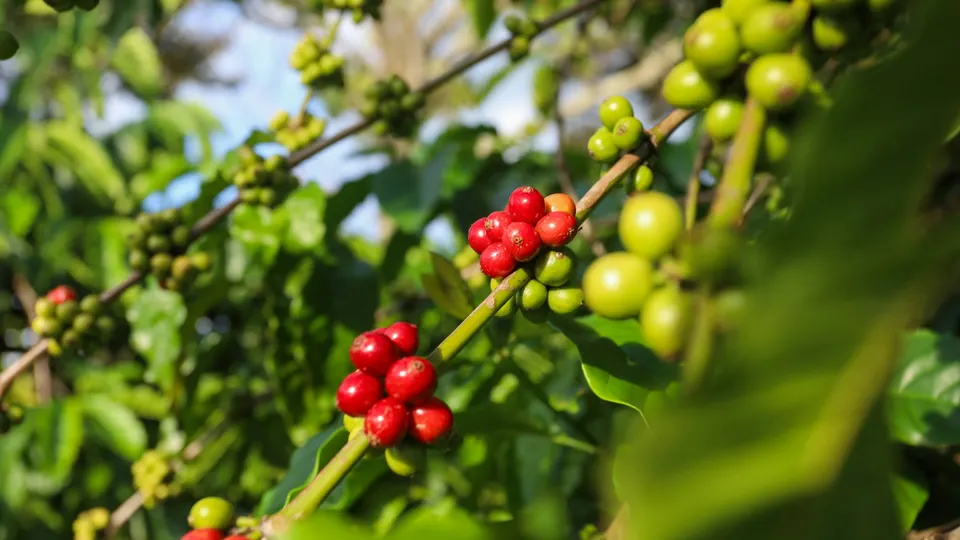
The result is a country built on one bean. In its 2025/26 forecast the US Department of Agriculture expects Vietnam to produce about 30.8 million 60-kg bags, nearly 95% of it robusta, keeping Vietnam the world’s second-largest coffee producer after Brazil and its leading robusta supplier; total exports, including roasted and instant coffee, are forecast at 27.9 million bags, again second only to Brazil (Viet Nam News).
Dak Lak is the biggest single piece of that. Provincial figures quoted in the national press put its coffee area at about 213,000 hectares in 2025, roughly 30% of the national total, with more than 520,000 tonnes of green beans a year, over 30% of Vietnam’s output; a provincial vice-chairman gave “more than 217,000 hectares” in October 2026. Its share of the country’s exports, as counted by the province, is smaller: about 18% of national volume in the 2023–24 crop year.
How it got here. Coffee reached Vietnam in the second half of the 19th century; Vietnamese sources usually give 1857. Under French rule, Buon Ma Thuot was chosen as a robusta-growing area in 1914 after studies of its soil, climate and altitude, and by 1922 French-run farms covered Dak Lak’s basalt land, shipping most of the beans to France. The real boom came much later. After the Doi Moi (Renovation) reforms of 1986, state investment and private smallholders spread coffee across the plateau, with large growing zones forming around Buon Ma Thuot, Cu (Cư) M’gar, Krong Pac (Krông Pắc) and Krong Nang (Krông Năng), according to Vietnam Economic News. That is why the landscape you drive through today is a patchwork of family plots rather than colonial estates: industry experts quoted by Tuoi Tre (Tuổi Trẻ) estimate that close to 90% of Vietnam’s coffee comes from smallholder farms.
Where can you see the coffee story in Buon Ma Thuot?
The obvious first stop is the World Coffee Museum (Bảo tàng Thế giới Cà phê) on Nguyen Dinh Chieu (Nguyễn Đình Chiểu) Street. It opened in late 2018 as part of a 45-hectare “coffee city” project by the Trung Nguyen (Trung Nguyên) Legend company, and its five curved buildings borrow the shape of E De longhouses and communal rong (rông) houses (Viet Nam News). Inside are more than 10,000 coffee-related objects, many of them from the former Jens Burg coffee museum in Hamburg, Germany: 19th-century brewing gear, a 1930 German bean-sorting machine and historical Vietnamese processing tools. It is still the city’s coffee showpiece: in April 2026 it hosted the World Coffee Heritage Forum, Nhan Dan reported.
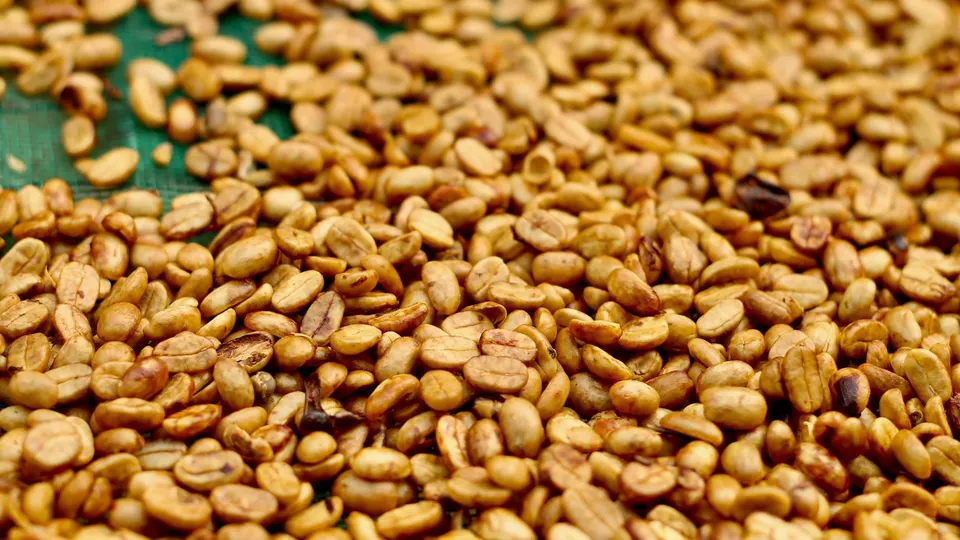
The museum is a corporate project as much as a public one, and it tells coffee’s global story more than the story of the farmers outside town. It is worth pairing with a visit to a working farm. VOV describes specialty robusta farms just outside the centre, such as one on the shore of Ea Kao Lake, where visitors can walk the rows, see beans dried and sorted and join a tasting. That farm sells under the Aeroco brand, and on 11 November 2026 Ea Kao ward sent its first official container of specialty Fine Robusta, more than 3.4 tonnes, to the United States, VOV reported. Check in advance what a farm actually offers, as tours vary.
The Coffee Festival. Every two years the city hosts the Buon Ma Thuot Coffee Festival (Lễ hội Cà phê Buôn Ma Thuột). The 9th edition ran from 9 to 13 March 2025 under the theme “Buon Ma Thuot – Destination of world coffee”, with a specialty roasting competition, a trade fair and a coffee camp on a plantation. During that week, VnExpress reported, cafes across the province served free coffee, and tour operators ran trips to coffee gardens and processing plants. The 10th festival is planned for March 2027, with the opening set for 8 March.
How do people in Buon Ma Thuot drink their coffee?
The default here is a hot coffee made in a phin, the small metal drip filter set on top of the glass. A 2023 feature in Luật sư Việt Nam (Vietnam Lawyers’ Journal) describes Buon Ma Thuot’s coffee culture as slow: people do not treat coffee as a quick drink, but sit with a hot phin over the newspaper, music or conversation, in pavement stalls and smart cafes alike. The same piece contrasts it with Saigon, known for pavement cafes and iced milk coffee (cà phê sữa đá), and Hanoi, where milk coffee or ready-brewed black coffee is the habit.

When National Geographic named Buon Ma Thuot one of its 15 best food destinations for 2026, it described the same ritual: waiting for coffee to drip through the phin into a strong brew, often sweetened with condensed milk, and a local joke that there is a coffee shop every 100 metres (Tuoi Tre).
What this means for you: order cà phê đen nóng (hot black) or cà phê sữa nóng (hot with condensed milk) and give it time to drip. If you are travelling the length of the country, compare it with the creamy egg coffee of Hanoi and the iced street coffee of Ho Chi Minh City. Each reflects its own city’s pace; our guide to Vietnamese coffee by region sets the three side by side.
Who are the E De, and what can you see of their culture?
The E De are one of the indigenous peoples of the Central Highlands, and some of their villages (buon (buôn)) survive inside Buon Ma Thuot itself. Their most visible heritage is the longhouse (nha dai (nhà dài)), a wooden house raised on stilts and shaped like a dugout canoe. Viet Nam News describes it as a symbol of a matriarchal society: a house was traditionally extended each time a woman of the family married, so it could run to tens of metres, and the main staircase is carved with a woman’s breasts and a crescent moon, standing for women’s power in the family. Dak Lak still has about 5,600 traditional longhouses, but many are in poor condition, and the province now subsidises restoration, Viet Nam News reported in December 2025.
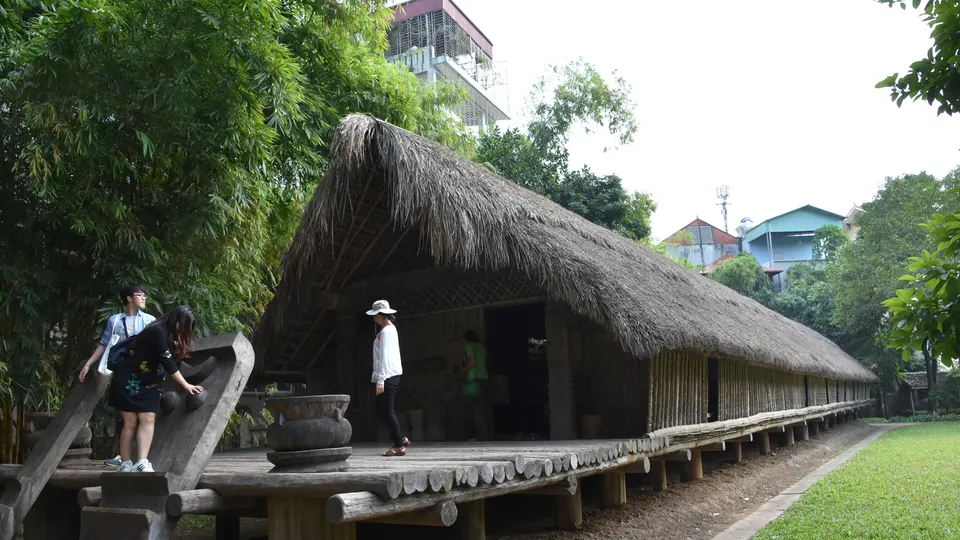
The easiest place to see them is Ako Dhong (Akô Dhông) village (buon Ako Dhong (buôn Akô Dhông)), inside the city. E De families founded it in 1956 at a spot where several streams met, which is what the name refers to. It keeps roughly 30 to 40 longhouses (sources give different counts), many still family homes. In March 2023 the province recognised it as Dak Lak’s first community-based tourism village. Visitors can watch gong performances in some longhouses, learn about brocade weaving and rice-wine making, stay overnight, and eat at a family-run space at the entrance that serves charcoal-roasted coffee and bamboo-cooked rice. These are lived-in homes, so ask before photographing people or climbing a staircase.
Gongs are the other key to E De life. UNESCO’s listing of the Space of Gong Culture in the Central Highlands, proclaimed in 2005 and inscribed on the Representative List of the Intangible Cultural Heritage of Humanity in 2008, covers seventeen Austroasiatic and Austronesian communities across several highland provinces (UNESCO). Gongs are played at every major ritual, from the blessing of the rice to the sacrifice of bullocks and mourning rites. They signal a family’s wealth and status and are believed to speak between people and the spirit world. UNESCO also records the threats: war disrupted transmission, older musicians are dying, and some gongs, stripped of their sacred meaning, have been sold for scrap. What you hear at a tourist performance is real music, but it has been moved out of the ritual setting it was made for.
What has changed at Buon Don, and what else is there outside the city?
Elephants. Buon Don is known for its elephant culture, and for years tourists came to ride elephants there. That has ended at the main sites. Yok Don National Park stopped rides in July 2018, with support from Animals Asia, and now invites visitors to watch its elephants quietly from a distance. On 10 February 2023 the Buon Don tourist centre took its six working elephants off rides, as part of a project running to December 2026 to move Dak Lak to elephant-friendly tourism (VietnamPlus). The numbers explain the urgency: Dak Lak had 37 elephants in 2023, down from about 500 in the 1980s, Tuoi Tre reported. If an operator still offers rides, it is going against the direction the province has set.
Buon Don is still worth the trip for its stilt houses and the long bamboo suspension bridges over the Serepok, nearly a kilometre in total, according to VnExpress.
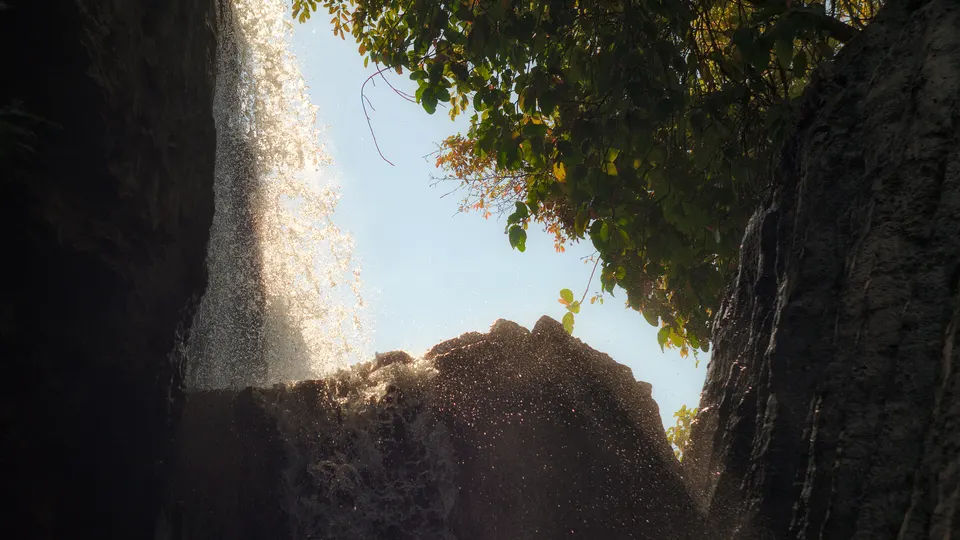
Waterfalls. Outside the city on the Serepok River are the twin falls of Dray Nur and Dray Sap (Sáp). Dray Nur is more than 250 metres wide and drops about 30 metres; Dray Sap, a short walk away across a bridge, falls about 20 metres. An E De legend tells of two lovers from feuding villages who drowned together in the river, after which a god split the Serepok into its female and male branches. The falls are wildest in the rainy season; in the dry season the water is gentler. Dray Sap was in the former Dak Nong (Đắk Nông) province, which has been part of Lam Dong (Lâm Đồng) province, centred on Da Lat, since July 2025, so the two falls now sit in different provinces.
What should you eat in Buon Ma Thuot?
The local signature is bun do, “red noodle soup”: thick red-orange rice noodles in a broth simmered from crab roe and pork and beef bones, topped with a patty of crab roe, pork and shrimp, quail eggs, boiled blood and crispy pork skin, with shredded cabbage on the side, as VietNamNet describes it. You find it at pavement stalls and ordinary noodle shops rather than smart restaurants.
The highland pairing is ga nuong and com lam. The chicken is free-range, marinated with lemongrass and grilled over charcoal, then dipped in chilli-lemongrass salt; Buon Don’s version is the best known. Com lam is sticky rice, ideally upland rice from hill fields, packed into a bamboo tube with a little water and salt, plugged with banana leaf and cooked by the fire for over an hour, then peeled and sliced. Highlanders eat it with sesame salt and grilled chicken or wild boar, often with ruou can (rượu cần), rice wine drunk through bamboo straws from a shared jar. Znews lists both among the best-known dishes of the Central Highlands as a whole, not of Buon Ma Thuot alone.
Our “Where to try it” card lists the one restaurant we could check in several independent, recent reports with a confirmed street: Arul House, an E De family restaurant at the entrance to Ako Dhong village. We have not named bun do shops: we could not find enough independent, recent sources with confirmed addresses.
When should you go, and how do you get there?
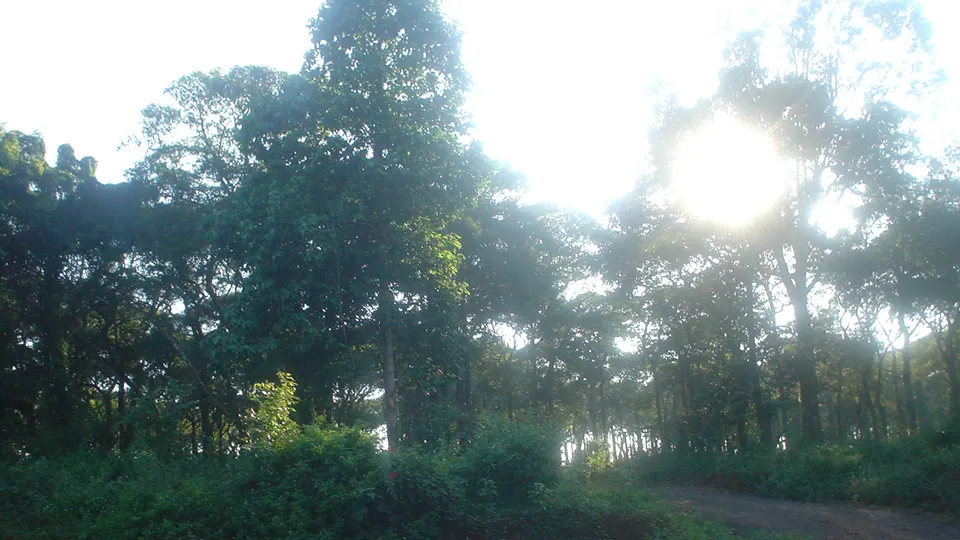
The dry season, roughly November to April, is the easiest time to visit, and VnExpress calls late November the most pleasant stretch. In the rainy months, rain tends to come in the afternoon, so plan sightseeing for the morning (VnExpress). Coffee cherries ripen from about August, and the main harvest runs roughly from October into December, when you will see beans drying on yards and roadsides. Come in March of an odd-numbered year for the Coffee Festival, but book early.
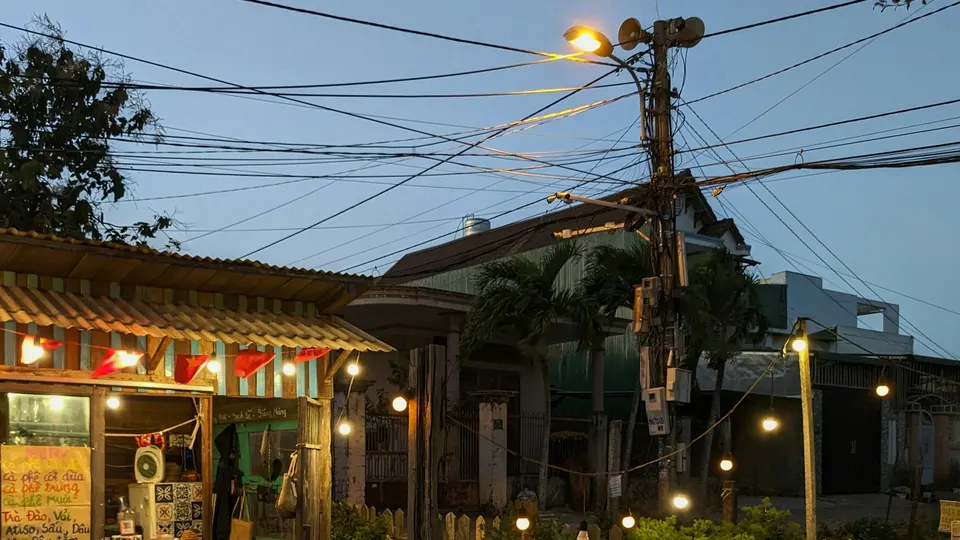
Getting there. Buon Ma Thuot’s airport is about an hour’s flight from Ho Chi Minh City and around 1 hour 45 minutes from Hanoi; buses from Ho Chi Minh City take about eight hours. Two or three days is enough for the museum, Ako Dhong, a coffee farm and a day trip to Buon Don or the waterfalls. The city combines naturally with Da Lat (Đà Lạt) in the southern highlands, or with the coast around Nha Trang if you want to end a highland trip by the sea; our Vietnam travel guides cover the wider route.
| Option | Travel time | What to know (as of November 2026) | Suits |
|---|---|---|---|
| Fly from Ho Chi Minh City | About 1 hour | The quickest link from the south | Short trips from Saigon |
| Fly from Hanoi | About 1 h 45 min | Vietravel Airlines added a daily flight on 15 June 2026 | Travellers coming from the north |
| Bus from Ho Chi Minh City | About 8 hours | Overland, no flight needed | Overland travellers |
| Road from Nha Trang | Allow extra time | The new expressway was about 89% built in October 2026; full opening expected in 2027 | Combining the coast and the highlands |
Coffee Festival 2027 and the road from Nha Trang: what is new
The 10th Coffee Festival. The draft plan, reported by VietnamPlus on 10 October 2026, puts the opening ceremony on 8 March 2027 at 10 March Square in the city centre, with about 30 activities and some 1.3 million visitors expected. VOV reported on 20 October 2026 a wider window for related events, from 15 December 2026 to 4 April 2027, with proposals for a coffee street and linked events reaching Tuy Hoa on the former Phu Yen coast. The plan was still awaiting final approval when we checked, so confirm the dates before booking; rooms in the city fill up for the opening week.
The Khanh Hoa–Buon Ma Thuot expressway. The new expressway from the coast near Nha Trang is not finished yet. Sections at both ends were opened to technical traffic in December 2025, but in October 2026 the project was about 89% complete, with the mountain section and its tunnel lagging, and full operation is now expected in 2027, VietnamPlus reported. The builders of the 11-km tunnel section aim to open it to traffic before the end of 2026, Bao Xay Dung reported on 26 October 2026, but their contract runs to June 2027. Until then, plan the drive between Nha Trang and Buon Ma Thuot on the existing mountain road and allow extra time.
More flights. Vietravel Airlines added a daily Hanoi–Buon Ma Thuot flight from 15 June 2026, VnEconomy reported, alongside the existing services from Hanoi and Ho Chi Minh City.
What did the 2025 merger change?
On 1 July 2025 Vietnam cut its provinces from 63 to 34. Dak Lak absorbed the whole of the former Phu Yen province on the south-central coast and kept its name, giving the new province an area of about 18,096 km² and a population of about 3.35 million (Viet Nam Government News). The political and administrative centre stayed in Buon Ma Thuot. Addresses now use the new wards and communes: Viet Nam News, for example, places Ako Dhong village in Buon Ma Thuot ward.
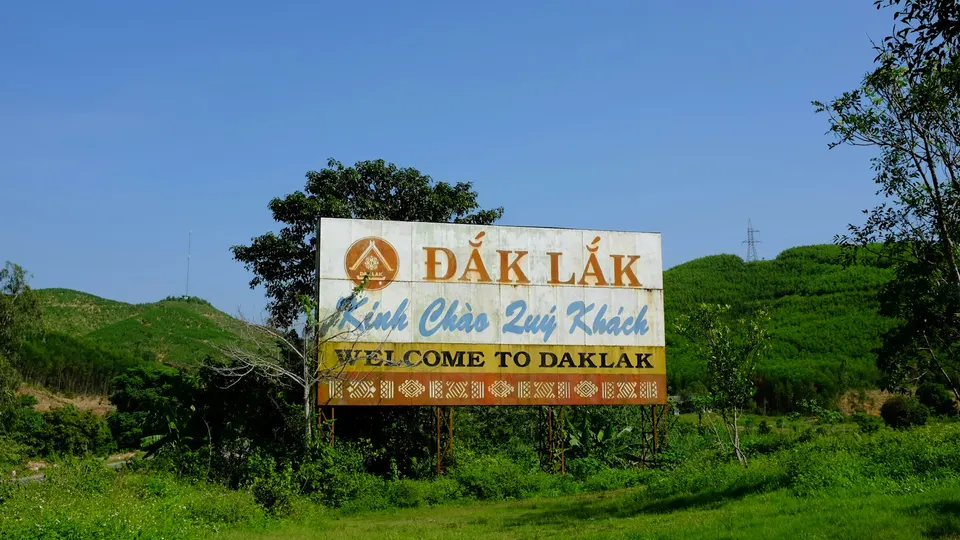
For travellers this mostly matters on maps, but it is also changing how the province sells itself. Dak Lak now markets a “forest and sea” combination, from coffee hills to Phu Yen’s coastline, and plans include upgrading Buon Ma Thuot’s airport to an international gateway and studying a Buon Ma Thuot–Tuy Hoa (Tuy Hòa) railway, Viet Nam News reported in May 2026. For now, the highlands and the old Phu Yen coast are still separate trips.
Where to try it
Local favourite
Arul House
Buôn Ma Thuột · Akô Dhông village, Buôn Ma Thuột ward (former Tân Lợi ward)
At the entrance to Akô Dhông village, at the end of Trần Nhật Duật Street
A wooden house at the entrance to the Ê Đê village of Akô Dhông, run by a local Ê Đê family and serving highland home cooking. Việt Nam News reviewed it in April 2025 (grilled chicken with black sticky rice cooked in bamboo, bitter eggplant soup, smoked beef with ant salt), and Báo Lâm Đồng noted in November 2025 that its menu changes with the seasons.
Order: Grilled chicken with rice cooked in bamboo, and bitter eggplant soup (canh cà đắng).
Recommended by: Việt Nam News (2025), Báo Lâm Đồng (2025), Vietnam National Authority of Tourism (from Nhân Dân) (2025) · checked November 2026
Addresses and details can change; check before you go. We do not accept payment for listings.
Frequently asked questions
Is Buon Ma Thuot worth visiting for coffee?
Yes, for two or three days. The World Coffee Museum, a working robusta farm such as Aeroco on Ea Kao Lake and a slow hot phin coffee in town cover the coffee story, and the E De longhouses of Ako Dhong village are inside the city.
When is the next Buon Ma Thuot Coffee Festival?
As of November 2026, the 10th Buon Ma Thuot Coffee Festival is planned for March 2027, with the opening on 8 March 2027 at 10 March Square. The programme was still a draft awaiting approval, so confirm the dates before booking; the festival is held every two years.
Can you still ride elephants at Buon Don?
The main tourist centre at Buon Don stopped elephant rides on 10 February 2023, and Yok Don National Park ended them in 2018. Dak Lak is moving to elephant-friendly tourism, where visitors watch elephants rather than ride them.
Is the Khanh Hoa–Buon Ma Thuot expressway open yet?
Not fully. In October 2026 the Khanh Hoa–Buon Ma Thuot expressway was about 89% complete and full operation is expected in 2027, so plan the drive from Nha Trang on the existing mountain road.
Which is the best way to get to Buon Ma Thuot?
Flying is quickest: about an hour from Ho Chi Minh City and around 1 hour 45 minutes from Hanoi, where Vietravel Airlines added a daily flight on 15 June 2026. Buses from Ho Chi Minh City take about eight hours.
Key sources
- Lễ hội Càphê Buôn Ma Thuột 2027 dự kiến thu hút 1,3 triệu lượt du khách · VietnamPlus, 10 October 2026
- Việt Nam cements status as world's No.2 coffee producer, robusta powerhouse · Viet Nam News (USDA data), 14 May 2026
- World Coffee Museum boosts Central Highlands tourism · Viet Nam News, 19 February 2023
- Vietnam's Buon Ma Thuot ranks among world's top 15 food destinations for 2026 · Tuổi Trẻ News, 1 June 2026
- Space of gong culture · UNESCO Intangible Cultural Heritage
- Buon Don district ends elephant rides · VietnamPlus (VNA), 10 February 2023
- Cẩm nang du lịch Đắk Lắk · VnExpress, 2024
- Names and administrative centers of 34 provinces and centrally-run cities specified · Viet Nam Government News, 15 April 2025
All 44 sources and further reading
- Lễ hội Cà phê Buôn Ma Thuột 2027 hướng tới tầm quốc tế · VOV, 20 October 2026
- Tháo gỡ khó khăn để dự án cao tốc Khánh Hòa - Buôn Ma Thuột hoàn thành vào cuối năm · VietnamPlus, 19 October 2026
- Cao tốc Khánh Hòa - Buôn Ma Thuột 22.000 tỷ đồng chính thức thông xe · VietnamFinance, 19 December 2025
- "Truyền lửa" nghề, vượt khó đưa cao tốc Khánh Hòa - Buôn Ma Thuột về đích sớm · Báo Xây dựng, 26 October 2026
- Đắk Lắk xuất khẩu cà phê đặc sản sang Hoa Kỳ · VOV, 11 November 2026
- Đắk Lắk: Cà phê đặc sản Ea Kao chinh phục thị trường Hoa Kỳ · Báo Văn Hóa, 11 November 2026
- Diễn đàn di sản cà-phê thế giới, không gian đối thoại kết nối văn hóa và tri thức cà-phê toàn cầu · Nhân Dân, 19 April 2026
- Arul House offers a taste of local flavours and culture · Việt Nam News, 27 April 2025
- Trải nghiệm văn hóa Ê Đê với một ngày ở 'buôn trong lòng phố' · Báo Lâm Đồng, 27 November 2025
- Xóm nhà truyền thống người Ê Đê giữa lòng phố thị · Znews, 14 July 2020
- Vietravel Airlines mở rộng mạng đường bay nội địa và quốc tế trong dịp hè 2026 · VnEconomy, 15 June 2026
- Vietnam expected to retain position as world's second-largest coffee producer in 2025/26 crop · VnEconomy, 15 May 2026
- Tiến gần hơn đến "Thành phố cà-phê của thế giới" · Nhân Dân, 20 March 2025
- Đắk Lắk: Ngành cà phê với nỗi lo thiếu nhân lực chất lượng cao · Đại biểu Nhân dân, 22 September 2025
- Đắk Lắk targets 75,000ha of sustainable, EUDR-compliant coffee by 2030 · Viet Nam News, 29 October 2026
- Vietnamese coffee reigns supreme on global coffee map · Vietnam Economic News (Ministry of Industry and Trade), 17 March 2023
- A Love Story of Trees and Soil · Heritage (Vietnam Airlines magazine), 2 December 2024
- Central Highlands establishes itself as agricultural hub of Vietnam · Vietnam News Agency, 18 April 2017
- Coffee museum opens in central highlands province · Quân đội Nhân dân, 3 December 2018
- Many new features at 2025 Buon Ma Thuot Coffee Festival · VTV, 22 February 2025
- Tháng 3 đi đâu, chơi gì? · VnExpress, 1 March 2025
- Độc đáo nét văn hóa thưởng thức cà phê Buôn Ma Thuột · Luật sư Việt Nam (lsvn.vn), March 2023
- Ako Dhong Village: A door to explore Ede ethnic culture in the heart of Buon Ma Thuot City · Vietnam National Authority of Tourism, April 2025
- Đắk Lắk eyes on preservation of the Ê Đê long house · Viet Nam News, 17 December 2025
- Vietnam's Central Highlands province ceases elephant ride service · Tuổi Trẻ News, 10 February 2023
- Yok Don Ends Elephant Rides. Tourists Can Now Watch Them, but Silently and From a Distance · Saigoneer, 24 October 2018
- Dray Nur – Dray Sap waterfalls · Vietnam Pictorial (VNA), 12 October 2020
- Bún đỏ, gỏi cá: Đặc sản có nơi nào ăn ngon như Buôn Ma Thuột · VietNamNet, 8 June 2023
- Cơm lam, gà nướng Buôn Đôn · Đại Đoàn Kết, 30 November 2020
- Bún đỏ và những món ăn trứ danh ở Tây Nguyên · Znews, 14 November 2019
- Coffee harvest season starts in the Central Highlands · VietNamNet, 6 November 2020
- Resolution 202/2025/QH15 on the reorganization of provincial-level administrative divisions · LuatVietnam (text of the National Assembly resolution, 12 June 2025)
- Đắk Lắk unveils tourism vision focused on coastal and mountain regions · Viet Nam News, 29 May 2026
- What awaits travellers in Buon Ma Thuot - Vietnam's coffee capital? · VOV, 3 June 2026
- Brazil threatens Vietnam's reign as 'king of robusta coffee' · Tuổi Trẻ News, 19 May 2025
- The World Coffee Museum · Wikipedia (background only)
Keep exploring
 Central Vietnam · Travel Da Lat (Dalat), Vietnam: Where It Is, When to Go, How Long Where is Da Lat (Dalat)? A cool highland city 300 km from Saigon: how many days you need, month-by-month weather, the airport transfer and 2026 roadworks.
 Central Vietnam · Travel Is Nha Trang Worth It? What to See, Eat and When to Go Is Nha Trang worth visiting? The bay and Hon Mun reefs, Po Nagar Cham towers, mud baths, fish-cake noodles, the January-August dry season and 2026 flood risks.
 North Vietnam · Food Hanoi Egg Coffee (Ca Phe Trung): Where to Drink It + Recipe Where to drink Hanoi egg coffee (ca phe trung) in 2026: Cafe Giang, Cafe Dinh and Giang Yen Phu compared, cup prices, a 5-minute recipe and raw-egg safety.