All three regions · Food
Vietnamese Coffee by Region: What to Order Where
How Vietnamese coffee changes from Hanoi's hot ca phe nau to Hue salt coffee and Saigon's iced ca phe sua da, bac xiu and cloth filter, and how to order.
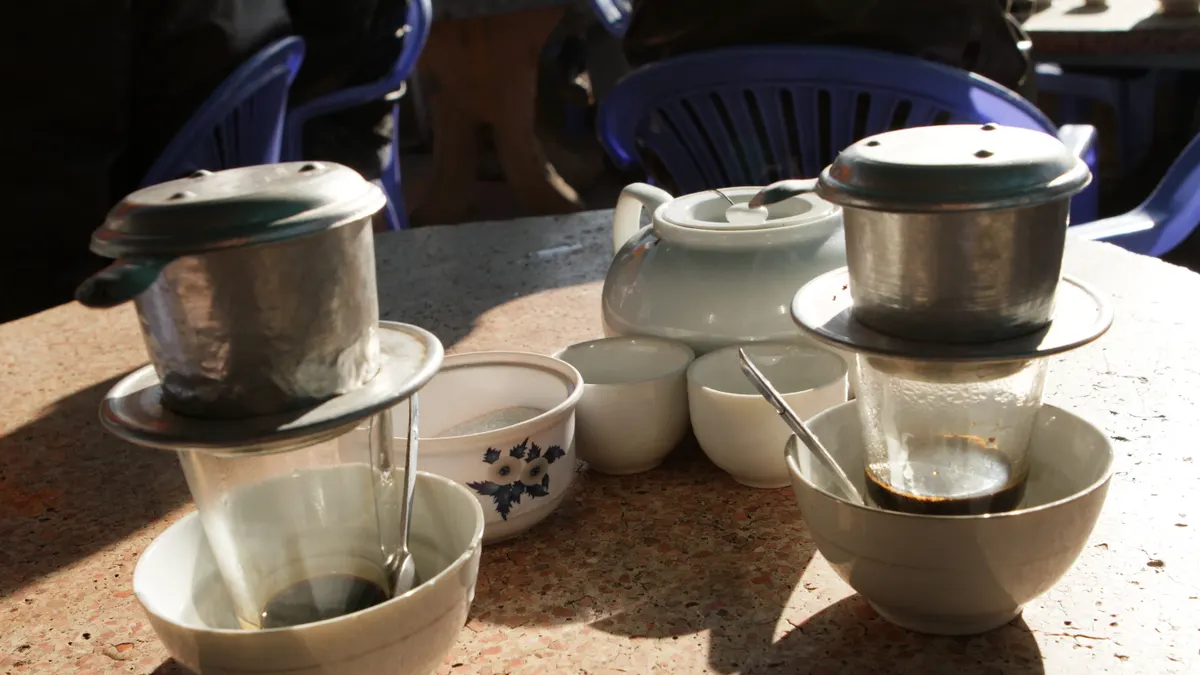
Ask for “a Vietnamese coffee” in Hanoi and in Ho Chi Minh City and you will get two different drinks made from the same beans: a small, hot, strong cup in Hanoi and a cup poured over ice in Saigon. Both start from dark-roasted robusta, which still makes up nearly 95% of Vietnam’s output in USDA forecasts for the 2025/26 crop, reported by Vietnam News in 2026. Both are dripped through a small metal filter and usually sweetened with condensed milk. What changes is the temperature, the name, the ratio of milk to coffee and the local inventions layered on top, from Hanoi’s egg coffee to Hue’s salt coffee and Saigon’s cloth-filtered brew. This guide explains those differences, why they exist and how to order each one.
What actually changes between North and South?
In the North the classic cup is small, hot and strong. Hanoians call coffee with condensed milk ca phe nau (cà phê nâu), “brown coffee”, and traditionally drink it hot, often in the morning. A 2016 VnExpress comparison found that the Hanoi cup uses more coffee and tastes more bitter, that older Hanoi drinkers did not take it with ice, and that bac xiu (bạc xỉu) was hard to find in the capital at the time (VietTimes).
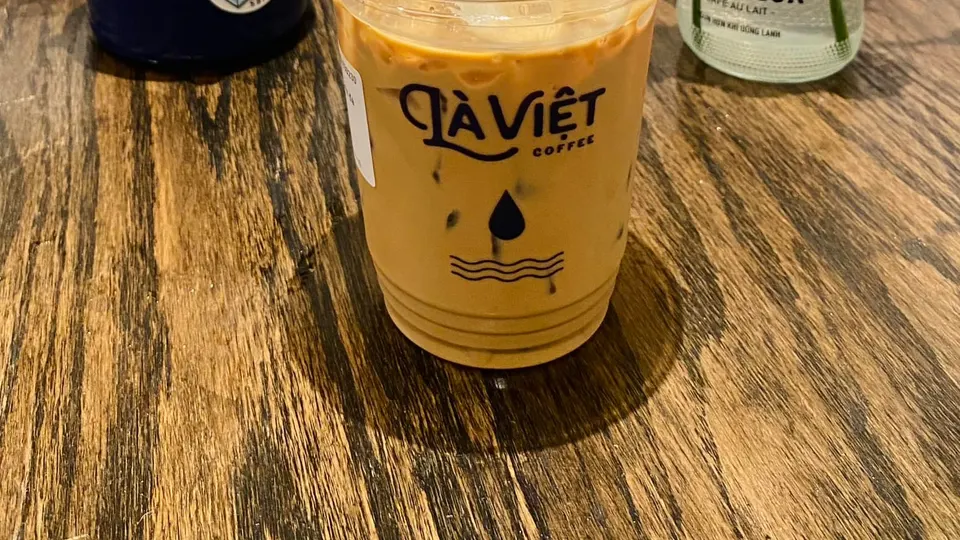
In the South the same coffee is poured over ice. Saigon has several names where Hanoi has one: cà phê sữa đá (iced coffee with condensed milk), bac xiu (mostly milk, a little coffee) and cà phê sữa tươi (with fresh milk), each a different strength. Saigonese also drink coffee at any hour and almost anywhere, from a plastic stool on the pavement to a designer cafe; the Saigon cafe culture guide covers that side of the city.
None of this is a rule. Plenty of Hanoians drink iced coffee in summer, and Saigon shops sell hot coffee too. Read the differences as each city’s default.
Vietnamese coffee by region at a glance
| Hanoi (North) | Hue (Central) | Saigon / Ho Chi Minh City (South) | |
|---|---|---|---|
| Everyday milk coffee | Ca phe nau | Ca phe sua (Cà phê sữa) | Cà phê sữa đá |
| Default temperature | Hot, often kept warm in a bowl of hot water | Hot or iced | Iced |
| Strength and milk | More coffee, more bitter | Sweet, salted cream on top for ca phe muoi (cà phê muối) | Several strengths, down to milky bac xiu |
| Signature invention | Egg coffee (ca phe trung (cà phê trứng)), 1940s | Salt coffee (ca phe muoi), 2010 | Cloth-filter ca phe vot (cà phê vợt) from Cho Lon (Chợ Lớn); bac xiu |
| Brewing | Phin | Phin | Phin, and cloth filter in old-style shops |
| Beans | Mostly dark-roasted robusta from the Central Highlands; arabica in specialty cafes | Same | Same |
Robusta and arabica: where Vietnam’s coffee grows
Coffee arrived with the French, who planted it as a commercial crop in the mid-19th century, as Vietnam’s national tourism board notes. Vietnam is now the world’s second-largest producer after Brazil, and nearly 95% of its output is robusta in US Department of Agriculture forecasts for the 2025/26 crop year, reported by Vietnam News (Vietnam News).
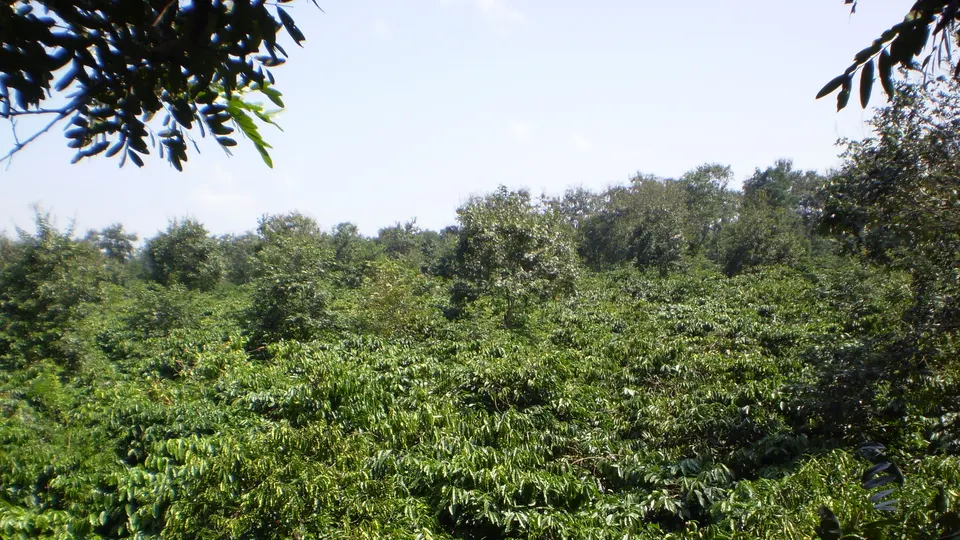
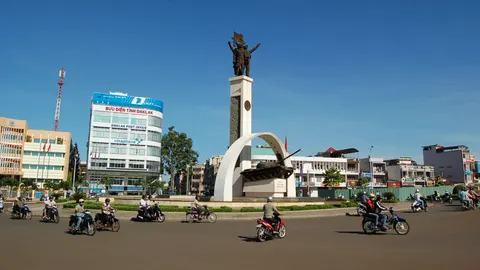
- Robusta (ca phe voi (cà phê vối)) grows mainly on the red basalt soils of the Central Highlands, above all in Dak Lak (Đắk Lắk) and Gia Lai. Its home city is Buon Ma Thuot, which has a coffee museum and a coffee festival. It makes a bold, heavy, high-caffeine cup that stands up to dark roasting and sweet milk.
- Arabica (ca phe che (cà phê chè)) needs higher, cooler ground. Around Da Lat, arabica from areas such as Cau Dat (Cầu Đất) grows above 1,500 metres, where soil, fog and the temperature range are credited with its quality. In the North, Son La (Sơn La) province had about 26,120 hectares of arabica at the end of 2025, Vietnam News reported in April 2026.
Since the provincial merger of 1 July 2025, Dak Lak includes the former Phu Yen (Phú Yên) province, Gia Lai the former Binh Dinh (Bình Định), and Lam Dong (Lâm Đồng) the former Dak Nong (Đắk Nông) and Binh Thuan (Bình Thuận); Son La is unchanged.
So a cup in Hanoi and a cup in Saigon usually start from the same highland robusta. The regional differences are made in the cafe, not on the farm.
The phin, the dark roast and the condensed milk
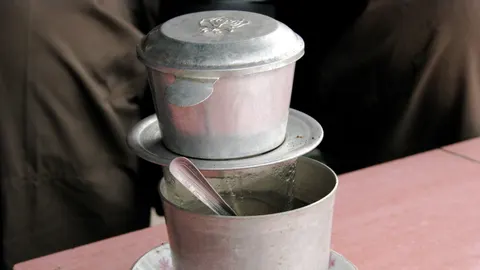
Three things make a cup taste “Vietnamese” in every region. The first is the phin, a small metal filter that sits on top of the glass. Hot water drips through the grounds by gravity, with no pressure as in an espresso machine, so a cup takes a few minutes and comes out thick and concentrated (vietnam.travel).
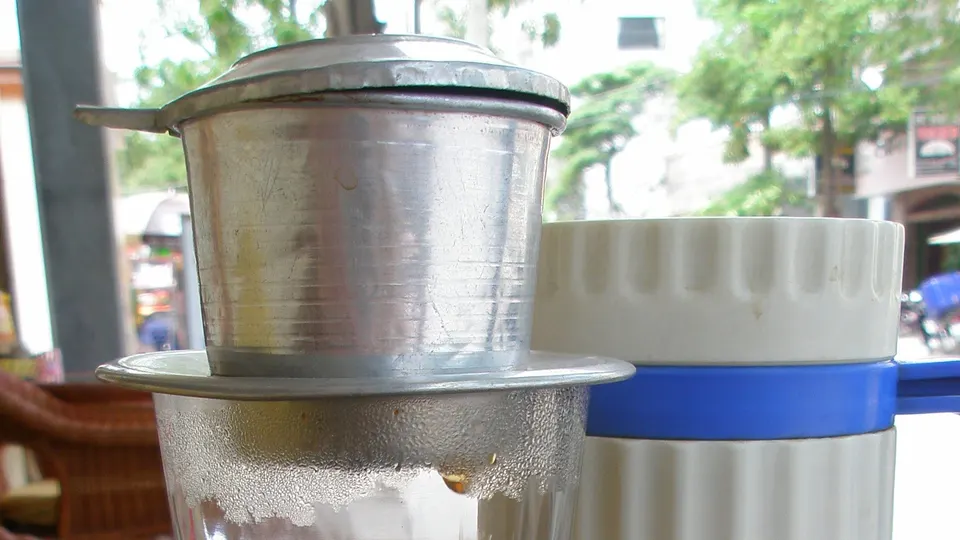
The second is a dark roast. Traditional robusta is roasted very dark, and some roasters add a little butter or cocoa for richness and a nutty smell. The third is condensed milk: in tropical Indochina fresh milk was scarce and expensive, so shelf-stable sweetened condensed milk became the standard. Its sweetness balances robusta’s bitterness, which is why black coffee (ca phe den (cà phê đen)) is also often served sweetened unless you ask.
Hanoi: hot, strong and called nau
Hanoi’s old cafes keep the coffee hot. A 2005 Cong Thuong (Công Thương) feature describes Ca phe Lam (Cà phê Lâm) on Nguyen Huu Huan (Nguyễn Hữu Huân) Street, a cafe linked with painters such as Bui Xuan Phai (Bùi Xuân Phái), serving phin coffee in porcelain bowls of boiling water to keep it warm. Tatler Asia describes Lam’s coffee as traditional, strong phin coffee, and Cafe Nhan (Café Nhân) on Hang Hanh (Hàng Hành) Street as known for very strong black coffee (Tatler Asia).
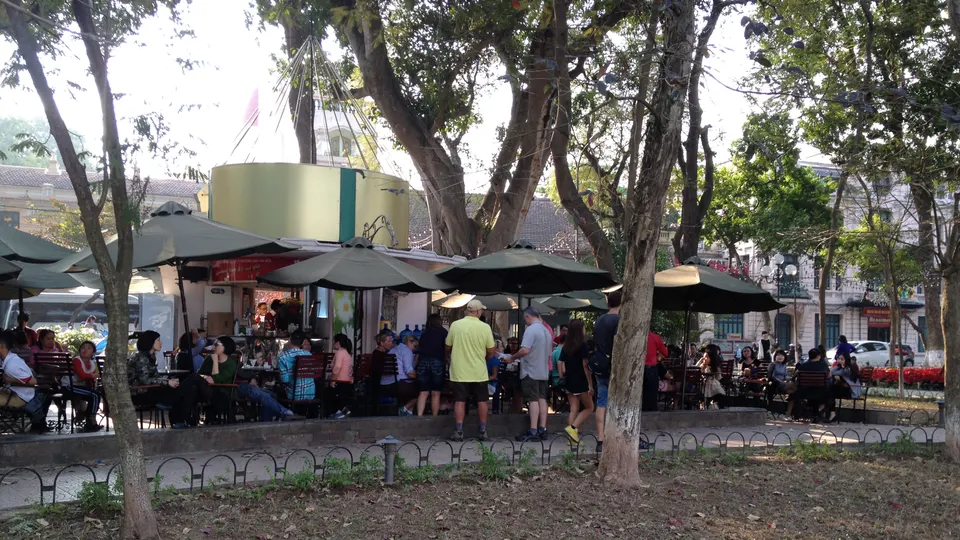
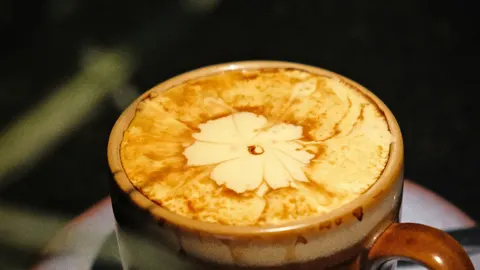
The standard Hanoi menu is short: den nong (đen nóng) or den da (đen đá) (black, hot or iced) and nau nong (nâu nóng) or nau da (nâu đá) (with condensed milk, hot or iced). The capital’s own invention is egg coffee, created at Cafe Giang (Café Giảng) in the late 1940s when milk was scarce: strong coffee under a foam of egg yolk whipped with sugar or condensed milk. It has its own guide: Hanoi egg coffee. For the city around these cafes, see the Hanoi guide.
Hue: salt coffee since 2010
Hue, the former imperial capital, gave Vietnam its newest classic. The owners of a small cafe called Ca phe Muoi at 10 Nguyen Luong Bang (Nguyễn Lương Bằng) Street, Ho Thi Thanh Huong (Hồ Thị Thanh Hương) and Tran Nguyen Huu Phong (Trần Nguyễn Hữu Phong), told CNN Travel that they came up with salt coffee in 2010 when they opened their first cafe (VnEconomy). Since then it has spread to Hanoi, Da Nang (Đà Nẵng) and Ho Chi Minh City.
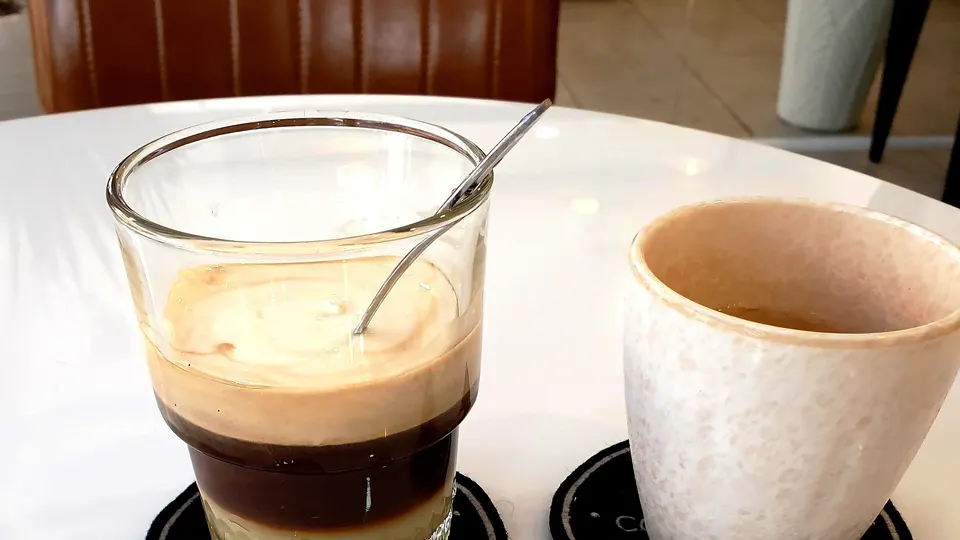
The glass is built in layers: condensed milk at the bottom, cream whipped with a little salt above it, and phin coffee dripped on top, sometimes with a pinch of cinnamon. VnExpress explains the salt as a balancer: it brings out the milk’s sweetness and softens the coffee’s bitterness. Stir before drinking, or the first sip is all salt and cream.
Saigon: iced milk coffee, bac xiu and the cloth filter
Saigon’s everyday drink is cà phê sữa đá, strong phin coffee with condensed milk poured over ice. Bac xiu goes the other way: mostly milk, with just enough coffee for flavour. Its name is commonly explained as a shortening of “bạc tẩy xỉu phé”, a phrase of the Hoa (Chinese-Vietnamese) community of Cho Lon meaning roughly “a white cup with a little coffee”; it is a popular etymology rather than a documented one.
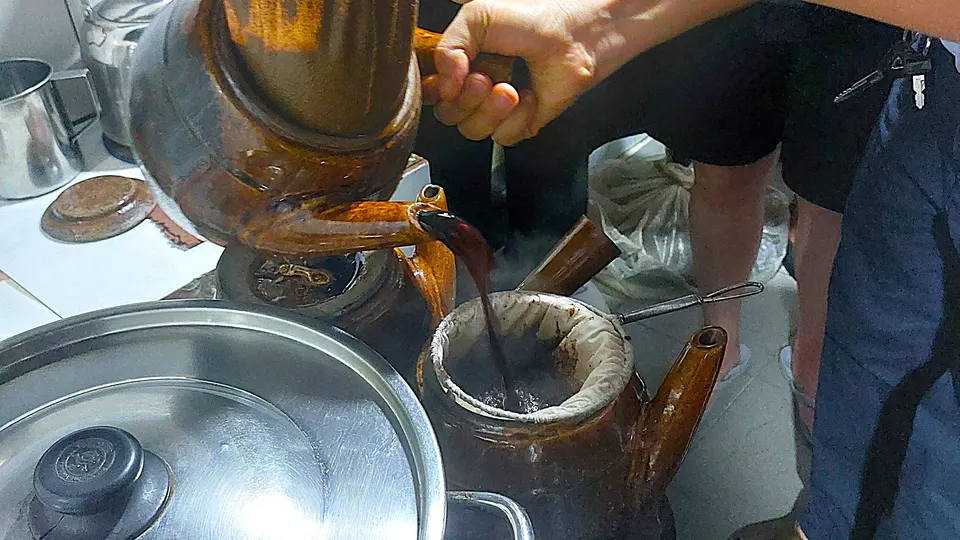
The older Saigon method is ca phe vot, “net coffee”. Coffee is steeped in boiling water, strained through a long cloth filter and kept warm in clay pots, which is why it is also called ca phe kho (cà phê kho). The style was common in the Hoa coffee shops of Cho Lon and spread to street stalls across the city by the 1990s, but only a few places keep it today. Cheo Leo Cafe (Cheo Leo Café), opened in 1938 in the alleys off Nguyen Thien Thuat (Nguyễn Thiện Thuật) Street, is the one Saigoneer calls the city’s oldest cafe (Saigoneer); Ba Lu (Ba Lù), inside Phung Hung (Phùng Hưng) market in the former District 5, has sold coffee since 1945. Tuoi Tre (Tuổi Trẻ) News notes that these shops were long the domain of older men, until social media brought in younger drinkers. More on the city: the Ho Chi Minh City guide.
Common patterns, real exceptions
The common pattern is robusta, phin and condensed milk everywhere, with the North preferring hot and strong and the South preferring iced and milky. The exceptions are growing fast.
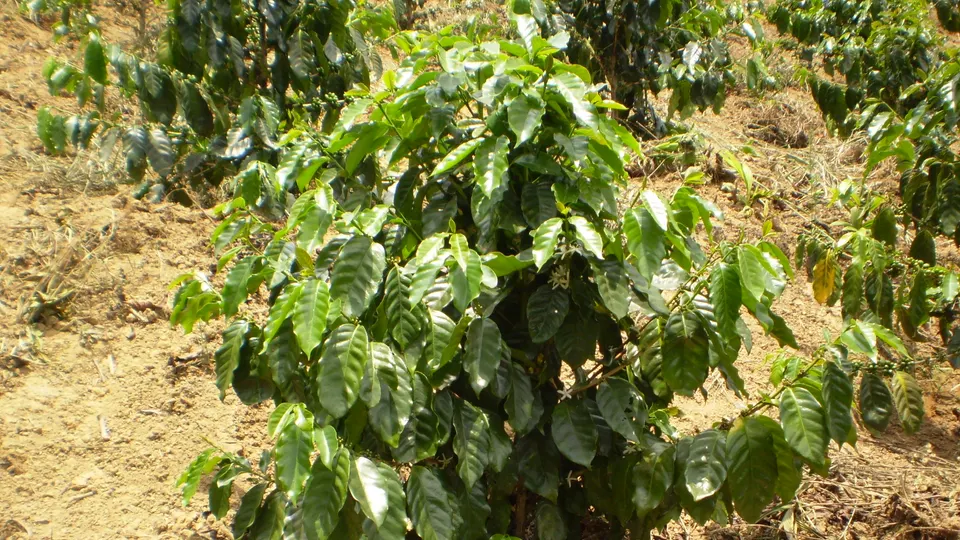
- Arabica and specialty cafes. Specialty cafes in Hanoi, Da Nang and Saigon now work with high-grade robusta and highland arabica from Da Lat (Đà Lạt). Son La is pushing its arabica abroad (Vietnam News).
- Drinks that travel. Egg coffee is sold in Saigon, salt coffee in Hanoi, and coconut coffee (coconut cream, condensed milk and robusta over ice) is a newer cafe favourite; our guide to coconut coffee and salt coffee compares the two and where they began. A drink’s home region tells you where it began, not where you can find it.
- Chains. Highlands Coffee, Phuc Long (Phúc Long), Cong Caphe and Trung Nguyen Legend now sell coffee and tea far from the cities where they began; Highlands alone had 985 stores at the end of 2025, according to Tuoi Tre News in March 2026. Our guide to Vietnamese coffee chains explains where each started and which to pick; for tea-led chains such as Katinat and Phe La, see our guide to Vietnam’s tea chains.
- Tradition vs today. Old-style shops are not frozen in time either: Saigon’s cloth-filter cafes, long frequented mainly by older men, have drawn younger customers through social media.
How to order coffee in Vietnam
The words below work in every region; the defaults behind them differ. For the full ordering vocabulary, including how to ask for less sugar, more milk or no ice, see our guide to Vietnamese coffee orders.

- Ca phe den – black coffee. Add nong (nóng) (hot) or da (đá) (iced). Ask for khong duong (không đường) if you want it unsweetened.
- Ca phe sua (South) / ca phe nau (North) – coffee with condensed milk; sua da (sữa đá) / nau da is the iced version.
- Bac xiu – mostly milk, a little coffee; a Saigon order.
- Ca phe muoi – salt coffee, Hue style.
- Ca phe trung – egg coffee, Hanoi style.
- It duong (Ít đường) / it sua (ít sữa) – less sugar / less milk. A phin cup is small and strong, so sip it slowly.
Which cup suits you? If you like espresso or strong black coffee, start with a hot den (đen) or nau (nâu) in Hanoi. If you want something cold and sweet for a hot afternoon, order cà phê sữa đá in Saigon, or bac xiu if you prefer milk to bitterness. If you like desserts, try egg coffee in Hanoi and salt coffee in Hue. For more regional food, browse the food guides.
Where to try the regional cups
Local favourite
Cà phê Lâm
Hanoi · Hoàn Kiếm ward (former Hoàn Kiếm district), Old Quarter
60 Nguyễn Hữu Huân Street
One of the Old Quarter's long-established cafés, dating from the early 1950s and linked with Hanoi painters and musicians such as Bùi Xuân Phái and Văn Cao. A place to taste the traditional hot, strong phin coffee of the North.
Order: Cà phê đen nóng (hot black) or cà phê nâu nóng (hot coffee with condensed milk).
Recommended by: VietNamNet (2024), Tatler Asia (2025) · checked November 2026
Local favourite
Cà phê Muối
Huế · Central Huế
10 Nguyễn Lương Bằng Street
The small café credited by Vietnamese press as the birthplace of salt coffee. Its owners, Hồ Thị Thanh Hương and Trần Nguyễn Hữu Phong, say they came up with the drink in 2010.
Order: Cà phê muối: coffee and condensed milk under a layer of salted cream. Stir before drinking.
Hundreds of cafés across Vietnam now sell 'cà phê muối'. This card means the original shop at 10 Nguyễn Lương Bằng, Huế.
Recommended by: VietNamNet (2023), VnEconomy (2024) · checked November 2026
Local favourite
Cheo Leo Café · Cà phê Cheo Leo
Ho Chi Minh City · Bàn Cờ area (former Ward 2, District 3)
109/36 Nguyễn Thiện Thuật Street, down an alley
A cloth-filter (cà phê vợt) café opened in 1938 by the owner's father and still at its original spot; it brews in cloth filters and clay pots.
Order: Cà phê sữa đá or bạc xỉu made with cloth-filtered coffee.
Recommended by: Saigoneer (2018), Đại Đoàn Kết (2025), Tuổi Trẻ News (2022) · checked November 2026
Addresses and details can change; check before you go. We do not accept payment for listings.
Frequently asked questions
Which coffee should I order in Hanoi, Hue and Saigon?
In Hanoi, order a hot ca phe nau (coffee with condensed milk) or the city's egg coffee. In Hue, try salt coffee (ca phe muoi), and in Saigon order an iced ca phe sua da, or bac xiu if you want more milk than coffee.
What is bac xiu?
Bac xiu is a Saigon drink that is mostly milk with a little coffee, usually iced. The name is commonly explained as a shortening of a phrase from the Hoa (Chinese-Vietnamese) community of Cho Lon meaning 'a white cup with a little coffee'.
Is Vietnamese coffee stronger than other coffee?
It usually tastes stronger because it is mostly robusta, roasted dark and brewed slowly in a phin. The result is a small cup with a lot of caffeine.
Where can I still drink cloth-filtered coffee in Saigon?
Cheo Leo Cafe, opened in 1938 in an alley at 109/36 Nguyen Thien Thuat Street, still brews ca phe vot in cloth filters and clay pots; Dai Doan Ket reported in February 2025 that it is still at its original spot. Ba Lu, inside Phung Hung market in the former District 5, has sold coffee since 1945.
Can I get unsweetened coffee in Vietnam?
Yes. Order ca phe den (black coffee) and ask for khong duong (no sugar); otherwise black coffee is often served sweetened.
Key sources
- The secret art of Vietnamese coffee · Vietnam National Authority of Tourism (vietnam.travel)
- Việt Nam cements status as world's No.2 coffee producer, robusta powerhouse · Việt Nam News, 14 May 2026
- Arabica coffee ambitions brew in Sơn La · Việt Nam News, 21 Apr 2026
- Cà phê arabica Đà Lạt 'trình làng' thế giới · Sài Gòn Giải Phóng, 14 Aug 2015
- Khác biệt văn hóa uống cà phê của Hà Nội và Sài Gòn · VietTimes (from VnExpress), 27 Jan 2016
- 4 Hanoi legendary coffee shops · Tatler Asia, 30 Aug 2025
- Vì sao cà phê muối Việt Nam nổi tiếng toàn thế giới? · VnEconomy, 6 Jul 2024
- Hẻm Gems: 80 Years of Cà Phê Vợt in Saigon's Oldest Cafe · Saigoneer, 29 Apr 2018
All 19 sources and further reading
- A taste of Vietnam: The story behind its beloved coffee culture · Vietnam National Authority of Tourism (vietnam.travel)
- Cà phê phố – 'nốt nhạc của thời gian' · Tạp chí Công Thương, 9 Aug 2005
- Experience long-established cafés in Hanoi's Old Quarter · VietNamNet, 29 Apr 2024
- Salt coffee, a Hue delicacy, conquers Hanoi taste buds · VietNamNet, 20 Sep 2023
- Cà phê muối xứ Huế · VnExpress, 3 Sep 2020
- Uống cà phê vợt, nhớ Sài Gòn xưa · Báo Pháp Luật Việt Nam, 7 May 2023
- Thơm mãi cà phê vợt · Đại Đoàn Kết, 9 Feb 2025
- Net-filter coffee: a testament to Saigon's rich coffee tradition · Tuổi Trẻ News, 15 Jun 2022
- Vì sao gọi là bạc xỉu? · CafeF (from Phụ nữ mới), 5 Aug 2026
- Highlands Coffee nears 1,000 stores, posts over $41mn profit as IPO plans advance · Tuổi Trẻ News, 15 Mar 2026
- Names and administrative centers of 34 provinces and centrally-run cities specified · Vietnam Government News (baochinhphu.vn), 15 Apr 2025
Keep exploring
 North Vietnam · Food Hanoi Egg Coffee (Ca Phe Trung): Where to Drink It + Recipe Where to drink Hanoi egg coffee (ca phe trung) in 2026: Cafe Giang, Cafe Dinh and Giang Yen Phu compared, cup prices, a 5-minute recipe and raw-egg safety.
 Central Vietnam · Travel Buon Ma Thuot (Buôn Ma Thuột): What to Do and When to Go Planning Buon Ma Thuot? The World Coffee Museum, a coffee farm, E De longhouses, Buon Don without elephant rides, the March 2027 festival and how to get there.
 South Vietnam · Culture Saigon Coffee Culture: Which Cafe to Choose and When How Saigon drinks coffee: sidewalk stools, ca phe bet by Notre-Dame, cloth-filter ca phe vot, hammock cafes, the Cafe Apartment, chains, and cafe etiquette.
 North · Central · South · Food How to Order Coffee in Vietnam: Bac Xiu vs Ca Phe Sua Da How to order coffee in Vietnam: ca phe sua da vs bac xiu, nau in Hanoi vs sua in Saigon, den da, egg coffee, asking for less sugar and what a cup costs in 2026.
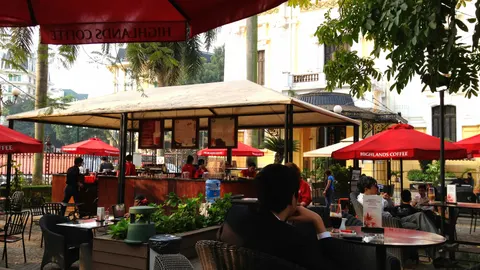 North · Central · South · Culture Vietnam Coffee Chains: Highlands, Cong or Phuc Long? Vietnam coffee chains compared: Highlands, Cong Caphe, Phuc Long and Trung Nguyen Legend, where each began, signature drinks, vibe, prices and which to pick.