North Vietnam · Food
Hanoi Egg Coffee (Ca Phe Trung): Where to Drink It + Recipe
Where to drink Hanoi egg coffee (ca phe trung) in 2026: Cafe Giang, Cafe Dinh and Giang Yen Phu compared, cup prices, a 5-minute recipe and raw-egg safety.
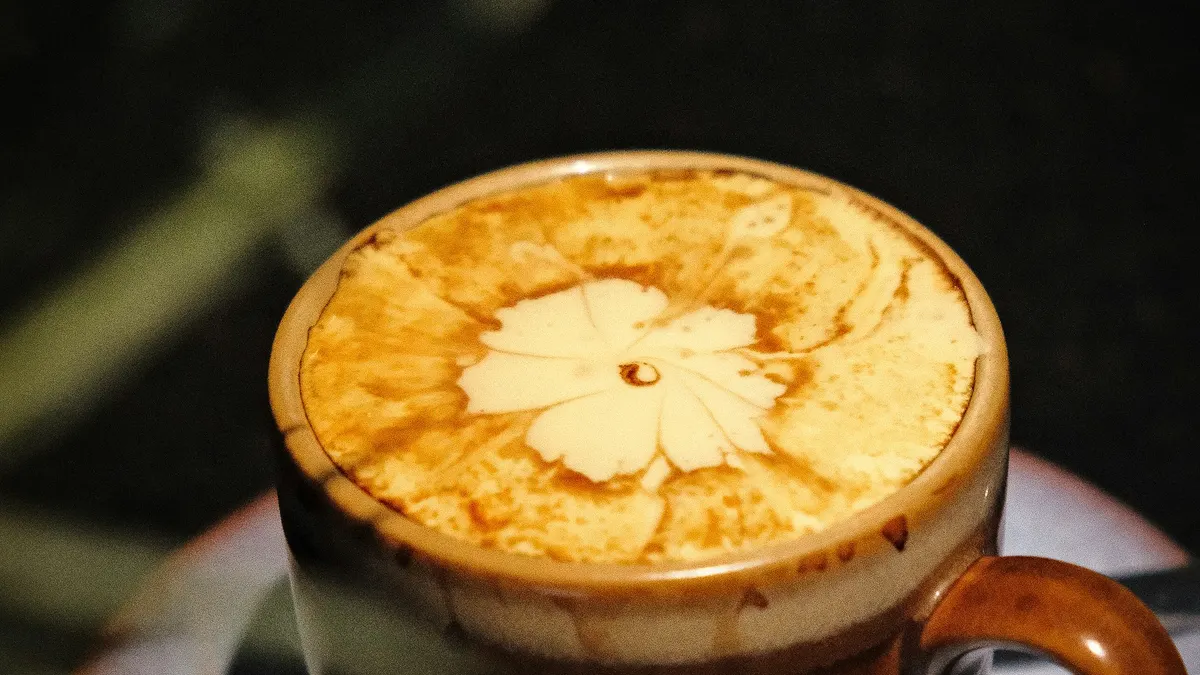
The best places to drink egg coffee in Hanoi are still the three cafes run by the founder’s family near Hoan Kiem Lake: Cafe Giang on Nguyen Huu Huan street for the original, Cafe Dinh on Dinh Tien Hoang street for the lake view, and Giang Yen Phu for a quieter cup. As of June 2026, VnExpress’s Hanoi travel guide put a cup from 25,000 dong and still named Dinh and Giang first among the places to try it. At home it takes about five minutes with one egg yolk, condensed milk and a strong coffee, as the recipe card below shows.
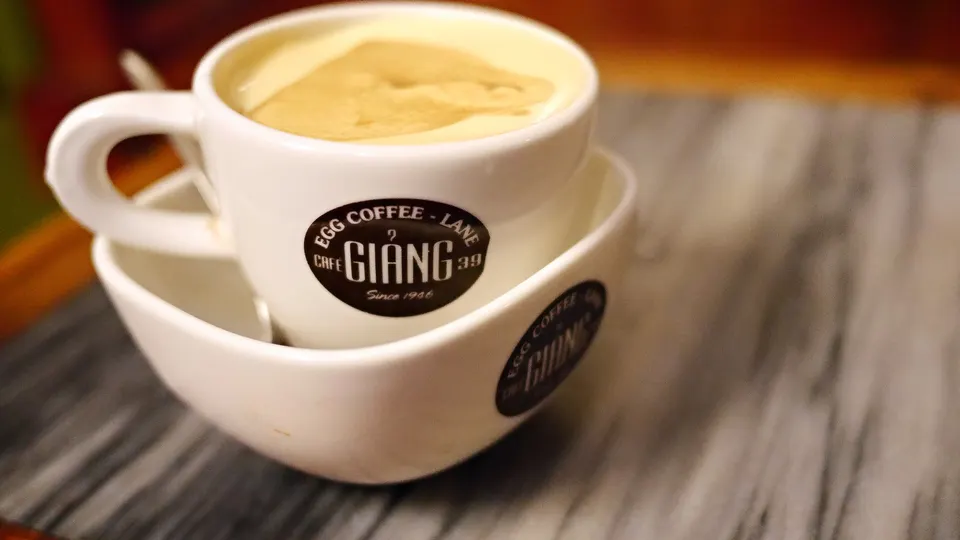
Egg coffee (ca phe trung (cà phê trứng)) is Hanoi’s best-known coffee drink: a small cup of strong black coffee under a thick layer of egg yolk whipped with sugar or condensed milk until it is pale, glossy and almost custard-like. It is usually served hot, often with the cup standing in a bowl of hot water, and you can sip it like a coffee or spoon the foam like a dessert. Ca phe (Cà phê) means coffee and trung (trứng) means egg. The drink is credited to one Hanoi family, the descendants of a hotel bartender called Nguyen Van Giang (Nguyễn Văn Giảng), and their cafe (café) still pours it in Hanoi’s Old Quarter (VnExpress).
What is Hanoi egg coffee, and what does it taste like?
Think of a warm, spoonable, tiramisu-like cream floating on a short, bitter Vietnamese coffee. The foam is sweet and rich; the coffee underneath is dark and strong, and as you drink, the two meet. A Vietnam (Việt Nam) News writer who tried it in Hanoi found it lighter than she expected and only moderately sweet, and a visitor she spoke to was surprised that it had “no fishy egg smell”, which is exactly what a good cup should achieve (Vietnam News). An August 2026 Thanh Nien (Thanh Niên) report on American travel coverage describes the foam as custard-like and repeats the common comparison with “liquid tiramisu”.
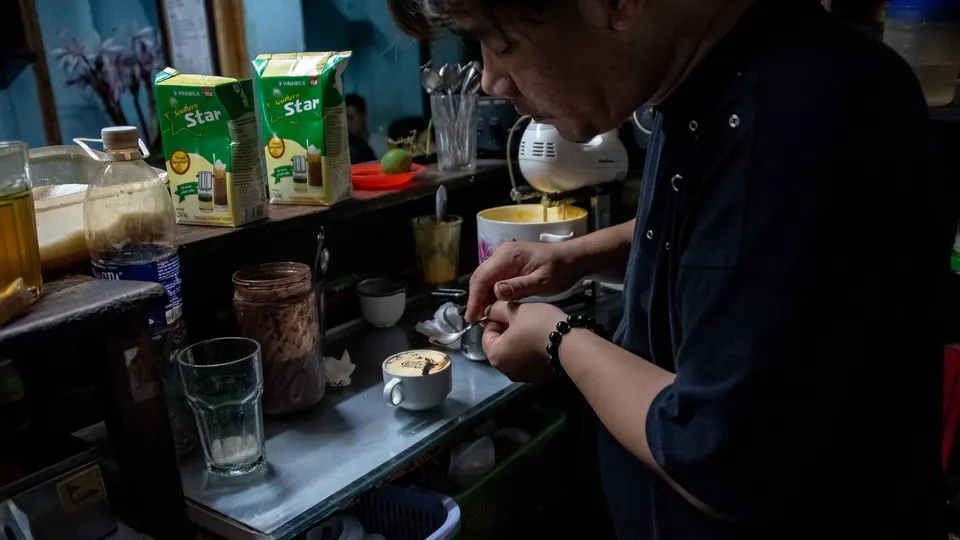
It is a small drink, not a large milky coffee, and it is meant to be lingered over. A Hanoi bartender quoted in the same Thanh Nien report says the authentic experience is less about the recipe than about slowing down in the city.
What goes into a cup of ca phe trung?
The basic idea is simple: egg yolk takes the place of milk. The details are each cafe’s secret.
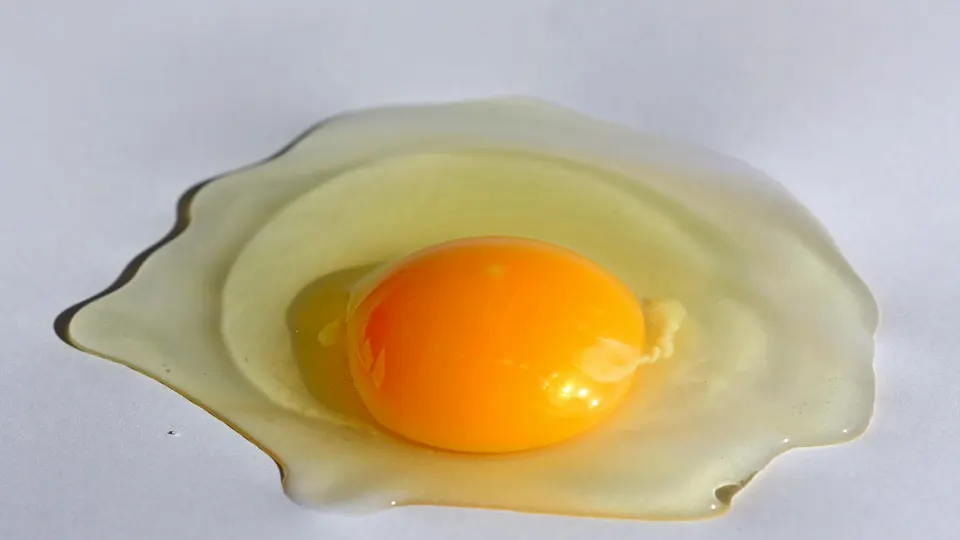
- The foam. Fresh egg yolks are whipped with sugar and milk or sweetened condensed milk until thick and creamy. Members of the Giang (Giảng) family have named butter and even cheese among their ingredients, alongside “secret” additions they do not disclose. The hard part, the family says, is getting a smooth, rich foam with none of the raw smell of egg (Hanoimoi).
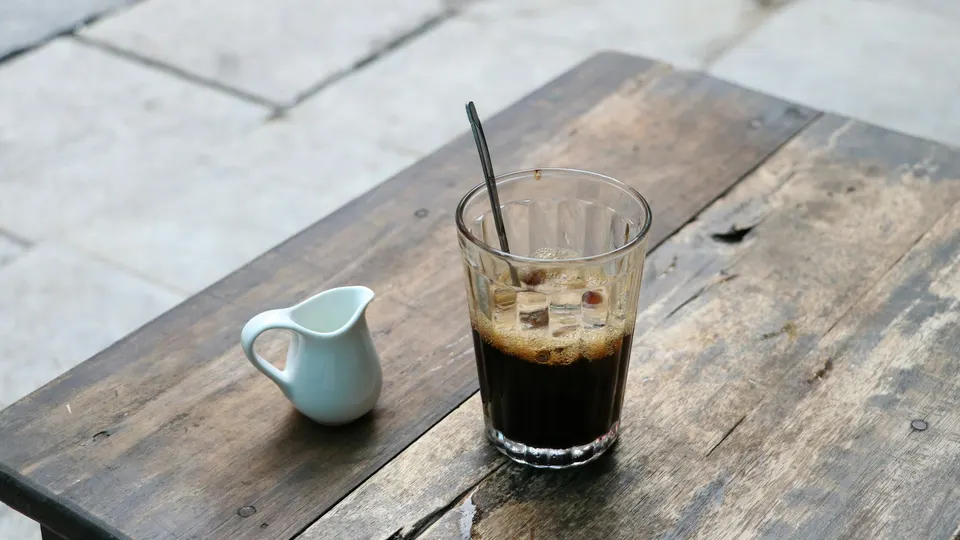
- The coffee. Strong coffee is brewed in a phin, the small metal drip filter used all over Vietnam. Hanoi’s traditional cafes (cafés) use Vietnamese beans, typically robusta; the Giang family roasts and grinds its own, and Cafe Dinh (Café Đinh) says it uses robusta from Buon Ma Thuot in the Central Highlands.
- Putting it together. In most descriptions the hot coffee goes into a small cup and the foam is spooned or poured on top, so it sits as a thick cap. Cafes may finish it with a dusting of cocoa or a simple drawing in chocolate.
- Timing. At the family’s Yen Phu (Yên Phụ) branch the eggs are whipped to order on quiet days, and the owners say whipped egg has to be served straight away, because if it stands it turns flat and starts to smell of egg.
| Egg coffee at a glance | |
|---|---|
| Vietnamese name | Ca phe trung (“egg coffee”) |
| Home city | Hanoi, especially the Old Quarter around Hoan Kiem (Hoàn Kiếm) Lake |
| Base | Strong coffee from a phin drip filter, usually Vietnamese robusta |
| Topping | Raw egg yolk whipped with sugar and milk or condensed milk; some cafes add butter |
| Classic serving | Hot, in a small cup, often set in a bowl of hot water |
| Common variants | Iced egg coffee, egg cacao, matcha, rum, egg beer |
| Credited creator | Nguyen Van Giang (family account), 1940s |
Where did egg coffee come from?
The story told by the Giang family, and repeated in Vietnamese and international press, goes like this. Nguyen Van Giang worked as a bartender at the Metropole hotel in Hanoi (today the Sofitel Legend Metropole). In the 1940s milk was scarce, so he whipped egg yolk as a substitute. Guests liked the drink, and he left the hotel to sell it himself, founding Cafe Giang (Café Giảng) in 1946. His family says he was improvising on the cappuccino; a son told AFP in 2019 that egg coffee was a cheaper alternative to French-colonial cappuccinos made with cow’s milk, and that “poor people could also drink egg coffee because they had lots of chickens”.
The details shift between tellings, which is why it is best read as family history rather than documented fact:
- The year. Most accounts give 1946 for the cafe, with the drink itself dated to “the 1940s”, “1946–1947” or “the late 1940s”. A 2025 MICHELIN Guide feature dates the drink to 1946 at the Metropole but says Giang opened his cafe in the 1960s.
- The missing milk. Some accounts speak of a shortage of fresh milk; another son told VOV it was condensed milk that was hard to find.
- The address. The cafe has moved. According to VnExpress, the first shop opened in 1946 on Cau Go (Cầu Gỗ) street, stopped trading in hard times, reopened on Hang Gai (Hàng Gai) street after the economic reforms of the late 1980s, and has been at 39 Nguyen Huu Huan (Nguyễn Hữu Huân) since 2007 (VnExpress). All three are in or beside the Old Quarter, and our guide to Hanoi’s Old Quarter streets explains how that tangle of trade streets grew.
What every source agrees on is that the drink grew out of scarcity and that one family’s cafe made it famous. The Giang children and grandchildren still run Cafe Giang and its sister cafes, each claiming to keep the founder’s recipe.
How do you order and drink egg coffee in Hanoi?
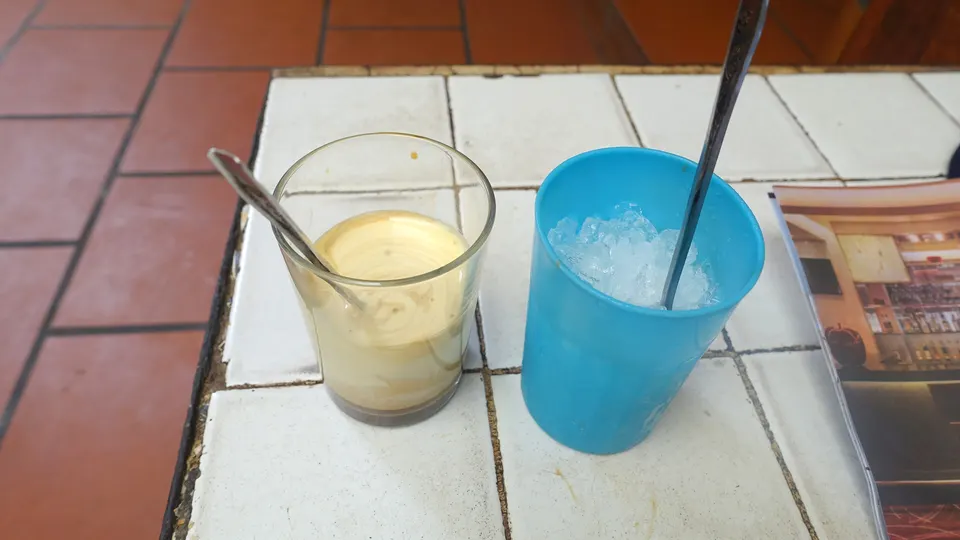
Ask for ca phe trung (hot is the default; nong (nóng) means hot, da (đá) means iced). In a traditional cafe it arrives in a small cup, often sitting in a bowl of hot water to keep the coffee warm to the last sip, with a teaspoon either standing in the foam or on the saucer.
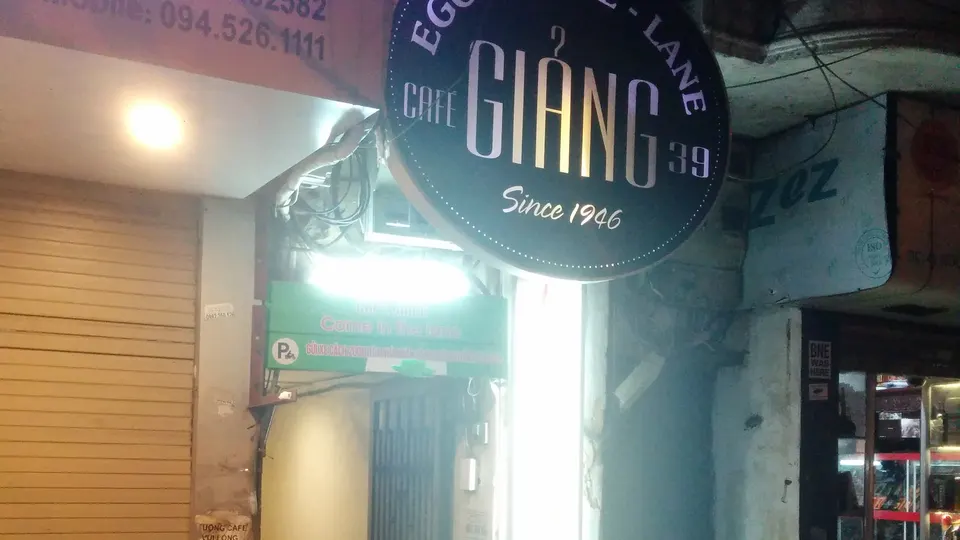
- Spoon first, or stir. There is no single rule. VnExpress describes eating some of the foam first with the small spoon, like a starter, then drinking the coffee through it; at Giang Yen Phu (Giảng Yên Phụ) regulars stir from the bottom so the foam and coffee mix.
- Drink it hot and fresh. Cafes stress this: a cup left to cool loses its texture, and a Dan Tri (Dân Trí) report notes that egg coffee at Cafe Dinh must be drunk hot so that it does not taste “fishy”.
- Expect a small cup. At Cafe Dinh it comes in a cup that fits in the palm of your hand and without the hot-water bowl used at Giang.
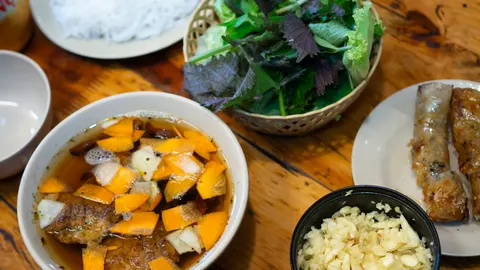
- Make a morning of it. Egg coffee fits neatly after a Hanoi breakfast or lunch of bun cha or a bowl of pho (phở), and before or after a slow walk round the lake.
Egg coffee is only one line on a Vietnamese cafe menu; for the others and how to ask for them, see our guide to ordering coffee in Vietnam.
Where should you drink egg coffee in Hanoi?
Start with the cafes run by the founder’s family, all close to Hoan Kiem Lake: Cafe Giang for the original, Cafe Dinh for the lake view, and Giang Yen Phu for a quieter, more local cup. Each pours the family recipe in its own way, and many other Old Quarter cafes now sell egg coffee too, from old-style rooms to hotel bars.
| Cafe Giang | Cafe Dinh | Giang Yen Phu | |
|---|---|---|---|
| Address | 39 Nguyen Huu Huan, down a narrow alley | 13 Dinh Tien Hoang (Đinh Tiên Hoàng), up a flight of stairs | 106 Yen Phu |
| Family link | The founder’s cafe, at this address since 2007 and run by his youngest son | Opened by his daughter and run by her family | Opened in 2006 by his second son |
| Setting | The best-known cafe, busy all year | A small, plain upstairs room looking over Hoan Kiem Lake | Open-air seats under trees, no music, mostly Hanoi regulars |
| How it comes | Small cup in a bowl of hot water | Palm-sized cup, without the hot-water bowl | Yolk whipped to order on quiet days; regulars stir from the bottom |
| Also on the menu | Egg beer, egg cacao | Egg cacao, iced egg coffee | Mung bean, matcha, cacao and rum egg drinks, egg beer |
| Go for | The original story | The lake view | A local, unhurried cup |
The cards below cover Cafe Giang and Cafe Dinh, plus one cafe in Saigon.
What does it cost, and where else can you drink it?
At Cafe Giang a drink cost about 40,000–55,000 dong in December 2024, Nguoi Quan Sat reported, and VnExpress put Giang Yen Phu at 30,000–60,000 dong a cup in September 2023; check the menu, as prices change. The family also opened a shop in Yokohama, Japan, in 2018. At the other end of the scale, a Hanoi hotel restaurant, F29 at the Dolce by Wyndham Hanoi Golden Lake, sells an egg coffee topped with 24-carat gold leaf for 150,000 dong, a novelty based on the Giang-style recipe, Dan Tri’s English service reported in October 2025.
For a more recent benchmark, VnExpress’s Hanoi travel guide, updated in June 2026, says a cup of egg coffee in Hanoi costs from 25,000 dong and names Dinh and Giang among the best-known places to drink it. Tourist towns can charge more: in Hoi An’s Old Town a visiting couple paid 65,000 dong a cup for egg coffee and salt coffee, Znews reported in October 2026.
Egg coffee has also travelled south. In Ho Chi Minh City, Little Hanoi Egg Coffee, with three branches in the former District 1, serves the classic Hanoi version, and the New York Times picked it among the city’s best cafes in 2024, VnExpress International reported; see the card below. It is a good stand-in if your trip skips Hanoi, though the drink is still at its most traditional in the Old Quarter.
Food-ranking site TasteAtlas placed egg coffee eighth among Southeast Asia’s best drinks in December 2025, VOV reported, two places behind Vietnamese black coffee. In TasteAtlas’s Top 100 Asian Beverages it ranked 35th with a score of 4 out of 5, Znews reported in September 2026, behind iced coffee with condensed milk (10th) and black coffee (18th).
Iced, cacao, egg beer: which variants are worth knowing?
Hot egg coffee is the original, but the family cafes themselves have long since branched out.
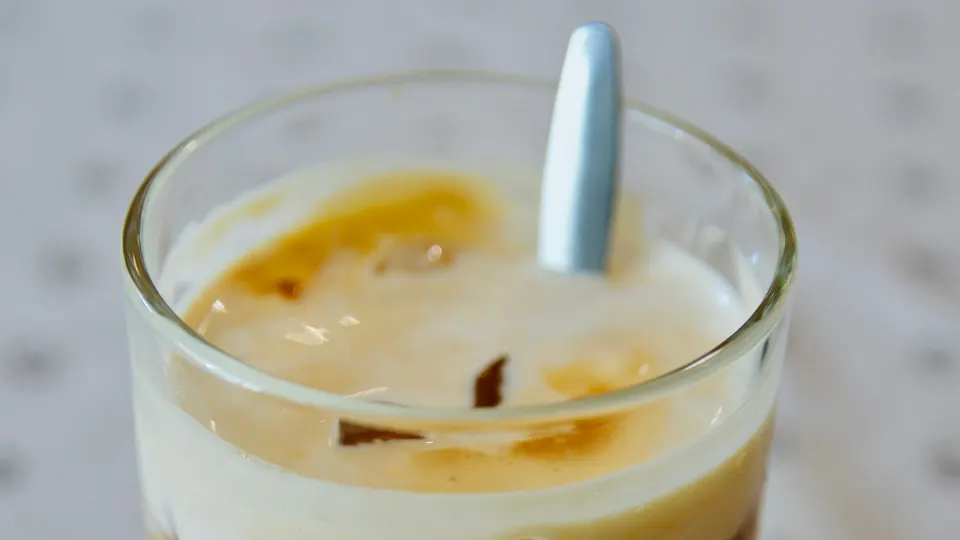
- Iced egg coffee (cà phê trứng đá). The same foam over coffee and ice. Vietcetera compares the cold version to ice cream or tiramisu, and notes that egg coffee has spread to Ho Chi Minh City in many variations.
- Egg cacao (cacao trung) and other bases. Cafes replace the coffee with cacao, matcha or mung bean for people who want the foam without caffeine or bitterness. Cafe Dinh is known for its egg cacao.
- Flavoured egg coffee. Giang’s menu has carried versions with rum, cinnamon, mung bean, green tea and chocolate.
- Egg beer (bia trung). Cold beer topped with yolk whipped with sugar and a little butter. Cafe Giang’s owner told AFP in 2019 that he invented it in 1999 out of curiosity (Malay Mail).
- Luxury takes. Hotels have dressed it up: the Sofitel Legend Metropole now makes its own version with vodka and vanilla syrup, according to the MICHELIN Guide, and VnExpress has reported a gold-leaf egg coffee at a Hanoi hotel restaurant. These are novelties built on the original rather than part of the tradition.
How is egg coffee different from other Vietnamese coffee?
Vietnamese coffee is mostly built on the same base: dark-roasted robusta dripped through a phin. What changes is what goes on top, and that is where regions show through (for Hanoi’s ca phe nau (cà phê nâu), Hue’s salt coffee and Saigon’s bac xiu (bạc xỉu), see Vietnamese coffee by region).
| Ca phe trung (egg coffee) | Ca phe sua da (iced coffee with condensed milk) | |
|---|---|---|
| Linked with | Hanoi’s Old Quarter | Vietnam’s cities; strongly associated with Saigon |
| Coffee | Strong phin coffee, usually robusta | Strong phin coffee, mainly robusta |
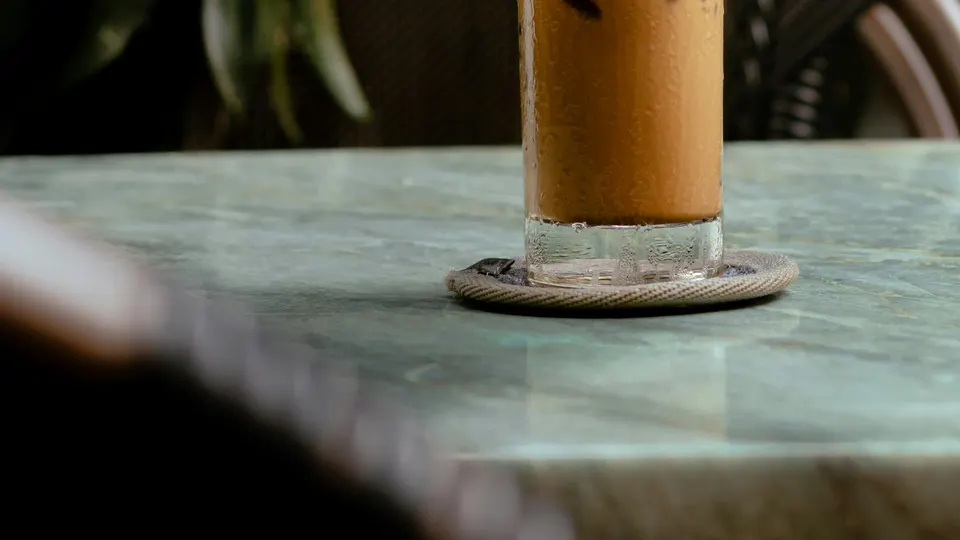
| What goes with the coffee | Raw egg yolk whipped with sugar and milk or condensed milk, as a foam on top | Sweetened condensed milk, then crushed ice |
| Served | Hot, often in a bowl of hot water; iced versions now common | Over ice |
| Texture | Thick, spoonable foam on a short coffee | Smooth, sweet and cold |
| Why it exists | Milk was scarce in 1940s Hanoi, so yolk replaced it | Fresh milk was scarce and costly in the tropics, and condensed milk kept |
Vietnam’s national tourism portal explains that sweetened condensed milk became the standard because fresh milk was scarce and expensive in the tropical climate, and that its sweetness balances the bitterness of robusta (Vietnam Tourism). Egg coffee answers the same shortage in a different way. If you are travelling on to Ho Chi Minh City you will find egg coffee there too, but the everyday Southern order is still an iced coffee with condensed milk. In Hue, the portal points to salt coffee (ca phe muoi (cà phê muối)), which it calls a “savoury turn” on the same base.
How do you make egg coffee at home?
You need nothing more than an egg, sugar, strong coffee and a whisk. Two published recipes show how far the method can stretch: a simple home cup described by Hanoi writer Vu Cong Chien (Vũ Công Chiến) in a book excerpt published by Znews in January 2024, and the Sofitel Legend Metropole’s hotel version printed by the MICHELIN Guide in April 2025. The recipe card further down follows a third, from cookbook author Andrea Nguyen’s Ever-Green Vietnamese (2023, reprinted by Food52): one yolk beaten with 3 tablespoons of condensed milk for about 2 minutes with a hand mixer, spooned over half a cup of strong coffee.
| Simple home cup (Vu Cong Chien, Znews 2024) | Metropole hotel version (MICHELIN Guide 2025) | |
|---|---|---|
| Coffee | Black coffee brewed in a phin | 10 g Vietnamese robusta, brewed strong in a dripper |
| Egg | 1 yolk | 3 yolks |
| Sweetener | About a small spoonful of white sugar per yolk; no milk | 10 g condensed milk and 10 ml vanilla syrup made with Vietnamese brown sugar |
| Extra | None | 10 ml vodka |
| Whisking | By hand with a bamboo whisk, the longer the better | Until light, airy and very smooth |
| Putting it together | Pour the coffee into the whipped yolk and stir gently | Spoon or pour the foam over the hot coffee |
| Keeping it warm | Not mentioned | Cup set in a bowl of hot water or over a small candle |
- Brew a small, strong coffee. A phin filter and dark-roasted robusta give the classic bitter base; keep it hot.
- Whisk the yolk. Beat one fresh yolk with sugar, or with condensed milk as most Hanoi cafes do, until it turns thick and pale. Vu Cong Chien says the longer you whisk, the fluffier and better the drink, and prefers a hand whisk to a machine, although many cafes now use machines.
- Combine. Most cafes spoon the foam on top of the coffee so it sits as a cap; Vu Cong Chien pours the coffee into the whipped yolk instead. Either works.
- Serve at once. Set the cup in a bowl of hot water and drink it straight away. The Giang family’s Yen Phu branch says whipped egg turns flat and smells of egg if it stands.
- Choose the egg with care. Vu Cong Chien writes that whisking “cooks” the yolk and takes away its raw smell, but we found no food-safety source that says whisking makes raw egg safe. If you are serving anyone pregnant, very young, elderly or unwell, use pasteurised eggs (see the next section).
Is the raw egg yolk safe to drink?
This is a fair question, and the honest answer is that the foam is raw egg. The yolk is whipped with sugar and milk, not cooked, and while the hot coffee and the bowl of hot water keep the drink warm, none of the sources we checked says that this heats the foam enough to make it safe in the way cooking does.
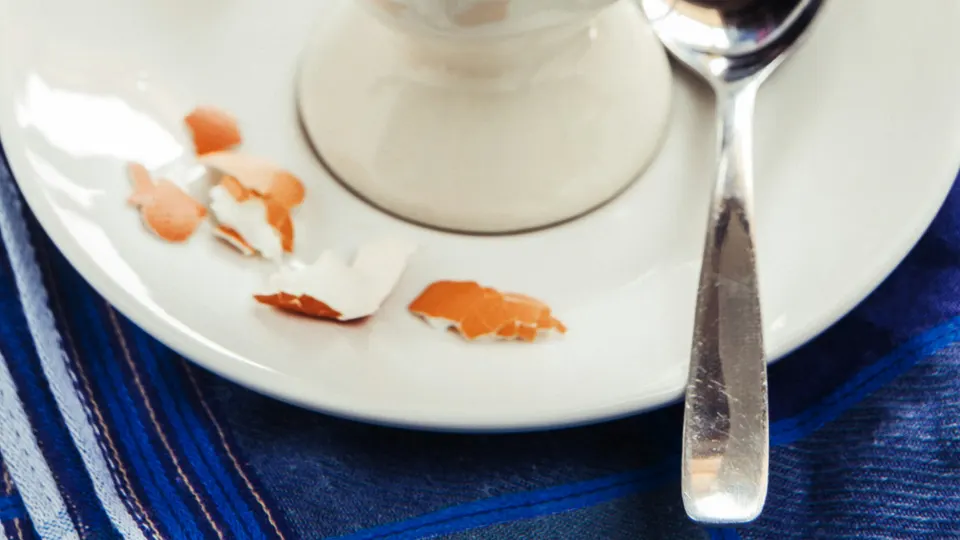
Food-safety authorities treat raw-egg foods as higher-risk:
- Eggs can carry Salmonella. Citing the WHO and the US FDA, Znews notes that even fresh, clean, uncracked eggs can contain Salmonella, and that warm storage lets the bacteria multiply.
- Raw-egg drinks and desserts are on the high-risk list. Guidance for food businesses from Australia’s NSW Food Authority, published in Vietnamese as well as English, lists raw-egg drinks and uncooked desserts such as tiramisu and mousse among common high-risk products, and advises businesses to use safer alternatives such as pasteurised egg where they can (NSW Food Authority).
- Some people should avoid it. The Saudi Food and Drug Authority advises everyone against raw or undercooked egg, and singles out people with health problems, the very young, the elderly and pregnant women as most vulnerable.
- The hot-water bowl is for warmth. Some travel guides advise choosing cafes that warm the foam over a water bath. Cafes use the bowl to keep the coffee warm, and we found no source showing that it heats the yolk enough to make it safe. Even Andrea Nguyen’s home recipe suggests pasteurised or coddled eggs.
What this means in practice: egg coffee is drunk in large numbers (Cafe Giang alone told Hanoimoi (Hànộimới) it serves about 1,000 cups a day), and the traditional cafes say (cafés say) they whip their eggs fresh and serve the foam at once. If you are pregnant, immunocompromised, or ordering for a young child, choose a drink without egg, or ask whether the cafe uses pasteurised eggs (trung thanh trung (trứng thanh trùng)). We found no published food-safety figures specific to egg coffee.
How has egg coffee changed since 1946?
Tradition. For most of its history egg coffee spread by word of mouth: the Giang family told Hanoimoi that it did little advertising and that customers did the rest. Giang’s children divided the business: the youngest son, Nguyen Tri Hoa (Nguyễn Trí Hòa), runs the Nguyen Huu Huan cafe (Nguyễn Hữu Huân café), a son opened Giang Yen Phu in 2006, and a daughter opened Cafe Dinh, now run by her son.

Today. The drink has become one of Hanoi’s calling cards. During the US–North Korea summit in Hanoi in February 2019 the Giang family says it served nearly 3,000 cups a day at the international press centre, and the cafe’s owner told Tuoi Tre (Tuổi Trẻ) that orders for egg coffee rose from about 70% to “99.9%” of customers afterwards. Hanoi’s city government has used it as a featured drink for official delegations. In 2018 Cafe Giang opened its first branch outside Vietnam, in Yokohama, Japan (VOV), and by 2026 a Hanoi bartender could tell Thanh Nien that egg coffee is found “almost everywhere, even outside Vietnam”.
What has changed in the cup. Whisking by hand once took a long time; machines now do much of the work, and the Giang family has said that on busy days it beats eggs in batches. Iced versions, cacao and matcha bases, egg beer and hotel-bar cocktails have joined the hot cup. The family’s own message is that many places imitate the drink but not the taste, so if you want the version the story is about, start in the Old Quarter.
Egg coffee is one of several Hanoi foods with a single-family origin story; the turmeric fish cha ca La Vong is another. For more dishes from the region, see the North Vietnam hub and the food section.
Where to try egg coffee in Hanoi and Saigon
Local favourite
Café Giảng · Cà phê Giảng
Hanoi · Old Quarter (former Hoàn Kiếm district)
39 Nguyễn Hữu Huân Street, down a narrow alley
The café of Nguyễn Văn Giảng's family, widely credited with the first egg coffee. Founded in 1946 and at this address since 2007, it serves the cup in a bowl of hot water.
Order: Hot egg coffee (cà phê trứng nóng); egg beer or egg cacao if you are curious.
Many cafés copy the drink and the name. The family also runs a quieter branch, Giảng Yên Phụ at 106 Yên Phụ; this card means the shop at 39 Nguyễn Hữu Huân.
Recommended by: VietNamNet (2024), Dân Trí (2024), Người Quan Sát (2024), Việt Nam News (2020), Hànộimới (Nhịp sống Hà Nội) (2019) · checked November 2026
Local favourite
Café Đinh · Cà phê Đinh
Hanoi · Hoàn Kiếm Lake (former Hoàn Kiếm district)
13 Đinh Tiên Hoàng Street, up a flight of stairs to the second floor
Opened by Giảng's daughter and run by her family, in a small upstairs room in an old house looking over Hoàn Kiếm Lake. The cup is small and the room plain and old-fashioned.
Order: Hot or iced egg coffee, or egg cacao (cacao trứng).
Recommended by: Dân Trí (2024), Việt Nam News (2020), Znews (2019) · checked November 2026
Local favourite
Little Hanoi Egg Coffee
Ho Chi Minh City · Former District 1
119/5 Yersin Street
A small Saigon cafe chain devoted to Hanoi-style egg coffee, recommended by the New York Times in 2024; useful if your trip does not reach Hanoi.
Order: The classic hot egg coffee; Cafebiz suggests a grilled sandwich to dip in the foam.
There are three branches in the former District 1 (119/5 Yersin, 212 Le Lai and 169L Ky Con); this card means the Yersin shop.
Recommended by: VnExpress International (2024), Cafebiz (2022), VOV (2024) · checked November 2026
Addresses and details can change; check before you go. We do not accept payment for listings.
Recipe: Cà phê trứng
Ingredients
- 1 egg yolk, at room temperature (pasteurised if anyone vulnerable will drink it)
- 3 tbsp sweetened condensed milk
- 1/2 cup (about 120 ml) strong Vietnamese coffee, freshly brewed, ideally in a phin drip filter
Method
- Brew the coffee. Brew a small, strong coffee, ideally dark-roasted Vietnamese coffee in a phin drip filter, and pour it into one small cup or two very small ones.
- Beat the yolk. Beat the egg yolk with the condensed milk using a hand mixer on high for about 2 minutes, until thick and pale yellow. Hanoi cafes once did this by hand, which takes much longer.
- Top the coffee. Spoon the egg cream gently over the coffee so that it sits on top as a thick layer.
- Serve at once. Set the cup in a small bowl of hot water, as traditional Hanoi cafes do, and serve straight away with a teaspoon. Whipped egg goes flat and smells of egg if it stands.
Frequently asked questions
How much does ca phe trung (egg coffee) cost in Hanoi in 2026?
VnExpress's Hanoi travel guide, updated in June 2026, puts a cup of egg coffee in Hanoi from 25,000 dong. At Cafe Giang drinks cost about 40,000-55,000 dong in December 2024, Nguoi Quan Sat reported, while the gold-leaf egg coffee at F29 in the Dolce by Wyndham Hanoi Golden Lake costs 150,000 dong (Dan Tri, October 2025).
Is Cafe Giang still the original egg coffee cafe?
Yes. Cafe Giang at 39 Nguyen Huu Huan is the cafe founded by Nguyen Van Giang, credited with inventing egg coffee, and is run by his son; it has been at this address since 2007. Many other Hanoi cafes copy the name, so check the address.
Should I go to Cafe Giang or Cafe Dinh for egg coffee?
Go to Cafe Giang at 39 Nguyen Huu Huan for the original story and the cup served in a bowl of hot water. Choose Cafe Dinh at 13 Dinh Tien Hoang, run by the founder's daughter's family, for a small upstairs room over Hoan Kiem Lake and its egg cacao.
Can I get egg coffee outside Hanoi?
Yes. In Ho Chi Minh City, Little Hanoi Egg Coffee at 119/5 Yersin Street serves the Hanoi-style cup, and Hoi An's Old Town cafes sell it too, at 65,000 dong a cup in one October 2026 Znews report. The Giang family also opened a branch in Yokohama, Japan, in 2018.
How does egg coffee rank on TasteAtlas?
TasteAtlas ranked egg coffee eighth among Southeast Asia's best drinks in December 2025, VOV reported, and 35th in its Top 100 Asian Beverages with 4 out of 5, Znews reported in September 2026. Vietnamese iced coffee with condensed milk ranked higher on the Asian list, at 10th.
Key sources
- Wake up and smell the egg coffee · Việt Nam News, 9 Jun 2020
- Cà phê trứng – Nét riêng Hà Nội · Hànộimới (Nhịp sống Hà Nội), 3 May 2019
- Giảng Yên Phụ, nơi tìm lại 'phong vị' xưa của cà phê trứng · VnExpress, 18 Sep 2023
- Tách cà phê trứng 'huyền thoại' của Hà Nội · VnExpress, 29 Mar 2017
- Cà phê 'ngõ nhỏ, gác nhỏ' ở phố cổ Hà Nội vươn tầm thế giới · VOV, 17 May 2018
- Frothed, not fried: Hanoi's egg beer draws curious drinkers · Malay Mail (AFP), 7 Apr 2019
- A taste of Vietnam: The story behind its beloved coffee culture · Vietnam National Authority of Tourism (vietnam.travel)
- Food Safety Guidelines for Preparation of Raw Egg Products (Vietnamese edition) · NSW Food Authority, Sep 2016
All 31 sources and further reading
- Cẩm nang du lịch Hà Nội mới nhất 2026 từ A-Z · VnExpress, 9 June 2026
- 4 đồ uống Việt 'ngon nhất châu Á' · Znews, 27 September 2026
- 'Tôi uống ly cà phê đẹp nhất trong đời ở Việt Nam' · Znews, 19 October 2026
- 3 Vietnamese coffee drinks among Southeast Asia's best: TasteAtlas · VnExpress International, 12 December 2025
- Quán cà phê trứng gần 80 năm tuổi duy nhất Việt Nam từng 2 lần đón CEO Nvidia · Người Quan Sát, 12 December 2024
- Hanoi introduces 24K gold egg coffee experience · DTiNews (Dân Trí), 13 October 2025
- Hanoi's egg coffee gets golden upgrade · VnExpress International, 3 August 2025
- New York Times recommends HCMC's finest cafes · VnExpress International, 11 March 2024
- Muốn thử cà phê trứng nhưng chưa có dịp đến Hà Nội thì ghé ngay 4 quán này tại TP.HCM · Cafebiz, 30 September 2022
- Vietnamese iced and egg coffee earn spots in Southeast Asia's top drinks · VOV, 4 December 2025
- Experience long-established cafés in Hanoi's Old Quarter · VietNamNet, 29 Apr 2024
- Bật mí cốc cà phê trứng mê hoặc Tim Cook và nhiều người nổi tiếng thế giới · Dân Trí, 17 Apr 2024
- 4 quán cà phê trứng ngon nức tiếng giữa lòng Hà Nội níu chân du khách · Znews, 2 Mar 2019
- Cà phê Giảng sau thượng đỉnh Mỹ – Triều: '99,9% khách gọi cà phê trứng' · Tuổi Trẻ, 1 Mar 2019
- Báo Mỹ gợi ý đây là đồ uống bạn nhất định phải thử khi đến Việt Nam · Thanh Niên, 31 Aug 2026
- Lịch sử của cà phê trứng · Vietcetera, 12 Nov 2019
- How to Make Vietnam's Iconic Egg Coffee the MICHELIN Way · MICHELIN Guide, 22 Apr 2025
- Cà phê trứng dát vàng ở Hà Nội · VnExpress, 2 Jul 2025
- What makes Vietnamese iced coffee the best? · VnExpress International, 4 Mar 2023
- Tự làm cốc cà phê đặc sản Hà Nội (excerpt from Vũ Công Chiến, Hà Nội trong tôi, NXB Trẻ) · Znews, 2 Jan 2024
- Is it safe to eat lightly cooked egg dishes, or use recipes that call for raw eggs? · Saudi Food and Drug Authority (SFDA)
- Lý do trứng sống dễ nhiễm Salmonella · Znews, 23 Jan 2025
- Egg Coffee from Andrea Nguyen (from Ever-Green Vietnamese, 2023) · Food52, 3 Aug 2023
Keep exploring
 North Vietnam · Travel Hanoi: How Many Days, What to See and When to Go Hanoi travel guide for 2026: how many days and where to stay, Noi Bai airport, walking-street hours, the new low-emission zone, Train Street and where to eat.
 North Vietnam · Food Cha Ca La Vong (Chả Cá Lã Vọng): Where and How to Eat It Where to eat cha ca La Vong in Hanoi, including the 2026 MICHELIN picks, how to eat the turmeric fish with dill at the table, and how it differs from fish cake.
 North Vietnam · Food Bun Cha (Bún Chả) in Hanoi: How to Eat It, What It Costs What bun cha is, why Hanoi eats it at lunch over charcoal smoke, how to eat it the local way, and how it differs from southern bun thit nuong.