Central Vietnam · Travel
Is Nha Trang Worth It? What to See, Eat and When to Go
Is Nha Trang worth visiting? The bay and Hon Mun reefs, Po Nagar Cham towers, mud baths, fish-cake noodles, the January-August dry season and 2026 flood risks.
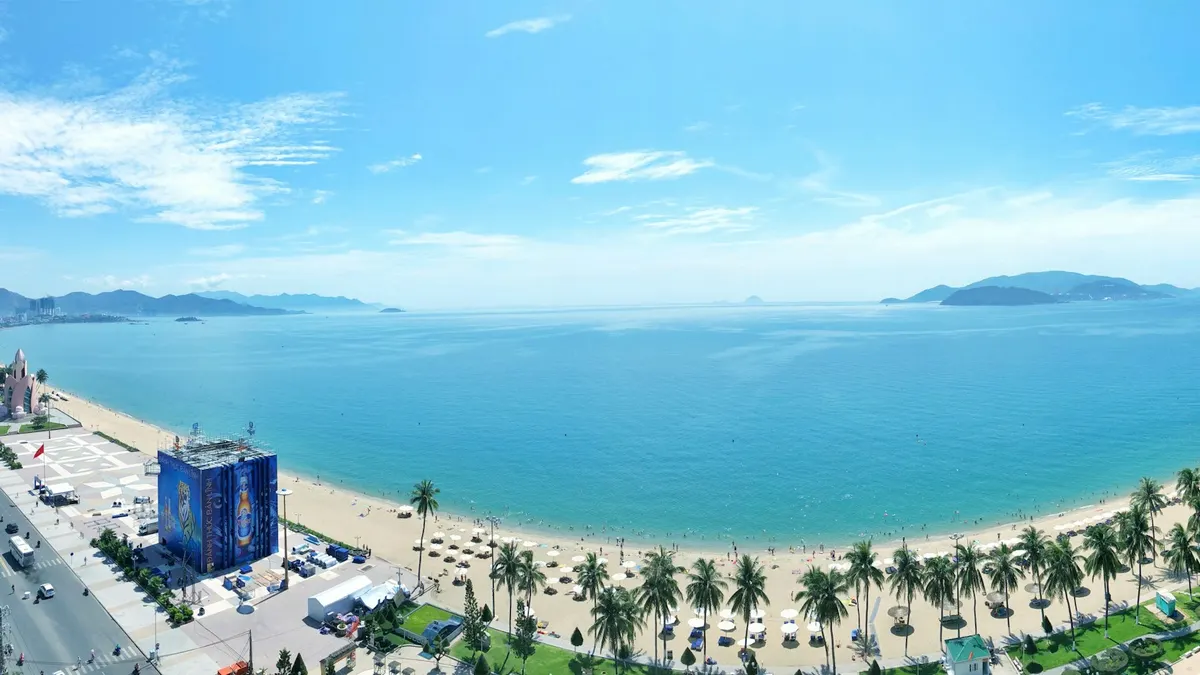
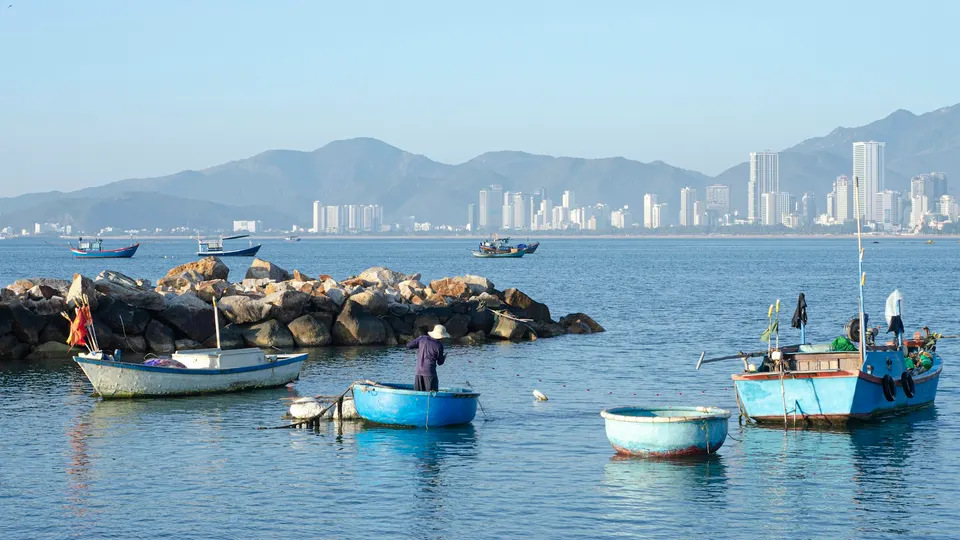
Yes, for two to three days: Nha Trang pairs a city beach with real sights a short ride away, and rain falls mainly from September to December, leaving January to August for the beach and islands. It is busy again: in the first ten months of 2026 Khanh Hoa province received more than 22.5 million visitors and passed its full-year target, VietnamPlus reported on 27 October 2026. Avoid pinning island days on October to December, when heavy rain on 9–11 November 2026 brought fresh flood warnings to the city’s western wards.
Nha Trang, the coastal city of Khanh Hoa (Khánh Hòa) province on Vietnam’s south-central coast, is known for its long beach and bay of islands, the Po Nagar Cham towers, mud baths, fish-cake noodles and long sunny dry season. The beach, lined with hotels, is the part most visitors see. The more rewarding Nha Trang lies just beyond it: a bay of islands with Vietnam’s first marine protected area, a thousand-year-old Cham sanctuary that is still a working shrine, a pagoda with a story from 1963, and two scientific institutions founded under French rule that still shape the city’s identity.
The city suits travellers who want a beach base with real sights a short ride away, families who want an easy island day, and anyone travelling the coast between Ho Chi Minh City and Central Vietnam who wants a beach stop with one of the shortest rainy seasons in Vietnam. It suits less well those looking for a quiet village: the main seafront is busy and built-up. This guide explains what to see beyond the sand, what to eat, and when the rains come.
Nha Trang at a glance
| Region | South-central coast; Khanh Hoa province, which since 1 July 2025 also includes the former Ninh Thuan (Ninh Thuận) province |
| Known for | Beach and bay islands, the Hon Mun (Hòn Mun) marine protected area, Po Nagar Cham towers, Long Son (Long Sơn) pagoda, mud baths, seafood |
| History to look for | Cham sanctuary at Po Nagar (from roughly the 8th century); Alexandre Yersin’s laboratory (1895); the oceanographic institute (1922) |
| Best time | January to August (dry); rain mainly September to December |
| How long | Two to three days for the city, the bay and the main sights |
| Getting there | Cam Ranh International Airport, about 30–35 km south; train station in the city centre |
| Local dishes | Cha ca (fish cake) in bun ca (bún cá) or banh canh (bánh canh), nem nuong Ninh Hoa (nem nướng Ninh Hòa), banh can (bánh căn) |
What is Nha Trang known for?
Nha Trang is known first for its bay: a city beach facing 19 islands, with Vietnam’s first marine protected area around Hon Mun. Close behind come the Po Nagar Cham towers, a sanctuary about 1,300 years old that is still a working shrine; a climate the national tourism authority credits with more than 300 days of sunshine a year, the most in the country; mineral mud baths; and seafood, above all fish cake in noodle soup. The province’s tourism portal adds two things guidebooks often skip: the bay was admitted in 2003 as the 29th member of the club of the world’s most beautiful bays, and its islands are home to the swiftlets whose nests, Khanh Hoa’s “white gold”, have been harvested here for centuries.
| Nha Trang is known for | What it is | What to know before you go |
|---|---|---|
| The bay and its islands | About 250 km² of sea and 19 islands; Vietnam’s first marine protected area around Hon Mun | Snorkelling and island boat trips run, but the reefs are damaged and diving was suspended in the most vulnerable areas in 2022 |
| Po Nagar Cham towers | A Cham sanctuary built roughly 1,300 years ago and still worshipped by Cham and Kinh visitors | A Special National Monument since January 2025; the festival falls late in the 3rd lunar month (5–11 May in 2026) |
| Sunshine and a short rainy season | More than 300 sunny days a year; rain mainly from September to December | January to August is the beach and island season |
| Mud baths | Mineral mud and hot-spring centres, the oldest behind the Po Nagar towers | Enjoy them as a soak; treat health claims cautiously |
| Fish-cake noodles and nem nuong | Bun ca and banh canh with cha ca; nem nuong Ninh Hoa; banh can | Eat at the markets and noodle streets rather than the seafront |
| Yersin and the Oceanographic Museum | Alexandre Yersin’s laboratory (1895) and the oceanographic institute (1922) | The best rainy-day stops in the city |
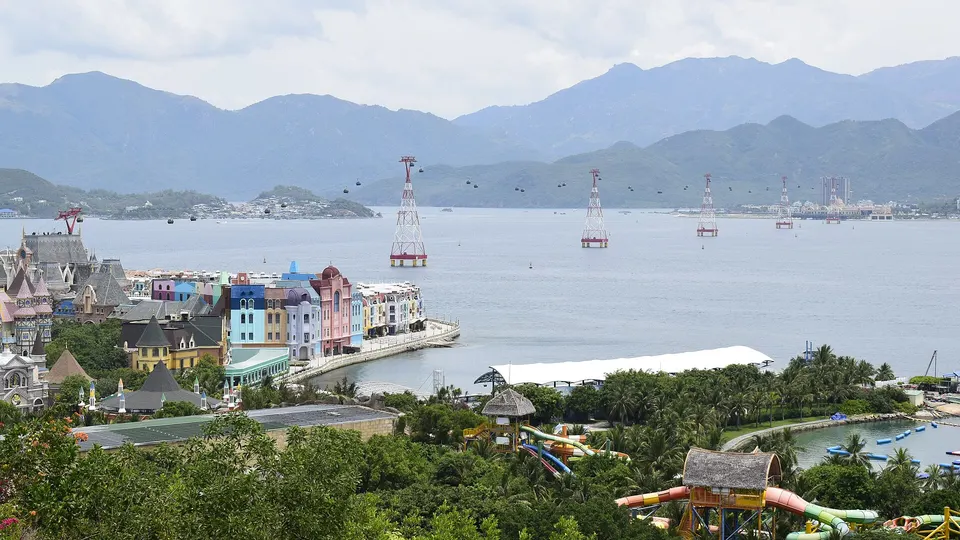
| Hon Tre and VinWonders | The resort island facing the city, reached by boat or cable car | A full family day rather than a nature trip |
| Bird’s nests (yen sao) | Swiftlet nests from the bay’s islands; the trade dates its founding to 1328 and honours its ancestors each year at a festival on Hon Noi island (24 June in 2026) | You meet the trade mostly as a product; Yen (Swift) Island is a common stop on bay boat tours |
Since July 2025 the name Khanh Hoa also covers far more coast. With the former Ninh Thuan province to the south, the enlarged province has about 490 km of coastline, the longest of any province, and takes in Vinh Hy (Vĩnh Hy) bay, Nui Chua (Núi Chúa) National Park and the Cham pottery village of Bau Truc (Bàu Trúc), Viet Nam News reported when the merger was agreed. A year on, VOV described the two halves as complementary: Nha Trang strong on beach and resort tourism, the former Ninh Thuan offering quieter beaches such as Ninh Chu and Vinh Hy, Cham craft villages and the Po Klong Garai towers. Nha Trang remains the base most visitors use.
What makes Nha Trang Bay more than a beach?
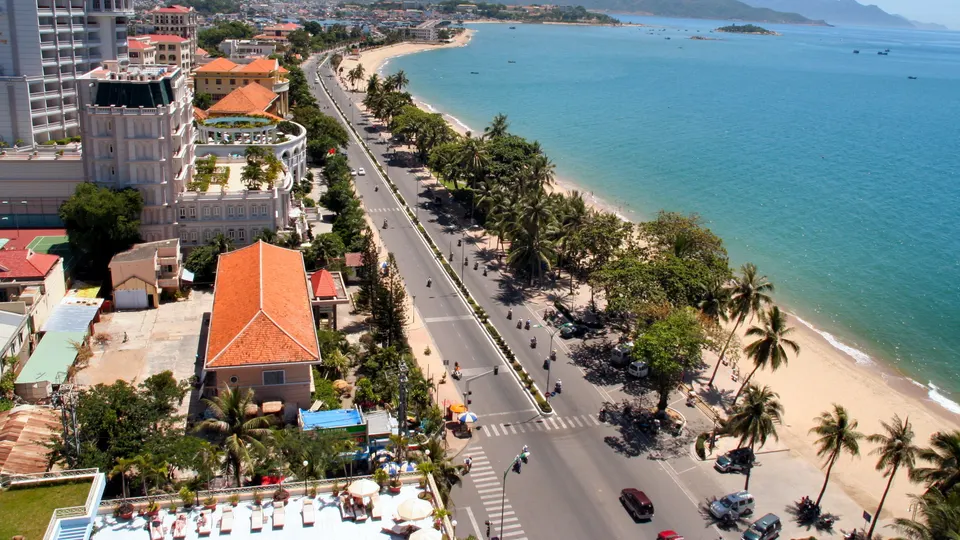
The bay (Vinh Nha Trang (Vịnh Nha Trang)) is the reason the city exists as a resort, and it is more varied than the view from the promenade suggests. It covers about 250 km², of which roughly 38 km² is land spread across 19 islands, from Hon Tre (Hòn Tre), the largest, down to rocks of less than a hectare. The Ministry of Agriculture and Environment’s newspaper describes it as Vietnam’s first marine protected area and a national scenic site, with more than 350 species of reef-building hard coral (Nong nghiep va Moi truong).
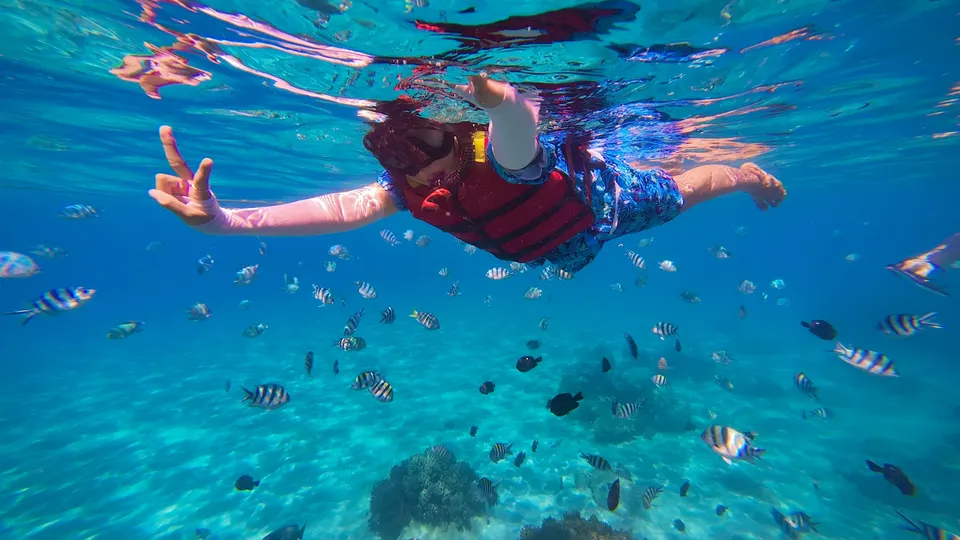
The protection began with a single island. The government approved a pilot reserve around Hon Mun at the end of 2000 and set it up in 2001; three years later the province renamed it the Nha Trang Bay Marine Protected Area, covering over 16,000 hectares with nine islands and the waters around them. The reefs have suffered since. Viet Nam News reported in 2022 that coral cover around Hon Mun had fallen to “poor”, with a preliminary survey finding that 60–70% of near-shore corals were broken and washed up after storms; experts named human activity on the mainland, including waste and runoff, as the main cause alongside warming seas. That year the province moved to suspend diving in the most vulnerable reef areas around Hon Mun. In practice this means snorkelling and diving trips still run, but where boats may go depends on current rules: ask the operator, never stand on or touch coral, and expect less colour than older brochures show.
For a day on the water there are two kinds of trip. Hon Tre, the big island facing the city, holds the Vinpearl resorts and the VinWonders theme park, reached by boat or a cable car more than 3.3 km long that opened in 2007: a family day rather than a nature trip. Day boat tours instead combine smaller islands such as Monkey Island, Hon Mun and Yen (Yến) Island, named by the national tourism authority as common stops. Our guide to Nha Trang’s islands covers the island trips in detail.
Who built Po Nagar, and is it still a place of worship?
The Po Nagar Cham towers (Thap Ba (Tháp Bà) Ponagar) stand on Cu Lao (Cù Lao) hill beside the Cai (Cái) River, about 2 km north of the centre. They were built by the Cham, whose kingdom of Champa ruled this coast before Vietnamese settlers arrived from the north. Dating is given in different ways: Vietnam’s tourism authority says the complex dates to the 8th century and that the present towers were built in 965 under King Jaya Indravarman I, while other official texts speak more broadly of the 7th to 12th centuries. Of the original towers, four survive; the tallest, about 23 m high, is dedicated to the goddess Po Nagar, “mother of the kingdom”, whom the Cham revere as the creator of the earth, trees and rice.
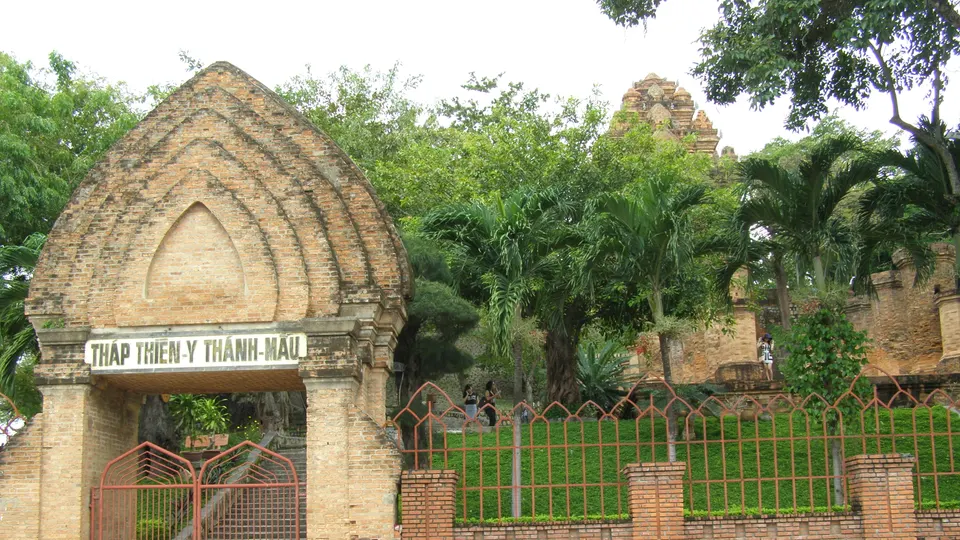
What makes Po Nagar different from the ruins at My Son is that worship never stopped; our Champa heritage guide explains which Cham sanctuaries are still used today. When Vietnamese settlers reached the area in the 17th century, they found the cult close to their own worship of the Mother Goddess and adopted the deity as Thien Y (Thiên Y) A Na, the Holy Mother. Today both Cham and Kinh (ethnic Vietnamese) worshippers come here. The Thap Ba festival is held late in the third lunar month, with the main days around the 20th to 23rd; in 2026 it ran from 5 to 11 May. Its rites include bathing the goddess’s statue, dressing her in new robes, a palanquin procession and lanterns floated on the Cai River. The festival was added to Vietnam’s national intangible heritage list in 2012, and in January 2025 the towers were classified as a Special National Monument (Khanh Hoa Provincial Portal).
Because it is a living shrine, dress as you would for a temple: shoulders and knees covered, and shoes off before entering the towers. Festival days are crowded and devotional, not staged for tourists.
How did a French doctor and a marine lab shape Nha Trang?
Two institutions on the seafront explain why Nha Trang mattered long before its beach did.
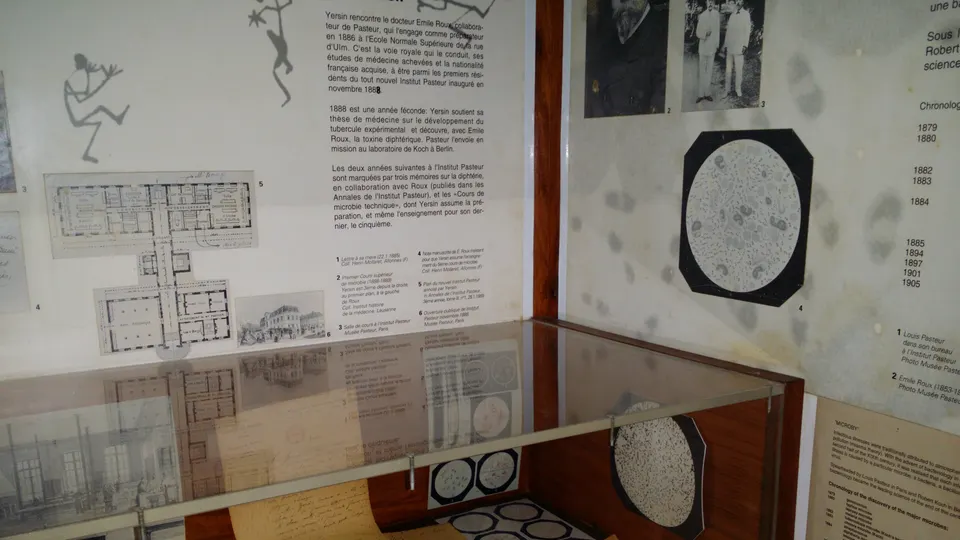
The physician Alexandre Yersin went ashore at Nha Trang in 1891 and was struck by the place. In 1894, in Hong Kong during a plague epidemic, he identified the plague bacterium that now bears his name, Yersinia pestis. The next year he set up a laboratory in Nha Trang that grew into today’s Pasteur Institute in Nha Trang, and he died in Nha Trang on 1 March 1943 (Khanh Hoa tourism portal). His library is now a small museum inside the institute grounds at 8 Tran Phu (Trần Phú) Street, showing his books, letters, laboratory equipment and photographs of his travels around Vietnam. His grave lies at Suoi Dau (Suối Dầu), about 20 km from the city, on a farm still run by the institute; the site has been a national monument since 1990. A shrine at the grave draws visitors every year.
The Institute of Oceanography (Viện Hải dương học) was founded by the French in 1922 as an Indochina-wide oceanographic institute, near Cau Da (Cầu Đá) port south of the centre. Its public museum holds more than 20,000 specimens of marine life, live tanks with species from the bay, a rare dugong and an 18 m whale skeleton brought from Nam Dinh (Nam Định) province in 1994. It is the best rainy-day stop in the city and a useful primer before a snorkelling trip.
What else is worth your time beyond the beach?
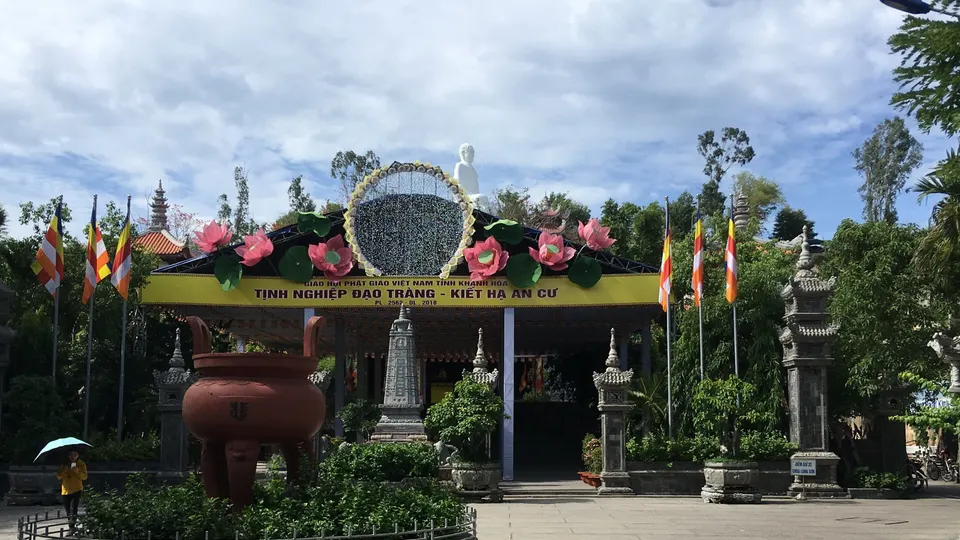
Long Son pagoda (chua Long Son (chùa Long Sơn)) sits at the foot of Trai Thuy (Trại Thủy) hill in the city. It was first built in 1886, but most visitors climb the 193 steps for the 24 m white Buddha on the hilltop, erected in 1963 (Vietnam National Authority of Tourism). The date is the key: the lotus base carries reliefs of Thich Quang Duc (Thích Quảng Đức) and other monks who burned themselves to death that year in protest at the persecution of Buddhists. A 17 m reclining Buddha, added in 2003, lies part-way up the steps. The pagoda is a working monastery, so the same dress rules apply as at Po Nagar.
Mud baths are the city’s other signature. The oldest and best known is the Thap Ba hot-spring centre, behind the Po Nagar towers a few kilometres north of the centre, which offers group and private mineral mud baths and hot and cold mineral pools; other centres, such as I-Resort and the newer 100 Egg Mud Bath, work the same way. Operators sell them as a health treatment for joints and skin. Treat those claims cautiously and enjoy the baths as what they are: a warm, muddy, very sociable afternoon.
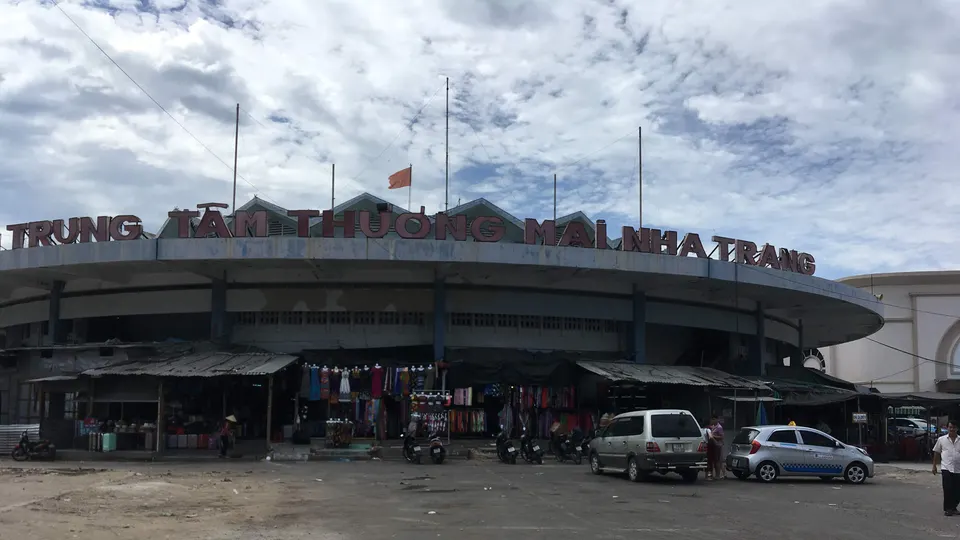
Cho Dam (Chợ Đầm), the main market, is where residents buy fish and produce; it is busiest in the early morning and evening. If you have a spare half-day, the fishing village of Cua Be (Cửa Bé), about 7 km south-east of the centre, has a road of food stalls and shows a less polished side of the coast.
What should you eat in Nha Trang?
Nha Trang cooks with the sea, and the dish to start with is cha ca: here the words mean fish cake, not the turmeric-fried fish Hanoi serves under the same name (our guide to cha ca explains the difference). VnExpress describes how cooks pound fresh fish such as lizardfish (ca moi (cá mối)), mackerel (ca thu (cá thu)) or barracuda (ca nhong (cá nhồng)) with shallot, garlic and pepper, the finer the chewier, then steam or fry it (VnExpress). The cake goes into bun ca (rice-noodle soup with a light fish-bone broth, fish cake and often fresh fish) and banh canh (the same idea with thick tapioca noodles; see banh canh by region). Many shops add jellyfish (sua (sứa)) to make bun sua (bún sứa), a breakfast dish rarely found outside the area.
Nem nuong Ninh Hoa comes from Ninh Hoa, a town in Khanh Hoa province. Minced pork seasoned with garlic, pepper, fish sauce and sugar is rolled onto sticks and grilled over charcoal, then wrapped at the table in rice paper, some of it fried crisp, with a pile of herbs, green banana and star fruit, and dipped in a thick, warm sauce of sticky rice, pork, liver and peanut. Local elders quoted by Viet Nam News say the dish was brought by settlers from Thanh Hoa (Thanh Hóa), but no one knows exactly when it began.
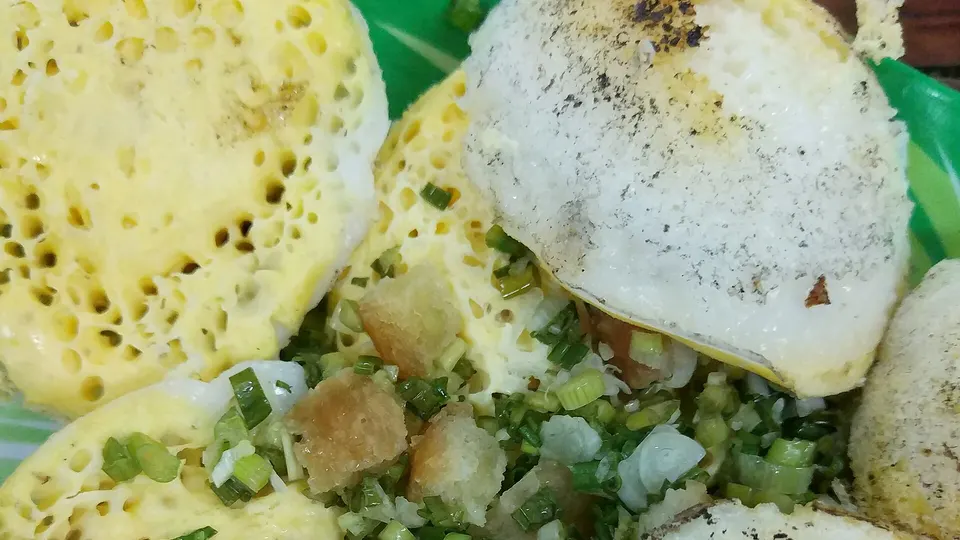
Banh can are small rice-flour cakes cooked in clay moulds, often with egg, squid or shrimp, and eaten with fish sauce, scallion oil and shredded green mango. Tuoi Tre (Tuổi Trẻ) notes that versions are found up and down the south-central coast and in Da Lat (Đà Lạt), each with its own sauce. Banh xeo (Bánh xèo) on this stretch of coast is also the small kind: Saigoneer describes south-central pancakes as smaller than elsewhere, filled with seafood instead of pork (see banh xeo South vs Central). Look for them on Tran Quy Cap (Trần Quý Cáp) and To Hien Thanh (Tô Hiến Thành) streets or in Cua Be. Seafood restaurants cluster along the ocean road north of the Tran Phu bridge and at Long Beach south of the city; pay by weight and agree the price before cooking.
The place cards below are shops recommended by at least two independent press or guide sources and confirmed at their current address.
Who visits Nha Trang now, and why does it matter?
You will hear several languages on the seafront, and the mix has changed fast. Before the pandemic Nha Trang was built around Chinese group tours: in 2019 Khanh Hoa received more than 2.5 million Chinese visitors, over 70% of its international arrivals. By the first nine months of 2024 the number had recovered to only about 27% of the 2019 level (Znews).
Other markets filled the gap. VnEconomy reported in September 2025 that close to 280,000 Russians visited Khanh Hoa in the first eight months of the year, almost four times the same period of 2024, and that Agoda ranked Nha Trang first among South Korean travellers’ summer destinations. Over the first nine months of 2025 the province recorded more than 4.2 million international visitors, while the provincial tourism department said the Russian and Chinese markets had still not fully recovered. For travellers this explains a lot about the seafront: menus and signs in Russian, Korean and Chinese, and a hotel strip shaped by package tourism. Step a few streets back, to the markets and noodle shops, and the city is mostly cooking for its own residents.
The recovery has gathered pace since. In the first ten months of 2026 the enlarged Khanh Hoa received more than 22.5 million visitors, about 51% more than a year earlier, including more than 7.8 million international arrivals, and passed its full-year target two months early, VietnamPlus reported in October 2026 (these figures include the former Ninh Thuan). From 12 October 2026 to 31 December 2027, Chinese tour groups that fly directly from mainland China to Cam Ranh and leave the same way can enter without a visa under a government resolution, Bao Quoc Te reported, so expect Chinese package tours to grow again on the seafront.
When is the best time to visit Nha Trang?
Nha Trang’s weather runs on a different clock from much of Vietnam. Its rain is concentrated from September to December, and Vietnam’s national tourism authority says the city has the shortest rainy season in the country, recommending January to August for beach and island trips (vietnam.travel). Khanh Hoa’s tourism department adds that over 75% of the province’s rain falls in those three to four months, and that in Nha Trang city itself the wettest spell usually lasts only about two months.
Compare that with the neighbours. In Ho Chi Minh City the wet season runs from May to November, so Nha Trang’s sunny months overlap with Saigon’s afternoon downpours. Further north the wet season is longer: the same tourism authority gives roughly September to January for Hoi An (Hội An) and September to February for Hue (Huế), and Da Nang has its own autumn storm season. For the whole country side by side, see the best time to visit Vietnam by region. Summer is also festival season: the Nha Trang Sea Festival ran from 17 to 19 July in 2026, with a carnival parade along Tran Phu street, according to the provincial tourism portal. In practice, from about May to August Nha Trang is a dependable beach choice while Saigon is wet; from September to December expect heavy rain and rougher seas, and keep island trips flexible because boats may not sail.
The short rainy season can still be dangerous. In November 2025 historic floods across Khanh Hoa killed 22 people and damaged more than 1,000 homes, VietNamNet reported, citing the provincial Party Committee; VnExpress later recalled that about 80% of today’s Tay Nha Trang ward, the low-lying west of the city, was under water, in places more than 2 m deep. A year on, heavy rain on 9–11 November 2026 brought a fresh round of warnings: residents parked cars on a Tay Nha Trang overpass, reservoirs upstream began releasing water from 11 November, and the province put agencies on 24-hour duty, though by the morning of 11 November river levels had levelled off and Tay Nha Trang’s ward chairman said no wide evacuation had been advised (VnExpress, Dan Tri (Dân Trí)). The beachfront centre is less exposed than the western wards, but if you travel from October to December, follow provincial warnings and ask your hotel before booking boats or mountain roads.
How do you get to Nha Trang, and where next?
Most visitors fly into Cam Ranh International Airport, about 30 km south of the city according to the national tourism authority and 35 km according to Vietnam Airlines; the transfer takes roughly 35–60 minutes, and our Cam Ranh airport to Nha Trang guide compares the airport buses, taxis and app cars. Viet Nam News puts it at 35–45 minutes on Nguyen Tat Thanh (Nguyễn Tất Thành) boulevard, which runs more than 35 km from downtown to Cam Ranh. The airport has separate domestic and international terminals and is busy: it handled about 4.1 million passengers in the first half of 2026, some 2.6 million of them international, and the airports corporation plans a new T1 passenger terminal, for 9 million passengers a year, for January 2030, CafeF reported in July 2026. Nha Trang’s railway station is in the city centre, a stop on the Reunification Express line between Hanoi and Saigon; our Saigon to Nha Trang guide compares the SNT night train, sleeper buses and flights.
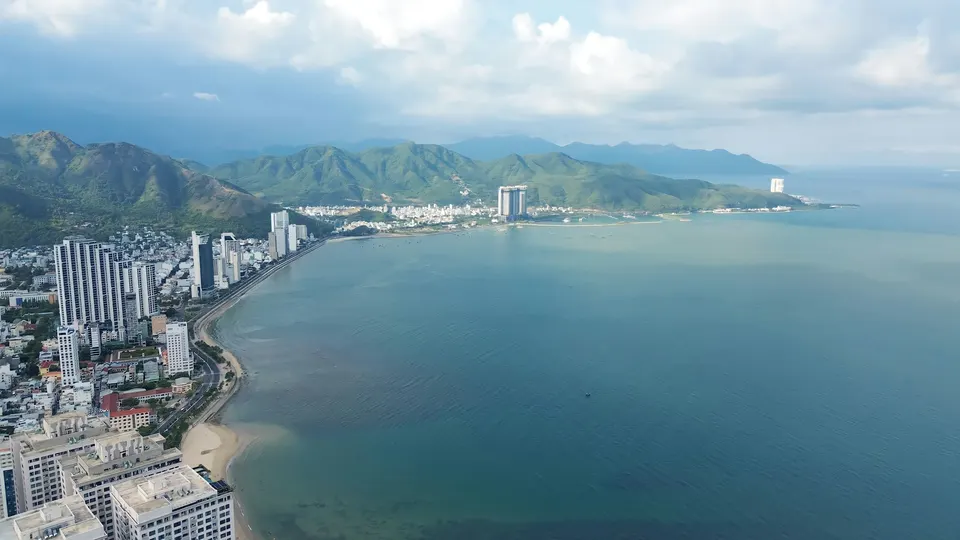
Since 1 July 2025, Khanh Hoa has included the whole of the former Ninh Thuan province to the south, with an area of about 8,556 km² and roughly 2.24 million people, keeping the name Khanh Hoa (Resolution 202/2025/QH15). The new province was proclaimed at a ceremony in Nha Trang, which the merger plan named as its political and administrative centre. The former Nha Trang city was replaced by four wards, Nha Trang, Bac Nha Trang, Tay Nha Trang and Nam Nha Trang, under a separate resolution of June 2025, so the seafront and Tran Phu street now sit in Nha Trang ward and Po Nagar in Bac Nha Trang ward. Khanh Hoa is still a province: in January 2026 provincial leaders told Tuoi Tre they aim to make it a centrally governed city by 2027, and in October 2026 CafeF reported that the province was studying a site for a new administrative centre in Cam Lam, near the airport. None of this changes how you visit, but older maps, hotel listings and tour notes still use the former names.
A feasible plan: give the city two to three days. Spend one on Po Nagar, a mud bath and Long Son; one on the bay, either a snorkelling trip to Hon Mun or a family day on Hon Tre; and keep half a day for the Oceanographic and Yersin museums and an evening of street food.
| If you have | Plan | Time | Suits |
|---|---|---|---|
| One day | Po Nagar, a mud bath and Long Son pagoda | A full day by taxi or motorbike, all within a few km of the centre | Culture first, short stopover |
| A bay day | Boat tour to Hon Mun and smaller islands for snorkelling | Most of a day; January to August, boats may not sail in the rains | Snorkellers who accept damaged reefs |
| A family day | Hon Tre and VinWonders by boat or cable car | A full day | Families with children |
| A rainy half-day | Oceanographic Museum and Yersin museum, then street food | Half a day | Wet-season visitors, history fans |
From here, the classic onward trip climbs to Da Lat on National Highway 27C over the 30 km Khanh Le (Khánh Lê) Pass, about three and a half to four hours, a road prone to landslides in the rainy season: on 16 November 2025 a landslide on the pass hit a coach, killing at least six people (Viet Nam News). An 80.8 km expressway was approved in 2026, with official targets for completion between 2028 and 2030. For bus and car options, the night closure of the pass and the detour, see our guide to getting from Nha Trang to Da Lat. Going north along the coast, Quy Nhon is the next beach city worth a stop.
What mistakes should you avoid in Nha Trang?
Most disappointments in Nha Trang come from expecting the brochure version of the city. These are the common ones, each drawn from the sources above.
- Booking the island day in October or November. Rain falls mainly from September to December, boats may not sail and low-lying wards can flood, as in November 2025; keep island trips for January to August, or leave spare days.
- Expecting bright, untouched coral. Hon Mun’s reefs were rated poor in 2022 and diving was suspended in the most fragile areas. Ask the operator where boats may go today, and never stand on or touch coral.
- Going to Po Nagar or Long Son in beach clothes. Both are working places of worship: cover shoulders and knees and take your shoes off before entering.
- Ordering cha ca and expecting Hanoi’s dish. In Nha Trang it means fish cake, eaten in bun ca or banh canh; Hanoi’s turmeric-fried fish is a different thing.
- Not agreeing the seafood price first. Seafood restaurants charge by weight: choose, see it weighed and agree the price before it is cooked.
- Eating only on the seafront. The markets and noodle streets cook for residents; Cho Dam is busiest in the early morning and evening.
- Treating mud-bath health claims as medical advice. Enjoy the soak; the joint and skin benefits are the operators’ claims.
- Using old addresses. Since July 2025 there is no “Nha Trang city” or “Vinh Phuoc ward” on official addresses; Po Nagar is in Bac Nha Trang ward, the centre in Nha Trang ward.
- Underestimating the airport and the mountain road. Cam Ranh is 30–35 km south, and the Khanh Le pass road to Da Lat is prone to landslides in the rainy season (a fatal one hit a coach in November 2025); build in time for both, and avoid the pass after heavy rain.
Where to eat in Nha Trang
Local favourite
Bún Cá Nguyên Loan
Nha Trang · Central Nha Trang
123 Ngô Gia Tự Street
A long-running family shop that makes its own fish cake, recommended by VnExpress and the provincial newspaper Báo Khánh Hòa as one of the older shops on Ngô Gia Tự. A good place to taste chả cá in its home setting.
Order: Bún cá with fish cake and fresh fish; add jellyfish (sứa) for the full bowl, or try the bánh canh.
Recommended by: VnExpress (2023), Báo Khánh Hòa (2024), VTC News (2024), VnExpress (2025) · checked November 2026
Local favourite
Bún Cá Năm Beo
Nha Trang · Chợ Đầm market area, central Nha Trang
Lot B2, Chợ Đầm apartment block, Phan Bội Châu Street
A fish-noodle stall by Chợ Đầm, Nha Trang's main market, listed by VnExpress, VTC News and Vietnam Coracle for bún cá and bánh canh with fish cake.
Order: Bún cá or bánh canh with chả cá.
Recommended by: VnExpress (2023), Vietnam Coracle (2026), VTC News (2024) · checked November 2026
Local favourite
Nem Nướng Đặng Văn Quyên
Nha Trang · Central Nha Trang
16A Lãn Ông Street
A nem nướng shop named by VnExpress, Việt Nam News and Vietnam Coracle, serving the Ninh Hòa style: grilled pork skewers with crisp rice paper, a big plate of herbs and a thick, warm dipping sauce.
Order: A set of nem nướng; wrap the pork with rice paper and herbs and dip.
Việt Nam News also lists a second branch at 02–04 Phan Bội Châu; this card means 16A Lãn Ông, the address all sources share.
Recommended by: VnExpress (2023), Việt Nam News (2024), Vietnam Coracle (2026) · checked November 2026
Local favourite
Bò Nướng Lạc Cảnh
Nha Trang · Central Nha Trang (Nha Trang ward)
44 Nguyễn Bỉnh Khiêm Street
The restaurant that gave its name to bò Lạc Cảnh, Nha Trang's honey-marinated beef that diners grill themselves over charcoal. VnExpress (2025) recommends it on Nguyễn Bỉnh Khiêm and dates it to 1963; Báo Khánh Hòa gives the house number.
Order: Bò nướng Lạc Cảnh with herbs, bread and the chilli-lime-salt dip; Báo Khánh Hòa also mentions lươn đùm (eel wrapped in caul fat) and squid grilled on a rack.
Many grills in Nha Trang sell 'bò Lạc Cảnh' as a dish name; this card means the shop at 44 Nguyễn Bỉnh Khiêm.
Recommended by: VnExpress (2025), Báo Khánh Hòa (2012), Phụ Nữ Việt Nam (2020) · checked November 2026
Addresses and details can change; check before you go. We do not accept payment for listings.
Frequently asked questions
Is Nha Trang worth visiting if I don't care about beaches?
For two or three days, yes. The Po Nagar Cham towers, Long Son pagoda, the Yersin museum at the Pasteur Institute, the Oceanographic Museum and a snorkelling trip in the Hon Mun protected area all sit within a short ride of the centre.
How long does it take from Cam Ranh airport to Nha Trang?
Roughly 35–60 minutes by road. Cam Ranh International Airport lies about 30–35 km south of central Nha Trang, linked by Nguyen Tat Thanh boulevard.
Is the Khanh Le Pass road from Nha Trang to Da Lat safe in the rainy season?
It is prone to landslides after heavy rain: on 16 November 2025 a landslide on the Khanh Le Pass hit a coach and killed at least six people, Viet Nam News reported. The drive takes about three and a half to four hours; avoid it after heavy rain, as the planned expressway is not due before 2028–2030.
Can you still snorkel and dive at Hon Mun in Nha Trang?
Yes, boat trips for snorkelling and diving still run in the Nha Trang Bay Marine Protected Area around Hon Mun. Diving was suspended in the most vulnerable reef areas in 2022 and coral cover was rated poor, so ask the operator where boats may go and never touch coral.
Do Chinese tour groups need a visa to visit Nha Trang?
Not if they meet the conditions of Government Resolution 325: from 12 October 2026 to 31 December 2027, groups of two or more on a package tour of up to 30 days run by a Vietnamese international travel company can enter visa-free if they fly directly from mainland China to Cam Ranh and leave the same way, Bao Quoc Te reported. Independent travellers follow Vietnam's normal visa rules.
Key sources
- Resolution 202/2025/QH15 on the reorganization of provincial-level administrative divisions · LuatVietnam (text of the National Assembly resolution)
- Weather and climate in Vietnam · Vietnam National Authority of Tourism (vietnam.travel)
- Nha Trang Bay, where the rare and typical ecosystem of tropical seas can be found · Agriculture and Environment newspaper (Nông nghiệp và Môi trường), 2025
- Opening Po Nagar Temple Festival 2026 · Khánh Hòa Provincial Portal, 25 May 2026
- The Alexandre Yersin memorial relic complex · Khánh Hòa Department of Culture, Sports and Tourism (digital tourism portal)
- Explore Nha Trang's iconic 24-meter white Buddha at Long Son Pagoda · Vietnam National Authority of Tourism, 22 May 2025
- Chả cá tươi · VnExpress, 7 February 2007
- Khách Trung Quốc không còn thích Nha Trang? · Znews, 22 October 2024
All 52 sources and further reading
- The Evolution of Bánh Xèo: A Street Food History · Saigoneer, 3 Sep 2016
- Công bố các Nghị quyết, Quyết định về sáp nhập đơn vị hành chính tỉnh Khánh Hoà (mới) · Báo Văn Hóa, 30 June 2025
- Tỉnh Khánh Hòa mới dự kiến có 13 cơ quan chuyên môn thuộc UBND tỉnh · Sài Gòn Giải Phóng, 22 April 2025
- Nha Trang · Vietnam National Authority of Tourism (vietnam.travel)
- Experience Nha Trang like a local · Vietnam National Authority of Tourism (vietnam.travel)
- Climate · Khánh Hòa Department of Culture, Sports and Tourism
- Measures needed to preserve Nha Trang Bay corals · Việt Nam News, 22 July 2022
- Dive tourism to be halted to protect coral reefs in Nha Trang · Công an Nhân dân, 24 June 2022
- Cáp treo Vinpearl Nha Trang vào top đẹp nhất châu Á · VnExpress, 6 March 2026
- Po Nagar Cham Towers · Vietnam National Authority of Tourism
- Giant Cham temples of Po Nagar are spiritual heart of Nha Trang · VietNamNet, 12 November 2012
- Alexandre Yersin legacy showcased in Nha Trang museum · VietNamNet, 17 June 2019
- Explore the Nha Trang Oceanography Museum inside a historic French building · Khánh Hòa Department of Culture, Sports and Tourism (digital tourism portal)
- Best mud bath in Nha Trang · Vietnam National Authority of Tourism (vietnam.travel)
- Trung tâm Du lịch Suối khoáng nóng Tháp Bà Nha Trang · Vietnam National Authority of Tourism
- Must-eat specialty dishes in Nha Trang · Vietnam National Authority of Tourism (vietnam.travel)
- Ẩm thực đường phố của Nha Trang · Báo Khánh Hòa, 30 May 2024
- Hàng bún hút khách ở Nha Trang vì món chả cá nhà làm · VnExpress, 19 August 2023
- Ninh Hòa grilled fermented pork recognised among top 10 specialties of Việt Nam in 2023 · Việt Nam News, 23 January 2024
- Đến Nha Trang, xuống Cửa Bé ăn bánh căn · Tuổi Trẻ (Phụ Nữ Online), 5 December 2014
- 48 giờ sành ăn như dân bản địa tại Nha Trang · VnExpress, 22 August 2025
- Nha Trang Food Guide · Vietnam Coracle, July 2026
- Khánh Hòa không chỉ là điểm hẹn của du khách Nga · VnEconomy, 26 September 2025
- Khánh Hòa: Phấn đấu sớm cán đích 15 triệu lượt khách trong năm 2025 · Báo Văn Hóa, 28 October 2025
- Cam Ranh Airport travel guide · Vietnam Airlines
- Vietnam building $953M mountain expressway to cut Nha Trang-Da Lat drive from 4 hours to under 2 · VnExpress International, 30 March 2026
- Có cao tốc, từ Nha Trang đi Đà Lạt chỉ còn 1,5 - 2 giờ · Tuổi Trẻ, 14 May 2026
- New Khánh Hòa Province will have longest coastline in Việt Nam · Việt Nam News, 24 April 2025
- Khánh Hòa vượt chỉ tiêu khách du lịch cả năm chỉ sau 10 tháng · VietnamPlus (VNA), 27 October 2026
- Du lịch Khánh Hoà 'cán đích' sớm, thêm cơ hội thu hút khách Trung Quốc · Báo Quốc tế, 30 October 2026
- Nghị quyết 1667/NQ-UBTVQH15 về việc sắp xếp các đơn vị hành chính cấp xã của tỉnh Khánh Hòa năm 2025 · LuatVietnam (text of the Standing Committee resolution, 16 June 2025)
- Khánh Hòa quyết tâm trở thành thành phố trực thuộc Trung ương, cực tăng trưởng cao của cả nước · Tuổi Trẻ, 18 January 2026
- Khánh Hòa xây dựng trung tâm hành chính mới tại xã Cam Lâm · CafeF, 17 October 2026
- Du lịch Khánh Hòa khởi sắc sau một năm hợp nhất · VOV, 16 July 2026
- Lễ hội Yến Sào Khánh Hòa 2026: Tri ân gần 700 năm lịch sử ngành nghề · Sài Gòn Giải Phóng, 25 June 2026
- Nha Trang Bay · Khánh Hòa Department of Culture, Sports and Tourism (digital tourism portal)
- Press conference introducing the 2026 Nha Trang Sea Festival · Khánh Hòa Department of Culture, Sports and Tourism (digital tourism portal), June 2026
- Khanh Hoa flood death toll rises to 22, over 1,000 homes damaged · VietNamNet, 26 November 2025
- Six dead, 19 injured as coach hit by landslide in Khánh Hoà · Việt Nam News, 17 November 2025
- Ôtô xếp hàng dài trên cầu vượt ở Nha Trang tránh lũ · VnExpress, 10 November 2026
- Mưa lớn kéo dài, Khánh Hòa kích hoạt các phương án ứng phó thiên tai · Dân Trí, 11 November 2026
- ACV dự kiến đầu tư gần 12.000 tỷ đồng mở rộng sân bay Cam Ranh, hoàn thành trong 2028-2030 · CafeF, 29 July 2026
- Lạc Cảnh đâu chỉ có bò nướng · Báo Khánh Hòa, 15 May 2012
- Quán bò nướng ngon tuyệt 40 năm tuổi ở Nha Trang, trưa chiều khách đông nghịt · Phụ Nữ Việt Nam, 17 July 2020
Keep exploring
 Central Vietnam · Travel Nha Trang Island Hopping: Which Boat Trip to Choose Nha Trang island hopping compared: Hon Mun snorkel trips, 3- and 4-island tours, VinWonders by cable car, Monkey Island and Diep Son, plus piers, fees, weather.
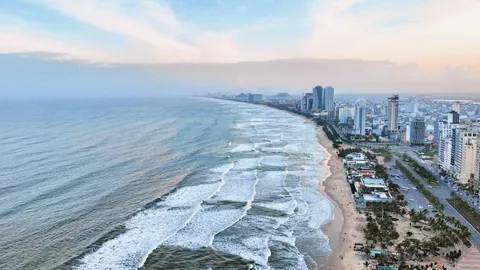 Central Vietnam · Travel Da Nang (Đà Nẵng): What to Do, Where to Stay, How Long Da Nang travel guide: the best things to do, whether to stay in Da Nang or Hoi An, a 2–4 day plan with Hue, what to eat and when the rains usually come.
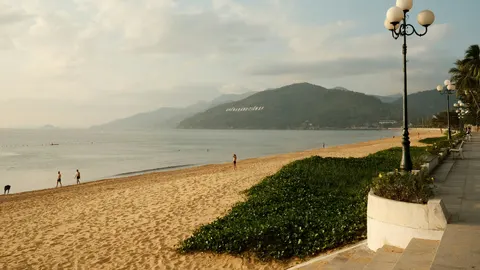 Central Vietnam · Travel Quy Nhon (Quy Nhơn): Is It Worth It and How Many Days? Is Quy Nhon worth it, and for how many days? Cham towers, Ky Co and Eo Gio, where to eat banh xeo, flights and the dry season, checked November 2026.
 Central Vietnam · Travel Da Lat (Dalat), Vietnam: Where It Is, When to Go, How Long Where is Da Lat (Dalat)? A cool highland city 300 km from Saigon: how many days you need, month-by-month weather, the airport transfer and 2026 roadworks.