All three regions · Culture
Li Xi (Lì Xì) Meaning: Tet Lucky Money, How Much to Give
What li xi means: Vietnam's Tet lucky money in red envelopes, the wish behind it, what families gave at Tet 2026, when to give at Tet 2027 and the etiquette.
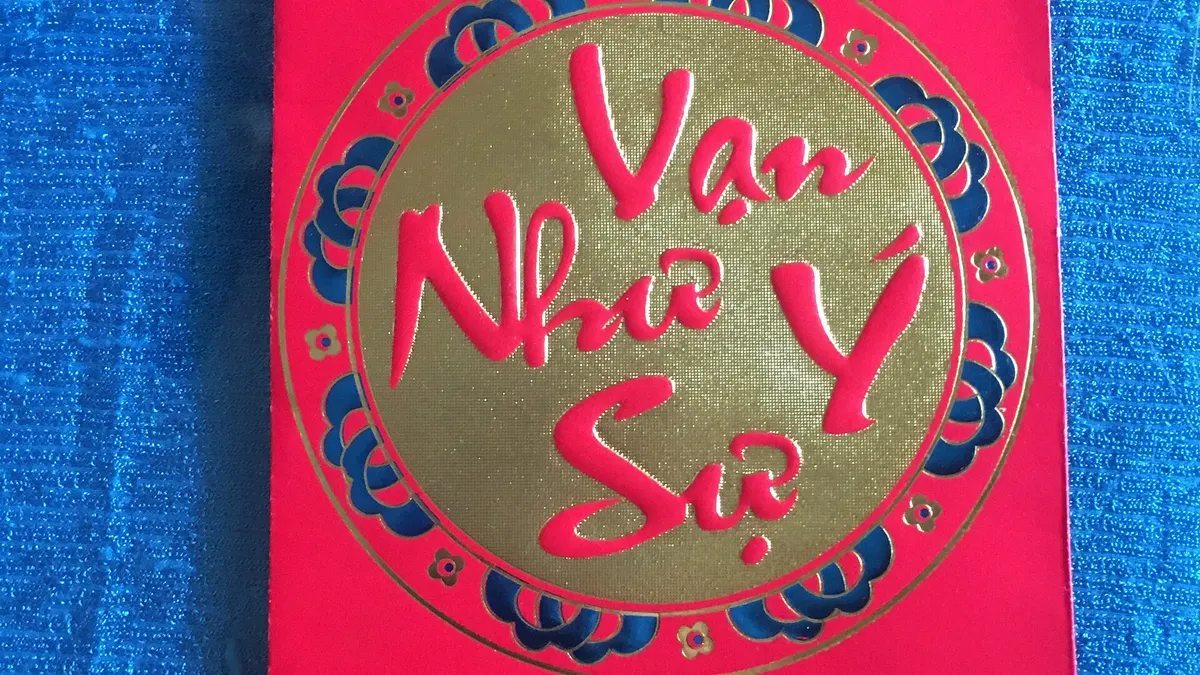
Li xi (lì xì) is the lucky money Vietnamese people give in small red envelopes at Tet, the Lunar New Year, together with a wish for the year ahead; in the North the same custom is called mung tuoi (mừng tuổi). As of November 2026, Tet 2027 falls on Saturday 6 February, inside a seven-day public holiday from Thursday 4 to Wednesday 10 February 2027 that the government confirmed in October 2026, and the first envelopes change hands that morning. How much to give has no fixed answer: in February 2026 VnExpress described one Hanoi family giving 50,000 VND to friends’ children, 200,000 VND to nieces and nephews and 500,000 VND to parents and grandparents.
Children are the main recipients, but envelopes also go to parents, grandparents and, in some workplaces, staff. The point is luck, not wealth: as VnExpress put it in 2023, the value of an envelope “lies not in the money but in the feeling”. Hand the envelope over with a New Year wish and both hands, and get crisp notes only from a bank.
This page explains what the custom means, who gives to whom, what amounts people actually describe, the rules on new banknotes, how QR codes are changing it, and how to take part as a visitor. For the wider festival, see Tet in North, Central and South Vietnam.
Li xi at a glance
| Names | Li xi, used in the South and now nationwide; mung tuoi (mừng tuổi) in the North |
| When | From the first day of Tet, whenever adults meet children over the holiday |
| Who gives | Adults to children; grown children to parents and grandparents; some employers to staff after the holiday |
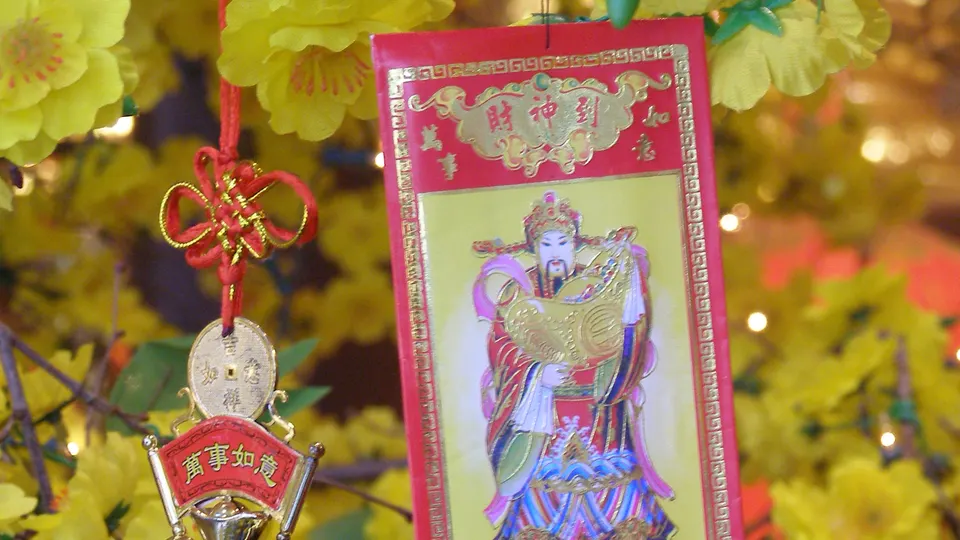
| The envelope | Red, or red and gold, often printed with gold wishes such as loc (good fortune) or van su nhu y (may everything go as you wish) |
| Typical amounts (press, 2021–2026) | About 20,000–100,000 VND for a child in ordinary families; 200,000–500,000 VND in better-off ones |
| New notes | Traditional; exchange only at banks, never through paid private services (fines up to 40 million VND for individuals, 2026) |
| Today | Digital envelopes in banking and e-wallet apps, and QR transfers, alongside cash |
| Tet 2027 | Saturday 6 February; official holiday 4 to 10 February; bank counters close over the holiday |
What li xi means, and what it is called
Tet is a fresh start, and li xi is a way of handing a little luck to the next generation. The Northern word, mung tuoi, translates roughly as “celebrating (someone’s) age”, a New Year congratulation on growing a year older. The Southern word li xi is used across the country today; Vietcetera notes li xi in the South and tien mung tuoi in the North.
Where the word comes from is unclear. Writing in Nhan Dan (Nhân Dân) in 2007, Tran Phong Dieu gave two explanations without choosing between them: that li xi echoes the Sino-Vietnamese loi thi, “profit” or “gain”, and that the custom goes back to Tang-dynasty China, where gifts wrapped in red cloth later gave way to a small red envelope. Either way, the word has come to mean luck and good fortune for the child.
A popular legend explains why the money comes wrapped. In the version a teacher retold in VnExpress, eight immortals turned themselves into eight coins wrapped in red paper and placed beside a sleeping child; when a demon came to harm the child, the light from the coins drove it away (VnExpress). Like most origin stories it is a legend, not history; what it shows is that the envelope was always meant as protection and luck.
What the money is for. The wish travels with the money and changes with the person, the finance paper Thoi bao Tai chinh Viet Nam explained before Tet 2025: health, a good appetite, good behaviour and good marks for a child; smooth business and “everything going well” for an adult; health, a long life and a gathered family for an elder. Giving at the start of the year is also meant to chase away the bad luck of the old year so the new one starts smoothly. That is why the envelope is sealed and discreet: the paper stresses that there should be no comparing of what is inside, so that giver and receiver both simply enjoy the custom.
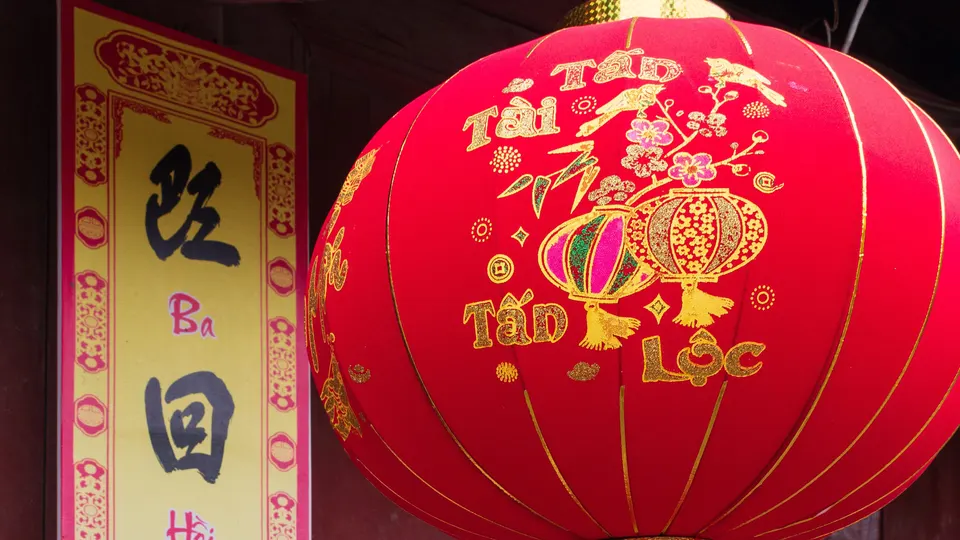
Tradition vs today. Envelopes still carry the old wishes, loc (good fortune), tan tai tan loc (wealth and luck), but the same idea now travels by banking app as often as by hand, as the section on QR codes below explains.
Who gives to whom, and when
The core pattern is adults to children. Parents give to their own children, then aunts, uncles, grandparents and family friends give to the children they meet in the first days of Tet. A Tuoi Tre News columnist noted in 2019 that there is no special day for it: it happens “whenever the adults meet the kids”, and plenty of foreigners join in.

| Who gives | To whom | When | What recent press describes |
|---|---|---|---|
| Parents, grandparents, aunts, uncles, family friends | Children | From the first day of Tet, whenever they meet | One Hanoi family in 2026: 50,000 VND for friends’ children, 200,000 VND for nieces and nephews (VnExpress) |
| Grown children | Parents and grandparents | Usually on the first days of Tet | A sign of respect; 500,000 VND each in that same family (VnExpress, 2026) |
| Employers | Staff | First working day after the holiday | 300,000 VND per worker at one Japanese-owned factory in 2026 (Tuoi Tre) |
| Visitors (optional) | Hosts’ children | When visiting at Tet | A modest envelope with a wish |
Envelopes also go upwards. Grown children give their parents and grandparents money as a sign of respect and gratitude, and Dien dan Doanh nghiep (Diễn đàn Doanh nghiệp) described households planning envelopes for “grandparents and parents” as well as for relatives’ children in 2026. Some firms now set aside a “li xi fund” from the Tet bonus, the paper added, and on the first working day after Tet 2026 the garment group May 10 and a Japanese-owned factory handed envelopes to their workers, the latter 300,000 VND each (Tuoi Tre).
What the envelope wishes for. The custom is old. In Viet Nam phong tuc (Vietnamese Customs), the scholar Phan Ke Binh (1875–1921) described descendants offering money and bowing twice to their grandparents and parents after the ancestor worship on New Year’s morning, with the elders giving a few coins back to the children, VietNamNet (VNA) recalled in February 2024. The red envelope itself was meant to bring luck and keep evil spirits away, and the wish changes with the person who receives it:
| Who receives | What the wish is for | Traditional gesture | Today |
|---|---|---|---|
| Small children | Growing well and doing well at school | Elders give a few coins after the ancestor worship | Red envelope with a short wish, or a digital envelope |
| Parents and grandparents | A long life and good health | Descendants offer money and bow twice | Envelope from grown children, often on the first morning of Tet |
| Everyone else you visit | Peace and good luck in the new year | A New Year greeting | Chuc mung nam moi (Happy New Year) |
Say the wish as you hand the envelope over; the amount comes second.
Common practice vs the exception. The envelope from an elder to a child is close to universal. What varies is everything around it: how many households you visit, whether the in-laws’ side gives as much as the father’s side (a VnExpress writer noted that it often does not), and whether money goes to employees and business partners. A teacher writing in VnExpress described one acquaintance preparing 10 million VND in new notes for his boss’s children and business partners, a sign of how far the custom can stretch beyond the family.
How much people give
No source sets an amount, and Vietcetera’s 2023 interviews with young workers found “no rules on how much lucky money should be”. What the press does show is how the usual sums have changed:
| Year reported | What was described | Source |
|---|---|---|
| About 2011 | 20,000 VND was the usual note for a child | VnExpress, 2021 |
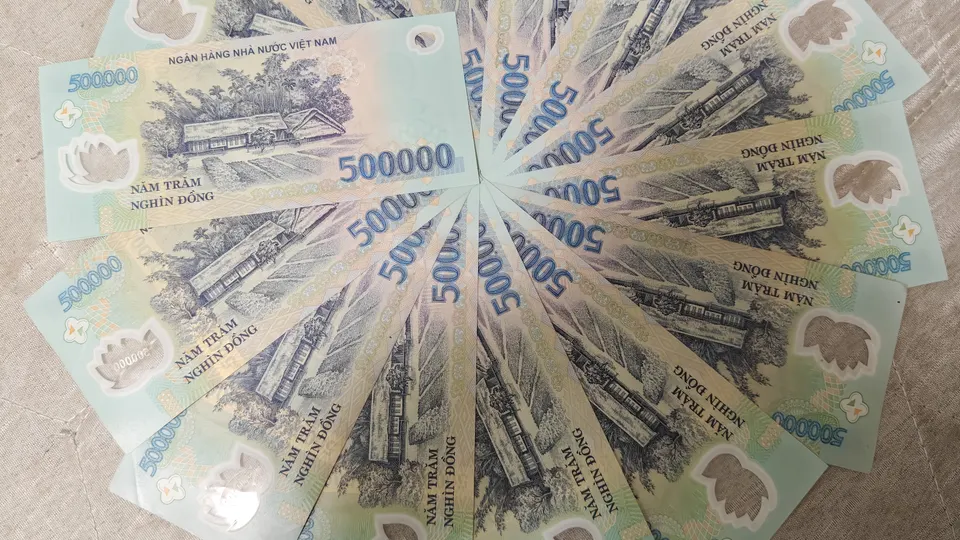
| 2021 | At least 40,000 VND (two 20,000 notes); 50,000–100,000 VND in ordinary families; 200,000–500,000 VND in better-off families | VnExpress, 2021 |
| 2023 | 10,000 VND notes chosen for their red-and-yellow colours; a 20,000 VND note “now met with disappointment” by some children | VnExpress, 2023; Vietcetera, 2023 |
| 2026 | 20,000 and 50,000 VND notes “happily chosen again”; scarce new 100,000 VND notes not chased | Dien dan Doanh nghiep, 2026 |
| 2026 | One Hanoi family: 50,000 VND (friends’ children), 200,000 VND (nieces and nephews), 500,000 VND (parents and grandparents), 5–7 million VND in all; a 28-year-old cut her total from about 5 million to 2 million VND | VnExpress, 2026 |
The 2026 report framed the change as a reaction to lam phat li xi, “lucky-money inflation”: families choosing “a budget for joy instead of a budget for appearances” (Dien dan Doanh nghiep). The pressure is real. VnExpress writers in 2021 and 2023 described children comparing envelopes, sulking over small notes or opening them in front of guests, and adults who felt li xi had become “a burden” or even a disguised favour to bosses. In February 2026 VnExpress described people limiting envelopes to close family and friends agreeing not to give each other’s children more than 50,000 VND, so that the gift stays a wish rather than a debt to repay.
Regional differences. The sources describe different words for the custom in North and South, but none shows a consistent difference in amounts between regions; the gap is between households and incomes, not between Hanoi and Saigon.
New notes, exchange fees and the law
Crisp, newly printed notes are part of the custom, and every year demand jumps before Tet. In January 2023 Tuoi Tre News reported people in Ho Chi Minh City queueing at banks and using online services that charged around 5–8 percent, and up to 10 percent for small notes; banks exchanged new notes free mainly for long-term and corporate customers.
Paying a private service for new notes breaks the rules. Only the State Bank, credit institutions, foreign bank branches and the State Treasury may exchange notes, a lawyers’ journal explained at Tet 2026 (Luat su Viet Nam). Before that Tet, police warned that paid exchange services often take a deposit and disappear or hand over counterfeit notes, and Viet Nam News reported fines of up to 40 million VND for individuals and 80 million VND for organisations. The penalty decree itself changed in the middle of that holiday: Decree 340/2025 replaced Decree 88/2019 from 9 February 2026, so check current rules rather than older articles. Nhan Dan added in 2023 that the State Bank had not issued new notes below 10,000 VND for Tet for about ten years, and warned of fake notes and deposit scams in online exchange; the policy of not issuing new small notes dates back at least to Tet 2014, when VietNamNet reported that the bank wanted to cut the 300 billion VND a year spent printing them.
What it means for you. You do not need brand-new notes to give li xi; clean notes in a fresh envelope are fine. If you want new ones, ask at your bank, and avoid street or online sellers; our guide to money in Vietnam covers banks, ATMs and QR payments.
From red envelopes to QR codes
The envelope is still the norm in families, but money increasingly moves by phone. Reporting on Tet 2026, Bao Lao Cai (Báo Lào Cai) described smartphones, QR codes and banking apps as the everyday “wallet” for Tet spending, from shopping and temple visits to lucky money, and cited State Bank figures for 2025: ATM transactions down 17.3 percent in number on 2024, QR payments up more than 50 percent in number and more than 124 percent in value (Bao Lao Cai).
E-wallets and banks compete for this money. Bao Quoc Te (Báo Quốc tế), reporting for the Vietnam News Agency in February 2026, named e-wallets such as MoMo and ZaloPay alongside the digital banks’ own li xi features, with zodiac-themed envelopes and even the sound of an envelope being opened, and cited one large e-wallet that counted more than 150 million digital envelopes over Tet 2025, double the year before. Researchers quoted in the article saw the real risk not in the format but in forgetting what the gift means. There is a practical risk too: VietnamFinance warned in 2025 that scammers make QR codes that carry malware, so only scan codes from people you know.
Tradition vs today. A transfer is practical for relatives far away; in person, many families still prefer cash in an envelope, because the handing over, with a wish and two hands, is the point. Dien dan Doanh nghiep described QR and bank-transfer li xi as “gradually taking over”, not replacing the envelope.
Li xi at Tet 2027: dates and what to prepare
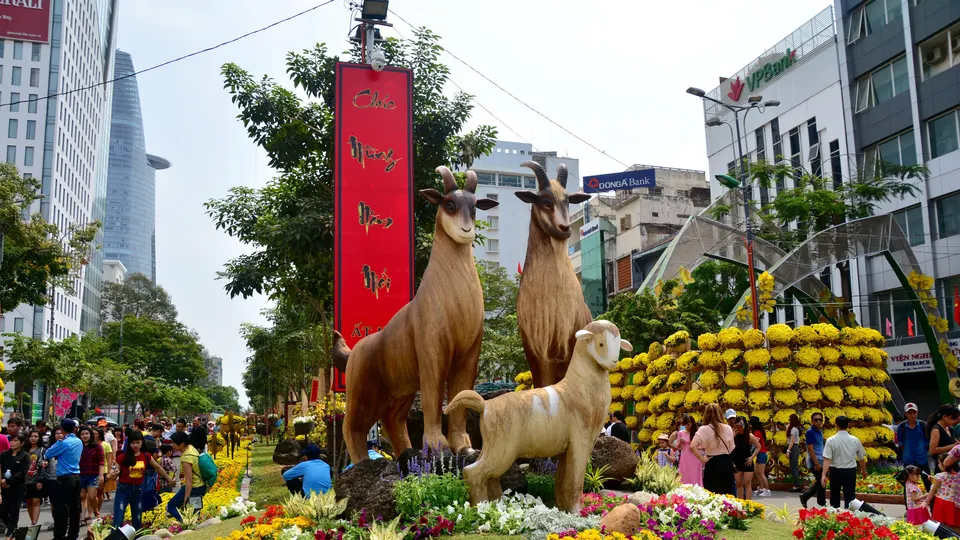
Tet 2027, the Year of the Goat, begins on Saturday 6 February, and the first envelopes change hands that morning. The official holiday for public offices runs from Thursday 4 to Wednesday 10 February 2027 (Ha Tinh portal), so workplace li xi, where it is given, falls on the first working day after it, Thursday 11 February for public offices.
Get new notes and envelopes early. At Tet 2026 the big banks closed their counters from the 27th or 29th day of the last lunar month until about the 7th day of the new year, while mobile banking, ATMs and card payments ran around the clock, VnBusiness reported; the 2027 bank schedules had not been published when we checked in November 2026. In practice, that means exchanging notes at your own bank in January and buying envelopes, sold in markets and shops before Tet, in the last weeks of the old year. Our Tet 2027 travel guide covers what else closes and when.
Checked in November 2026. The seven-day Tet 2027 break, 4 to 10 February, was approved by the government, Bao Quoc Te reported on 3 October 2026, and set out in Ministry of Home Affairs notice 11483/TB-BNV of 9 October 2026, which matches the holiday’s last day, 10 February, to the fifth day of the lunar new year. Ahead of Tet 2026 the State Bank told banks, in letter 910/NHNN-VP of 6 February 2026, to meet cash demand “in both value and denomination mix”, keep ATMs topped up and act against money exchange that breaks the law. Two new paid public holidays do not move Tet: Vietnamese Culture Day on 24 November is a paid day off from 2026 under the National Assembly’s April 2026 resolution on culture, and a draft amendment of the Labour Code discussed on 9 November 2026 would add War Invalids and Martyrs Day, 27 July, from 2027, raising paid holidays from 11 to 13 days a year, Bao Van Hoa (Báo Văn Hóa) reported on 10 November 2026; the Tet 2027 break stays 4 to 10 February. A rule change on the notes themselves: Circular 45/2026, in force since 13 October 2026, lets the State Bank Governor set the serial-number format for banknotes printed from 1 January 2027, Thoi bao Tai chinh Viet Nam reported in September 2026. And the shift to phones keeps going: in February 2026 a TPBank executive told VnBusiness that banks expected Tet digital payments to rise 30 to 40 percent.
Li xi etiquette: what to do and what to avoid
Most mistakes with li xi are about appearances rather than money. The table brings together the practice the sources describe, so you can check yourself before a Tet visit.
| Situation | Do | Avoid | Why (source) |
|---|---|---|---|
| Choosing the envelope | A red or red-and-gold envelope, sealed | Loose cash handed over without an envelope | The red envelope carries the luck and keeps the gift discreet (Thoi bao Tai chinh Viet Nam, 2025) |
| Deciding the amount | The same amount for children of the same family; a modest sum as a guest | Visibly different sums for siblings, or sums that start a comparison | Press from 2021 to 2026 describes children comparing envelopes and adults feeling pressure (VnExpress) |
| Handing it over | Say a wish that fits the person, and use both hands | Giving it silently, or leading with the amount | The wish is the point of the gift (VnExpress, 2023) |
| Receiving one | Take it with both hands, thank the giver, open it later | Opening it in front of the giver | A Hanoi mother told VnExpress in February 2026 that her children always receive with both hands, thank the giver and never open the envelope in front of others; the same report describes a child opening one at the table and calling 50,000 VND too little |
| Getting new notes | Ask at your bank, early in January | Paid exchange services on the street or online | Only banks, the State Bank and the State Treasury may exchange notes; fines up to 40 million VND for individuals were reported in 2026 |
| Giving from far away | A bank transfer or digital envelope with a written wish | Scanning QR codes from strangers | VietnamFinance warned in 2025 that scam QR codes can carry malware |
Common practice vs the exception. In most families the rule of thumb is simply “same envelope for the same kind of relationship”. Where a family has its own habit, follow your hosts: some households give only to children, others also to elders and staff.
Giving and receiving li xi as a visitor
You are not expected to give li xi, but if you visit a Vietnamese family at Tet, a small envelope for each of your hosts’ children is a warm gesture. A few points, drawn from the practice the press describes:
- Use a red envelope, sold everywhere before Tet, and put the money in before you arrive.
- Keep it modest. The wish matters more than the amount; one envelope per child, of the same value for children of the same family, avoids comparisons.
- Say a wish as you give it, for example chuc mung nam moi (Happy New Year); our guide to Vietnamese phrases by region covers greetings for elders.
- Receiving an envelope: take it with both hands and say thank you, as VnExpress reminds parents to teach their children, and open it later, not in front of the giver.
- Clean notes are enough. Do not pay a street exchanger for new ones.
- Far away? A bank transfer or a digital envelope with a written wish is now normal for relatives and friends you cannot visit.
Li xi is one symbol of the Tet visit; the other you are likely to meet is the rice cake set on the ancestor altar, square in the North and cylindrical in the South, which our page on banh chung vs banh tet explains.
If you know the Chinese custom of red packets, the idea is the same; our page on Tet vs Chinese New Year explains what else is shared and what differs. For more on Vietnamese customs, see the culture hub.
Frequently asked questions
How much lucky money should I give in Vietnam?
There is no rule. Press reports from 2021 to 2026 describe common amounts for children of about 20,000 to 100,000 VND per envelope in ordinary families, and more in better-off ones; as a guest, a modest envelope for your hosts' children is enough.
What does li xi mean in Vietnamese?
Li xi means Tet lucky money: cash in a small red envelope given with a New Year wish, mostly to children. Li xi is the Southern word, now heard nationwide; in the North the same custom is called mung tuoi, roughly "celebrating your age".
Is it illegal to pay for new banknotes for li xi in Vietnam?
Running a paid exchange outside the banking system breaks Vietnamese rules: only the State Bank, credit institutions, foreign bank branches and the State Treasury may exchange notes. Before Tet 2026 the press reported fines of up to 40 million VND for individuals, and Decree 340/2025 replaced the old penalty decree from 9 February 2026.
When do you give li xi at Tet 2027?
From the first day of Tet, Saturday 6 February 2027, whenever you meet children and elders over the holiday. Some employers also hand out envelopes on the first working day after the break, which for public offices is Thursday 11 February 2027.
What do you say when you give li xi?
A New Year wish that fits the person: growing well and doing well at school for a child, a long life and good health for a grandparent. Chuc mung nam moi (Happy New Year) works for everyone, and grown children also give envelopes to their parents and grandparents as a sign of respect.
Key sources
- 'Ngày Văn hóa Việt Nam-24/11': Người lao động được nghỉ làm, hưởng nguyên lương · Cổng thông tin điện tử tỉnh Hà Tĩnh (National Assembly resolution of 24 April 2026)
- Đảm bảo an toàn hoạt động ngân hàng Tết Bính Ngọ 2026 (letter 910/NHNN-VP) · Ngân hàng Nhà nước Việt Nam, 12 February 2026
- Sau Tết, công nhân rộn ràng nhận lì xì, doanh nghiệp tất bật đơn hàng mới · Tuổi Trẻ, 23 February 2026
- Tết Nguyên đán 2027, công chức, viên chức được nghỉ 7 ngày liên tục · Cổng thông tin điện tử tỉnh Hà Tĩnh, 9 October 2026 (on Ministry of Home Affairs notice 11483/TB-BNV)
- Trượt giá của lì xì · VnExpress, 13 February 2021
- Tết Bính Ngọ 2026: Đưa lì xì về lại 'nếp xưa' · Diễn đàn Doanh nghiệp, 17 February 2026
- Đổi tiền lẻ thu phí dịp Tết: Cá nhân có thể bị phạt đến 40 triệu đồng · Luật sư Việt Nam, 15 February 2026
- Tết Bính Ngọ 2026: ATM vắng khách, thanh toán số lên ngôi · Báo Lào Cai, 12 February 2026
All 28 sources and further reading
- Ý nghĩa của tiền lì xì và cách để "tiền đẻ ra tiền" · Thời báo Tài chính Việt Nam, 30 January 2025
- Từ năm 2027, người lao động có thể được nghỉ và hưởng nguyên lương ngày 27.7 · Báo Văn Hóa, 10 November 2026
- Chốt lịch nghỉ Tết Nguyên đán Đinh Mùi 7 ngày · Báo Thế giới và Việt Nam, 3 October 2026
- Từ năm 2027 trở đi, seri tiền mới in được xác lập theo nguyên tắc mới · Thời báo Tài chính Việt Nam, 3 September 2026
- Tết Bính Ngọ 2026: ATM "thất sủng", giao dịch số bùng nổ gấp 28 lần GDP · VnBusiness, 9 February 2026
- Giải áp lực lì xì ngày Tết · VnExpress, 14 February 2026
- Police warn against small banknotes exchange near Tết · Việt Nam News, 29 January 2026
- Nghị định 340/2025/NĐ-CP về xử phạt vi phạm hành chính trong lĩnh vực tiền tệ và ngân hàng (Article 72: replaces Decree 88/2019 from 9 February 2026) · Thư viện Nhà Đất (full text of the decree)
- Tết Bính Ngọ 2026: Lì xì điện tử và sự chuyển mình của phong tục truyền thống · Báo Thế giới và Việt Nam (TTXVN), 19 February 2026
- Tết số hóa, ngân hàng đua 'hút' khách lì xì online · VietnamFinance, 25 January 2025
- Lịch nghỉ Tết Nguyên đán 2026 của các ngân hàng và những lưu ý quan trọng về tài chính · VnBusiness, 13 February 2026
- Nguồn gốc từ "lì xì" · Nhân Dân, 16 February 2007
- Lì xì bao nhiêu là đủ? · VnExpress, 23 January 2023
- Cẩn trọng với dịch vụ đổi tiền mất phí · Nhân Dân, 9 January 2023
- New banknotes in high demand in Ho Chi Minh City as Tet approaches · Tuổi Trẻ News, 9 January 2023
- Lucky money giveaway – an exchange of best New Year wishes · VietNamNet Global (VNA), 10 February 2024
- No small notes for Tet: SBV · VietNamNet, 28 December 2013
- How lucky is your Tet money? · Tuổi Trẻ News, 6 February 2019
- Vietnam's Lì Xì tradition: has it become a burdensome responsibility? · Vietcetera, 16 January 2023
- Tet Holiday: The Age-Old Tradition Explained · Vietcetera
Keep exploring
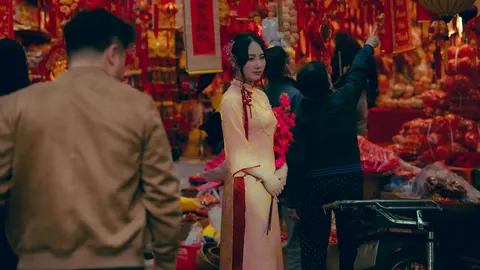 North · Central · South · Culture Tet (Tết) 2027 by Region: North, Central, South Compared How Tet differs in North, Central and South Vietnam: peach vs mai, banh chung vs banh tet, fruit trays, pickles, first visitors, plus the Tet 2027 dates.
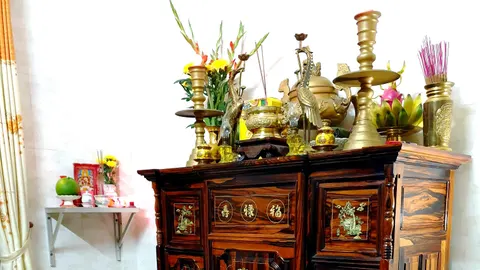 North · Central · South · Culture Is Tet the Same as Chinese New Year? What Differs in 2027 Is Tet the same as Chinese New Year? Same roots and usually the same day (6 Feb 2027), but not in 2030, with a different zodiac, food and holiday length.
 North · Central · South · Travel Tet 2027 in Vietnam: When to Travel and What's Open Travelling at Tet 2027 (4–10 Feb): when to book trains and flights, fares as of November 2026, Long Thanh airport, and what stays open in Hanoi, Hue and Saigon.
 North · Central · South · Culture Which Vietnamese Phrases to Use in Hanoi, Hue and Saigon Which Vietnamese phrases to use in Hanoi, Hue and Saigon: greetings and family words, da or vang, prices, ordering, and words that change, like lon or heo.