All three regions · Culture
Is Tet the Same as Chinese New Year? What Differs in 2027
Is Tet the same as Chinese New Year? Same roots and usually the same day (6 Feb 2027), but not in 2030, with a different zodiac, food and holiday length.
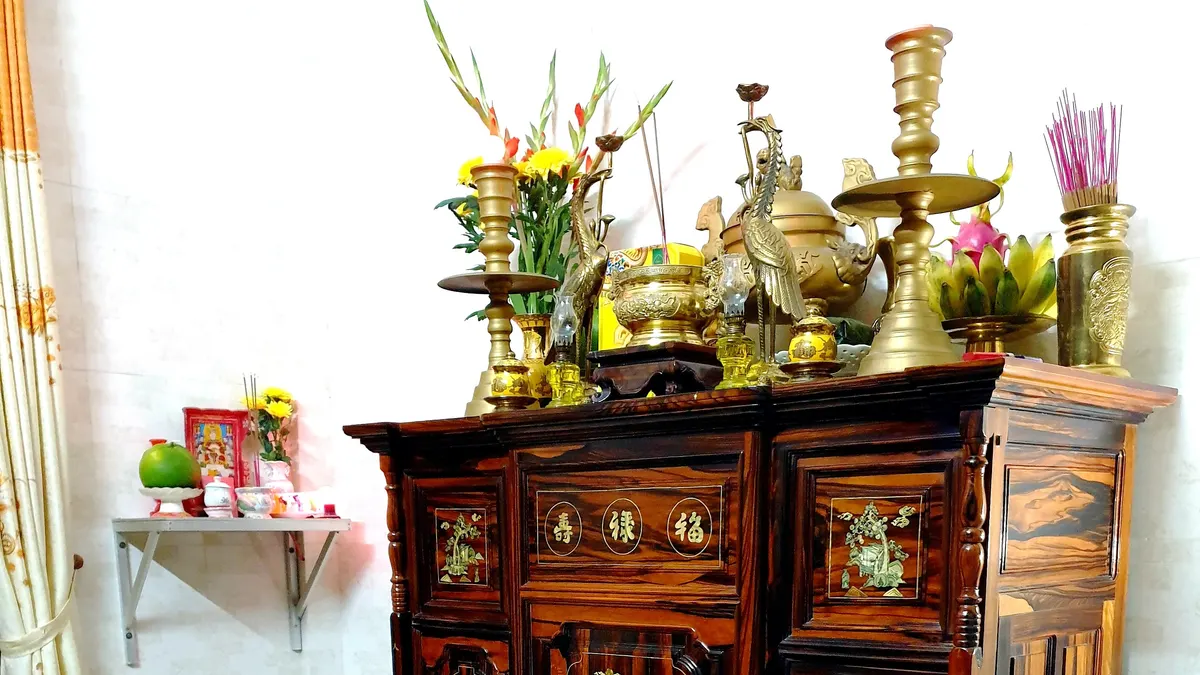
Is Tet the same as Chinese New Year? No, but the two are close relatives: they share their origin, their lunisolar calendar and, in 2027, their date, Saturday 6 February, the first day of the Year of the Goat, while Vietnam keeps its own zodiac, food and customs, and the dates do not always match (in 2030 Tet comes a day earlier). As of November 2026 the 2027 holidays are also fixed: the Government Office confirmed in October 2026 that Vietnam’s public-sector Tet break runs seven days, from Thursday 4 to Wednesday 10 February 2027, while China’s State Council set nine days, from 5 to 13 February.
Tet (Tết), short for Tet Nguyen Dan (Tết Nguyên Đán), is the Vietnamese Lunar New Year, a festival with the same roots and usually the same date as the Chinese Spring Festival, but with its own zodiac, food and customs. Both grew from the same lunisolar calendar and the same new-year customs, which is why outsiders often call Tet “Chinese New Year”, and why Vietnamese people tend to correct them. Vietnam received the calendar of heavenly stems and earthly branches from China and adapted it to its own customs, as Vietnam’s national news agency puts it.
This page sets the two side by side: what they share, where they differ, and why. For how Tet itself changes between the North, the Centre and the South, from peach blossom to mai and from square to cylindrical rice cakes, see our guide to Tet in North, Central and South Vietnam.
Tet vs Chinese New Year at a glance
| Tet (Vietnam) | Spring Festival (China) | |
|---|---|---|
| Name | Tet Nguyen Dan, usually Tet | Chunjie (Spring Festival), in English often Chinese New Year |
| Calendar | Lunisolar, computed for UTC+7 by Vietnam’s State Calendar Office | Lunisolar, computed for UTC+8 |
| Date | Usually the same day; one day earlier in 1968, 1969, 2007 (and due in 2030, 2053), a month earlier in 1985 | Sets the reference most outsiders know; 2030 starts on 3 February |
| New Year 2027 | Saturday 6 February, Year of the Goat | Saturday 6 February, Year of the Goat |
| Official holiday 2027 | 7 days, Thu 4 to Wed 10 February (public sector) | 9 days, Fri 5 to Sat 13 February, with make-up workdays on 31 January and 14 February |
| Zodiac | Cat instead of rabbit, water buffalo instead of ox | Rabbit, ox |
| Kitchen gods | Sent to heaven on the 23rd of the 12th lunar month, riding a carp; live carp released | Not covered here |
| Signature food | Banh chung (square, North) and banh tet (cylinder, South) | Dumplings and other regional dishes |
| Lucky money | Li xi (lì xì) or mung tuoi (mừng tuổi) in red envelopes | Hongbao (lai see in Cantonese) |
| Heritage status | — | UNESCO intangible heritage list, December 2024 |
The shared core is larger than the differences. UNESCO’s description of the Chinese festival, inscribed in December 2024, would fit a Vietnamese family too: homes cleaned and food prepared in advance, a family dinner on New Year’s Eve, offerings to heaven, earth and ancestors, new clothes and visits to elders (UNESCO).
Are Tet and Chinese New Year always on the same day?
Both calendars start a month on the day of the new moon. The difference is where that day is measured. Vietnam’s State Calendar Office, which computes and publishes the official lunar calendar every year, uses Vietnam’s standard time, UTC+7, with Hanoi as the reference; China uses UTC+8. When a new moon falls between 11 pm and midnight in Vietnam, it is already the next day in Beijing, so the month starts a day earlier in Vietnam (Nhan Dan).
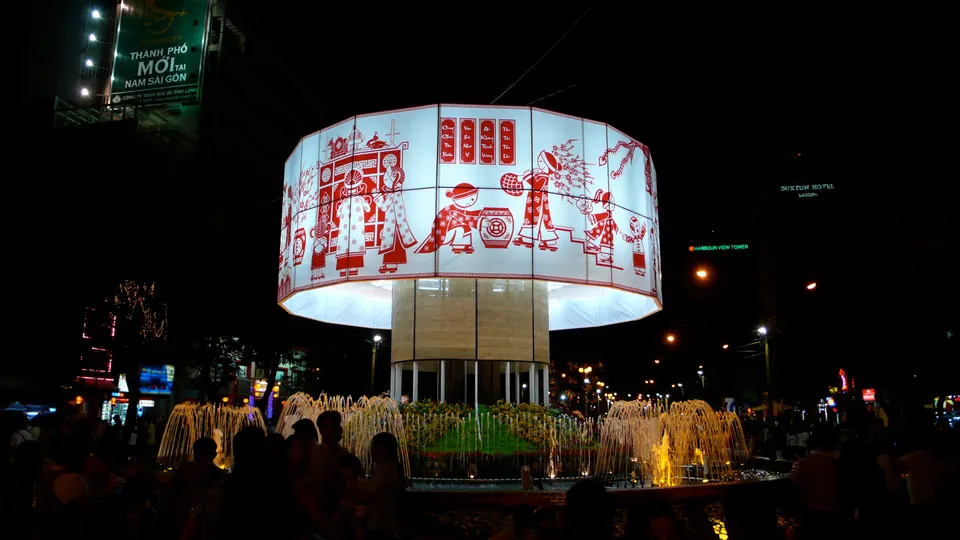
Most years this changes nothing, and the next three New Years coincide. The table below compares Vietnam’s lunar calendar (as published by the provincial newspaper Bao Lam Dong (Báo Lâm Đồng)) with the Chinese calendar of the Hong Kong Observatory, which, like mainland China, uses UTC+8:
| Year (sign) | Tet in Vietnam | Chinese New Year | Same day? |
|---|---|---|---|
| 2027 (Goat) | Sat 6 February | Sat 6 February | Yes |
| 2028 (Monkey) | Wed 26 January | Wed 26 January | Yes |
| 2029 (Rooster) | Tue 13 February | Tue 13 February | Yes |
| 2030 (Dog) | Sat 2 February | Sun 3 February | No, Tet is a day earlier |
In 2030 the Hong Kong Observatory’s table still counts Saturday 2 February as the 30th day of the old year, while for Vietnam the same day is the first day of the first month of Canh Tuat (Canh Tuất), the Year of the Dog. So a Vietnamese family will be on its first New Year visits while Chinese families are sitting down to their New Year’s Eve dinner.
Earlier exceptions were larger. According to the State Calendar Office, Tet came one day before the Chinese New Year in 1968 and 1969, and a whole month earlier in 1985, when the two calendars also placed the leap month differently; in this century it was a day earlier in 2007 and will be again in 2030 and 2053. In 2007 Tet fell on 17 February, a day before China’s, and the two calendars stayed a day apart until 18 March, VnExpress reported.
Why it matters for you. If you plan around “Chinese New Year” dates from a Chinese source, check the Vietnamese date in those rare years; Vietnamese public holidays follow the Vietnamese calendar. VnExpress also warned in 2006 that some almanacs sold in Vietnam were translated directly from Chinese books and gave the wrong Vietnamese dates.
The zodiac. Vietnam and China share ten of the twelve signs: rat, tiger, dragon, snake, horse, goat, monkey, rooster, dog and pig. Vietnam has the cat where China has the rabbit, and the water buffalo where China has the ox, AFP reported via Tuoi Tre News in 2023. So 2023 was the Year of the Cat in Hanoi and the Year of the Rabbit in Beijing. Why is debated. The explanations reported by AFP, the Vietnam News Agency and Vietcetera are that the Chinese name of the sign, mao, sounds like meo, the Vietnamese word for cat; that rice farmers value cats because they keep rats away; that Vietnamese did not want two similar, rodent-like animals in the cycle; and that cats are simply more familiar than rabbits in Vietnam. None is proven.
Tet 2027 vs Chinese New Year 2027: same day, different holidays
In 2027 the two calendars agree: the Year of the Goat begins on Saturday 6 February in both Vietnam and China, with New Year’s Eve on Friday 5 February. What differs for a traveller is the holiday around it. Vietnam’s public-sector Tet break runs seven days, from Thursday 4 to Wednesday 10 February 2027, under a Ministry of Home Affairs notice of 9 October 2026 reported by the Ha Tinh provincial portal. China’s State Council, in a notice dated 5 November 2026, set a nine-day Spring Festival holiday from Friday 5 to Saturday 13 February, with Sundays 31 January and 14 February made working days to compensate (State Council).
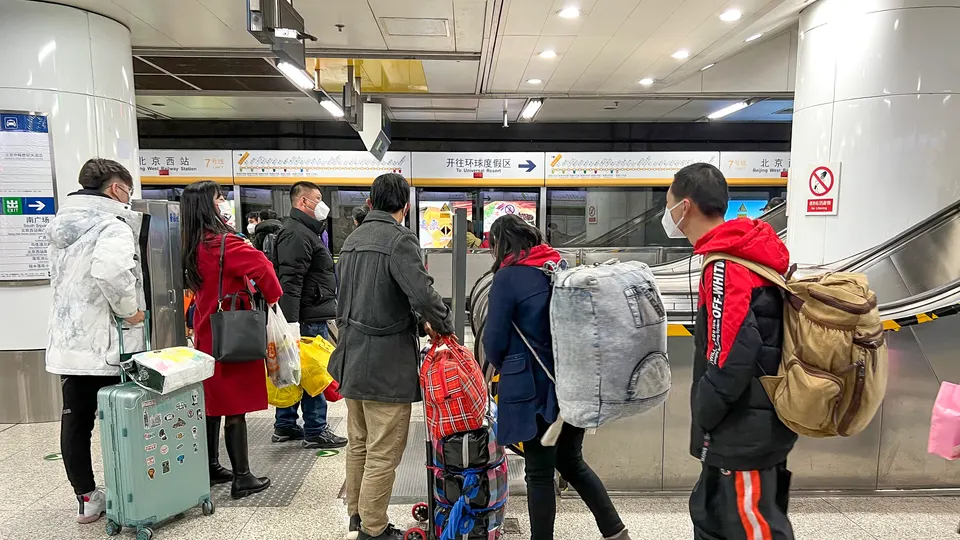
| 2027 | Vietnam (Tet) | China (Spring Festival) |
|---|---|---|
| New Year’s Eve | Fri 5 February, the 29th day of the last lunar month | Fri 5 February (chuxi) |
| New Year’s Day | Sat 6 February | Sat 6 February |
| Official holiday | Thu 4 to Wed 10 February, 7 days | Fri 5 to Sat 13 February, 9 days |
| How the days add up | 5 days of Tet leave plus 2 days off in lieu of the weekend that falls inside it | Includes the weekend; Sun 31 January and Sun 14 February become working days |
The break is not affected by Vietnam’s new holiday law. On 21 November 2026 the National Assembly passed an amendment to the Labour Code that adds two paid holidays, Vietnam Culture Day on 24 November (from 2026) and War Invalids and Martyrs Day on 27 July (from 2027), but keeps five days of Tet leave; from 2027 Vietnam has 13 paid public holidays a year, CafeF and VietnamPlus reported, the same number China’s employees have under its 2027 schedule.
One Vietnamese quirk: there is no “30 Tet” in 2027. Znews explained in January 2026 that in Vietnam’s calendar the last lunar month has only 29 days every year from 2025 to 2032, so New Year’s Eve falls on the 29th; the 30th day returns only at Tet 2033.
What it means for you. In Vietnam the quietest days are the first three of the new year, 6 to 8 February 2027, when many family-run eateries and small shops close, while trains and flights fill up in the weeks before; our Tet 2027 travel guide has the booking dates and what stays open in each city. If your trip also takes in mainland China, plan around its longer break, which ends on 13 February.
Kitchen gods and carp: the send-off a week before Tet
In Vietnam the run-up to Tet starts on the 23rd day of the 12th lunar month with the offering to Ong Cong Ong Tao (Ông Công Ông Táo): the god who looks after the house and its land (Ong Cong) and the kitchen gods (Ong Tao), who are said to travel to heaven to report on the family’s year. Families make the offering at home, usually before noon on the 23rd, with paper effigies for the gods.
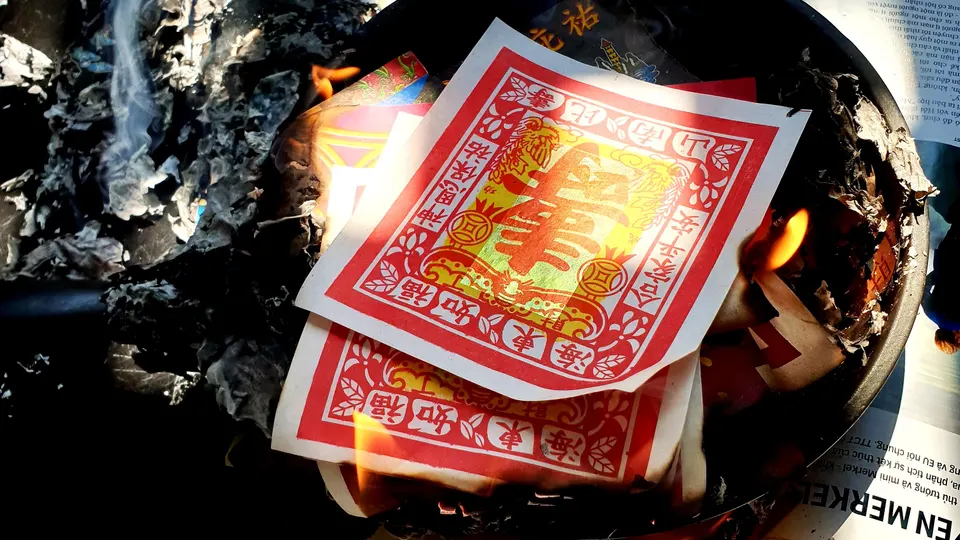
The Vietnamese detail is the carp. The kitchen gods are believed to ride a carp to heaven, so many families buy live carp, often three, keep them beside the offering tray and release them into a river or lake afterwards, where the carp is said to become a dragon; some use paper carp instead and burn them with the votive paper (Bao Van Hoa). Bao Van Hoa (Báo Văn Hóa) has also reported the downside: after the day, lakes in Hanoi fill with plastic bags thrown in with the fish, and the paper asks people to release the fish gently and bin the bags.
Common practice vs the exception. Not every family releases live fish: some use paper carp instead, which Bao Van Hoa describes as an accepted alternative. The offering itself, not the fish, is the heart of the day.
Food, flowers and the New Year tree
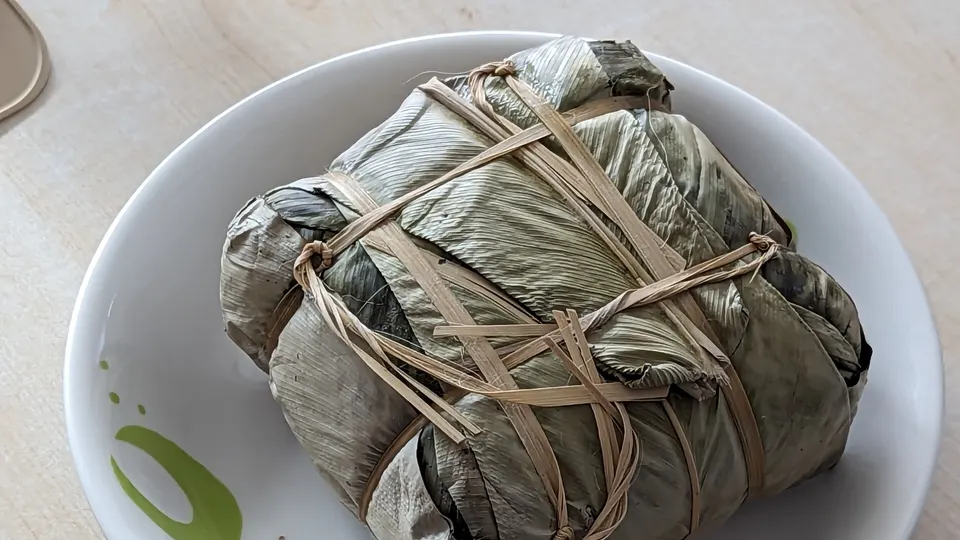
Here the two festivals look most different. The Vietnamese table centres on banh chung (bánh chưng), a square cake of sticky rice, mung beans and pork wrapped in leaves, in the North, and its cylindrical cousin banh tet (bánh tét) in the South (our page on banh chung vs banh tet explains how they differ); dumplings, the dish many outsiders associate with Chinese New Year, are not part of the Vietnamese Tet table (SCMP).
The traditional Vietnamese New Year tree is the cay neu (cây nêu), a tall bamboo pole set up for Tet, where a Hong Kong household might display a kumquat tree or a blossom tree hung with red packets and couplets, the South China Morning Post notes. In homes, flowers are the more common sign of the season: peach blossom in the North and yellow mai in the South, as our Tet by region guide explains.
What is shared: family, ancestors and lucky money
Strip away the details and the festival is the same in both countries: a time to go home, to remember the dead and to start the year well. Families clean the house beforehand, put offerings on the ancestor altar, share a New Year’s Eve meal and visit relatives in the first days of the year.
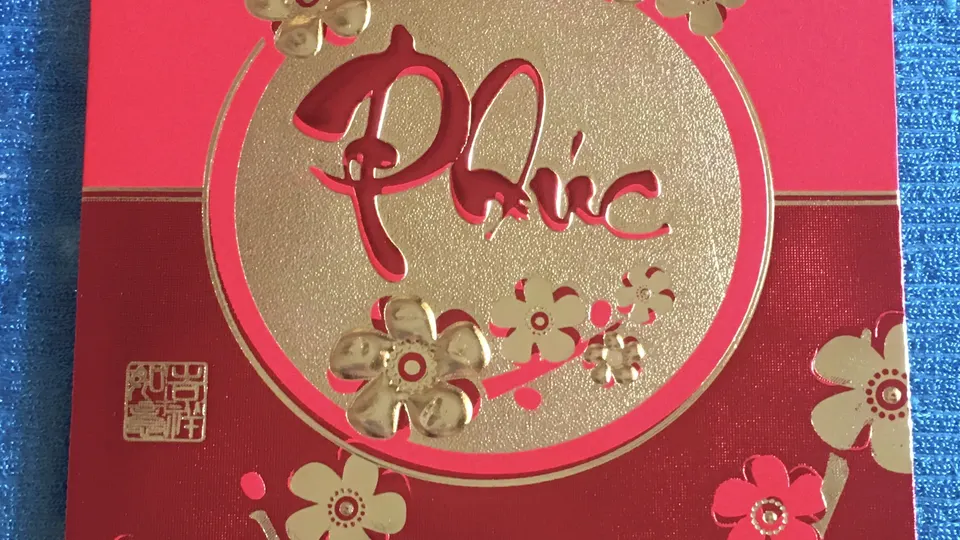
Lucky money is common to both. In Vietnam elders give children red envelopes of money with New Year wishes: li xi in the South, mung tuoi or tien mung tuoi in the North, Vietcetera notes; the Chinese equivalent is the hongbao, or lai see in Cantonese. Our li xi guide explains amounts, new notes and etiquette. The Vietnamese custom of choosing the first visitor of the year, xong dat (xông đất), so that a lucky person steps into the house first, is part of the same family of beliefs about starting the year well.
What to call it, and where the two meet in Vietnam
In Vietnam, call it Tet. In English, “Vietnamese New Year” or “Lunar New Year” is fine; “Chinese New Year” for Tet sounds wrong to many Vietnamese, because Tet is their own festival with its own customs. To wish someone a happy new year, say chuc mung nam moi (chúc mừng năm mới); our guide to Vietnamese phrases by region helps with pronunciation.
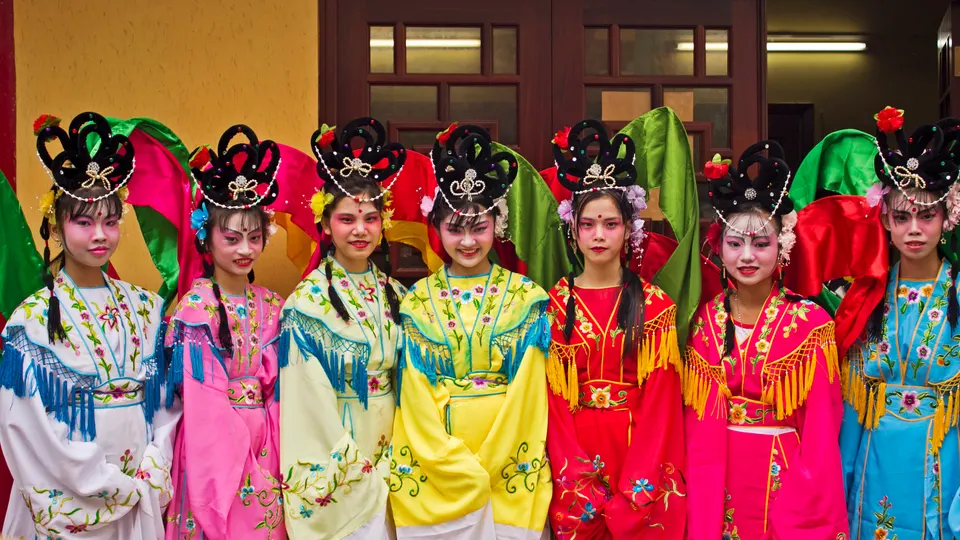
The two traditions do meet. Vietnam’s ethnic Chinese (Hoa) community, concentrated in Cho Lon (Chợ Lớn) in Saigon, celebrates the New Year with customs of its own, including lantern and drum celebrations around the first full moon, Nguyen Tieu (Nguyên Tiêu), centred on the assembly halls described in our Cholon guide. If you are in Vietnam over Tet, remember that many shops and restaurants close for several days; our best time to visit Vietnam guide covers Tet travel, and the culture hub has more on Vietnamese customs.
Frequently asked questions
Is there a 30 Tet in 2027?
No. In Vietnam's lunar calendar the last month of the year has only 29 days every year from 2025 to 2032, so New Year's Eve for Tet 2027 falls on the 29th, Friday 5 February 2027. The 30th day returns only at Tet 2033, Znews reported in January 2026.
Do private companies in Vietnam get the same Tet 2027 holiday as civil servants?
Not automatically. The seven-day break from 4 to 10 February 2027 applies to civil servants and public employees; private businesses may set their own Tet schedule as long as they respect workers' legal entitlements, Bao Quoc te reported in October 2026.
Is Tet 2030 on a different day from Chinese New Year?
Yes. Vietnam's lunar calendar puts Tet Canh Tuat on Saturday 2 February 2030, while the Chinese calendar published by the Hong Kong Observatory starts the Year of the Dog on Sunday 3 February 2030. Tet 2027, 2028 and 2029 fall on the same day as Chinese New Year: 6 February 2027, 26 January 2028 and 13 February 2029.
Does Vietnam's new holiday law change the Tet 2027 break?
No. The Labour Code amendment passed by the National Assembly on 21 November 2026 adds two paid holidays, Vietnam Culture Day on 24 November and War Invalids and Martyrs Day on 27 July, but keeps five days of Tet leave, so the public-sector break of 4 to 10 February 2027 stands.
Should I call Tet Chinese New Year in Vietnam?
No. In Vietnam it is Tet, short for Tet Nguyen Dan; in English, Vietnamese New Year or Lunar New Year is fine. Ethnic Chinese (Hoa) communities in Vietnam, centred on Cho Lon in Saigon, celebrate it too, with some customs of their own.
Key sources
- Gregorian-Lunar Calendar Conversion Table of 2030 (Geng-xu, year of the Dog) · Hong Kong Observatory
- 国务院办公厅关于2027年部分节假日安排的通知 (2027 public holiday arrangements) · General Office of the State Council, via Xinhua, 5 November 2026
- Tết Nguyên đán 2027, công chức, viên chức được nghỉ 7 ngày liên tục · Cổng thông tin điện tử tỉnh Hà Tĩnh, 9 October 2026 (on Ministry of Home Affairs notice 11483/TB-BNV)
- Chung quanh thông tin về ngày âm lịch khác nhau trên một số loại lịch · Nhân Dân (answers by the State Calendar Office), 29 June 2006
- Spring festival, social practices of the Chinese people in celebration of traditional new year · UNESCO Intangible Cultural Heritage (inscribed 2024)
- UNESCO inscribes Spring Festival on intangible cultural heritage list · Xinhua (gov.cn), 5 December 2024
- Phong tục của người Việt trong lễ cúng ông Công ông Táo · Báo Văn Hóa, 16 January 2020
- What is Tet? The Vietnamese Lunar New Year explained · South China Morning Post (Young Post)
All 18 sources and further reading
- Quốc hội chính thức bổ sung 2 ngày nghỉ lễ, tết hưởng nguyên lương · VietnamPlus (VNA), 21 November 2026
- Quốc hội quyết bổ sung 2 ngày nghỉ lễ, người lao động được hưởng nguyên lương · CafeF, 21 November 2026
- Âm Dương lịch ngày 02 tháng 02 năm 2030 · Báo Lâm Đồng (lunar calendar)
- Chốt lịch nghỉ Tết Nguyên đán Đinh Mùi 7 ngày · Báo Thế giới & Việt Nam (baoquocte.vn), 3 October 2026
- Tại sao 7 năm nữa Tết Nguyên đán mới có ngày 30 Tết? · Znews, 12 January 2026
- China public holiday schedule 2027: official calendar and working days · China Briefing (Dezan Shira & Associates), 6 November 2026
- Lịch sai do dịch sách Trung Quốc · VnExpress, 21 July 2006
- Why Vietnam is celebrating the Year of the Cat, not the Rabbit · Tuổi Trẻ News (AFP), 19 January 2023
- Why does Vietnam celebrate the year of the Cat instead of the Rabbit? · VietnamPlus (VNA), 18 January 2023
- Tet Holiday: The Age-Old Tradition Explained · Vietcetera
Keep exploring
 North · Central · South · Culture Tet (Tết) 2027 by Region: North, Central, South Compared How Tet differs in North, Central and South Vietnam: peach vs mai, banh chung vs banh tet, fruit trays, pickles, first visitors, plus the Tet 2027 dates.
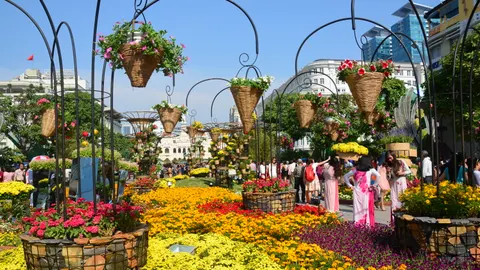 North · Central · South · Travel Tet 2027 in Vietnam: When to Travel and What's Open Travelling at Tet 2027 (4–10 Feb): when to book trains and flights, fares as of November 2026, Long Thanh airport, and what stays open in Hanoi, Hue and Saigon.
 North · Central · South · Food Banh Chung vs Banh Tet: The Difference and Which to Buy Banh chung vs banh tet: the difference in shape, leaf, filling and region, how to cut and keep them, and when to buy one before Tet on 6 February 2027.
 North · Central · South · Culture Li Xi (Lì Xì) Meaning: Tet Lucky Money, How Much to Give What li xi means: Vietnam's Tet lucky money in red envelopes, the wish behind it, what families gave at Tet 2026, when to give at Tet 2027 and the etiquette.