Central Vietnam · Food
Cao Lau (Cao Lầu): What It Is, Price and Where to Eat It
Cao lau, Hoi An's chewy ash-water noodle dish: what is in a bowl, what it costs in 2026, the Ba Le well legend, how it differs from mi Quang, where to eat it.
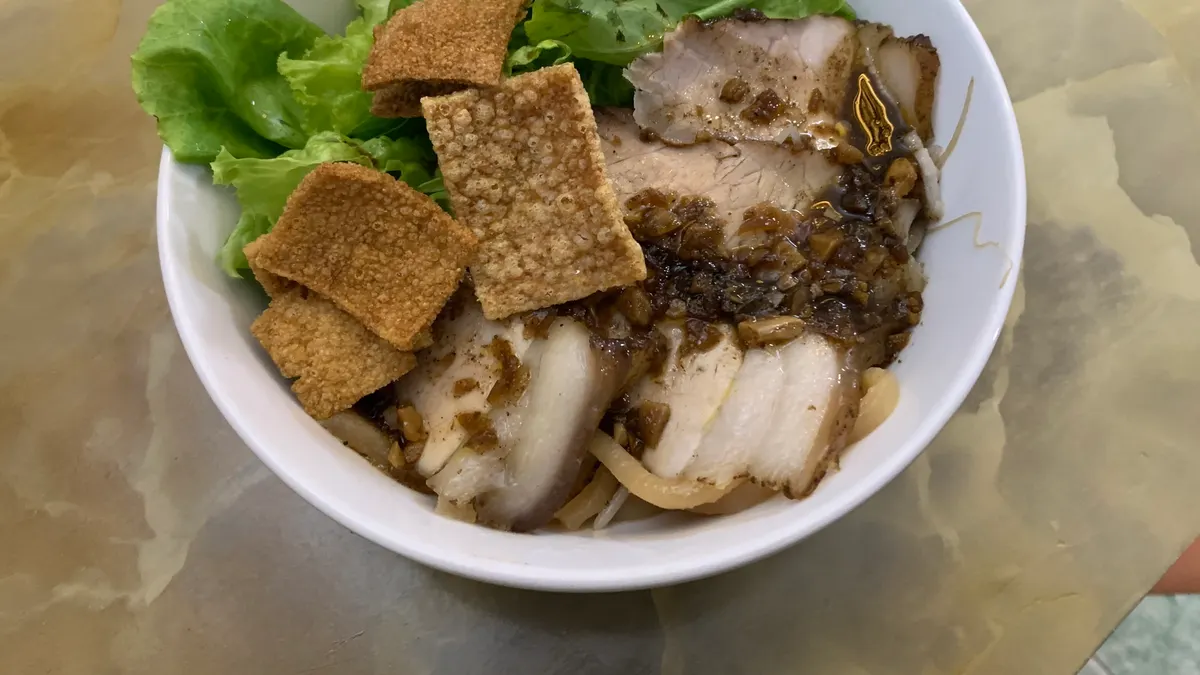
Cao lau is Hoi An’s own noodle dish, eaten mixed with a little sauce rather than as a soup, and the best place to try it is the old town itself. It is cheap: as of April 2026, VnExpress’s Hoi An travel guide put a bowl at about 25,000 dong at street eateries, and in June 2026 Afamily gave a usual range of 30,000–50,000 dong. The legends about its water and ash are less reliable than the noodle itself, as the sections below explain.
Cao lau (Cao lầu) (usually written “cao lau” in English) is the noodle dish of Hoi An, the old trading port on the Thu Bon (Thu Bồn) River in Central Vietnam. A bowl holds thick, chewy, pale yellow rice noodles, thin slices of five-spice pork, crisp fried pieces, blanched bean sprouts and fresh greens, with only two or three spoonfuls of sauce rather than a broth. Da Nang’s tourism authority calls it a dish that “can only be found in Hoi An” (Da Nang tourism portal), and that is how people in the town see it, even though restaurants elsewhere now serve it.
Hoi An (Hội An) belonged to Quang Nam (Quảng Nam) province until 1 July 2025, when the province merged into Da Nang city. Nothing about the dish has changed: it is still made and eaten in the same streets.
What is in a bowl of cao lau?
Every shop has its own touches, but a bowl is built from the same few parts, and VnExpress describes them in a long-standing guide to the dish: noodles blanched just until done, braised pork sliced thin, bean sprouts, Tra Que (Trà Quế) greens, and a spoonful of sauce made from the pork’s braising liquid with tomato and onion (VnExpress).
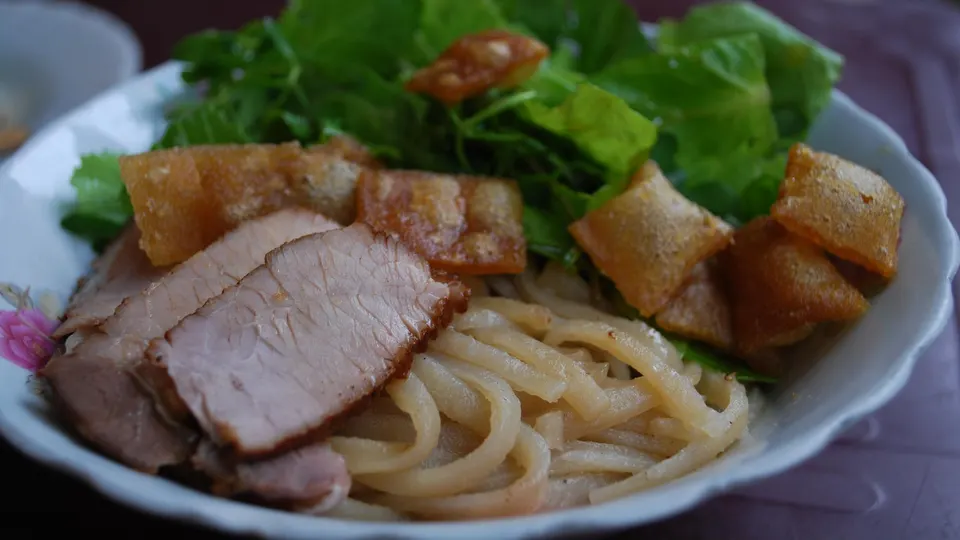
- The noodles. Thick strands made from rice soaked in ash-water, which turns them pale yellow and gives them their firm, springy bite. They are the reason the dish exists (see the next section).
- The pork. Called xa xiu (xá xíu), after Chinese char siu, but in Hoi An it is usually marinated with five-spice powder and fish sauce or soy sauce and simmered, not roasted. The slices are laid around the rim of the bowl.
- The sauce. Da Nang’s tourism portal describes tomatoes, onion and oil simmered in the meat’s cooking liquid. Only a little goes on, enough to moisten everything.
- The crunch. Crisp fried pieces scattered on top. Hoi An’s heritage inventory notes that cooks once used crisp fried pork fat (tep mo (tép mỡ)) and that many now use fried pieces of cao lau (lầu) dough instead; some shops add fried pork skin.
- The greens. Lettuce, herbs and bean sprouts, ideally from Tra Que, the herb and vegetable village just outside town.
- On the side. A grilled rice cracker with sesame, chilli sauce, lime and vinegar, according to the heritage inventory.
| Cao lau at a glance | |
|---|---|
| Vietnamese name | Cao lau (literally “high floor”; meaning debated) |
| Home | Hoi An (part of Da Nang city since July 2025) |
| Noodles | Thick, firm rice noodles soaked in ash-water, rolled and steamed twice |
| Meat | Xa xiu: pork marinated with five-spice and simmered |
| Liquid | Two or three spoonfuls of sauce, no broth |
| Crunch | Crisp fried pork fat or fried pieces of dough; a sesame rice cracker on the side |
| Greens | Lettuce, herbs and bean sprouts, ideally from Tra Que village |
| Tradition vs today | Ash from Cu Lao Cham (Cù Lao Chàm) and water from the Ba Le (Bá Lễ) well in the legend; bought-in lye water in practice by 2013 |
How are the noodles made, and is the Ba Le well story true?
Cao lau noodles are not cut from a steamed sheet of rice batter, as pho (phở) and mi Quang (mì Quảng) noodles are. They are made from a dough. Hoi An’s Centre for Cultural Heritage Management and Preservation recorded the process in a 2013 inventory of the craft: rice is soaked for about three hours in ash-water (nuoc tro (nước tro)), ground into a batter, then stirred over heat until it thickens into a dough, work traditionally done by men. The dough is steamed, kneaded, rolled thin and cut into strands, which are steamed again (Hoi An heritage centre). Timings differ from one account to another, and one family told Saigoneer in 2023 that the whole process takes about four hours, with noodles delivered to the market and eateries by 5–6am.

The ash-water is what makes the noodle. It gives cao lau its yellow tint and, noodle makers told AFAR, its chew; SilverKris credits it with a slightly smoky taste. Because it is alkaline, Saigoneer notes, it also helps the noodles keep, and the heritage inventory says they last a few days without spoiling.
This is where the legend comes in. People in Hoi An have long said that true cao lau needs ash from trees on Cu Lao Cham, the islands off the coast, mixed with water from the Ba Le well in the old town. VnExpress names the wood as tram (tràm) (melaleuca); the heritage inventory lists several traditional ash sources, including firewood from Cu Lao Cham and dried stalks of other plants. Either way, it is a tradition rather than a rule anyone can check today:
- The ash. The 2013 inventory found that Hoi An’s noodle makers were buying lye water imported from Taiwan or China, and warned that this industrial lye could make the noodles differ from the hand-made kind. One noodle maker told AFAR in 2012 that the islands were now protected, so his family burned the same kind of wood from the surrounding area.
- The well. Ba Le is a real, square, brick-lined well in a small alley off Tran Hung Dao (Trần Hưng Đạo) Street, thought to date from the Cham era around the 8th–9th century. A July 2026 Tien Phong (Tiền Phong) report found its water still clear but the well little visited, with tap water having replaced it for most households, and it did not say that noodle makers still use it. The same AFAR noodle maker said his family had dug its own well with similar water.
- The makers. Very few households make the noodles. The 2013 inventory counted three workshops producing about 300 kg a day between them, only one of which still did every step by hand, while machines for grinding, rolling and cutting had arrived at others. In 2023 Saigoneer described the Ta (Tạ) family in Cam Chau (Cẩm Châu) as one of only two households still making fresh cao lau the traditional way.
So the well and the ash are best read as a sign of how much Hoi An values its noodle, and why people say cao lau tastes right only in town. VnExpress reported that most restaurants serving cao lau in Hanoi (Hà Nội) or Ho Chi Minh (Hồ Chí Minh) City fly the noodles in from Hoi An.
Where does cao lau come from, and what does the name mean?
Nobody knows exactly. Hoi An was an international port from the 15th to the 19th century, with Japanese and Chinese merchant quarters, and Da Nang’s tourism portal dates the dish to the 17th century, when the Nguyen (Nguyễn) lords opened the port to foreign trade. Tuoi Tre (Tuổi Trẻ) put it plainly in 2013: many people think the dish came from the Chinese, some experts compare it to Japanese udon, and its origin and name “cannot yet be determined” (Tuoi Tre).

The main views:
- Japanese. The rolled, steamed dough resembles Japanese udon. A 2006 article reprinted by VnExpress leaned this way, arguing that Japanese merchants brought the idea three or four centuries ago. Hoi An’s heritage inventory says the likeness is real but that more evidence would be needed.
- Chinese. The xa xiu pork, named after Chinese char siu, points that way, and the noodle maker interviewed by AFAR said his family’s recipe was taught to his great-grandfather by a Chinese man. Against this, the heritage inventory found that Hoi An’s Chinese families say cao lau is not their dish, and the 2006 article noted that it is not served in the Chinese community of Ho Chi Minh City’s Cho Lon (Chợ Lớn).
- Mixed. The inventory’s own conclusion is that cao lau grew out of exchanges between Vietnamese, Chinese and Japanese cooking in the port’s heyday, between the 17th and 19th centuries, and that many of the shops and noodle makers are Vietnamese.
The name is just as debated. Cao lau means roughly “high floor” or “upper storey”. A popular story says diners once ate it upstairs, and Vietnam Pictorial wrote in 2021 that wealthy customers sat on the upper floor of old restaurants. Hoi An’s heritage inventory rejects the upstairs story, since most cao lau shops were on the ground floor, and suggests the word first meant a house with an upper floor, then a smart eatery, and finally the dish. Vietnam Pictorial also notes that cao lau was once food for the better-off and is now eaten by everyone.
Recognition has followed the dish’s fame. In 2013 the Asian Records Organisation listed cao lau as an “Asian Record dish”, after mi Quang, Vietnam (Việt Nam) News reported.
In December 2025 TasteAtlas, an online food guide, included cao lau in its list of the world’s 100 best noodle dishes for 2026, alongside mi Quang, VnExpress International reported. Formal heritage status is another matter: in August 2024 Vietnam’s culture ministry recognised the folk knowledge of mi Quang, Hanoi pho and Nam Dinh pho as national intangible cultural heritage, the Ha Tinh newspaper (Bao Ha Tinh) reported, and cao lau was not among them.
Cao lau vs mi Quang: what is the difference?
In Hoi An the two dishes appear side by side on menus and look alike at first: yellowish noodles, pork, greens and very little liquid. They are different dishes, and the noodle is the clearest difference. Tuoi Tre News describes cao lau noodles as thick and square-cut, while mi Quang comes with a lighter sauce, wild garlic, banana blossom and a wider range of meats, including frog (Tuoi Tre News). Our guide to mi Quang covers that dish in full.
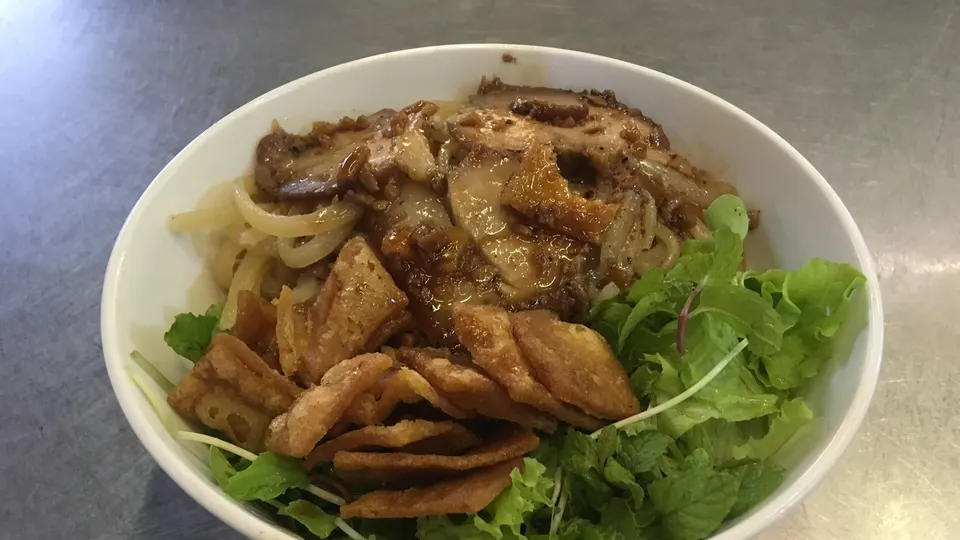
| Cao lau | Mi Quang | |
|---|---|---|
| Where it belongs | Hoi An town | The former Quang Nam province and Da Nang, eaten across Central Vietnam |
| Noodles | Thick strands cut from a rolled rice dough soaked in ash-water and steamed twice; firm and chewy | Wide, flat ribbons cut from steamed sheets of rice batter; softer |
| Meat | Xa xiu pork, sometimes with fried pork skin | Many choices: pork and shrimp, chicken, fish, frog and more |
| Liquid | Two or three spoonfuls of sauce from the pork | A small ladle of thick broth cooked with the toppings |
| Crunch | Crisp fried pork fat or fried dough pieces; rice cracker on the side | Roasted peanuts and a sesame rice cracker |
Do not rely on colour to tell them apart. Hoi An’s heritage inventory calls cao lau noodles the darker, more deeply yellow of the two, while Tuoi Tre News describes the opposite, because mi Quang is often coloured with turmeric and some versions are white. Texture is the safer test: cao lau noodles are harder and chewier, with a faint ash taste. The heritage inventory sums up the cultural difference too: mi Quang is a dish of the Quang Nam countryside, cao lau a dish of the town.
Both are far from a noodle soup. If you want the contrast with a full bowl of clear broth, see our guide to pho by region.
How do you eat cao lau?
Cao lau is eaten with chopsticks, and you do not drink the liquid. A 2006 piece reprinted by VnExpress insists that it is noodles, pork and greens in a little broth, eaten without slurping, and that its proper greens are young mustard greens, tan o (tần ô) (garland chrysanthemum) and rau dang (đắng) (a bitter herb), not the mint that goes with mi Quang (VnExpress). Da Nang’s tourism portal names chrysanthemum greens, bitter herbs and basil as essential, so lists differ from cook to cook.
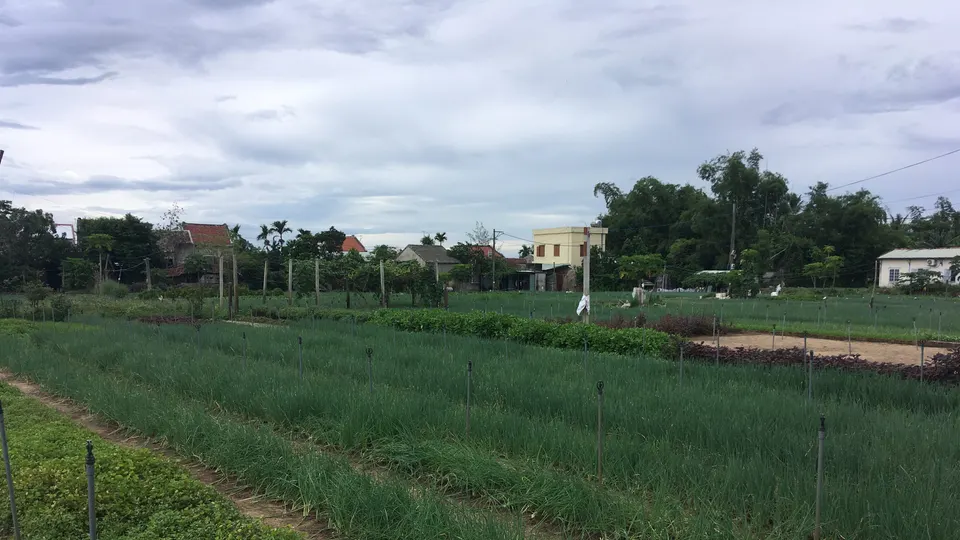
- Mix it. Turn the noodles, greens and pork over with your chopsticks so the little sauce coats everything. Da Nang’s tourism portal says diners mix the bowl thoroughly.
- Season to taste. Add a little fish sauce or soy sauce and some chilli sauce. Lime and vinegar are the traditional accompaniments, according to the heritage inventory.
- Use the cracker. Break the sesame rice cracker over the bowl or eat it between mouthfuls.
If you expect a noodle soup, the first bowl can be a surprise: as a Vietjet Air travel guide (2025) points out, cao lau comes without broth. The sauce is a seasoning, not something to drink.
Where to try cao lau in Hoi An
Cao lau is sold all over Hoi An, from smart restaurants to market stalls. For the town’s other dishes and where to find them, see where to eat in Hoi An. The places below are recommended by Vietnamese press and travel guides, and two of them belong to sellers named in Hoi An’s 2013 heritage inventory of the craft. Vietnam Pictorial’s guide to the dish, for example, names Cao lau Thanh on Thai Phien (Thái Phiên) Street and Ba Be’s stall on Tran Phu (Trần Phú) Street (Vietnam Pictorial). No MICHELIN Guide listing covers a cao lau shop in Hoi An, so all the cards below are local favourites.
Prices are low. VnExpress’s Hoi An travel guide, updated in April 2026, says a bowl of cao lau or mi Quang at a street eatery costs only 25,000 dong, and Afamily wrote in June 2026 that cao lau starts at about 20,000 dong and usually costs 30,000–50,000 dong a portion; expect to pay more in sit-down restaurants. MICHELIN’s 2026 Vietnam selection, announced on 4 June 2026, covers Hanoi, Ho Chi Minh City and Da Nang, and its announcement names no cao lau shop.
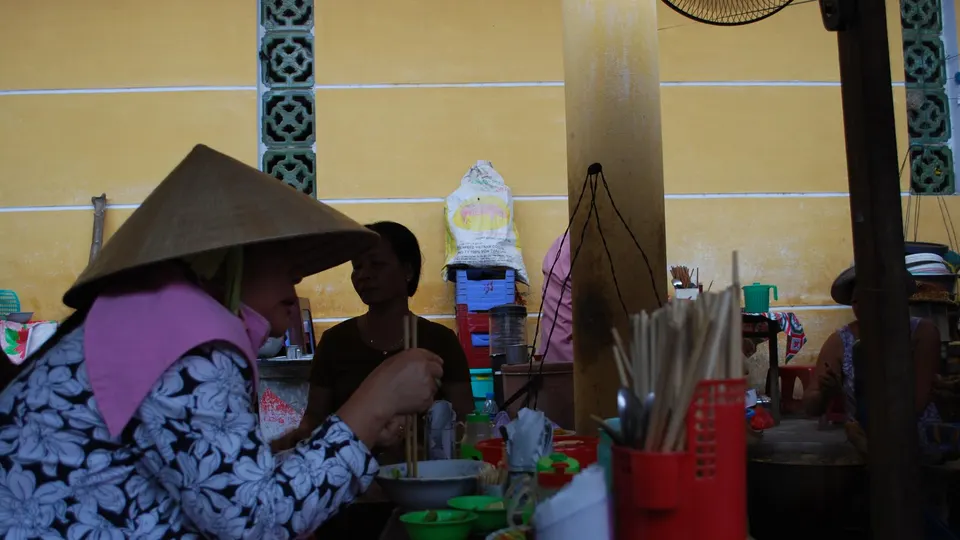
Most of these shops are in or beside the old town, so a bowl fits easily between visits to the assembly halls and the riverfront. If you are staying in Da Nang, the old town is a short drive south.
For more of the region, start from our Central Vietnam hub or browse the food section. The brick temples of My Son, inland from Hoi An, are a reminder of the Cham past that the Ba Le well legend reaches back to, and further north Hue has a very different noodle tradition of its own.
Where to try cao lầu in Hội An
Local favourite
Cao lầu Thanh
Hội An (Đà Nẵng) · Hội An ward, old town
26 Thái Phiên Street
A small shop that has served cao lầu for years: Hội An's 2013 heritage inventory names its owner, Hà Thị Thanh, as one of the town's cao lầu sellers, and Vietnam Pictorial (2021) and Vietjet Air's travel guide (2025) both recommend it.
Order: A plain bowl of cao lầu, with a rice cracker and chilli on the side.
A 2015 press report mentions a different 'cao lầu bà Thanh' cart on Trần Cao Vân Street. This card means the shop at 26 Thái Phiên.
Recommended by: Vietjet Air travel guide (2025), Vietnam Pictorial (VNA) (2021), Hội An Centre for Cultural Heritage Management and Preservation (2013) · checked November 2026
Local favourite
Trung Bắc · Nhà hàng Trung Bắc
Hội An (Đà Nẵng) · Hội An ward, old town, near Hội An Market
87 Trần Phú Street
A family restaurant in a vintage-style building on Trần Phú Street, in the middle of the market area. Its owner, Trần Tấn Mân, is listed in Hội An's 2013 heritage inventory as a cao lầu seller at this address, and Việt Nam News described the family's cao lầu in 2016.
Order: Cao lầu with xá xíu pork; the family mixes in slices of fried pork skin and uses greens from Trà Quế village.
Recommended by: Vietjet Air travel guide (2025), Việt Nam News (2016), Hội An Centre for Cultural Heritage Management and Preservation (2013) · checked November 2026
Local favourite
Cao lầu Bà Bé
Hội An (Đà Nẵng) · Hội An Market (Chợ Hội An), at the Trần Phú Street end
Hội An Market, 19 Trần Phú Street
A stall in the food hall of Hội An Market, recommended by Zing/Giao Thông (2015), Vietnam Pictorial (2021) and Vietjet Air's travel guide (2025).
Order: A bowl of cao lầu at the stall counter.
Several stalls in the market food hall sell cao lầu. This card means Bà Bé's stall; look for her name on the sign.
Recommended by: Vietjet Air travel guide (2025), Vietnam Pictorial (VNA) (2021), Zing (from Giao Thông) (2015) · checked November 2026
Local favourite
Cao lầu Liên
Hội An (Đà Nẵng) · Central Hội An, just north of the old town
120 Trần Cao Vân Street
A family business named after its matriarch, Liên, who sold cao lầu from several rented spaces around Hội An; younger family members now run it. Recommended by Vietnam Pictorial (2021) and Vietnam Coracle's Hội An food guide (2024).
Order: A bowl of cao lầu; the setting is plain.
The shop has moved: Vietnam Pictorial gave its address in 2021 as 21B Thái Phiên Street. The address shown is from the more recent 2024 guide, so check a map before you go.
Recommended by: Vietnam Coracle (2024), Vietnam Pictorial (VNA) (2021) · checked November 2026
Addresses and details can change; check before you go. We do not accept payment for listings.
Frequently asked questions
How much does a bowl of cao lau cost in Hoi An?
As of April 2026, VnExpress's Hoi An travel guide put a bowl of cao lau at about 25,000 dong at street eateries. Afamily reported in June 2026 that most bowls cost 30,000–50,000 dong, from about 20,000 dong at the cheapest; restaurants charge more.
Where should I eat cao lau in Hoi An?
Good starting points are Cao lau Thanh at 26 Thai Phien Street, Ba Be's stall in Hoi An Market at 19 Tran Phu Street, and the Trung Bac restaurant at 87 Tran Phu Street, all in or beside the old town. Cao lau Thanh is also on VnExpress's 2026 list of Hoi An eateries not to miss.
Do you drink the sauce in cao lau?
No. Cao lau comes with only two or three spoonfuls of sauce, which you mix through the noodles, pork and greens with chopsticks before adding chilli, lime or a little fish sauce. It is a dry noodle dish, not a soup like pho.
Is cao lau on Vietnam's national heritage list?
No. When Vietnam's culture ministry listed folk-knowledge food traditions as national intangible cultural heritage in August 2024, it recognised mi Quang, Hanoi pho and Nam Dinh pho, but not cao lau. Cao lau was, however, included in TasteAtlas's list of the world's 100 best noodle dishes for 2026.
Can I eat cao lau outside Hoi An?
Yes, restaurants in Hanoi, Ho Chi Minh City and along the central coast serve cao lau, but VnExpress reported that most of them fly the noodles in from Hoi An. For the local version, eat it in Hoi An.
Key sources
- Cẩm nang du lịch Hội An · VnExpress, 15 Mar 2022 (updated 16 Apr 2026)
- Cao Lau Hoi An – a traditional noodle specialty of Hoi An · Đà Nẵng City Tourism Promotion Center (danangfantasticity.com), 24 Sep 2025
- Phiếu kiểm kê: Nghề chế biến cao lầu (inventory form for the cao lầu craft) · Hội An Centre for Cultural Heritage Management and Preservation, 2013
- Đặc sản cao lầu Hội An · VnExpress, 3 Mar 2012
- Đúng điệu cao lầu · VnExpress (from Sài Gòn Tiếp Thị), 11 Nov 2006
- Đến Hội An, ngồi lầu cao ăn cao lầu · Tuổi Trẻ, 21 Dec 2013
- The secret to making Hoi An's traditional noodle, according to a Vietnamese diva · Tuổi Trẻ News, 28 Apr 2021
- Cao lau, a pride of Hoi An cuisine · Vietnam Pictorial (VNA), 19 Jun 2021
All 22 sources and further reading
- Không phải phở, gà... món ăn từ 20.000 đồng/phần này mới là hương vị Việt lọt top ngon nhất thế giới · Afamily, 4 Jun 2026
- Vietnamese cuisine dominates world's 100 best noodle dishes: TasteAtlas · VnExpress International, 7 Dec 2025
- Phở Nam Định, Hà Nội và mì Quảng được công nhận di sản quốc gia · Báo Hà Tĩnh, 13 Aug 2024
- MICHELIN Guide Vietnam 2026 ceremony · MICHELIN Guide, 4 Jun 2026
- Giếng cổ ở Hội An nổi tiếng thế giới đang bị quên lãng · Tiền Phong, 14 Jul 2026
- Giếng cổ Hội An · Báo Pháp luật Việt Nam, 8 Jan 2011
- Meet the Hội An Family Making Cao Lầu Noodles From Scratch · Saigoneer, 21 Nov 2023
- What's Inside Vietnam's Bowl of Secrets? · AFAR, 5 Apr 2012
- Exploring the traditional foods of Hội An · Việt Nam News, 25 Sep 2016
- Cao lau noodles gain recognition · Việt Nam News, 21 Dec 2013
- Muốn ăn cao lầu thì về phố Hội · Zing (from Giao Thông), 17 Oct 2015
- Hoi An cuisine: Quang Nam must-try local delicacies · Vietjet Air travel guide, 22 Oct 2025
- Hội An Food Guide · Vietnam Coracle, May 2024
- Truth behind Hoi An's legendary noodle dish · SilverKris (Singapore Airlines), 13 Oct 2017
Keep exploring
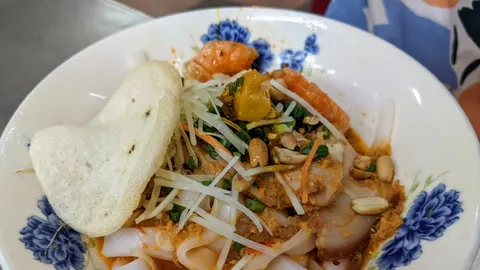 Central Vietnam · Food Mi Quang (Mì Quảng): What to Order and Where in Da Nang Mi Quang explained: which version to order, how to eat it, 2026 prices, three MICHELIN-listed Da Nang shops and how it differs from cao lau and pho.
 Central Vietnam · Travel Hoi An (Hội An): How Many Days, What to See, When to Go How many days Hoi An needs, what the 80,000 or 120,000 dong ticket covers, lantern nights, where to eat, beaches, flood months and getting there from Da Nang.
 Central Vietnam · Travel Da Nang (Đà Nẵng): What to Do, Where to Stay, How Long Da Nang travel guide: the best things to do, whether to stay in Da Nang or Hoi An, a 2–4 day plan with Hue, what to eat and when the rains usually come.
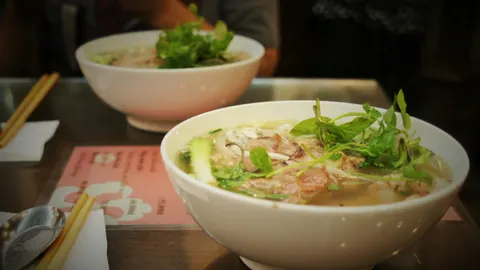 North · Central · South · Food Hanoi vs Saigon Pho (Phở): Differences and How to Order Hanoi vs Saigon pho: a clear, spare Northern broth or a sweeter Southern bowl with herbs and sauces, plus Central styles, 2026 prices and MICHELIN picks.