All three regions · Food
How to Order Banh Mi (Bánh Mì): Fillings, Sauces, Prices
How to order banh mi in Vietnam: what goes in the roll, filling names in plain English, phrases like khong cay, 2024–26 prices and how to pick a safe stall.
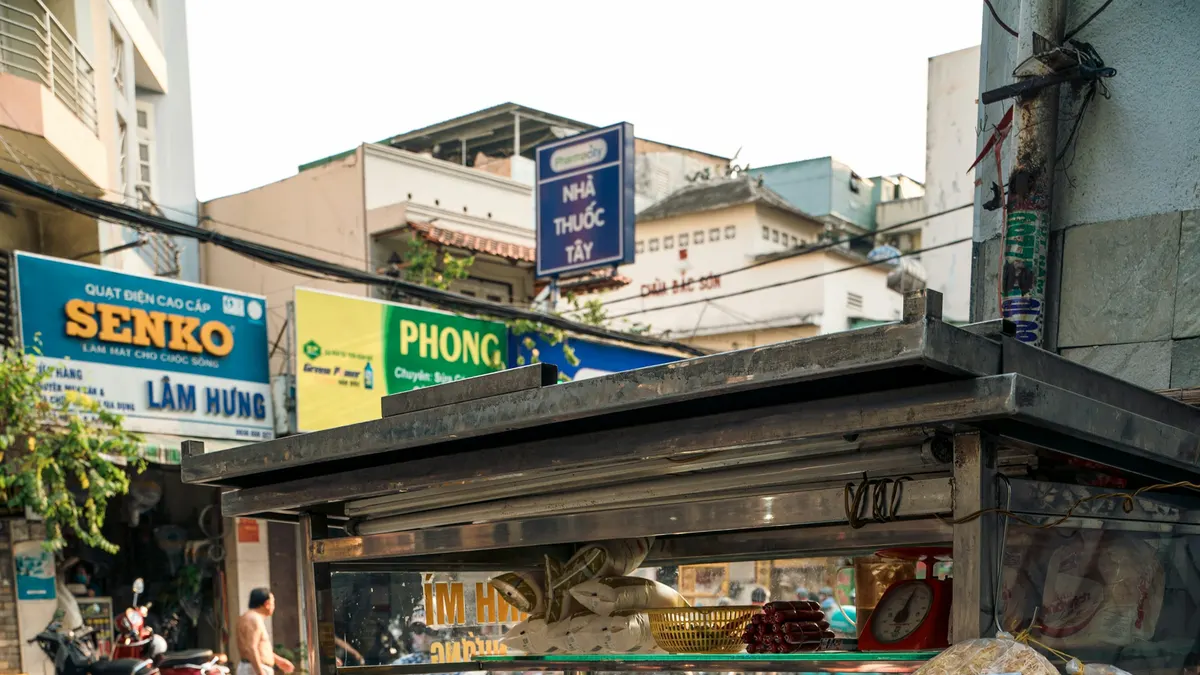
Ordering a banh mi (bánh mì) takes about ten seconds once you know the routine: name the filling, say what you do not want, and pay when the roll is handed to you. The difficulty for a first-timer is that the cart rarely has an English menu, the fillings have Vietnamese names, and the vendor starts building the moment you speak. This guide is the practical companion to our banh mi by region guide, which explains why Saigon, Hanoi, Hai Phong and Hoi An make the sandwich differently. Here you get the parts of the roll, the names on the cart, a step-by-step order with the phrases to use, what a banh mi costs in 2026 according to dated press reports, and how to choose a stall after a run of food-poisoning cases.
Everything below applies across the country; where a city does something differently, it is noted. For the rest of the menu, start at the Vietnamese food hub.
What goes into a banh mi?
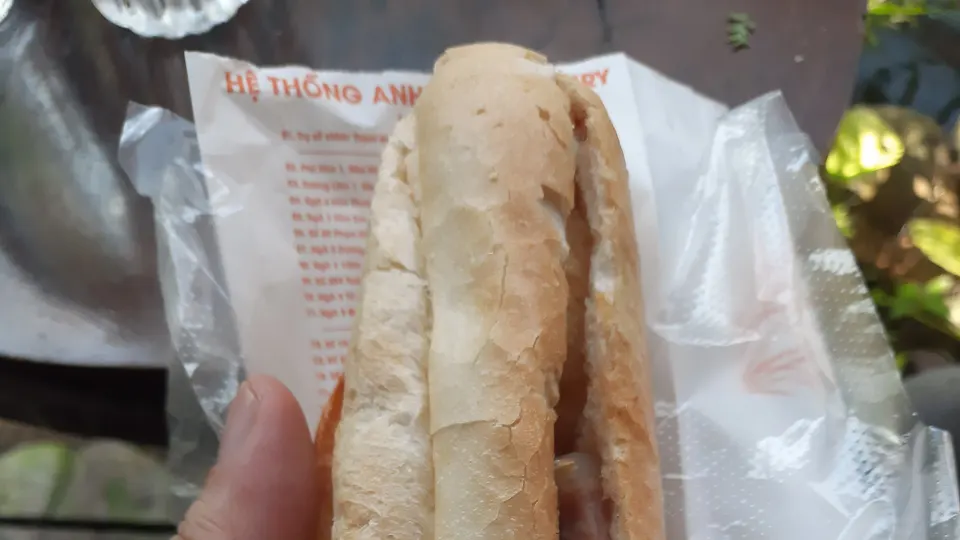
A banh mi is built in a fixed order, and knowing it tells you when to speak up. The bread is a short Vietnamese baguette, split along one side. Then come the spreads, the meat, the vegetables and herbs, and finally the chilli and seasoning. Vietnam’s tourism authority describes a fully loaded banh mi thit (bánh mì thịt) as several kinds of Vietnamese ham, char siu or fried pork, butter, pate and pork floss, tied together by a house sauce.
| Layer | What it usually is | What you can ask |
|---|---|---|
| Bread | A light, crisp roll, often warmed in a small oven before filling | — |
| Pate | Pate (pâté), usually pork liver, spread on the inside | Them pate (more), khong pate (none) |
| Bo | A pale spread called bo, “butter”, which at most stalls is an egg-based Vietnamese mayonnaise | Leave it out if you avoid raw egg |
| Meat | Cold cuts, cha lua pork roll, char siu, roast pork, meatballs, egg or fish cake | Choose one, or ask for the mixed dac biet or thap cam |
| Pickles | Do chua, sweet-sour pickled carrot and daikon | Khong do chua (no pickles) |
| Fresh greens | Cucumber, coriander, spring onion | Khong rau (no herbs), khong hanh (no spring onion) |
| Heat | Fresh chilli and chilli sauce | Khong cay (not spicy), it cay (a little) |
| Seasoning | A splash of soy or seasoning sauce, sometimes fish sauce or the shop’s own sauce | Usually added without asking |
Two layers deserve a word. Bo is not dairy butter at most carts: Tuoi Tre News, in a March 2026 food-safety explainer, describes it as “bo (Vietnamese mayo)” and notes that the sandwich’s distinctive taste comes from “homemade pate and egg-based Vietnamese mayo” (Tuoi Tre News). And the seasoning varies: Znews describes simple rolls finished with “a little soy sauce or fish sauce”, while the tourism authority says its fried-egg banh mi gets “chili sauce and a drop of soy sauce”. The common pattern is everything in; the exception is Hanoi’s classic stalls, where the VietNamNet-profiled Hang Gai roll has no pickles, lettuce or cabbage at all.
Banh mi fillings: the names on the cart, in plain English
Most carts write their fillings on the glass or a small sign. The word after “banh mi” is the filling, so banh mi ga (bánh mì gà) is a chicken banh mi. This table covers the names you will see most, using the descriptions in Vietnam’s tourism guide and Znews’s survey of Saigon street stalls.
| On the sign | Plain English | What to expect |
|---|---|---|
| Banh mi thit | Banh mi with meat | The standard roll: cold cuts, pate, pork floss, pickles, cucumber, coriander |
| Banh mi dac biet (đặc biệt) / thap cam (thập cẩm) | “Special” / “the works” | Every filling the cart has |
| Banh mi pate | Pate banh mi | Pate and butter, sometimes with one meat; the classic Hanoi order |
| Banh mi cha lua (chả lụa) / gio lua (giò lụa) | Pork-roll banh mi | Slices of steamed pork roll; cha lua in the South, gio lua in the North |
| Banh mi cha bong (chà bông) / ruoc (ruốc) | Pork-floss banh mi | Dried, shredded pork; cha bong in the South, ruoc in the North |
| Banh mi xa xiu (xá xíu) | Char siu banh mi | Red-glazed roast pork, Chinese style |
| Banh mi heo quay | Roast-pork banh mi | Roast pork belly with cucumber and pickles |
| Banh mi thit nuong (thịt nướng) | Grilled-pork banh mi | Grilled pork with the shop’s sauce |
| Banh mi xiu mai (xíu mại) | Meatball banh mi | Pork meatballs in sauce, sometimes served in a bowl to dip the bread in |
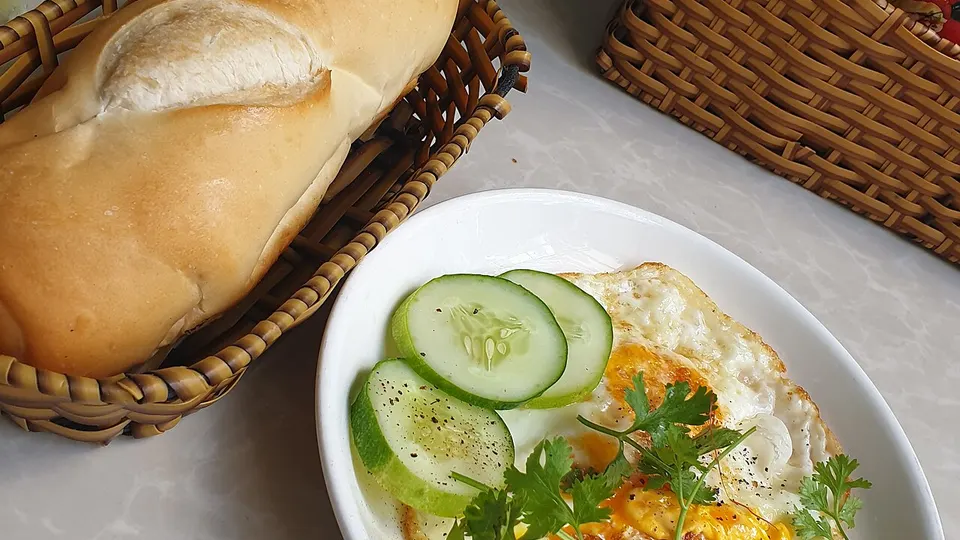
| Banh mi op la (ốp la) / trung (trứng) | Fried-egg banh mi | One or two eggs fried to order, with pickles, chilli sauce and soy |
| Banh mi cha ca (chả cá) | Fish-cake banh mi | Fried fish cake with pepper, coriander and a garlic-chilli soy sauce |
| Banh mi ga | Chicken banh mi | Chicken, cooked the shop’s way |
| Banh mi bo (bò) | Beef banh mi | Beef; grilled, pan-fried or stewed depending on the shop |
| Banh mi chay | Vegetarian banh mi | Tofu, egg, mushroom or other meat-free fillings; ask about the pate and sauce |
| Banh mi khong (không) | Plain bread | Just the roll, the cheapest thing on the cart |
The tourism authority’s guide describes the roast-pork, fried-egg and fish-cake versions in those terms (Vietnam Tourism), and Znews lists xiu mai, roast pork, chicken, fish cake and beef among the fillings sold at Saigon’s street stalls. The North–South word pairs (cha lua and gio lua, cha bong and ruoc) are one of the clearest everyday examples of regional vocabulary; our Vietnamese phrases by region guide explains more of them. If you eat no meat, our guide to vegetarian food in Vietnam covers what to say about fish sauce and pate.
How to order at a banh mi cart, step by step
A banh mi cart works like any one-dish street stall: you order at the front, watch it being made and pay at the end. Our street food etiquette guide explains the wider routine of stools, condiments and paying; the table below is the banh mi version.
| Step | What to do | What to say | Why |
|---|---|---|---|
| 1. Read the glass | Look at the fillings and the sign; prices are often written on it | — | Tells you what this cart actually sells |
| 2. Ask the price if none is posted | Ask before the vendor starts | Bao nhieu tien mot o? (How much for one?) | Avoids surprises; airport and tourist-street prices can be far higher |
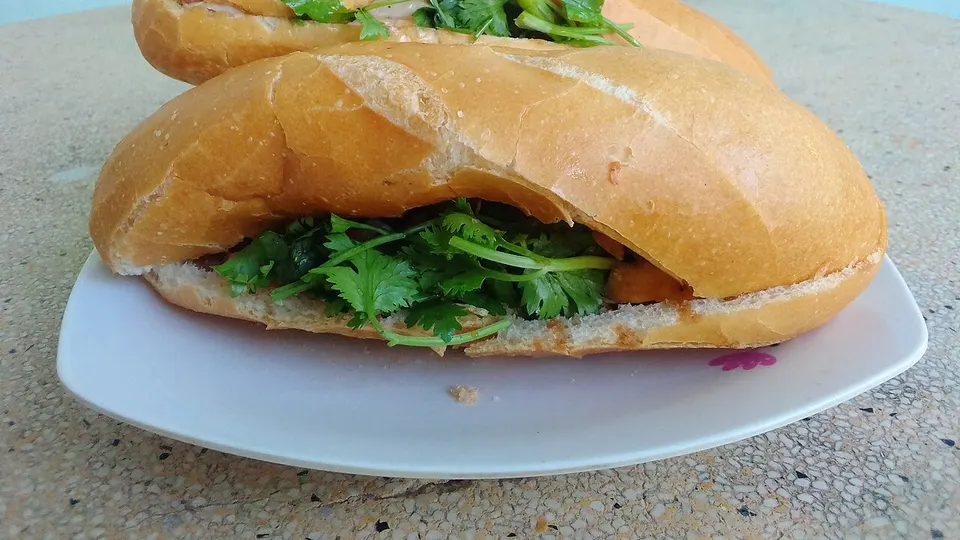
| 3. Name the filling and the number | Say the filling, or point | Cho toi mot o banh mi thit (One meat banh mi, please) | The vendor starts cutting as soon as you speak |
| 4. Say what to leave out, straight away | Do it before the spreads and chilli go in | Khong cay (not spicy), khong pate (no pate), khong rau (no herbs) | Chilli and pate go in early and cannot be taken out |
| 5. Add extras | Extra pate, egg or meat can cost more | Them trung (add egg), them pate (more pate) | Hanoi’s Hang Gai stall charged 12,000 dong for the standard roll and 15,000 or 20,000 with extra filling in 2025 (VnExpress International) |
| 6. Say where you will eat it | Take away, or eat at the cart’s stools if it has any | Mang ve (to take away), an o day (eat here) | Some carts have no seats at all |
| 7. Pay when it is handed over | Cash; some shops also take bank transfer | Chuyen khoan duoc khong? (Can I pay by transfer?) | Bay Ho in Saigon takes cash or transfer (VTC News, 2025) |
| 8. Eat it now | Take it out of the plastic bag and eat it while the crust is crisp | — | Experts quoted by VOV advise eating it right after buying |
If you freeze, point. At a glass cart, pointing at the fillings and holding up fingers for the number works everywhere. Add khong cay if you do not want chilli, and you have covered the step that most often goes wrong.
Phrases for the cart. These cover almost every banh mi order. Vietnamese is tonal, so the accented spelling in brackets is worth showing on your screen if you are not understood.
| Say | Meaning |
|---|---|
| Cho toi mot o banh mi… (Cho tôi một ổ bánh mì…) | One banh mi with…, please |
| Hai o (Hai ổ) | Two rolls |
| Khong cay (Không cay) / it cay (ít cay) | Not spicy / a little spicy |
| Khong ot (Không ớt) | No chilli |
| Khong pate / them pate (thêm pate) | No pate / more pate |
| Khong rau (Không rau) / khong hanh (không hành) | No herbs / no spring onion |
| Khong do chua (Không đồ chua) | No pickles |
| Them trung (Thêm trứng) | Add an egg |
| Toi an chay (Tôi ăn chay) | I am vegetarian |
| Mang ve (Mang về) / an o day (ăn ở đây) | To take away / to eat here |
| Bao nhieu tien (Bao nhiêu tiền)? | How much? |
| Cam on (Cảm ơn) | Thank you |
O (ổ), “loaf”, is the counting word used in Vietnamese price reports; leaving it out and saying mot banh mi is also understood. Many banh mi carts are busiest in the morning, and some sell only then; our Vietnamese breakfast guide shows which Hanoi stalls open at dawn and when they sell out.
How much does a banh mi cost in 2026?
Prices have crept up since 2024, and they vary more by place than by filling: an airport counter can charge several times the street price. The figures below are taken from dated press reports; treat them as a guide to the range rather than today’s price at any one stall.
| Where | Price per roll | Source and date |
|---|---|---|
| Hanoi pavement stall, Hang Gai Street | 12,000 dong (15,000 or 20,000 with extra filling) | VnExpress International, June 2025 |
| Saigon street stall, typical | about 15,000–20,000 dong | VnExpress International, November 2024 |
| Saigon, meat banh mi in general | 15,000–100,000 dong, by location and brand | Tuoi Tre News, September 2026 |
| Saigon street cart (Co Thys, former District 3) | 20,000–25,000 dong | Vietcetera, July 2025 |
| Bay Ho, Saigon | 22,000 → 24,000 dong from 1 June 2025 | VTC News, June 2025 |
| Long-running Saigon shops (eight surveyed) | 20,000–80,000 dong | Znews, April 2026 |
| Hoa Ma, Saigon | 42,000 dong for the roll; 62,000–64,000 for the pan-fried op la | VietNamNet, May 2026 |
| Hanoi shops in a 2025 city guide | mostly 20,000–35,000 dong | Bao Lam Dong, November 2025 |
| Madam Khanh, Hoi An | 25,000–30,000 dong | VnExpress (reprinted by Bao Quang Ninh), August 2024 |
| Tan Son Nhat airport, Saigon | 74,000 dong | VnExpress International, November 2024 |
| Noi Bai airport, Hanoi, airside counters in Terminal 2 | 132,000–216,000 dong (US$5–8.2) | VTC News, July 2025 |
| Bar-restaurant “luxury” banh mi, Thao Dien | 250,000 dong | Vietcetera, July 2025 |
What moves the price is mostly where the stall is and how much goes into the roll. Znews’s April 2026 survey of eight Saigon shops more than 50 years old found ranges from 20,000–30,000 dong at the simpler shops to 40,000–80,000 at Nguyen Sinh (Nguyên Sinh), which serves French-style cold cuts at tables (Znews). Vietcetera’s comparison of a 20,000-dong cart and a 250,000-dong bar sandwich put the gap down to rent, setting and imported ingredients, not to the bread. In June 2025 several Saigon vendors raised prices by 2,000 dong, citing new tax rules for household businesses, VTC News reported. At airports, the Northern Airports Authority told VTC News in July 2025 that banh mi prices of US$5 to 8.2 at the airside counters of Noi Bai’s Terminal 2 were acceptable because they were clearly posted.
Practical upshot: on the street, expect a five-figure dong price, ask first where no price is posted, carry small notes, and eat before airport security if price matters. Our money and tipping guide covers cash, QR payments and whether to tip.
Is street banh mi safe? How to choose a stall
Banh mi is eaten safely by millions of people every day, but it has also been at the centre of several large food-poisoning outbreaks since 2023. Because it is eaten cold and has five to seven ingredients that are not reheated, one bad ingredient reaches every customer; VOV’s August 2026 health explainer makes exactly that point.
| When | Where | What happened | Source |
|---|---|---|---|
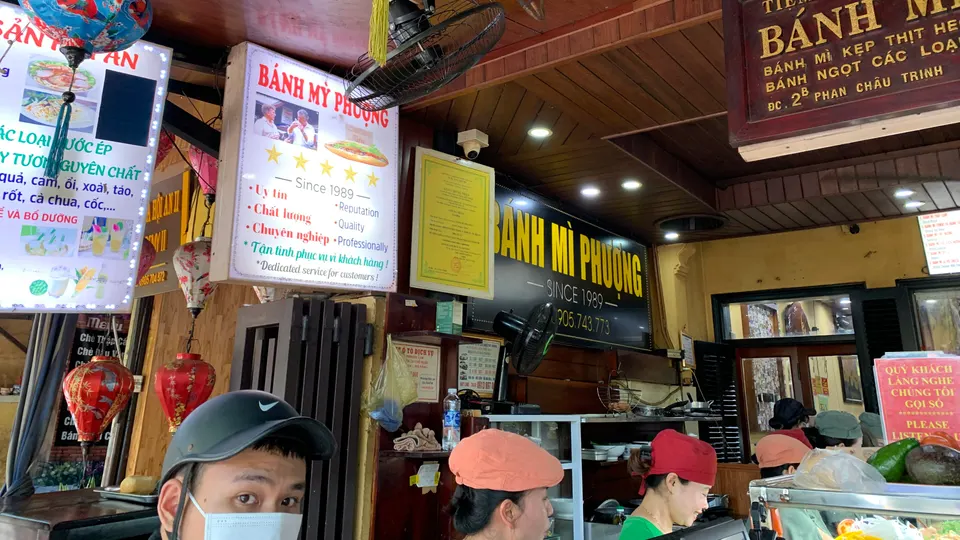
| Sept 2023 | Hoi An | Banh Mi Phuong suspended for three months after poisoning more than a hundred people; reopened with supplier checks and same-day meat, sausage and pate | KTSG Online, Jan 2024 |
| May 2024 | Long Khanh, Dong Nai | 547 people hospitalised; Salmonella found in pate, processed pork, cha lua and pickled vegetables from one bakery | Dai Bieu Nhan Dan, May 2024 |
| Nov 2025 | Go Vap and Binh Loi Trung, Ho Chi Minh City | More than 230 ill after eating from two outlets of one chain; Salmonella suspected | VnExpress International, Nov 2025 |
| Dec 2025 | Quang Ngai; Phu My (former Ba Ria–Vung Tau) | More than 200, then more than 100 people treated | VnExpress International, Dec 2025 |
| Mar 2026 | Hanh Thong and Vung Tau wards, Ho Chi Minh City | About 130 people taken to hospital | Tuoi Tre News, Mar 2026 |
| Jul–Aug 2026 | Lam Dong; An Khe, Gia Lai | 84 hospitalised; 150 examined or treated | VOV, Aug 2026 |
What usually goes wrong. Investigators and experts point to the fillings, not the bread. VnExpress International’s December 2025 explainer names Salmonella as the main cause, often in pate, pork sausage, cold cuts or raw vegetables, and lists fillings prepared the night before and left warm for hours, bare hands, and knives shared between raw and cooked food (VnExpress International). Associate Professor Nguyen Duy Thinh told Tuoi Tre News that homemade pate made in 0.5–1 kg blocks and used over the day carries the highest risk, and that egg-based mayo and pate become “breeding grounds for Salmonella if not kept properly refrigerated”.
How to choose a stall, from the experts’ advice:
- Choose a clean, busy, reputable seller. This is the first piece of advice in every article above, from the Tuoi Tre News explainer to VTC News’s December 2025 report, which tells buyers to pick places with clear hygiene conditions.
- Be cautious with rolls packed with many pre-made fillings. VnExpress International and VTC News both advise it.
- Look and smell before you bite. A sour smell, slimy texture or bubbles in the pate are warning signs, according to the experts Tuoi Tre News quoted.
- Eat it straight away. VOV’s expert advises eating banh mi right after buying; Tuoi Tre News notes that a meat banh mi left out from morning to noon in 37–39°C heat can already carry large amounts of bacteria.
- Know the symptoms. Salmonella usually shows within half a day to about three days. For diarrhoea, vomiting or stomach pain, drink oral rehydration salts and see a doctor quickly if you have a high fever or signs of dehydration; VOV advises against self-medicating with antidiarrhoeals or antibiotics.
Tradition versus today: street banh mi “largely sits outside the reach of routine inspections”, a December 2025 Tuoi Tre News op-ed argued, calling for checks on the finished sandwich and certified ingredient suppliers. Some shops have tightened up after outbreaks (Banh Mi Phuong reopened in 2024 with supplier checks and same-day fillings, KTSG Online reported), but for a traveller the practical tools remain the same: choose well, eat quickly, and walk away from anything that smells wrong.
Where to practise ordering banh mi
You can order banh mi at almost any street corner, but a few shops make a good first attempt because their fillings are on display and they are used to visitors. One thing you will not find is a MICHELIN pick: no banh mi shop in Vietnam made any list of the 2026 MICHELIN Guide, the fourth year running (Tuoi Tre News). The four cards below are local favourites recommended by at least two independent press sources.
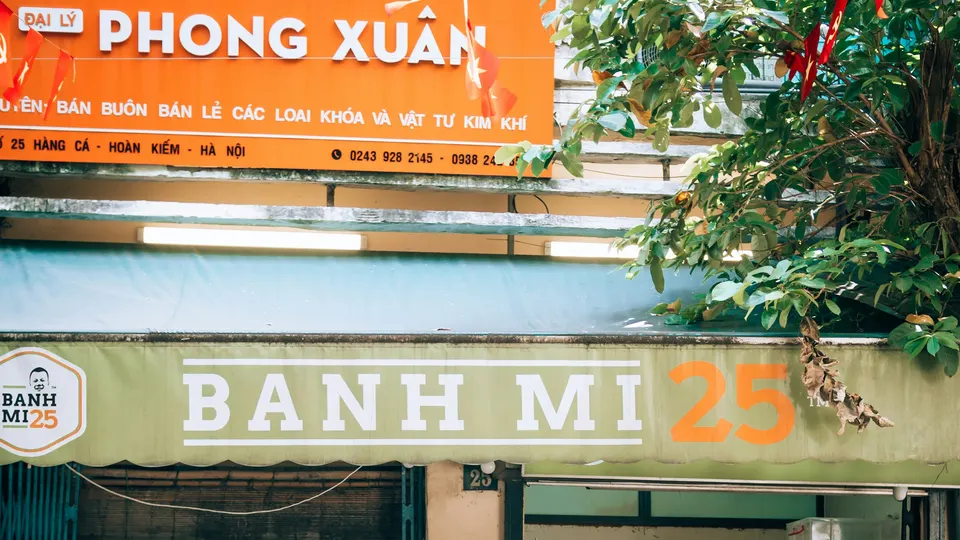
- Hanoi: Banh Mi 25 on Hang Ca Street, in the Old Quarter, sells several fillings including a mushroom version; our Hanoi Old Quarter eating guide puts it on a walking route.
- Hoi An: Madam Khanh (Khánh), on Tran Cao Van Street, keeps its fillings behind glass, so you can point; see where to eat in Hoi An for the rest of the town’s menu. Hoi An has been part of Da Nang city since July 2025.
- Saigon: Bay Ho (Bảy Hổ) is a family shop with handmade pate, and Nguyen Sinh serves the cold cuts on a plate so you can learn their names; our Saigon food guide by area adds more.
Before you go, decide three things: the filling, whether you want chilli, and whether you are eating there or taking it away. Say them in that order, pay when the roll is handed over, and eat it while the crust still crackles.
Where to practise ordering banh mi in Hanoi, Hoi An and Saigon
Local favourite
Bánh Mì 25 · Bánh mì 25
Hanoi · Old Quarter, Hoàn Kiếm ward
25 Hàng Cá Street
A small husband-and-wife shop trading since 2014 and popular with foreign visitors: The Nightly (2025) recommends its banh mi with pork, chicken, beef or mushroom, and the Vietnam News Agency noted chicken, char siu, pâté, egg and vegetarian fillings. Báo Lâm Đồng's 2025 Hanoi guide lists it for its wide menu, including a pan-fried beef and cheese roll and the mixed thập cẩm.
Order: The house bánh mì with your choice of filling, or the mushroom version if you avoid meat.
The Vietnam News Agency also listed a second outlet on Lò Rèn Street in 2020; this card means 25 Hàng Cá.
Recommended by: The Nightly (2025), Báo Lâm Đồng (2025), Vietnam News Agency (Vietnam Pictorial) (2020) · checked November 2026
Local favourite
Madam Khánh – The Banh Mi Queen · Bánh mì Madam Khánh
Hội An (Đà Nẵng city since July 2025) · Hội An old town area
115 Trần Cao Vân Street
A family shop about a kilometre from Hội An Market, founded by Nguyễn Thị Lộc and named by foreign visitors after her husband. VnExpress (2024) counts six kinds of bánh mì with pork, chicken, egg and sausage plus vegetarian versions with egg, tofu, cheese, cucumber and tomato, all with a homemade sauce; the fillings sit behind a glass counter, so you can point.
Order: Bánh mì thập cẩm (the mixed roll), or the egg-and-tofu vegetarian roll.
Founding dates differ between sources (VnExpress and CNN: 1975; VietNamNet in 2015: nearly 60 years), so the page gives none.
Recommended by: Báo Quảng Ninh / VnExpress (2024), VietNamNet (2015) · checked November 2026
Local favourite
Bánh Mì Bảy Hổ · Bánh mì Bảy Hổ
Ho Chi Minh City · Tân Định ward (former District 1)
19 Huỳnh Khương Ninh Street
One of the few Saigon bánh mì shops still run as a traditional family business, Znews says, with handmade pâté, cold cuts and meatballs in bread from a regular bakery. It is also a good lesson in prices: VTC News reported that it raised its roll from 22,000 to 24,000 dong on 1 June 2025, citing tax, and takes cash or bank transfer.
Order: Bánh mì thịt (the cold-cut roll); add xíu mại if you want the meatballs.
Recommended by: Znews (2026), VTC News (2025) · checked November 2026
Local favourite
Nguyên Sinh Bistro · Bánh mì Nguyên Sinh
Ho Chi Minh City · Cầu Ông Lãnh ward (former District 1)
141 Trần Đình Xu Street
The sit-down way to learn the cold cuts: founded in Hanoi in 1942 and in Saigon since the late 1970s, it serves 'bánh mì Tây', a plate of ham, smoked ham, sausages, liver pâté and pickles with bread on the side (Tuổi Trẻ News), plus steak and fried eggs (Znews, 2026).
Order: Bánh mì Tây (the cold-cut platter with bread).
Recommended by: Znews (2026), Tuổi Trẻ News (2019) · checked November 2026
Addresses and details can change; check before you go. We do not accept payment for listings.
Frequently asked questions
How do you say no chilli when ordering banh mi?
Say khong cay, 'not spicy', or khong ot, 'no chilli'. It cay means just a little chilli. Say it before the vendor starts filling the roll, because chilli sauce and fresh chilli go in early.
How much should a banh mi cost in Vietnam?
In Ho Chi Minh City a street-cart banh mi usually costs about 15,000–20,000 dong (VnExpress International, 2024), and long-running shops charge 20,000–80,000 dong (Znews, 2026). Rolls at airport counters can cost 74,000 dong or more, so eat before you go through security if price matters.
What is the white spread in a banh mi?
Usually bo, which means 'butter' but is a homemade egg-based Vietnamese mayonnaise, spread with the pate. Food-safety experts quoted by Tuoi Tre News say both need to be kept cold, so a busy stall that makes them fresh is the safer choice.
Can I get banh mi without pork?
Yes. Ask for banh mi op la or trung (fried egg), ga (chicken), cha ca (fish cake) or chay (vegetarian, often tofu), and add khong pate (no pate), because the standard pate is pork liver.
Is it safe to eat banh mi from street carts in Vietnam?
Millions of rolls are eaten safely every day, but there have been repeated mass poisonings, such as 547 people hospitalised in Long Khanh in May 2024. Pick a clean, busy stall, eat the roll at once rather than carrying it around in the heat, and skip anything that smells sour.
Key sources
- What to know about 'banh mi' food poisoning in Vietnam, and how to eat it safely · Tuổi Trẻ News, 15 Mar 2026
- Why Vietnam sees repeated banh mi food poisoning outbreaks · VnExpress International, 24 Dec 2025
- Over 230 fall ill in Ho Chi Minh City banh mi poisoning, Salmonella suspected · VnExpress International, 9 Nov 2025
- Vụ 547 người bị ngộ độc bánh mì ở Đồng Nai: Phát hiện vi khuẩn Salmonella, E.Coli trong thực phẩm · Đại biểu Nhân dân, 7 May 2024
- Ngộ độc bánh mì: Vì sao món ăn quen thuộc vẫn tiềm ẩn rủi ro? · VOV, 29 Aug 2026
- 8 tiệm bánh mì tồn tại trên 50 năm tại TP.HCM · Znews, 21 Apr 2026
- 7 superb banh mi to try in Vietnam · Vietnam National Authority of Tourism (vietnam.travel)
- Fact: Michelin Guide recognizes Vietnamese banh mi abroad but not in Vietnam · Tuổi Trẻ News, 6 Jun 2026
All 27 sources and further reading
- Liên tiếp các vụ ngộ độc bánh mì: Vì sao món ăn quen thuộc thành mối nguy sức khỏe? · VTC News, 25 Dec 2025
- Op-ed: To make banh mi safe, Vietnamese vendors must change · Tuổi Trẻ News, 26 Dec 2025
- Bánh mì Phượng trở lại phục vụ du khách tại Hội An · KTSG Online (The Saigon Times), 9 Jan 2024
- Bún, phở, bánh mỳ đồng loạt tăng giá, chủ quán đổ tại do thuế · VTC News, 13 Jun 2025
- I was shocked as banh mi at HCMC airport costs 5 times normal price · VnExpress International, 8 Nov 2024
- Vụ 208.000 đồng một ổ bánh mỳ: Cảng hàng không Nội Bài báo cáo gì? · VTC News, 15 Jul 2025
- Hanoi's 'cheapest banh mi' costs $0.46 · VnExpress International, 27 Jun 2025
- This nearly 70-year-old banh mi shop remains a morning favorite in HCM City · VietNamNet, 26 May 2026
- Vietnam's banh mi: from wartime staple to global icon · Tuổi Trẻ News, 7 Sep 2026
- $1 vs $10 Banh Mi in Saigon: What's the Real Difference? · Vietcetera, 7 Jul 2025
- Bánh mì Sài Gòn – món ăn ngon, rẻ 150 năm · Znews, 28 Jan 2018
- Bánh mì Hà Nội: Cẩm nang các hàng ngon nức tiếng Thủ đô · Báo Lâm Đồng, 2 Nov 2025
- Hanoi's best street food: 10 essential eats starting from 76 cents · The Nightly, 27 Sep 2025
- Banh mi 25 · Vietnam News Agency (Vietnam Pictorial), 4 Mar 2020
- Queen of the scene: Madam Khanh's banh mi in Hoi An · Báo Quảng Ninh (from VnExpress), 8 Aug 2024
- Hoi An's queen of banh mi · VietNamNet, 31 May 2015
- Bánh mì rẻ nhất Hà Nội 40 năm đông nườm nượp · VietNamNet, 30 Dec 2021
- The banh mi you shouldn't overlook in Ho Chi Minh City · Tuổi Trẻ News, 11 Jun 2019
- Resolution 202/2025/QH15 on the reorganisation of provincial-level administrative units · National Assembly of Vietnam (via LuatVietnam)
Keep exploring
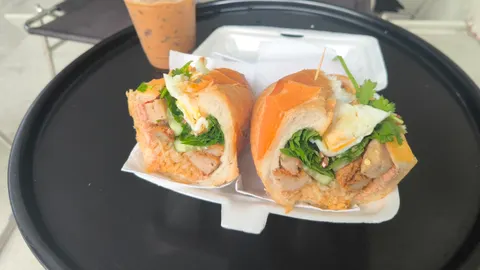 North · Central · South · Food Banh Mi (Bánh Mì) by Region: Which Style to Try Where Which banh mi to try where: Saigon's loaded roll, Hanoi's pate-led bread and beef stew, Hai Phong's stick-thin banh mi que, Hoi An's crisp roll, plus prices.
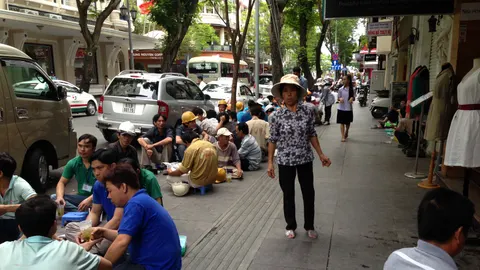 North · Central · South · Travel How to Eat Street Food in Vietnam: Order, Sit, Pay, Tip Vietnam street food etiquette as of November 2026: how to order, sit and pay at a stall, which extras cost money, chopstick manners, tipping and sidewalk rules.
 North · Central · South · Food Vegetarian in Vietnam: What to Order and Where to Eat Vegetarian in Vietnam: what chay means, fish sauce and bone-broth traps, phrases to ask, what to order by region, and the MICHELIN 2026 vegetarian picks.
 North · Central · South · Culture Which Vietnamese Phrases to Use in Hanoi, Hue and Saigon Which Vietnamese phrases to use in Hanoi, Hue and Saigon: greetings and family words, da or vang, prices, ordering, and words that change, like lon or heo.