All three regions · Travel
How to Eat Street Food in Vietnam: Order, Sit, Pay, Tip
Vietnam street food etiquette as of November 2026: how to order, sit and pay at a stall, which extras cost money, chopstick manners, tipping and sidewalk rules.
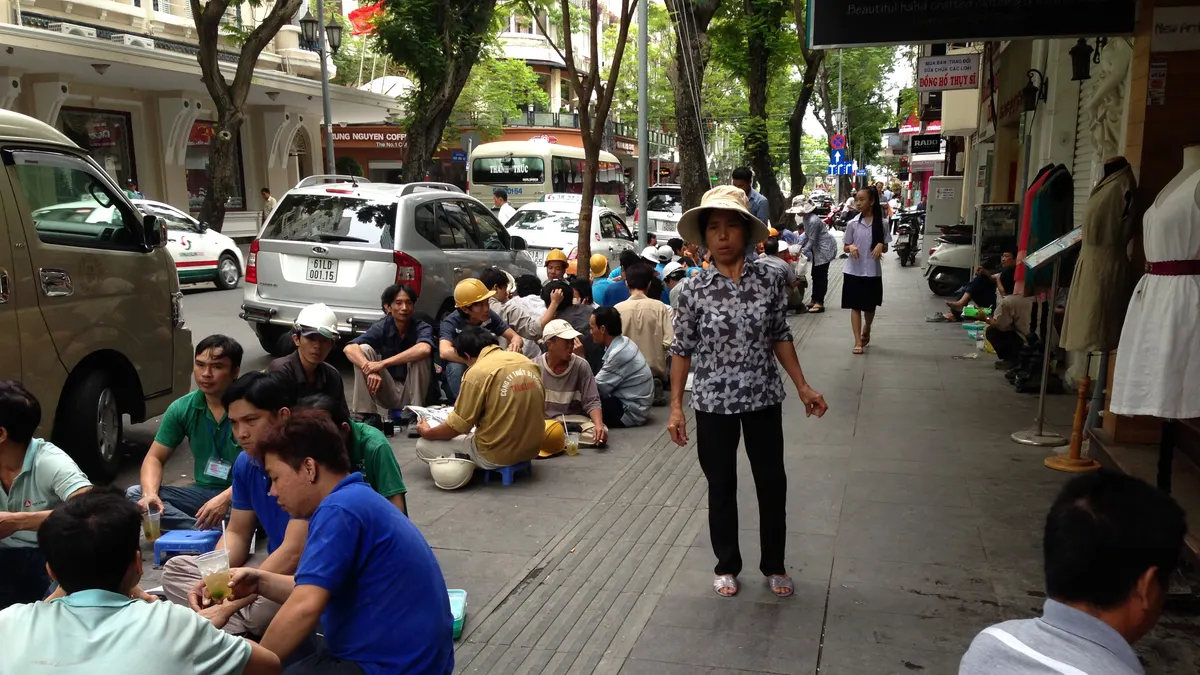
Eat first, pay later. At a Vietnamese street stall you order the one or two dishes the cook makes, sit on a free low stool, season the bowl yourself from the jars on the table, then ask the total and pay the cook on your way out (Vietnam Tourism). As of November 2026, what trips visitors up is small: paid extras such as a packaged wet towel, which adds a few thousand dong once opened (Znews, July 2026), chopsticks left standing in rice, and pavement rules that have pushed some stalls indoors in Hanoi and Ho Chi Minh City. Choose a stall that is clean and busy, and ask the price when none is posted.
This guide is part of our Vietnam travel planning hub. It covers how a stall works, what to say and do at the table, what is free and what is not, how regions differ, how to judge hygiene and what the 2026 sidewalk rules mean for you, and ends with a six-step plan for your first meal. Prices and rules are given only with a dated source.
Street food etiquette at a glance: do and don’t
| Do | Don’t | Why (source) |
|---|---|---|
| Order the house dish at the front, then sit | Wait to be seated or ask for a menu at a one-dish stall | Order at the front and choose your own stool (Vietnam Tourism) |
| Share a table and smile | Hold empty stools for friends at peak time | Other diners may join you; a smile is enough (Vietnam Tourism) |
| Taste first, then season from the table jars | Tip the whole herb plate and every sauce in at once | Taste the broth before adding anything (MICHELIN Guide) |
| Wipe your chopsticks and spoon with a napkin | Feel awkward about it | A quick wipe is normal, even wise (Vietnam Tourism) |
| Drop napkins and lime husks in the bin under the table | Hunt for a waste bin elsewhere | Bins sit below the table (Vietnam Tourism) |
| Leave a wet towel sealed if you don’t want it | Open it and expect it to be free | Opened towels usually cost a few thousand dong (Znews, Jul 2026) |
| Ask the price when nothing is posted | Order skewers or seafood by the piece without asking | A Da Nang vendor was fined for not posting prices (Bao Van Hoa, Jul 2025) |
| Lay chopsticks together across the bowl when done | Stand them upright in rice | Upright chopsticks recall rice offered to the dead (CafeF, Oct 2026) |
| Ask the total and pay the cook as you leave | Wait for a written bill | Eat first, pay later; written tabs are rare (Vietnam Tourism) |
| Keep small notes in cash | Feel you must tip | Tipping is not a Vietnamese custom (VNAT, via our money guide) |
| Choose busy stalls cooking hot food to order | Eat lukewarm food that has sat out | Hot food should be steaming hot (CDC) |
How does a Vietnamese street stall work?
Many stalls cook one dish, or two or three, and nothing else. Ordering is therefore short: you name the dish or point at what the next table is eating, and the cook adds it up in their head. Vietnam’s tourism authority describes the routine: order at the front, choose your own table or stool, and at busy times expect strangers to sit with you.
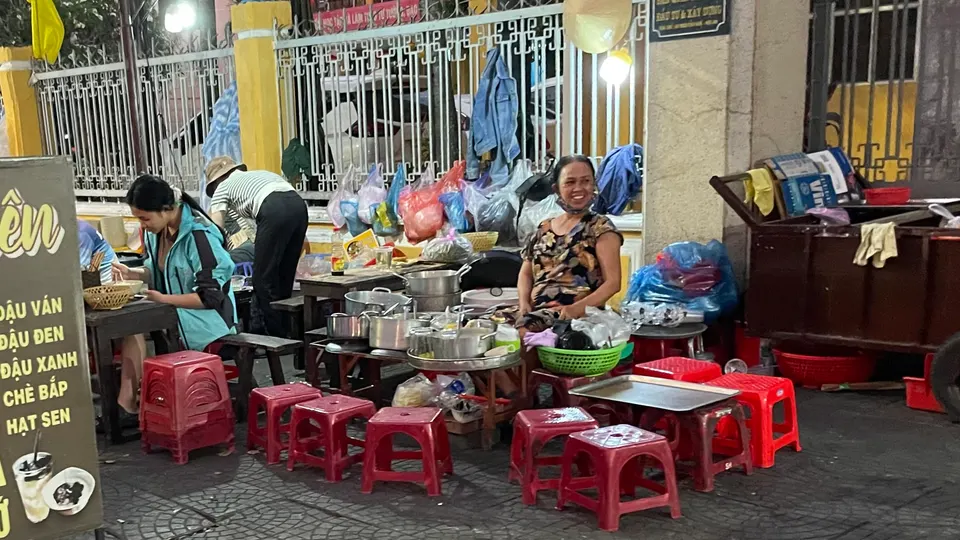
The stools. The low plastic stool is the seat of Vietnamese street food from Hanoi to the Mekong Delta. A Tuoi Tre News contributor called the “kiddie stools” the biggest challenge of eating out cheaply, and suggested stacking a second stool on the first if you need more height.
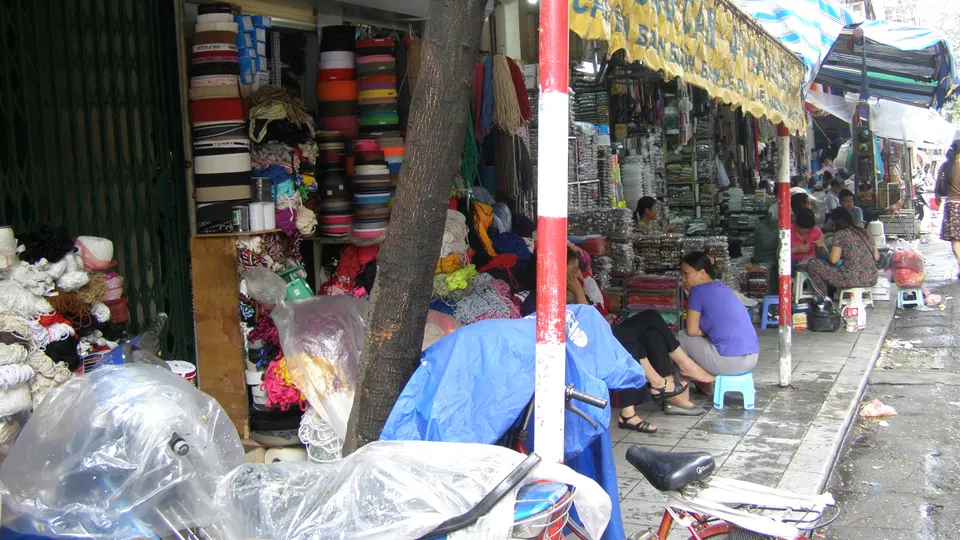
Why on the pavement. Eating on the street is part of how Vietnamese cities live. A 2026 Tuoi Tre News commentary describes “a steaming bowl of pho on a low plastic stool” as part of the street’s soul, and notes that for low-income workers a few square metres of sidewalk can be their livelihood. That is also why the city rules further down matter to the people who cook for you.
Timing. Many stalls keep short hours; our guides to where to eat in Hanoi’s Old Quarter and where to eat in Saigon note when well-known shops open.
How do you order, and should you ask the price first?
Say the dish and how many: one bowl, two plates. At a one-dish stall that is the whole order. If the dish has no posted price, ask before you order, especially for anything sold by the piece, such as skewers, snails or seafood.
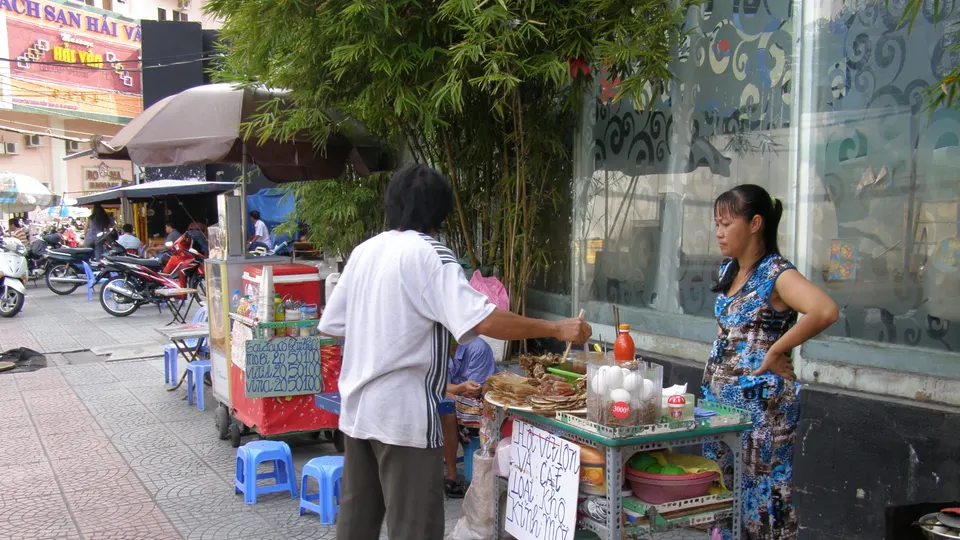
Why asking the price matters. Overcharging does happen, and vendors are expected to post prices. In July 2025 a stall in Da Nang charged a group of Lao tourists 760,000 dong for a handful of skewers, chicken feet and sausages, refunded part of it when they objected, and was then fined 750,000 dong for not posting prices where the law requires it (Bao Van Hoa). Asking first, ideally in Vietnamese, avoids almost all of this.
The words. “Bao nhieu tien (Bao nhiêu tiền)?” (how much?), “khong cay (không cay)” (not spicy) and “tinh tien (tính tiền)” (the bill, please) cover most meals. Our guide to Vietnamese phrases by region gives the polite forms and the words that change between Hanoi and Saigon. Vegetarians need a few more words, because fish sauce and bone broth hide in dishes that look meatless; our guide to vegetarian food in Vietnam lists them by region. At a banh mi cart the order has a few more parts (filling, chilli, pate); our guide on how to order banh mi gives the phrases step by step.
What is on the table, and what costs extra?
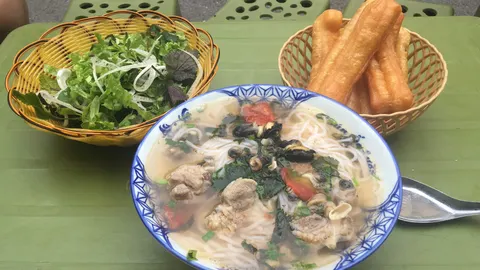
The table is a small kit for finishing your own dish. Vietnam’s tourism authority lists the usual jars: light fish sauce and garlic and chilli in vinegar, often with fresh chilli and lime. Noodle soups and grilled dishes come with a plate of fresh herbs. All of this is there for you to use, and none of it is an insult to the cook.
Herbs. Tear the leaves into soups, or wrap them with grilled meat; how much comes on the plate changes from north to south. Our Vietnamese herbs guide explains each leaf and how to use it.
Tissues and the bin. Paper napkins sit on the table. Used ones, lime husks and herb stems go in the bin below, as the tourism authority notes, and older Tuoi Tre News advice is to ignore the litter under busy tables: it is a sign of turnover, not neglect.
Wet towels. The sealed wet towel, khan lanh (khăn lạnh), placed on your table is usually not free. Customers who open and use one pay a few thousand dong more on the bill, and many people assume it is free until they see the charge; Znews says unused towels should be taken off the bill and urges restaurants to list the price (Znews). If you don’t want one, leave it sealed.
What is free and what is not. A quick guide to the extras, from the sources in this section:
| Item | Usually free? | Cost if charged (dated report) | What to do |
|---|---|---|---|
| Table jars (fish sauce, chilli, garlic vinegar, lime) | Yes (Vietnam Tourism) | – | Taste first, then season |
| Herb plate with soups and grilled dishes | Yes, part of the dish (Vietnam Tourism) | – | Tear into the bowl or wrap with meat |
| Packaged wet towel, khan lanh | No, if you open it (Znews, Jul 2026) | A few thousand dong each (Znews, Jul 2026) | Leave it sealed if you don’t want it |
| Iced tea, tra da | Often in Saigon (Vietcetera, Jan 2026), not guaranteed (Vietcetera, Aug 2026) | 5,000 dong a glass in readers’ reports (Tuoi Tre, Jun 2024) | Ask, or order a sealed bottle |
| Tip | Not expected | – | Small change is optional |
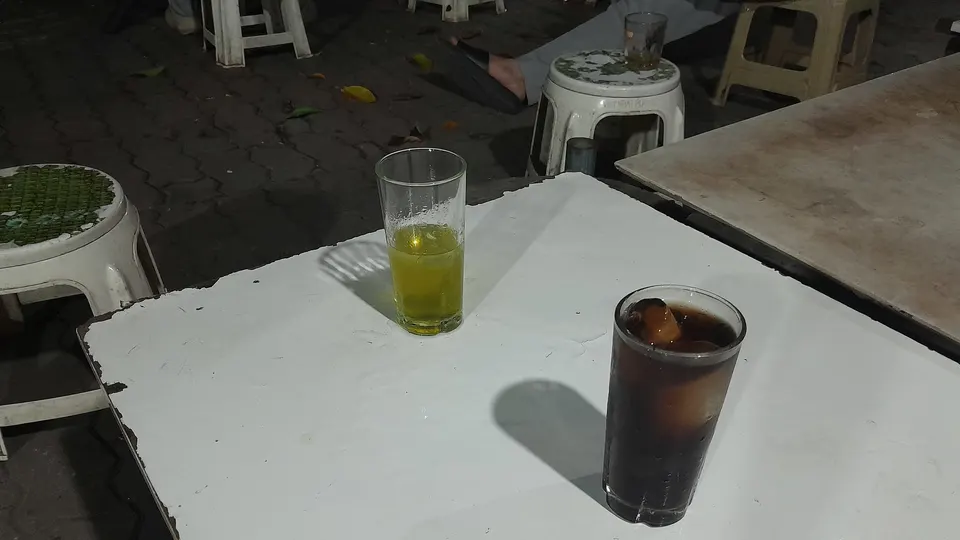
Iced tea. Tra da (Trà đá), iced green tea, is served “instead of water” at stalls all over the country, says the tourism authority. Whether it is free varies. Vietcetera wrote in January 2026 that it is often free at Saigon stalls, while in August 2026 it noted that none of these extras is guaranteed to be free and that a foreign reviewer in Ho Chi Minh City was surprised to be charged for it. Tuoi Tre readers complained in 2024 that some shops add a glass you did not order for 5,000 dong. If you want only water, buy a sealed bottle.
Chopsticks and table manners
Street food is informal, but a few table habits matter. The most important is about rice: never leave your chopsticks standing upright in a bowl of it. Many Vietnamese, taught as children, connect that image with the rice offered to the dead, and although families no longer all explain the custom the same way, avoiding it is still good manners, especially with older people (CafeF).
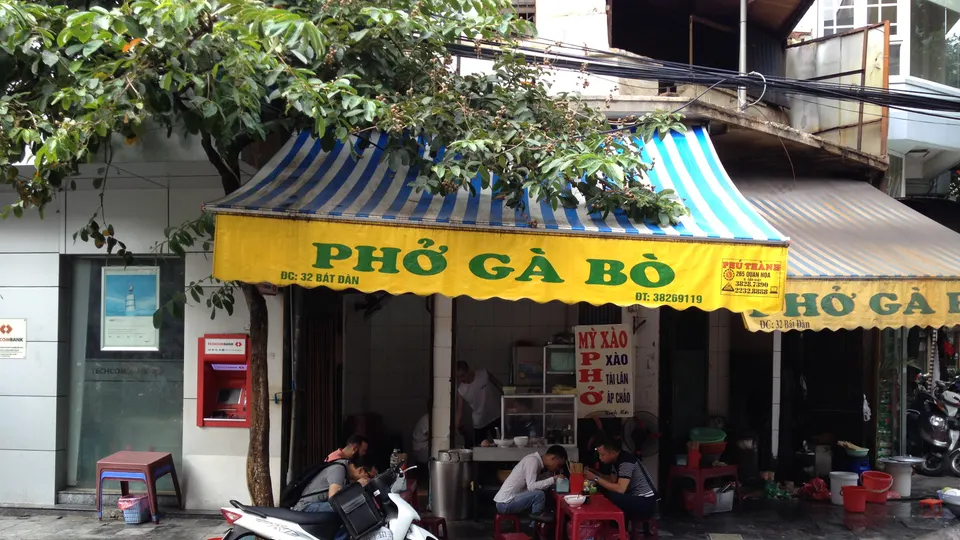
- Wipe first. Wiping your chopsticks or spoon with a napkin before you eat is normal, the tourism authority says.
- Shared plates. Using your own chopsticks to take from shared dishes on your table is also normal at street stalls, according to the same guide; at a family meal, a serving spoon or the other end of your chopsticks is the more careful choice.
- When you finish, lay your chopsticks together on top of the bowl (Vietnam Tourism).
Paying, and do you tip at a street stall?
You pay at the end, usually to the cook. Catch their eye, say “tinh tien”, and they will add up what you had; written bills are not common at local stalls, and the national tourism site advises trusting the tally, because they do it all day. Have small notes ready: a big note can be hard to change at a stall.
What to check. The total may include the towel you opened and the iced tea, as described above. That is normal; if you are unsure, ask what is included.
Tipping. No tip is expected at street stalls, cafes or simple eateries; leaving small change is a friendly extra, not a duty. Our guide to money and tipping in Vietnam explains cash, cards, QR payment and whom you do tip, such as spa staff and private guides.
North, Centre and South: what changes from region to region?
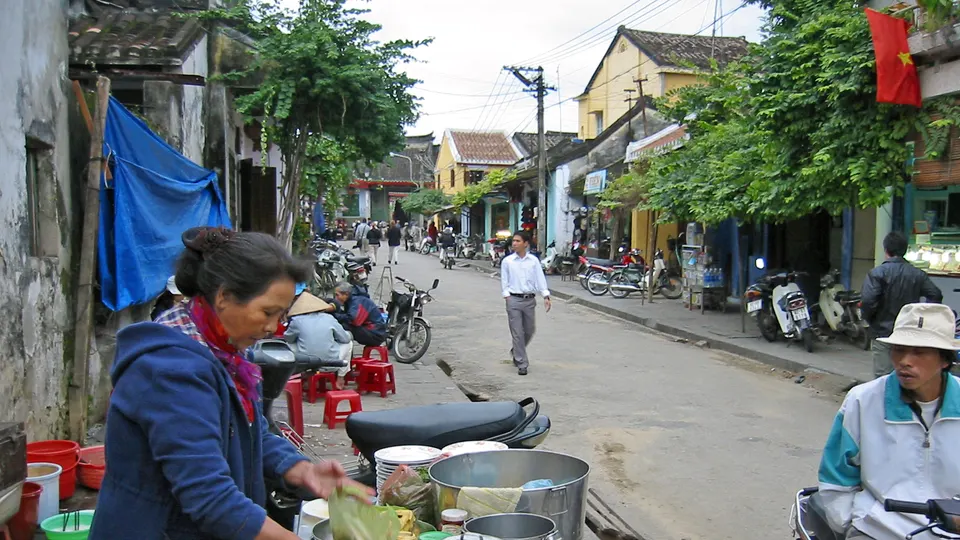
The etiquette is the same across the country; what changes is the bowl and the plate beside it. The MICHELIN Guide notes that in the North, beef pho is given a splash of vinegar and chicken pho a squeeze of lemon, while in the South the broth has a touch of sugar and comes with basil and coriander; in the Centre, banh xeo (bánh xèo), a rice pancake, comes small and soft, and each bite is wrapped and dipped to taste (MICHELIN Guide). Its universal advice: taste the broth before adding anything.
| What you notice | North (Hanoi) | Centre (Hue, Hoi An, Da Nang) | South (Saigon, Mekong) |
|---|---|---|---|
| Seasoning pho | A splash of vinegar in beef pho, lemon with chicken pho (MICHELIN) | – | A touch of sugar in the broth, basil and coriander (MICHELIN) |
| Banh xeo (rice pancake) | – | Small and soft; each bite wrapped and dipped to taste (MICHELIN) | Large and crisp, wrapped in lettuce and herbs, dipped in sweet-and-sour fish sauce (MICHELIN) |
| Iced tea | Spread north after 1975, widely by the 1990s (Vietcetera) | Served at stalls across the country (Vietnam Tourism) | Often free at stalls (Vietcetera, Jan 2026) |
Why it differs. Iced tea is a good example of how habits travel: Vietcetera writes that it was not a Northern habit before 1975, when colder winters favoured hot tea, and spread north after reunification. For the full story of the pho bowl, see pho by region; for where to eat in the Centre, our guides to Hue and Hoi An list the dishes and streets.
Is Vietnam street food safe, and how do you choose a stall?
Advice from health authorities on street food is cautious, and it is worth knowing what it says before you choose. The US CDC calls tap water in Vietnam unsafe to drink, warns that ice is often made from tap water, advises against raw or undercooked meat and seafood and uncooked vegetables, and recommends typhoid and hepatitis A vaccines for travellers; it also discourages eating from street vendors altogether (CDC). Treat that as the strict end of the scale.
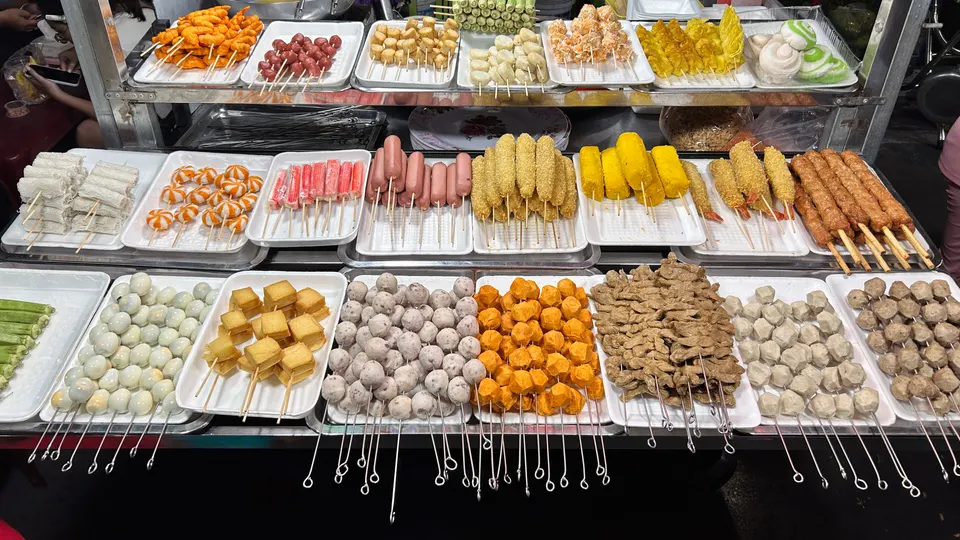
What Vietnam’s Ministry of Health says. In March 2025 the ministry warned about food poisoning from street food and advised choosing places with a clean grilling area and staff who wear gloves, and avoiding skewers with an odd colour or smell, frying oil that is dark and full of sediment, and stalls in dusty spots by heavy traffic, Dai Bieu Nhan Dan reported.
Inspections in 2026. The 2026 national Food Safety Action Month, run from 15 April to 15 May by the central food-safety steering committee, focused on catering services and street food, with inspections aimed at eateries, canteens and street vendors, Nhan Dan reported in April 2026.
A practical checklist, drawn from the CDC’s general food advice and the sources above:
- Busy and hot. Choose stalls with a queue and a quick turnover, where food is cooked or reheated in front of you and arrives steaming.
- Clean set-up. Look at the tables, floor and utensils; the tourism authority’s own test is whether the set-up is clean and organised.
- Wash or sanitise. Wash your hands before eating, or use a sanitiser with at least 60% alcohol (CDC).
- Drinks. Sealed bottles and cans are the safest choice; skip ice if your stomach is sensitive.
- Raw things. Herbs and raw vegetables are part of the meal; if you are being careful, the CDC advises against uncooked vegetables and cut-up fruit, and against fresh sauces made from raw produce.
Can stalls still use the sidewalk in 2026?
Less than before, and as of November 2026 the rules are still in flux. In Ho Chi Minh City, national rules that took effect in 2025 removed local authority to permit business on sidewalks, the city stopped issuing permits, and by January 2026 officials described all sidewalk-based commerce as a violation; unauthorised vending in prohibited areas can be fined 200,000 to 250,000 dong under Decree 168/2024, Tuoi Tre News reported. The city’s earlier paid-sidewalk scheme, in force from 2023, was scrapped, Vietcetera reported in August 2025.
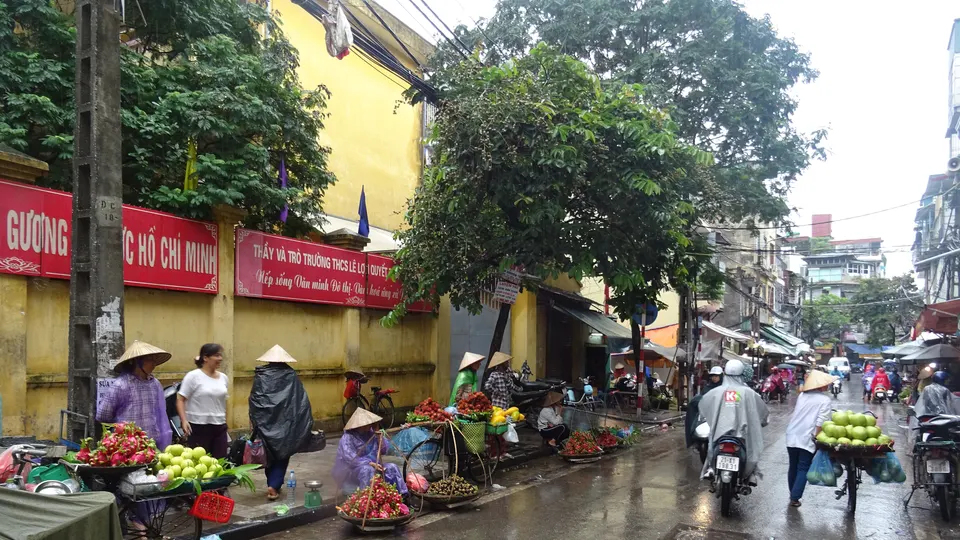
Hanoi. Since late 2025 a pilot in the central Hoan Kiem, Cua Nam and Ba Dinh wards has asked vendors and businesses to move goods indoors to free pedestrian space (Tuoi Tre News). In May 2026 the city drafted a resolution to lease parts of wide sidewalks for business while keeping at least a 1.5-metre path for pedestrians, starting with streets in Hoan Kiem and Cua Nam; in July 2026 it withdrew the draft for further study, Bao Phap Luat reported. As of 20 November 2026 we found no later decision on the draft.
What it means for you. In central Hanoi some shops have moved their tables indoors, Tuoi Tre News found, so a stall you read about may now seat you inside. Don’t block the pedestrian path, and don’t leave a rented motorbike on the sidewalk while you eat: Ho Chi Minh City fines for parking on sidewalks were 400,000 to 600,000 dong in January 2026, Tuoi Tre News reported.
Your first street-food meal in 6 steps
Put it together like this. Each step uses only the practices above.
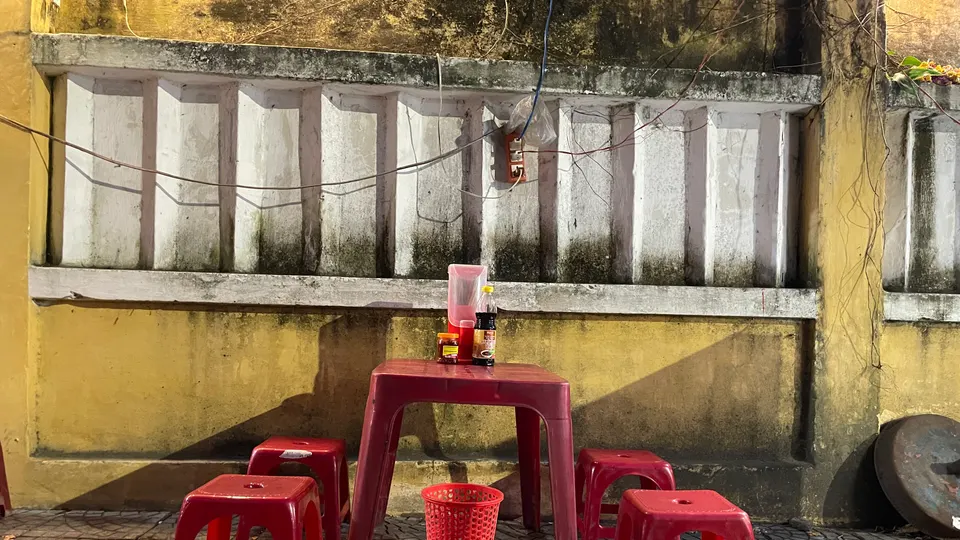
- Pick the stall. Choose a busy one cooking a single dish hot to order, with a clean set-up.
- Order at the front. Say the dish and how many, or point at a neighbour’s bowl. If no price is posted, ask “Bao nhieu tien?” first.
- Sit where there is space. Take any free stool, share a table if needed, and stack a second stool if you need height.
- Season it yourself. Taste first, then add herbs, lime, chilli and fish sauce a little at a time. Wipe your chopsticks with a napkin if you like; leave the wet towel sealed unless you want to pay for it.
- Eat, then tidy. Napkins and lime husks go in the bin under the table; lay your chopsticks together across the bowl, never upright in rice.
- Pay and go. Ask “tinh tien”, pay the cook in small notes and say thank you (“cam on”). No tip is needed.
Once you have the routine, the food hub has the dishes to try next.
Frequently asked questions
Do I need to speak Vietnamese to order street food?
No. At a one-dish stall you can point at the pot or at a neighbour's bowl and hold up fingers for how many; three phrases, bao nhieu tien (how much?), khong cay (not spicy) and tinh tien (the bill, please), cover most meals.
Should I ask the price before ordering street food in Vietnam?
Yes, whenever no price is posted, especially for skewers, snails or seafood sold by the piece. In July 2025 a Da Nang vendor who charged Lao tourists 760,000 dong for a few skewers was fined 750,000 dong for not posting prices, Bao Van Hoa reported.
Is street food still allowed on the sidewalks in Hanoi and Saigon?
Partly. As of November 2026, Ho Chi Minh City treats sidewalk trade as a violation (Tuoi Tre News, January 2026), and Hanoi has asked vendors in central wards to move goods indoors and withdrew its sidewalk-leasing draft in July 2026, so many stalls still trade but some now seat you inside.
Is it OK to eat the raw herbs at a street stall?
Most diners do, because the herb plate is part of noodle soups and grilled dishes. If your stomach is sensitive, the US CDC advises travellers to avoid uncooked vegetables, so you can leave the herbs aside and eat the hot food.
Which street stall should I choose as a first-timer?
Pick a busy stall that cooks one dish hot in front of you and looks clean. Vietnam's Ministry of Health also advises a clean grilling area and staff wearing gloves, and avoiding dark, reused frying oil and stalls in dusty spots by heavy traffic.
Key sources
- A beginner's guide to Vietnamese street food · Vietnam National Authority of Tourism (vietnam.travel), checked 12 November 2026
- Sự thật sau khoản phí khăn lạnh vài nghìn đồng trên hóa đơn · Znews, 29 July 2026
- Điều người Việt, Trung, Hàn, Nhật... cùng kiêng trên mâm cơm · CafeF (from Phụ Nữ Mới), 10 October 2026
- Vietnam 101: How to eat Vietnamese food like a local · MICHELIN Guide, 6 June 2023
- Vietnam – CDC Yellow Book · US Centers for Disease Control and Prevention, 23 April 2025
- Food and drink considerations when traveling · US Centers for Disease Control and Prevention
- Vietnam's biggest cities push to reclaim sidewalks, drawing praise, nostalgia and skepticism · Tuoi Tre News, 30 January 2026
- Xử phạt chủ quầy hàng rong 'chặt chém' du khách Lào tại Đà Nẵng · Báo Văn Hóa, July 2025
All 19 sources and further reading
- Hai 'phe' chê khen quán ăn tận thu tiền giữ xe, trà đá, khăn giấy của thực khách · Tuổi Trẻ, 17 June 2024
- A viral tweet about a family restaurant in Vietnam says a lot about the extras you get for free · Vietcetera, 21 August 2026
- Trà đá: Vietnam's most common drink tells a collective memory · Vietcetera, 23 January 2026
- Bộ Y tế cảnh báo nguy cơ ngộ độc thực phẩm từ thức ăn đường phố · Đại Biểu Nhân Dân, 26 March 2025
- Ho Chi Minh City steps up crackdown on sidewalk, roadway encroachment · Tuoi Tre News, 19 January 2026
- Hanoi weighs sidewalk leasing to boost nighttime economy · Tuoi Tre News, 14 May 2026
- Hà Nội rút dự thảo nghị quyết về khai thác vỉa hè để tiếp tục hoàn thiện · Báo Pháp Luật Việt Nam, 11 July 2026
- Fee-free sidewalks: Ho Chi Minh City scraps sidewalk leasing policy · Vietcetera, 11 August 2025
- What to keep on Vietnam's sidewalks: order, street life, the city's soul or the whole? · Tuoi Tre News, 29 May 2026
- Low-end dining in Vietnam is lots of fun · Tuoi Tre News, 18 May 2018
- Tháng hành động vì an toàn thực phẩm 2026: Mở cao điểm siết chặt bếp ăn tập thể, thức ăn đường phố · Nhân Dân, 11 April 2026
Keep exploring
 North · Central · South · Travel Money in Vietnam: Cash, Card or QR, and Whom to Tip Money in Vietnam as of November 2026: cash, card or QR, which visitors can scan VietQR, ATM limits and fees, legal money exchange and whom to tip.
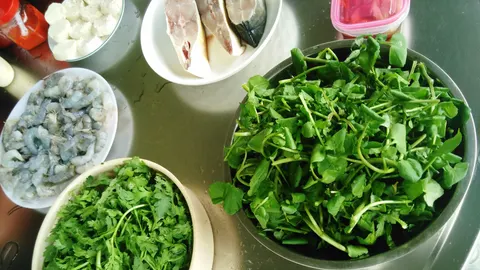 North · Central · South · Food Vietnamese Herbs: English Names and How to Eat Each One Vietnamese herbs by English name: rau ram, perilla, culantro, fish mint and more, with taste, the dishes each suits, regional herb plates and how to wash them.
 North · Central · South · Culture Which Vietnamese Phrases to Use in Hanoi, Hue and Saigon Which Vietnamese phrases to use in Hanoi, Hue and Saigon: greetings and family words, da or vang, prices, ordering, and words that change, like lon or heo.
 North Vietnam · Food Where to Eat in Hanoi Old Quarter: Best Restaurants 2026 Where to eat in Hanoi Old Quarter, re-checked November 2026: MICHELIN 2026 picks and local favourites by street, dish and time of day, plus a one-day plan.