All three regions · Food
Nuoc Cham (Nước Chấm) by Region: Which Dip Goes With What
Which dipping sauce goes with bun cha, cha ca, banh xeo, goi cuon and com tam, how Hanoi, Da Nang and Saigon mix nuoc cham, and how to adjust your bowl.
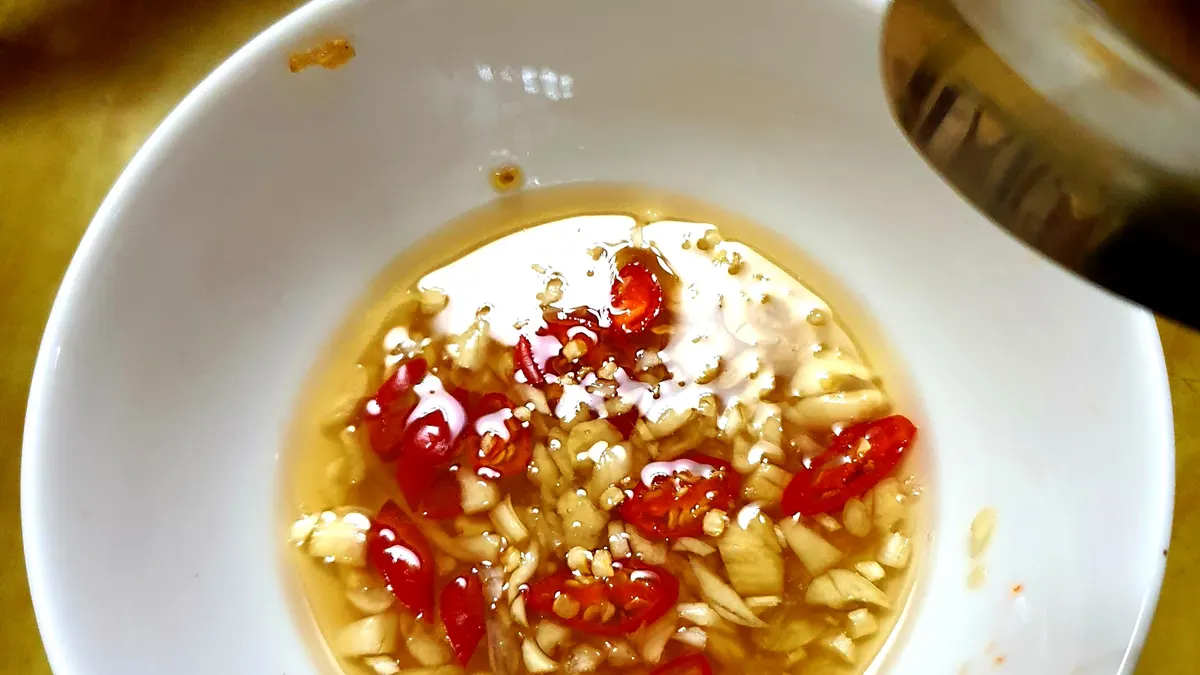
Use the sauce the dish comes with: a warm, thin, vinegar-soured fish sauce broth for bun cha (grilled pork with noodles) in Hanoi, mam nem (fermented anchovy paste with pineapple) for pork rolls and bun mam on the Central coast, and a sweeter, thicker sauce poured over com tam (broken rice) in Saigon. The everyday fish sauce dip is also one of Vietnam’s best-rated foods abroad: in TasteAtlas’s sauce ranking updated on 15 September 2026, Vietnamese nuoc cham placed 3rd of 34 sauces with 4.3 out of 5, and mam nem 15th with 3.9, VietnamPlus reported on 1 October 2026.
Sit down to almost any Vietnamese meal and there is a small bowl in front of you. The food in the middle of the table is shared; the sauce is yours to adjust. That bowl changes with the dish and with the region. In Hanoi it may be a warm, thin broth with slices of pickled papaya floating in it, in Da Nang (Đà Nẵng) a thick paste of fermented anchovy and pineapple, in Saigon a sweeter sauce poured straight over the rice.
This guide is about those mixed sauces at the table: what goes with which dish, how the North, Centre and South balance them, and how to season your own bowl without getting it wrong. For the fish sauce itself, from Phu Quoc’s barrels to Cat Hai’s jars and how to read the protein number on a bottle, see our guide to fish sauce by region.
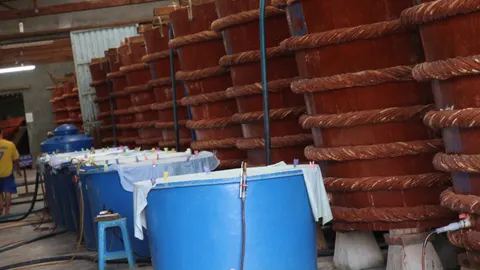
The bottle behind the bowl is news in its own right. Ahead of Tet (Lunar New Year) in February 2026, Tuoi Tre News reported that Phu Quoc’s 45 traditional barrel houses, running about 7,000 wooden fermentation barrels, were selling gift baskets of fish sauce for VND500,000–800,000 (about US$19–31), roughly 20 percent more than in previous years. Phan Thiet’s fish sauce craft, by contrast, is not yet on Vietnam’s national intangible heritage list: as of August 2026, Tien Phong reported, Lam Dong’s culture department judged that it met the criteria and aimed to submit the dossier to the Ministry of Culture, Sports and Tourism in 2026.
Vietnamese dipping sauces at a glance
| North (Hanoi and the Red River Delta) | Centre (Hue (Huế), Da Nang) | South (Saigon, Mekong Delta) | |
|---|---|---|---|
| Everyday nuoc cham (nước chấm) | Milder and less sweet | Spicier and saltier | Sweeter |
| Sour and sweet | Vinegar traditionally for bun cha (bún chả); lime or kumquat elsewhere | Lime; pineapple in mam nem (mắm nêm) | Lime; many cooks use coconut water for sweetness |
| Signature fermented dip | Mam tom (fermented shrimp paste) | Mam nem (fermented anchovy paste) | Used less; mam nem appears as an option with some rolls |
| A dip without fish sauce | Tuong (fermented soybean sauce), salt-pepper-lime | Hue’s nuoc leo (nước lèo) for banh khoai (bánh khoái) | Hoisin-and-peanut sauce for goi cuon (gỏi cuốn) |
| Classic pairings | Bun cha, banh cuon (bánh cuốn), bun dau (bún đậu), cha ca (chả cá), boiled snails | Banh trang cuon thit (Bánh tráng cuốn thịt) heo, bun mam (bún mắm), banh xeo (bánh xèo) | Com tam (Cơm tấm), banh xeo, goi cuon, cha gio (chả giò) |
These are tendencies, not rules: every family and every shop adjusts the bowl, and the sections below give the exceptions.
What nuoc cham is, and how it differs from fish sauce
Nuoc cham simply means “dipping sauce”. The most common one is nuoc mam pha (nước mắm pha), “mixed fish sauce”: fish sauce diluted with water and balanced with sugar and something sour (lime, kumquat or vinegar), with garlic and chilli on top. Fish sauce straight from the bottle (nuoc mam (nước mắm)) is also put on the table, but it is not what most dishes are dipped in. Mam tom, mam nem, peanut sauce and seasoned salt are all nuoc cham too (nước chấm too); they are just not made from fish sauce in the same way.
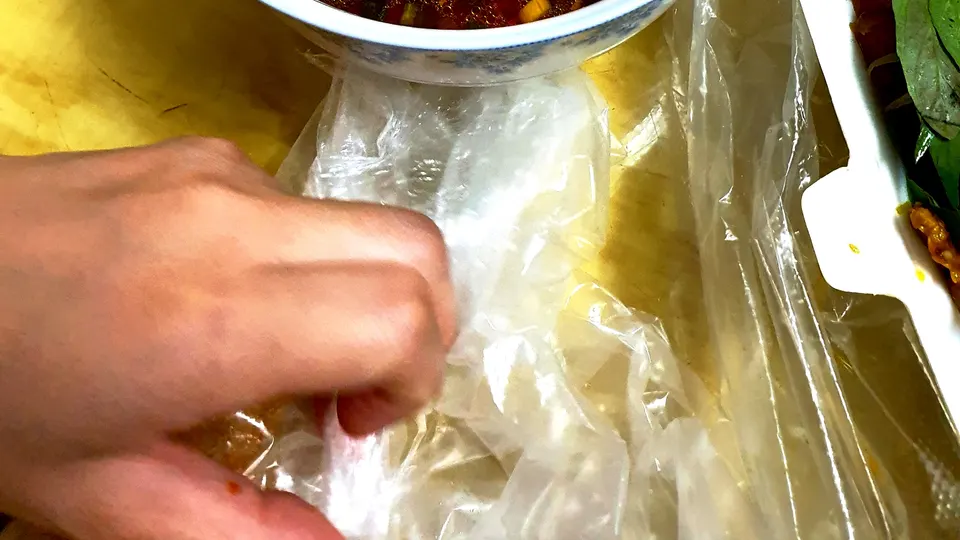
A VOV World food feature on Hanoi, republished by Vietnam’s national tourism authority, calls the dipping sauce the core of the meal and gives the traditional starting point as roughly equal parts fish sauce, sugar and vinegar, adjusted to taste. It also sums up the regional tendencies that most Vietnamese cooks recognise: Northern sauces are mild and balanced, Central ones spicier and saltier, Southern ones sweeter (Vietnam Tourism). The same piece notes a small detail that matters: garlic should be minced, not crushed to a puree (purée), so that it floats on top rather than clouding the bowl.
The reason one meal can need several sauces is that the sauce does a job. A rich, fatty dish wants something sharp. A delicate, steamed dish wants a light sauce that does not drown it. Foods that Vietnamese tradition regards as “cooling”, such as snails, frogs and fish, are often paired with ginger in the sauce, the VOV piece explains, to balance them.
Why does the sauce taste different in Hanoi and Saigon?
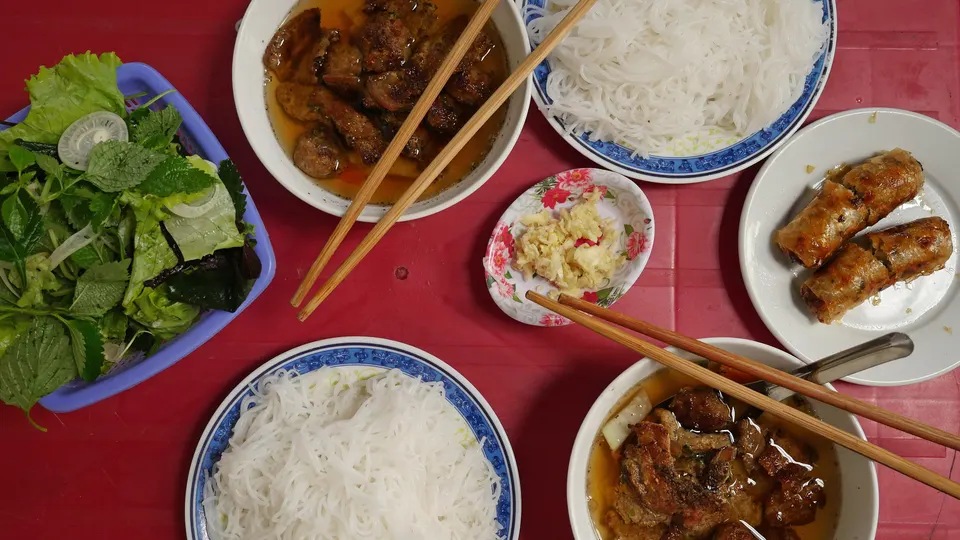
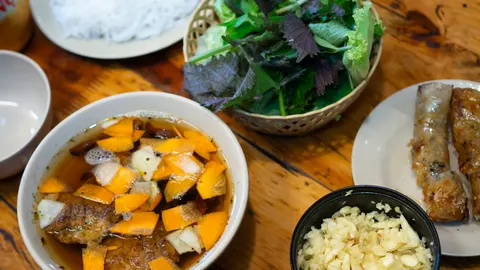
The clearest example is Hanoi’s bun cha. Its sauce is not a dip in a small saucer but a bowl of warm, thin broth that holds the grilled pork. VnExpress’s cooking writer Bui Thuy (Bùi Thủy) gives the traditional proportions as fish sauce, sugar, vinegar and water at 1:1:1:5, with green papaya, carrot, lightly crushed garlic and red chilli added, and an optional drop of ca cuong (cà cuống), the scent of a giant water bug that older Hanoi recipes prized (VnExpress). The result should be soft and balanced, not harsh, with a light reddish-brown colour. In winter it is heated, so the bowl stays warm while you eat, VnExpress International adds.
The South starts from the same three ingredients but turns them sweeter. In a 2024 VnExpress recipe for the sweet-sour sauce used with many Southern dishes, fresh coconut water replaces plain water, at 1:1:2 fish sauce to sugar to coconut water. For com tam, cha gio (fried spring rolls) and seafood the sauce is simmered until slightly thickened; for bun thit nuong (bún thịt nướng), goi cuon and banh xeo it is only boiled briefly and cooled. Lime, garlic and chilli go in at the end. That thicker, sweeter sauce is the one poured over broken rice in Ho Chi Minh City’s com tam.
Why the difference? Part of it is taste: the South’s palate generally leans sweeter, as both the VOV feature and Saigon Giai Phong’s essay on the spices of the three regions describe it. Part of it is the pantry: the Southern recipe builds on coconut water, the Hanoi one on traditional home-made vinegar. And part of it is the dish: a sauce you pour over rice can be thick and sweet, while a broth you dip noodles in has to be thin enough to drink.
There are exceptions inside each city. Not every Hanoi shop makes its bun cha sauce the old way. Some use lime instead of vinegar, and VnExpress takes up the old question of vinegar or lime: vinegar gives a mild, rounded sourness that suits the grilled pork, while lime is sharper and its aroma fades if it sits, so it works better as a last-minute touch than as the base. Even in the Old Quarter the sweetness varies: the Vietnam Airlines guide notes that the sauce at Bun Cha Hang Quat (Bún Chả Hàng Quạt) leans sweet. Northern dishes in Hanoi also have lighter and sharper sauces of their own; the next section matches them dish by dish.
Which sauce goes with which dish?
The safest rule is to use the sauce the dish comes with. If a shop gives you only one bowl, that is the right one. The table below covers the dishes visitors meet most often.
| Dish | Where | Sauce | How it is used |
|---|---|---|---|
| Bun cha | Hanoi | Warm, diluted fish sauce with vinegar, sugar, pickled papaya and carrot | Pork sits in the bowl; dip noodles and herbs into it |
| Banh cuon (steamed rice rolls) | North | Light, slightly sweet fish sauce with lime, chilli and garlic | Dip each piece |
| Nem ran (Nem rán) / cha gio (fried spring rolls) | North / South | Sweet-sour fish sauce | Dip |
| Oc luoc (boiled snails) | Hanoi | Tangy, sweet fish sauce with lime and chilli; some cooks add ginger and lime leaves | Dip each snail |
| Boiled pork | North | Mam tom, salt-pepper-lime, or plain fish sauce | Dip |
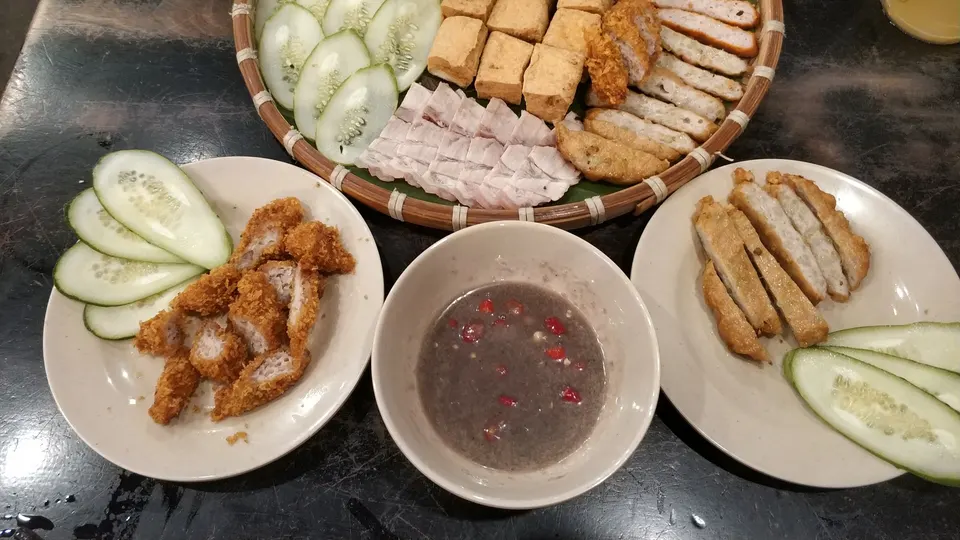
| Bun dau mam tom (Bún đậu mắm tôm) | Hanoi | Mam tom whisked with kumquat or lime, sugar, chilli and hot oil | Dip tofu, pork and noodles |
| Cha ca | Hanoi | Mam tom with lime and chilli | Spoon a little over the fish and noodles |
| Boiled morning glory | North | Fish sauce with lime and sugar, or tuong (fermented soybean sauce) | Dip |
| Banh trang cuon thit heo | Da Nang | Mam nem with pineapple, garlic, chilli and lemongrass | Roll, then dip one end |
| Bun mam | Da Nang | Mam nem | Poured over the noodles |
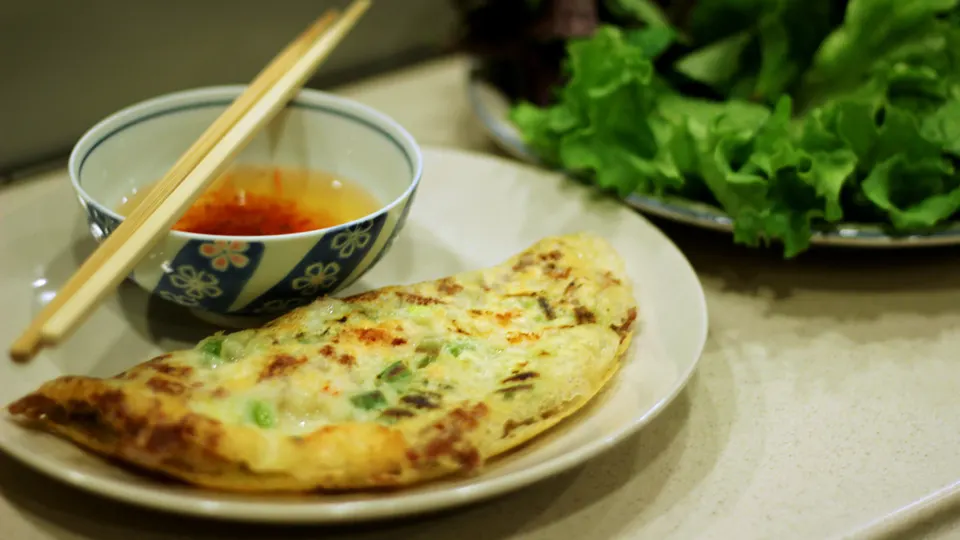
| Banh xeo (Central) | Da Nang and the coast | Mam nem, or a minced-pork and peanut sauce at some shops | Roll in rice paper, then dip |
| Banh khoai | Hue | Nuoc leo: soybean paste, peanuts, sesame, liver and pork broth | Tear and dip |
| Banh xeo (Southern) | Saigon, Mekong Delta | Sweet-sour fish sauce | Wrap in greens, then dip |
| Com tam | Saigon | Thicker sweet-sour fish sauce | Pour over the rice |
| Goi cuon (fresh spring rolls) | South | Hoisin-and-peanut sauce, or sweet-sour fish sauce with garlic and chilli | Dip |
| Boiled chicken | Everywhere | Salt, pepper and lime, often with lime leaves | Dip |
| Sticky rice, bamboo shoots, vegetables, fish | Northwest (Son La) | Cham cheo (Chẩm chéo) | Dip or sprinkle |
Two dishes show how the same food changes sauce as it travels. Southern banh xeo is wrapped in greens and dipped in sweet-sour fish sauce; on the Central coast the smaller, crisper pancakes are more often eaten with mam nem, and at Banh Xeo Ba Duong (Bánh Xèo Bà Dưỡng) in Da Nang the MICHELIN inspectors single out a minced-pork and peanut dip instead (MICHELIN Guide). And Northern banh cuon relies on a light sauce precisely because the rolls are so delicate; the VOV feature describes it as there to lift the dish, not to overpower it.
Mam tom: how to eat the North’s strongest dip
Mam tom is fermented shrimp paste: pungent and, to many first-timers, alarming. In Hanoi it is indispensable. VnExpress lists the dishes it finishes, from bun dau mam tom and cha ca La Vong to bun thang (bún thang), hot snail noodles (bun oc) and crab noodle soup (bun rieu), where only a little is stirred in to lift the other flavours (VnExpress). The Vietnam News Agency calls cha ca the most famous dish eaten with it.
The dish has official standing too: in December 2025 Hanoi announced that the knowledge of preparing and eating cha ca La Vong had been designated national intangible cultural heritage, DTiNews reported on 17 December 2025.
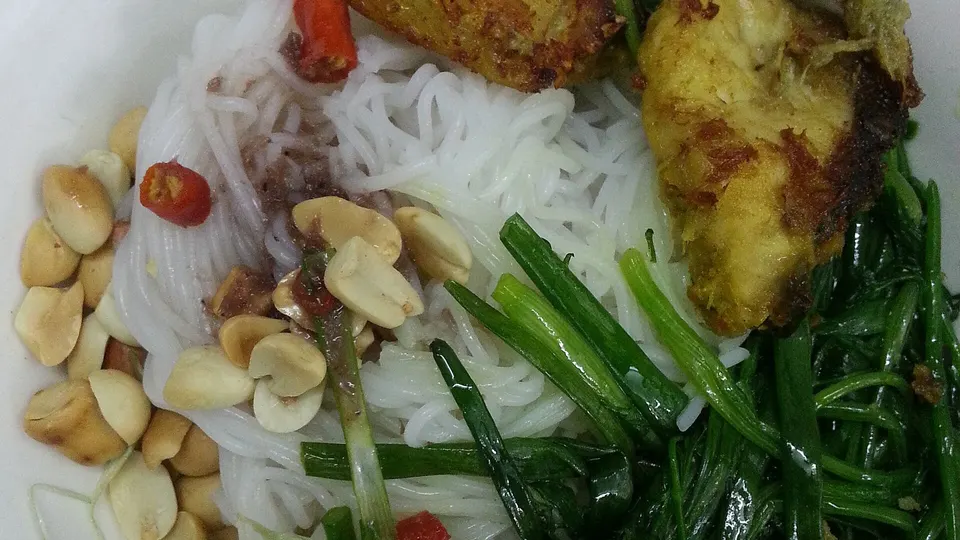
It is never eaten straight from the jar. For bun dau, shops bring the paste with sugar and kumquat or lime, and you whisk it until it turns pale and frothy. Saigoneer, describing a Hang Khay (Hàng Khay) alley shop, lists kumquat juice, sugar, fresh chilli and a spoonful of oil; VnExpress describes it whipped with a little white rice spirit to tame the smell, softened with sugar and finished with hot fat and chilli. Tuoi Tre (Tuổi Trẻ) News suggests about two kumquats and three teaspoons of sugar per bowl as a starting point. Whisk until the colour lightens and the bowl foams, then taste and add more kumquat or sugar.
Two habits help. First, dip into mam tom last: the Vietnam News Agency’s advice is that once you have tasted it, you will not want the other sauces. Second, use it as a dip for the things it belongs with, fried tofu, boiled pork and noodles, rather than for every item on the tray. Some shops put chewing gum on the tray for afterwards. A deeper guide to mam tom and other fermented sauces will follow; this page sticks to how to eat it.
Mam nem: the Central coast’s fermented anchovy dip
Head south to Da Nang and the strong sauce changes. Mam nem is made from whole fermented anchovies and is more a paste than a liquid; Vietnam’s national tourism authority describes it as a delicacy of Quang Nam (since July 2025 part of Da Nang city), mixed with sugar, chilli, garlic, lemongrass and crushed pineapple, and used “when nuoc mam just won’t do” (Vietnam Tourism).
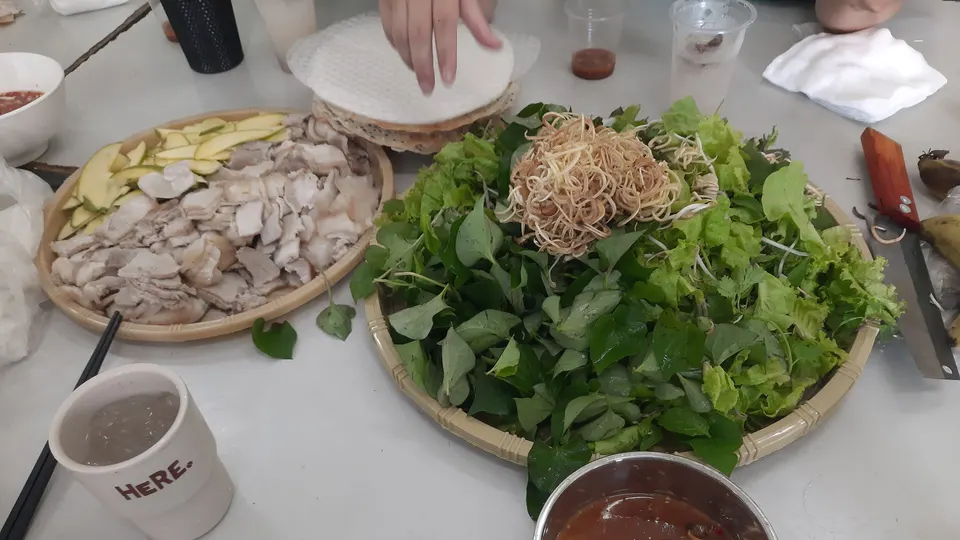
Its classic partner is bánh tráng cuốn thịt heo: thin slices of boiled pork rolled at the table in rice paper with fresh rice noodles, lettuce, herbs and cucumber. A 2011 VnExpress feature calls mam nem the only dipping sauce for the dish. In a VnExpress reader recipe, the garlic, chilli and lemongrass are fried first, then the mam nem, chopped pineapple and sugar are cooked together for a few minutes, and a spoonful of lime juice goes in just before eating. You dip one end of the roll.
Mam nem also dresses Da Nang’s bun mam, cold rice vermicelli with roast pork, herbs and peanuts, where it is poured generously over the bowl rather than served on the side. It turns up beyond the Centre too: a Tien Phong (Tiền Phong) essay on goi cuon notes that some people prefer to eat the rolls with mam nem, garlic and chilli instead of the usual sauces. If it is your first time, start with a small amount. In the Mekong Delta, mam usually means fermented freshwater fish eaten as a dish rather than a dip; see our guide to Mekong mam.
Peanut, soy and liver: dips without fish sauce
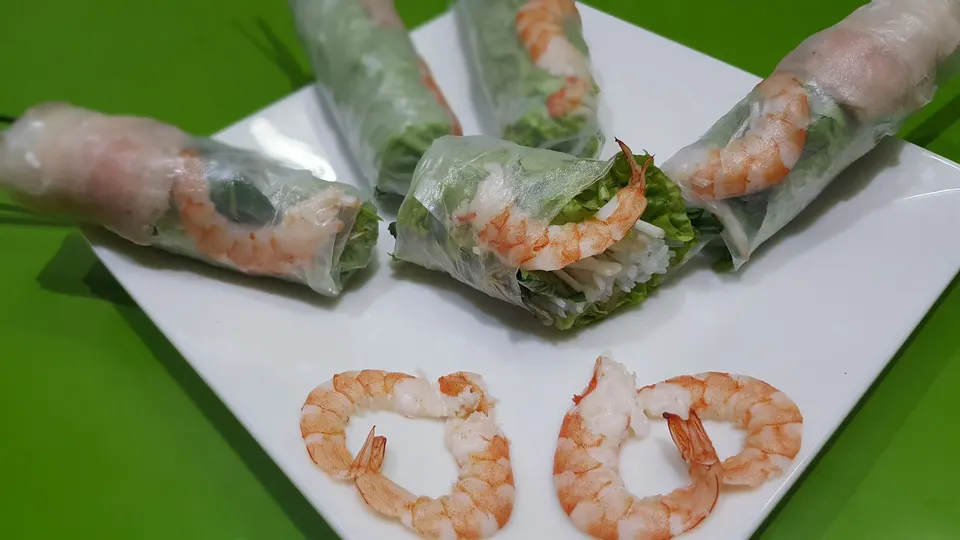
Not every Vietnamese dip starts with fish sauce. In the South, goi cuon, the fresh spring rolls of shrimp, pork, noodles and herbs that are a common street snack in Saigon, come with one of two sauces: a sweet-sour fish sauce with garlic and chilli, or a blend of hoisin and peanut sauce, VnExpress International explains. The savoury version of bo bia (bò bía), rolls brought to Vietnam by Chaozhou (Teochew) immigrants, is eaten with chilli sauce mixed with roasted peanut butter and fried onions; Hanoi, the same guide notes, sells only the sweet version.
Soybeans give the North its own dip. The Vietnam News Agency describes tuong, a whole-bean soybean sauce whose best-known version comes from Ban (Bần) village in Hung Yen (Hưng Yên) province, as a dip for boiled morning glory, the alternative to fish sauce with lime. In Hue, banh khoai, the city’s small, crisp cousin of banh xeo, is dipped in nuoc leo, a thick sauce that Hue’s information-technology centre’s tourism site lists as soybean paste, peanuts, sesame, liver and pork broth.
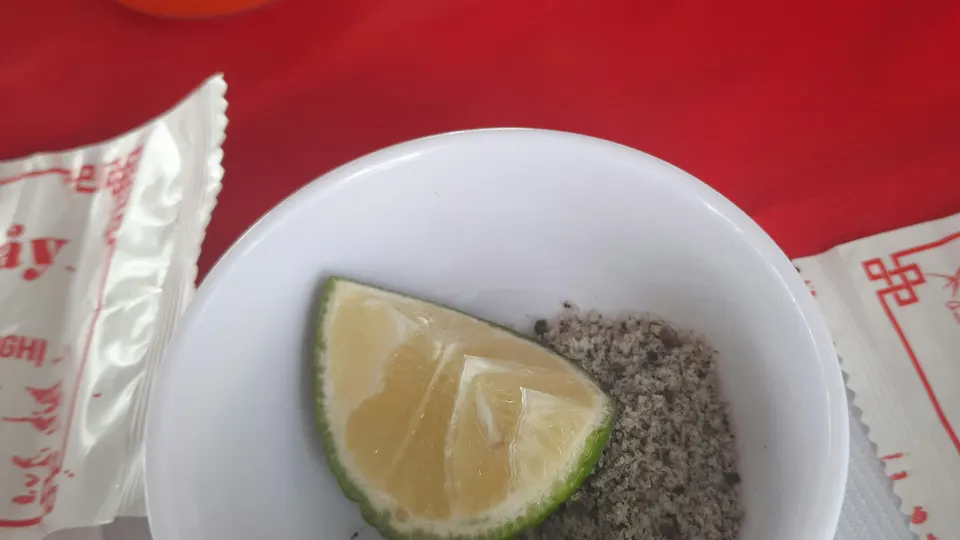
Salt dips: muoi tieu chanh and the Northwest’s cham cheo
The simplest dip in Vietnam is a pile of salt and ground pepper with a squeeze of lime: muoi tieu chanh (muối tiêu chanh). It is the usual partner for boiled chicken at family meals such as Tet (Tết). Bao Phap Luat’s Tet recipe adds thinly sliced lime leaves and chilli and says to squeeze in the lime only when serving. In Hanoi it is also one of the options for boiled pork, alongside mam tom and plain fish sauce, according to the VOV feature.
Seafood can get a sharper, greener variant. Znews describes muoi ot xanh (muối ớt xanh), green bird’s eye chilli blended with lime, lime leaves, salt and sugar, and some cooks add condensed milk, as a dip for seafood and grilled food.
In the mountains of the Northwest, salt becomes something else. Cham cheo is a dipping sauce of the Thai (Thái) people of Son La; cham (chẩm) means “to dip” in Thai. Salt, garlic, fresh chilli, lime leaves and the herb rau mui tau (mùi tàu) are grilled over charcoal, then pounded with mac khen (mắc khén), a wild mountain pepper that the Son La write-up calls essential. It comes dry, keeping for months in a jar, or wet, with fish sauce, a little sugar and lime juice added. It is eaten with bamboo shoots, sticky rice, vegetables and fish (Ministry of Industry and Trade).
How to adjust the bowl at the table
Many shops expect you to season your own bowl and put fresh chilli, garlic and lime or kumquat on the table. The order in which you use them matters more than the amounts.
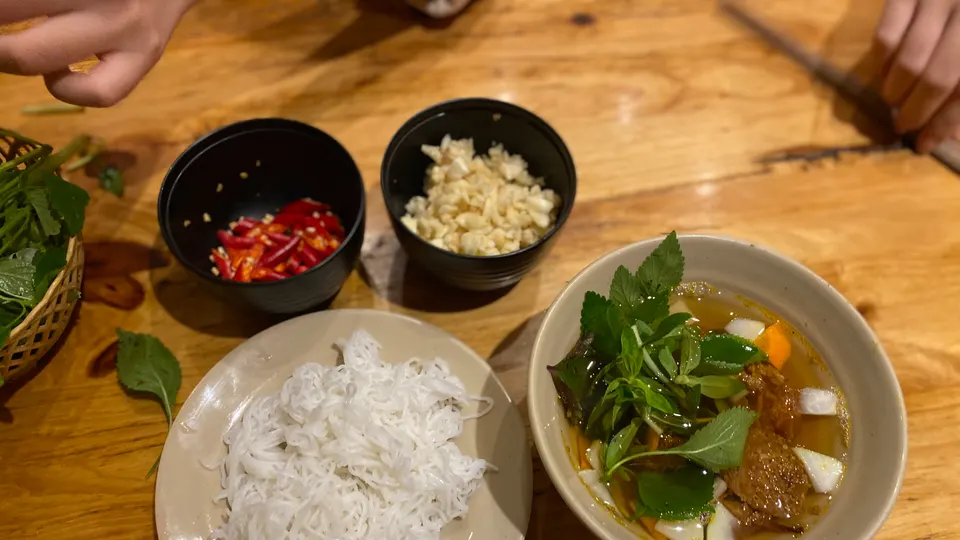
- Taste first. The sauce has already been balanced in the kitchen. A 2009 VnExpress guide to dipping sauces, written with the chefs of a cooking school, points out that fish sauces differ in saltiness and sourness, so even cooks adjust the ratio by taste rather than by measure.
- Add chilli and garlic a little at a time. The same guide warns that adding garlic and chilli too early is a common mistake: taste the balance first, then add them, garlic last. At the table, a few slices are enough to start.
- Squeeze lime or kumquat gently, and last. VnExpress explains that hard squeezing releases bitter oil from the peel, and that lime’s aroma fades if it sits. For bun cha it recommends mixing the lime into a little warm sauce first, then returning it to the bowl.
- Sweeter or sharper? If a sauce tastes too sweet, a little more kumquat, lime or vinegar brings it back; the Vietnam Airlines guide suggests exactly that at Bun Cha Hang Quat. If it tastes too salty, the fix in the kitchen is more water and sugar, as VnExpress’s recipe advises for a stronger fish sauce. At the table, ask for a fresh bowl rather than diluting it yourself.
- Whisk the fermented dips. Mam tom needs to be beaten until it foams before you dip; mam nem should be stirred so the pineapple and garlic are evenly mixed.
Common mistakes, and what to do instead
Most mistakes come from treating every sauce as interchangeable. A few that are easy to avoid:
- Using one sauce for everything. The sweet, thick sauce for com tam would swamp a plate of banh cuon; a thin bun cha broth would be lost on broken rice. Use the bowl the dish comes with.
- Pouring a dip over food meant for dipping. Bun cha’s noodles and herbs are dipped into the broth a bite at a time, and banh trang cuon thit heo (bánh tráng cuốn thịt heo) is dipped by one end. Com tam and bun mam are the exceptions, where the sauce is poured over.
- Starting with mam tom. Dip into it last, so that it does not overwhelm everything else, and whisk it first.
- Squeezing lime hard, or early. It turns bitter and loses its scent. Add it gently, just before you eat.
- Expecting Southern sweetness in Hanoi, or the reverse. Neither is wrong. A Hanoi bun cha sauce that tastes thin and sharp to a Saigon palate is made that way on purpose, and so is the glossy sweetness of a Southern sweet-sour sauce.
- Missing the old touches. Traditional Hanoi bun cha sauce carried a drop of ca cuong essence; VnExpress now lists it as an optional extra. If a shop offers it, it is worth a try.
The easiest way to learn is to eat one dish in each region with the sauce it was made for: bun cha or bun dau mam tom in Hanoi, banh trang cuon thit heo with mam nem in Da Nang, com tam with sweet-sour fish sauce in Saigon. The cards below list places where those sauces are part of what the guides and press recommend. For more regional dishes to pair them with, start at our Vietnamese food by region hub.
Where to taste the sauces
MICHELIN Guide pick
Bún Chả Đắc Kim · Bún chả Đắc Kim
Hanoi · Old Quarter, Hoàn Kiếm ward
1 Hàng Mành Street
A no-frills Old Quarter shop since 1966, listed in the MICHELIN Guide Vietnam 2026, whose inspectors call its nước chấm, a sweet chilli fish sauce with finely sliced pickled green mango, the perfect condiment.
Order: Bún chả, dipping the noodles and herbs into the sauce bowl with the pork. Expect queues and shared tables.
This card means the shop at 1 Hàng Mành Street.
Listed in: MICHELIN Guide Vietnam 2026 · checked November 2026
Local favourite
Bún Chả Hàng Quạt · Bún chả Hàng Quạt
Hanoi · Old Quarter, Hoàn Kiếm ward (former Hàng Gai ward, Hoàn Kiếm district)
Alley 74 Hàng Quạt Street
A family-run shop in a narrow alley about ten minutes' walk from Hoàn Kiếm Lake. VietNamNet describes a classic sauce of fish sauce, vinegar, sugar and water finished with fresh garlic and chilli; the Vietnam Airlines guide notes that it leans sweet and suggests a little kumquat if you want it sharper, a good place to practise adjusting the bowl.
Order: Bún chả; taste the sauce first, then add kumquat, garlic or chilli.
Recommended by: VietNamNet (2026), Vietnam Airlines travel guide · checked November 2026
Local favourite
Chả Cá Lã Vọng · Chả cá Lã Vọng
Hanoi · Old Quarter, Hoàn Kiếm ward (former Hàng Đào ward, Hoàn Kiếm district)
14 Chả Cá Street
The Đoàn family's shop, where chả cá was first sold; the 2025 national heritage dossier cites only Nos. 14 and 5 Chả Cá Street, and the fourth generation still serves the dish. Chả cá is the dish most famously eaten with mắm tôm.
Order: Chả cá with rice vermicelli, herbs and peanuts, with a little mắm tôm whisked with lime and chilli.
'Chả cá Lã Vọng' is also the name of the dish, and many restaurants use it. This card means the Đoàn family's shop at No. 14 Chả Cá Street.
Recommended by: DTiNews (Dân Trí) (2025), Đại Đoàn Kết (2025) · checked November 2026
MICHELIN Guide pick
Bà Đông · Bún mắm Bà Đông
Đà Nẵng · Hải Châu ward
145 Huỳnh Thúc Kháng Street
A Bib Gourmand in the MICHELIN Guide Vietnam 2026 for bún mắm, cold rice vermicelli dressed with the owner's family fermented fish sauce, which the inspectors call the heart and soul of the dish; Báo Đà Nẵng describes the fermented anchovy sauce (mắm nêm) added generously on top.
Order: Bún mắm with crispy roast pork, or the thập cẩm (mixed) version; fresh sugar cane juice on the side.
Listed in: MICHELIN Guide Vietnam 2026, Báo Đà Nẵng (2024) · checked November 2026
MICHELIN Guide pick
Bánh Xèo Bà Dưỡng · Bánh xèo Bà Dưỡng
Đà Nẵng · Hòa Cường ward
280/23 Hoàng Diệu Street, at the end of the alley
Listed in the MICHELIN Guide Vietnam 2026: a shop of more than 30 years serving crispy bánh xèo with herbs and pickles, where the inspectors call the minced-pork and peanut dipping sauce a must. A Central-coast alternative to fish sauce and mắm nêm.
Order: Bánh xèo rolled in rice paper with herbs, dipped in the pork-and-peanut sauce.
Listed in: MICHELIN Guide Vietnam 2026 · checked November 2026
MICHELIN Guide pick
Cơm Tấm Ba Ghiền · Cơm tấm Ba Ghiền
Ho Chi Minh City · Phú Nhuận ward
84 Đặng Văn Ngữ Street
A Bib Gourmand in the MICHELIN Guide Vietnam 2026, serving broken rice with a charcoal-grilled pork chop since the 1990s, with pickled radish and the sweet-and-sour fish sauce that defines the Southern style.
Order: Cơm tấm sườn (grilled pork chop); pour the sweet-sour fish sauce over the rice.
Listed in: MICHELIN Guide Vietnam 2026 · checked November 2026
Addresses and details can change; check before you go. We do not accept payment for listings.
Frequently asked questions
Do I use vinegar or lime in bun cha dipping sauce?
Traditionally vinegar: VnExpress explains that it gives a softer, rounder sourness that suits the grilled pork, while lime is sharper and its aroma fades if it sits. Some Hanoi shops use lime, but as a last-minute touch rather than as the base of the bun cha sauce.
How do I mix mam tom for bun dau?
Add kumquat or lime juice and sugar to the mam tom (fermented shrimp paste) and whisk until it turns pale and frothy; many Hanoi shops also add chilli and a spoonful of hot oil. Tuoi Tre News suggests about two kumquats and three teaspoons of sugar per bowl as a starting point, then adjust to taste.
Which sauce should I dip banh xeo in when I'm in Da Nang?
On the Central coast, banh xeo is usually rolled in rice paper and dipped in mam nem, the fermented anchovy paste with pineapple. At Banh Xeo Ba Duong in Da Nang, listed in the MICHELIN Guide Vietnam 2026, the inspectors single out the minced-pork and peanut sauce instead; in Saigon, banh xeo comes with sweet-sour fish sauce.
What should I do if my nuoc cham tastes too salty or too sweet?
If it is too sweet, add a little kumquat, lime or vinegar, as the Vietnam Airlines guide suggests at Bun Cha Hang Quat in Hanoi. If it is too salty, ask for a fresh bowl rather than diluting it yourself; in the kitchen, VnExpress fixes a strong fish sauce with more water and sugar.
Is Phan Thiet fish sauce a national heritage yet?
Not yet. As of August 2026, Tien Phong reported that Lam Dong province's culture department found the Phan Thiet fish sauce craft met the criteria and aimed to submit its national intangible heritage dossier to the Ministry of Culture, Sports and Tourism in 2026; Phu Quoc's craft has been on the list since 2021.
Key sources
- Nước chấm Việt Nam lọt vào Top 3 trên bảng xếp hạng thế giới · VietnamPlus, 1 October 2026
- International tourists snap up Phu Quoc fish sauce ahead of Tet · Tuổi Trẻ News, 5 February 2026
- A taste of Hanoi: Where every dish meets its perfect dip · VOV World (Kim Chi), republished by Vietnam National Authority of Tourism, November 2025
- Nước chấm bún chả Hà Nội pha giấm hay chanh? · VnExpress (Bùi Thủy), 4 August 2024
- Mắm tôm trong món ăn Hà Nội · VnExpress (Bùi Thủy), 8 September 2023
- Da Nang's special pork rolls · Vietnam Tourism (Vietnam National Authority of Tourism)
- Bánh Xèo Bà Dưỡng · MICHELIN Guide Vietnam 2026
- Chẩm chéo – hương vị đặc trưng của núi rừng Tây Bắc · Ministry of Industry and Trade portal (from the Sơn La provincial portal), 19 September 2021
All 23 sources and further reading
- Giữ hồn nghề nước mắm 300 năm · Tiền Phong, 12 August 2026
- How to make Hanoi bun cha · VnExpress International (Bui Thuy), 23 December 2023
- Cách pha nước mắm chua ngọt · VnExpress (Bùi Thủy), 13 November 2024
- Bí quyết pha chế các loại nước chấm ngon · VnExpress, 15 December 2009
- Vietnamese rolls: a brief guide · VnExpress International, 18 February 2023
- The smorgasbord of sauces in Vietnamese cuisine · Vietnam News Agency / Vietnam Pictorial, 1 January 2021
- Michelin Guide honoured 'bun mam nem' eatery in Da Nang · Báo Đà Nẵng, 7 August 2024
- 7 công thức pha nước chấm đơn giản cho thịt luộc, hải sản · Znews (Uyên Hoàng), 12 May 2020
- Tết ăn gà luộc phải biết 3 loại đồ chấm dễ làm · Báo Pháp Luật Việt Nam, 13 February 2018
- 'Bun dau mam tom': just another stinky delicacy in Vietnam · Tuổi Trẻ News (Tien Bui), 16 April 2018
- Ngõ Nooks: The Dish That Smells Like Regret but Tastes Like Happiness · Saigoneer (Gia Nguyen), 15 February 2019
- Bánh Khoái – Vietnamese Crepe in Hue · Hue Discovery (Huế Center of Information Technology)
- Tản mạn về gỏi cuốn · Tiền Phong (Trọng Thịnh), 4 September 2011
- Gia vị trong ẩm thực 3 miền · Sài Gòn Giải Phóng (Lê Phong), 9 August 2015
- Vietnamese dipping sauce · Wikipedia (background only)
Keep exploring
 North · Central · South · Food Phu Quoc vs Phan Thiet vs Cat Hai Fish Sauce: Which to Buy Phu Quoc, Phan Thiet or Cat Hai fish sauce? How the three differ in fish, barrels and protected names, what °N on a label means and which bottle to buy.
 North Vietnam · Food Bun Cha (Bún Chả) in Hanoi: How to Eat It, What It Costs What bun cha is, why Hanoi eats it at lunch over charcoal smoke, how to eat it the local way, and how it differs from southern bun thit nuong.
 North · Central · South · Food Banh Xeo (Bánh Xèo): South vs Central and What to Order Banh xeo South vs Central: a big folded Saigon pancake or small crisp seafood ones, plus Hue's banh khoai, 2026 prices, what to order and MICHELIN picks.
 North Vietnam · Food Cha Ca La Vong (Chả Cá Lã Vọng): Where and How to Eat It Where to eat cha ca La Vong in Hanoi, including the 2026 MICHELIN picks, how to eat the turmeric fish with dill at the table, and how it differs from fish cake.