All three regions · Food
Phu Quoc vs Phan Thiet vs Cat Hai Fish Sauce: Which to Buy
Phu Quoc, Phan Thiet or Cat Hai fish sauce? How the three differ in fish, barrels and protected names, what °N on a label means and which bottle to buy.
Which Vietnamese fish sauce should you buy? For a guaranteed origin, pick a Phu Quoc (Phú Quốc) or Phan Thiet (Phan Thiết) bottle carrying the geographical indication mark; for a northern sauce made from mixed small fish, pick Cat Hai (Cát Hải); and whichever town you choose, read the protein figure (°N) and the ingredient list before the town name. As of November 2026, Phan Thiet’s fish sauce craft has joined Phu Quoc’s on Vietnam’s national intangible heritage list, added by a culture ministry decision of 16 November 2026, according to Bao Lam Dong (Báo Lâm Đồng).
Pick up a bottle of nuoc mam (nước mắm), Vietnamese fish sauce, and the town on the label is part of what you are paying for. Three of the best-known names come from opposite ends of the coast: Phu Quoc, the island in the Gulf of Thailand; Phan Thiet, the fishing city on the south-central coast; and Cat Hai, the island off the northern port of Hai Phong (Hải Phòng). The chairman of the Vietnam Fish Sauce Association names them among the country’s six well-known fish sauce areas, together with Ba Lang (Ba Làng) in Thanh Hoa (Thanh Hóa), Da Nang (Đà Nẵng) and Nha Trang (SGGP).
All of them start from the same two ingredients, small sea fish and salt, left to ferment until the fish turns to liquid. What changes is which fish, how it is salted, what it ferments in, for how long and under which sky, and what the law protects. This guide compares the three main centres, explains the protected names, shows how to read the protein number on a label, and ends with how to use, buy and fly home with a bottle. For the dishes that depend on it, browse the Vietnamese food hub.
Fish sauce regions at a glance
| Phu Quoc | Phan Thiet | Cat Hai | |
|---|---|---|---|
| Where it is now | Phu Quoc special zone, An Giang province (formerly Kien Giang) | Phan Thiet, Lam Dong (Lâm Đồng) province (formerly Binh Thuan) | Cat Hai special zone, Hai Phong city |
| Fish | Anchovies only (ca com), from the island’s waters | Anchovies, especially ca com than and soc tieu (sọc tiêu); some sauce from scad (ca nuc) | Anchovies with other small sea fish such as ca nham (cá nhâm) and scad |
| Salting | On the boat, straight after the catch; about 2.5–3 parts fish to 1 of salt | About 3 parts fish to 1 of salt | Fish cleaned, mixed with salt and left to ripen as chuop (chượp) |
| Vessel | Tall wooden barrels of boi loi (bời lời) or ven ven (vên vên) wood | Wooden barrels and earthenware jars, often outdoors in the sun | Jars or tanks, sun-dried |
| Fermentation | 12–15 months (up to 18 in some accounts) | About 8–18 months, depending on source and producer | 12–16 months |
| Colour (as described) | Reddish “cockroach-wing” brown | Straw-yellow to reddish brown; accounts differ | Dark brown |
| Protected name | Geographical indication 2001; EU PDO 2012 | Geographical indication 2007 | Producer’s trademark; two products rated 5-star OCOP (April 2026) |
| Heritage status | National intangible heritage (2021) | National intangible heritage (November 2026) | Not listed |
The table shows the common pattern described by the sources below. Every centre makes several grades, and individual producers differ.
Phu Quoc: anchovies and wooden barrels
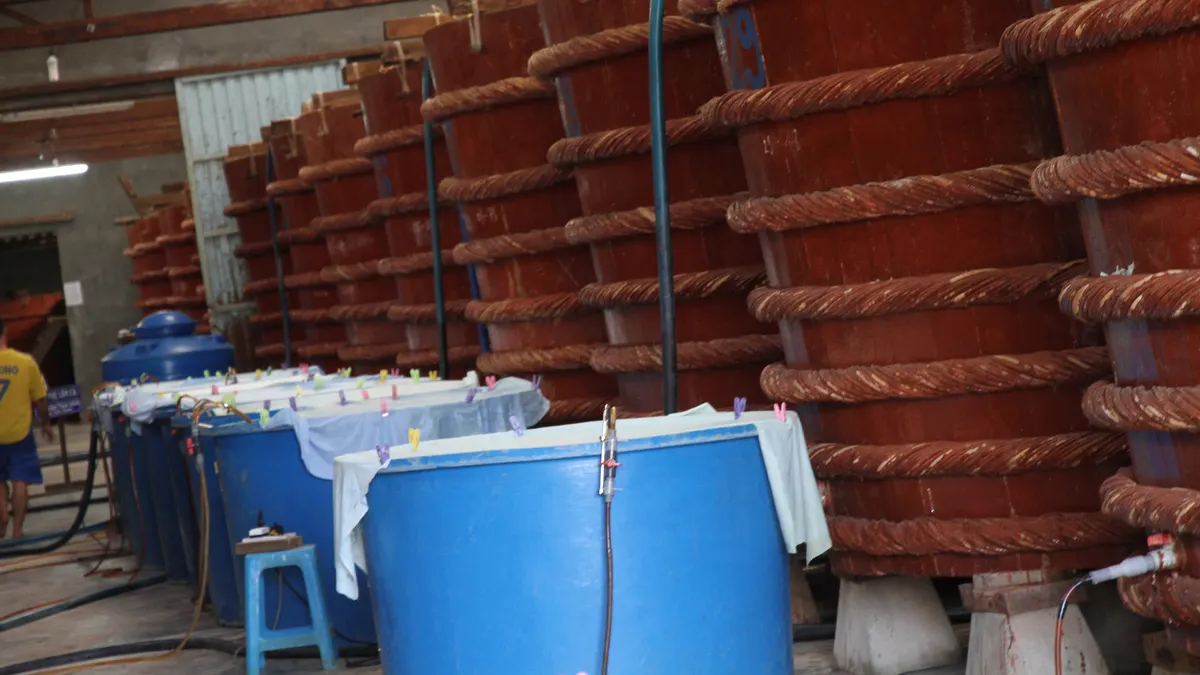
Phu Quoc is the best-known name, and its rules are written down in detail. The sauce is made only from anchovies (ca com), salted on the boat immediately after the catch and fermented for 12 to 18 months with nothing added, in barrels that must be made of boi loi or ven ven wood (Bao Van Hoa). Nhan Dan (Nhân Dân) puts the usual fermentation at 12–15 months and counts more than 7,000 barrels on the island, each holding 12–15 tonnes of fish.
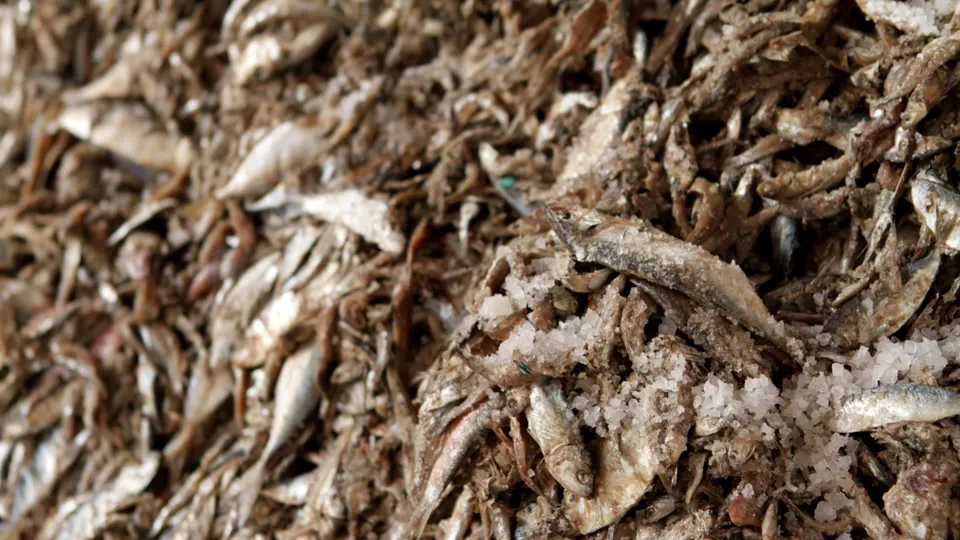
Why the island? Nhan Dan points to anchovies that can be caught around Phu Quoc all year, and to the workshops themselves: the producers’ association has about 50 members, all of them barrel owners (nha thung (nhà thùng)). The traditional mix, according to Dai bieu Nhan dan (Đại biểu Nhân dân), is 2.5 to 3 parts fish to one part salt. The craft was organised as a guild in 1939 and was added to Vietnam’s national intangible heritage list in 2021. Output is around 20–30 million litres a year.
Tradition vs today. The barrels are old, but the island’s sauce now comes from large factories as well as family barrel houses; Dai bieu Nhan dan describes one industrial site with nearly 500 barrels that ferments some products for only 9–12 months, shorter than the 12–15 months of the geographical-indication process. Our Phu Quoc island guide covers visiting a barrel house and the island’s other local products.
Phan Thiet: the mainland’s old fish sauce town
Phan Thiet, on the dry south-central coast (since July 2025 part of Lam Dong province, formerly Binh Thuan), has the longest-documented mainland tradition. Vietnam’s Ministry of Industry and Trade dates the craft to the 18th century and calls it more than 200 years old; local producers and Nhan Dan speak of 300 years, so the exact age is a matter of local pride rather than record. The ministry names four traditional production areas: Thanh Hai (Thanh Hải), Phu Hai (Phú Hài), Duc Thang (Đức Thắng) and Ham Tien (Hàm Tiến)–Mui Ne (Mũi Né).
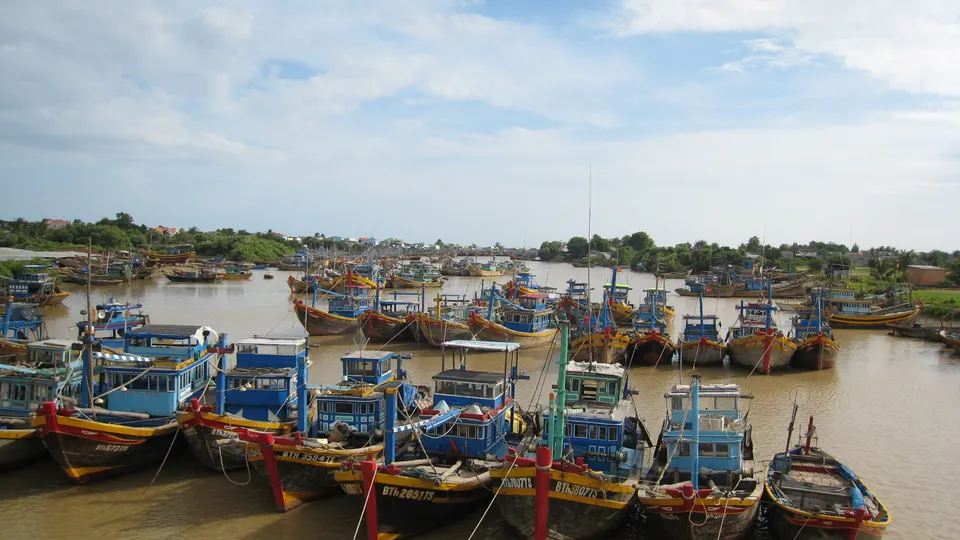
The fish is again anchovy. Nhan Dan singles out ca com than and cá cơm sọc tiêu as the best, caught mainly from the fourth to the eighth lunar month, mixed three parts fish to one of salt and left outdoors for 9 to 18 months in earthenware jars (lu khap (khạp)); anchovy sauce comes out pale straw-yellow, while sauce from scad is light brown. Bao Lam Dong describes wooden barrels alongside rows of clay jars, and a fermentation of 12–18 months. Vietnam’s national tourism administration links the town’s rise to its anchovy grounds and its hot, dry, sunny climate.
Phan Thiet is also a bigger industry than its fame abroad suggests. Bao Lam Dong counts about 200 producing households, about 22,000 tonnes of fish a year and 20–30 million litres of sauce. Tradition vs today: in March 2026 the province’s culture department was still preparing the heritage dossier. On 16 November 2026 Vietnam’s culture ministry added the craft, centred on the Phu Thuy (Phú Thủy), Mui Ne and Phan Thiet wards, to the national intangible heritage list by a decision numbered 3117; the same report puts output at about 22 million litres a year (Bao Lam Dong). To combine a visit to the fish sauce houses with the dunes and the fishing harbour, see our Mui Ne and Phan Thiet guide; if you are travelling inland afterwards, our Da Lat guide explains the new, much larger Lam Dong province.
Cat Hai: the North’s fish sauce
The northern centre is the island of Cat Hai, between the port of Hai Phong and Cat Ba (Cát Bà). Its sauce descends from nước mắm Vạn Vân, named after the producer who made it famous across French Indochina; after 1954, the city portal says, the island’s private works were merged into one state-private enterprise. Bao Phap Luat Vietnam (Báo Pháp Luật Việt Nam) dated the company’s work to 1959 in a 2007 profile and said its trademark has been used continuously since 1986.
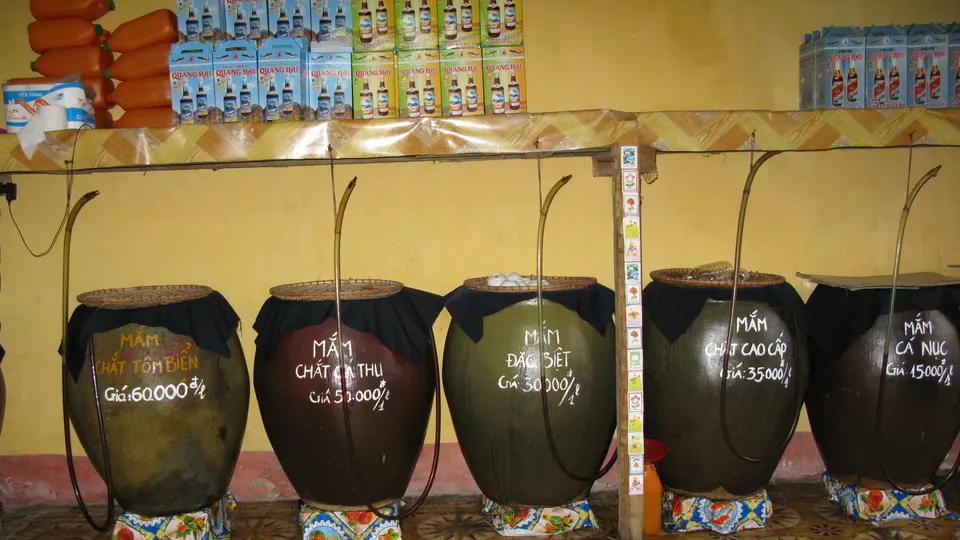
Cat Hai works differently from the southern islands. Its producers use a mix of fish, anchovy (ca com), ca nham and scad (ca nuc), caught from March to August; the cleaned fish is mixed with salt, put into jars or tanks and left to ripen in the sun for 12 to 16 months until the fishy smell is gone and the liquid turns reddish brown, according to a report on a Cat Hai workshop in Bao Phap Luat (Báo Pháp Luật) TP.HCM. The same workshop gives protein levels of 25–45 g per litre, and notes that only a few households in the village still work fully by the traditional method. The city portal claims a flavour that “cannot be mistaken” for Phu Quoc or Phan Thiet sauce, and VnExpress describes Cat Hai and Cat Ba sauces as dark brown.
Tradition vs today. In 2022 Vietnam’s Research Institute for Marine Fisheries reported a project with Cat Hai producers that used a starter culture to cut three months from production and soften the ammonia smell. In March 2026 Hai Phong put forward seven Cat Hai fish sauce products for the national five-star rating of OCOP, the government’s “One Commune One Product” quality scheme, according to Bao Hai Phong. By April 2026 two had received it, one from the Cat Hai fisheries processing company and one from Quang Hai Co., VietnamPlus reported in August 2026 (VietnamPlus). Cat Hai has been a special zone of Hai Phong since July 2025; our Cat Ba and Hai Phong guide explains how to reach it.
Other fish sauce towns: Nha Trang, Nam O and Ba Lang
The three big names are not the whole map. The association’s list adds Ba Lang in Thanh Hoa, Da Nang and Nha Trang. VnExpress describes Nha Trang sauce as straw-yellow, lighter in colour than the brown sauces of Phu Quoc, Phan Thiet and Cat Hai.
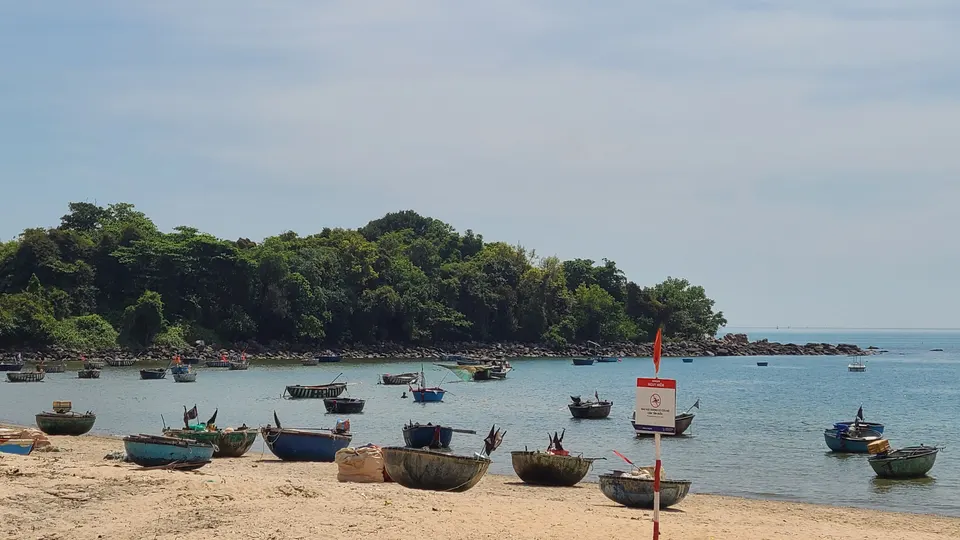
In Da Nang the name to know is Nam O (Nam Ô), a fishing village on the bay about 3 km from the Hai Van (Hải Vân) pass. Its centuries-old craft was added to Vietnam’s national intangible heritage list in August 2019, two years before Phu Quoc’s (Bao Van Hoa). See our Da Nang guide and, for the south-central coast, our Nha Trang guide.
Two things that are not nuoc mam often get mixed up with it. The thick, cloudy mam nem (mắm nêm) that Central stalls serve with banh xeo is a fermented fish paste, and the Mekong Delta’s whole fermented fish, sold by the barrel in Chau Doc, is mam (mắm), eaten as food rather than poured as a sauce.
Why they taste different: fish, salt, vessel and sun
The sources point to four causes, and they work together. Fish: Phu Quoc allows anchovies only; Phan Thiet mostly uses anchovies but also makes sauce from scad; Cat Hai mixes anchovy with other small fish. Salt and timing: Phu Quoc’s rules require the fish to be salted on the boat, while the fish-to-salt ratio, roughly 2.5–3 to 1, is similar in Phu Quoc and Phan Thiet.
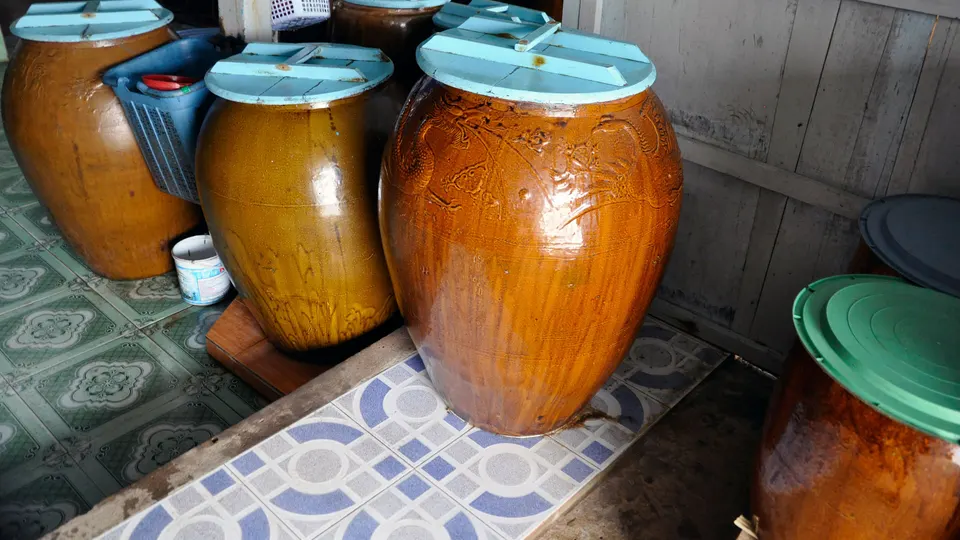
Vessel: Phu Quoc keeps to big wooden barrels under a roof, while Phan Thiet and Cat Hai use earthenware jars or tanks set out in the sun as well as barrels. Climate and time: sun speeds ripening, which is why Phan Thiet’s dry, sunny coast suits the craft, and fermentation ranges from about 8 months to 18. The result shows in the bottle, but the descriptions do not agree: VnExpress calls Phu Quoc sauce reddish brown and Phan Thiet sauce dark brown, while Phan Thiet’s own sources call anchovy sauce straw-yellow and the oldest producers’ sauce reddish brown. Treat colour as a clue to the producer and the grade, not as a fixed regional fingerprint.
What it means for you: the town on the label tells you the tradition and the rules behind the bottle. The protein number and the ingredient list, explained below, tell you more about what is actually inside.
Protected names: what Phu Quoc and Phan Thiet guarantee
Phu Quoc was the first Vietnamese product protected by a geographical indication at home, in 2001, according to Tap chi Cong Thuong (Tạp chí Công Thương). In Europe, “Phu Quoc” was entered in the register of Protected Designations of Origin by an EU regulation dated 8 October 2012 (European Commission), the first Vietnamese name to gain that status. Under the EU rules described by Bao Van Hoa (Báo Văn Hóa), sauce sold there as Phu Quoc must be bottled on the island and traceable along the supply chain.
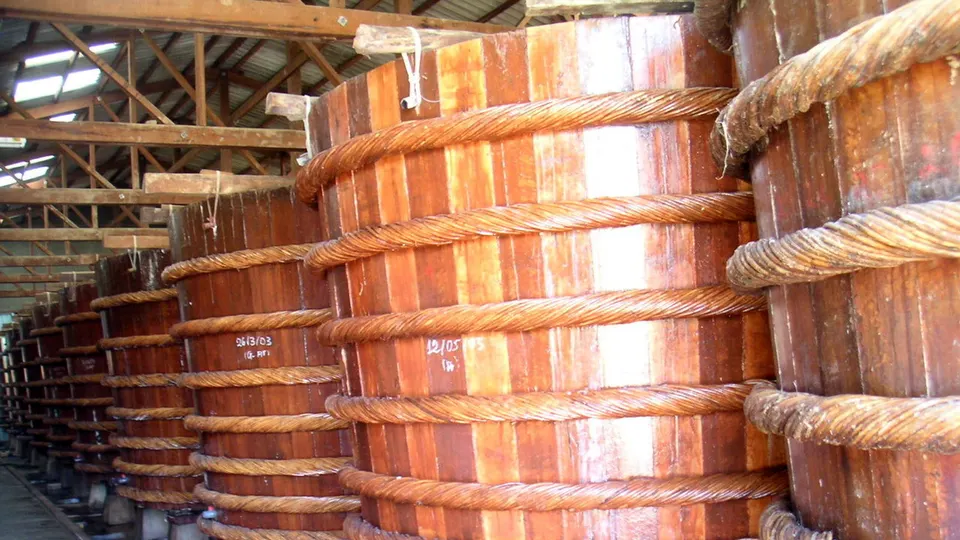
The protection is narrower than many shoppers assume. Nhan Dan counted 21 enterprises certified to use the Phu Quoc geographical indication in 2024, and the name is widely copied; Kien Giang’s science department piloted traceability stamps on Phu Quoc bottles in 2022 to push fakes out of the market.
Phan Thiet’s geographical indication was registered by Vietnam’s Intellectual Property Office in May 2007 and updated in 2020. The management rules issued by Binh Thuan province in December 2024, before the merger, require the sauce to be made in the Phan Thiet area, to be straw-yellow or yellow-brown with a sweet, lingering taste, and to contain at least 15 g of total nitrogen per litre; certified producers print a GI stamp with a code ending in “PTGI”. For Cat Hai, none of the sources we checked mentions a geographical indication; its best-known sauce relies on its producer’s trademark and the OCOP rating.
How to read a fish sauce label: do dam and °N
The most important number on a Vietnamese bottle is the protein figure, written as do dam (độ đạm), dam (đạm) or °N. It is the total nitrogen in grams per litre of finished sauce, so a 30°N sauce contains 30 g of nitrogen per litre (Vietcetera). Labels must at least state the total protein content. Vietnam’s 2003 national standard graded sauce by this figure: 30 g/l and above “dac biet (đặc biệt)” (special), 25 g/l “thuong hang (thượng hạng)” (top grade), 15 g/l grade 1 and 10 g/l grade 2 (Tuoi Tre). An expert quoted in the same article argues that anything below 10 should be sold as nuoc cham (nước chấm), dipping sauce, not as nuoc mam.
- Nuoc mam nguyen chat (Nước mắm nguyên chất) means pure fish sauce. The current standard, TCVN 5107:2018, defines it as the clear liquid from fish and salt fermented naturally for at least six months. Plain nuoc mam may be made from that base with added brine, sugar and food additives, and its colour and smell may be adjusted.
- Read the ingredients. Ca com (anchovy) and muoi (muối) (salt) alone is the traditional recipe. Duong (Đường) (sugar), chat dieu vi (chất điều vị) (flavour enhancer) and phu gia (phụ gia) (additives) mean a blended sauce. Umami Mart’s buying guide warns that the English ingredient list on some bottles leaves out additives shown on the Vietnamese label.
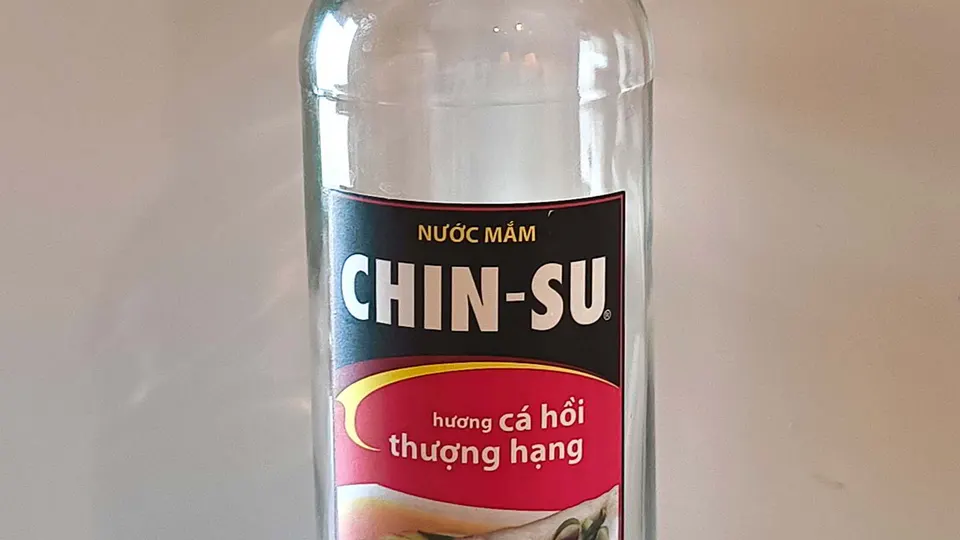
- Watch the small words. Huong (Hương) means “flavour”, so “huong ca hoi (hương cá hồi)” on the bottle above signals a flavoured product. Nhi (Nhĩ) is the first sauce that drips from the barrel, the most concentrated and the scarcest.
- A high number is not automatically better. Producers say traditional methods reach about 30–43°N naturally, and Vietcetera argues the figure tells you the best use, not the quality. A “Phu Quoc” on the front is a starting point, not a guarantee: check the producer’s address and the GI mark.
How to use, buy and carry fish sauce
Match the grade to the job. Vietcetera recommends a medium sauce of about 15–25°N for braising fish, soups and marinades, where long cooking dulls the aroma anyway, and a strong 40°N first-press sauce for dipping or adding at the last moment. At the table it is often mixed into a dipping sauce: nuoc mam pha (nước mắm pha), the sweet-sour sauce poured over com tam, or the warm dipping broth of Hanoi’s bun cha. In the Mekong Delta, mam means something else: whole freshwater fish fermented into a paste, which our guide to Mekong mam explains.
Which bottle for which job, from the sources on this page:
| If you want… | Look for | Why | Suits |
|---|---|---|---|
| Braising, soups, marinades | About 15–25°N | Long cooking dulls the aroma, so a medium sauce is enough (Vietcetera) | Everyday cooks |
| Dipping or adding at the end | 30–40°N or more; nhi, the first press | 30 g/l and up was the top grade in the 2003 standard; strongest and scarcest | Cooks who want full fish flavour |
| The traditional recipe only | “Nuoc mam nguyen chat”; ingredients anchovy and salt | TCVN 5107:2018 reserves “nguyen chat” for fish and salt fermented at least six months | Buyers avoiding sugar and additives |
| A guaranteed origin | GI mark: Phu Quoc, or Phan Thiet with a code ending “PTGI” | Only registered producers may use the protected names | Gift buyers, buyers abroad |
| A northern sauce | Cat Hai, including its five-star OCOP products (April 2026) | Mixed small fish, jars or tanks, 12–16 months | Visitors to Hai Phong and Cat Ba |
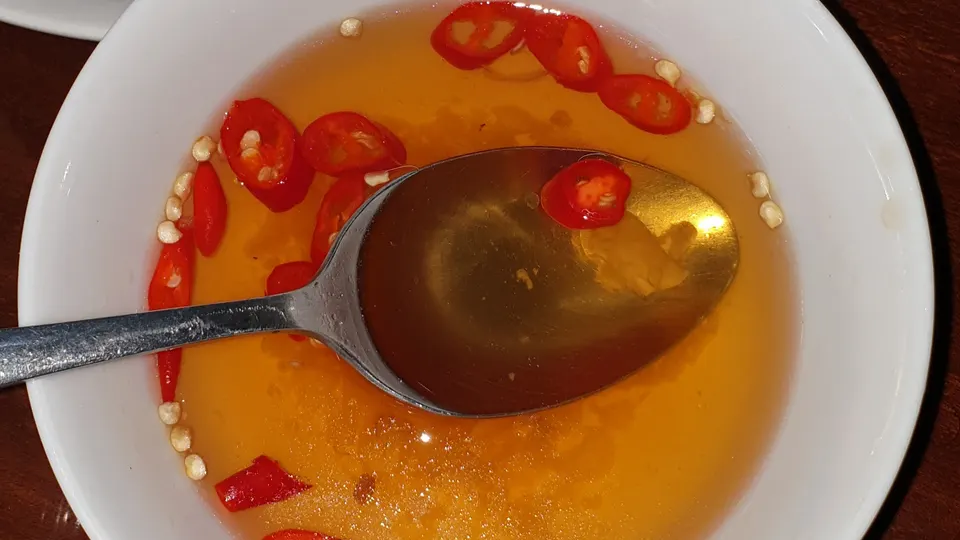
- Buying at the source. On Phu Quoc, a barrel house lets you see the barrels and buy from the producer. In Phan Thiet, the fish sauce houses of Phu Thuy ward and the Lang Chai Xua (Làng Chài Xưa) museum (below) show the process. Cat Hai sauce, two of whose products gained a national five-star OCOP rating in April 2026, is sold widely across the northern provinces.
- Checking a bottle. Look for the protein figure, a short ingredient list, the producer’s address and, for Phu Quoc or Phan Thiet, the GI mark. A chef quoted by Tuoi Tre (Tuổi Trẻ) says traditional sauce is darker and smells stronger than industrial sauce.
- Storing it. VnExpress advises keeping the cap tight, because air darkens the sauce, and using a traditional sauce within one to two months of opening for the best flavour.
- Flying home. As of November 2026, Vietnam Airlines’ baggage page accepts up to 3 litres or 3 kg of fish sauce per passenger, in tightly capped plastic bottles wrapped in tape, filled to no more than 95% and packed in a taped foam box; it recommends checked baggage and does not carry odorous items on its ATR72 flights (Vietnam Airlines). Other airlines and your destination country may be stricter, so check before you pack.
Where to see fish sauce made
Local favourite
Làng Chài Xưa fish sauce museum · Bảo tàng nước mắm Làng Chài Xưa
Phan Thiết (Lâm Đồng province since July 2025) · Phú Thủy ward (former Phú Hài ward)
360 Nguyễn Thông Street
A museum of Phan Thiết's fish sauce craft that SGGP describes as the first in Vietnam, set up by Trần Ngọc Dũng: a film on the history of the fishing village, hundreds of old barrels, vats, jars and tools, wooden fish sauce barrels more than 100 years old, and production houses of former hàm hộ (large producers) rebuilt on the site. Báo Lâm Đồng lists it in 2025 among the larger fish sauce houses of Phú Thủy ward, where visitors can taste the sauces.
Order: See the old barrels and the film, then taste and compare the sauces.
Opening hours and ticket prices are not given by the sources; check locally before you go.
Recommended by: Báo Lâm Đồng (2025), SGGP (2018), SGGP (2019) · checked November 2026
Addresses and details can change; check before you go. We do not accept payment for listings.
Frequently asked questions
Which fish sauce should I buy for dipping and which for cooking?
For dipping or adding at the last moment, Vietcetera recommends a strong first-press sauce of about 40°N; for braising, soups and marinades a medium sauce of about 15–25°N is enough, because long cooking dulls the aroma. Under Vietnam's 2003 standard anything from 30°N up was the top grade.
Does "Phu Quoc" on the label mean the sauce was made on the island?
Not always. The protected name may only be used by registered producers on the island, and sauce sold in the EU as Phu Quoc must be bottled there, but the name is widely copied. Look for the producer's address on the island and the geographical indication mark, or buy from a barrel house on Phu Quoc.
Is Phu Quoc fish sauce better than Phan Thiet fish sauce?
Neither is officially better: both are anchovy sauces with protected names, and both towns make sauces of every grade. They differ in vessels and climate, and taste is personal, so compare the protein number and the ingredient list rather than the town alone.
Can I take fish sauce on a plane from Vietnam?
As of November 2026, Vietnam Airlines lets you carry up to 3 litres or 3 kg of fish sauce per passenger, in tightly capped plastic bottles wrapped in tape, filled to no more than 95% and packed in a taped foam box; the airline recommends checked baggage and does not accept odorous items on its ATR72 flights. Other airlines and your destination may have stricter rules.
What is nuoc mam nhi?
Nuoc mam nhi is the first sauce that drips from the fermented fish. It is the most concentrated and the scarcest, which is why it costs more; a later extraction is called nuoc mam ngang.
Key sources
- Đề nghị công nhận nghề làm nước mắm là di sản văn hóa của Việt Nam · SGGP, 30 Sep 2023
- Nghề làm nước mắm ở Phú Quốc trở thành di sản văn hóa phi vật thể quốc gia · Báo Văn Hóa, 27 May 2021
- Commission Implementing Regulation (EU) No 928/2012 entering a name in the register of protected designations of origin [Phú Quốc (PDO)] · European Commission (via legislation.gov.uk)
- Đà Nẵng: Trao Bằng chứng nhận Di sản văn hóa phi vật thể quốc gia cho nghề làm nước mắm Nam Ô · Báo Văn Hóa, 4 Jul 2020
- Làm sao biết đâu là nước mắm thật? · Tuổi Trẻ, 30 Jun 2016
- Thực phẩm & Đồ uống (restricted baggage: food and drinks) · Vietnam Airlines
- Nghề làm nước mắm Phan Thiết chính thức vào Danh mục di sản văn hóa phi vật thể quốc gia · Báo Lâm Đồng, 17 Nov 2026
- Hải Phòng ứng dụng công nghệ, nâng sức cạnh tranh sản phẩm OCOP · VietnamPlus, 1 Aug 2026
All 33 sources and further reading
- Giữ gìn nghề nước mắm truyền thống Phú Quốc · Nhân Dân, 9 Jul 2025
- Phu Quoc fish sauce to have more EU consumers · Tuổi Trẻ News, 15 Oct 2012
- Phu Quoc fish sauce granted PDO in EU · Việt Nam News (Bizhub), 17 Jul 2013
- Thí điểm thành công dán tem truy xuất nguồn gốc nước mắm Phú Quốc · Tạp chí Công Thương (Ministry of Industry and Trade), 14 Aug 2022
- Cách nhận diện nước mắm Phú Quốc · VnExpress, 22 Jul 2016
- Bên trong những thùng gỗ khổng lồ ở Phú Quốc · Đại biểu Nhân dân, 1 Oct 2026
- Làng nghề nước mắm Phan Thiết: Hơn 200 năm hình thành và phát triển · Ministry of Industry and Trade (moit.gov.vn), 12 Mar 2019
- Phát triển thương hiệu nước mắm Phan Thiết · Nhân Dân, 2 Feb 2026
- Làng mắm Phan Thiết và giấc mơ di sản · Báo Lâm Đồng, 9 Mar 2026
- Đến Phan Thiết nhớ ghé thăm làng nghề nước mắm · Báo Lâm Đồng, 28 Sep 2025
- Phan Thiet Fish Sauce: The Culinary Essence of Vietnam's Coastal Cuisine · Vietnam National Authority of Tourism, rural tourism portal
- Quyết định 67/2024/QĐ-UBND: Quy chế quản lý và sử dụng chỉ dẫn địa lý "Phan Thiết" cho sản phẩm nước mắm · Bình Thuận Provincial People's Committee (via Hệ thống pháp luật)
- Khám phá "Làng chài xưa" ở xứ biển Phan Thiết · SGGP, 28 Apr 2018
- Tiến sĩ tâm lý làm… bảo tàng nước mắm · SGGP, 30 Mar 2019
- 'Bí kíp' làm nên thương hiệu nước mắm truyền thống Cát Hải · Báo Pháp Luật TP.HCM (plo.vn)
- Nước mắm Cát Hải – Thương hiệu của mọi nhà · Báo Pháp Luật Việt Nam, 4 Mar 2007
- Cat Hai fish sauce · Hải Phòng City Portal
- Hai Phong proposes seven Cat Hai fish sauce products for national 5-star OCOP certification · Báo Hải Phòng, 13 Mar 2026
- Kết quả hoàn thiện công nghệ sản xuất nước mắm đặc sản Cát Hải · Tạp chí Công Thương, 31 Aug 2022
- Cát Hải dẫn đầu khối xã, đặc khu về công tác cải cách hành chính của Hải Phòng năm 2025 · Báo Pháp Luật TP.HCM (plo.vn), Jan 2026
- Tiêu chuẩn quốc gia TCVN 5107:2018 về nước mắm · Ministry of Science and Technology standard (via Hệ thống pháp luật)
- Giải mã độ đạm °N: Sự ứng biến nước mắm với từng "khoảnh khắc" ẩm thực · Vietcetera, 24 Jul 2026
- Furochan Eats: A Guide to Buying Fish Sauce in Vietnam · Umami Mart, 14 Mar 2016
- Phú Quốc chính thức trở thành đặc khu: Mở cánh cửa vận hội mới · SGGP, 1 Jul 2025
- Resolution 202/2025/QH15 on the reorganisation of provincial-level administrative units · National Assembly of Vietnam (via LuatVietnam)
Keep exploring
 South Vietnam · Travel Phu Quoc (Phú Quốc) Travel Guide: Which Area to Stay In Phu Quoc travel guide: which area to stay in (Duong Dong, Ong Lang, Long Beach, Bai Sao), flights and ferries, getting around, visa rules and local food.
 North Vietnam · Travel Cat Ba (Cát Bà): Ferry, Cable Car and What to Do, 2026 Cat Ba island in 2026: ferry and cable car times to cross from Hai Phong, the national park and its rare langurs, wartime caves and forts, and crab noodles.
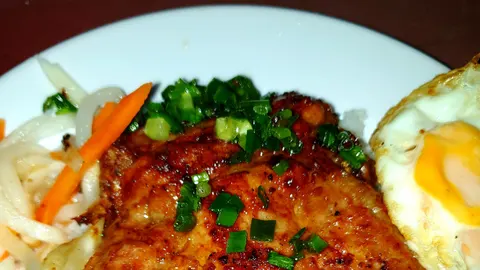 South Vietnam · Food Com Tam (Cơm Tấm) in Saigon: What to Order, What It Costs Com tam is Saigon's broken rice plate: what suon, bi and cha mean, what a plate costs in 2026 press reports, and where the MICHELIN Bib Gourmand pick is.