All three regions · Food
What to Eat at Tet: Vietnamese New Year Food by Region
Tet food by region: what Vietnamese families eat North, Centre and South, what the sweets tray means, food taboos, 2026 prices and how to taste it in 2027.
Vietnamese New Year food is not one menu but three: Hanoi and the North set a formal tray around square banh chung (bánh chưng), gio lua (giò lụa) pork roll and boiled chicken, Central Vietnam fills a round tray with small plates of food that keeps, and the South braises one big pot of pork and eggs and serves bitter melon soup with cylindrical banh tet (the Khmer of the Delta also make a flattened-rice version, banh tet com dep). As of November 2026 the date is fixed: Tet 2027 begins on Saturday 6 February 2027, and civil servants are off from 4 to 10 February under a Ministry of Home Affairs notice of 9 October 2026 (Ha Tinh provincial portal).
This guide is about the food itself: what each region puts on the table, what the dishes mean, when they are eaten, which foods some families avoid, and how a visitor can taste them. For flowers, fruit trays and the wider festival, see our pillar guide to Tet across the three regions; for the two rice cakes in depth, banh chung vs banh tet. More regional dishes are in our food guides.
The one rule shared everywhere is practical. Tet food has to last several days of visiting, when markets close and nobody wants to cook, so every region relies on dishes that keep: cold cuts, pickles, braises, preserved meat and sweets. What each region chooses comes down to its climate and its taste.
Tet food at a glance: North, Centre and South
| North (e.g. Hanoi) | Central (e.g. Hue, Hoi An) | South (e.g. Saigon, Mekong Delta) | |
|---|---|---|---|
| Rice cake | Square banh chung | Banh tet, often with smaller banh chung | Cylindrical banh tet, savoury or sweet (mung bean, black bean, banana, coconut) |
| Centrepiece | Boiled chicken, gio lua, cha que (cinnamon pork), nem ran (fried spring rolls) | Pork steeped in fish sauce, tom chua (sour shrimp), nem chua, shrimp and pork simmered dry | Thit kho hot vit: pork belly braised with whole eggs |
| Soup | Pork leg with dried bamboo shoots; bong (puffed pork skin) soup | Glass noodles with chicken and bamboo shoots (Hue) | Canh kho qua: bitter melon stuffed with pork or fish |
| Cold-weather or keeping dish | Thit dong, jellied pork | Dishes in fish sauce that keep up to 15–20 days | One pot reheated over several days |
| Pickle | Dua hanh, pickled shallots; dua gop, mixed pickles | Dua mon, mixed pickles in fish-sauce brine | Cu kieu, sweet-sour scallion bulbs, with dried shrimp |
| Style of the table | Formal: “four bowls, four plates” or more | Many small plates on a round tray | Fewer dishes, less formal |
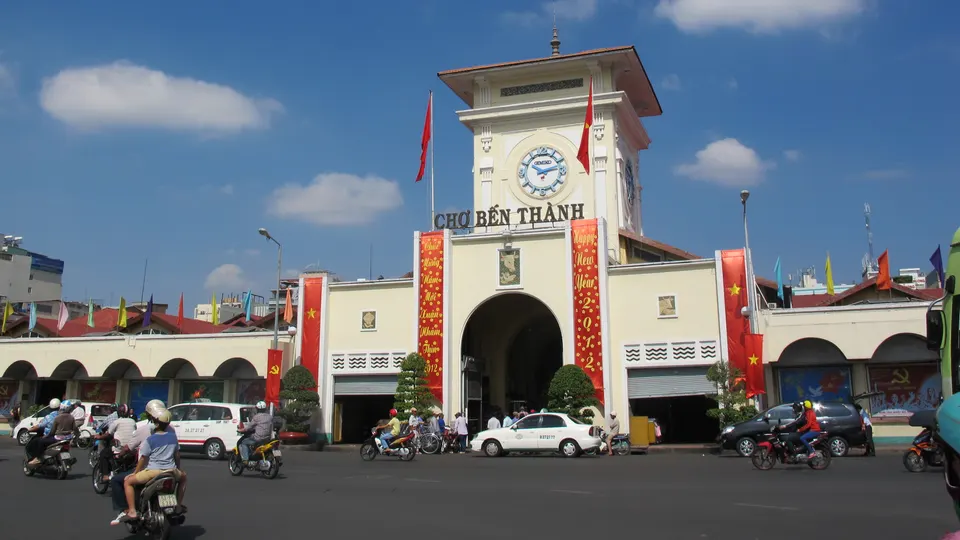
| Where a visitor tastes it | Hang Be market, Old Quarter sweet streets | Hue’s Tet food events, Kim Long ginger jam | Ben Thanh, Binh Tay and An Dong markets |
Sources: Hanoi city portal, Tap chi Cong Thuong (2024), VnExpress (2023), SGGP (2026). Individual families vary; read it as the common pattern, not a rule.
What does the North eat at Tet?
The Northern Tet table is the most formal in the country. A Vietnamese couplet still sums it up: “fatty pork, pickled shallots, red couplets… and green banh chung”. Hanoi’s city portal lists the classic Tet foods as banh chung, gio (pork paste), cha (grilled or cinnamon pork), brined meat and fish, pickled shallots and fruit jams, and the New Year’s Eve feast as banh chung, boiled chicken, lean pork roll, cinnamon pork, spring rolls and a soup of pork leg with dried bamboo shoots (Hanoi city portal).
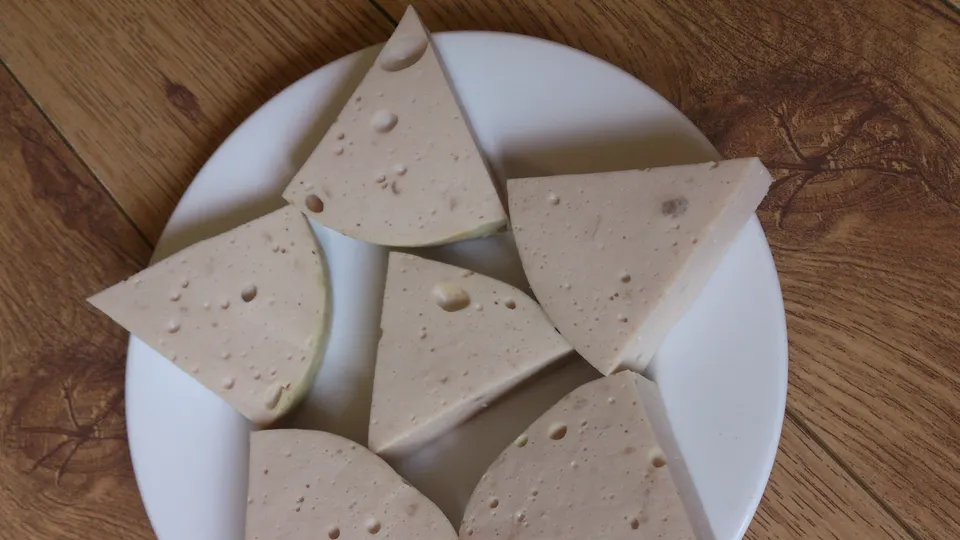
Traditional families follow the rule of “four bowls, four plates” (bon bat, bon dia (bốn bát, bốn đĩa)), and better-off households set six or eight of each. Tap chi Cong Thuong, the trade ministry’s magazine, gives the four bowls as pork leg with bamboo shoots, puffed pork skin soup, glass noodles and a mushroom-and-pork-ball broth, and the four plates as chicken for prosperity, banh chung for plenty, nem ran for family unity and gio lua or cha que. Many families add thit dong (thịt đông), pork in jelly that only sets in the Northern winter, and xoi gac (xôi gấc), sticky rice turned red with gac fruit for luck.
A Hanoi Old Quarter family described in VnExpress in 2023 keeps five basics for every Tet tray: gio lua, cha que, gio thu (head-cheese roll), nem ran and boiled chicken, with a whole chicken offered at New Year’s Eve and canh bong (canh bóng), puffed pork skin soup with vegetables, as the dish they would never leave out. Pickles such as dua hanh (dưa hành) and dua gop are eaten with the meal but not placed on the offering tray. The square cake is cut with its own bamboo string into eight wedges, as the city portal describes; fried spring rolls have their own guide to spring rolls by region.
What does Central Vietnam eat at Tet?
Central Vietnam has the harshest weather in the country and stays warm even at Tet, and Tap chi Cong Thuong links its Tet table to thrift and sharing: food is split into many small plates on a round tray, and preserved dishes are prized because they keep. The typical plates are banh tet, boiled chicken and pork, nem chua (sour fermented pork), tom chua (sour shrimp), thit heo ngam mam (thịt heo ngâm mắm) (pork steeped in fish sauce), shrimp and pork simmered dry, and dua mon (dưa món), mixed pickles. Central families also like to roll food at the table: boiled pork, steamed fish or nem lui wrapped in rice paper with herbs.
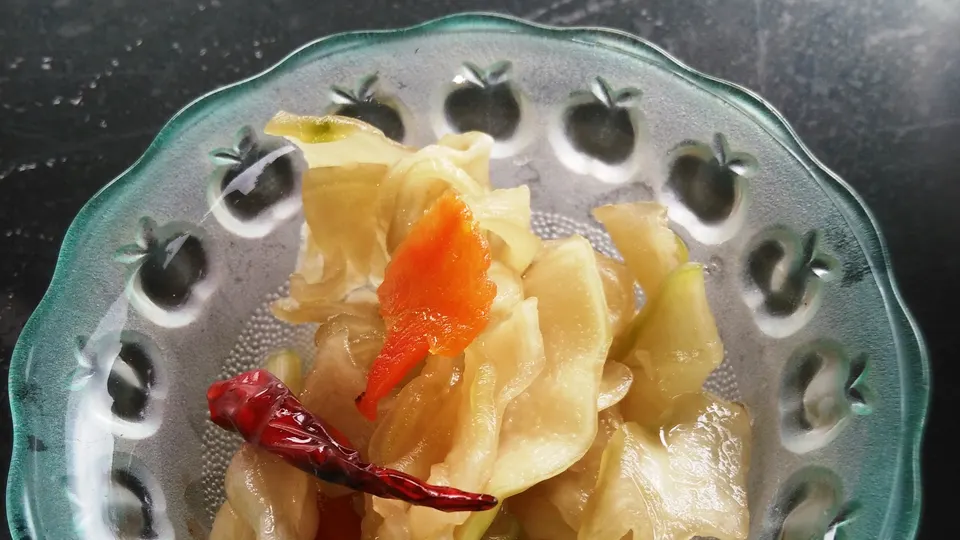
Pork in fish sauce shows the logic best. A cook from Phu Yen (since July 2025 part of Dak Lak (Đắk Lắk) province) told VnExpress her family makes it a week before Tet (VnExpress): blanched pork belly is set in a boiled brine of fish sauce, sugar and vinegar, is ready in about two days and keeps for 15 to 20 days. She remembered being told that Central families once had meat only at Tet and needed a way to make it last. The Tap chi Cong Thuong round-up adds a symbolic reading of banh tet here: the layers of banana leaf around the rice are compared to a mother holding her child.
In Hue, the former imperial capital, the tray is the most elaborate in the region. VnExpress lists pork in fish sauce, thit kho tau (braised pork), nem, cha and tre (tré) (a sour pork-skin roll), chicken salad, glass noodles with chicken and fresh bamboo shoots, even jellied pork, plus both rice cakes, dua mon and pickled scallion bulbs. Hue’s sweet offerings are dried cakes pressed in moulds shaped as flowers or as the characters for happiness and long life, such as banh in (bánh in), and candied fruit stacked on lacquered stands for the ancestors.
What does the South eat at Tet?
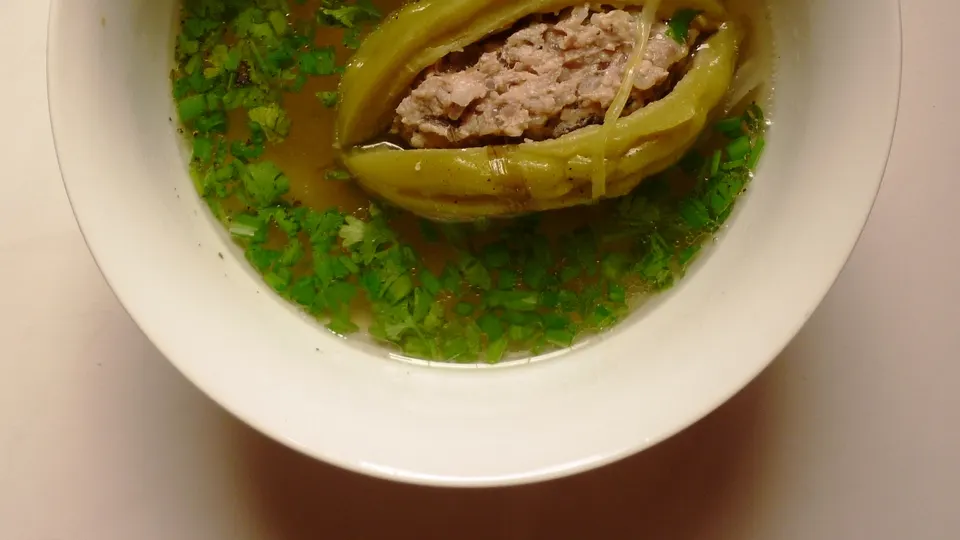
The Southern Tet table is the least formal and has fewer dishes, but three are close to essential. The first is thit kho hot vit (thịt kho hột vịt), pork belly braised with whole duck eggs in one large pot and eaten over several days; the square pieces of pork and the round eggs are often explained as earth and heaven. The second is canh kho qua (canh khổ qua), bitter melon stuffed with pork, because kho qua also sounds like “hardship passes”. The third is banh tet, which in the South comes with fillings from mung bean and pork to black bean, banana and coconut (Tap chi Cong Thuong).
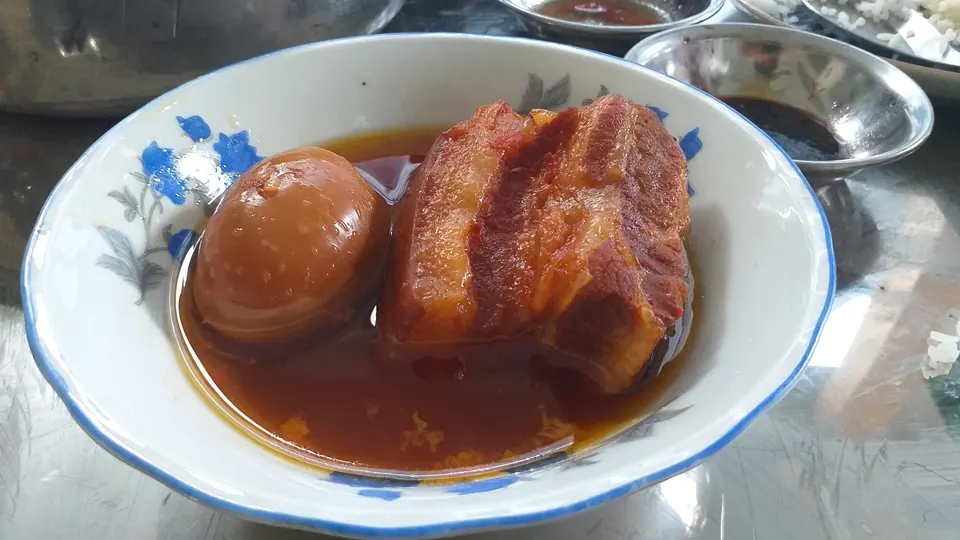
A Ho Chi Minh City family described in VnExpress set its meal on the last day of the year with braised pork and eggs, bitter melon stuffed with clown knifefish paste, stir-fried rice noodles, pig’s ear in vinegar rolled in rice paper, sweet-sour scallion bulbs, duck cooked with dried bamboo shoots, banh tet and red watermelon. The eggs in the braise are left whole rather than halved, for a Tet that is complete. Families also serve boiled chicken, cha gio (fried spring rolls), lotus stem salad and lap xuong (lạp xưởng), sweet dried sausage. Cu kieu (củ kiệu), sweet-sour pickled scallion bulbs, are served with dried shrimp as a dish of their own and cut through all the fat, the Southern answer to the North’s pickled shallots.
What is on the Tet sweets tray?
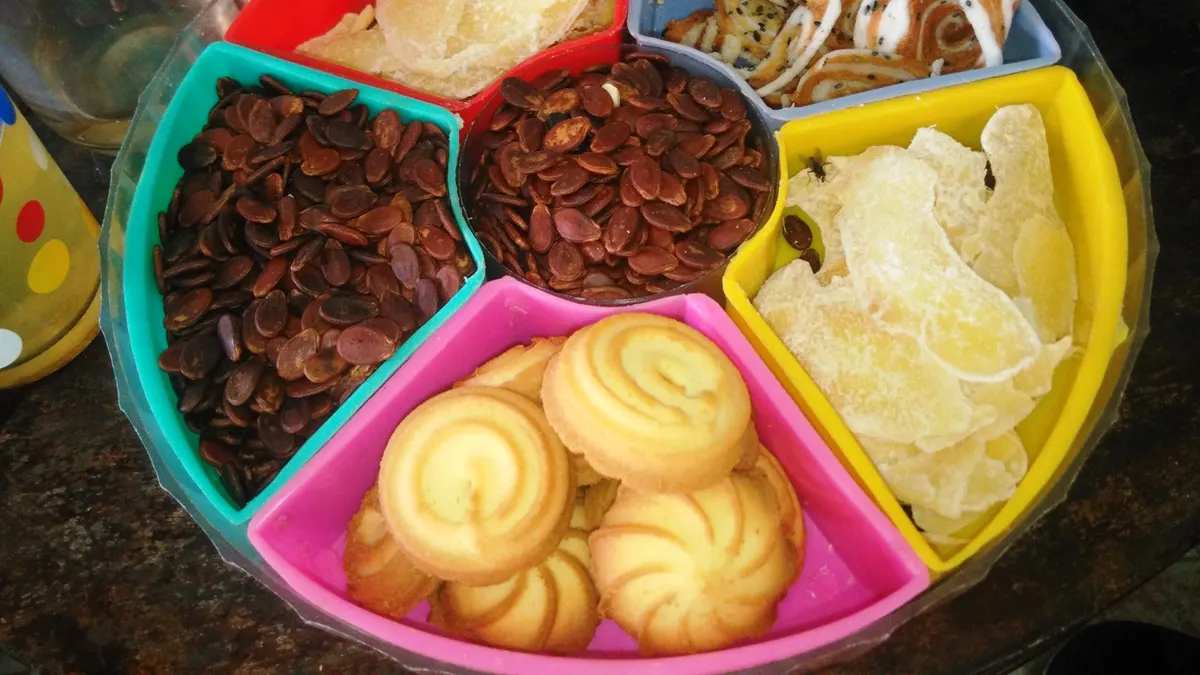
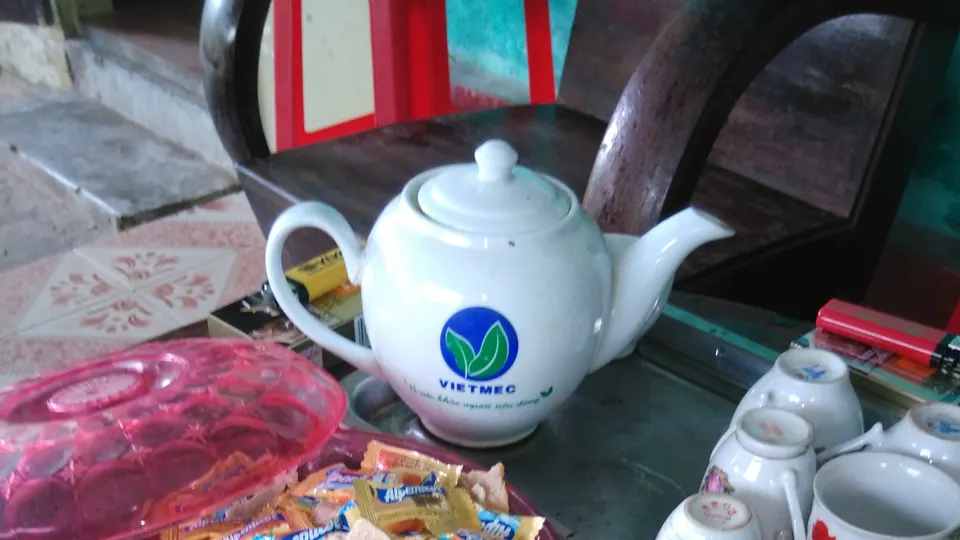
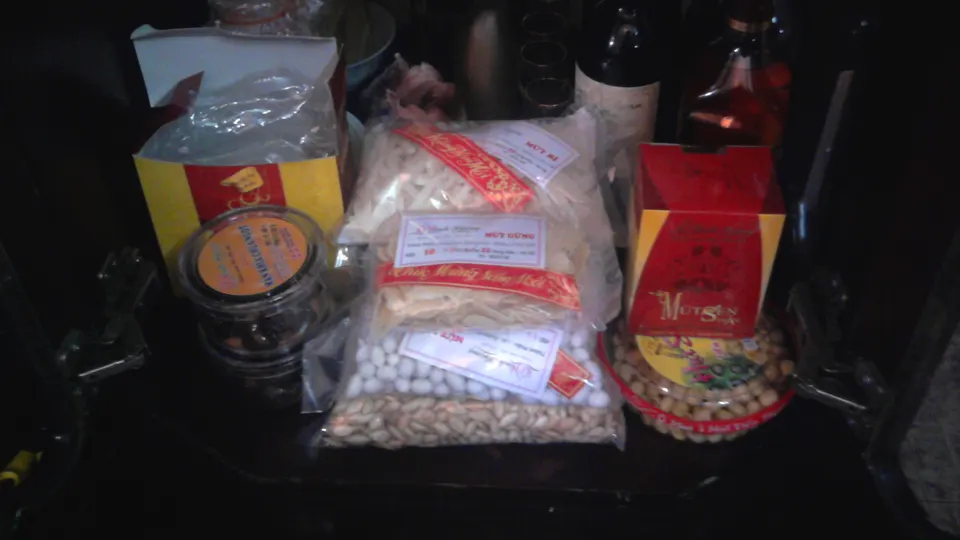
Every Vietnamese home keeps a tray of jams, seeds and sweets (khay mut (khay mứt)) for visitors, served with hot tea. Each item carries a wish. A 2021 Tap chi Cong Thuong guide reads the tray this way: mut gung (mứt gừng) (candied ginger) for a warm, happy life, coconut jam for the family gathering, kumquat jam for prosperity, candied lotus seeds for reunion and many children, candied winter melon for health, peanuts for long life, red-dyed roasted watermelon seeds (hat dua (hạt dưa)) for luck and candies for a sweet year. Together the tray covers sour, spicy, sweet and nutty, like the four seasons (Tap chi Cong Thuong).
Hue is famous for its candied ginger. Kim Long, a riverside neighbourhood next to the Hue Citadel, has made it for close to 200 years; producers there cook thin slices of ginger with white sugar over wood fires until they dry into a crisp, pale jam, and the jam sells as far as Hanoi (Nong nghiep va Moi truong, January 2023). In January 2021 one Kim Long workshop told VnExpress it turned out about 200 kilos a day in the Tet season. The Northern tray leans on the same items plus o mai, salty-sweet preserved fruit from Hanoi’s Old Quarter, while Southern sellers report that coconut jam, candied ginger and cashews still sell well against imported sweets (Phap Luat TP.HCM, February 2026).
When is each Tet dish eaten?
The dishes above appear at fixed moments. For Tet 2027, the dates fall like this, based on the official holiday calendar (4 February 2027 is the 28th day of the last lunar month and 6 February the first day of the new year):
| Moment (Tet 2027) | What happens | Typical food |
|---|---|---|
| 23rd day of the 12th month, Saturday 30 January 2027 | Kitchen god sent back to heaven | Offerings to the kitchen god; the start of the Tet shopping rush |
| Last week of the year, to Friday 5 February | Shopping, wrapping and boiling the cakes, making pickles and jams | Banh chung and banh tet boiled; dua hanh, dua mon, cu kieu set to pickle |
| Last day, Friday 5 February | Tat nien (tất niên), the year-end meal and offering to the ancestors | The full regional tray; the South’s braised pork and eggs and bitter melon soup |
| Midnight, night of 5–6 February | Giao thua (giao thừa), the New Year’s Eve offering | A whole boiled chicken, sticky rice, banh chung or banh tet, fruit and flowers |
| 1st to 3rd days, 6–8 February | Family and visiting days | Leftover cake and cold cuts, reheated braise; tea and the sweets tray for every visitor |
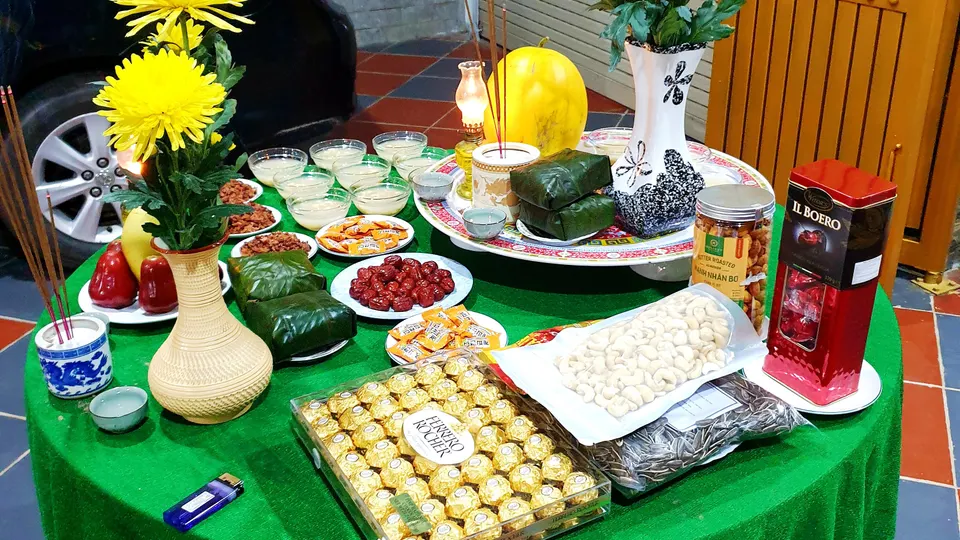
Hanoi’s city portal recalls how, in the past, families cooked for days before Tet so that the three days of the holiday could be spent eating and visiting, and how, on New Year’s Eve, the grandfather or father would wrap small banh chung for the children while the women prepared the feast. For the lucky money children receive on the first morning, see our guide to li xi.
Which foods do families avoid at Tet?
Food taboos are family and local habits, not national rules, and they often point in opposite directions. A 2015 round-up of customs in Bao Phap Luat notes that many Central Vietnamese families avoid shrimp dishes in the first days because shrimp swim backwards and the year’s work might go the same way, and that some people avoid duck meat and balut in the New Year (Bao Phap Luat). Yet the Ho Chi Minh City family above cooks duck with bamboo shoots for its year-end meal.
Coastal Quang Ninh, in the far north-east, shows how local the rules are. Families there do not avoid squid at all: VnExpress reported in 2023 that most homes buy dried squid for New Year’s Eve and that sea crab is a must on the offering trays for New Year’s Eve and the first day, because of a pun: eating crab (cua be) at the start of the year is said to “carry wealth home” (be cua ve).
Puns work the other way too. Bitter melon soup is eaten precisely because its name promises that hardship passes, and the custom of keeping sweet, red and round foods comes from the same wish-making. The one rule nearly everyone shares concerns guests: the same 2015 round-up says a visitor should not refuse the food a host sets out, and should at least taste a little, even when full.
Do families still cook it all? Tradition versus today
Less than they did. Hanoi’s city portal already noted that Tet dishes can now be found all year and that time-consuming foods such as banh chung, pickled shallots and jams can be bought ready-made, even if the bustle of cooking before Tet survives in many homes. Press reports from the last two Tet seasons show how far that has gone:
- Ready-made offerings. On the last day of the year before Tet 2026, Vietnam’s domestic market agency reported strong sales of ready-cooked offerings: boiled roosters, sticky rice, banh chung and gio cha. Gio lua sold for a typical 150,000 to 180,000 dong a kilo and beef gio for 280,000 to 300,000, and at Hang Be market in Hanoi ready-boiled offering chickens priced at up to about 1.8 million dong each still sold out fast. Pre-ordered, ready-cooked food with fast delivery kept growing in the cities (SGGP).
- Bought sweets. Hang Giay and Hang Buom streets in Hanoi’s Old Quarter were packed on 15 February 2026, with domestic sweets sold by weight at 130,000 to 350,000 dong a kilo and online orders rising, Lao Dong reported.
- Shopping earlier. By early November 2026, Ho Chi Minh City supermarkets including Satra, GO!, Co.opmart and Bach Hoa Xanh had already begun selling Tet goods, and the meat processor Vissan said it would add mini sausages, shrimp lap xuong and a premium gio cha for Tet 2027 (Tien Phong, 12 November 2026).
- Food safety checks. On 6 November 2026 Hanoi’s industry and trade department announced stepped-up inspections against fake goods and food-safety violations for Tet 2027, and asked retailers to stock 10 to 20% more than usual (VnBusiness).
What has not changed is the menu. City families may buy the gio, order the chicken and pick up banh tet at the supermarket, but they still set the same dishes for the same moments.
How to taste Tet food as a traveller in 2027
Most of these dishes are home food, so the realistic options are markets in the run-up to Tet, the few public Tet food events, and an invitation to a family meal. At Tet 2026 even supermarket chains closed for part of the holiday, so plan to buy before New Year’s Eve on Friday 5 February 2027.
| Option | When | What you can taste or buy | Best for |
|---|---|---|---|
| Hanoi Old Quarter: Hang Giay and Hang Buom sweet streets, Hang Be market | Last two weeks before Tet; busiest after 30 January 2027 | Candied ginger and coconut, o mai, watermelon seeds; gio lua, boiled chicken, banh chung | Northern Tet food in one walk |
| Hue: Tet events in the Citadel, Kim Long ginger jam | Days before Tet (in 2026 the Tet Phu Xuan programme ran outside the Quoc Tu Giam in the Citadel) | Displays and tastings of candied ginger and lotus seeds, banh chung, banh tet; jam- and cake-making | Seeing Central Tet food made |
| Ho Chi Minh City: Ben Thanh, Binh Tay and An Dong markets | Late January to the last day of the year | Jams, dried shrimp and fish, gio cha, lap xuong, banh tet, cu kieu | Southern Tet food and gifts |
| A family invitation | First to third days, 6–8 February 2027 | The full regional tray, tea and the sweets tray | Eating Tet food as it is meant to be eaten |
In Hanoi, the Old Quarter sweet streets are where many families still buy their jams, and shops such as Quoc Huong on Hang Bong Street (see the cards below) sell gio cha and banh chung; by Lao Dong’s account the rush starts after the kitchen god day (Lao Dong). In Hue, Bao Van Hoa reported that the 2026 “Tet Phu Xuan” programme in the Citadel showcased candied ginger, candied lotus seeds and banh thuan sponge cakes alongside the rice cakes, with jam-making and cake-wrapping that visitors could join; check Hue’s programme for 2027 nearer the date. In Ho Chi Minh City, SGGP found the jam, dried food, gio cha and lap xuong stalls busiest at Ben Thanh, Binh Tay and An Dong markets in late January 2026, and Phap Luat TP.HCM reported Ca Mau dried shrimp at Binh Tay at 700,000 to 1.8 million dong a kilo before Tet 2026.
What to do: buy a small mixed bag of jams and a piece of gio lua to taste before Tet, try banh chung with pickled shallots in the North or banh tet with cu kieu in the South, and if a family invites you, bring fruit or a box of sweets, taste a little of everything you are offered, and leave the shrimp on the plate if your hosts do. Our Tet 2027 travel guide covers transport, closures and what stays open.
Where to buy Tet food in Hanoi
Local favourite
Quốc Hương · Giò chả Quốc Hương
Hanoi · Old Quarter (former Hoàn Kiếm district)
9 Hàng Bông Street
A decades-old Old Quarter shop for gio cha (pork rolls and cinnamon pork) and other Tet food that also sells banh chung all year; before Tet, Hanoians queue outside for gio lua, cha que and pairs of banh chung for the ancestors' altar (SGGP, 2023; Ngôi Sao, 2024).
Order: Gio lua and cha que for a Northern Tet tray, with a banh chung.
Expect long queues in the last days before Tet; the owner told SGGP that demand rises dozens of times over in those days.
Recommended by: Ngôi Sao (VnExpress) (2024), Sài Gòn Giải Phóng (2023) · checked November 2026
Local favourite
Tranh Khúc banh chung village · Làng bánh chưng Tranh Khúc
Hanoi · Nam Phù commune, on Hanoi's southern edge
Tranh Khúc village, Nam Phù commune, Hanoi
Hanoi's best-known banh chung village, making the cakes all year; before Tet 2026 its family workshops sold wholesale to shops, supermarkets and hotels at a typical 40,000 to 50,000 dong a cake (Tiền Phong), and the cakes boil over wood fires through the night (VNA).
Order: A classic square banh chung; ask whether it was boiled that day.
A working village of family workshops, not a market: there is no single shop, and the days just before Tet are the busiest. Ask before you photograph or step inside.
Recommended by: Tiền Phong (2026), Vietnam News Agency (VNA) · checked November 2026
Addresses and details can change; check before you go. We do not accept payment for listings.
Frequently asked questions
What Tet food should I try if I visit Vietnam at New Year?
Try banh chung with dua hanh (pickled shallots) and gio lua in Hanoi, dua mon and pork steeped in fish sauce with banh tet in Hue or Hoi An, and thit kho hot vit with bitter melon soup in Ho Chi Minh City. Finish with candied ginger and green tea, which most Vietnamese homes offer guests at Tet.
Is it rude to refuse food at a Vietnamese Tet visit?
It is better not to refuse outright: custom says a guest should at least taste what the hosts offer, even when full. Take a little, eat a few watermelon seeds or a piece of jam with the tea, and thank your hosts with a New Year wish.
Which foods do Vietnamese avoid at Tet?
It depends on the family and the region. Many Central Vietnamese families avoid shrimp in the first days because shrimp swim backwards, and some people avoid duck, while coastal Quang Ninh families eat squid and put crab on the New Year tray for luck. If in doubt, eat what your hosts serve.
Are food shops and supermarkets open during Tet 2027?
Expect closures from New Year's Eve. At Tet 2026 WinMart stores closed at noon on the last day of the year and reopened on the fourth day, 20 February 2026, and some Co.opmart stores in Ho Chi Minh City closed on the first day. Check each store's Tet notice for 2027 and shop before Friday 5 February 2027.
Where can I buy Tet sweets and gio lua in Hanoi and Saigon?
In Hanoi the sweets streets are Hang Giay and Hang Buom in the Old Quarter, shops such as Quoc Huong at 9 Hang Bong Street sell gio lua and banh chung, and Hang Be market sells ready-boiled offering chickens. In Ho Chi Minh City, Ben Thanh, Binh Tay and An Dong markets sell jams, dried goods, gio cha and lap xuong sausage in the weeks before Tet.
Key sources
- Tết Nguyên đán 2027, công chức, viên chức được nghỉ 7 ngày liên tục (Notice 11483/TB-BNV, 9 October 2026) · Cổng thông tin điện tử tỉnh Hà Tĩnh
- Dishes on Tết (Lunar New Year Celebration) in Hà Nội · Hà Nội Capital, Viet Nam Government Portal
- “No ba ngày Tết” với mâm cỗ ba miền · Tạp chí Công Thương (2024)
- Mâm cỗ Tết ba miền có gì? · VnExpress, 22 January 2023
- Bí mật khay mứt Tết của người Việt · Tạp chí Công Thương, 11 February 2021
- Tục kiêng 3 miền trong 3 ngày Tết · Báo Pháp Luật Việt Nam, 19 February 2015
- Tất niên, đồ lễ đắt hàng · Sài Gòn Giải Phóng, 16 February 2026
- Hanoi confectionery street packed with buyers on the eve of Tet · Lao Động, 15 February 2026
All 15 sources and further reading
- Rộn ràng mua sắm cuối năm · Sài Gòn Giải Phóng, 30 January 2026
- Thị trường Tết Bính Ngọ: Đặc sản vùng miền lên ngôi · Pháp Luật TP.HCM, 4 February 2026
- Doanh nghiệp TPHCM tăng tốc trữ hàng Tết · Tiền Phong, 12 November 2026
- Hà Nội tăng cường truy quét hàng giả, kiểm soát thực phẩm dịp Tết 2027 · VnBusiness, 6 November 2026
- Trải nghiệm “vị Tết” giữa lòng Cố đô · Báo Văn hóa, 11 February 2026
- Làng nghề mứt gừng phục vụ Tết · VnExpress, 23 January 2021
- Làng nghề mứt gừng 200 năm tuổi nức tiếng xứ Huế vào vụ Tết · Nông nghiệp và Môi trường, 11 January 2023
Keep exploring
 North · Central · South · Culture Tet (Tết) 2027 by Region: North, Central, South Compared How Tet differs in North, Central and South Vietnam: peach vs mai, banh chung vs banh tet, fruit trays, pickles, first visitors, plus the Tet 2027 dates.
 North · Central · South · Food Banh Chung vs Banh Tet: The Difference and Which to Buy Banh chung vs banh tet: the difference in shape, leaf, filling and region, how to cut and keep them, and when to buy one before Tet on 6 February 2027.
 North · Central · South · Travel Tet 2027 in Vietnam: When to Travel and What's Open Travelling at Tet 2027 (4–10 Feb): when to book trains and flights, fares as of November 2026, Long Thanh airport, and what stays open in Hanoi, Hue and Saigon.
 North · Central · South · Culture Li Xi (Lì Xì) Meaning: Tet Lucky Money, How Much to Give What li xi means: Vietnam's Tet lucky money in red envelopes, the wish behind it, what families gave at Tet 2026, when to give at Tet 2027 and the etiquette.