South Vietnam · Food
Banh Tet Com Dep (Bánh Tét Cốm Dẹp): What It Is, How to Try
Banh tet com dep is banh tet made with Khmer flattened rice: how it differs from Tra Cuon banh tet, how it is made, and where to try it at Ok Om Bok 2026.
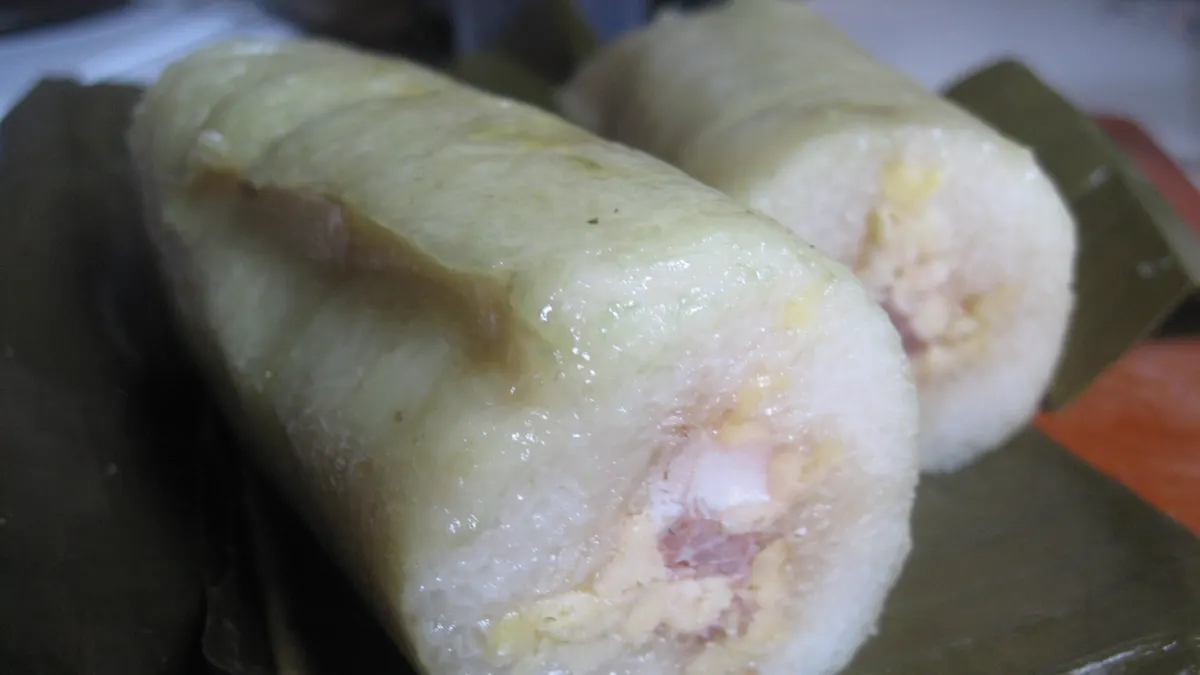
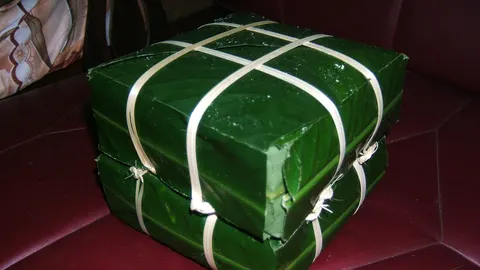
Banh tet com dep (bánh tét cốm dẹp) is banh tet made with com dep, the flattened sticky rice of the Mekong Delta’s Khmer people, instead of whole sticky rice grains: a small banana-leaf log, usually filled with sweet mung bean, softened with coconut milk and, in the Tra Vinh version, steamed rather than boiled. It belongs to the Khmer and mixed Kinh, Khmer and Hoa communities of the former Tra Vinh and Soc Trang provinces. As of 22 November 2026, the easiest place to look for it is Vinh Long province’s Ok Om Bok week, 18 to 24 November, whose exhibition of Khmer specialty products runs at Ao Ba Om all week (CAND).
This guide explains what the cake is, how it is made, why the sources disagree on how it is cooked, how it differs from the better-known Tra Cuon banh tet, and how to find one. For the rice itself, see our guide to com dep, the Khmer rice flakes; for the Tet cakes most visitors know, see banh chung vs banh tet.
Banh tet com dep vs ordinary banh tet at a glance
| Banh tet com dep (Khmer, Tra Vinh and Soc Trang) | Ordinary banh tet (South and Central Vietnam) | |
|---|---|---|
| Grain | Com dep: young sticky rice roasted, pounded flat and winnowed, then softened in coconut milk | Whole sticky rice, soaked; Tra Cuon banh tet uses Long An “nep sap” sticky rice coloured green with sweet-leaf juice |
| Filling | Usually sweet mung bean with sugar and vanilla; Soc Trang also makes a savoury one with pork fat | Mung bean and seasoned pork (often salted egg in Tra Cuon), or sweet fillings such as banana |
| Wrapping | Banana leaves, the cake dipped in coconut milk so it does not stick | Banana leaves, tied with string |
| Cooking | Tra Vinh: steamed over water, about half an hour to a few hours by different accounts; Soc Trang: boiled 3 to 4 hours | Boiled in water for many hours; Tra Cuon banh tet about 10 hours |
| Size | Tra Vinh: small, about hand-sized; Soc Trang: 30 to 40 cm long | Large log, sliced into rounds |
| Keeps | About 7 to 10 days (Can Tho Newspaper, 2014) | Varies with filling and storage |
| When | Tied to Ok Om Bok in the 10th lunar month; now also made daily for sale | Mainly Tet |
What is banh tet com dep, and where does it come from?
Banh tet com dep is a meeting of two kitchens. The banh tet shape and method come from the Kinh, the Vietnamese majority; the grain comes from the Khmer, for whom com dep is the offering at Ok Om Bok, the Moon festival. Vietnamese press describe the cake as the product of Tra Vinh’s long mix of Kinh, Khmer and Hoa communities: Bao Tay Ninh (2013) and Giao duc va Thoi dai (2019) both call it a sign of that culinary exchange.
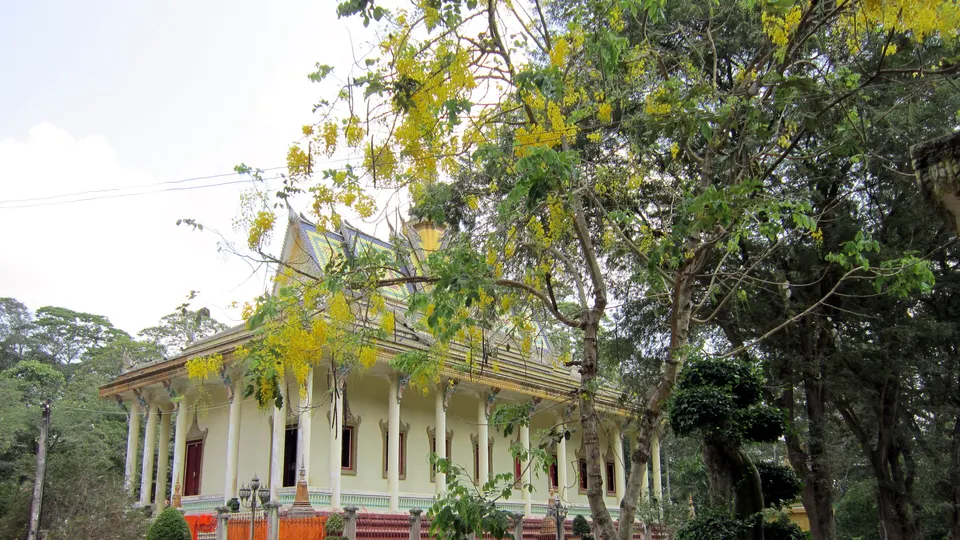
Nobody can date it. Quan doi nhan dan cuoi tuan wrote in 2022 that few people know when the cake began, and that older residents say it has been a common food for “many hundreds of years”, eaten at festivals and sold at country markets; treat that as local memory rather than documented history. The same report says that today families and small producers wrap it every day for visitors and as a gift to take away (QDND).
Common vs exception. Most write-ups describe the Tra Vinh version, now in Vinh Long province since the 1 July 2025 merger of provinces. Soc Trang, since then part of Can Tho city, makes its own: Can Tho Newspaper described Soc Trang Khmer families using com dep instead of white or black sticky rice, in sweet and savoury versions, and the merger itself follows National Assembly Resolution 202/2025. The Khmer pagodas of both areas are covered in our Khmer pagodas of the Mekong Delta guide.
How is banh tet com dep made?
It starts with com dep. Sticky rice is cut one to two weeks before it is fully ripe, roasted in a pan over a low fire while being stirred with wide bamboo chopsticks, pounded in a stone mortar with a wooden pestle until the husks come off and the grains flatten, then winnowed clean, as Bao Tay Ninh and QDND describe for Tra Vinh. Giao duc va Thoi dai adds that the Ba So com dep village in the Cau Ngang area sells com dep across the Mekong Delta, to Ho Chi Minh City and beyond.
The cake is then built in five steps that the Tra Vinh accounts agree on:
- Soften the com dep. Grated coconut is pressed for coconut milk and the com dep is mixed in and left for a few minutes to soften; some makers add a little fresh coconut water for sweetness (Bao Tay Ninh).
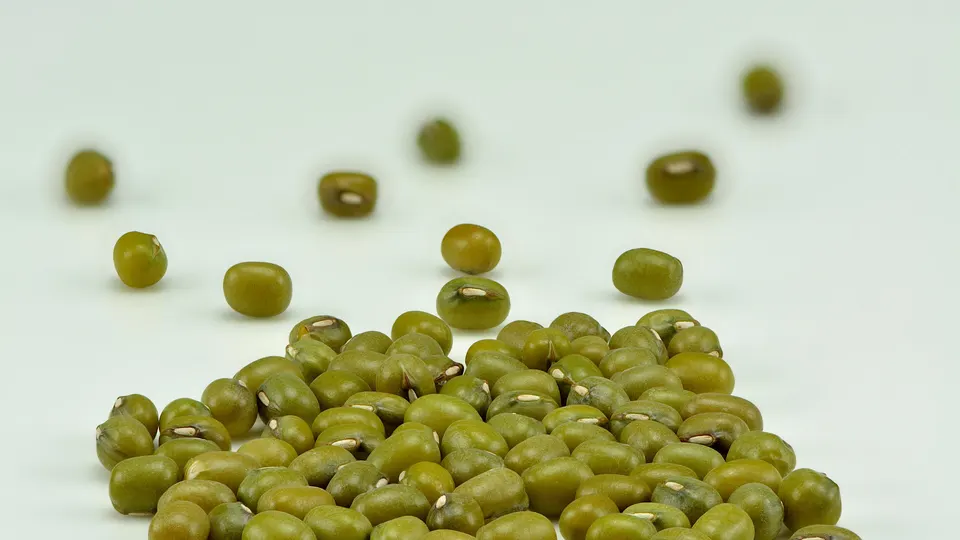
- Make the filling. Mung beans are hulled, cooked soft, mixed with sugar and a little vanilla, then stirred in a pan until dry and shaped into a roll about half the thickness of a wrist.
- Wrap. The com dep and filling are rolled in banana leaves, usually “chuoi xiem” banana leaves or “la lung” leaves, into a log smaller than an ordinary banh tet.
- Coat and tie. The cake is dipped in coconut milk once more so it does not stick to the leaf, then tied with string, not too tight and not too loose.
- Cook. In Tra Vinh it goes into a steamer over boiling water.
Can Tho Newspaper gives one number worth knowing: a kilo of com dep makes three to four finished cakes (Bao Can Tho).
Steamed or boiled? The sources disagree. The Tra Vinh write-ups say steamed: Bao Tay Ninh and Giao duc va Thoi dai give about half an hour, Bao Dan toc says “a few hours”, and Bao Tay Ninh explains that steam cooks the rice gently without changing the shape of the filling, as boiling in water would. The Soc Trang account says boiled like an ordinary banh tet, but for only three to four hours, because the roasted com dep needs less cooking than whole grain. Both are true locally: the cake is a family and village food, not a fixed recipe, so size, filling and cooking vary by maker.
Tradition vs today. Com dep was once made only around the harvest in the 10th lunar month. Giao duc va Thoi dai reported in 2019 that machines now help with some steps and that com dep is made all year to meet demand, which is why the cake is no longer tied only to the festival.
How is it different from Tra Cuon banh tet?
The confusion is easy, because both are banh tet from Tra Vinh, and both come from the Cau Ngang area with its large Khmer population. VnExpress describes Tra Cuon banh tet, named after Tra Cuon hamlet, as a big log of Long An “nep sap” sticky rice coloured green with the juice of sweet leaf (rau ngot), filled with mung bean and seasoned pork, often with salted egg, and boiled for about ten hours (VnExpress, December 2024).
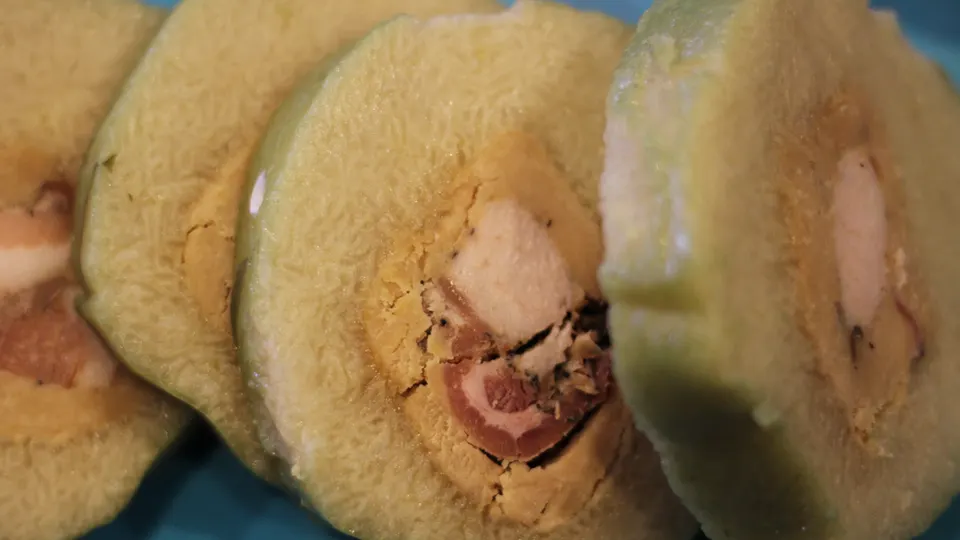
Banh tet com dep is the opposite on almost every point: flattened rice instead of whole grain, white rather than green, usually sweet rather than savoury, small rather than large, and steamed for a short time rather than boiled overnight. VnExpress serves Tra Cuon banh tet in rounds with pickled scallions, dried shrimp or pickled vegetables; banh tet com dep is eaten on its own. If you want the savoury Tet cake, ask for Tra Cuon; if you want the Khmer one, ask for “banh tet com dep” by name.
Why is it tied to Ok Om Bok?
Ok Om Bok, the Khmer festival that thanks the Moon for the harvest, falls on the 15th day of the 10th lunar month, and com dep is its essential offering. Can Tho Newspaper wrote in 2014 that Soc Trang Khmer families wrap banh tet com dep with a sweet filling at that full moon and offer it to the Moon, who they believe regulates the water and brings a good harvest. VnExpress notes that the Ok Om Bok of the Tra Vinh Khmer was recognised as national intangible cultural heritage in 2014. For the whole festival, from the moon rite to the ngo boat races, see our Ok Om Bok guide.
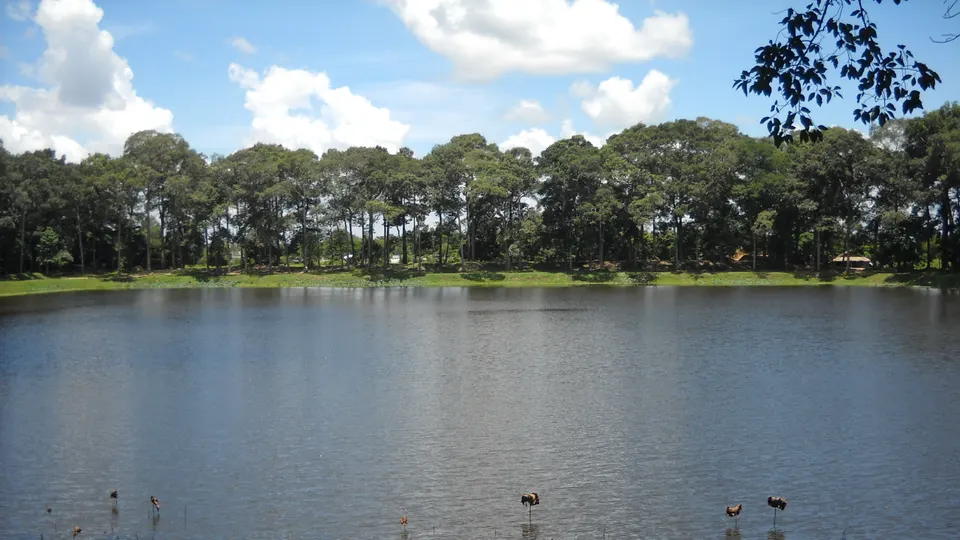
That timing is what makes November the best month to look for the cake. Can Tho Newspaper notes that the season’s sticky rice is harvested around the 10th lunar month, and households pound fresh com dep before the full moon, the flakes the cake is made from.
How do you eat, buy and keep it?
Unwrap it, slice it into rounds and eat it as it is. Bao Tay Ninh describes the taste as the scent of sticky rice, the richness of coconut milk and the nuttiness of mung bean with a hint of vanilla, and says Khmer families eat it in place of a rice meal as well as a snack. It needs no sauce and no further cooking.
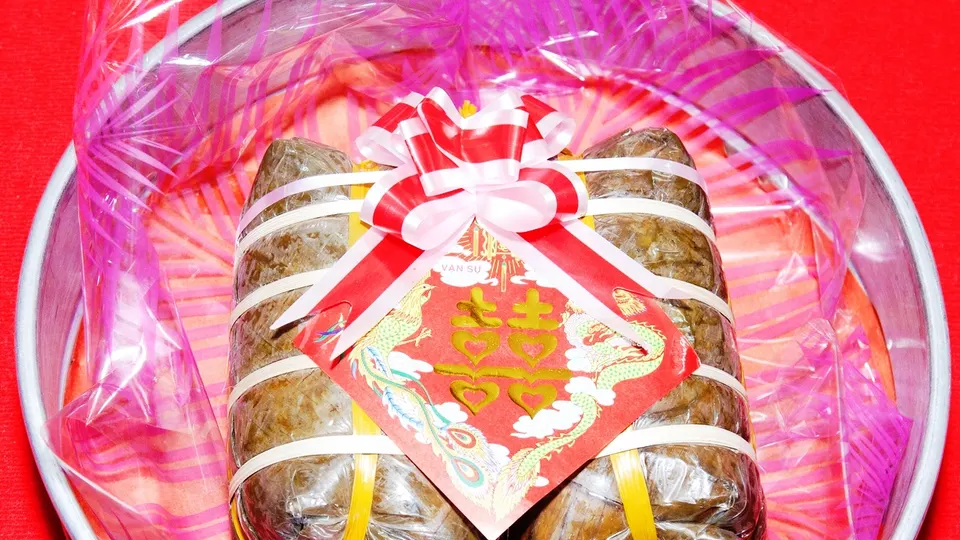
- How it is sold. Makers tie the cakes in pairs, often in tens, for selling and giving (Bao Tay Ninh).
- How long it keeps. About 7 to 10 days according to Can Tho Newspaper, longer than the mixed com dep snack, so it travels well as a gift.
- Common mistakes. Expecting a pork filling (the Tra Vinh cake is usually sweet), confusing it with the green Tra Cuon banh tet, or assuming it is only a Tet food: its season is Ok Om Bok in the 10th lunar month, around November.
- Prices. We found no dated, sourced price, so we leave them out; ask before you buy.
Where can you try banh tet com dep in November 2026?
As of 22 November 2026, there is no banh tet com dep shop we can recommend by name: we found no maker of the cake with two independent recent recommendations and a confirmed address. The one card on this page is a com dep hamlet in An Giang, where the grain is still pounded by hand. Otherwise, go where the Khmer food of the season is on show:
| Option | When | What you can expect | Who it suits |
|---|---|---|---|
| Ok Om Bok exhibition, Ao Ba Om, Vinh Long province (former Tra Vinh) | 18–24 November 2026 | Exhibition of Khmer specialty products all week; festival night at 7 pm on 24 November | Travellers in the Delta this week |
| Ngo boat races, Lang The river, Vinh Long province | 21–22 November 2026 | The Khmer longboat races that open the festival weekend | Those who want the festival atmosphere |
| Phuoc Loc com dep hamlet, O Lam, An Giang | 10th lunar month to the first month | Com dep pounded by hand; at the 21 November 2026 contest, judges also scored cakes made from com dep (Nhan Dan) | Those who want to see the grain made |
| Markets in the former Tra Vinh | Most of the year | Families and small producers sell it daily, according to QDND (2022) | Anyone outside the festival season |
| Can Tho (former Soc Trang) Khmer areas | Around the 10th-month full moon | Home-made cakes for the Moon offering, sweet or savoury | Visitors to Khmer pagodas who are invited in |
The Ao Ba Om dates and the 7 pm start of the Ok Om Bok night come from the Vinh Long provincial plan reported on 12 November 2026 (Chinhphu.vn); Bao Vinh Long confirmed the 18–24 November programme on 11 November. Programmes can change, so check the day before.
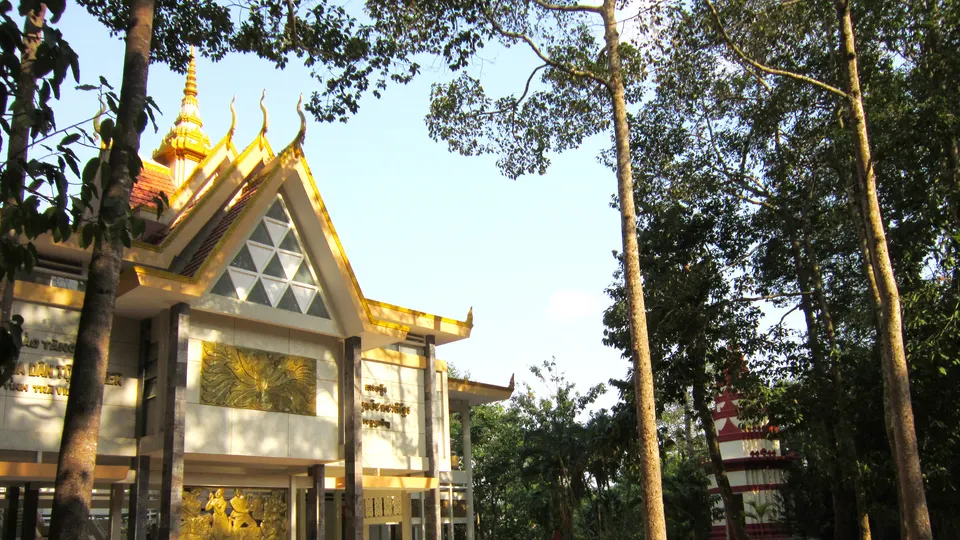
What to do. If you are in the Mekong Delta this week, base yourself near Ao Ba Om in Nguyet Hoa ward, in the former Tra Vinh city, or in Can Tho, visit Ao Ba Om and the Khmer Culture Museum beside it in the daytime, and look for banh tet com dep at the Khmer products exhibition; buy a pair to take home, since it keeps for about a week. Outside November, ask at markets in the former Tra Vinh for “banh tet com dep” by name and say you want the Khmer one, not Tra Cuon. To combine it with the rest of the region, start from our Mekong Delta guide or the wider South Vietnam hub, and for the other Tet cakes see Vietnamese New Year food by region.
Where to see the com dep for it made
Local favourite
Phuoc Loc com dep hamlet, O Lam · Sóc Tà Păng S'lêng, ấp Phước Lộc, xã Ô Lâm
An Giang (Bay Nui area, near Tri Ton) · O Lam commune (Ô Lâm), An Giang province
Ta Pang S'leng sóc, Phuoc Loc hamlet, O Lam commune, An Giang
Khmer households here still roast and pound com dep, the flattened rice this cake is made from, by hand, mainly from the 10th lunar month to the first month; at the commune's com dep pounding contest on 21 November 2026, judges also scored cakes made from com dep.
Order: Freshly pounded com dep to take away; ask whether anyone is wrapping banh tet com dep that day
Home production, not a shop: no fixed opening hours, and banh tet com dep is not always on offer. This is a place to see and buy the com dep itself; ask in the hamlet or through a local guide.
Recommended by: Nhân Dân (2026), Báo Văn Hóa · checked November 2026
Addresses and details can change; check before you go. We do not accept payment for listings.
Frequently asked questions
Is banh tet com dep the same as banh tet?
No. Banh tet com dep is made with com dep, Khmer flattened sticky rice that has already been roasted, so the cake is softer and cooks faster; ordinary banh tet uses whole soaked sticky rice and is boiled for hours.
Is banh tet com dep sweet or savoury?
Usually sweet. Tra Vinh write-ups describe a mung bean filling cooked with sugar and vanilla, while Can Tho Newspaper notes that Soc Trang Khmer families make both a sweet mung bean filling and a savoury one with pork fat.
Where can I buy banh tet com dep?
In the former Tra Vinh, now part of Vinh Long province, where Vietnamese press report families and small producers making it every day for visitors; in November 2026 Vinh Long's Ok Om Bok exhibition at Ao Ba Om (18 to 24 November) is the easiest place to look.
How long does banh tet com dep keep?
Can Tho Newspaper says it keeps about 7 to 10 days, which is why it is sold in pairs or bunches as a gift to take home.
Do I need to cook banh tet com dep before eating it?
No. It is sold cooked; unwrap it, slice it into rounds and eat it as it is, as a snack or, as Khmer families do, in place of a rice meal.
Key sources
- Hương vị bánh tét cốm dẹp của người Khmer Sóc Trăng · Báo Cần Thơ, 12 April 2014
- Bánh tét cốm dẹp · Báo Dân tộc và Phát triển, 7 October 2019
- Bánh tét Trà Vinh · Quân đội nhân dân cuối tuần, 10 September 2022
- Dẻo thơm bánh tét cốm dẹp Trà Vinh · Báo Tây Ninh, 23 August 2013
- Cẩm nang du lịch Trà Vinh · VnExpress, 4 December 2024
- Vĩnh Long sắp diễn ra lễ hội Ok Om Bok, đua ghe Ngo cùng nhiều trải nghiệm hấp dẫn · Báo Điện tử Chính phủ (Chinhphu.vn), 12 November 2026
- Vĩnh Long tổ chức Tuần lễ Văn hóa, Thể thao và Du lịch gắn với Lễ hội Ok Om Bok năm 2026 · Công an Nhân dân, 3 November 2026
- Náo nức hội thi Giã cốm dẹp chào mừng Lễ Ok Om Bok năm 2026 ở xã Ô Lâm · Nhân Dân, 21 November 2026
All 12 sources and further reading
- Dẻo thơm cốm dẹp Trà Vinh · Giáo dục và Thời đại, 10 August 2019
- Về Vĩnh Long, hòa mình vào sắc màu Lễ hội Ok Om Bok · Báo Vĩnh Long, 11 November 2026
- Vị ngọt tình quê Bảy Núi · Báo Văn Hóa
- Nghị quyết 202/2025/QH15 về việc sắp xếp đơn vị hành chính cấp tỉnh · LuatVietnam
Keep exploring
 South Vietnam · Food Com Dep (Cốm Dẹp): Khmer Rice Flakes and Where to Try Them Com dep, the Khmer flattened sticky rice of the Mekong Delta: how it is made and eaten, how it differs from Hanoi com, and where to see it in November 2026.
 North · Central · South · Food Banh Chung vs Banh Tet: The Difference and Which to Buy Banh chung vs banh tet: the difference in shape, leaf, filling and region, how to cut and keep them, and when to buy one before Tet on 6 February 2027.
 South Vietnam · Culture Ok Om Bok (Oóc Om Bóc): Khmer Moon Festival and Boat Races Ok Om Bok, the Khmer moon festival of the Mekong Delta: the flattened-rice moon rite, lanterns, ghe ngo boat races and 2026 dates in Can Tho and Vinh Long.