North Vietnam · Travel
Cat Ba (Cát Bà): Ferry, Cable Car and What to Do, 2026
Cat Ba island in 2026: ferry and cable car times to cross from Hai Phong, the national park and its rare langurs, wartime caves and forts, and crab noodles.

Cat Ba (dao Cat Ba (đảo Cát Bà)) is worth two or three nights if you want Lan Ha Bay plus forest hikes, wartime sites and a small beach town, and as of November 2026 getting there is a road trip from Hai Phong (Hải Phòng) plus a short sea crossing: the Dong Bai–Cai Vieng (Đồng Bài–Cái Viềng) car ferry runs 24 times a day between 05:00 and 18:00 until the end of 2026, Bao Hai Phong reported on 3 September 2026. Cat Ba is the largest island of the Cat Ba archipelago, off the coast of Hai Phong in North Vietnam. Most travellers know it as the base for boat trips into Lan Ha (Lan Hạ) Bay. This page is about the rest of the island: a steep, forested interior protected as a national park, one of the world’s rarest primates, gun emplacements and a cave hospital from two wars, and a small town with beaches. It also covers Hai Phong, the port city you pass through to get there, which most visitors drive straight past.
Hai Phong is one of Vietnam’s centrally governed cities. On 1 July 2025 it absorbed the neighbouring province of Hai Duong (Hải Dương) and kept the name Hai Phong (Resolution 202/2025/QH15). If you are still deciding between a cruise in Ha Long (Hạ Long) Bay and one in Lan Ha Bay, start with our Ha Long Bay and Lan Ha Bay guide; this page picks up where that one stops, on dry land.
Cat Ba and Hai Phong at a glance
| Where | Hai Phong city, on the coast east of Hanoi; Cat Ba island lies offshore to the south-east |
| Administration (since 1 July 2025) | Hai Phong city (now including former Hai Duong); Cat Ba in the Cat Hai (Cát Hải) special zone |
| On the island | Cat Ba National Park (1986), Cat Ba langur, Hospital Cave (1963–65), Cannon Fort (1940s), Cat Co (Cát Cò) and Tung Thu (Tùng Thu) beaches |
| In the city | French-era street grid and buildings, red flamboyant trees in May, breakfast noodle shops |
| Food to try | Banh da cua (crab soup with red rice noodles), banh mi que (bánh mì que); seafood on Cat Ba |
| Getting there | Road over the Tan Vu–Lach Huyen sea bridge, then the Dong Bai–Cai Vieng ferry (05:00–18:00 to 31 Dec 2026) or the cable car; fast boats from the city; ferry from Tuan Chau (Quang Ninh) |
| Best time | April–October for beaches; September–November most comfortable for hiking; storms possible in summer and early autumn |
| UNESCO | Biosphere Reserve (2004); part of the Ha Long Bay – Cat Ba Archipelago World Heritage site since 2023 |
What are Cat Ba and Hai Phong called now?
The 2025 reorganisation also changed the level below the city. Cat Ba town, Cat Hai town and ten communes of the former Cat Hai district, among them Gia Luan (Gia Luận), Tran Chau (Trân Châu), Viet Hai (Việt Hải) and Phu Long (Phù Long), were merged into a single Cat Hai special zone (đặc khu Cát Hải), one of two special zones in Hai Phong alongside the remote island of Bach Long Vi (Resolution 1669/NQ-UBTVQH15). The new units began operating on 1 July 2025.

In practice, older guidebooks, tickets and road signs still say “Cat Hai district” or “Cat Ba town”, and both names will be understood. The island’s own name comes with a legend: Bao Phap luat Vietnam (Báo Pháp luật Việt Nam) records the local story that it was once Cac Ba (Các Bà), “the ladies’ island”, and that the name drifted over time into Cat Ba. Treat that as folklore, not etymology.
What is Hai Phong like as a city?
Hai Phong is a port first. The city portal calls it the gateway to the sea for northern Vietnam and places it roughly 100 km from Hanoi. The French built it up in the late 19th and early 20th centuries as a commercial and shipping centre, and that origin still shapes the centre. According to Vietnam News, the French began developing the area into a port city in 1885, laid out a chessboard of streets in what are now the Hong Bang (Hồng Bàng), Le Chan (Lê Chân) and Ngo Quyen (Ngô Quyền) areas, and dug the Bonal canal to separate the French and Vietnamese quarters. Most surviving colonial buildings are Art Deco, some neo-classical; the City Hall, completed in 1905, is almost intact, and the Opera House resembles Hanoi’s on a smaller scale. What you notice walking the centre is not one grand monument but a whole grid of old shophouses and offices, some restored and some waiting.
Tradition vs today: the red flamboyants. Hai Phong’s nickname is “the city of the red flamboyant” (thành phố hoa phượng đỏ). The phuong vi (phượng vĩ) (phoenix tail) trees flower in May and mark the start of summer; local elders say the French brought the tree from Madagascar about a century ago (Vietnam News). A tree introduced by a colonial power has become the city’s emblem, and each year around 13 May, the city’s Liberation Day, Hai Phong opens a Red Flamboyant Festival. If you pass through in May, the street trees alone are worth the stop.

What should you eat in Hai Phong and on Cat Ba?
Hai Phong eats noodles for breakfast, and its signature is banh da cua (bánh đa cua): a broth of field crab (cua dong (đồng)) with crab roe, much like Hanoi’s bun rieu, poured over flat, chewy red rice noodles (banh da do (bánh đa đỏ)) and topped with fish cake, minced pork in betel leaf (cha la lot (chả lá lốt)), shrimp and greens such as water spinach and rau nhut (nhút) (water mimosa). VnExpress calls it the dish that made Hai Phong’s food famous (VnExpress). The same report notes another local habit: in beef noodle soup (bánh đa bò nhừ) Hai Phong cooks use a vinegar dressing rather than lime or kumquat.

The other thing to try is banh mi que, a thin baguette grilled crisp, spread with pate (pâté) and eaten with chi chuong (chí chương), a sharp local chilli sauce. It is a breakfast, a snack and a take-home gift. Compared with the clear beef broths described in our pho by region guide, Hai Phong’s bowls lean on crab, vinegar and chilli, a taste of the coast rather than the capital.
On Cat Ba itself, food means seafood. VnExpress lists the island’s specialities as including tu hai (hài) (a large saltwater clam), be be (bề bề) (mantis shrimp) and ca song (cá song) (grouper). Cat Hai island, which you cross on the way from the city, is also one of Vietnam’s well-known fish sauce centres; our guide to Vietnamese fish sauce by region compares its sauce with Phu Quoc’s and Phan Thiet’s. For more of the country’s regional dishes, see our food section.
How do you get from Hai Phong to Cat Ba?
Cat Ba is no longer as cut off as it was, but the crossing still shapes your day. The table compares the ways across with the schedules Bao Hai Phong (Báo Hải Phòng), the Hai Phong city newspaper, published in 2026; where no dated official figure exists, the cell says so.

| Option | Route | Times (as reported) | Cost | Best for |
|---|---|---|---|---|
| Car ferry | Dong Bai (Cat Hai island) to Cai Vieng (Cat Ba) | 24 crossings a day, 05:00–18:00; last from Cai Vieng 17:30 (1 Sep–31 Dec 2026) | Not published in the report | Cars, buses, motorbikes; the default route |
| Cable car | Cat Hai to Phu Long (Cat Ba side), about 4 km | 6 departures each way, 09:00–15:30, daily (from 8 Apr 2026; summer timetable) | 70,000 dong a trip; under 1 m free (Apr 2026) | Foot passengers who want the view; check winter times |
| Fast boat | Binh wharf, Hai Phong city, to Cat Ba | No dated official timetable found | Not verified | Travellers without a road transfer |
| Ferry from Quang Ninh | Tuan Chau, near Ha Long, to the island | Only a few sailings a day | Not verified | Combining Ha Long Bay and Cat Ba |
How to choose. Coming by bus or car from Hanoi, you will almost certainly use the ferry; aim to reach Dong Bai well before 17:00 so the 18:00 cut-off does not catch you. Take the cable car only if you are on foot and arrive between 09:00 and 15:30. Coming from a Ha Long cruise, the Tuan Chau ferry saves going back through Hai Phong.
- By road and sea bridge. The Tan Vu–Lach Huyen bridge, more than 5.4 km long, opened on 2 September 2017 as part of a highway built for the new Lach Huyen port on Cat Hai island; Vietnam News reported at the time that it was also expected to help tourism to the Cat Ba Biosphere Reserve. VnExpress puts the drive from Hanoi via the expressway and the bridge at about 140 km.
- Across the last strait by ferry. From Cat Hai island, a car ferry crosses to Cai Vieng on Cat Ba. VnExpress reports that the newer Dong Bai ferry terminal has replaced the old Got (Gót) ferry, which used to be notorious for weekend queues. The operator, Bayview Cat Ba, cut the service from 38 to 24 crossings a day on 1 September 2026 as the summer peak ended, with no more than 40 minutes between boats, Bao Hai Phong reported.
- By cable car. The Cat Hai–Phu Long cable car, about 3.95 km long, opened on 6 June 2020 near the old Got ferry and carries passengers over the sea to the Cat Ba side. Its tallest tower, 214.8 m high, was certified by Guinness World Records as the tallest cable-car pylon in the world. At its opening, Saigon Giai Phong (Sài Gòn Giải Phóng) reported that the ride took about nine minutes against about twenty by ferry, and that peak-season ferry waits of two to three hours were one reason it was built (SGGP). From 8 April 2026 it ran every day, including Tuesdays when it used to close, with six departures each way between 09:00 and 15:30 and a ride of 10–15 minutes, at 70,000 dong a trip, Bao Hai Phong reported; that was the summer timetable, so check it before you rely on it.
- By fast boat or from Quang Ninh. Fast boats run from Binh (Bính) wharf in Hai Phong city, and a quieter ferry route links Tuan Chau, near Ha Long in Quang Ninh (a centrally governed city since 1 September 2026, VOV reported), with the island; VnExpress notes it has only a few sailings a day, which suits travellers combining both bays.
What this means for you: on summer weekends and holidays, cross early or midweek. Coming from Hanoi, many travellers go by bus or car straight through Hai Phong; a night in the city is worth adding if you want to eat breakfast there.
What is Cat Ba National Park, and what can you do there?
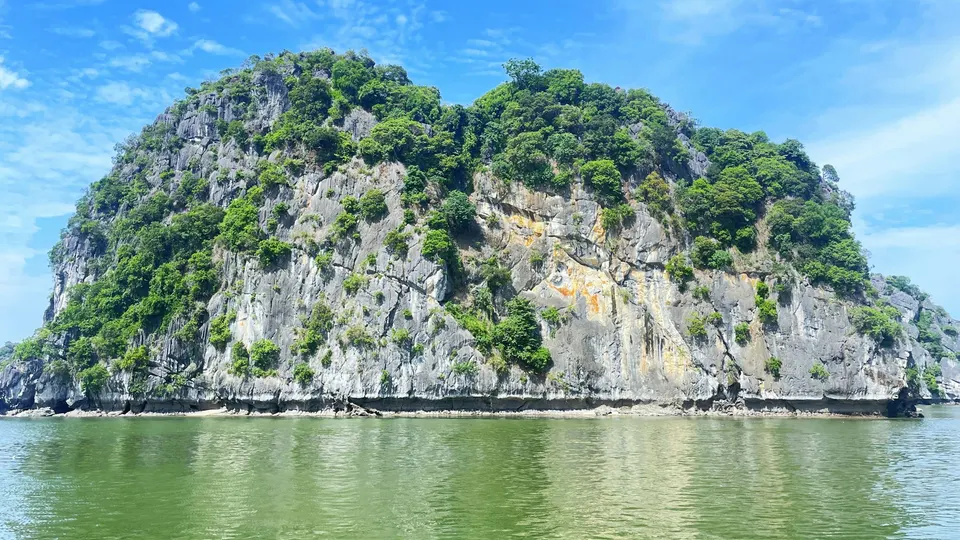
Cat Ba National Park (Vườn quốc gia Cát Bà) was established by a government decision dated 31 March 1986. Published figures for its area range from about 15,000 hectares, including around 5,400 hectares of sea, in an older protected-area sourcebook to more than 17,000 hectares in recent Vietnamese reporting. The park is the core of the wider Cat Ba Biosphere Reserve, recognised by UNESCO in 2004, which covers tropical forest on limestone, mangroves, wetlands and coral reefs, and an archipelago of some 366 limestone islands where people have lived for at least 6,000 years (UNESCO). In 2023 the archipelago was also added to the Ha Long Bay World Heritage site, which UNESCO describes as having a wild, forested interior of steep rocky peaks.
What you do here is walk. VnExpress describes trails ranging from about two hours to a full day of four to eight hours. The best-known short route climbs through the kim giao forest, named after its native kim giao trees, to Ngu Lam (Ngự Lâm) peak for views over the island; the highest point of the archipelago, Cao Vong (Cao Vọng), reaches 322 m according to Bao Van hoa (Báo Văn hóa). Longer hikes cross mountain passes to Viet Hai, a village inside the park where, the national tourism authority notes, a few basic homestays receive walkers. Near it lies Ao Ech (“frog pond”), a small patch of flooded forest.
Common vs exception: most visitors see the park on a short morning climb from the main gate, or not at all, and spend their time in town and on the water. The exception is the walkers who go through to Viet Hai and stay the night; this is the island at its quietest. Limestone trails can be steep and slippery after rain, so go with proper shoes and, for the longer routes, a guide.
Why is the Cat Ba langur so rare?
The Cat Ba langur (vooc Cat Ba (voọc Cát Bà), also called the golden-headed langur) lives on Cat Ba island and nowhere else. UNESCO calls it a critically endangered endemic primate and the flagship species of the archipelago. In the 1960s there were an estimated 2,500 to 2,700; over five decades the population fell by about 98 percent, mainly through hunting, and poaching rose in the 1990s as Cat Ba became popular with tourists (DTiNews).
A conservation project began in 2000, when fewer than 50 remained. Hai Phong’s city portal reported 82 langurs in September 2023, up from 47 in 2000. In August 2026 a veteran park ranger told VTV that a little over 80 remain, in several small groups, while Thanh Nien (Thanh Niên) wrote in September 2026 of about 100 in the wild. Sources count differently, so “roughly 80 to 100” is the fair figure as of November 2026. The langurs live in troops of about 10 to 20 led by a male and sleep in caves on sea-facing cliffs, roughly 100 to 150 metres up. Local protection groups in communes such as Gia Luan, Tran Chau and Viet Hai work with the park to guard them.
What this means for you: you will probably not see one, and you should not try to get close. Their cliffs are strictly protected, and tourism is itself listed as a pressure on the species. Any operator promising a sighting is overselling. What you can see is the landscape that sheltered them: forest and limestone cliffs that are too steep to farm.
What wartime history can you see on Cat Ba?
Two sites show how the island’s position in the Gulf of Tonkin, off the port of Hai Phong, made it a military outpost.

Cannon Fort (Pháo đài Thần Công) sits on a hilltop known as high point 177 above Cat Ba town. According to Bao Phap luat Vietnam, the French built it in the 1940s with forced local labour, installing heavy anti-ship guns; the Japanese took it over after ousting the French, and during the American war the same hill served as an anti-aircraft position. Two large guns and a network of tunnels and trenches are still fairly intact, and the hilltop is a popular place for sunrise and sunset over the bay.
Hospital Cave (Hang Quan Y (Hang Quân Y)), formerly known as Hung Son (Hùng Sơn) cave, lies inland in the park area on the road from the town. Between 1963 and 1965 a field hospital was built inside the rock, with about 17 rooms on three levels and blast-proof doors (VnExpress). The Vietnam Airlines guide describes operating theatres, wards and living quarters for staff, sheltered from air raids. Walking through the concrete rooms gives a clear sense of how wartime services were moved underground.
Cat Ba town and the beaches: then and now
Cat Ba town is the island’s harbour town, where most visitors sleep and eat. Close by are the Cat Co beaches and Tung Thu, calm beaches that are easy to reach from town, and VnExpress also points to the Cat Dua (Cát Dứa) beaches on nearby Monkey Island (Dao Khi (Đảo Khỉ)).

Tradition vs today: UNESCO lists farming, fishing and hunting as the islanders’ traditional livelihoods, with tourism now a key industry. That shift has had costs: as Cat Ba became popular in the 1990s, hunting of the langur rose, and by 2020 peak-season ferry queues were long enough to help justify a cable car. Today the town is busiest from May to July and at weekends, while November to March is quiet. VnExpress recommends April to October for swimming; for hiking, the national tourism authority finds September to November the most comfortable, while noting that storms are still possible. In summer, sea conditions can stop boats at short notice, as our Ha Long guide explains.
How do Cat Ba and Hai Phong fit into a trip north?
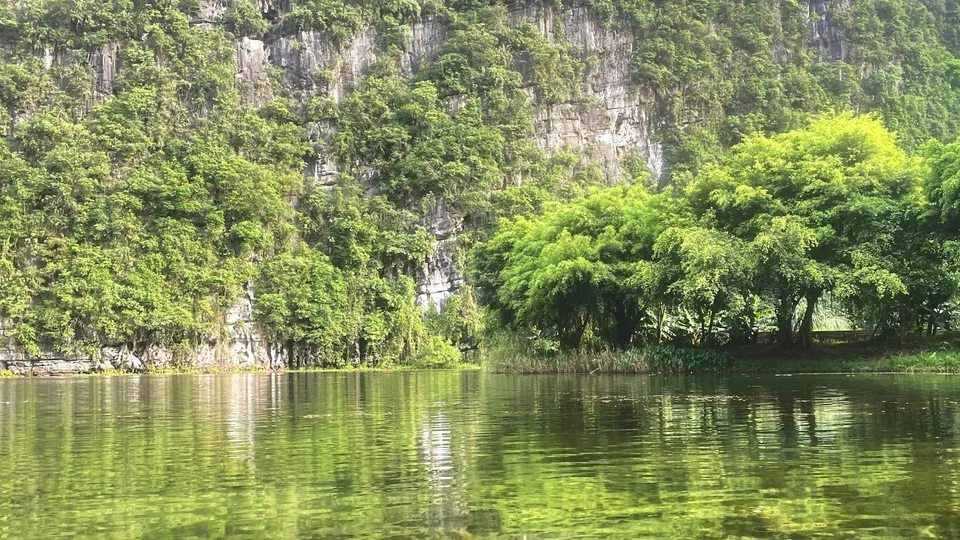
A slower trip of two or three nights suits Cat Ba: one day on the water, one in the park or at the fort and cave, and a slow evening in town. Add a night in Hai Phong if you want the city’s breakfasts and French streets. If you only have a day, our comparison of day trips from Hanoi explains why the bays are better with a night, and our Ha Long vs Lan Ha vs Bai Tu Long cruise guide sets out the ports, official routes and storm rules if you are weighing a Lan Ha trip from Cat Ba against a cruise from the Ha Long side. The island pairs well with Ninh Binh, where the same kind of limestone stands in rice fields instead of the sea. For seasons and the 2025 provincial map across the region, see our North Vietnam hub.

Frequently asked questions
Is Cat Ba part of Ha Long Bay?
Cat Ba is a separate island group in Hai Phong, south-west of Ha Long Bay in Quang Ninh, but it is the same limestone seascape. Since 2023 both form one UNESCO World Heritage site, Ha Long Bay – Cat Ba Archipelago.
What time is the last ferry to Cat Ba?
From 1 September to 31 December 2026 the Dong Bai–Cai Vieng car ferry runs from 05:00, with the last boat to Cat Ba leaving Dong Bai at 18:00 and the last one back leaving Cai Vieng at 17:30, Bao Hai Phong reported. The operator may run until 19:00 on busy days, but do not count on it.
How much is the Cat Ba cable car, and is it running?
As of April 2026 the Cat Hai–Phu Long cable car cost 70,000 dong a trip for adults and children over 1 m, with six departures each way between 09:00 and 15:30, every day of the week. That timetable was set for the summer peak, so check Sun World Cat Ba's current schedule before you rely on it.
Can you still see the Cat Ba langur in 2026?
Only with luck. Reports in August and September 2026 put the population at roughly 80 to 100, living on sea-facing cliffs that are strictly protected; rangers search for hours to see them for a few minutes, so no boat trip can promise a sighting.
Is Hai Phong worth a stop on the way to Cat Ba?
If you like food and city history, yes. Hai Phong has a French-era grid of streets, its own breakfast dishes such as banh da cua, and in May the red flamboyant trees that give it its nickname.
Key sources
- Resolution 202/2025/QH15 on the reorganization of provincial-level administrative divisions · LuatVietnam (text of the National Assembly resolution)
- Resolution 1669/NQ-UBTVQH15 on the reorganization of commune-level administrative divisions of Hai Phong city · LuatVietnam (text of the National Assembly Standing Committee resolution)
- Cat Ba Biosphere Reserve · UNESCO Man and the Biosphere Programme
- Endangered langurs on Cát Bà · Dân Trí International (DTiNews), 31 January 2025
- Kinh nghiệm du lịch Cát Bà từ A-Z (Cát Bà travel handbook) · VnExpress, 2022, updated April 2026
- Ăn sáng như người Hải Phòng (Breakfast like a Hải Phòng local) · VnExpress, 19 July 2023
- Sun Group khai trương tuyến cáp treo 3 dây hiện đại tại Cát Bà (Cát Hải–Phù Long cable car opens) · Sài Gòn Giải Phóng, 6 June 2020
- Hải Phòng's most beautiful season · Việt Nam News, 23 May 2022
All 27 sources and further reading
- Ha Long Bay - Cat Ba Archipelago · UNESCO World Heritage Centre
- Quyết định 79-CT năm 1986 thành lập Vườn quốc gia Cát Bà (Decision 79-CT establishing Cát Bà National Park) · Thư viện Nhà đất (legal text record), 31 March 1986
- Cat Ba National Park (protected areas sourcebook) · Thiên nhiên Việt (sourcebook of existing and proposed protected areas)
- Vườn quốc gia Cát Bà – Tuyệt phẩm quên lối về (Cát Bà National Park) · Báo Văn hóa
- Preservation of endangered Cat Ba langurs · Hải Phòng City Portal
- Cat Ba langur population increases by 15 individuals in 10 months · Vietnam Agriculture and Environment (Nông nghiệp và Môi trường), October 2024
- 7 amazing national parks in Vietnam · Vietnam National Authority of Tourism (vietnam.travel)
- Huyền thoại đảo Ngọc Cát Bà và di tích Pháo đài Thần công (Cát Bà and the Cannon Fort relic) · Báo Pháp luật Việt Nam, 24 July 2020
- Military Hospital Cave · Vietnam Airlines travel guide
- Hai Phong · Vietnam Airlines destination guide
- One of longest sea bridges in Southeast Asia opens in Hải Phòng · Việt Nam News, 2 September 2017
- French architecture: Hải Phòng's treasured history · Việt Nam News, 30 October 2022
- About Hai Phong · Hải Phòng City Portal
- Phà Đồng Bài - Cái Viềng giảm chuyến từ tháng 9 · Báo Hải Phòng, 3 September 2026
- Cáp treo Cát Bà hoạt động các ngày trong tuần · Báo Hải Phòng, 9 April 2026
- Giữ bóng voọc trên núi đá Cát Bà · VTV, 30 August 2026
- Đi tàu từ 4 giờ sáng tìm đàn voọc Cát Bà chỉ còn khoảng 100 con · Thanh Niên, 15 September 2026
- Từ hôm nay, Quảng Ninh trở thành thành phố thứ 8 của Việt Nam · VOV, 1 September 2026
- Cát Bà Island · Wikipedia (see its cited sources)
Keep exploring
 North Vietnam · Travel Ha Long Bay (Hạ Long) or Lan Ha Bay: Which to Choose How Ha Long Bay and Lan Ha Bay differ: what the drowned limestone karst is, UNESCO status since 1994 and 2023, floating villages then and now, and when to go.
 North Vietnam · Travel Hanoi: How Many Days, What to See and When to Go Hanoi travel guide for 2026: how many days and where to stay, Noi Bai airport, walking-street hours, the new low-emission zone, Train Street and where to eat.
 North Vietnam · Travel Ninh Binh (Ninh Bình): How Many Days, Boats and Tickets Ninh Binh: how many days you need, Trang An or Tam Coc boats, 2026 ticket prices, when the rice turns gold, the Hoa Lu capital, what to eat and a 2-day plan.