North Vietnam · Travel
Hanoi Old Quarter Walk: A 3-Hour Self-Guided Route (2026)
A 3-hour self-guided Hanoi Old Quarter walk with stop-by-stop timing, the 2026 entry fees and hours for Bach Ma, 87 Ma May and Kim Ngan, and where to eat.
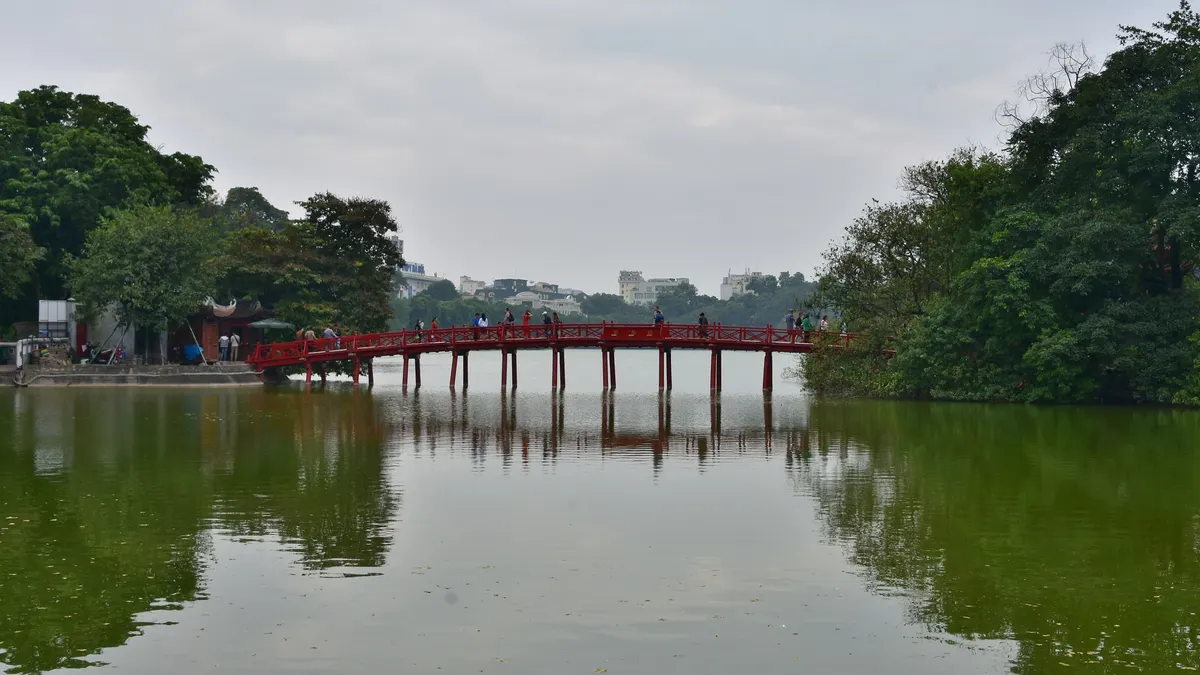
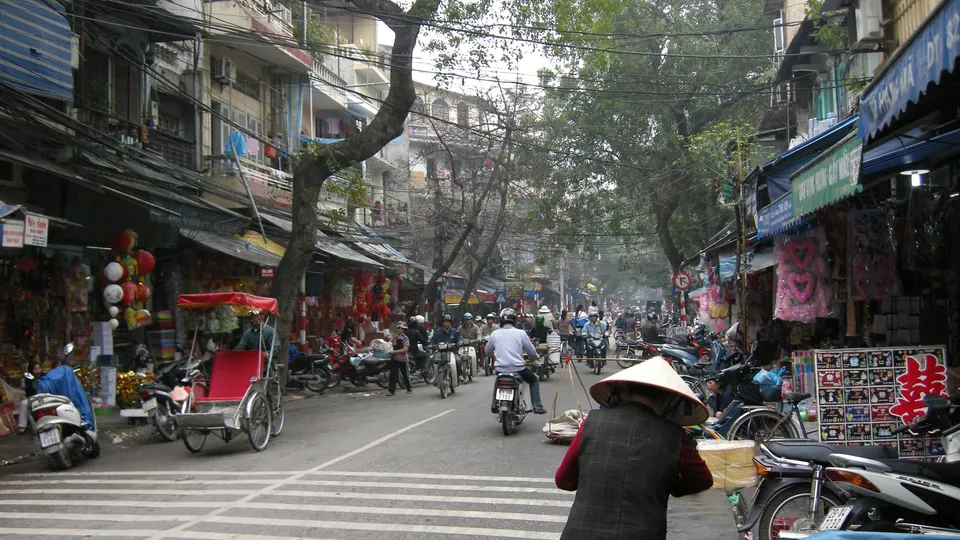
Allow about three hours for a self-guided loop of Hanoi’s Old Quarter: start at Hoan Kiem (Hoàn Kiếm) Lake by 8:30 am on a weekday, walk the trade streets of Hang Bac (Hàng Bạc) and Ma May (Mã Mây) to Bach Ma (Bạch Mã) temple, reach the old city gate and Dong Xuan (Đồng Xuân) market, and return south along Hang Dao (Hàng Đào) to the lake. The timing matters more than it used to: since 8 December 2025 the Old Quarter’s best-known relics sell tickets and keep fixed hours, 8 am to 12 noon and 1:30 to 5:30 pm daily, with an extra 7 to 9 pm opening on Friday to Sunday (Bao Lam Dong). Start late and you reach Hang Buom (Hàng Buồm) just as the doors close for lunch.
This guide is the practical companion to our Hanoi city guide: a timed route, a table of what each site costs and when it opens as of November 2026, and where to stop for coffee and lunch. For the history behind the street names, the guild temples and the tube houses, read our guide to Hanoi’s 36 streets before or after you walk.
Which version of the walk suits you?
Pick the version by the day and time you have, not by how many sights you want to tick off. The Old Quarter changes character completely between a weekday morning and a weekend night.
| Version | When to start | What you see | Ticketed sites open? | Best for |
|---|---|---|---|---|
| Classic 3-hour loop | Weekday, 8:00–8:30 am | Trade streets at work, Bach Ma, 87 Ma May, O Quan Chuong gate, Dong Xuan market | Yes, until 12 noon | First-time visitors who want the whole loop |
| Afternoon loop | Any day, 1:30–2:00 pm | The same route, more traffic and heat | Yes, until 5:30 pm | Late risers; finish with an early dinner |
| Weekend evening walk | Friday to Sunday, from 7 pm | Car-free streets around the lake, the Hang Dao night market, lit temples | Yes, 7–9 pm only | Atmosphere and street food, if you accept crowds |
| 90-minute short version | Any opening hours | Hang Bac, Ma May and Hang Buom only | Yes | A first look, or a day with other plans |
On Friday, Saturday and Sunday evenings the streets around the lake have been closed to all vehicles from 7 pm to midnight since 1 July 2026, as Zone 1 of the city’s low-emission zone pilot (Hanoimoi), and the night market runs from Hang Dao up to Dong Xuan market from 6 pm to midnight on those nights, according to Vietnam Airlines’ guide. Our guide to the Hoan Kiem walking street covers that weekend scene; the rest of this page follows the classic morning loop.
The 3-hour loop at a glance
The times below are a suggested pace with short visits inside four or five sites. They are not walking times measured by us; add time for photos, shopping or a long coffee.
| Time | Stop | What to do there | Entry |
|---|---|---|---|
| 8:30 | The Huc bridge, Hoan Kiem Lake | Start on the north shore; Ngoc Son temple is optional | Bridge free; Ngoc Son 50,000 dong |
| 8:50 | Hang Dao and Hang Bac | Walk north, then east along Silver Street | Free |
| 9:05 | Kim Ngan communal house, 42–44 Hang Bac | Guild temple of the silversmiths | 20,000 dong |
| 9:25 | Heritage house, 87 Ma May | Inside a late-19th-century tube house | 20,000 dong |
| 9:55 | Bach Ma temple (76), Quan De temple (28) and Cantonese hall (22), Hang Buom | Pick one or two | 20,000 dong each |
| 10:30 | Cultural Exchange Centre, 50 Dao Duy Tu, and O Quan Chuong gate | The last old city gate | Centre 20,000 dong; gate free |
| 10:50 | Hang Chieu to Dong Xuan market | Hanoi’s big covered market | Free |
| 11:20 | Hang Duong, Hang Ngang and Hang Dao back to the lake | Detour into Trung Yen alley for lunch | Free |
| 11:45 | Lunch | Fish noodles in Trung Yen alley or bun cha on Nguyen Huu Huan | Pay as you eat |
First hour: Hoan Kiem Lake, Hang Bac and Ma May
Begin at The Huc bridge, the red footbridge on the north-east shore of the lake. Crossing it to Ngoc Son (Ngọc Sơn) temple is optional: VnExpress International reported in January 2025 that the temple opens 7 am to 6 pm on weekdays and until 9 pm at weekends, and that tickets, 50,000 dong for adults and free for under-16s, are needed beyond the bridge but not for the bridge itself (VnExpress International). If you are short of time, skip it today and come back for an evening visit.
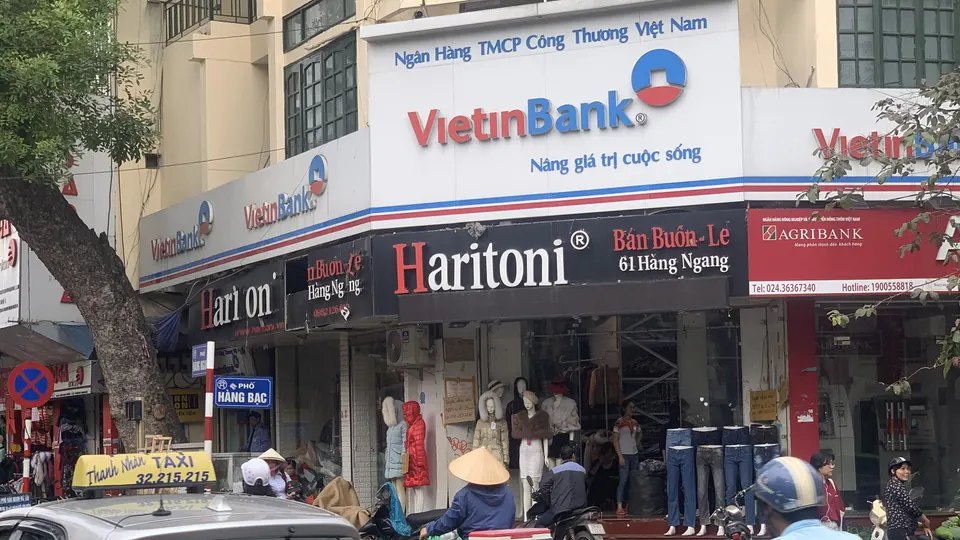
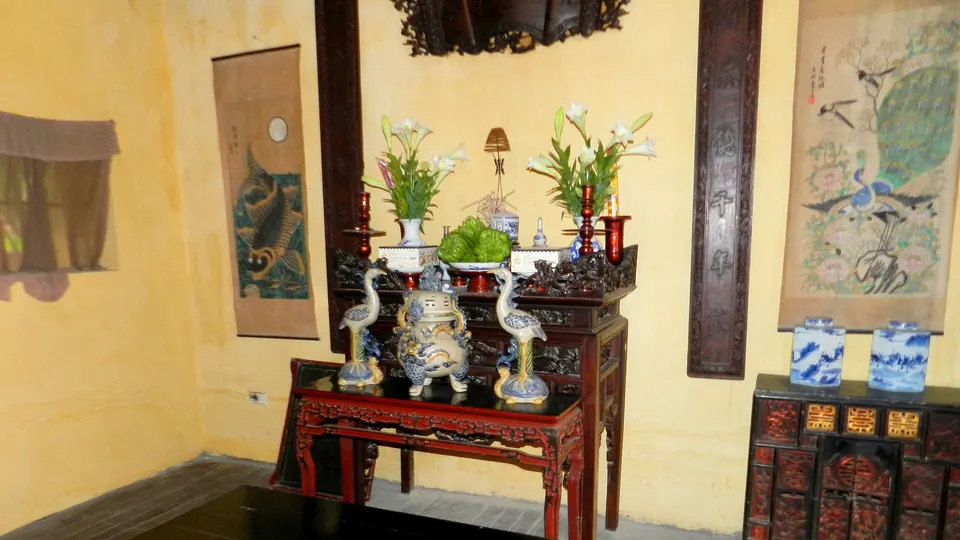
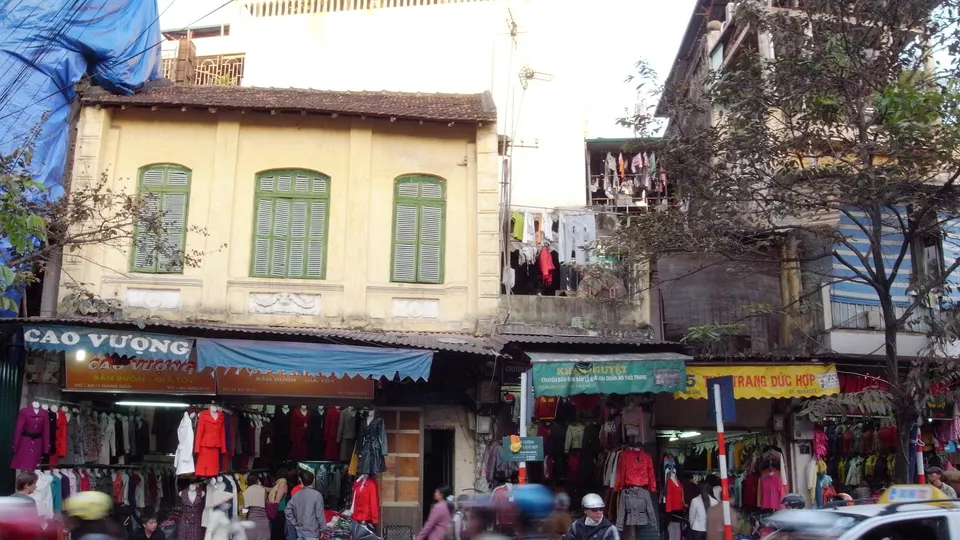
From the lake, walk north up Hang Dao and turn right into Hang Bac, Silver Street, known for its jewellery shops. Kim Ngan (Kim Ngân) communal house, at numbers 42–44, is dedicated to the founder of a hundred crafts (ông tổ bách nghệ), and is one of the sites that began selling tickets on 8 December 2025. A few minutes on, turn left into Ma May for the heritage house at No. 87, one of 14 old houses in Hanoi built around the end of the 19th century and recognised as national heritage in 2004, the newspaper Bao Lao Cai reported; inside, you walk through the narrow rooms of a tube house to its altar room.
Coffee first? Cafe Giang at 39 Nguyen Huu Huan, the family cafe credited with inventing Hanoi’s egg coffee, is a short walk east of the start (see the card below); check its opening time if you plan an early cup.
Second hour: Hang Buom, Bach Ma temple and O Quan Chuong
At the top of Ma May you reach Hang Buom, the old sail-makers’ street, which has three ticketed sites within a short stretch. Bach Ma temple at No. 76 is one of the four temples said to guard the old capital Thang Long, dedicated to the guardian spirit Long Do; Quan De temple stands at No. 28, and the Cantonese assembly hall (Quảng Đông hội quán) at No. 22 has been a national architectural and artistic relic since 2007. If you only have time for one, choose Bach Ma; the newspaper Bao Lam Dong notes that it also hosts performances of traditional music such as xam, chau van and ca tru.
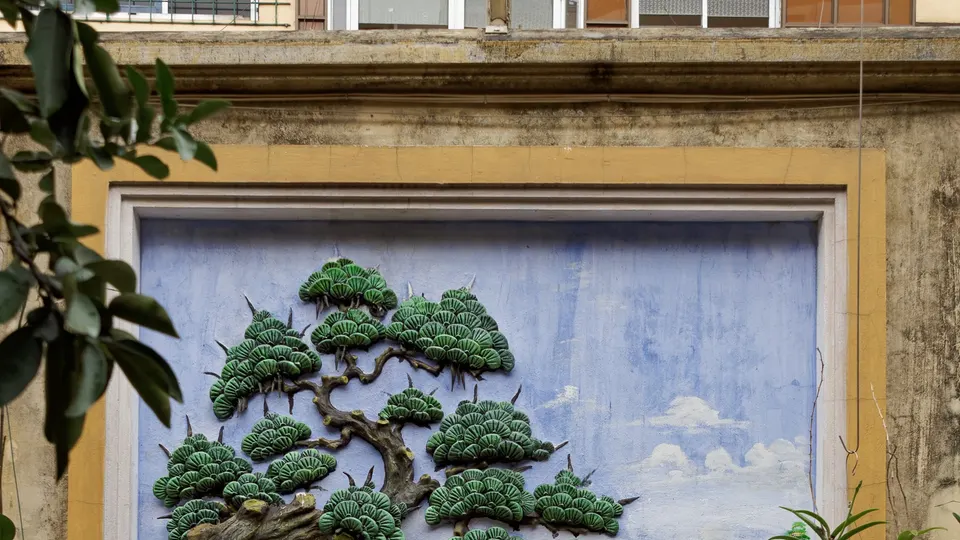
From Hang Buom, walk east to Dao Duy Tu (Dao Duy Tu). The Old Quarter Cultural Exchange Centre at No. 50 has been ticketed since 1 January 2026; ask at the door what is on show before you pay. At the end of the street stands O Quan Chuong (Ô Quan Chưởng), the only one of Hanoi’s old city gates still standing, built in 1749 and known in Chinese characters as Dong Ha Mon (Nhan Dan).
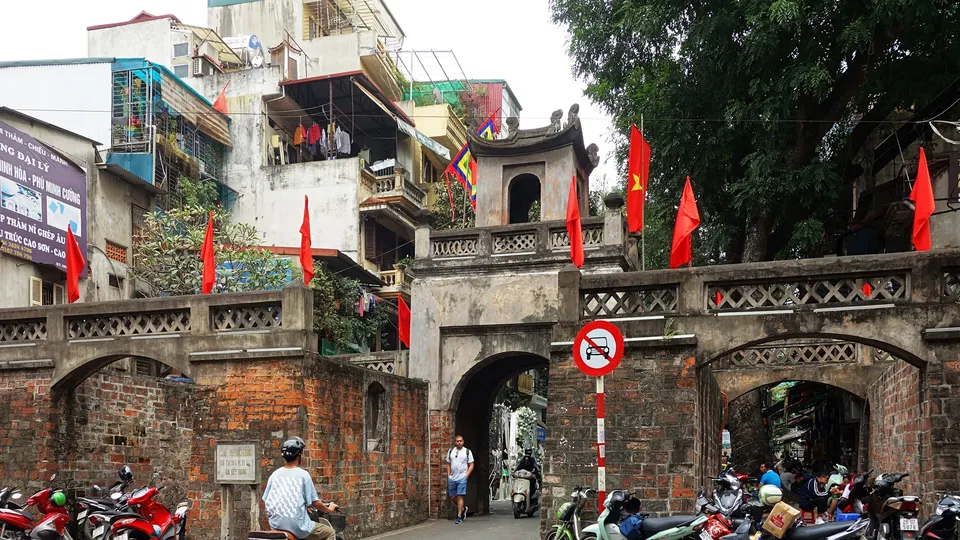
Early-19th-century records counted 21 gates in Hanoi’s outer wall, VnExpress notes, although researchers have only been able to identify 18. The name “Quan Chuong” is usually linked to an officer who died defending the gate against the French in 1873, but VTC News (August 2026) points out that this is only one of several explanations, so treat it as tradition rather than settled history. Motorbikes still pass through the arch: stand to the side to look and photograph.
Third hour: Dong Xuan market and back to the lake
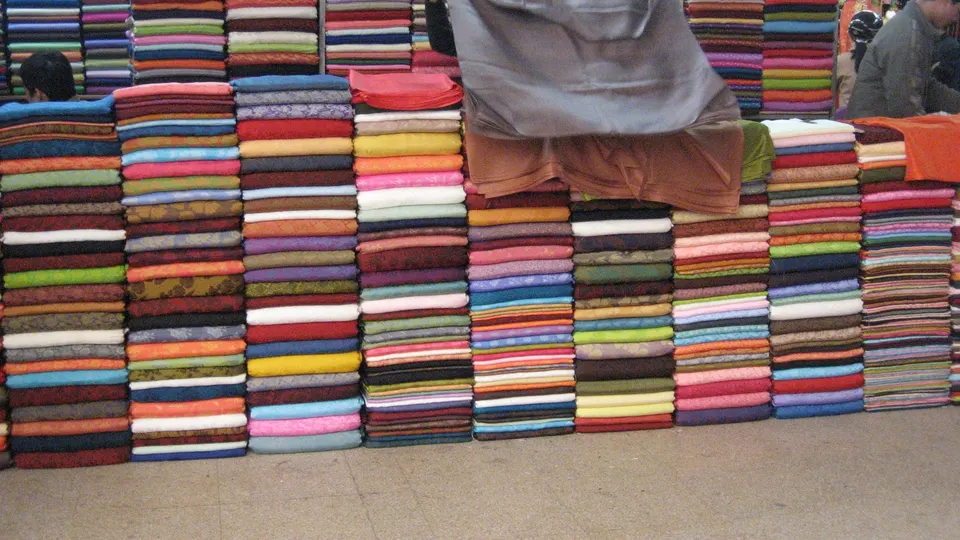
Walk west from the gate along Hang Chieu (Hang Chieu) to Dong Xuan market, the Old Quarter’s big covered market. A quick loop of the ground floor is enough for most walkers: whole aisles are given over to stalls like the fabric sellers below, the aisles are narrow and many traders are busy selling in bulk.
To return, follow the single line of streets that runs south from the market to the lake: Hang Duong (Hang Duong), Hang Ngang (Hang Ngang) and Hang Dao. This is also the spine of the weekend night market, so on a Friday to Sunday it will look very different after dark. Shortly before the lake, make a short detour east of Hang Dao into Trung Yen alley for lunch at the fish-noodle stall Sam Cay Si, or carry on to Nguyen Huu Huan for bun cha.
For a longer day, combine this loop with the Temple of Literature and the Imperial Citadel in the afternoon, as in our 3-day Hanoi itinerary, or use it as the first morning of a longer stay in North Vietnam.
Which Old Quarter sites charge entry in 2026, and when are they open?
Walking the streets is free, but six relics and cultural buildings on or near this route now charge 20,000 dong per visit. Children under 16 (or under 1.3 m tall without ID) go free, and students aged 16 and over and people aged 60 and over pay half (Tuoi Tre).
| Site | Address | Fee since | Adult fee | Published hours |
|---|---|---|---|---|
| Heritage house | 87 Ma May | 2 January 2025 | 20,000 dong | Not stated in the sources we checked; usually daytime |
| Cantonese assembly hall | 22 Hang Buom | 2 January 2025 | 20,000 dong | Not stated in the sources we checked |
| Bach Ma temple | 76 Hang Buom | 8 December 2025 | 20,000 dong | 8:00–12:00 and 13:30–17:30 daily; also 19:00–21:00 Fri–Sun |
| Kim Ngan communal house | 42–44 Hang Bac | 8 December 2025 | 20,000 dong | As Bach Ma |
| Quan De temple | 28 Hang Buom | 1 January 2026 | 20,000 dong | As Bach Ma |
| Old Quarter Cultural Exchange Centre | 50 Dao Duy Tu | 1 January 2026 | 20,000 dong | As Bach Ma |
| Ngoc Son temple | Hoan Kiem Lake | (city fee table, December 2023) | 50,000 dong | 7:00–18:00 weekdays, to 21:00 at weekends (January 2025) |
The fees for 87 Ma May and 22 Hang Buom come from the Hoan Kiem Lake and Old Quarter Management Board’s scheme reported by Bao Lao Cai in January 2025; the other four were set by Hanoi’s Resolution 66, adopted on 27 November 2025. In January 2026 the newspaper Nhan Dan reported that tickets for these sites can also be bought as e-tickets through the national “Vietnam Travel” app. Entry is free on some days: on 23 November, Vietnam’s Cultural Heritage Day, and for Bach Ma, Kim Ngan and Quan De on the last day of the lunar year and the first two days of Tet, Tuoi Tre reported; in February 2026 the city also waived fees at 17 sites, including all six above, for the Tet holiday.
Where to stop for coffee or a bowl of noodles
The route passes plenty of cheap food, but many Old Quarter stalls serve one dish and keep short hours, so it pays to know where you will stop before you get hungry.
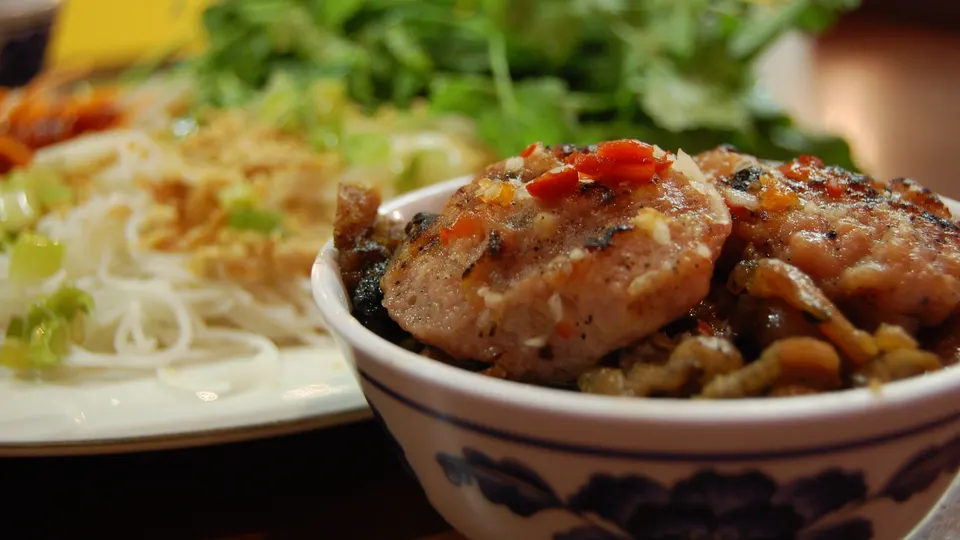
The three cards below are on or beside the route. Sam Cay Si, in Trung Yen alley just off the walk back to the lake, is a daytime fish-noodle stall; Bun Cha Ta on Nguyen Huu Huan serves bun cha, grilled pork with rice noodles, and MICHELIN lists it as open 8 am to 10 pm. For a wider choice by street and dish, see our guide on where to eat in the Old Quarter.
Common versus exception: most Old Quarter food stalls serve one dish and seat you on low stools at the pavement edge; a few, like Bun Cha Ta, have a proper dining room. Pay when you finish, and ask the price first if no menu is shown.
Walking safely: traffic, pavements and temples
Hanoi’s Old Quarter is compact but hard on attention. The pavements are often used for parking and cooking, so you will spend part of the walk in the road.
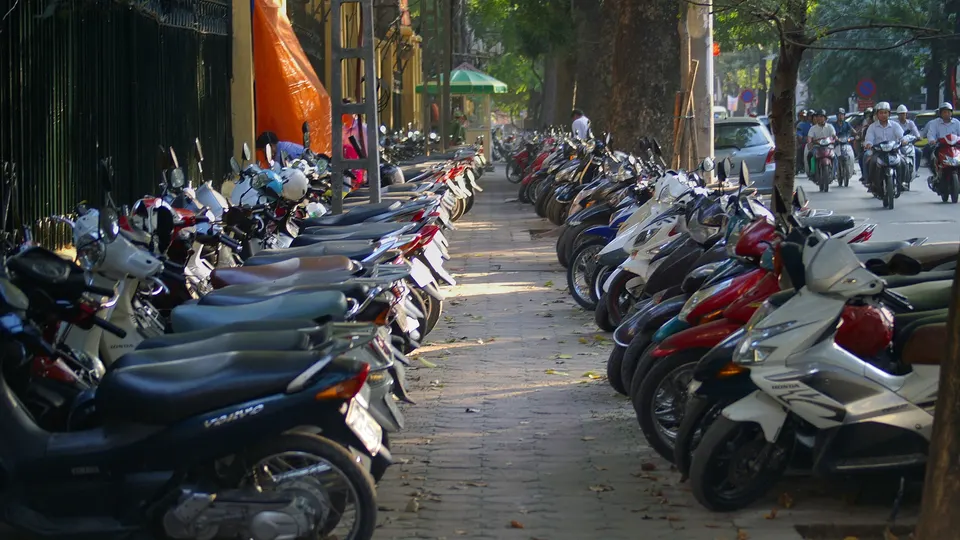
- Crossing the street: walk at a slow, steady pace and do not stop suddenly or run; riders steer around predictable pedestrians. Use the lights where they exist, around the lake.
- Dress for the temples: cover shoulders and knees for Bach Ma, Kim Ngan, Quan De and Ngoc Son, speak quietly and do not touch the altars or offerings.
- Shoes and weather: wear proper walking shoes. In winter, mornings can be cold and damp; our guide to Hanoi in winter explains what to wear. In summer, start earlier and carry water.
- Leave Train Street out: it lies just west of the quarter but is not an approved attraction; see our Hanoi Train Street status before you go.
Before you set off: a short checklist
Most problems on this walk come from timing, not distance. Five things to settle before you leave the hotel:
- Pick the day and start time from the first table: a weekday by 8:30 am for the classic loop, or Friday to Sunday from 7 pm for the evening version.
- Carry small notes: 20,000 dong per site and 50,000 dong for Ngoc Son, or buy e-tickets in the “Vietnam Travel” app (Nhan Dan).
- Save an offline map with the stops marked; street names change at almost every junction.
- Avoid the lunch gap: the ticketed relics close from 12 noon to 1:30 pm.
- Check for closures: opening hours change around Tet and public holidays, and city events sometimes close the streets around the lake.
If you are still choosing a base for the trip, staying in or next to the Old Quarter puts this walk on your doorstep; our guide to where to stay in Hanoi compares the areas.
Where to stop for coffee and lunch on the walk
Local favourite
Café Giảng · Cà phê Giảng
Hanoi · Old Quarter, Hoàn Kiếm ward (east side, near Hàng Bè)
39 Nguyễn Hữu Huân Street, at the end of a narrow alley
The family cafe founded by Nguyen Van Giang in 1946 and widely credited as the origin of Hanoi's egg coffee; a short detour from the start of the walk, before you turn up Hang Bac.
Order: Hot egg coffee (cà phê trứng), served in a bowl of hot water.
Many cafes copy the drink and the name. This card means the shop at 39 Nguyen Huu Huan.
Recommended by: VietNamNet (2024), Người Quan Sát (2024) · checked November 2026
Local favourite
Bún cá Sâm Cây Si
Hanoi · Old Quarter, Hoàn Kiếm ward
5 Ngõ Trung Yên (Trung Yên alley)
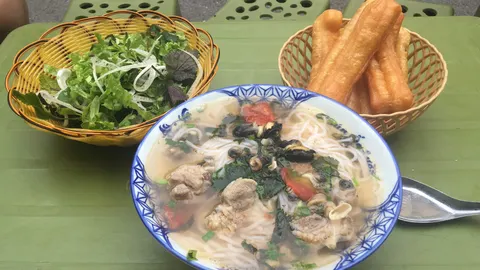
A daytime alley stall that VnExpress International says has drawn locals and visitors for about 30 years, for fried perch with noodles in a light, tangy broth of fish bones, pineapple and tomato; it sits just off the last stretch of the walk back to the lake.
Order: Bun ca (fish noodle soup) with a side of fish rolls (nem cá).
Recommended by: VnExpress International (2025), Saigoneer (2023) · checked November 2026
MICHELIN Guide pick
Bun Cha Ta · Bún chả Ta
Hanoi · Old Quarter, Hoàn Kiếm ward
21 Nguyễn Hữu Huân Street
Listed by the MICHELIN Guide, which calls it popular with tourists: smoky grilled pork and patties with rice noodles, crisp spring rolls (the crab roll is the one the inspectors single out) and a vegetarian tofu dish. The listing gives 8 am to 10 pm daily (checked 24 November 2026), so it works for a late lunch after the loop.
Order: Classic bun cha with a crab spring roll.
The MICHELIN listing names the Nguyen Huu Huan Street shop; this card means No. 21.
Listed in: MICHELIN Guide Vietnam · checked November 2026
Addresses and details can change; check before you go. We do not accept payment for listings.
Frequently asked questions
How long does it take to walk the Hanoi Old Quarter?
About three hours for a loop from Hoan Kiem Lake through Hang Bac, Ma May, Hang Buom, O Quan Chuong and Dong Xuan market and back, with short visits to four or five sites. A 90-minute version covering only Hang Bac, Ma May and Hang Buom gives a good first look.
Do I need tickets for the temples in the Hanoi Old Quarter?
Yes, for six sites. Since 2025 and early 2026, 87 Ma May, 22 Hang Buom, Bach Ma temple, Kim Ngan communal house, Quan De temple and the Old Quarter Cultural Exchange Centre at 50 Dao Duy Tu each charge 20,000 dong; children under 16 are free and students and over-60s pay half.
What time do the Old Quarter temples open in Hanoi?
The management board's published hours for Bach Ma, Kim Ngan, Quan De and 50 Dao Duy Tu are 8 am to 12 noon and 1:30 to 5:30 pm every day, plus 7 to 9 pm on Friday, Saturday and Sunday. Avoid arriving between noon and 1:30 pm.
Is it better to walk the Old Quarter in the morning or at night?
Go on a weekday morning to see the trade streets working and the relics open with few visitors. Go on a Friday to Sunday evening for the car-free streets around Hoan Kiem Lake (7 pm to midnight) and the Hang Dao night market, accepting crowds and a shorter list of open sites.
Can I include Hanoi Train Street in an Old Quarter walk?
It is close to the western edge of the quarter, but Hanoi Train Street is not an approved attraction, so this route leaves it out. Check its current status before going.
Key sources
- 4 di tích có thu phí tham quan tại phố cổ Hà Nội · Tuổi Trẻ, 4 Dec 2025
- Hà Nội: Bắt đầu thu phí tham quan 4 di tích tại phố cổ · Báo Lâm Đồng, 5 Dec 2025
- Áp dụng thêm hình thức vé điện tử tại 2 di tích trên địa bàn Thủ đô · Nhân Dân, 12 Jan 2026
- Từ 1/7, Hà Nội chính thức triển khai vùng phát thải thấp · Hànộimới, 1 July 2026
- Ngoc Son Temple: A historic spiritual haven in Hanoi · VnExpress International, 28 Jan 2025
- Ô Quan Chưởng - Cửa ô duy nhất còn lại của Hà Nội · Nhân Dân, 18 Oct 2024
- Hà Nội từng có 21 cửa ô · VnExpress, 25 Dec 2016
- Ha Noi offers free entry to 17 important historical sites until sixth day of Lunar New Year · Nhân Dân (English), February 2026
All 15 sources and further reading
- Hai điểm di tích trên phố cổ Hà Nội thu phí tham quan từ ngày 2/1/2025 · Báo Lào Cai (from Tin Tức), January 2025
- Tên gọi Ô Quan Chưởng có ý nghĩa gì? · VTC News, 7 Aug 2026
- Chợ đêm Hà Nội (Hanoi night market) travel guide · Vietnam Airlines
- [Infographic] Mức phí tham quan mới các danh lam thắng cảnh, di tích lịch sử của Hà Nội · Nhân Dân, 7 Dec 2023
- Bun Cha Ta (Nguyen Huu Huan Street) · MICHELIN Guide Vietnam
- Experience long-established cafés in Hanoi's Old Quarter · VietNamNet, 29 Apr 2024
- Eat like a local: 10 street food icons that have opened for more than 30 years in Hanoi · VnExpress International, 18 Oct 2025
Keep exploring
 North Vietnam · Travel Hanoi: How Many Days, What to See and When to Go Hanoi travel guide for 2026: how many days and where to stay, Noi Bai airport, walking-street hours, the new low-emission zone, Train Street and where to eat.
 North Vietnam · Culture Hanoi's 36 Streets: What the Names Mean and How to Walk Them What Hanoi's 36 streets really were, which Hang streets still sell what their names say, where the guild temples stand, and a self-guided Old Quarter walk.
 North Vietnam · Food Where to Eat in Hanoi Old Quarter: Best Restaurants 2026 Where to eat in Hanoi Old Quarter, re-checked November 2026: MICHELIN 2026 picks and local favourites by street, dish and time of day, plus a one-day plan.
 North Vietnam · Travel Hoan Kiem Walking Street 2026: Hours and When to Go Hoan Kiem walking street hours in 2026: the lake loop from 7 pm Friday to midnight Sunday, the Old Quarter night market evenings only, parking and holiday changes.