All three regions · Travel
Da Lat vs Sa Pa (Sapa): Which Should You Visit?
Da Lat vs Sa Pa: compare the two hill stations by season, cost, getting there and trip length, with November 2026 transport updates and 3-day plans.
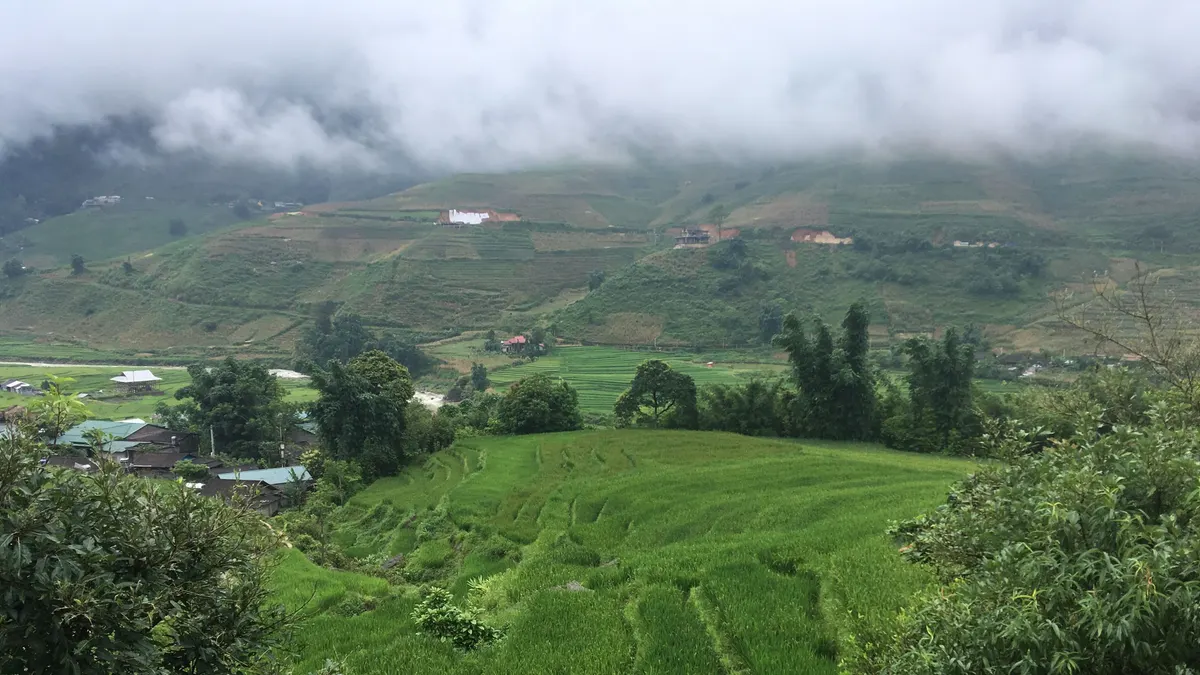
Choose Da Lat (Đà Lạt) if you want an easy, mild-weather break with lakes, pine hills, farms and good food; choose Sa Pa if you want to trek through rice terraces and stay in mountain villages. As of November 2026, Da Lat is the easier trip: its Lien Khuong airport reopened on 19 August 2026 after runway repairs, while Sa Pa still means one of three nightly trains from Hanoi to Lao Cai or a drive of 5 to 6 hours. Both are French-era hill stations at about 1,500 metres, but Da Lat is a city on a plateau in the Central Highlands that you can fly into, while Sa Pa is a small mountain town in the far north, a night train or a long drive from Hanoi.
This page puts the two side by side: seasons, getting there, what you actually do, sample three-day plans and the mistakes that spoil each trip. For the full picture of each place, read our Da Lat travel guide and our Sa Pa guide; the comparison here helps you decide which one to build your trip around.
Da Lat vs Sa Pa at a glance
Every entry is drawn from the sources cited in the sections below. Where sources disagree, the range is shown.
| Da Lat | Sa Pa | |
|---|---|---|
| Where | A plateau in the Central Highlands; Lam Dong province | Mountains of the far north-west; Lao Cai province |
| Altitude | About 1,500 m | About 1,500–1,650 m; Fansipan, Vietnam’s highest peak (3,143 m), nearby |
| Climate | Spring-like all year, chilly nights | Cool all year; chilly and misty December–March, occasional snow |
| Driest, easiest months | December–March | About March–May and September–November |
| Wettest months | April or May to September–November (sources differ) | June–August, with storms, flash floods and landslides |
| Getting there | Fly to Lien Khuong airport, about 30 km away; or about 300 km by road from Ho Chi Minh City over mountain passes | No airport: night train Hanoi–Lao Cai plus about an hour by road, or 5–6 hours by van or bus from Hanoi |
| How long | About 3 days | About 3 days, 2 nights |
| Main costs (as of November 2026) | Your flight, or the overnight sleeper bus from Ho Chi Minh City (the cheapest way up, per VnExpress) | Night train or van from Hanoi, plus the Fansipan cable car at 850,000 dong adult return (operator’s price, August 2026) |
| What you do | Lakes, French-era villas and railway station, flower, vegetable and coffee farms, Langbiang, canyoning, street food | Trekking between rice terraces and villages, homestays, Fansipan cable car, markets |
| People | Mostly Kinh in the city; K’Ho groups such as the Lach and Chil live at the foot of Langbiang | Seven main groups, among them Hmong, Dao, Tay and Kinh |
| Busiest | May–September for domestic visitors escaping the heat | Weekends, holidays and the golden-rice season |
| Admin since 1 July 2025 | Lam Dong now includes former Dak Nong and Binh Thuan; the former city is run as wards | Lao Cai now includes former Yen Bai; the six wards of Sa Pa town became one Sa Pa ward |
The provincial changes come from the National Assembly’s merger resolution, which took effect on 1 July 2025 (LuatVietnam). They change addresses, not what you will see.
Which should you choose: Da Lat or Sa Pa?
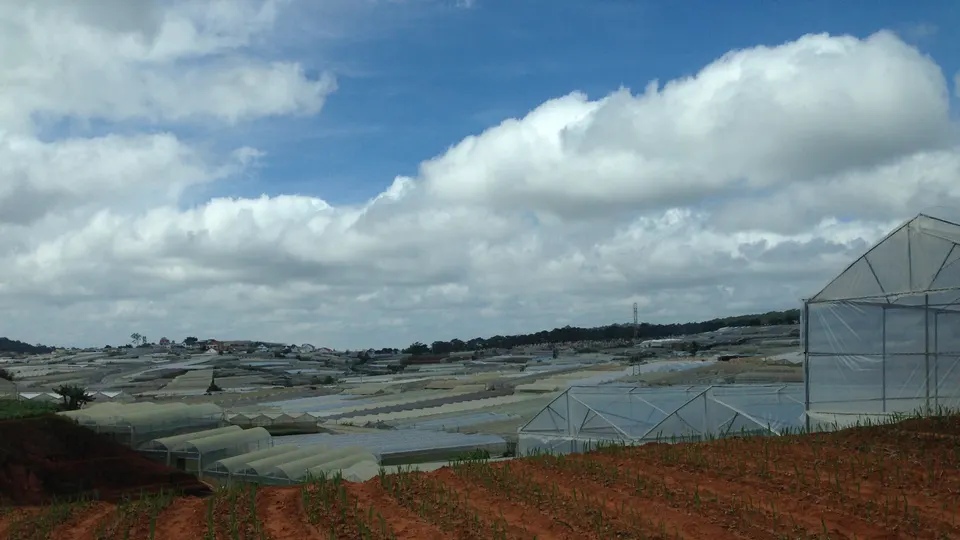
The quickest test is what you want to do with your days. Da Lat is a city break in cool air: you walk, eat, visit farms and cafes (cafés) and take short trips into the hills. Sa Pa is a walking trip: the reason to go is the terraced valleys below town and the villages of the people who farm them.
| If you… | Choose | Why |
|---|---|---|
| Have only 2–3 days and want little travel time | Da Lat | You can fly in; Sa Pa takes a night or most of a day each way from Hanoi |
| Want to trek and sleep in a village homestay | Sa Pa | Village treks and homestays are the heart of a Sa Pa visit |
| Travel from December to March | Da Lat | Its dry, sunny season; Sa Pa is chilly and misty then |
| Travel in late April–May or September–October | Sa Pa | Flooded terraces in the water-filling season, golden rice before the harvest |
| Travel with young children or older relatives | Da Lat | City sights close together, less walking on steep, muddy paths |
| Are already in the south (Saigon, Nha Trang) | Da Lat | The nearest highlands; Sa Pa means flying to Hanoi first |
| Are already in Hanoi or doing a northern loop | Sa Pa | It fits a route with Ha Long Bay and Ninh Binh |
| Care most about food and cafes | Da Lat | Highland street food, hotpot and locally grown coffee |
| Want to stand on Vietnam’s highest peak | Sa Pa | The Fansipan cable car reaches near the 3,143 m summit |
Choose Da Lat if you want comfort, short transfers, a mild climate in the northern winter and a trip built around food, flowers, coffee farms and colonial architecture. Choose Sa Pa if you want mountain scenery on foot, are happy with cold mornings and simple homestays, and travel in the spring or autumn when the terraces are at their best.
How do the seasons and weather compare, month by month?
The two run on different calendars. Da Lat’s best months are the dry season from December to March, when the national tourism authority (VNAT) describes it as dry, cool and sunny. Sa Pa’s best months are spring and autumn; its winter is genuinely cold and its summer stormy.
There is no official long-term weather series for either town in the international data we use, so the table below sets out the seasons as Vietnam’s tourism authority and VnExpress’s 2026 destination guides describe them, not average temperatures.
| Months | Da Lat | Sa Pa |
|---|---|---|
| December–February | Dry, cool and sunny; chilly nights | Chilly, misty and cloudy; harvest over; occasional snow on the peaks, rarely in town |
| March | Still dry and sunny | Warming up; spring flowers |
| April | Rains begin, according to VNAT’s weather guide; other sources start them in May | Warm, clear and sunny; VNAT calls late April “near-perfect” |
| May | Rainy season under way in every source | Water-filling season on the terraces, late April into May and sometimes June |
| June–August | Rainy; also Da Lat’s busiest period for domestic tourists | Stormy, warm and humid; green terraces; flash floods and landslides |
| September | Rainy; the end of the rains varies by year | Cool and clearer; rice starts to turn gold |
| October–November | Rains ending at some point, depending on the year and source | Cool, clear and dry; golden rice and harvest, early October especially |
Where the sources disagree on Da Lat. VNAT’s weather guide gives Da Lat’s rains as April to October (VNAT), its Da Lat page May to October, and VnExpress’s Da Lat guide, updated in April 2026, May to September, calling October to December the dry, cold season. Treat April–May and September–November as transition months, and expect some rain.
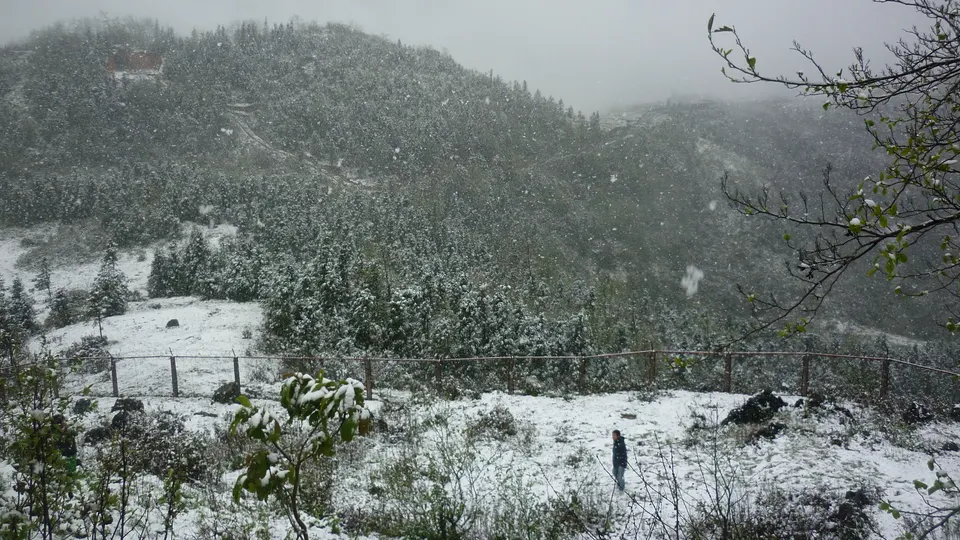
Sa Pa in detail. VNAT lists Sa Pa as chilly, misty and cloudy from December to March, warm and clear from April to June, stormy and humid from June to August, and cool, clear and dry from September to November. VnExpress’s Sa Pa guide, updated in April 2026, advises avoiding the storm season from June to early August, when flash floods and landslides occur. Vietnam (Việt Nam) News puts the water-filling season in the north-western mountains from late April into May and even June. Snow is rare enough to make the news: on 31 January 2018 it spread from Fansipan to Sa Pa town, where the temperature fell to 1.2 °C, Tuoi Tre (Tuổi Trẻ) News reported. The government’s online newspaper describes Sa Pa as having “4 seasons” in a single day, from a spring-like morning to a cold night, so pack layers in every month.
Crowds. VnExpress calls May to September Da Lat’s peak season, when visitors come to escape the heat. Sa Pa ward expected more than 4.93 million visitors in 2025, Doanh nghiep va Hoi nhap (Doanh nghiệp và Hội nhập) reported; its trains and vans fill first on weekends, public holidays and in the golden-rice season. Events add to that: Sa Pa’s “Sa Pa – Essence of Convergence” cultural week runs on 21–24 November 2026 with ethnic performances and craft exhibitions, Viet Nam News reported on 4 November, and the 11th Da Lat Flower Festival is due to open on 19 December 2026, according to VietnamPlus on 13 October. For how these months fit with the rest of the country, see Vietnam weather by month and our guide to the best time to visit Vietnam by region.
What do you actually do in each?
In Da Lat you mostly stay in or near the city; in Sa Pa you mostly leave the town on foot. That difference shapes your packing, your fitness needs and your budget for guides.
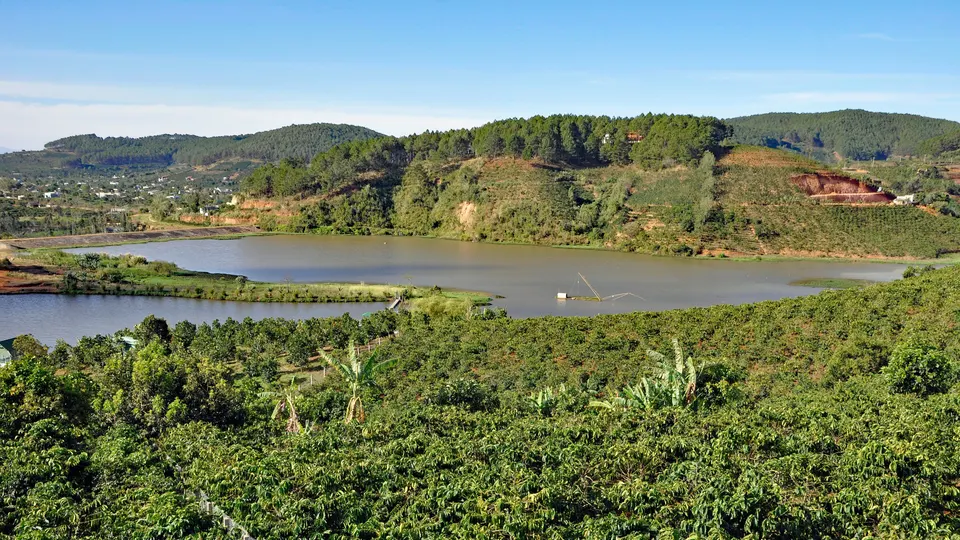
Da Lat. VNAT calls Xuan Huong (Xuân Hương) Lake the focal point of the city and points visitors to the central market, packed with flowers and produce, to coffee grown on the slopes around town (one farm, K’Ho Coffee, offers tours of its farm and roastery), and to hiking, mountain biking, canyoning and trails on Langbiang mountain. The yellow railway station was built by the French from 1932 to 1938 and is a national historical relic; a roughly 7 km stretch of line to Trai Mat (Trại Mát) was revived for tourist trains in 1991, VTV reports. The plateau’s oldest communities are the Lach (Lạch) and Chil groups of the K’Ho, a few thousand people who live mainly in villages at the foot of Langbiang, Nhan Dan (Nhân Dân) reports. VnExpress adds Datanla waterfall, Tuyen Lam (Tuyền Lâm) Lake, Da Phu (Đa Phú) hill and the tea hills of Cau Dat (Cầu Đất) for watching the clouds, and dishes such as lau ga la e (lẩu gà lá é), chicken hotpot with a local herb. Our Da Lat guide explains the city’s history, flowers and food in detail.
Sa Pa. The town sits at 1,500 to 1,650 metres and is home to seven major ethnic groups, among them Hmong, Dao, Tay and Kinh, according to Bao Chinh phu (Báo Chính phủ). VNAT recommends booking an overnight trek through the terraces with a homestay, and notes that Cat Cat (Cát Cát) and Ta Phin (Tả Phìn) can be visited without a guide. VnExpress puts Cat Cat, a Hmong village, about 2 km from the centre and the Lao Chai (Lao Chải)–Ta Van (Tả Van) area about 10 km away, worth a full day. Above it all, the Fansipan cable car, opened in February 2016, is 6,282 m long and climbs 1,410 m to near the 3,143 m summit in about 15 minutes, a climb that usually took two days on foot (Tuoi Tre News). Sun World, the operator, listed the return fare at 850,000 dong for adults and 550,000 dong for children in its guide of 3 August 2026.
| Experience | Da Lat | Sa Pa |
|---|---|---|
| Walking | Lakeside and town walks; Langbiang trails | Village-to-village treks through terraces, often muddy |
| Culture | French-era villas, station and palaces; K’Ho villages at the foot of Langbiang | Hmong, Dao, Tay, Giay and other communities; homestays |
| Nature | Pine hills, lakes, waterfalls, flower farms | Terraced valleys, Fansipan, cloud seas |
| Food and drink | Street food, chicken hotpot, local coffee | Grilled skewers, salmon and sturgeon hotpot |
| Adventure | Canyoning, mountain biking | Multi-day treks; the climb or cable car to Fansipan |
How do you get there, and how long do you need?
Da Lat is easier to reach: you can fly in. Sa Pa has no airport, so every visit starts with the overland trip from Hanoi.
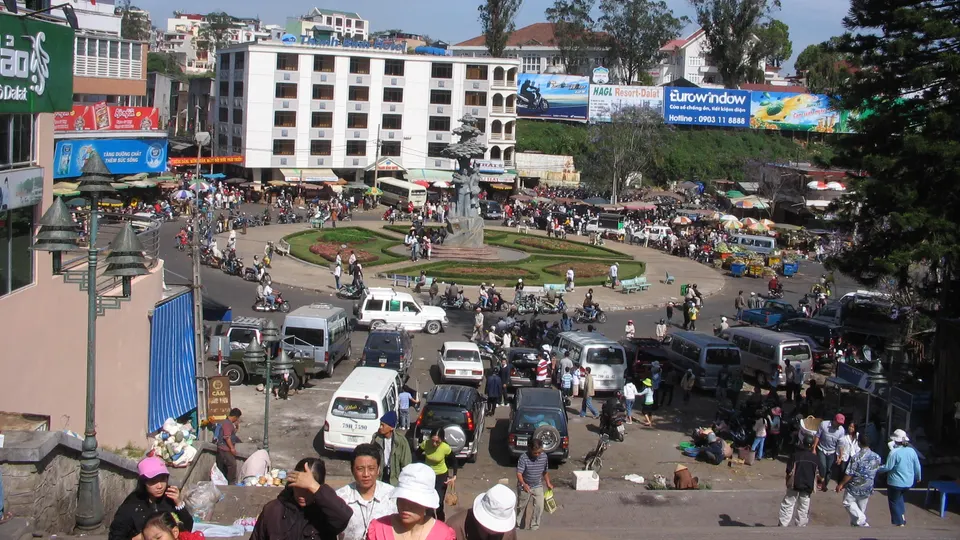
Da Lat. Lien Khuong airport, about 30 km from the city, has flights from Hanoi and Ho Chi Minh City, VNAT says. It closed on 4 March 2026 for runway and taxiway repairs and reopened at 00:01 on 19 August 2026 (VTC News), with routes being restored gradually, so check that yours is flying. By road, Da Lat is about 300 km from Ho Chi Minh City, and VnExpress names the overnight sleeper bus, arriving early in the morning, as the cheapest way up, and our guide to getting from Saigon to Da Lat compares it with the flight and a car; VNAT also points to buses from Nha Trang. The roads climb mountain passes: as of late October 2026 the Prenn pass, one of the main roads into the city, was down to two of its four lanes at 40 km/h for emergency landslide works expected to take about four months, VietnamPlus reported.
Sa Pa. VNAT’s advice is to take the night train or the expressway from Hanoi to Lao Cai, then a short transfer up to the town. Since 10 October 2026 three night trains run every evening, leaving Hanoi at 21:45, 22:00 and 22:40 and reaching Lao Cai between 05:20 and 06:27, Bao Lao Cai (Báo Lào Cai) reported. By van or bus on the expressway, VnExpress puts the trip at 5 to 6 hours. Our guide to getting from Hanoi to Sa Pa compares the options, fares and the Lao Cai transfer.
How long to stay. About three days for each. Our Da Lat guide plans three days in and around the city, with a fourth in reserve if you come by road in the rainy season. VnExpress suggests about three days and two nights for Sa Pa’s main sights; add the travel nights or days from Hanoi on top, because Sa Pa is not a day trip.
What does a three-day trip look like in each?
Both plans assume you arrive the evening before or early on day 1. Opening times, train departures and trekking conditions change, so check them locally the day before.
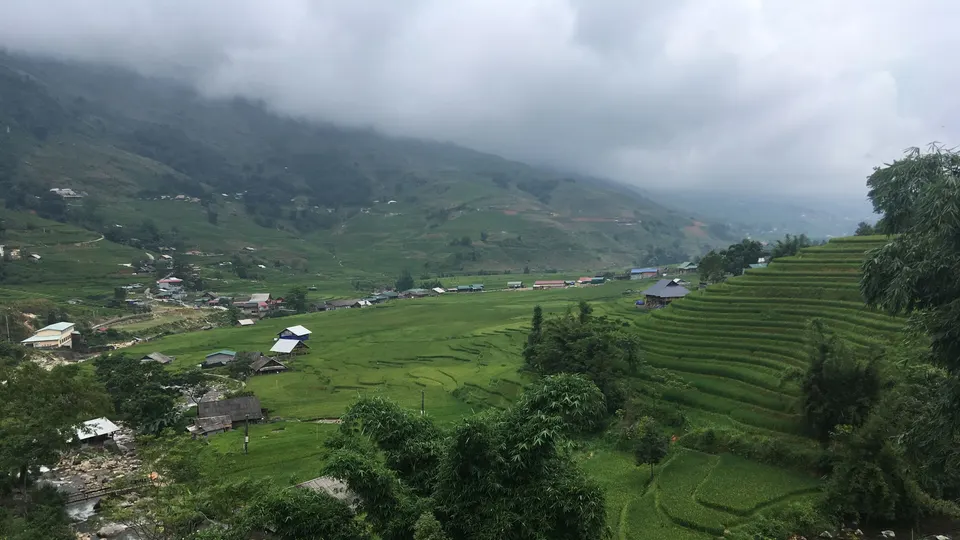
Three days in Da Lat
| Day | Morning | Afternoon and evening |
|---|---|---|
| 1. The centre | Walk around Xuan Huong Lake | Central market for flowers and produce; street food after dark |
| 2. Railway and history | The 1930s railway station and the tourist train to Trai Mat | French-era villas and palaces; cafes in the evening |
| 3. Out of town | Langbiang mountain, or canyoning | A coffee or flower farm visit; or the tea hills at Cau Dat to watch the clouds |
Three days in Sa Pa (two nights)
| Day | Morning | Afternoon and evening |
|---|---|---|
| 1. Arrive and the town | Arrive from the night train via Lao Cai around dawn; rest, breakfast | Walk down to Cat Cat, about 2 km from the centre |
| 2. Trek the valley | Trek with a local guide through the Muong Hoa (Mường Hoa) valley towards Lao Chai and Ta Van | Night in a village homestay |
| 3. Fansipan or a shorter walk | Fansipan cable car if the summit is clear; otherwise Ta Phin | Van back to Hanoi, or the night train from Lao Cai |
VnExpress’s Sa Pa guide suggests giving the Lao Chai–Ta Van area a full day (VnExpress). Keep the Fansipan day flexible: the summit is often in cloud, and a clear morning is worth waiting for. In Sa Pa, ask before photographing people and do not buy from child vendors; our Sa Pa guide explains why.
Can you combine Da Lat and Sa Pa on one trip?
You can, but they are at opposite ends of the country, so you will fly at least once between them. Sa Pa fits a northern loop from Hanoi; Da Lat fits a southern or central route with Ho Chi Minh City or the Nha Trang coast.

The link is a flight. After Lien Khuong reopened, Lam Dong’s plan was to stabilise domestic routes to Ho Chi Minh City, Hanoi, Da Nang, Vinh, Hai Phong and Can Tho within 90 days (VOV). A Hanoi–Da Lat flight therefore joins a northern section (Hanoi, Sa Pa, Ha Long Bay) to the highlands, and a Da Lat–Da Nang flight joins them to the central coast; check that the route you want is flying.
Time. With three days in each, the two travel nights to and from Sa Pa and a flight day, the pair takes about eight days on its own. Our two-week Vietnam itinerary shows that two weeks from Hanoi to the Mekong Delta already leaves no room for the northern mountains without cuts, so combine the two hill stations only on a longer trip or one focused on the highlands.
Seasons. The best overlap is March: Da Lat is still in its dry season and Sa Pa is warming up with spring flowers. In October and November Sa Pa is at its golden best while Da Lat’s rains are ending, depending on the year. Between December and February, pack for real cold in Sa Pa and mild days in Da Lat; our North Vietnam hub and Central Vietnam hub show what else fits each half.
Common mistakes when choosing between them
Most disappointments come from picking the right place in the wrong season, or from underestimating the travel.
- Treating Sa Pa as a quick add-on. The trip from Hanoi takes a night or most of a day each way. With fewer than three days to spare, Da Lat (or a day trip from Hanoi) is the better choice.
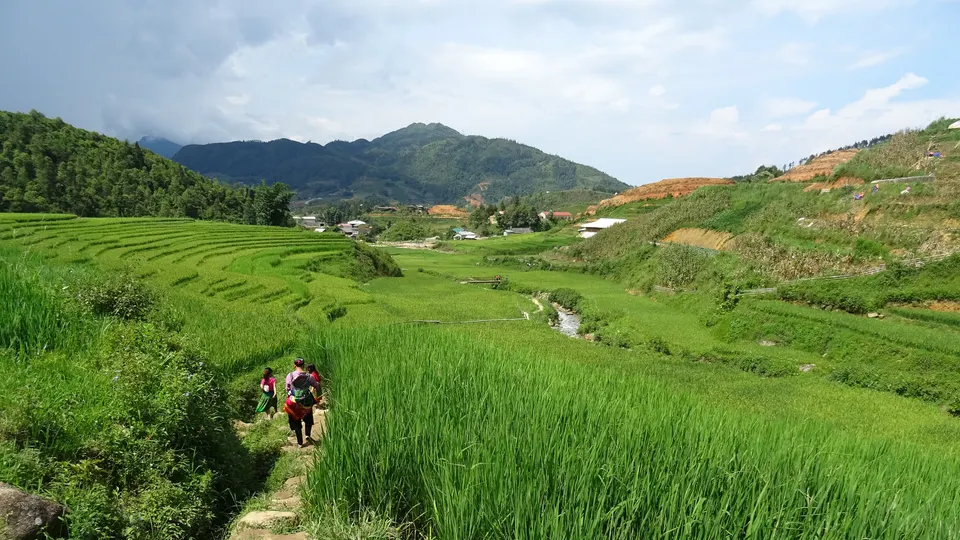
- Expecting golden terraces in winter or summer. The rice is gold roughly from September to November and the terraces are flooded in late April and May; in winter the fields are bare and in summer they are green and wet.
- Planning a trip around snow. Snow in Sa Pa is occasional and makes the news when it falls; cold, damp mist is far more likely from December to March.
- Going to Sa Pa from June to early August without slack. VnExpress warns of storms, flash floods and landslides in those months; leave a spare day before any flight.
- Driving into Da Lat in heavy rain. The mountain passes are where landslides happen; in 2026 the Prenn pass had emergency works from the autumn. Fly in the rainy season if you can.
- Assuming Da Lat is quiet in summer. May to September is its peak season for domestic visitors escaping the lowland heat, so book rooms ahead.
- Packing for the tropics. Both towns have cool evenings all year; Sa Pa needs a warm jacket from December to March, Da Lat a light one in any month.
Before you book: a short checklist
Run through this once you have chosen, and recheck transport close to your date.

- Match the month: December–March favours Da Lat; late April–May and September–November favour Sa Pa.
- Da Lat by air: confirm your route into Lien Khuong is flying. By road: check the passes on the day in the rainy season.
- Sa Pa by train: book a berth on one of the three night trains to Lao Cai and plan the road leg up; by van: confirm pick-up and drop-off points.
- Days: three in each, plus travel days for Sa Pa.
- Clothes: layers for both; real winter clothing for Sa Pa from December to March; rain gear for Da Lat from April or May and for Sa Pa in summer.
- Holidays: both fill up over Tet and long weekends, and Da Lat in summer; book early. Our Vietnam in December guide covers the year-end events in both towns.
- Addresses: since July 2025 Sa Pa’s six former town wards have formed one Sa Pa ward, and nearby villages sit in Ta Van and Ta Phin communes (Government of Viet Nam); Da Lat’s centre is now Xuan Huong – Da Lat ward, formed from five central wards, VietnamPlus reported. Older signs and guides still use the former names.
For more planning across the country, from visas to transport and itineraries, start at our Vietnam travel planning hub.
Frequently asked questions
Is Sapa colder than Da Lat in winter?
Yes. Vietnam's tourism authority describes Sa Pa as chilly, misty and cloudy from December to March, with occasional snow in January, while Da Lat stays spring-like all year with chilly nights. Pack a real winter layer for Sa Pa and a light jacket for Da Lat evenings.
Which should I visit in December, Da Lat or Sapa?
Da Lat, for most travellers: December starts its dry, cool, sunny season, and the 11th Da Lat Flower Festival is due to open on 19 December 2026, VietnamPlus reported. Sa Pa in December is cold and often misty, with the rice harvest over.
How much is the Fansipan cable car from Sapa?
Sun World, the operator, listed a return ticket at 850,000 dong for adults and 550,000 dong for children from 1 m to under 1.4 m in its guide of 3 August 2026; children under 1 m ride free. Check the current fare on the operator's site before you go.
Do I need a guide to trek around Sapa?
Not for the nearest villages: Vietnam's tourism authority says Cat Cat and Ta Phin can be visited without a guide. For longer treks through the Muong Hoa valley with a night in a homestay, it recommends booking an overnight trek.
Can I visit both Da Lat and Sapa on one trip?
Yes, but they sit at opposite ends of Vietnam, so you link them by a flight between Hanoi and Da Lat or Ho Chi Minh City. With about three days in each plus travel days, the pair takes about eight days and suits trips of two weeks or more.
Key sources
- Resolution 202/2025/QH15 on the reorganization of provincial-level administrative divisions · LuatVietnam (text of the National Assembly resolution, 12 June 2025)
- Toàn văn Nghị quyết số 1673/NQ-UBTVQH15 sắp xếp các ĐVHC cấp xã của tỉnh Lào Cai năm 2025 · Government of Viet Nam (xaydungchinhsach.chinhphu.vn), June 2025
- Phường trung tâm lớn nhất của tỉnh Lâm Đồng tổ chức Đại hội Đảng bộ · VietnamPlus (VNA), 30 July 2025
- Weather and climate in Vietnam · Vietnam National Authority of Tourism (vietnam.travel), checked 8 November 2026
- Cẩm nang du lịch Sa Pa · VnExpress, updated 16 April 2026
- Vietnam inaugurates world's longest 3-rope cable car system · Tuổi Trẻ News, 4 February 2016
- Từ ngày mai, sân bay Liên Khương được khai thác trở lại · VTC News, 18 August 2026
- Lâm Đồng phục hồi, mở rộng các đường bay quốc tế · VOV, 21 July 2026
All 22 sources and further reading
- Sapa · Vietnam National Authority of Tourism (vietnam.travel), checked 8 November 2026
- Da Lat · Vietnam National Authority of Tourism (vietnam.travel), checked 8 November 2026
- Kinh nghiệm du lịch Đà Lạt · VnExpress, updated 21 April 2026
- SaPa – town in clouds of Viet Nam · Government of Viet Nam online newspaper (baochinhphu.vn), 3 August 2020
- Water-filling season turns northwestern rice fields into a masterpiece · Việt Nam News, 22 May 2026
- Snow blankets Vietnam's Sa Pa (photos) · Tuổi Trẻ News, 1 February 2018
- Làng ca sĩ dưới chân núi mẹ · Nhân Dân, 27 May 2022
- Da Lat city's century-old railway station doubles as tourist draw · VTV, 10 May 2026
- Lâm Đồng: Gấp rút khắc phục sạt lở trên đèo Prenn, bảo đảm an toàn giao thông · VietnamPlus (VNA), 27 October 2026
- Tuyến đường sắt Hà Nội - Lào Cai tăng lên 3 đôi tàu khách mỗi ngày, thêm lựa chọn cho du khách · Báo Lào Cai, 11 October 2026
- Phường Sa Pa (Lào Cai) đặt mục tiêu đón 12,2 triệu lượt du khách vào năm 2030 · Doanh nghiệp và Hội nhập, 11 August 2025
- Festival Hoa Đà Lạt 2026: Kết nối sắc hoa, đánh thức tiềm năng du lịch Lâm Đồng · VietnamPlus (VNA), 13 October 2026
- Sa Pa to host cultural week to attract year-end visitors · Việt Nam News, 4 November 2026
- Bỏ túi cẩm nang du lịch Fansipan từ A đến Z chi tiết nhất 2026 · Sun World Fansipan Legend (operator), 3 August 2026
Keep exploring
 Central Vietnam · Travel Da Lat (Dalat), Vietnam: Where It Is, When to Go, How Long Where is Da Lat (Dalat)? A cool highland city 300 km from Saigon: how many days you need, month-by-month weather, the airport transfer and 2026 roadworks.
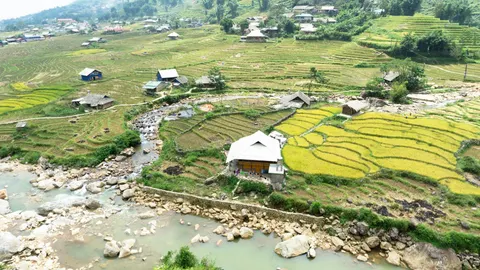 North Vietnam · Travel Sa Pa (Sapa): When to Go, How Many Days and What to See Sa Pa (Sapa) trip planner: when to see golden or flooded rice terraces, how many days to stay, which Hmong and Dao villages to visit, and Fansipan in brief.
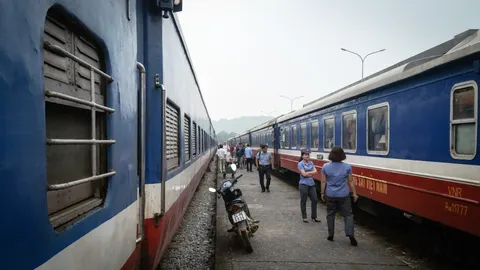 North Vietnam · Travel Hanoi to Sapa: Train, Sleeper Bus or Van – Which to Book? Hanoi to Sapa as of November 2026: night train to Lao Cai, sleeper bus, limousine van or car compared by time and fare, plus the transfer, road works and Tet.
 North · Central · South · Travel Best Time to Visit Vietnam: Which Month for Which Region Which month to visit Vietnam: March–May for a whole-country trip, dry seasons by region, the November 2026 flood outlook for Hue and Hoi An, and Tet 2027 dates.