Central Vietnam · Culture
Hon Chen Temple (Hòn Chén) in Hue: Is It Worth Visiting?
Hon Chen temple in Hue: who the goddess Thien Y A Na is, the 2026 festival dates, the 50,000 dong ticket, hau dong rituals and how to get there by boat or road.
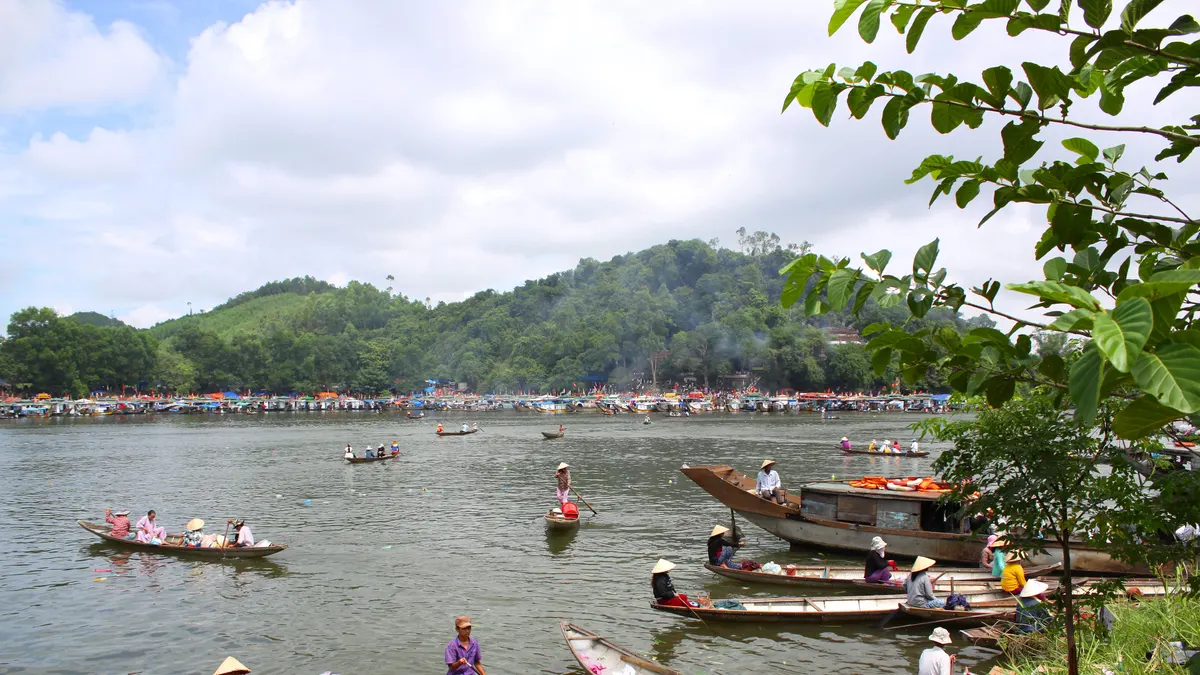
Hon Chen (Hòn Chén) temple is Hue’s shrine to the Holy Mother Thien Y A Na (Thiên Y A Na), a goddess who began as the Cham deity Po Nagar, and it is worth a visit for anyone curious about the folk religion that still fills Vietnam’s temples. Its festival, held twice a year on the Perfume River, is on Vietnam’s national intangible heritage list; in 2026 the autumn rites ran from 20 to 22 August, with 20,000–30,000 participants expected and free entry to the temple from 18 to 22 August (VietnamPlus).
This page explains who the goddess is, why a Cham deity is worshipped in the old imperial capital, what happens at the festival and how to visit on an ordinary day. For the city as a whole, start with our Hue guide; for the river trip that usually brings visitors here, see the Perfume River boat guide.
Hon Chen at a glance
| Hon Chen temple (Hue Nam temple) | |
|---|---|
| Where | Ngoc Tran (Ngọc Trản) hill on the Perfume River, upstream of central Hue; Kim Long ward, Hue city |
| Official name | Hue Nam (Huệ Nam) temple, given by Emperor Dong Khanh after 1886; earlier “Ngoc Tran Son Tu”, the shrine on Ngoc Tran hill |
| Who is worshipped | The Holy Mother Thien Y A Na (the Cham goddess Po Nagar), with Lieu Hanh since 1954, the Buddha, Quan Cong and more than 100 other spirits |
| Ticket | 50,000 dong adults, children 7–12 free (2025 fee list, unchanged for 2026) |
| Festival | 2nd–3rd day of the third lunar month and early in the seventh lunar month; in 2026: 18–19 April and 20–22 August |
| Heritage status | National intangible heritage (festival), December 2024; part of UNESCO-listed Mother Goddess worship (2016) |
| Getting there | Dragon boat from Hue after Thien Mu pagoda, or by car, taxi or motorbike |
Is Hon Chen temple worth visiting?
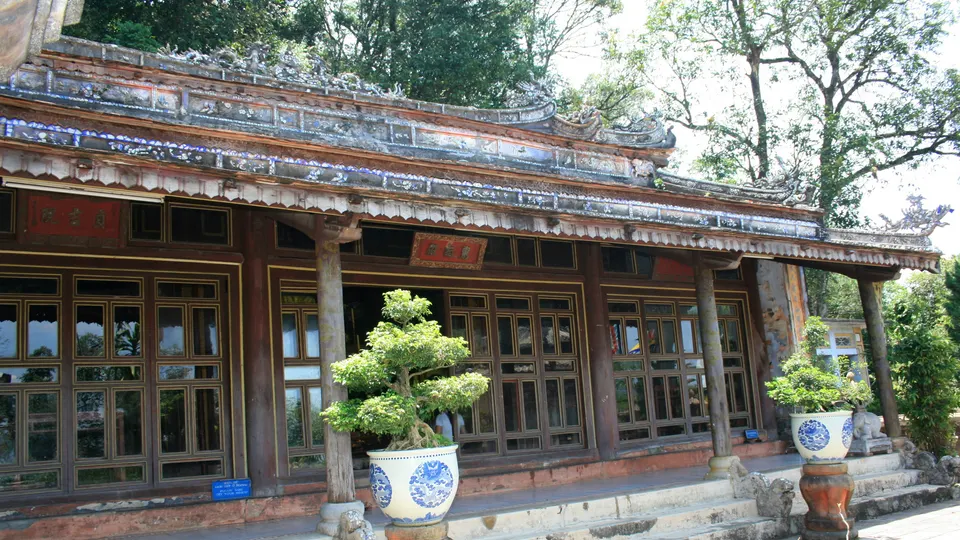
Yes, if you want to see Vietnamese folk religion at work rather than another imperial monument. Hon Chen is not grand: the Hue city tourism portal describes a cluster of about ten large and small buildings set halfway up Ngoc Tran hill under tall trees, with the main hall, Minh Kinh Dai, in the middle and a water-spirit altar, Thuy Phu, down at the river’s edge. What makes it different is that it is the only temple in Hue that combines court ritual with folk belief and festival with spirit-medium rites, VietnamPlus notes, and its late-19th-century decoration is among the finest of its kind.
The ticket is cheap. The Hue Monuments Conservation Centre’s fee list, published by Tuoi Tre in August 2025, puts Hon Chen in its lowest band with Thieu Tri’s tomb, the Royal Antiquities Museum, An Dinh palace and the Nam Giao altar: 50,000 dong for adults and free for children aged 7 to 12 (Tuoi Tre). Hue’s fee resolution for 2026 left single-site prices unchanged, Bao Van Hoa reported in December 2025.
| Your trip | Hon Chen? | Why |
|---|---|---|
| One day in Hue | Skip | The Imperial City and one tomb fill the day |
| Two days, boat trip planned | Add it after Thien Mu | Same boat, a longer stretch upriver, small ticket |
| Interested in religion, ritual or the Cham | Go | The clearest place in Hue to see Mother Goddess worship and its Cham roots |
| In Hue in the third or seventh lunar month | Go for the festival | Boat processions, offerings and hau dong rituals on and beside the river |
| Travelling with small children or limited mobility | Think twice | The temple sits halfway up a hill, and festival days are crowded |
If you have two or three days, our Hue itinerary shows where a river morning fits.
Who is Thien Y A Na, the goddess of Hon Chen?
Thien Y A Na is the name Vietnamese gave to Po Nagar, the Cham “Mother of the Land”. According to VietnamPlus’s April 2026 history of the temple, the site was once a place where the Cham worshipped Po Nagar; Vietnamese followers of the Thien Tien Thanh Giao (Thiên Tiên Thánh giáo) sect continued to worship her as the Holy Mother, and Confucian scholars wrote her Cham name in four Chinese characters that sound similar: Thien Y A Na. In the legend told at festival time, she created the land, trees and precious woods, rice and maize, and taught people how to farm, Dai Bieu Nhan Dan reported in 2025.
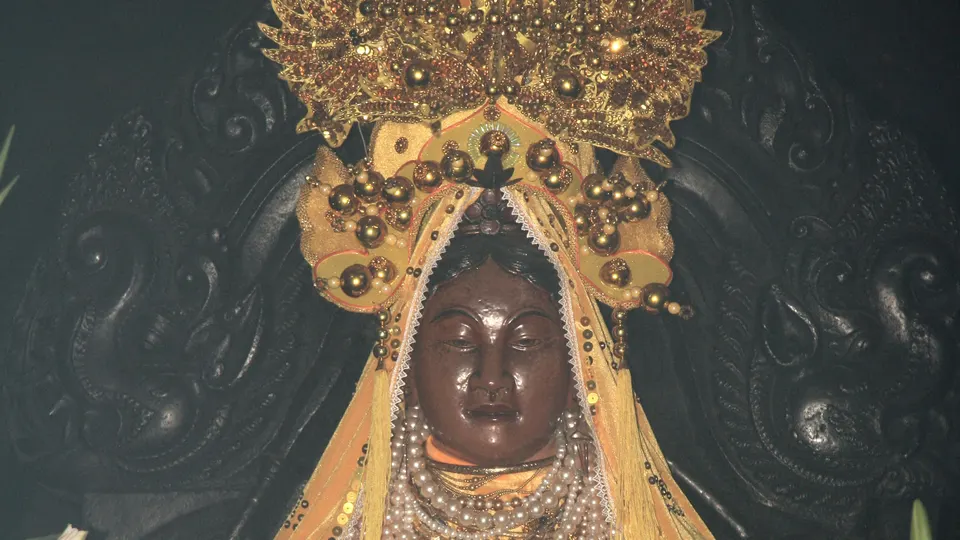
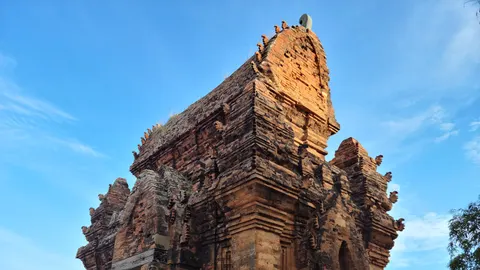
The same goddess is still honoured at the Po Nagar towers in Nha Trang, a Cham sanctuary that never stopped being used. Khanh Hoa province held the 2026 Po Nagar festival from 5 to 11 May, the 19th to 25th days of the third lunar month, with a bathing ceremony and a change of the goddess’s clothes, in honour of “Mother Thien Y Ana”, revered as the Mother of the South Central region (Khanh Hoa portal). Our Champa heritage guide explains how Cham shrines like Po Nagar passed to Vietnamese worship, and the Nha Trang guide covers a visit to the towers.
A debated origin. Not every account starts with the Cham. Heritage, Vietnam Airlines’ magazine, describes the shrine as originally a small one for the guardian goddess of Ngoc Tran hill, which only later grew into the royal-patronised temple seen today. Both views agree that by the 19th century the hill was sacred to a female deity identified with Thien Y A Na.
Jade cup or golden spittoon: how the temple got its names
The popular name Hon Chen, “cup hill”, comes with competing legends. One, retold by VietnamPlus and the Hue tourism portal, says the temple was once called Hoan Chen, “the cup returned”: Emperor Minh Mang (Minh Mạng) dropped a jade cup into the river here, and a huge turtle surfaced and gave it back. Heritage magazine tells a different story, of Emperor Thieu Tri (Thiệu Trị) praying to the goddess after a concubine dropped a gold spittoon overboard, which then floated up. The portal adds a geographic explanation: a small hollow at the top of the hill holds rainwater like a cup. Treat all three as local lore; none is documented history.
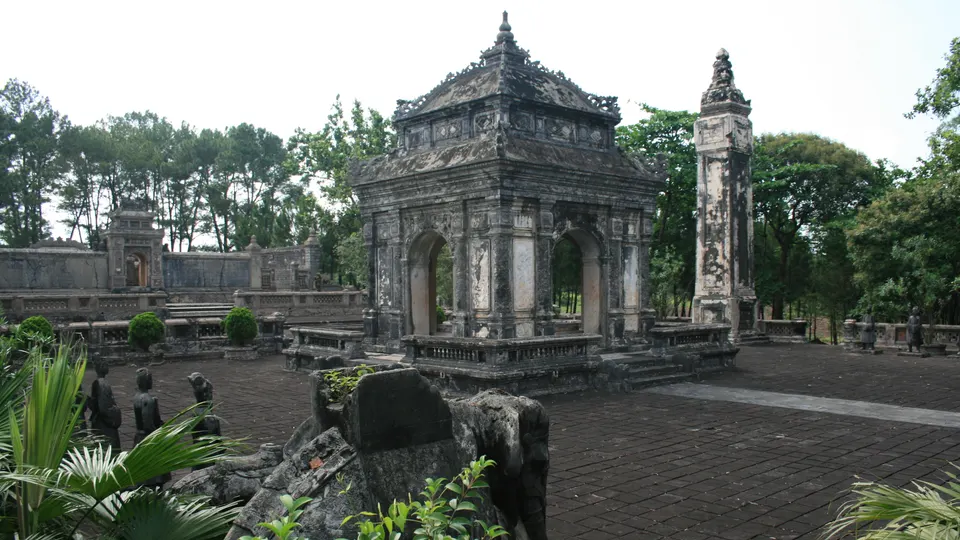
The documented history is about royal favour. In the official decrees of the Nguyen emperors the temple appears as Ngoc Tran Son Tu, the shrine on Ngoc Tran hill. Minh Mang had it repaired and enlarged in March 1832 and restored again in 1834. Between 1883 and 1885, while the future Emperor Dong Khanh (Đồng Khánh) waited to see whether he would succeed Tu Duc, his mother went to the shrine to ask the goddess, who answered that he would. After his accession in 1886 he rebuilt the temple, added ritual objects and renamed it Hue Nam, “grace for the South”, in thanks (VietnamPlus). Since 1954 the princess-goddess Lieu Hanh (Liễu Hạnh) has also been worshipped here, alongside the Buddha, the general Quan Cong and more than 100 other spirits.
That layering is visible today. Heritage describes the goddess’s sanctuary as three halls aligned one behind another facing the river, with Hue’s double roofs, glazed tiles, porcelain inlay on the ridges and phoenix motifs, the emblem of a female deity. Dong Khanh’s own tomb, a quiet stop near Tu Duc’s, is covered in our royal tombs guide.
The Hue Nam festival and hau dong: what happens and when
The Hue Nam festival is held twice a year, early in the third lunar month and early in the seventh, and VietNamNet reported in December 2024 that the Ministry of Culture had added it to the national intangible heritage list, calling it a festival that draws tens of thousands of followers (VietNamNet). Hue people call it the Mother’s festival; an old saying quoted by Heritage runs “the seventh month for the Father, the third month for the Mother”.
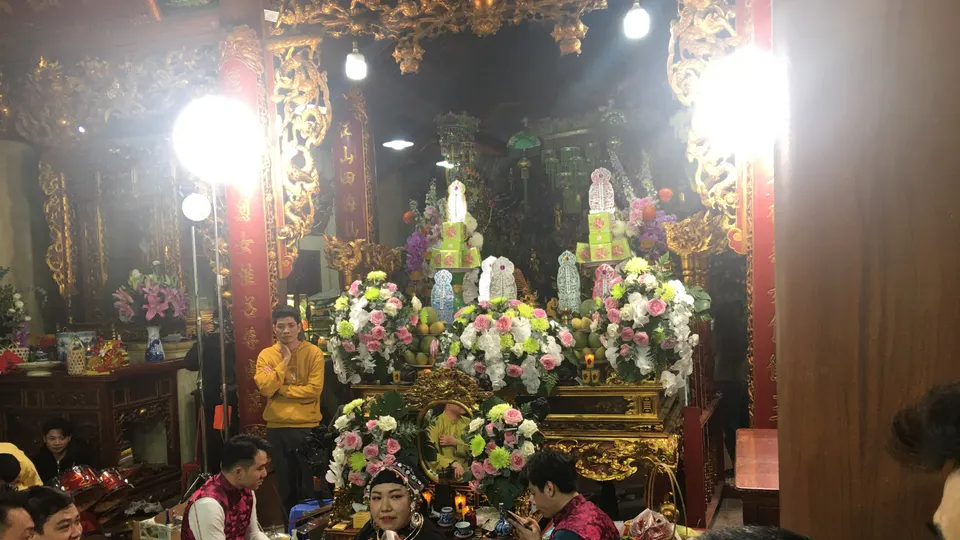
The spring festival (third lunar month). On 18 April 2026, the 2nd day of the third lunar month, a land procession set off from the Thien Tien Thanh Giao sanctuary at 352 Chi Lang street, crossed Gia Hoi bridge and walked more than 2 km along Tran Hung Dao street to Thuong Bac park on the river. There the goddess’s palanquin and the chest of royal decrees went aboard decorated boats, called bang (bằng) and an (án), for the trip upstream to the temple. Nhan Dan counted about 5,000 participants and more than 35 boats; VnEconomy put it at more than 6,000 people and 30–40 boats. It was the fourth year the land procession had been revived.
The autumn festival (seventh lunar month). The larger festival follows the same pattern and adds the village. In 2025 it ran from 30 August to 1 September (the 8th to 10th of the seventh lunar month), with nearly 40 boats despite heavy rain; in 2026 it ran from 20 to 22 August. After the opening at 352 Chi Lang and the main offering at the temple, the goddess and the spirits of the Four Palaces are carried to the communal house of Hai Cat (Hải Cát), the village beside the temple where she is the guardian deity, for a night of rites before returning to Hon Chen.
Hau dong. Mediums in costume embody the goddess’s retinue of spirits through the night, accompanied by ritual musicians. This is hau dong (hầu đồng), the spirit-possession ritual that UNESCO describes as part of the Mother Goddess worship it inscribed in 2016. It is a religious act for the mediums and their followers, not a show, even though visitors are welcome to watch.
| Spring festival | Autumn festival | |
|---|---|---|
| Lunar date | 2nd–3rd day of the third month | Early seventh month (8th–10th in 2025) |
| 2026 dates | 18–19 April | 20–22 August |
| Scale reported | About 5,000–6,000 people, 30–40 boats | 20,000–30,000 expected in 2026 |
| Route | 352 Chi Lang → Thuong Bac park → boats → temple | 352 Chi Lang → temple → Hai Cat communal house → back |
| Best for visitors | Seeing the street procession in the city | The full river procession and night rites at Hai Cat |
One goddess cult, three regions: Hon Chen compared
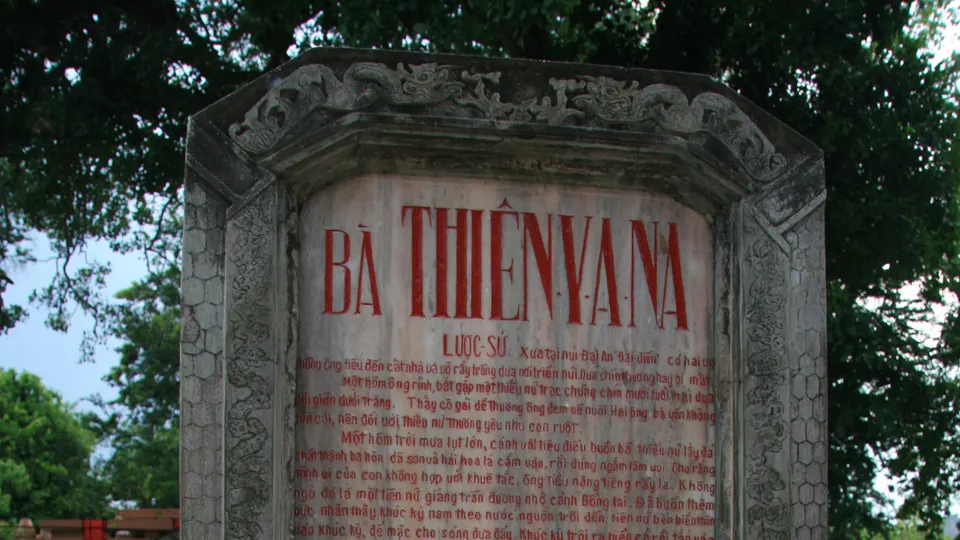
Hon Chen is the Central Vietnamese face of a worship found across the country, and seeing how it differs helps you read what you see. In the North, Mother Goddess worship centres on Lieu Hanh and festivals such as Phu Day (Phủ Dầy), the example UNESCO names in its 2016 listing (UNESCO). In the South, the best-known goddess festival is at the Ba Chua Xu temple on Sam Mountain, which UNESCO inscribed separately in 2024.
| Hon Chen, Hue (Central) | Po Nagar, Nha Trang (South Central) | Phu Day (North) | Ba Chua Xu, Chau Doc (South) | |
|---|---|---|---|---|
| Goddess | Thien Y A Na, with Lieu Hanh since 1954 | Po Nagar, called Thien Y A Na by Vietnamese | Lieu Hanh, the Mother of the World | Ba Chua Xu, the Lady of the Realm |
| Roots | Cham shrine or hill goddess (debated), raised by Nguyen emperors | Cham sanctuary still in use | Viet Mother Goddess worship | Worshipped by Kinh, Khmer, Cham and Hoa communities |
| Festival | Third and seventh lunar months, boats on the Perfume River | 19th–25th of the third lunar month (2026) | Phu Day festival (dates not covered here) | 22nd–27th of the fourth lunar month |
| Heritage status | National intangible heritage (2024) | Towers: special national monument | Part of UNESCO Mother Goddess listing (2016) | UNESCO Representative List (2024) |
What they share is the idea of a protective mother who grants health and prosperity, and the role of women in the cult, which UNESCO stresses in both listings. What differs is the mix: in Hue, court ritual and the Thien Tien Thanh Giao sect; in Nha Trang, Cham ceremonies alongside Vietnamese ones; in Chau Doc, four communities sharing one festival. Our Ba Chua Xu festival guide covers the southern counterpart.
How to visit: by boat or road, and how to behave
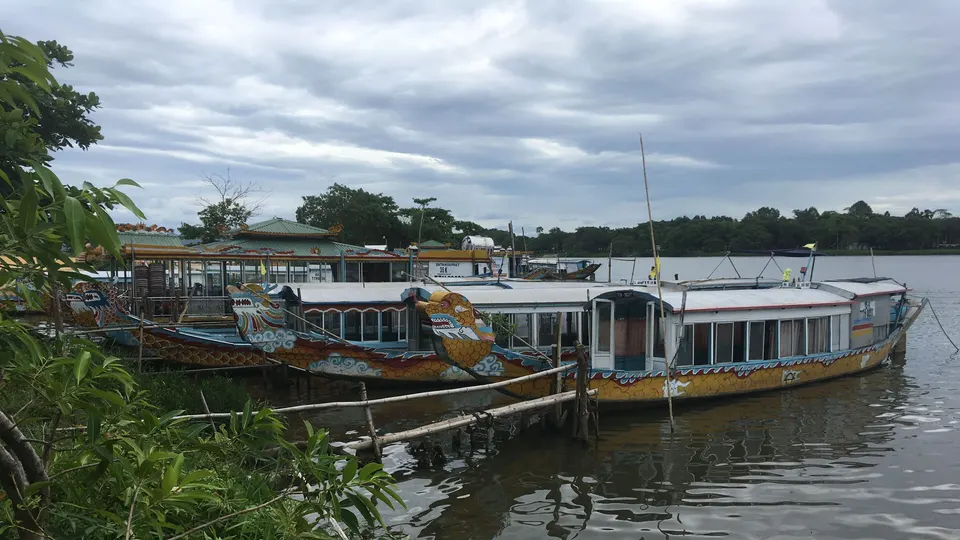
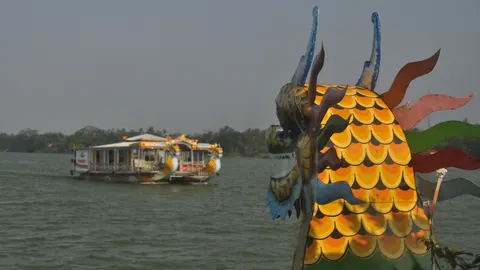
Most visitors arrive by river. Dragon boats from the city wharves continue upstream to Hon Chen after Thien Mu pagoda, a longer and slower stretch of river; agree the stop with the boat owner when you book. By road, a car, taxi or motorbike lets you combine the temple with the tombs. Whichever you choose, expect a climb: the temple sits halfway up the hill.
Behaving respectfully. Hon Chen is an active place of worship. Dress as for any Vietnamese temple, with shoulders and knees covered, take your hat off inside the halls and keep your voice down. During a hau dong ritual, stand at the edge of the hall and ask before photographing a medium or anyone at prayer. Festival organisers have campaigned in recent years for safety, cleanliness and fire precautions, and against the mass release of captive animals, Dai Bieu Nhan Dan reported in 2025, so do not buy birds or fish to set free.
Before you go:
- Check the lunar calendar. The spring festival falls on the 2nd–3rd day of the third lunar month and the autumn one early in the seventh. Hue had not published 2027 dates as of November 2026, so look for the Festival Hue programme in early 2027.
- Choose your festival day. The first morning brings the procession from 352 Chi Lang; the autumn festival’s second day brings the river procession to Hai Cat and the night rites.
- Watch the river in the rainy season. In Hue’s autumn rains and floods, river trips may not run; our boat guide has flood-season advice.
- Carry small notes for the 50,000 dong ticket and for offerings; entry may be free in festival week, as it was in August 2026.
- Plan the rest of the day. Combine Hon Chen with Thien Mu by boat, or with the tombs by road; our Central Vietnam hub lists more of the region’s temples and traditions.
Frequently asked questions
Is Hon Chen temple worth visiting if I only have two days in Hue?
Only if living religion interests you more than another royal tomb. Hon Chen is small, but it is a regular stop on Perfume River boat trips after Thien Mu pagoda, so you can add it to a river morning rather than giving it a separate trip.
How much is the ticket for Hon Chen temple?
50,000 dong for adults, with children aged 7 to 12 free, according to the official fee list Tuoi Tre published in August 2025; Hue kept single-site fees unchanged for 2026. Entry was free during the August 2026 festival.
When is the Hon Chen festival in 2027?
The spring festival falls on the 2nd and 3rd days of the third lunar month and the autumn festival early in the seventh lunar month. As of November 2026 Hue had not published its 2027 programme, so check the city's Festival Hue calendar in early 2027.
Can tourists watch hau dong at Hon Chen?
Yes, during the festivals visitors stand among the pilgrims while mediums perform hau dong in the halls and at Hai Cat communal house. Keep to the edges of the hall, stay quiet and ask before photographing a medium or anyone at prayer.
Is the goddess at Hon Chen the same as Po Nagar in Nha Trang?
Yes. Thien Y A Na is the Vietnamese name for Po Nagar, the Cham Mother of the Land worshipped at the Po Nagar towers in Nha Trang, where Khanh Hoa province holds her own festival late in the third lunar month.
Key sources
- Huế tổ chức Lễ hội Điện Huệ Nam, dự kiến thu hút 30.000 người · VietnamPlus (VNA), 11 August 2026
- Lễ hội Điện Huệ Nam: Từ di tích Cố đô đến lễ hội đặc sắc của người dân Huế · VietnamPlus (VNA), 17 April 2026
- Đặc sắc Lễ hội truyền thống điện Huệ Nam tại Huế · Nhân Dân, 18 April 2026
- Two national intangible cultural heritages recognised in Huế · VietNamNet (VNA/VNS), 12 December 2024
- Vé tham quan di sản Huế: Đắt hay xứng đáng từng đồng? · Tuổi Trẻ, 15 August 2025
- Practices related to the Viet beliefs in the Mother Goddesses of Three Realms · UNESCO Intangible Cultural Heritage
- Festival of Bà Chúa Xứ Goddess at Sam Mountain · UNESCO Intangible Cultural Heritage
- Opening Po Nagar Temple Festival 2026 · Khánh Hòa Provincial Portal, 25 May 2026
All 14 sources and further reading
- Huế đón du khách trẩy hội Điện Huệ Nam 2026 · VnEconomy, 19 April 2026
- Linh thiêng lễ hội Điện Huệ Nam: Hội tụ niềm tin, lưu giữ hồn xưa đất Huế · Đại biểu Nhân dân, 31 August 2025
- Festival Huế 2026 sôi động với Lễ hội mùa Thu · Đại biểu Nhân dân, 2 August 2026
- Mở rộng đối tượng miễn, giảm phí tham quan di tích Huế từ năm 2026 · Báo Văn Hóa, 27 December 2025
- Hon Chen Temple Festival · Khám phá Huế (Hue city tourism portal)
- Returning to the Mother · Heritage (Vietnam Airlines), 23 July 2024
Keep exploring
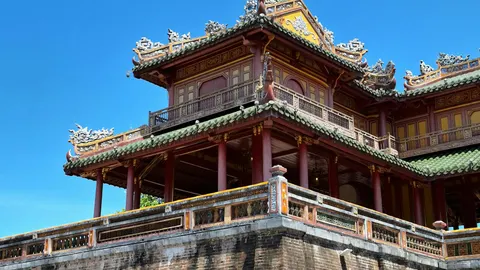 Central Vietnam · Travel Hue (Huế): How Many Days, What to See, 2026 Tickets How many days Hue needs, which Citadel sights and royal tombs to pick, 2026 ticket prices, the flood months to avoid and where to eat in the old royal capital.
 Central Vietnam · Travel Perfume River Boat Trip in Hue: Thien Mu, Tombs, Ca Hue Perfume River boat trips in Hue: Toa Kham wharf, Thien Mu pagoda by dragon boat, Hon Chen and the tombs, ca Hue at night, new electric boats and flood-season advice.
 Central Vietnam · Culture Champa Heritage: Which Cham Towers to See, and When Which Cham towers are ruins and which still hold rites, when Kate falls (main rites 10 Oct 2026), My Son's 2026 fee, the Cham museum and respectful visits.