All three regions · Food
Salt Coffee (Ca Phe Muoi) vs Coconut Coffee: Which to Order
Salt coffee (ca phe muoi) or coconut coffee? How each tastes, what a glass costs in reports from 2023 to 2026, Hue's salt coffee origin and where to try both.
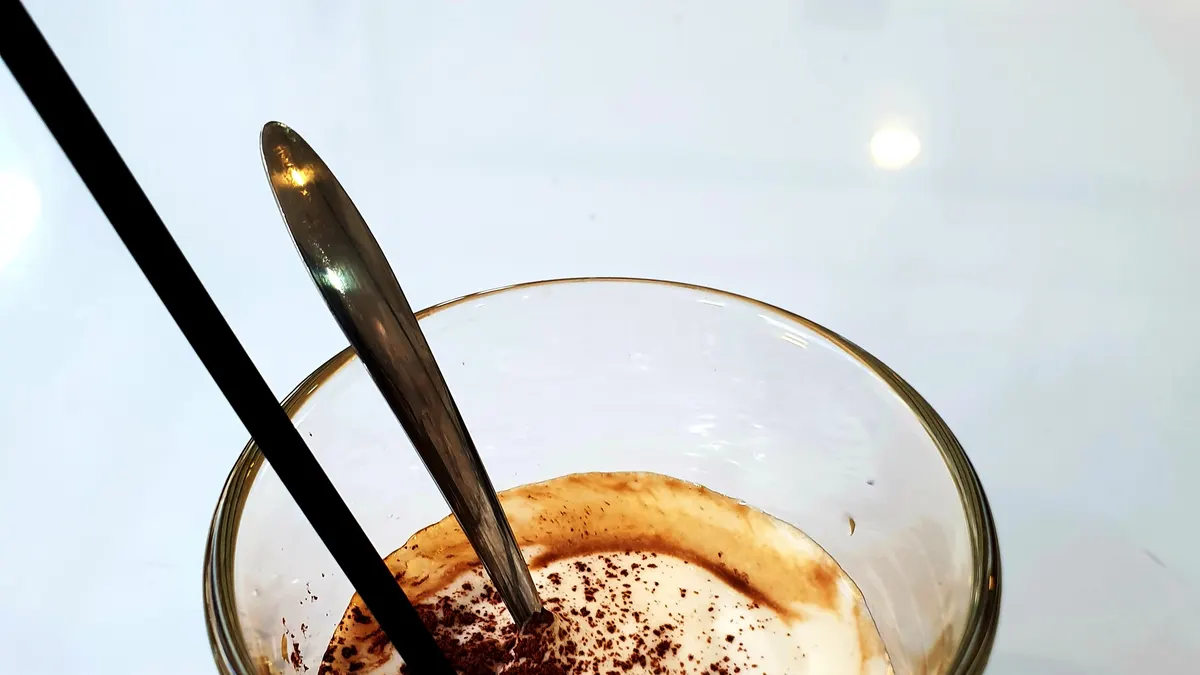
Order salt coffee, ca phe muoi (cà phê muối), if you want a creamy iced milk coffee under a cream whipped with a little salt; order coconut coffee, ca phe cot dua (cà phê cốt dừa), if you want strong coffee mixed with a sweet, icy slush of coconut milk, condensed milk and ice. Salt coffee has a documented birthplace in Hue (Huế), while nobody has pinned down who made coconut coffee first. As of November 2026, the latest reports we checked put coconut coffee at 40,000-70,000 VND a glass in May 2026 (LocalVietnam), and salt coffee from just over 10,000 VND at a street cart to just under 50,000 VND in an air-conditioned cafe (VnEconomy, July 2024).
This page compares the two drinks side by side, with egg coffee as a reference, and ends with how to order them and where to try them. For how coffee changes between Hanoi, Hue and Saigon more generally, see our guide to Vietnamese coffee by region; for the rest of the country’s food, start at the Vietnamese food hub.
Salt coffee vs coconut coffee at a glance
| Salt coffee | Coconut coffee | Egg coffee (for reference) | |
|---|---|---|---|
| Vietnamese name | Ca phe muoi | Ca phe cot dua (also ca phe dua) | Ca phe trung (Cà phê trứng) |
| Coffee base | Phin coffee dripped over condensed milk | Strong black coffee, phin or espresso | Strong phin coffee |
| What goes on or in it | Cream or fermented milk whipped with a little salt | Coconut milk or cream blended with condensed milk and ice | Raw egg yolk whipped with sugar or condensed milk |
| Taste and texture | Sweet and creamy with a faint salty edge | Icy, slushy, like a coconut dessert | Warm, thick, custard-like foam |
| Usually served | Iced, though hot is possible | Iced or blended | Hot, often in a bowl of hot water; iced too |
| Where it began | Hue, at Ca phe Muoi: 2010 by the owners’ account | Not documented; claims for Hanoi, the South and Hai Phong (Hải Phòng) | Hanoi, Cafe Giang (Cafe Giảng), 1940s by the family’s account |
| Who made it famous | The Hue shop, then cafes and street carts nationwide | The Hanoi chain Cong Ca Phe (founded 2007) | Cafe Giang and its family cafes |
| Where you find it now | Across Vietnam and abroad | Across Vietnam and abroad | Hanoi first, specialty cafes elsewhere |
The rows on origin summarise accounts that differ in detail; the sections below give the sources and the disagreements.
What is salt coffee, and how is it made?
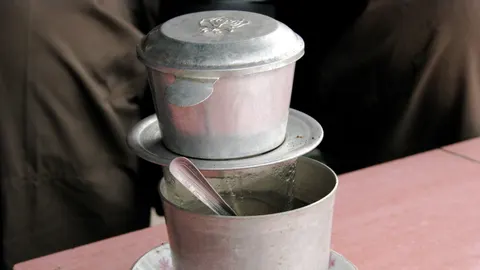
Salt coffee is built in layers. VnExpress describes the Hue original as condensed milk at the bottom of the glass, then a layer of fermented milk mixed with fine salt, with coffee dripped on top from a traditional aluminium phin; after about three minutes the dark coffee seeps down through the white cream, and you stir and add ice if you like. The salt, the paper explains, brings out the sweetness of the milk and tames the coffee’s bitterness (VnExpress).
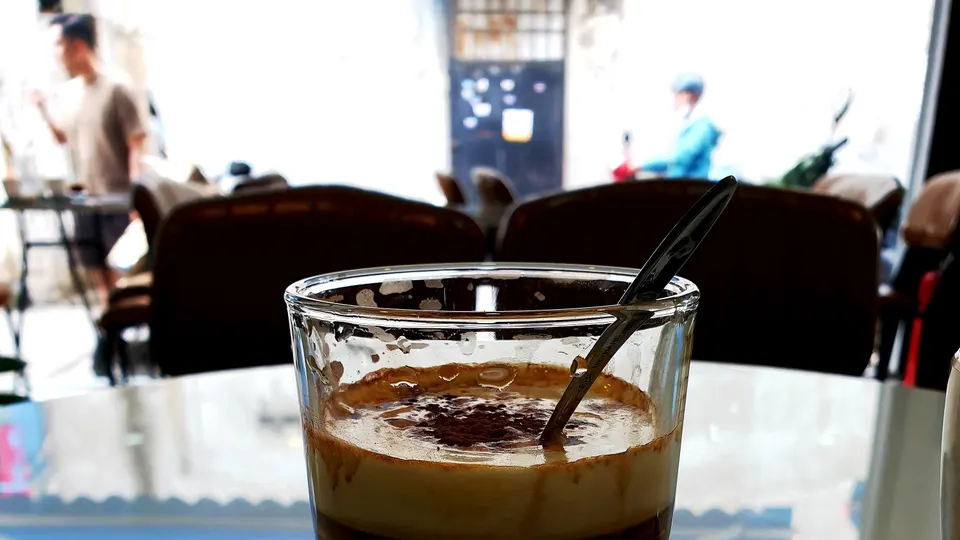
Other descriptions agree on the shape and vary the details. The MICHELIN Guide describes condensed milk at the base, coffee in the middle and a creamy top that you stir together. VietNamNet, reporting on Hanoi cafes in 2023, adds a sprinkle of cinnamon on the salty whipped cream, and Vietnam Airlines’ travel guide speaks of a pinch of sea salt on top of milk foam. The Hue owners keep their own process secret, from roasting the beans to fermenting the cream, according to a 2025 feature on Hue’s city portal.
What it tastes like: not salty in the way a snack is. Vietnam Coracle compares the balance of bitter and sweet to salted caramel. The first sip from an unstirred glass is mostly cream, so stir before you judge it.
Who invented salt coffee, and when?
The drink is credited to Ca phe Muoi, a small cafe in Hue, the former imperial capital in Central Vietnam. Its owners, Ho Thi Thanh Huong (Hồ Thị Thanh Hương) and Tran Nguyen Huu Phong (Trần Nguyễn Hữu Phong), told CNN: “We created salt coffee in 2010 when we opened our first shop at 10 Nguyen Luong Bang Street,” as Hue’s own newspaper reported (Hue Ngay Nay).

The 2010 date is the one most sources repeat, including VnEconomy and VnExpress International. It is not unanimous: a February 2025 feature on Kham pha Hue (Khám phá Huế), the city’s tourism portal, says the couple opened their first coffee shop in 2014 and developed the salted coffee afterwards, in response to customers. Both accounts agree on the couple, the first address and Hue. The name also has a story behind it: VnExpress International reports that Huong, an architect, named the shop after a love story called “Salted Coffee” that circulated online, in which a nervous young man asks for salt in his coffee on a first date. Treat that as the shop’s story rather than the drink’s history.
The couple have said they want salt coffee to stay a Hue specialty and turned down offers to open branches in other provinces (VnExpress International, 2023). Other cafes took up the idea anyway: Vietnam Coracle traces how it spread to neighbouring cafes, then to other Central cities, then nationwide. If you are in Hue for its food, our map of where to eat in Hue covers the dishes around it.
What is coconut coffee, and how is it made?
Coconut coffee replaces fresh milk with coconut. The MICHELIN Guide’s method blends coconut milk with condensed milk and ice until it reaches a smooth, velvety texture, then adds black coffee shaken until it foams (MICHELIN Guide). Barista Magazine, tasting it in Hanoi in 2025, called the iced, blended drink “Vietnam’s answer to the frappe”, with strong black coffee poured over a slush of coconut milk, condensed milk and ice.
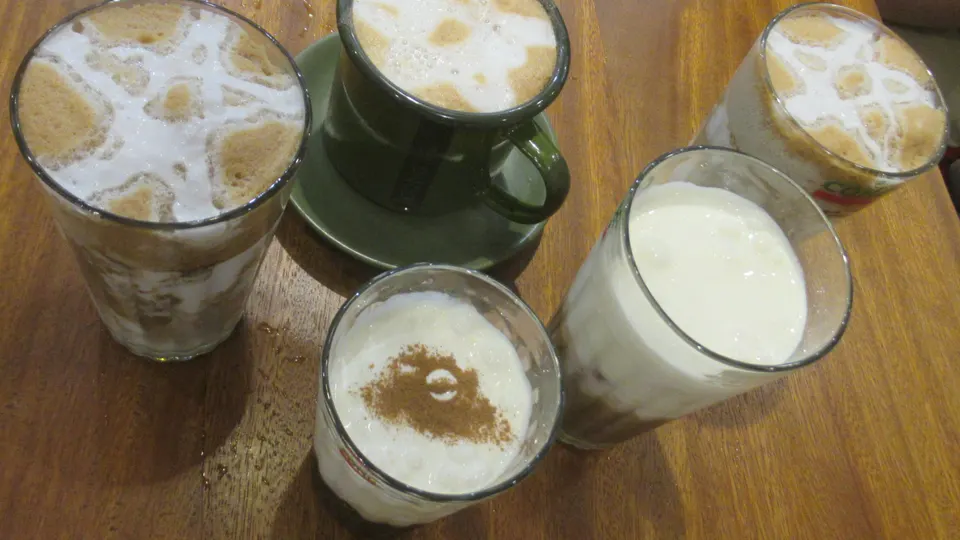
There are variations. Vietnam Airlines’ Hanoi guide describes espresso or phin coffee layered or blended with coconut milk or even coconut ice cream, sometimes topped with grated coconut or served in a coconut shell. LocalVietnam’s explainer pours the coffee in first and spoons the slush on top. National Geographic describes it as “a dairy-free combination of rich coffee and creamy coconut milk or cream”, but most cafe recipes also contain condensed milk, so it is usually not dairy-free.
Where does coconut coffee come from?
Unlike salt coffee, coconut coffee has no documented inventor, first cafe or year. The sources we checked give at least four different answers. GTRIP, a Hanoi travel company, says it first emerged in Hanoi in the early 2000s. One Vietnam Airlines guide calls it a Southern Vietnamese specialty that shows off the coconuts of the Mekong Delta, while another of its guides says it emerged recently with the third-wave cafe movement in Hanoi and Ho Chi Minh City. LocalVietnam writes that most sources point to Hai Phong, the port city east of Hanoi, but we found no Vietnamese press account that confirms this.

What is documented is who made it famous. Cong Ca Phe was founded in 2007 by the performance artist Linh Dung on Trieu Viet Vuong (Triệu Việt Vương) Street in Hanoi, according to Tatler Asia. Its signature drink is coffee blended with coconut milk, and the chain now has more than 100 stores worldwide (Inside Retail). LocalVietnam credits Cong with turning coconut coffee into a nationwide phenomenon, but no source we found says Cong invented it. The honest answer is that coconut coffee is a recent cafe drink whose rise in Hanoi chains is clear and whose first cup is not.
How do they compare with egg coffee and the classic orders?
All three specialty coffees answer the same question: how to soften dark, bitter robusta. The classic answer is sweetened condensed milk, as in ca phe sua da (cà phê sữa đá), iced coffee with condensed milk; egg coffee, salt coffee and coconut coffee each add one more ingredient on top of that.
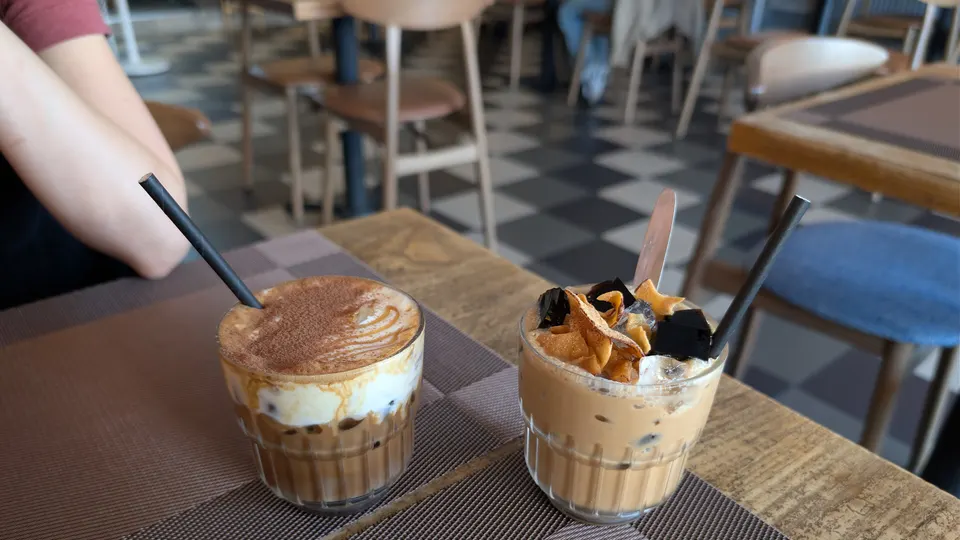
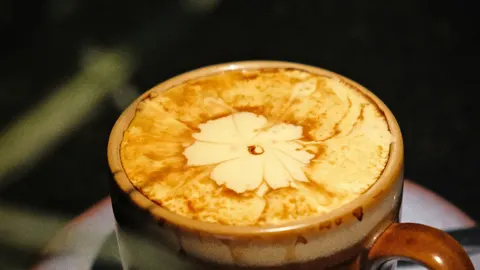
- Egg coffee is the oldest and the richest. Our Hanoi egg coffee guide tells how Cafe Giang whipped egg yolk in place of scarce milk in the 1940s; it is a warm, thick foam best drunk hot. It contains raw yolk, which matters for some drinkers.
- Salt coffee is the lightest of the three: a creamy milk coffee with a salted cream that makes the sweetness taste rounder. It works hot or iced, though VnExpress International, writing about the Hue original, says a cold cup tastes better than a hot one.
- Coconut coffee is the most dessert-like and the least about coffee. The coconut slush dominates and it is nearly always served cold.
- The classic orders stay the everyday drinks. Ca phe sua da, ca phe den (cà phê đen), black coffee, and the milky bac xiu (bạc xỉu) are what most people order every morning; the three specialties are treats. The terms are explained in our guide to Vietnamese coffee orders.
Where can you drink them today?
Neither drink stayed at home. VietNamNet reported in 2023 that salt coffee could be found in nearly every pavement cafe in Hanoi, and that its popularity soared further after the Covid-19 pandemic. In Saigon, a former soldier, Duong Thanh Long (Dương Thành Long), tasted salt coffee in Hue and started a takeaway stall on Cong Hoa (Cộng Hòa) Street; from early 2023 his brand, Ca phe muoi Chu Long (Cà phê muối Chú Long), spread along streets across Ho Chi Minh City and neighbouring provinces (Znews). Tuoi Tre (Tuổi Trẻ) reported in June 2026 that since the start of that year the chain had opened a series of new stores under a new look, with Uncle Long’s picture gone from the signs, while keeping the low prices it had charged for more than two years.
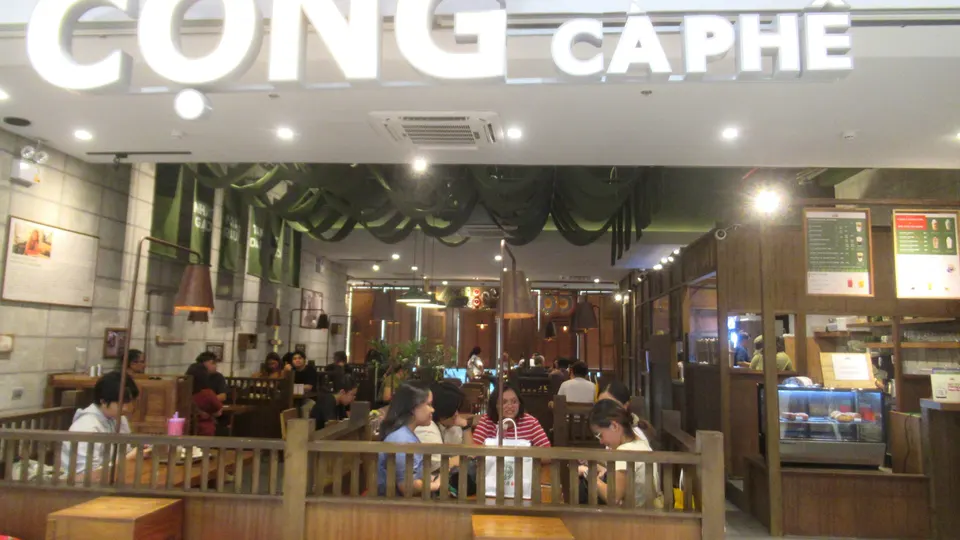
Big chains followed: VnEconomy reported that Starbucks’ Vietnamese branches launched a salt coffee in 2024, and that Vietnamese cafes in Seattle, Philadelphia and London serve it. Coconut coffee travelled mainly with Cong, whose first foreign branch opened in Seoul in 2018, followed by Malaysia, Taiwan, Canada, the Philippines and Paris (Inside Retail). Within Vietnam it is on the menus of chains and independent cafes from Hanoi to Ho Chi Minh City; National Geographic singles out a coconut coffee near An Bang beach in Hoi An. Saigon’s older cafe habits are covered in our Saigon coffee culture guide.
Copies vary. Vietnam Coracle found that most salt coffee outside the original shop uses coffee made in advance rather than dripped, and one cafe even salts the rim of the glass like a margarita, so a glass in Hue is still the reference point.
How do you order salt or coconut coffee?
Ask for ca phe muoi for salt coffee and ca phe cot dua for coconut coffee; on many menus they appear simply as “muoi (muối)” and “cot dua (cốt dừa)” in the coffee list. Add da (đá) for iced or nong (nóng) for hot. Salt coffee comes either way, as VnEconomy notes, and coconut coffee is almost always iced or blended (VnExpress International says a cold cup of the Hue original tastes better than a hot one).
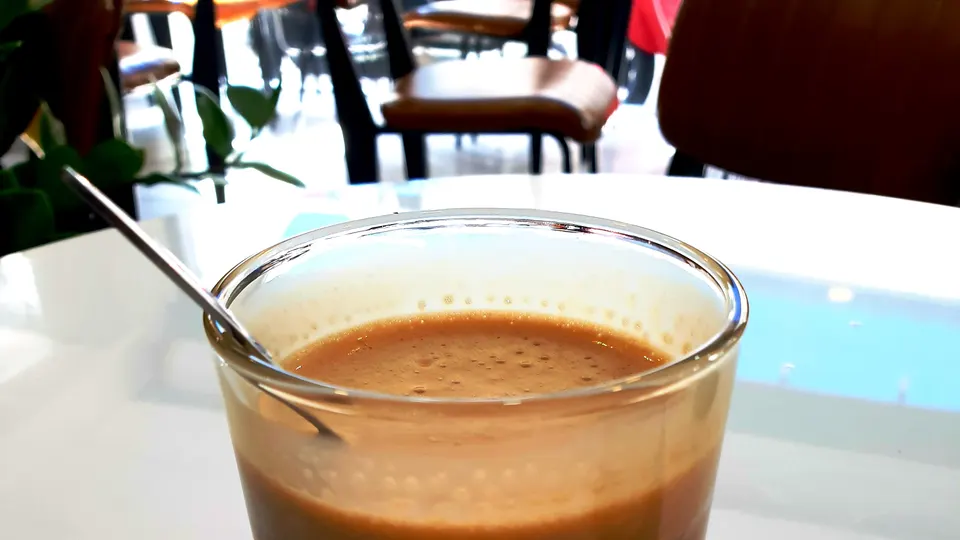
- Stir salt coffee. The condensed milk sits at the bottom and the salted cream on top. Stir them together, or drink a little cream first and then stir, as VnExpress suggests.
- Expect sweetness. Both drinks are made with condensed milk. Ask for it ngot (less sweet) or it duong (less sugar) if you prefer, but both drinks are sweet by design.
- Do not expect a caffeine hit from coconut coffee. The slush dilutes the coffee; order a black coffee alongside it if you need the caffeine.
- Check the method if it matters to you. The original Hue shop drips the coffee through a phin onto the salted mixture; Vietnam Coracle found that most copies use coffee made in advance.
Which should you choose?
Choose by what you want from the glass, and by where you are.
- You like iced milk coffee but want something new: salt coffee. It is the closest to a ca phe sua da, with a creamier, rounder finish.
- You want something cold and sweet on a hot afternoon: coconut coffee, which is closer to a coconut sorbet than to a cup of coffee.
- You avoid dairy: neither is reliably dairy-free, because both usually contain condensed milk; ask before ordering.
- You want the original: salt coffee in Hue at the shop on Nguyen Luong Bang Street, or egg coffee in Hanoi. Coconut coffee has no original, so a Cong branch in Hanoi is the easiest place to taste the version that made it famous.
- You can only try one in each city: salt coffee in Hue, coconut coffee or egg coffee in Hanoi.
| Option | Price reported (source, date) | Where to look | Suits |
|---|---|---|---|
| Salt coffee from a street cart | From just over 10,000 VND (VnEconomy, July 2024) | Hanoi pavement cafes; Saigon carts such as Chu Long | A cheap iced drink on the go |
| Salt coffee at the original Hue shop | 20,000-30,000 VND (VnExpress International, April 2023) | Ca phe Muoi, 10 Nguyen Luong Bang Street, Hue | Anyone who wants the phin-dripped original |
| Salt coffee in an air-conditioned cafe | Up to just under 50,000 VND (VnEconomy, July 2024) | Cafes and chains nationwide | Sitting down out of the heat |
| Coconut coffee in a cafe or chain | 40,000-70,000 VND; chains such as Cong about 55,000-70,000 VND (LocalVietnam, May 2026) | Cong Ca Phe branches; The Note Coffee in Hanoi | A sweet, cold afternoon treat rather than a caffeine hit |
Prices are as reported on the dates shown and change quickly; check the menu board before you order.
In practice: order the drink iced, stir salt coffee before drinking, ask for less sweetness if you want it, and treat both as an afternoon treat rather than your morning coffee. The place cards below give the original salt-coffee shop in Hue and The Note Coffee in Hanoi for coconut coffee; Vietnam Airlines’ Hanoi guide also lists the Cong Ca Phe branch at 27 Nha Tho Street.
Where to try salt coffee and coconut coffee
Local favourite
Cà phê Muối
Huế · Central Huế
10 Nguyễn Lương Bằng Street
The couple's first shop, credited by Vietnamese press as the birthplace of salt coffee. The owners, Hồ Thị Thanh Hương and Trần Nguyễn Hữu Phong, told CNN they created the drink here in 2010 (VnEconomy, Huế Ngày Nay, 2024). Vietnam Coracle notes that the shop still drips the coffee through a phin onto the salted mixture, where most copies use coffee made in advance.
Order: Cà phê muối, iced. Stir the salted cream through before drinking.
Hundreds of cafés across Vietnam now sell 'cà phê muối' and many copy the name. This card means the original shop at 10 Nguyễn Lương Bằng; the same owners run a second shop at 142 Đặng Thái Thân, near the Citadel (VnExpress International 2023, Khám phá Huế 2025).
Recommended by: VnEconomy (2024), Huế Ngày Nay (2024), VnExpress International (2023), Khám phá Huế (HueCIT) (2025) · checked November 2026
Local favourite
The Note Coffee
Hanoi · Hoàn Kiếm ward (former Hàng Trống ward, Hoàn Kiếm district), near Hoàn Kiếm Lake
64 Lương Văn Can Street
An independent café near Hoàn Kiếm Lake whose walls are covered in visitors' Post-it notes (LocalVietnam). Both Vietnam Airlines' and LocalVietnam's Hanoi coconut coffee guides list it, so it is an easy place to try the drink in the Old Quarter.
Order: Cà phê cốt dừa (coconut coffee).
Recommended by: LocalVietnam (2024), Vietnam Airlines travel guide · checked November 2026
Addresses and details can change; check before you go. We do not accept payment for listings.
Frequently asked questions
Is ca phe muoi (salt coffee) actually salty?
Only slightly. The salt is whipped into the cream on top, and VnExpress explains that it balances the drink, bringing out the sweetness of the condensed milk and taming the coffee's bitterness. Stir it before drinking, or the first sip is all salted cream.
How much does salt coffee or coconut coffee cost in Vietnam?
VnEconomy reported in July 2024 that a salt coffee costs from just over 10,000 VND at a street cart to just under 50,000 VND in an air-conditioned cafe, and VnExpress International listed the original Ca phe Muoi in Hue at 20,000-30,000 VND in April 2023. LocalVietnam's May 2026 guide puts coconut coffee at 40,000-70,000 VND, with chains such as Cong Ca Phe at about 55,000-70,000 VND.
Which should I order, salt coffee or coconut coffee?
Order salt coffee if you like Vietnamese iced milk coffee and want it creamier, with a faint salty edge; order coconut coffee if you want a cold, sweet, dessert-like drink in which the coconut slush matters more than the coffee. Both are made with condensed milk, so neither is a light or dairy-free choice.
Is coconut coffee dairy-free?
Usually not. Coconut milk replaces fresh milk, but the recipes described by the MICHELIN Guide and Barista Magazine also blend in sweetened condensed milk. If you avoid dairy, ask the cafe whether it can leave the condensed milk out.
Did Cong Ca Phe invent coconut coffee?
No source we found says so. Cong Ca Phe, founded in Hanoi in 2007, made coffee blended with coconut milk its signature drink and spread it through more than 100 stores worldwide by August 2025 (Inside Retail), but the drink's inventor and first cafe are not documented.
Key sources
- Cà phê muối xứ Huế · VnExpress (Ngân Dương), 3 September 2020
- Salt coffee in Hue featured on US newspaper · Huế Ngày Nay, 4 July 2024
- A Guide to Vietnamese Coffee · MICHELIN Guide, 30 March 2024
- The story behind the global rise of Vietnam's nostalgic coffee brand Cong Ca Phe · Inside Retail, 25 August 2025
- Hành trình đưa ly cà phê muối chú Long đến mọi khách hàng · Znews (Đắc An), 4 July 2023
- Salted coffee: A Hue specialty · VnExpress International (Van An, Thu Mai), 2 January 2023
- A guide to Hue's best salted coffee shops · VnExpress International (Quynh Mai), 13 April 2023
- Vietnamese coconut coffee: what it is, where to find it · LocalVietnam (Marnick Schoonderwoerd), 12 May 2026
All 21 sources and further reading
- Vì sao cà phê muối Việt Nam nổi tiếng toàn thế giới? · VnEconomy (Băng Sơn), 6 July 2024
- Salted Coffee Brings the World to Hue · Khám phá Huế (HueCIT, from Huế Ngày Nay), 10 February 2025
- Salt coffee, a Hue delicacy, conquers Hanoi taste buds · VietNamNet (from Việt Nam News), 20 September 2023
- Salt coffee: Vietnam's latest global coffee trend · VietNamNet, 1 July 2024
- Cà phê muối chú Long âm thầm thay đổi diện mạo · Tuổi Trẻ, 17 June 2026
- The founders behind the most successful coffee chains in Vietnam · Tatler Asia, 4 August 2025
- A caffeine-fueled journey through Vietnam's rich coffee culture · National Geographic (Kristin Braswell), 7 January 2026
- Vietnam in a Cup: 4 Exceptional Coffee Drinks in Hanoi and Ho Chi Minh City · Barista Magazine (Vasileia Fanarioti), 13 May 2025
- Best coffee in Vietnam · Vietnam Airlines travel guide
- Coconut coffee in Hanoi · Vietnam Airlines travel guide
- Salt Coffee, Cà Phê Muối, Hue, Vietnam · Vietnam Coracle (Tom Divers), 2023, updated 2024
- Best coconut coffee Hanoi: 8 must-try cafés · LocalVietnam, updated 30 December 2024
- Top 7 Coconut Coffees in Hanoi · GTRIP, 29 July 2025
Keep exploring
 North · Central · South · Food Vietnamese Coffee by Region: What to Order Where How Vietnamese coffee changes from Hanoi's hot ca phe nau to Hue salt coffee and Saigon's iced ca phe sua da, bac xiu and cloth filter, and how to order.
 North · Central · South · Food How to Order Coffee in Vietnam: Bac Xiu vs Ca Phe Sua Da How to order coffee in Vietnam: ca phe sua da vs bac xiu, nau in Hanoi vs sua in Saigon, den da, egg coffee, asking for less sugar and what a cup costs in 2026.
 North Vietnam · Food Hanoi Egg Coffee (Ca Phe Trung): Where to Drink It + Recipe Where to drink Hanoi egg coffee (ca phe trung) in 2026: Cafe Giang, Cafe Dinh and Giang Yen Phu compared, cup prices, a 5-minute recipe and raw-egg safety.
 Central Vietnam · Travel Hue (Huế): How Many Days, What to See, 2026 Tickets How many days Hue needs, which Citadel sights and royal tombs to pick, 2026 ticket prices, the flood months to avoid and where to eat in the old royal capital.