South Vietnam · Culture
Saigon Coffee Culture: Which Cafe to Choose and When
How Saigon drinks coffee: sidewalk stools, ca phe bet by Notre-Dame, cloth-filter ca phe vot, hammock cafes, the Cafe Apartment, chains, and cafe etiquette.
In Ho Chi Minh City, still widely called Saigon, coffee is less a drink than a reason to sit somewhere. People drink it on low stools along the sidewalk, on a scrap of cardboard in front of Notre-Dame Cathedral, in alley shops that still brew through a cloth filter, in hammocks on the highway out of town and on the balconies of an old apartment block on Nguyen Hue (Nguyễn Huệ). Chains are spreading fast (Highlands Coffee alone had 928 outlets in Vietnam at the end of September 2025, Tuoi Tre reported on 1 January 2026), but they sit alongside the street cafes rather than replacing them. This guide explains those places, why the city drinks coffee this way and how to join in without getting it wrong. For the drinks themselves (phin, ca phe sua da (cà phê sữa đá), bac xiu (bạc xỉu) and the regional styles) see our guide to Vietnamese coffee by region; for the city as a whole, our Ho Chi Minh City guide.
Saigon’s cafe types at a glance
| Cafe (Café) type | What it is | Where you find it | Who goes, and when |
|---|---|---|---|
| Ca phe via he (Cà phê vỉa hè) / ca phe coc (cà phê cóc) (sidewalk coffee) | Low plastic stools and small tables on the pavement or against a house wall | Main roads and side alleys across the city | Students, office workers and labourers; older men with Chinese chess sets; busiest in the morning |
| Ca phe bet (Cà phê bệt) (“sitting-on-the-ground” coffee) | A mobile vendor with bottled coffee; customers sit on cardboard, a mat or newspaper | Around Notre-Dame Cathedral, the Central Post Office and April 30 Park | Mostly young people, from early morning; busier at weekends |
| Ca phe vot (Cà phê vợt) (cloth-filter coffee) | Coffee brewed through a cloth “net” or “stocking” filter, kept hot in a pot | A few old family shops, for example in former District 3 and Cho Lon (Chợ Lớn) | Market traders, neighbours, retirees with newspapers; now young people too, about 6:30–8 a.m. |
| Ca phe san vuon (Cà phê sân vườn) / ca phe vong (cà phê võng) (garden and hammock cafes) | Leafy courtyards in the city; roadside sheds full of hammocks out of town | Garden cafes inside the city; hammock cafes on highways and the urban edge | People wanting space and shade; road travellers resting |
| Cafe apartments and modern cafes | Independent cafes stacked in old apartment blocks, designed spaces | 42 Nguyen Hue and similar buildings in the centre | Young Saigonese and visitors, into the evening |
| Chains | Highlands Coffee, Phuc Long (Phúc Long), Katinat, Trung Nguyen (Trung Nguyên), Starbucks and others | Shopping streets, office buildings, malls | Meetings, laptop work, air conditioning |
How did Saigon’s cafe habit grow?
Saigoneer’s history of the city’s coffee styles dates its mass appeal to the 1950s, when Chinese-Vietnamese noodle vendors began brewing it (Saigoneer). They used a sock-shaped cloth filter: hot water was poured over the grounds and left to steep for about ten minutes, and the coffee came on a plate, often with dim sum or dumplings. Mac Mahon Street (now Nguyen Cong Tru) and Verdun Street (now Cach Mang Thang Tam) were known for it. The same Chinese-Vietnamese community gave the city its noodle-shop culture; see our guide to hu tieu.
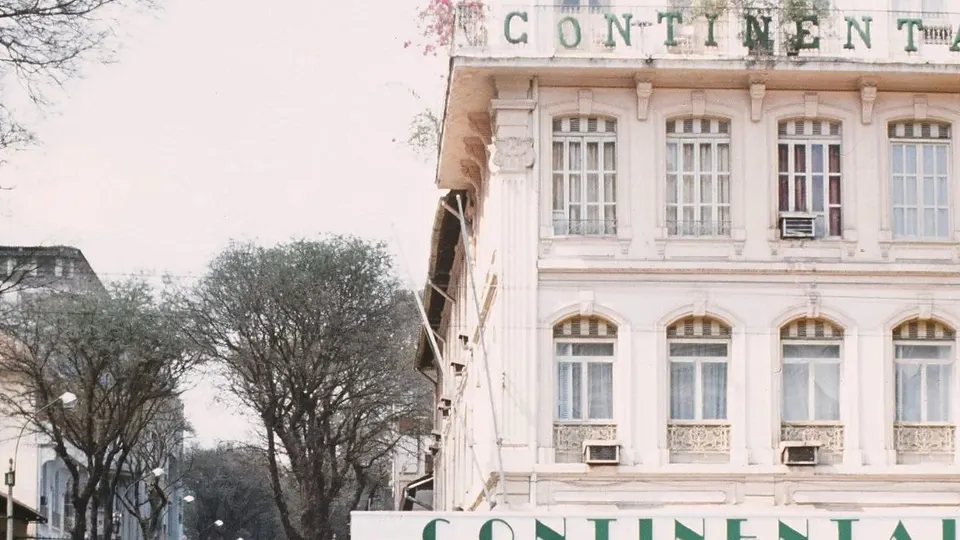
In the 1960s writers, artists, businesspeople and journalists talked over filtered phin coffee on Catinat Street, today’s Dong Khoi (Đồng Khởi), within sight of the Opera House. The sock-coffee shops in the centre gave way to Western-style cafes such as La Pagode, Brodard, Givral and the Continental, and music cafes like Anh Vu (Anh Vũ) on Bui Vien (Bùi Viện) Street had singers performing for the tables. After 1975, Saigoneer writes, the casual street cafe came back: men on small chairs, long conversations and tobacco smoke. Those layers explain why a Saigon cafe can be a plastic stool, a colonial terrace or an air-conditioned chain, and why all three count as “going for coffee”.
Sidewalk coffee: low stools facing the street
The everyday Saigon cafe is cà phê vỉa hè (sidewalk coffee), also called ca phe coc: a few low plastic stools and small tables on the pavement or against a house wall in an alley. VnExpress describes them on main roads and side streets alike, with students, office workers and labourers as customers and older men bringing Chinese chess sets. Saigon Giai Phong (Sài Gòn Giải Phóng) calls the habit a “heritage” of the city’s daily routine: people drink slowly over the morning paper, and it is easy to start a conversation with a stranger at the next table (Saigon Giai Phong).
The same paper contrasts these unhurried customers, who sit on for a long time, with people grabbing takeaway coffee on the busy main streets. Both exist; the sidewalk stool is the one Saigonese describe as part of the city’s character. The same plastic stools carry much of the city’s street food, from com tam at breakfast to noodles at night.
Ca phe bet: coffee on the ground by Notre-Dame
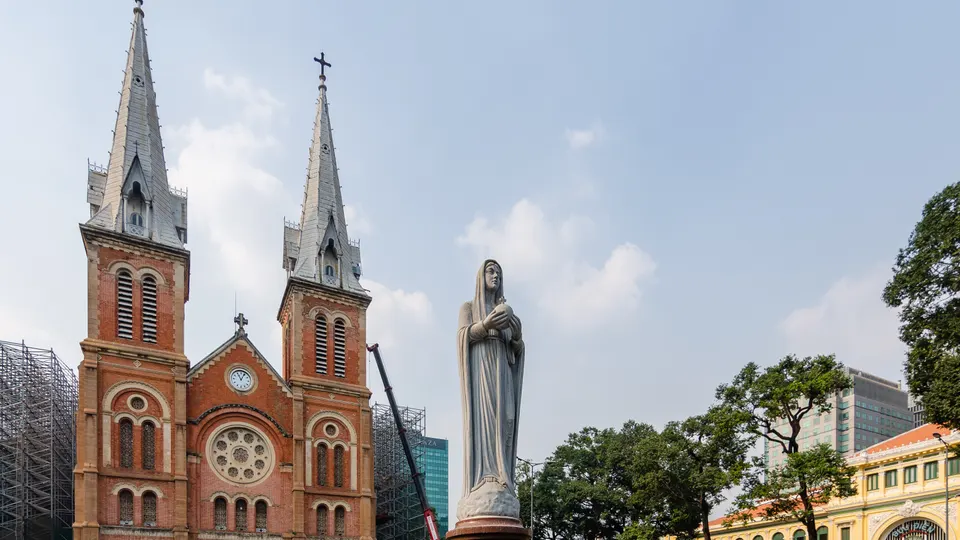
Ca phe bet goes one step lower: you sit on the ground. Vietcetera dates it to the 1990s; Tuoi Tre (Tuổi Trẻ) describes it as a habit of mostly young people in the city centre, around Notre-Dame Cathedral, the Central Post Office and April 30 Park, the green space in front of the Reunification (Independence) Palace (Tuoi Tre News). Vendors brew with simple cloth filters the night before, bottle the coffee and keep it cold for the morning; customers get a piece of cardboard or a tarp to sit on. One regular told Tuoi Tre, “This way helps everyone here become closer.”
It is also contested. Most vendors have no permit, and urban order teams regularly clear the sidewalks, so vendors take payment straight away and regulars may move at least once a morning. Park staff complain about plastic cups and food boxes left on the paths, and parked motorbikes spill onto the pavement. Vietcetera notes that Hanoi, Da Lat (Đà Lạt) and Can Tho (Cần Thơ) have their own versions, but the downtown Saigon scene is the one people mean by the name.
Ca phe vot: the old cloth-filter shops
Before the metal phin became standard, Saigon brewed coffee through a cloth filter shaped like a small net or stocking, the vot (vợt). The coffee is strained and then kept hot in a pot, which is why Saigon Giai Phong says some people call it ca phe kho (cà phê kho), “stewed coffee”. Saigoneer describes the old sock-coffee scene as something “now preserved in nostalgia”, but some family shops still brew this way. The best known is Cheo Leo, in an alley at 109/36 Nguyen Thien Thuat (former District 3), where the owner’s father started selling ca phe vot in 1938, according to Saigoneer.
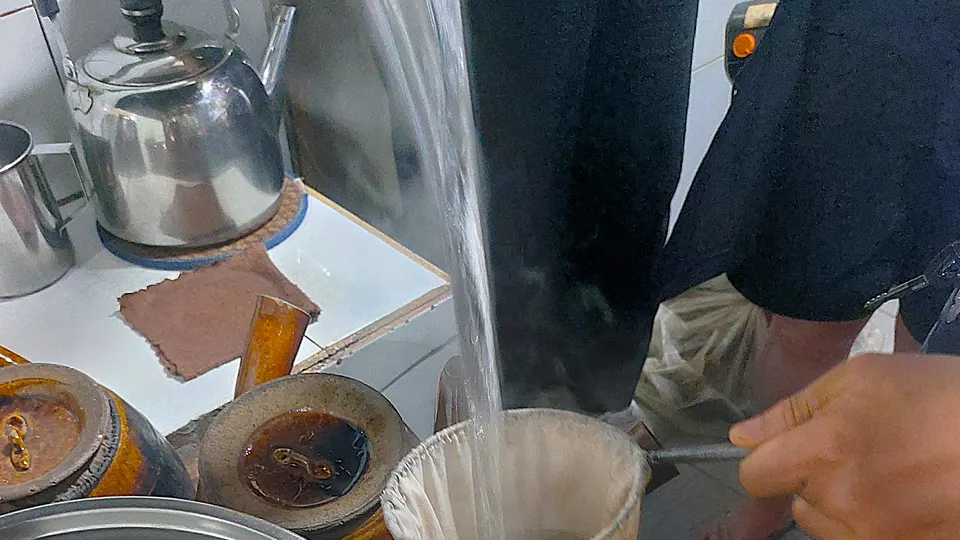
Tuoi Tre describes the rhythm of these shops: they are busiest from about 6:30 to 8 a.m., the traditional customers are market traders, neighbours and retired men reading the paper or playing chess, and in recent years young Saigonese born in the 1990s and 2000s have joined them, drawn partly by nostalgia (Tuoi Tre). It also mentions an unsigned shop on Phan Dinh Phung (Phan Đình Phùng) known for coffee with fresh milk and Ba Lu (Ba Lù) in the Chinese market quarter, whose coffee is so strong, the writer warns, that newcomers may feel it until the afternoon. At a ca phe vot shop, the article adds, say one sentence and someone will answer.
Garden and hammock cafes: room to stretch out
Space is what Saigon lacks, and some cafes sell exactly that. Cà phê sân vườn, garden cafes, put tables among trees, ponds and birdsong; VnExpress notes they cost more than the sidewalk because green space in a crowded city is hard to find. People go there for long catch-ups or quiet work.
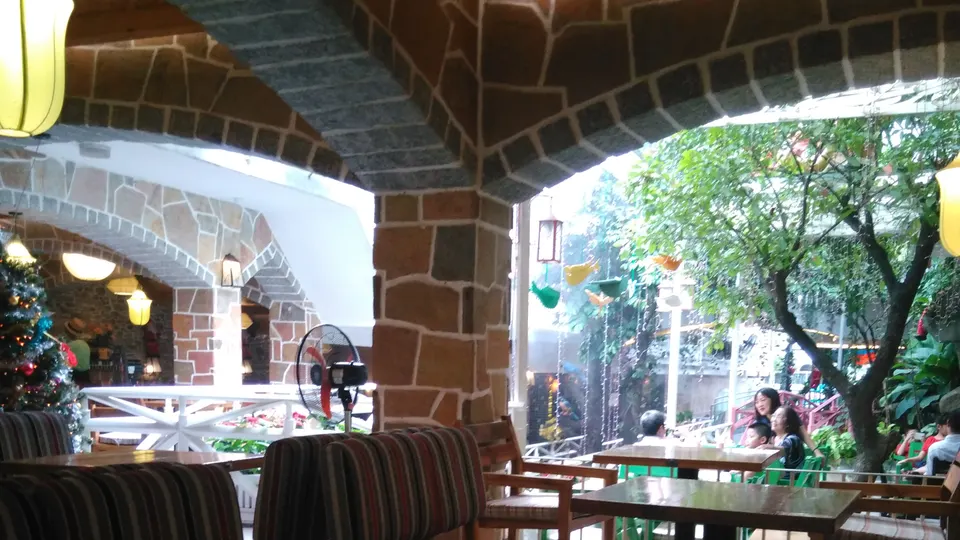
On the roads out of the city the equivalent is the ca phe vong, the hammock cafe: a roofed roadside plot strung with hammocks, especially common in the southern provinces and the Mekong Delta, where, Vietnam Coracle writes, “you’re never more than a kilometre from a hammock cafe” on a main road (Vietnam Coracle). You buy one drink (coffee, sugarcane juice or a coconut), the staff bring it to your hammock, and you can nap for as long as you like. Shoes come off before you climb in. A warning that both Vietnam Coracle and VnExpress have made: some “hammock cafes”, typically dark and enclosed ones, are fronts for other services. If you walk into one by mistake, apologise and leave. For the region where they are most common, see our Mekong Delta guide.
The Cafe Apartment and other new cafes
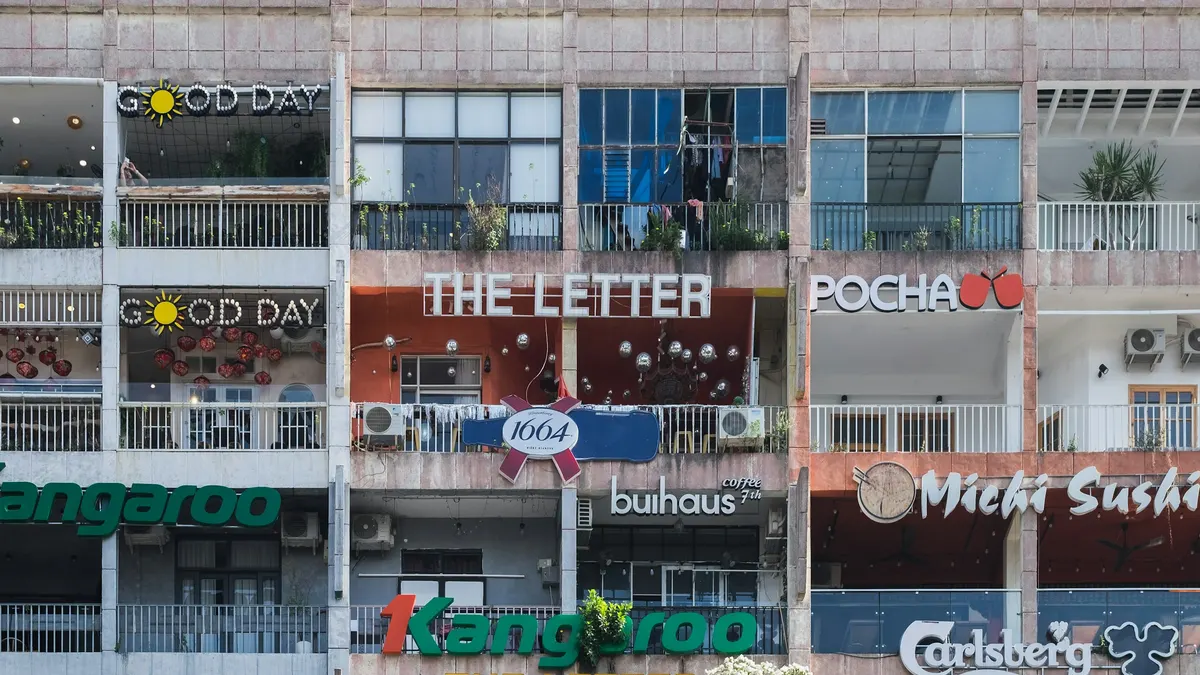
The building at 42 Nguyen Hue shows how the scene has changed. It is an old nine-storey apartment block on the walking street in the city centre (former District 1); tenants began renting their rooms to coffee shops and other businesses, and by 2020, when National Geographic UK featured it, it held more than 30 of them, according to Tuoi Tre News. Each floor now mixes cafes, small shops and studios behind the same balconies.
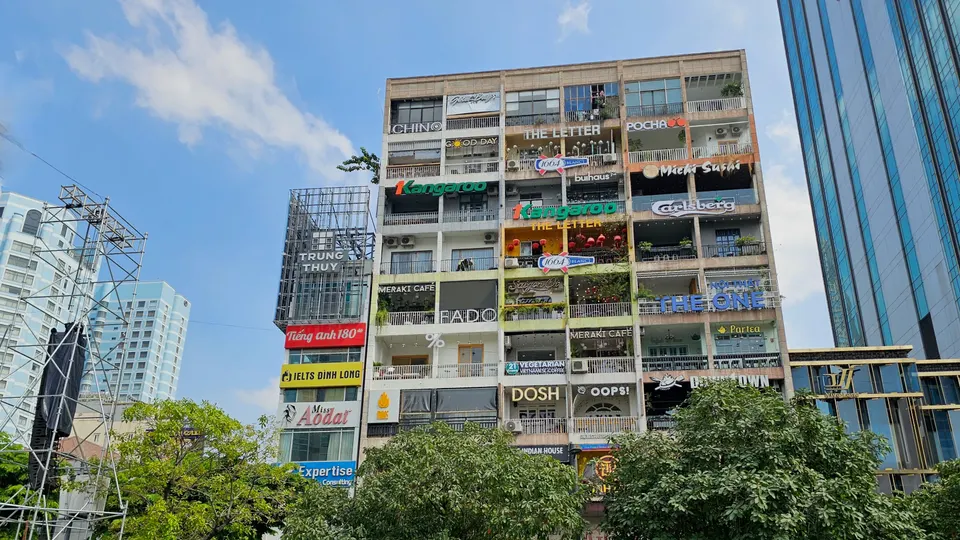
Vietnam Airlines’ travel guide notes that the lift charges a small fee, that some cafes refund it when you buy a drink and that the stairs are free; the balconies look over Nguyen Hue walking street, which fills with people in the evening (Vietnam Airlines). Elsewhere, designed “concept” and art cafes, with themed decor (décor) and careful cups, are where many young Saigonese now meet. VnExpress describes art cafes with themed decor, paintings or classical music; they cost more than a sidewalk stool.
Chains versus family shops: how cafe culture is changing
Vietnam has a very large number of cafes; estimates range from about 317,000 (iPos.vn, end of 2023) to more than 500,000 (consultancy Mibrand), according to Saigoneer. Chains are growing fast. Tuoi Tre reports that by the end of September 2025 Highlands Coffee had 928 outlets, Phuc Long nearly 200 and Katinat 114, and that Starbucks reached its 150th Vietnamese store, on Quang Trung Street in Ho Chi Minh City, on 1 January 2026 (Tuoi Tre). The same report notes a shake-out: about 50,000 food and drink outlets closed in the first half of 2025, and some chains shrank or left.
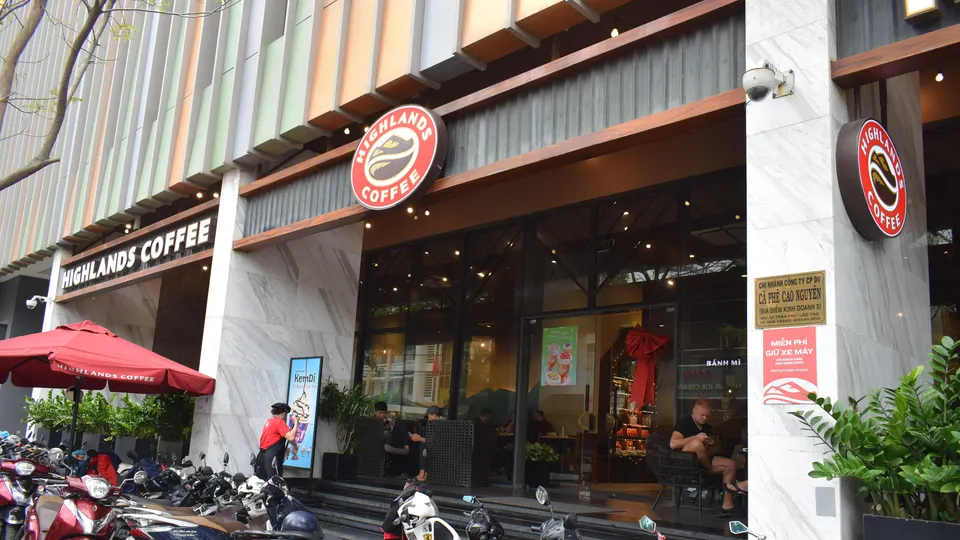
Chains offer a different kind of seat, indoors and air-conditioned, but they sit alongside the street cafes rather than replacing them. VietNamNet noted as early as 2014 that Saigon’s street cafes were upgrading their coffee and service to hold their own against Starbucks and other chains. The layer that has shrunk most is the oldest one, the cloth-filter shops. To choose between the big names, our guide to Vietnamese coffee chains compares Highlands, Phuc Long, Cong and Trung Nguyen and what each is good for. For where Vietnam’s coffee is grown, see our guide to Buon Ma Thuot in the Central Highlands.
Tra da and time: why nobody rushes you
Tea is never far away. Saigon’s tra da (trà đá) is green jasmine tea, brewed and then watered down until it is pale amber; Saigoneer calls it “tea-flavored iced water” and says that in Saigon “every single eatery is in itself a tra da vendor” (Saigoneer). Iced tea was mainly a southern habit until the early 2000s; older Hanoians preferred hot tea, which still shows in Hanoi’s cafe culture, where the classic cup is hot.
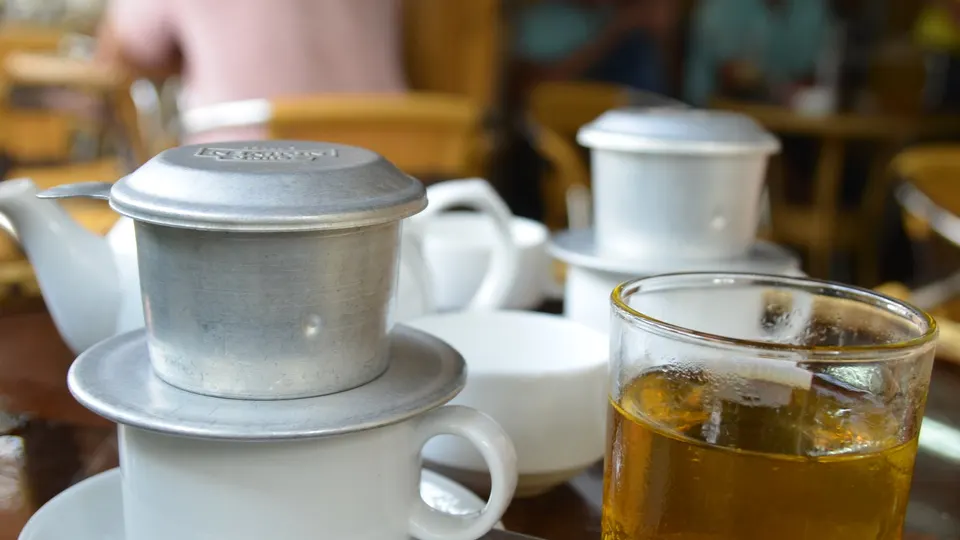
The same generosity shows in the city’s free iced-tea stations: plastic jugs and clean cups left on sidewalks for delivery riders, cleaners and anyone who is thirsty. Vietcetera describes one resident of former District 8 who has kept such a station outside her home for more than 20 years. Vietcetera reads the stations as a quiet thank-you to the city’s outdoor workers, and they fit the wider pattern: in Saigon, the sidewalk is a place to stop.
Cafe etiquette for visitors
You do not need to know much to fit in, but a few habits help:
- Learn the Southern words. Ordering is easier with a few words of Vietnamese: our guide to Vietnamese coffee orders explains sua da, bac xiu and how to ask for less sugar, and our guide to regional accents explains how Southern pronunciation and vocabulary differ from Hanoi’s.
- Pay when asked. At ca phe bet vendors expect payment straight away, because they may have to pack up quickly.
- Leave the pavement as you found it. Take your cup to the vendor or a bin, keep your motorbike off the walkway and move if the vendor packs up.
- Shoes off in a hammock. Most hammock cafes ask you not to wear shoes in the hammock, and some ask you to take them off at the entrance.
- Match the cafe to what you need. For conversation and street life, choose a stool; for a laptop, power sockets and air conditioning, a chain or modern cafe suits better. Some old cloth-filter shops prefer talk to screens.
- Expect early mornings. Cloth-filter shops and ca phe bet are at their liveliest between dawn and about 8 a.m.; the Cafe Apartment and modern cafes come into their own in the evening.

To put the city’s coffee in context with the rest of the South, from Cho Lon noodle shops to Mekong river towns, start from our Southern Vietnam guide or browse the Vietnamese culture hub.
Frequently asked questions
What is ca phe bet?
Ca phe bet means 'coffee sitting on the ground'. Mostly young Saigonese buy cheap coffee from a mobile vendor and sit on a piece of cardboard or a mat, usually around Notre-Dame Cathedral, the Central Post Office and April 30 Park, especially in the early morning and at weekends.
What is ca phe vot?
Ca phe vot is coffee brewed through a cloth filter shaped like a small net or stocking (vot), the older Saigon method before the metal phin. A few family shops still make it, such as Cheo Leo in former District 3, where the family has sold it since 1938.
What is the Cafe Apartment in Ho Chi Minh City?
It is the old nine-storey apartment block at 42 Nguyen Hue, in the city centre, where tenants rented their rooms out to coffee shops and other businesses. By 2020 it held more than 30 businesses, many with balconies over Nguyen Hue walking street.
What are hammock cafes (ca phe vong)?
Roadside cafes with rows of hammocks, common on highways in southern Vietnam and the Mekong Delta. You buy one drink and can rest as long as you like. Avoid the dark, closed-in ones: some are fronts for other businesses.
Key sources
- Coffee Styles in Saigon Then and Now · Saigoneer (Dang Bui), 26 Jun 2014
- Sài Gòn cà phê sữa đá · Sài Gòn Giải Phóng (Thiên Thanh), 3 Jan 2021
- Sitting on the ground for 'cà phê bệt': A cool but problematic experience in Ho Chi Minh City · Tuổi Trẻ News, Jun 2023
- Cà phê vợt: Có nơi ở Sài Gòn gì cũng từ từ · Tuổi Trẻ (Đức Noise), 4 Jun 2022
- Cà Phê Võng: Ode to Hammock Cafes · Vietnam Coracle (Luke Digweed), May 2023
- The Foolproof Guide to Exploring The Cafe Apartments Ho Chi Minh · Vietnam Airlines travel guide
- Starbucks chạm mốc 150 cửa hàng, thị trường ghi nhận chuỗi cà phê trung - cao cấp nở rộ · Tuổi Trẻ, 1 Jan 2026
- For the Love of Our Cooling, Affordable and Ubiquitous Trà Đá · Saigoneer (Khôi Phạm), 12 May 2023
All 16 sources and further reading
- 4 phong cách cà phê đặc trưng người Sài Gòn · VnExpress, 28 Jan 2015
- Cà Phê Bệt: Sidewalks As Saigon's Living Room · Vietcetera (Gấm Võ), 2 Oct 2025
- [Video] Hẻm Gems: 80 Years of Cà Phê Vợt in Saigon's Oldest Cafe · Saigoneer, 29 Apr 2018
- Saigon cafe apartment building featured on National Geographic UK · Tuổi Trẻ News, 29 Sep 2020
- Street cafes have new faces · VietNamNet, 16 Feb 2014
- Cà phê võng 'sung sướng' · VnExpress, 21 Sep 2012
- With Thriving Coffee Culture, Vietnam Has Half a Million Cafes, Data Shows · Saigoneer, 20 Aug 2024
- What Free Iced Tea Says About Ho Chi Minh City · Vietcetera (Phoebe Phạm), 9 Aug 2025
Keep exploring
 South Vietnam · Travel Ho Chi Minh City (Saigon): How Many Days and What to See Ho Chi Minh City (Saigon) explained: the 2025 merger and new wards, how many days to stay, Metro Line 1, Long Thanh airport, palace and museum tickets.
 North · Central · South · Food Vietnamese Coffee by Region: What to Order Where How Vietnamese coffee changes from Hanoi's hot ca phe nau to Hue salt coffee and Saigon's iced ca phe sua da, bac xiu and cloth filter, and how to order.
 North Vietnam · Food Hanoi Egg Coffee (Ca Phe Trung): Where to Drink It + Recipe Where to drink Hanoi egg coffee (ca phe trung) in 2026: Cafe Giang, Cafe Dinh and Giang Yen Phu compared, cup prices, a 5-minute recipe and raw-egg safety.
 North · Central · South · Culture Vietnamese Accents Compared: 6 vs 5 Tones, Which to Learn Vietnamese accents compared sound by sound: Hanoi's six tones vs Saigon's five, Hue's local words, the hardest accent, and a table for which accent to learn.