All three regions · Food
How to Order Coffee in Vietnam: Bac Xiu vs Ca Phe Sua Da
How to order coffee in Vietnam: ca phe sua da vs bac xiu, nau in Hanoi vs sua in Saigon, den da, egg coffee, asking for less sugar and what a cup costs in 2026.
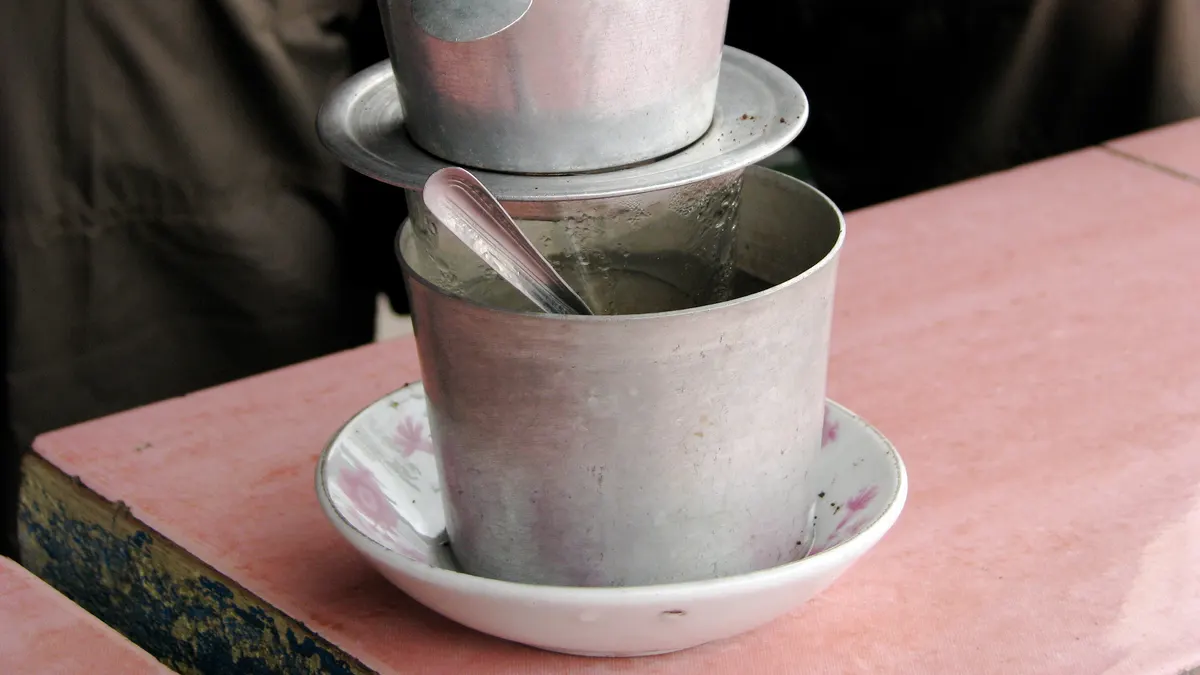
To order coffee in Vietnam, say ca phe, then den for black or sua for condensed milk, then da for iced or nong for hot; ask for bac xiu if you want a milky, mild glass instead. As of October 2026, Znews put a cup at a sidewalk cafe at about 15,000–25,000 dong, against roughly 90,000–125,000 dong for a drink at Starbucks, so the local orders below are also the cheap ones.
Most Vietnamese coffee orders are built from three drinks: ca phe den (cà phê đen), black coffee; ca phe sua (cà phê sữa), coffee with sweetened condensed milk; and bac xiu (bạc xỉu), a glass of milk with a little coffee. Add da (đá) for iced or nong (nóng) for hot, and you can order almost anywhere: ca phe sua da, the iced milk coffee most visitors know, is simply “coffee, milk, ice”.
The words shift between Hanoi and Saigon, and so do the habits behind them. Our guide to Vietnamese coffee by region explains why the North drinks its coffee hot and strong and the South drinks it iced; this page stays at the counter, with the terms, what is in each glass, how to change it and the mistakes visitors make. For the rest of the country’s food, start at the Vietnamese food hub.
Vietnamese coffee orders at a glance
| Order (plain name) | Vietnamese | What is in it | In Hanoi (North) | In Saigon (South) |
|---|---|---|---|---|
| Black coffee, hot / iced | Ca phe den nong / den da (đen nóng / đen đá) | Strong phin coffee, often already sweetened | Den nong or den da | Den da; hot coffee is less common |
| Milk coffee, iced | Ca phe sua da / nau da (nâu đá) | Phin coffee, condensed milk, ice | Called nau da | Called sua da, the everyday order |
| Milk coffee, hot | Ca phe nau nong / sua nong | Phin coffee and condensed milk, served hot | Nau nong, the traditional Hanoi cup | Sua nong |
| Bac xiu | Bac xiu | Mostly milk, a little coffee, usually iced | Rare in 2016; check the menu | A Saigon classic from the Hoa community |
| Coffee with fresh milk | Ca phe sua tuoi | Coffee with fresh rather than condensed milk | Ask for it | Listed among Saigon’s milk coffees |
| Egg coffee | Ca phe trung (cà phê trứng) | Coffee under whipped egg yolk and sugar | Hanoi specialty since 1946 | Sold in specialty cafes |
| Salt coffee | Ca phe muoi (cà phê muối) | Coffee under salted milk foam | Common in pavement cafes | Sold in specialty cafes; born in Hue |
| Coconut coffee | Ca phe cot dua (cà phê cốt dừa) | Coffee with coconut milk, iced | Also on menus | A Southern specialty |
The North and South columns describe each city’s default, not a rule; the sections below give the sources and the exceptions.
How do you order coffee in Vietnamese?
Build the order from left to right: ca phe (coffee), then how you want it (den for black, sua for condensed milk), then the temperature (da for iced, nong for hot). Kavey Eats’ ordering guide sets out the same pattern and notes that nong and da can be added to almost any drink. Ca phe sua da, ca phe den nong and nau da are all built this way.
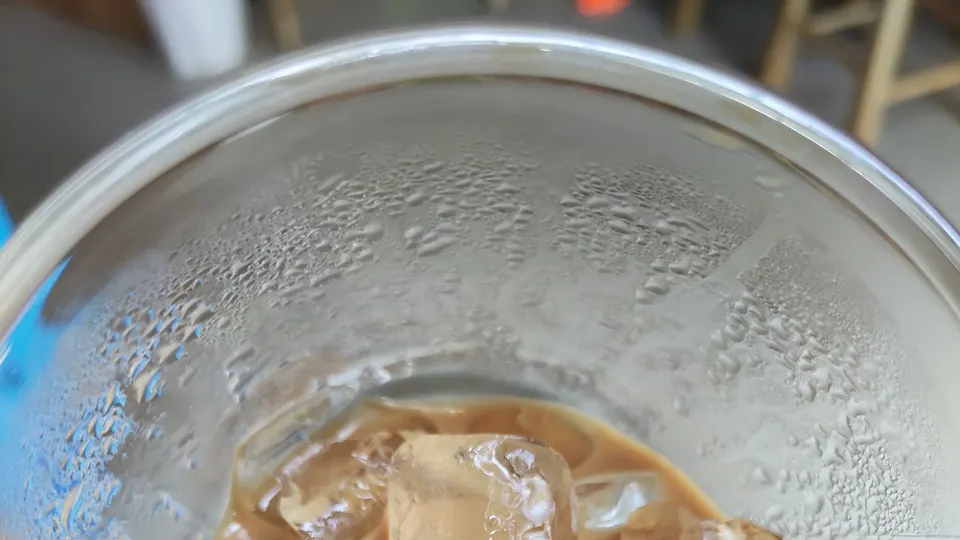
Then adjust it with three small words placed in front of what you want to change:
- It (less, a little): it duong (ít đường), less sugar; it sua (ít sữa), less milk; it da (ít đá), less ice.
- Nhieu (nhiều) (more): nhieu sua, more milk; nhieu da, more ice.
- Khong (không) (no, none): khong duong, no sugar; khong da, no ice.
So “Cho em mot den da, khong duong” means “An iced black coffee for me, no sugar”. The polite frame around it (cho em or cho toi at the start, a softener at the end) is the same one used for food; our guide to Vietnamese phrases by region explains which pronoun to use with whom. If the words will not come, point at the menu or show a photo.
Bac xiu vs ca phe sua da: what is the difference?
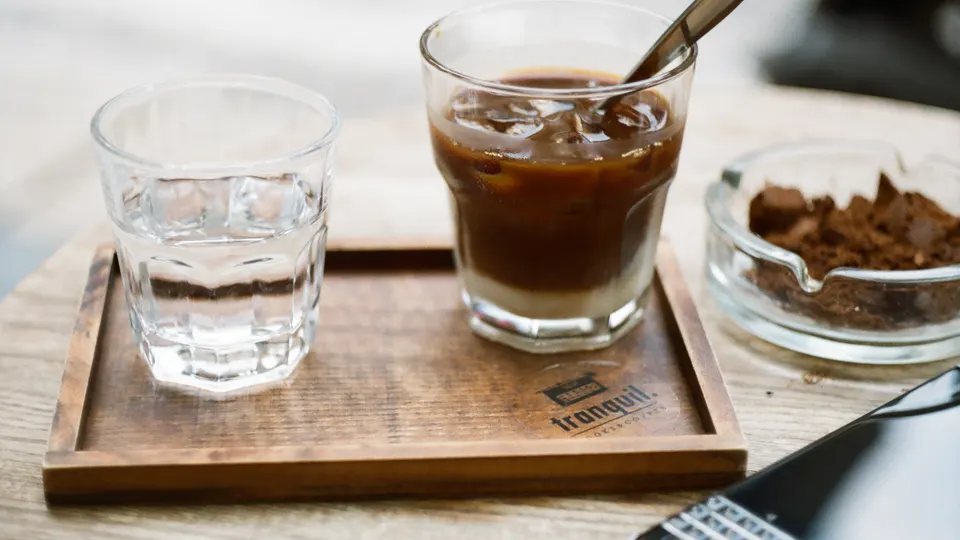
Ca phe sua da and bac xiu are built from the same three things, phin coffee, sweetened condensed milk and ice, in opposite proportions. Ca phe sua da is a coffee softened with milk; bac xiu is a glass of milk with a little coffee in it, “a lot of milk, little coffee” in the words of a Thanh Nien (Thanh Niên) food writer, who adds that ca phe sua is the one with the more concentrated coffee (Thanh Nien).
| Ca phe sua da | Bac xiu | |
|---|---|---|
| What it is | Phin coffee with condensed milk, over ice | Milk with a little coffee, usually over ice today |
| Which leads | The coffee; the milk softens it | The milk; the coffee adds aroma and flavour |
| Taste | Strong and bitter-sweet | Sweeter and much milder |
| Milk | Sweetened condensed milk | Condensed milk, often mixed with fresh milk |
| Hot or iced | Both; iced is Saigon’s everyday cup | Once drunk hot in old Saigon; mostly iced now |
| Name | Plain Vietnamese: coffee, milk, ice | Cantonese: “a glass of white with a little coffee” |
| In Hanoi | Ordered as nau da (iced) or nau nong (hot) | Not a traditional Hanoi order; check the menu |
| How to ask | “Mot ca phe sua da” (in Hanoi “mot nau da”) | “Mot bac xiu”; add nong for a hot one |
No source we found gives a fixed ratio, and each cafe pours its own. The MICHELIN Guide sums up the balance bac xiu is after: too much milk makes it overly sweet, too much coffee makes it too bitter. Tuoi Tre (Tuổi Trẻ) describes the base as condensed milk mixed with fresh milk, with a little coffee “dabbed” on top for flavour, and says it can be drunk hot or cold. VietNamNet’s 2016 feature insists that, hot or iced, bac xiu is not a ca phe sua at all, and notes that it is now usually served with ice, sometimes with coconut milk. Thanh Nien’s writer, by contrast, argues that only a hot glass brings out the coffee’s aroma.
What this means at the counter:
- For a coffee kick, order ca phe sua da. With less coffee in the glass, bac xiu is the gentler drink, not a stronger one.
- For a milky, dessert-like drink, order bac xiu. If you like it less sweet, say it duong; if you want to know whether fresh milk goes in, ask.
- In Hanoi, translate first. The local sua da is nau da. Where bac xiu is not on the menu, you can ask for nau with nhieu sua (more milk) to get closer to it.
- Either way, stir. Both drinks settle with the milk at the bottom, as in the photo above.
Nau or sua: why does Hanoi use a different word?
Hanoi and Saigon order the same drink with different words. A VnExpress comparison republished by VietTimes in 2016 put it plainly: for the same coffee with condensed milk, Saigon people say ca phe sua da and Hanoi people say ca phe nau (VietTimes). Nau means brown, the colour of the coffee once the milk is in; sua simply means milk.
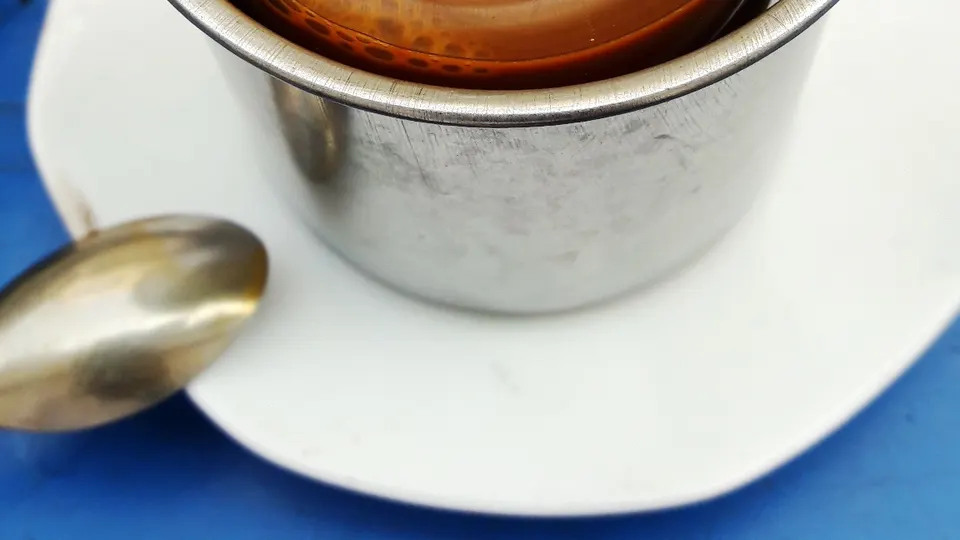
The difference is more than a word. The same article found that the Hanoi cup uses more coffee and tastes more bitter, that Hanoi drinkers of the time did not take their nau with ice, and that Saigon offered three milk coffees where Hanoi had one: ca phe sua da, bac xiu and ca phe sua tuoi (cà phê sữa tươi), coffee with fresh milk. Current ordering guides such as Kavey Eats list ca phe nau next to ca phe sua, with nong or da added to either, so in a Hanoi cafe you can ask for nau nong or nau da.
For the South, the everyday cup is the iced one. Home Coffee Expert’s 2026 guide notes that Saigon rarely serves hot coffee, so in Ho Chi Minh City “sua da” is the default and “sua nong” the exception. The vocabulary differences run wider than coffee; our guide to regional accents explains how Southern and Northern Vietnamese differ in sound and words.
Where does the name bac xiu come from?
The name describes what is in the glass. CafeF, republishing a 2026 Phu nu moi article, explains the name as a shortening of “bac tay xiu phe (bạc tẩy xỉu phé)”, a phrase of the Hoa community of Saigon and Cho Lon in the mid-20th century: bac from bach, white; tay, the glass; xiu, a little; together “a glass of white milk with a little coffee” (CafeF).
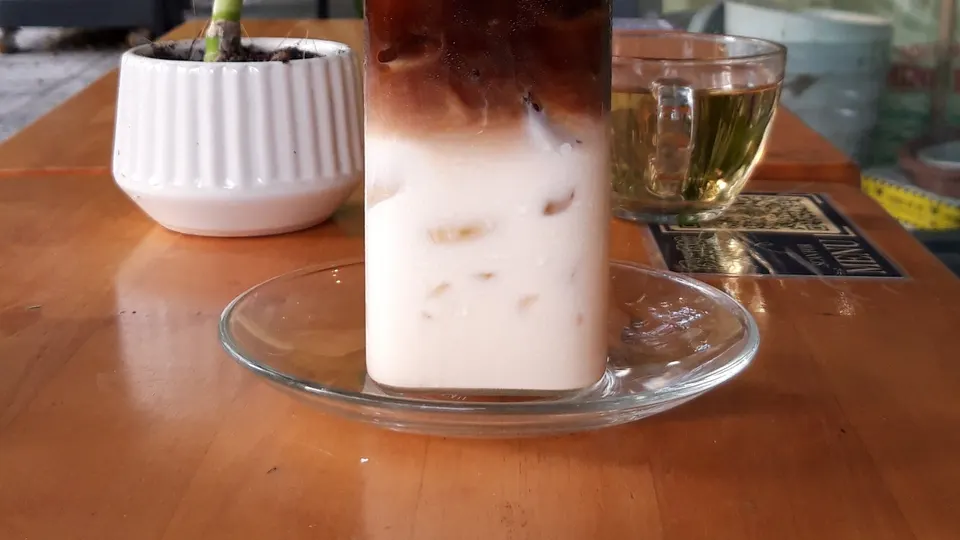
Saveur’s 2026 guide to Saigon coffee traces the drink to the Cantonese community of Saigon’s Chinatown and glosses the full name as “a glass of white with a little coffee”, and Vietnam Airlines’ travel guide and Tuoi Tre also say the name comes from Cantonese. The sources agree on the Hoa origin and on the meaning, but not on the date: the MICHELIN Guide places the drink in the early 20th century, CafeF in the mid-20th century and Tuoi Tre in the 1950s and 1960s, so treat any exact year as uncertain.
The story of why it exists is told as a legend rather than a record. In the MICHELIN Guide’s version, Chinese cafe owners in Saigon adjusted the coffee-to-milk ratio because black and milk coffee were too bitter for women and children; Tuoi Tre adds that condensed milk replaced fresh milk because fresh milk was expensive. VietNamNet recalls that old Saigon drank bac xiu with banh tieu (bánh tiêu), a hollow fried bread, at breakfast. In 2016 VietTimes still found bac xiu almost absent in Hanoi, so in the North, check the menu before you order it.
What is a phin, and why does your coffee take so long?
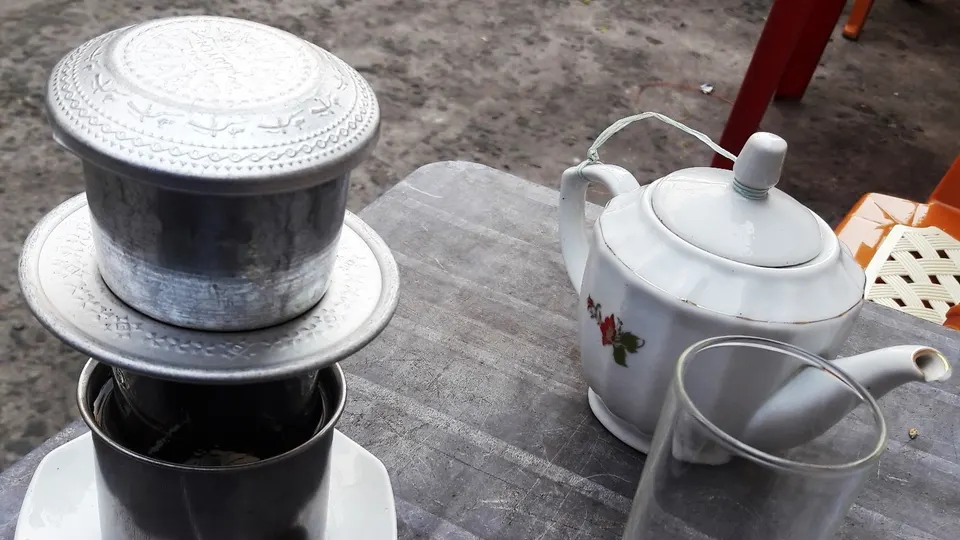
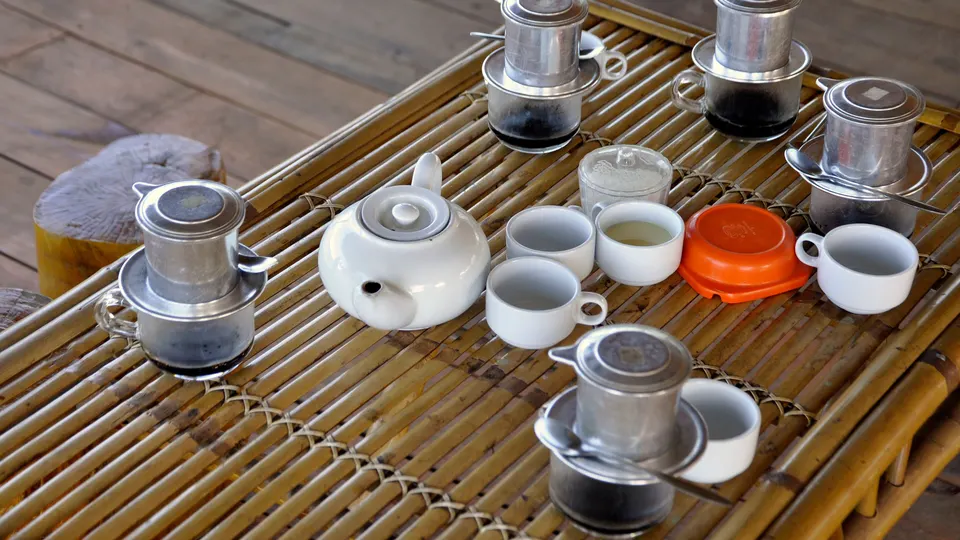
Almost every cup on this page starts in a phin, a small metal filter that sits on top of the glass or cup. Vietnam’s national tourism board describes it as a gravity-fed drip filter: coarse robusta grounds, water at 90–95°C and a slow drip with no espresso-machine pressure, often straight onto a layer of condensed milk (vietnam.travel).
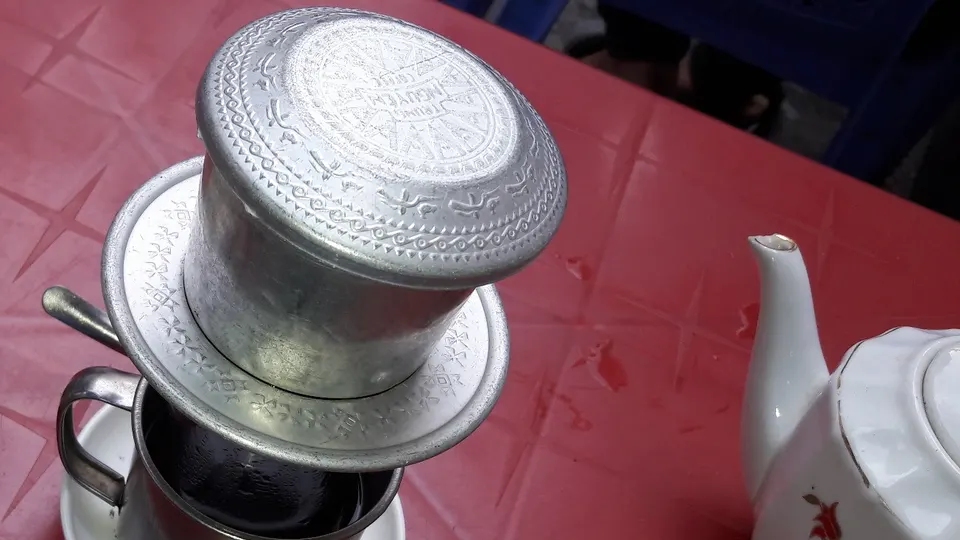
So “ca phe phin” on a menu means filter coffee made the slow way. Not every cafe works like that; Znews notes that in Hanoi some cafes brew phin coffee slowly for people who like to take their time, while others serve coffee made in advance, hot or iced. What arrives depends on where you sit:
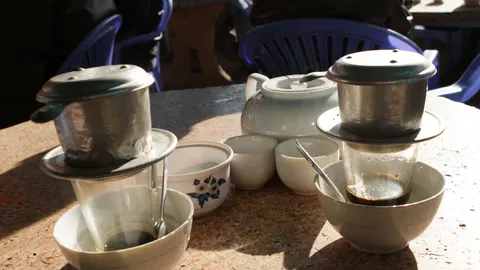
- Phin at the table: the filter sits on your glass and drips while you wait. When it stops, take it off and stir: the condensed milk sits at the bottom, and Home Coffee Expert advises stirring thoroughly.
- Made in advance: the coffee is poured for you and arrives ready to drink, usually already mixed with milk and ice.
- Cloth filter: in a few old Saigon shops the coffee comes from a cloth filter instead, ca phe vot (cà phê vợt), described in our Saigon coffee culture guide.
Robusta or arabica: what is in the cup?
Unless a cafe says otherwise, your coffee is robusta. Vietnam is the world’s second-largest coffee producer, and nearly 95% of its output is robusta, according to US Department of Agriculture figures reported by Viet Nam News (Vietnam News). Vietnam’s national tourism board places the main robusta country in the Central Highlands, in Dak Lak (Đắk Lắk) and Gia Lai, around the coffee town of Buon Ma Thuot.
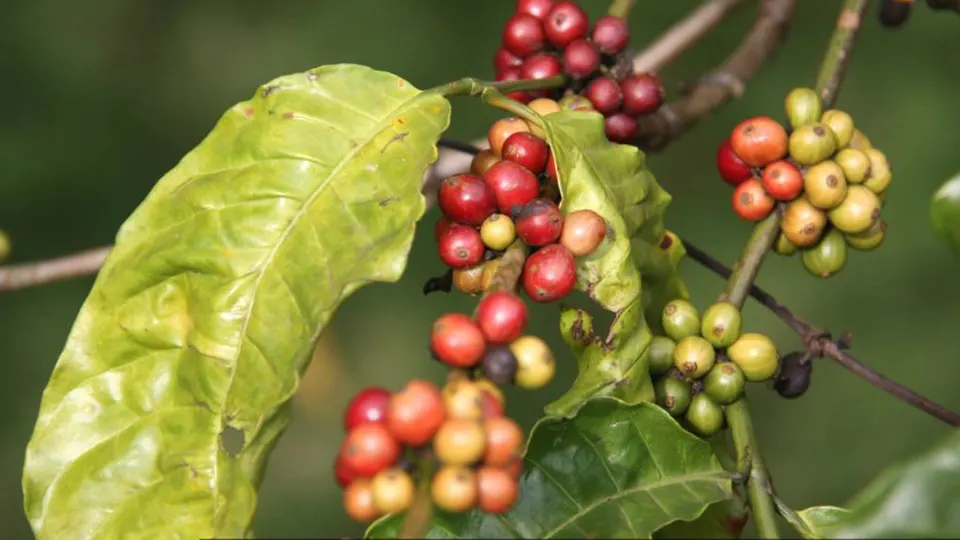
In Vietnamese, robusta is ca phe voi (cà phê vối) and arabica ca phe che (cà phê chè). Robusta is the bitter, heavy bean that stands up to a dark roast and sweet milk; the tourism board notes that traditional roasters sometimes add a touch of butter or cacao. Arabica, grown around Da Lat, is what the tourism board finds in third-wave roasteries, and Saveur points to Saigon cafes serving high-altitude arabica as pour-over. Bao Quoc te (Báo Quốc tế) describes arabica as more acidic and robusta as more bitter, so if you prefer a lighter cup, ask whether a cafe has arabica; the standard orders on this page use robusta.
Viet Nam News, citing US Department of Agriculture figures in May 2026, reported that Vietnam’s 2025/26 coffee crop was forecast to recover to 30.8 million 60kg bags. Bean prices move daily: on 9 November 2026 green coffee in the Central Highlands traded at about 84,500–85,300 dong per kilo, Bao Van hoa reported, a farm-gate figure that does not translate directly into the price of your cup.
Egg, salt and coconut: the specialty orders
Three newer drinks now sit on many menus next to the classics. They are worth knowing by name, but none is the everyday order in the way ca phe sua da is.
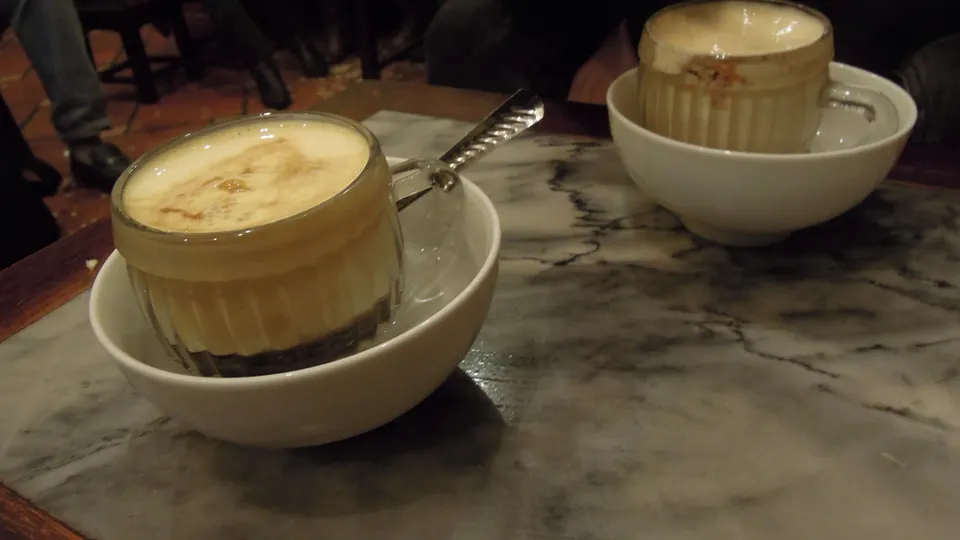
- Ca phe trung, egg coffee. Created in Hanoi in 1946: coffee under egg yolks whipped with sugar, which Saveur describes as “rich and custardy without the strong egginess that first-timers often expect” (Saveur). It is traditionally served hot, often standing in a bowl of hot water. Our Hanoi egg coffee guide covers where to drink it and the raw-egg question.
- Ca phe muoi, salt coffee. Vietnam Airlines’ travel guide calls it a creation of Hue, with a pinch of sea salt on top of creamy milk foam. VietNamNet reported in 2023 that you can find it in nearly every pavement cafe in Hanoi, and Saveur lists it in Saigon too.
- Ca phe cot dua, coconut coffee. Coffee with coconut milk over ice, which Vietnam Airlines describes as a Southern specialty and Saveur calls a drink that blurs “the line between caffeine and dessert”.
For ordering, it is enough to know that egg, salt and coconut coffee are all sweet and creamy, closer to a dessert than to a black coffee; our salt coffee and coconut coffee guide explains where each comes from.
How strong and how sweet is Vietnamese coffee?
Expect a small cup with a lot of caffeine and, unless you say otherwise, a lot of sugar. On caffeine, Bao Quoc te, republishing Dan tri, gives about 2.5% caffeine in robusta beans against roughly 0.9–1.7% in arabica (Bao Quoc te), and the phin concentrates it further. Tuoi Tre warns that the cloth-filter coffee at one old Saigon shop is so strong that newcomers may feel it until the afternoon.
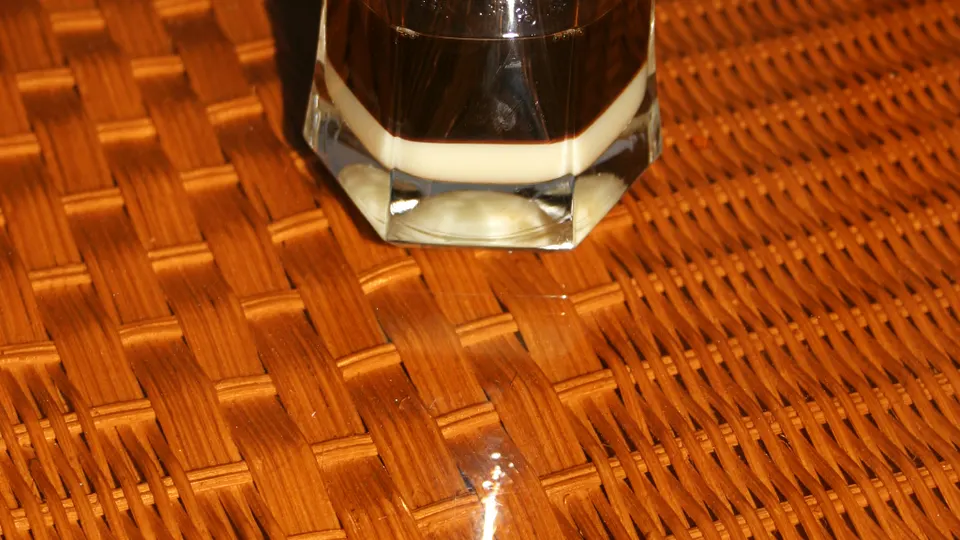
On sweetness, the condensed milk is the point, not an extra. The tourism board explains that fresh milk was scarce and expensive in tropical Indochina, so shelf-stable sweetened condensed milk became the standard, and its sweetness balances robusta’s bitterness. Black coffee is not always plain either: Home Coffee Expert notes that sugar is standard with black coffee, so say khong duong if you want it unsweetened, or it duong for a little less. If you drink little coffee, a bac xiu or a sua da with extra ice is the gentler start; if you are sensitive to caffeine, one phin cup in the morning is plenty.
Common mistakes when ordering coffee in Vietnam
Most mistakes come from assuming a Western menu: that black means unsweetened, that milk means fresh milk, or that the word you say will be heard as you mean it.
- Getting the tone wrong on sua. Sua (sữa) is milk, but with a rising tone sua (sứa) is jellyfish. Bao Van hoa (Báo Văn hóa) reported in May 2026 on a foreign customer who asked for “ca phe sua” with the wrong tone and was jokingly sent to the seafood market, until he showed a photo of an iced milk coffee (Bao Van hoa). A photo or a pointed finger solves it.
- Expecting black to mean unsweetened. Den da can arrive sweet. Say khong duong when you order, not after the sugar is in.
- Expecting fresh milk. Sua on a Vietnamese menu means condensed milk. Ask for sua tuoi if you want fresh milk; for bac xiu, Home Coffee Expert suggests checking which milk a cafe uses.
- Ordering bac xiu for a caffeine hit. It is mostly milk. For strength, order den or sua.
- Forgetting to stir. The coffee drips onto condensed milk at the bottom of the glass; stir it through before you drink.
- Treating it like a large filter coffee. A robusta phin cup is small but carries a lot of caffeine; sip it slowly.
Which coffee should you order first?
Order by what you want from the cup, and use the local word where you are. Both work everywhere, but the local one gets the local cup.
- You like espresso or strong black coffee: ca phe den nong in Hanoi, den da in Saigon, and add khong duong.
- You want the classic Vietnamese coffee: ca phe sua da in the South, nau nong or nau da in Hanoi.
- You want it mild and sweet: bac xiu, or sua da with nhieu sua (more milk).
- You want fresh milk: ca phe sua tuoi.
- You want something different: egg coffee in Hanoi; salt or coconut coffee in many cafes in both cities.
Where you sit changes the price more than what you order. Znews reported in October 2026 that a sidewalk coffee could cost only 15,000–25,000 dong, mass-market chains a few tens of thousands of dong, and Starbucks about 90,000–125,000 dong per drink, with some specialty cafes charging far more for single-origin cups. The Vietnamese chain Highlands Coffee had 985 stores by the end of 2025, Tuoi Tre News reported in March 2026, so a chain cafe is an easy fallback if a sidewalk stall feels daunting.
Say “Cho em mot …” plus the drink, add one adjustment (it duong, khong da, nhieu sua), and stir before you drink. The place cards below name two old cafes, one in Hanoi and one in Saigon’s Cho Lon, where the core orders are still made the traditional way.
Where to order the classic cups in Hanoi and Saigon
Local favourite
Café Nhân · Cà phê Nhân
Hanoi · Hoàn Kiếm ward (former Hoàn Kiếm district), Old Quarter
39D Hàng Hành Street
An Old Quarter café that dates its history to 1946 and moved to Hàng Hành later (Znews). Tatler Asia (2025) describes an unchanged, simple room and rich, full-bodied coffee without trendy extras: a place to taste Hanoi's plain black coffee the way the capital has long drunk it.
Order: Cà phê đen (strong black coffee), which Tatler Asia says is served in glass cups; add nóng for hot or đá for iced.
Recommended by: Tatler Asia (2025), Znews (2019) · checked November 2026
Local favourite
Cà phê Ba Lù
Ho Chi Minh City · Inside Phùng Hưng market, Chợ Lớn (former Ward 14, District 5)
193 Phùng Hưng Street (in Phùng Hưng market)
A Chinese-Vietnamese family stall that still brews cà phê vợt (cloth-filter coffee) inside a Chợ Lớn market, now run by the founder's third generation (Đại Đoàn Kết, 2025). TheSmartLocal reports it sells only black coffee, hot or iced, with or without condensed milk: the core orders on this page, made the old way.
Order: Cà phê đen đá or cà phê sữa đá. Tuổi Trẻ warns the coffee is so strong that newcomers may feel it until the afternoon.
Sources disagree on the founding date (1945 in Đại Đoàn Kết, 1953 in TheSmartLocal). It is a market stall with early hours; check opening times on the day.
Recommended by: Đại Đoàn Kết (2025), TheSmartLocal Vietnam (2022), Tuổi Trẻ (2022) · checked November 2026
Addresses and details can change; check before you go. We do not accept payment for listings.
Frequently asked questions
How much does a coffee cost in Vietnam in 2026?
Znews reported in October 2026 that a ca phe sua da or den da at a sidewalk cafe costs about 15,000–25,000 dong, while drinks at Starbucks in Vietnam run about 90,000–125,000 dong. Mass-market chains sit in between, at a few tens of thousands of dong.
Is Vietnamese coffee stronger than regular coffee?
It usually tastes and feels stronger, because it is mostly robusta, which contains more caffeine than arabica (about 2.5% against 0.9–1.7%), and it is dark-roasted and slowly dripped through a phin into a small, concentrated cup. We found no reliable source comparing a phin cup with an espresso shot directly.
Can I order bac xiu in Hanoi?
Sometimes, but bac xiu is a Saigon drink and not a traditional Hanoi order, so check the menu first. Where it is missing, ask for ca phe nau with nhieu sua (more milk) to get close to it.
Can I get Vietnamese coffee with fresh milk instead of condensed milk?
Yes, in many cafes. Ask for ca phe sua tuoi, coffee with fresh milk, which VietTimes lists among Saigon's standard milk coffees; plain sua on its own normally means condensed milk.
Do I need to speak Vietnamese to order coffee in Vietnam?
No. Pointing at the menu or showing a photo of ca phe sua da works in almost any cafe, and it avoids the tone mistake Bao Van hoa reported in May 2026, when a visitor's 'ca phe sua' was heard as 'jellyfish'.
Key sources
- Bạc sỉu, di sản Sài Gòn xưa · Thanh Niên (Giang Vũ), 3 February 2016
- Khác biệt văn hóa uống cà phê của Hà Nội và Sài Gòn · VietTimes (from VnExpress), 27 January 2016
- Vì sao gọi là bạc xỉu? · CafeF (from Phụ nữ mới), 5 August 2026
- 10 Essential Vietnamese Coffee Drinks and Where to Try Them in Saigon · Saveur (Dan Q. Dao), 31 August 2026
- The secret art of Vietnamese coffee · Vietnam National Authority of Tourism (vietnam.travel)
- Việt Nam cements status as world's No.2 coffee producer, robusta powerhouse · Việt Nam News, 14 May 2026
- Cà phê Arabica và Robusta khác nhau như thế nào? · Báo Thế giới và Việt Nam (from Dân trí), 7 March 2021
- Gọi "cà phê sữa" nhưng nói nhầm 1 dấu, khách Tây được nhân viên nhiệt tình chỉ đường đến chợ hải sản · Báo Văn hóa (Nhật Linh), 5 May 2026
All 24 sources and further reading
- Ly cà phê giá 100.000 đồng trở nên bình thường từ khi nào? · Znews, 8 October 2026
- Highlands Coffee nears 1,000 stores, posts over $41mn profit as IPO plans advance · Tuoi Tre News, 15 March 2026
- Giá cà phê hôm nay 10/11/2026: Robusta tăng, Arabica giảm trong phiên tối · Báo Văn hóa, 10 November 2026
- A guide to Vietnamese coffee · MICHELIN Guide (Lana Tran), 30 March 2024
- Bạc xỉu – Nhấm nháp chút "hơi thở của thời gian" giữa lòng Sài Gòn · Tuổi Trẻ, 18 January 2024
- Bạc xỉu hay câu chuyện sữa – cà phê của người Sài Gòn · VietNamNet (from Vntinnhanh), 5 May 2016
- Best coffee in Vietnam · Vietnam Airlines travel guide
- A taste of Vietnam: The story behind its beloved coffee culture · Vietnam National Authority of Tourism (vietnam.travel)
- How to Order Your Coffee in Vietnam · Kavey Eats (Kavita Favelle)
- How to Order Coffee in Vietnam: Sip Like a Local · Home Coffee Expert (Matt Woodburn-Simmonds), updated 11 June 2026
- Salt coffee, a Hue delicacy, conquers Hanoi taste buds · VietNamNet, 20 September 2023
- 4 Hanoi legendary coffee shops · Tatler Asia, 30 August 2025
- Cà phê kiểu Hà Nội · Znews, 7 August 2019
- Thơm mãi cà phê vợt · Đại Đoàn Kết, 9 February 2025
- Cà phê vợt: Có nơi ở Sài Gòn gì cũng từ từ · Tuổi Trẻ, 4 June 2022
- Ba Lù cafe – Cholon signature net coffee · TheSmartLocal Vietnam, 12 April 2022
Keep exploring
 North · Central · South · Food Vietnamese Coffee by Region: What to Order Where How Vietnamese coffee changes from Hanoi's hot ca phe nau to Hue salt coffee and Saigon's iced ca phe sua da, bac xiu and cloth filter, and how to order.
 South Vietnam · Culture Saigon Coffee Culture: Which Cafe to Choose and When How Saigon drinks coffee: sidewalk stools, ca phe bet by Notre-Dame, cloth-filter ca phe vot, hammock cafes, the Cafe Apartment, chains, and cafe etiquette.
 North Vietnam · Food Hanoi Egg Coffee (Ca Phe Trung): Where to Drink It + Recipe Where to drink Hanoi egg coffee (ca phe trung) in 2026: Cafe Giang, Cafe Dinh and Giang Yen Phu compared, cup prices, a 5-minute recipe and raw-egg safety.
 North · Central · South · Culture Which Vietnamese Phrases to Use in Hanoi, Hue and Saigon Which Vietnamese phrases to use in Hanoi, Hue and Saigon: greetings and family words, da or vang, prices, ordering, and words that change, like lon or heo.