South Vietnam · Food
Com Dep (Cốm Dẹp): Khmer Rice Flakes and Where to Try Them
Com dep, the Khmer flattened sticky rice of the Mekong Delta: how it is made and eaten, how it differs from Hanoi com, and where to see it in November 2026.
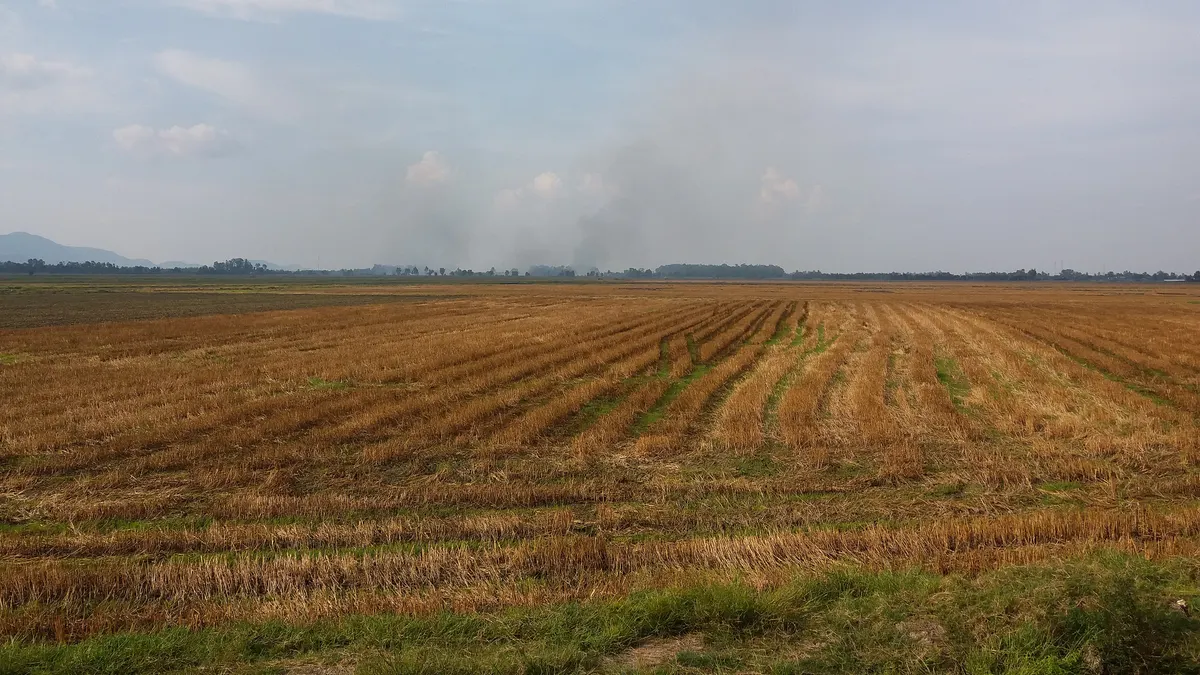
Com dep (cốm dẹp) is the flattened sticky rice of the Mekong Delta’s Khmer people: rice roasted in a clay pot until it pops, pounded flat in a wooden mortar and eaten mixed with coconut water, grated coconut and sugar. It is the one offering no altar goes without at Ok Om Bok, the Khmer moon festival, and as of November 2026 it is still pounded by hand: O Lam commune in An Giang holds its second com dep pounding contest on 21 November 2026, two days before the festival full moon on 23 November (Bao Van Hoa).
If you know the pale green com of Hanoi, com dep will surprise you: it is a different snack from a different rice culture. This page explains what it is, how it is made, how it differs from Hanoi com and where to try it. For the festival itself, see our Ok Om Bok guide; for the region, the South Vietnam hub.
Com dep vs Hanoi com at a glance
Both are “com”, rice pounded flat, but they come from opposite ends of the country and are eaten in different ways. The table draws on Vietnamese press reports opened on 19 November 2026.
| Com dep (Mekong Delta Khmer) | Com (Hanoi) | |
|---|---|---|
| Who makes it | Khmer villages in Can Tho (former Soc Trang), Vinh Long (former Tra Vinh) and An Giang; Kinh and Cham households too | Vong and Me Tri villages on Hanoi’s western side |
| Rice | Sticky rice; once young grain from the single wet-season crop, now often mature grain soaked overnight | Very young sticky rice (nep cai hoa vang) cut at the “milky” stage |
| Roasting | In a clay pot over a low charcoal fire until the grains pop | Over firewood, never gas or charcoal, in the village tradition |
| Pounding | Wooden mortar, two people with wooden pestles, fast while the rice is hot | Stone mortar, pounded and sifted three to seven times |
| Look | Flat, off-white to pale flakes | Jade-green flakes, coloured by the young grain |
| How it is eaten | Moistened with coconut water, mixed with grated coconut and sugar | Plain, from a lotus leaf, often with ripe bananas or persimmons |
| Season and meaning | Offering at Ok Om Bok, full moon of the 10th lunar month (23 Nov 2026); sold until Tet | Autumn delicacy; Mid-Autumn trays and betrothal gifts |
| Where to try it | Village stalls and festivals in the Delta; souvenir shops in An Giang | Hanoi street vendors and shops in autumn |
What is com dep, and who makes it?
Com dep is a festival food first and a snack second. For Khmer families in the Mekong Delta it is the offering to the Moon at Ok Om Bok, and VnExpress calls it a required item on the Moon rite tray in Tra Vinh, whose Ok Om Bok was listed as national intangible heritage in 2014 (VnExpress). The name means “flat com”, and the flatness is the point: the grain is crushed, not ground.
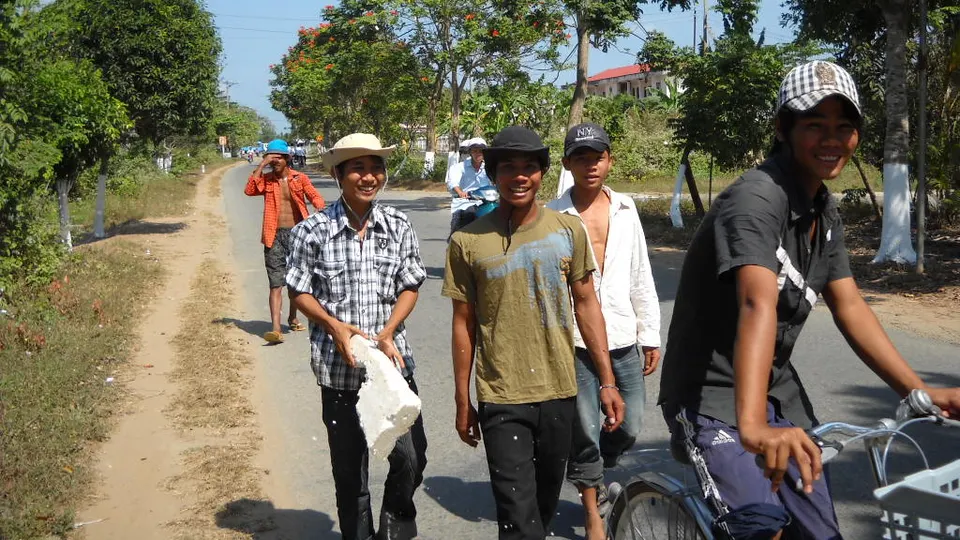
The Khmer of Vietnam live mainly in the former provinces of Soc Trang and Tra Vinh, now part of Can Tho city and Vinh Long province after the July 2025 merger, and around the Bay Nui (Seven Mountains) area of An Giang. Com dep is not only Khmer, though: Tuoi Tre has described it as a traditional food of Southern Khmer “and Kinh people too”, and Vietnam Airlines’ An Giang guide counts it as both Khmer and Cham. Its closest relative is across the border: in Cambodia the same flattened rice is called ambok and eaten at the Water Festival. To see the Khmer pagodas at the heart of this culture, our Khmer pagodas guide covers Soc Trang and Tra Vinh.
How is com dep made?
The method is simple to describe and hard to do well. In Song Loc commune in Vinh Long, Nhan Dan reported in November 2025, the sticky rice is sifted to remove empty grains and soaked overnight, then roasted a handful at a time in a clay pot over a low charcoal fire until the grains crackle. It goes straight into a wooden mortar, where two people facing each other pound it with wooden pestles in turn while a third scrapes the rice off the pestles with a bamboo stick. The flakes are then winnowed and sifted to remove husk and bran (Nhan Dan).
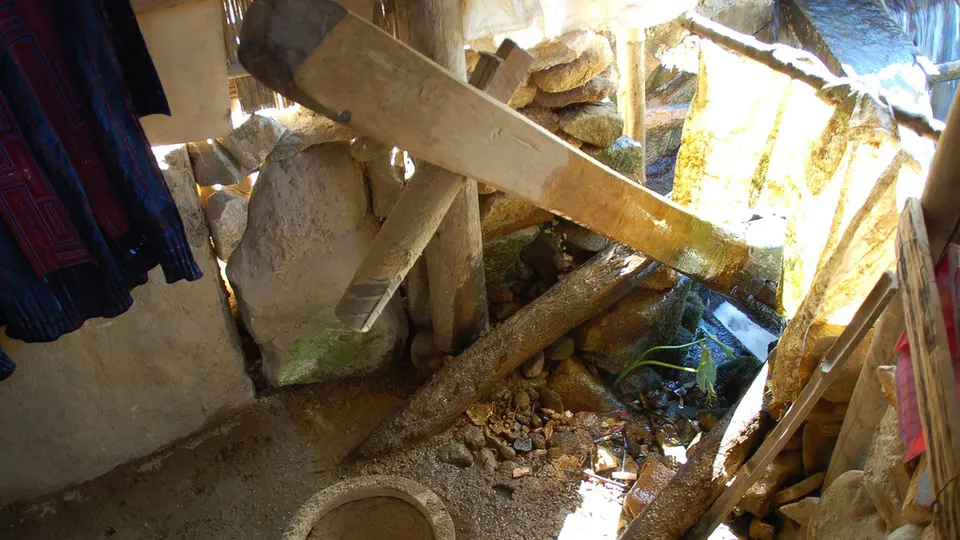
Speed matters. Tuoi Tre explained in 2013 that each batch is pounded in about two minutes, because once the roasted rice cools the pestle no longer flattens it. In An Giang’s Bay Nui area, makers prefer a local sticky rice the press calls Chhon ho, and roast it in clay pots whose smell carries across the hamlet.
Tradition vs today. Older makers say the rice used to come from a single wet-season crop and was cut just as it ripened, when the grains turned yellowish and tasted milky, as VietNamNet described in 2016. Today farmers grow three rice crops a year, so makers soak mature grain overnight to get the same softness, and machines do some steps for larger batches. What has not changed is the wooden mortar and the two-person rhythm, which is why villages now stage pounding for visitors.
How is it different from Hanoi’s green com?
The short answer: the rice, the fire, the mortar and the way you eat it. Hanoi’s com is made from nep cai hoa vang, a fragrant sticky rice cut while the grain is still green and “milky”, roasted over firewood and pounded in a stone mortar, then sifted again and again until only the fine green flakes remain; Nhan Dan’s report on the Vong and Me Tri villages describes up to six or seven rounds of pounding and sifting (Nhan Dan). The green colour comes from the young grain itself.
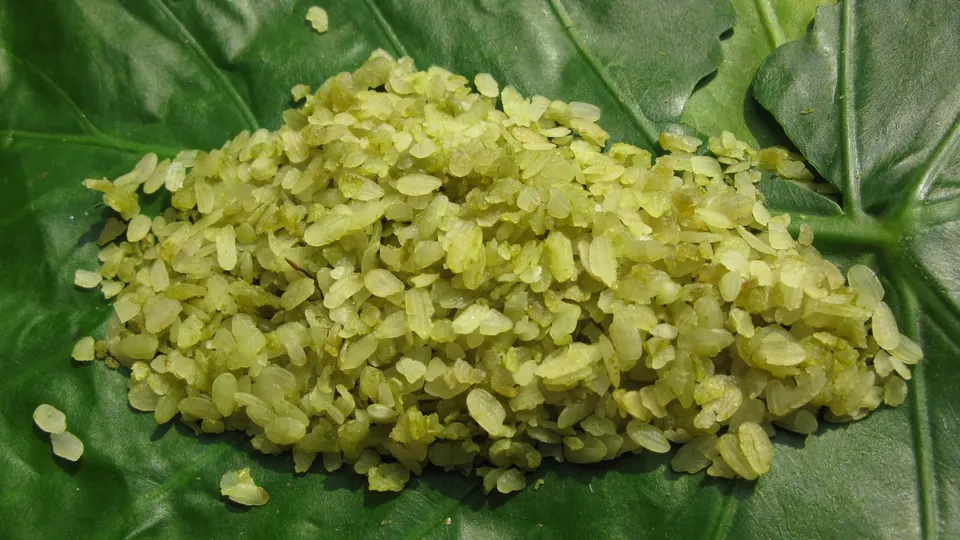
Hanoians eat com slowly and plain, pinched from a lotus-leaf parcel, or with ripe bananas or persimmons in autumn; the Me Tri com craft is on Vietnam’s national intangible heritage list, Bao Van Hoa reported. Com dep is chewier and paler, and it is almost always eaten mixed with coconut. Vietnam Airlines’ An Giang guide puts it simply: unlike Hanoi com, An Giang com dep is softer and richer. If you are in the north in autumn, our Hanoi guide and the Mid-Autumn Festival guide show where com fits in; Hanoi bakers even put it into mooncakes.
Why does Ok Om Bok need com dep?
Ok Om Bok thanks the Moon for the harvest at the end of the rains, and sticky rice is the earliest grain to be harvested, so the first rice of the season goes to the Moon. On the night of the full moon, families gather in pagoda courtyards or their own yards, face the Moon and lay out com dep with bananas, tubers and fruit. After the prayers the elder leading the rite feeds each child a handful of com dep and asks for their wish for the coming year, as Tuoi Tre and VietNamNet both describe.
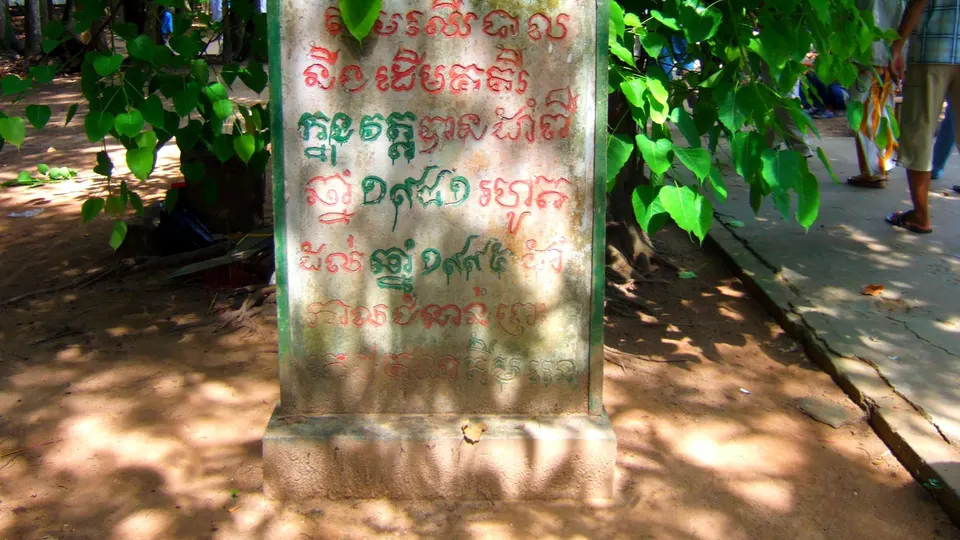
Before the full moon, the sound of pestles used to fill every hamlet. “At the full moon of the 10th month every household set out its mortar”, one 70-year-old maker in Vinh Long told Nhan Dan; fewer people pound by hand now, but the festival is still the peak season. In 2026 the full moon of the 10th lunar month falls on 23 November (Hong Kong Observatory calendar), Vinh Long’s ghe ngo boat races are on 21–22 November and Can Tho’s on the Maspero River in Soc Trang on 23–24 November, with 82 teams registered, Bao Van Hoa reported on 11 November 2026. Our Ok Om Bok guide has the full programme.
How do you eat com dep?
You do not cook it. Com dep is already roasted, so it is softened instead: moisten the flakes with coconut water, mix in grated coconut and a little sugar, and leave it to absorb the liquid. Sources give different waiting times, about 15 minutes in Tuoi Tre’s 2013 account and VietNamNet’s, about an hour in Nhan Dan’s 2025 report, one to two hours in a Tuoi Tre essay from 2022; longer gives a softer, sweeter result (Tuoi Tre).
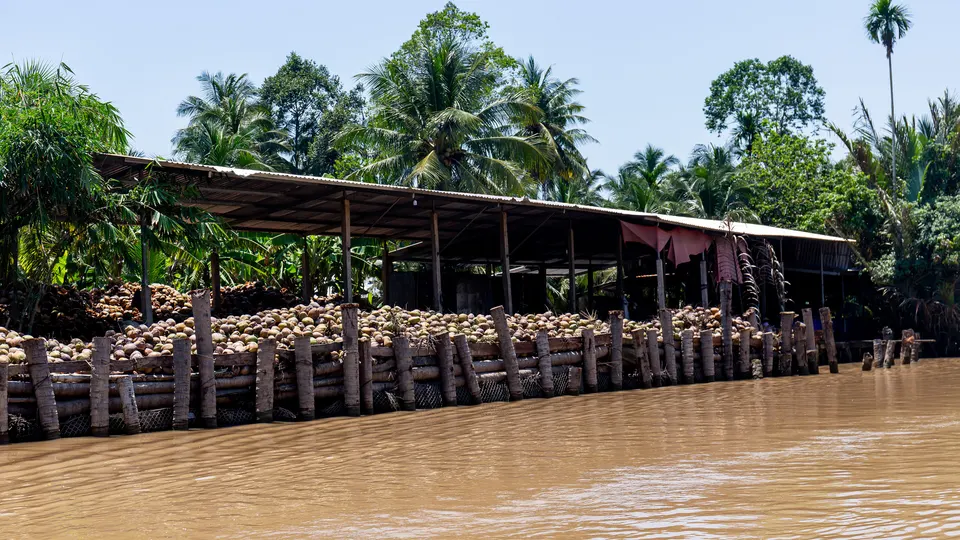
Ways to eat it, all documented in Vietnamese press:
- With a spoon, mixed with coconut and sugar: the everyday way.
- Wrapped in banana or lotus leaves, which add their scent, or rolled in sweet rice paper or eaten with puffed rice crackers (banh phong).
- With toasted sesame, a version Vietnam Airlines’ An Giang guide lists.
- Plain, chewed dry: older people sometimes eat the unmixed flakes to taste the rice itself, the 2022 Tuoi Tre essay recalls.
Pick a half-ripe coconut if you mix it yourself: its water is sweet enough to need little sugar and its flesh is firm but not dry, the same essay advises. In the former Tra Vinh, com dep is also wrapped with mung bean in banana leaves as banh tet com dep, a small Khmer banh tet steamed rather than boiled.
Where can you see it made or buy it in November 2026?
The best time is the fortnight before the Ok Om Bok full moon, which in 2026 means mid to late November. Three areas stand out, each documented in Vietnamese press; none has an official visitor programme, so treat them as places to ask locally rather than fixed attractions.
| Area (current unit) | What is documented | Best for |
|---|---|---|
| O Lam, Bay Nui area, An Giang | About 15–20 households in Phuoc Loc hamlet pound com dep from the 10th month to January, a commune com dep production group is part of a farm-tourism project, and the commune holds a pounding contest on 21 Nov 2026 with about 23 teams, Khmer theatre and drumming (Bao Van Hoa and the An Giang provincial portal, Nov 2025; Bao Van Hoa, Oct 2026) | Watching pounding as a community event; combine with Chau Doc |
| Song Loc, Vinh Long (former Tra Vinh) | A family in Ba Se B hamlet pounds com dep for tour groups and lets visitors try (Nhan Dan, Nov 2025) | Seeing the full process with a tour operator |
| Ba So, Vinh Long (former Cau Ngang, Tra Vinh) | Known com dep village with more than 50 families making it year-round in 2013 (Tuoi Tre); no recent figure found | Buying, if you are passing; check locally |
| Soc Trang, now in Can Tho city | Com dep sold at the Ok Om Bok festival and races, 23–24 Nov 2026 | Tasting at the festival; base yourself in Can Tho |
A simple plan. If you have two or three days in late November 2026: day one in Can Tho or Soc Trang for the moon rite and races (23–24 Nov); or, a little earlier, An Giang for the O Lam contest on 21 November, staying in Chau Doc. Outside the season, VnExpress lists com dep among An Giang souvenirs (guide updated January 2026), and many Khmer villages now make it all year, so markets in the Delta and our Mekong Delta guide are a good starting point.
What to check before you go. Ask your hotel or a local guide whether a household is pounding that day; it is home production, not a show. Buy fresh com dep plain and mix it the same day if you can, since the mixed version does not keep. At a moon rite, stand at the edge, accept com dep if it is offered, and ask before photographing.
Where to see com dep made
Local favourite
Phuoc Loc com dep hamlet, O Lam · Sóc Tà Păng S'lêng, ấp Phước Lộc, xã Ô Lâm
An Giang (Bay Nui area, near Tri Ton) · O Lam commune (Ô Lâm), An Giang province
Ta Pang S'leng sóc, Phuoc Loc hamlet, O Lam commune, An Giang
Khmer households here still roast and pound com dep by hand, mainly from the 10th lunar month to January; the commune runs a com dep production group and staged its first public pounding contest for Ok Om Bok 2025, with a second on 21 November 2026.
Order: Freshly pounded com dep mixed with coconut and sugar; plain flakes to take away
Home production, not a shop: there are no fixed opening hours, and households pound mainly in season. Ask in the hamlet or through a local guide.
Recommended by: Báo Văn Hóa (2025), An Giang Provincial Portal (2025) · checked November 2026
Addresses and details can change; check before you go. We do not accept payment for listings.
Frequently asked questions
Is com dep the same as Hanoi com?
No. Both are flattened sticky rice, but Hanoi com is very young green rice eaten plain in autumn, while Khmer com dep from the Mekong Delta is roasted until it pops, pounded in a wooden mortar and eaten mixed with coconut water, grated coconut and sugar.
Do I need to cook com dep before eating it?
No. Com dep is already roasted; you moisten it with coconut water, add grated coconut and a little sugar, and let it soften for about 15 minutes to an hour, as Vietnamese press describe Khmer households doing.
Where can I see com dep being made in November 2026?
O Lam commune in An Giang holds a com dep pounding contest on 21 November 2026, and Khmer pagodas and homes in Can Tho (former Soc Trang) and Vinh Long (former Tra Vinh) pound it before the Ok Om Bok full moon on 23 November.
Can you buy com dep outside the Ok Om Bok season?
Yes. Many Khmer villages now make com dep all year, and VnExpress lists it among An Giang souvenirs, but the freshest batches appear around Ok Om Bok in the 10th lunar month and in the months up to Tet.
Which com dep should I try first?
Try freshly pounded com dep mixed with coconut at a village or festival stall in the Mekong Delta in November, then compare it with plain Hanoi com in autumn; the contrast between coconut-rich and plain young rice is the point.
Key sources
- Giữ nghề làm cốm dẹp của đồng bào Khmer · Nhân Dân, 12 November 2025
- Về Ô Lâm vui hội giã cốm dẹp cùng đồng bào Khmer · Báo Văn Hóa, 22 October 2026
- Cốm dẹp thơm ngày lễ cúng Trăng · Tuổi Trẻ, 14 November 2013
- Tết trong hương cốm dẹp · Tuổi Trẻ, 12 December 2022
- Cẩm nang du lịch Trà Vinh · VnExpress, 4 December 2024
- Cốm, thức quà thanh nhã cho thu Hà Nội · Nhân Dân (special report)
- Go to O Lam to watch pounding of flattened young rice in the Moon Worship Festival · An Giang Provincial Portal, 5 November 2025
- Gregorian-Lunar Calendar Conversion Table, 2026 · Hong Kong Observatory
All 15 sources and further reading
- Vị ngọt tình quê Bảy Núi · Báo Văn Hóa, 5 November 2025
- Sôi nổi những nhịp chèo trước mùa lễ hội Ok Om Bok – Đua ghe Ngo 2026 · Báo Văn Hóa, 11 November 2026
- Flat 'Com' of the Khmer · VietNamNet, 24 January 2016
- Cẩm nang du lịch An Giang · VnExpress, updated 5 January 2026
- Đặc sản An Giang: ăn gì, mua gì làm quà · Vietnam Airlines travel guide, checked 19 November 2026
- Đón nhận Bằng Di sản văn hóa phi vật thể quốc gia nghề cốm Mễ Trì · Báo Văn Hóa
- Flattened rice · Wikipedia
Keep exploring
 South Vietnam · Culture Ok Om Bok (Oóc Om Bóc): Khmer Moon Festival and Boat Races Ok Om Bok, the Khmer moon festival of the Mekong Delta: the flattened-rice moon rite, lanterns, ghe ngo boat races and 2026 dates in Can Tho and Vinh Long.
 South Vietnam · Culture Khmer Pagodas in Soc Trang and Tra Vinh: Which to Visit Khmer pagodas of Soc Trang and Tra Vinh: Bat, Kh'leang, Som Rong, Ang and Hang pagodas, what the carvings mean, Ok Om Bok 2026, etiquette, a route from Can Tho.
 North · Central · South · Food Banh Nuong vs Banh Deo: Which Vietnamese Mooncake to Buy Banh nuong vs banh deo, Vietnam's baked and sticky mooncakes: crust, thap cam filling, 2026 prices, safety checks and when to buy before Mid-Autumn 2027.