South Vietnam · Culture
Khmer Pagodas in Soc Trang and Tra Vinh: Which to Visit
Khmer pagodas of Soc Trang and Tra Vinh: Bat, Kh'leang, Som Rong, Ang and Hang pagodas, what the carvings mean, Ok Om Bok 2026, etiquette, a route from Can Tho.
The Khmer pagodas of Soc Trang (Sóc Trăng) and Tra Vinh (Trà Vinh) are the living temples of the Mekong Delta’s Khmer community: Theravada Buddhist monasteries with steep tiered roofs, serpent-tipped gables and monks in saffron robes, still used every day for worship, schooling and festivals. Five are worth planning around: Kh’leang, the Bat pagoda (Chua Doi (Chùa Dơi)) and Som Rong in Soc Trang, and Ang (Âng) pagoda with the Ao Ba Om (Ao Bà Om) pond and Hang pagoda in Tra Vinh. They are liveliest at Ok Om Bok: as of November 2026, Can Tho city’s ghe ngo boat races on the Maspero River in Soc Trang are scheduled for 23–24 November, Dai Bieu Nhan Dan reported on 7 November 2026.
This page explains who the Khmer of the delta are, how to read a pagoda, which temples carry national relic status, how the festivals are dated and how to behave, and ends with a one- or two-day route from Can Tho (Cần Thơ). For the delta as a whole, start with our Mekong Delta travel guide; this page goes deeper into its Khmer side.
Khmer pagodas of Soc Trang and Tra Vinh at a glance
Since 1 July 2025 Soc Trang has been part of Can Tho city and Tra Vinh part of Vinh Long (Vĩnh Long) province, under National Assembly Resolution 202/2025/QH15 (Dai Bieu Nhan Dan). Signs, buses and locals still use the old names for the towns, so we do too.
| Pagoda | Where (since July 2025) | Known for | National relic? | Combine with |
|---|---|---|---|---|
| Kh’leang | Ton Duc Thang (Tôn Đức Thắng) street, Soc Trang ward, Can Tho city | One of the oldest Khmer pagodas in Soc Trang; first hall recorded in 1532, present hall 1918; moon-worship rite at Ok Om Bok (Ooc Om Boc) | Yes, architecture and art, 1990 | Som Rong and the Clay pagoda on the same street |
| Bat pagoda (Chua Doi, Mahatup) | Soc Trang, Can Tho city | Founded in 1569 according to its deputy abbot; fruit bats in the old trees, now far fewer | Yes, art, 1999 | The Ton Duc Thang street pagodas |
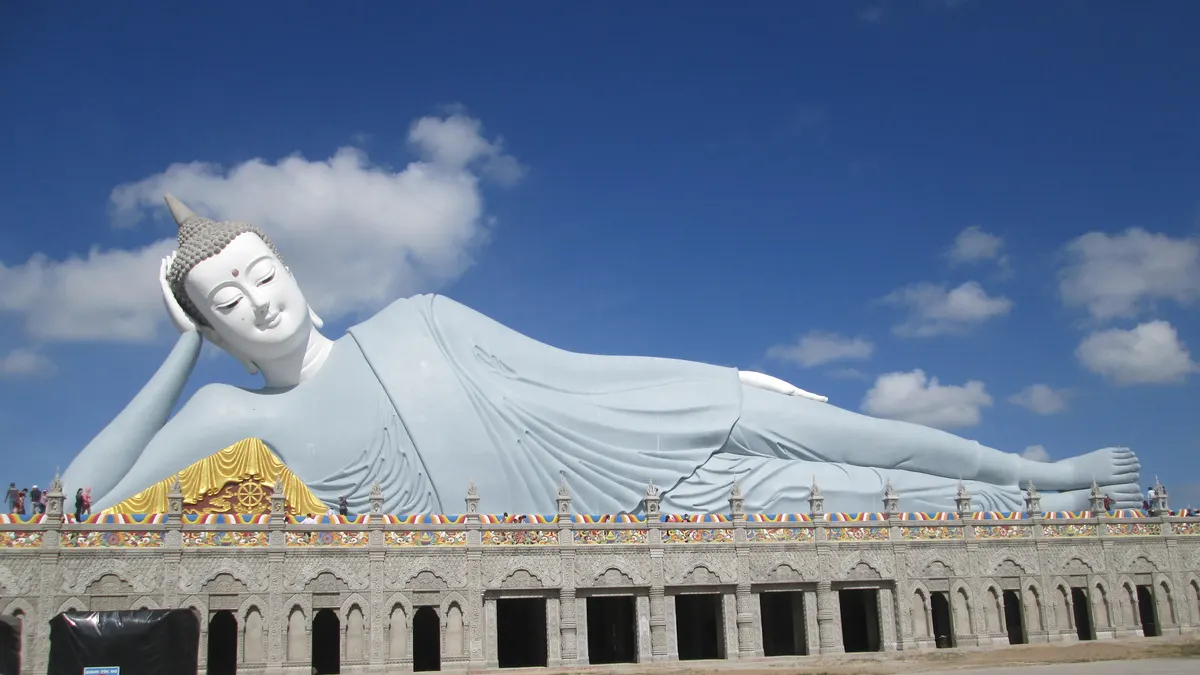
| Som Rong | Ton Duc Thang street, Soc Trang ward, Can Tho city | Founded around 1785; modern reclining Buddha 63 m long | None found | Kh’leang |
| Clay pagoda (Buu Son Tu) | Ton Duc Thang street, Soc Trang | Ngo family Buddhist temple, not Khmer; clay statues and giant candles | Provincial relic, 2010 | Kh’leang and Som Rong |
| Ang pagoda (Angkorajaborey) | Beside Ao Ba Om, Nguyet Hoa (Nguyệt Hóa) ward, Vinh Long province | Moated main hall, Naga roofs, murals of the Buddha’s life; Khmer culture museum opposite | Yes, historical and cultural, 1994 | Ao Ba Om pond |
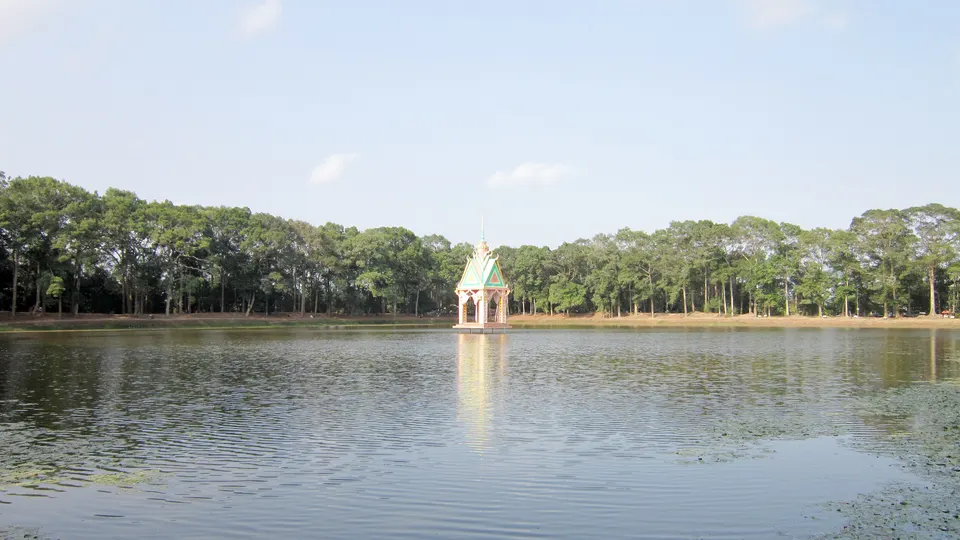
| Ao Ba Om | Beside Ang pagoda, near Tra Vinh town | Square pond ringed by old trees with exposed roots; Ok Om Bok gatherings | Yes, scenic site (1994 or 1996, sources differ) | Ang pagoda and the museum |
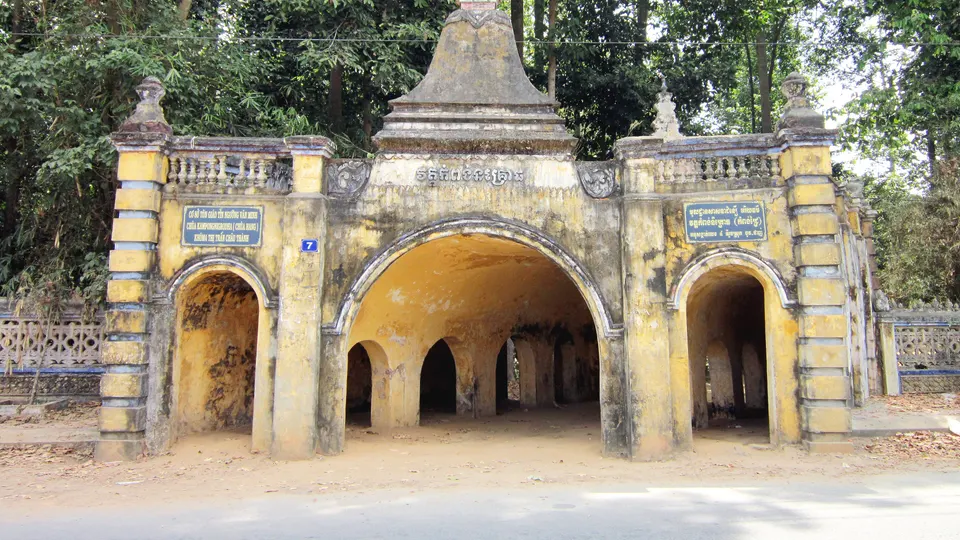
| Hang pagoda (Kompong Chray) | National Highway 54, just outside Tra Vinh town | Cave-like gate; storks and herons in its grounds; established 1637 | None found | Ang pagoda the same morning |
How to use the table. If you have one day from Can Tho, stay in Soc Trang: three of its four big sights stand on one street. Tra Vinh’s two pagodas are older-feeling and leafier, but they need their own day.
Who are the Khmer of the Mekong Delta?
The Khmer are one of Vietnam’s largest ethnic minorities, with more than 1.3 million people, mainly in the south (Viet Nam News). In English they are often called Khmer Krom, “lower Khmer”; Vietnamese sources usually say simply Khmer, or Khmer Nam Bo (Khmer Nam Bo (Nam Bộ), southern Khmer). Their religion is Theravada Buddhism, the same school as in Cambodia, and their pagodas follow its rules and its architecture.
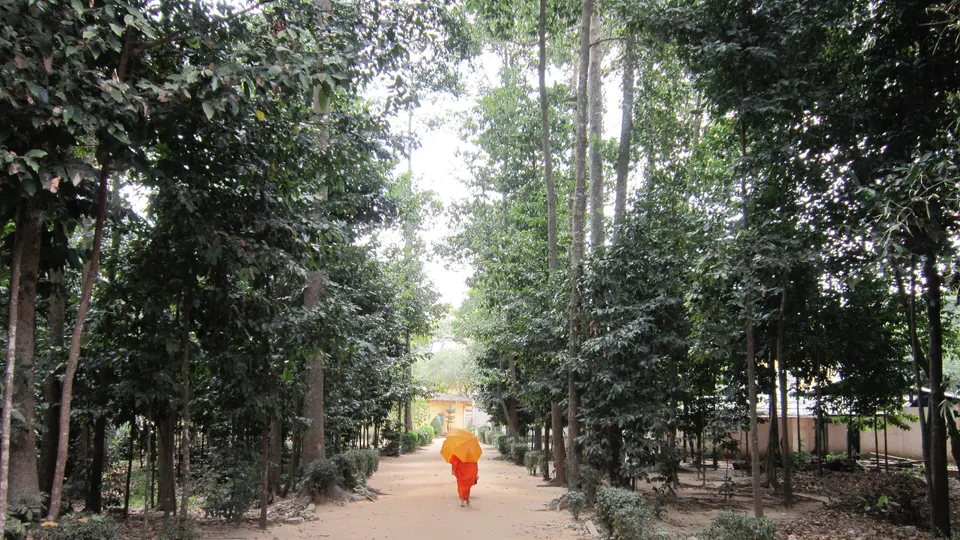
Where they live. The communities are concentrated in the old provinces of Soc Trang and Tra Vinh. After the 2025 merger, Can Tho city alone has 543,266 Khmer residents, 14.11% of its population, and 120 Khmer Theravada pagodas; the delta as a whole has more than 450, Dai Bieu Nhan Dan reported in May 2026. VnExpress counted more than 140 Khmer pagodas in Tra Vinh alone.
Why the pagoda matters so much. For the Khmer, the pagoda (chua (chùa)) is the centre of the village, not only a place to pray. Life rites from a blessing after birth to cremation happen there, ashes are kept there, and before public schools spread the monks taught reading, including the Pali script, which helped keep written Khmer alive, VietNamNet explains. Each Khmer hamlet (phum soc (phum sóc)) usually has at least one pagoda.
Tradition and today. Boys were traditionally sent to the pagoda at about 12 to live as novices for around two years; a young man who had never done so could struggle to marry. Today stays of a year, a month or a few days are accepted, Bao Phap Luat reported. In the same way, morning alms rounds no longer happen daily at many temples, and urban lay people often give money instead of cooked food, Tap chi Toa an notes.
What will you see inside a Khmer pagoda?
A Khmer pagoda is a walled compound, usually on a large plot shaded by palms or old trees. Inside you will find a gate, the main hall, stupas for ashes, monks’ quarters and a hall for gatherings, the newspaper Dai Doan Ket explains (Dai Doan Ket).
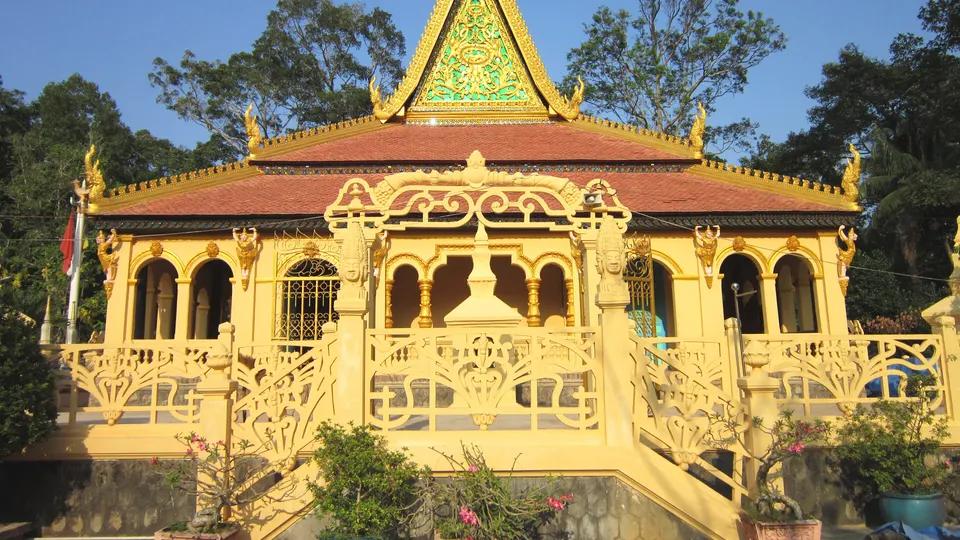
What each part means, so you can read any Khmer pagoda you walk into:
- Main hall (vihara, Khmer preah vihear; Vietnamese chanh dien (chánh điện)). The most important building, in the centre of the compound. It is aligned east–west because the Buddha is believed to sit facing east to give his blessing, which is why the main door is on the east side. Inside are the Buddha image and wall paintings of his life.
- Sala. A separate hall where lay people bring offerings and where monks and villagers eat together at festivals. It is often the busiest building on a festival day.
- Stupas. Pointed towers that hold the ashes of monks and of local families; at Ang pagoda a five-spired stupa in front of the main hall holds the ashes of senior monks, according to the national tourism authority. Rows of smaller stupas built by lay families, their size depending on the donation, are normal in the grounds, as Viet Nam News described at Hang pagoda.
- Naga. Multi-headed serpents, often with five or seven heads, run along balustrades and curl up at the roof ends. They stand for the link between the human world and the sacred.
- Kayno (Kâyno). A half-woman, half-bird figure, often carved as a dancer whose arms seem to hold up the roof; the same figure is called kinnari in wider Southeast Asian art.
- Reahu. A fierce face with bulging eyes swallowing the moon, carved over gates, doors and even Buddha pedestals.
- Yeak (chan (chằn)) and Krud. Armoured club-holding guardians at the gates, and the Garuda bird. With Reahu, Dai Doan Ket notes, they express the Buddhist idea that evil can be turned to serve good.
- Four faces. A four-faced head in the style of the Bayon at Angkor, as at Ang pagoda.
Khmer, not Chinese. Many delta towns also have Chinese and Vietnamese temples with dragons on the roof ridge, red lanterns and Chinese characters, such as the Ong pagoda in Can Tho. Tiered roofs ending in serpents, Khmer script over the gate and stupas in the grounds tell you that you are in a Khmer Theravada pagoda.
Which Khmer pagodas in Soc Trang are worth seeing?
Soc Trang town has the densest cluster of famous pagodas in the delta, and Kh’leang and Som Rong stand on the same street, Ton Duc Thang. The Bat pagoda is the most famous name, but Kh’leang is the oldest-feeling building of the three.
Bat pagoda (Chua Doi, Mahatup). Also called Ma Toc pagoda, it was founded in 1569 as a bamboo hall with a leaf roof, according to its deputy abbot, and was recognised as a national art relic in 1999 (VnExpress). Its name comes from the flying foxes that roost in the old trees around the main hall, leaving at dusk and returning before dawn. Hunting at night has cut their numbers sharply: the abbot told VnExpress that the great evening flights now remain “only in memory”. Come for the carved Kemnar maidens on the columns, the curling Naga on the roof ends and the long ghe ngo racing boats kept in the grounds, not for a bat spectacle.
Kh’leang. Records kept at the pagoda say its first main hall was built in 1532 (the national tourism authority gives 1533); the present hall dates from 1918, and the pagoda has been a national architectural and artistic relic since 1990, the Vietnam News Agency reported in November 2025. It covers about 3,800 m², and its main hall is known for the colourful decoration of its roof arches and pillars. It hosts all three big Khmer festivals, and in 2025 the moon-worship rite of Ok Om Bok was held here, Dai Bieu Nhan Dan reported.
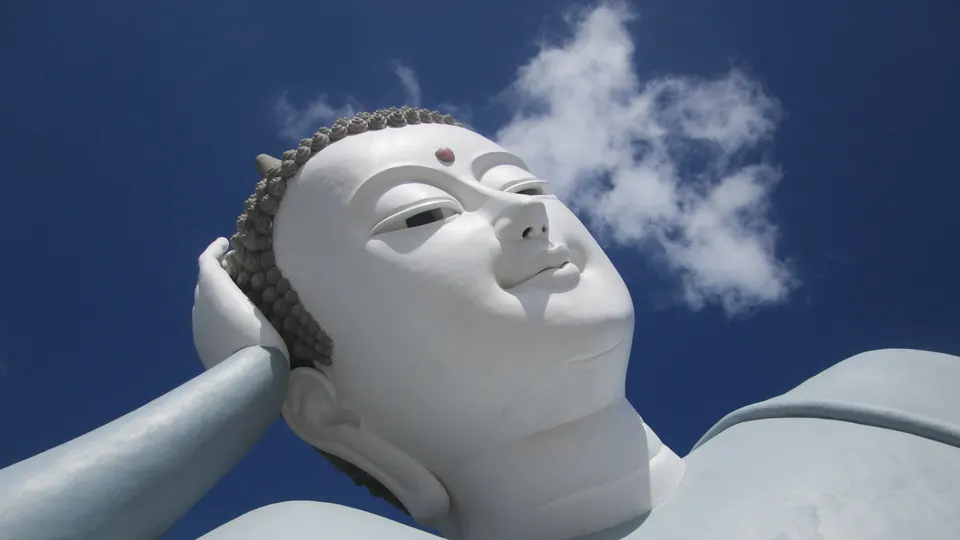
Som Rong. Founded around 1785 as a simple wood and leaf structure, Som Rong is now the most modern of the three. Its reclining Buddha is 63 m long and 22.5 m high and weighs 490 tonnes; Viet Nam News called it one of the largest in Vietnam. Its main tower is grey rather than the usual gold, VnExpress noted in 2024. It is a reminder that Khmer pagodas are still being built and enlarged, not preserved as ruins.
Also nearby. Chen Kieu (Sa Lon) pagoda, outside town, is decorated with bowls and plates donated by local families; our Mekong Delta route plan covers it in its fourth day.
Is the Clay pagoda in Soc Trang a Khmer pagoda?
No. The Clay pagoda (Chua Dat Set (Chùa Đất Sét)), properly Buu Son Tu (Bửu Sơn Tự), on Ton Duc Thang street, is a Buddhist temple founded by the Ngo family for practice at home. Ngo Kim Dinh built a small hermitage there in 1906, and the fourth abbot, Ngo Kim Tong (Ngô Kim Tòng) (1909–1970), expanded it into the present temple, Bao Phap Luat reported (Bao Phap Luat).
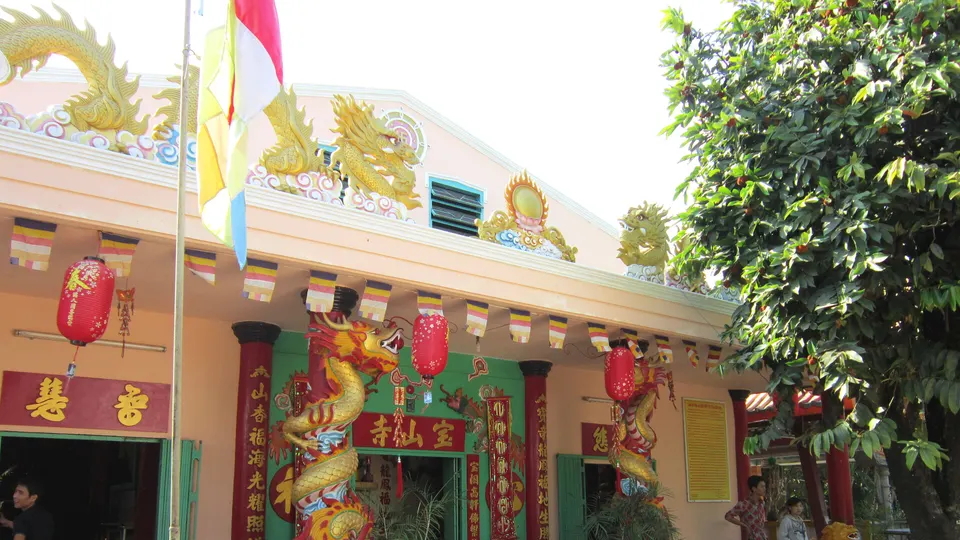
How it differs. The sources describe a family temple, not a Theravada monastery. It shows Buddhist figures together with Confucian and Taoist ones, the “three teachings” arrangement familiar from Chinese and Vietnamese temples, and its name boards are in Chinese characters. Its altar objects, including what Bao Phap Luat counts as 1,991 Buddha statues, are made of clay, and the temple is known for its giant candles; the paper’s own figures for the candles are inconsistent, so we do not repeat them. Soc Trang province listed it as a provincial architectural and artistic relic on 10 December 2010.
Why it matters for your visit. Tour pages often list the Clay pagoda among “Soc Trang’s Khmer pagodas”. It is worth the stop, but as a contrast: standing in front of it after Kh’leang is the quickest way to see what makes a Khmer pagoda different. The sources we read do not state the family’s ethnic origin, so we do not label it “Chinese”.
What to see in Tra Vinh: Ang pagoda, Ao Ba Om and Hang pagoda
Tra Vinh’s two great pagodas lie a few kilometres from the town centre, in groves of old trees. Ang pagoda and the Ao Ba Om pond form one site, with the Khmer culture museum beside the pond, opposite the pagoda; Hang pagoda is a short ride away on another highway.
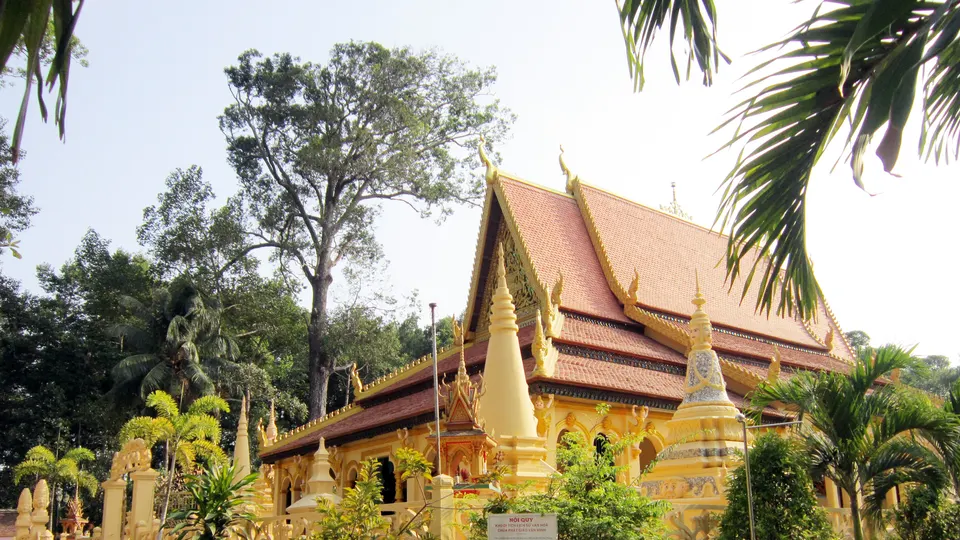
Ang pagoda (Angkorajaborey). A national historical and cultural relic since 1994, Ang pagoda sits within the Ao Ba Om complex; since 1 July 2025 it has been in Vinh Long province (Vietnam National Authority of Tourism). You cross a wide moat to the main hall, whose three-tiered roof is carved with Naga and whose 18 wooden pillars and ceiling paintings show the Buddha’s birth, renunciation, enlightenment and nirvana. It was also a monastic school for Pali and Khmer script.
How old is it? A debated point. The national tourism authority and VietnamPlus give its founding as 990, with an expansion in 1842, and VnExpress says the 10th century. The Tra Vinh provincial trade department’s page, written in 2008, says it was built about a hundred years earlier. Treat “a thousand years old” as tradition rather than established fact; what is documented is the 1994 national listing.
Ao Ba Om. A near-square pond, roughly 500 m by 300 m, surrounded by centuries-old sao and dau trees (hopea and dipterocarp) whose roots rise out of the ground in strange shapes. Its name comes from a legend in which women led by Ba Om (Bà Om) won a pond-digging contest against the men by hanging a lamp that looked like the morning star, so the men stopped work too early; Bao Phap Luat links the story to the old Khmer custom of men marrying into the wife’s family. It is a national scenic relic, but sources disagree on the year: Bao Phap Luat gives 1994, VnExpress 1996. The Khmer people gather here at Ok Om Bok.
Hang pagoda (Kompong Chray). About 4–5 km from Tra Vinh town, its western gate faces National Highway 54. It was established in 1637, and its gate, built like three caves side by side, gives it the Vietnamese name “cave pagoda”, Viet Nam News reported in 2023. The grounds hold nearly tens of thousands of birds, mostly storks and herons, and a woodcarving workshop. Its main hall faces east, like Ang’s. We found no national relic listing for Hang pagoda.
When are the Khmer festivals, and can visitors join?
The Khmer year has three big festivals, all centred on the pagoda: Chol Chnam Thmay (New Year), Sene Dolta (ancestor festival) and Ok Om Bok (moon festival). Two follow the lunar calendar and one falls in April, so check each year’s dates.
| Festival | When | What happens | For visitors |
|---|---|---|---|
| Chol Chnam Thmay (New Year) | Mid-April; 14–16 April in 2026 | Marks the turn from dry to rainy season; ancestors honoured, pagodas full | Pagodas are crowded and festive; dress carefully |
| Sene Dolta (ancestor festival) | Late in the 8th lunar month, three days (welcome, main offering, farewell) | Families welcome ancestors home, bring food to the pagoda; small banana-stalk boats sent off on the water | A family and pagoda occasion; watch quietly |
| Ok Om Bok (moon festival) | Full moon of the 10th lunar month (October or November) | Moon-worship rite, ghe ngo boat races, lanterns on the water | The most visitor-friendly; races draw big crowds |
Ok Om Bok in 2026. Under the organisers’ plan, the Can Tho city ghe ngo races take place on the Maspero River in Soc Trang on 23 November 2026, with the women’s and men’s finals on 24 November and prizes expected around 16:30; more than 60 men’s and women’s teams are expected (Thuong hieu & Cong luan). In Vinh Long province, a new 4,000-seat stand on the Lang The River in Binh Phu commune is due to host the races on 21 and 22 November, VOV reported in October 2026. In 2025 Vinh Long’s races were held on the Long Binh River in Tra Vinh ward, Viet Nam News reported, so the venue can move; confirm locally. The ghe ngo are long racing canoes kept at the pagodas, and each crew rows for its pagoda; in October 2026 VOV described one Can Tho pagoda’s 170 rowers training every evening in the run-up.
What the festivals mean. Ok Om Bok thanks the moon for the harvest as the rains end; VnExpress notes that flattened young rice (com dep (cốm dẹp)) is the essential offering; our com dep guide explains how it is pounded and eaten. Our Ok Om Bok festival guide explains the moon rite, the lanterns, the boat races and the full 2026 programme. Sene Dolta is about filial duty: families lay out a bed, food and new clothes for the returning ancestors, monks chant at the pagoda, and on the last day families traditionally float a small decorated boat on a canal to send them off, VietNamNet described in 2024. Older customs, such as the half-month length of Sene Dolta, have shrunk to three days. For the delta’s other great festival, shared by Khmer, Kinh, Cham and Chinese, see our Ba Chua Xu festival guide.
How should you behave in a Khmer pagoda?
Khmer pagodas are open to visitors, but they are homes for monks and places of worship. Viet Nam News’ 2026 guide to temple etiquette in Vietnam sets out the basics: cover shoulders and knees, take off your hat, keep your voice down and ask before photographing a ritual (Viet Nam News).
Dress. Sleeves to the elbow and trousers or skirts below the knee; no see-through or sleeveless tops. A scarf or light shawl solves most problems in the heat.
Shoes and feet. Take your shoes off before entering the main hall. Keep your feet tucked away, never pointing the soles at a Buddha image or at a monk, a rule Lonely Planet gives for Khmer temples in Cambodia, where the same Theravada tradition is followed.
Monks. Women should not touch a monk or hand him something directly; place it within his reach or on the cloth he puts down. Do not step onto raised platforms where monks sit or keep scriptures, and do not touch anyone’s head.
Offerings and money. Put donations in the donation box rather than on a statue, and do not touch offerings on the altar. Traditionally Theravada monks did not handle money and ate only cooked food given to them; many lay people now give cash so monks can buy their own meals. A small note in the box is the normal way for a visitor to give.
Photos and festivals. Ask before photographing monks or a ceremony, and follow any no-photo sign. On festival days the sala and main hall are for the community; stay at the edge and let processions pass.
A 1–2 day route from Can Tho
Can Tho is the natural base. Our Can Tho city guide covers where to stay and the dawn trip to Cai Rang (Cái Răng) floating market, which fits before or after this route.
| When | Route | Notes |
|---|---|---|
| Day 1, morning | Can Tho to Soc Trang town, about 60 km | VnExpress (September 2024) puts Soc Trang 60 km from Can Tho; a shuttle from Can Tho airport took about 1 hour 15 minutes |
| Day 1, late morning | Kh’leang, then the Clay pagoda and Som Rong, all on Ton Duc Thang street | Seeing the Clay pagoda after Kh’leang shows the Khmer–non-Khmer contrast best |
| Day 1, lunch | Bun nuoc leo (bún nước lèo), the fish noodle soup Soc Trang is known for | Our guide to mam, the delta’s fermented fish explains it |
| Day 1, afternoon | Bat pagoda (Mahatup) | Then return to Can Tho, or sleep in Soc Trang if you continue to Tra Vinh |
| Day 2, morning | Soc Trang to Tra Vinh, across the Hau (Hậu) River | The direct road uses the Dai Ngai (Đại Ngãi) ferries until the Dai Ngai bridge opens (planned for 2028); otherwise go the long way via the bridges |
| Day 2, late morning | Ang pagoda, Ao Ba Om and the Khmer culture museum | One site; allow for walking round the pond |
| Day 2, afternoon | Hang pagoda, then on to Ho Chi Minh City or back | Tra Vinh is about 130 km from Ho Chi Minh City by road, roughly 3 hours by bus (VnExpress, December 2024) |
One day only? Do Day 1 and return to Can Tho; it is the realistic day trip. Before you leave Soc Trang, pick up a box of banh pia, the flaky Teochew-rooted pastry of nearby Vung Thom. Coming from Saigon? Tra Vinh is closer to Ho Chi Minh City than Soc Trang, so you can also do the route in reverse: Saigon to Tra Vinh, then Soc Trang, then Can Tho. For the full delta loop, including Chau Doc (Châu Đốc) on the Cambodian border, see our Chau Doc guide.
The ferry. VnEconomy reported in 2024 that crossing the Hau between the two provinces needs the Dai Ngai 1 and Dai Ngai 2 ferries and that the bridge had been pushed back; a July 2026 report gave 15 June 2028 as the expected completion. Check ferry times on the day.
Before you go: what to check
Most disappointments come from treating the pagodas as tourist sights rather than temples, or from old festival dates and old province names.
- Check the festival calendar. Ok Om Bok and Sene Dolta move with the lunar calendar; look up the current year’s programme from Can Tho city or Vinh Long province before you book. If you want quiet temples, avoid festival days; if you want the boat races, plan around them.
- Pack for the dress code. Long trousers or a skirt below the knee and a top with sleeves, plus shoes that slip off easily.
- Read addresses carefully. A 2026 address for Kh’leang or Som Rong says “Soc Trang ward, Can Tho city”, and one for Ang pagoda “Nguyet Hoa ward, Vinh Long province”; neither is near central Can Tho or Vinh Long town.
- Do not expect bats or a timetable. The Bat pagoda’s colony has shrunk, and storks at Hang pagoda come and go; we found no recent count for either.
- Carry small notes for the donation box and ask before photographing monks.
- Season. The pagodas can be visited all year; for weather by month, see our guide to the best time to visit Vietnam, and for more of the region, our South Vietnam hub.
Frequently asked questions
Which Khmer pagodas in Soc Trang are worth visiting?
Kh'leang and Som Rong stand on the same street, Ton Duc Thang, in Soc Trang ward, and the Bat pagoda (Mahatup) is a short ride away; together they show an old national relic, a temple known for its fruit bats and a modern temple with a 63-metre reclining Buddha. The Clay pagoda on the same street is worth seeing too, but it is a family Buddhist temple, not a Khmer one.
Is the Bat pagoda in Soc Trang still full of bats?
Far fewer than before. The deputy abbot told VnExpress in 2020 that numbers had fallen because of night hunting and that the big evening flights now survive only in memory, so do not plan a visit around seeing them.
Can you visit Soc Trang and Tra Vinh in one day from Can Tho?
It is not realistic. Soc Trang town is about 60 km from Can Tho, and the direct road on to Tra Vinh crosses the Hau River by ferry until the Dai Ngai bridge opens, planned for 2028. Do Soc Trang as a day trip and give Tra Vinh its own day.
When is Ok Om Bok in 2026?
Ok Om Bok falls at the full moon of the 10th lunar month. The 2026 Can Tho boat races are scheduled for 23 and 24 November on the Maspero River in Soc Trang, and Vinh Long province's races for 21 and 22 November.
Key sources
- Nghị quyết về việc sắp xếp đơn vị hành chính cấp tỉnh (Nghị quyết 202/2025/QH15) · Đại biểu Nhân dân, 12 June 2025
- Southern region steps up efforts to preserve Khmer cultural values · Việt Nam News, 10 June 2026
- Lộng lẫy kiến trúc chùa Khmer · Đại Đoàn Kết, 21 August 2021
- Chùa Dơi ở Sóc Trăng · VnExpress, 26 February 2020
- Ngôi chùa 1991 tượng Phật lớn nhỏ · Báo Pháp Luật Việt Nam, 24 February 2017
- Ang Pagoda – A Magnificent Ancient Khmer Temple in Vinh Long · Vietnam National Authority of Tourism (ethnic culture portal), 21 August 2025
- Sắp diễn ra Giải đua ghe Ngo TP Cần Thơ năm 2026 · Thương hiệu & Công luận, 17 October 2026
- Temple etiquette keeps visitors in sacred harmony · Việt Nam News, 26 March 2026
All 35 sources and further reading
- TP Cần Thơ bảo tồn, phát huy giá trị văn hóa truyền thống dân tộc Khmer · Đại biểu Nhân dân, 22 May 2026
- Ngày xuân thăm chùa Khmer Nam Bộ · Tạp chí Tòa án nhân dân, 21 January 2023
- Kh'leang Pagoda – National Architectural and Artistic Heritage Site in Can Tho · Happy Vietnam (Vietnam News Agency), 18 November 2025
- Som Rông Pagoda: one of the most beautiful pagodas in Sóc Trăng · Việt Nam News, 26 November 2020
- Pagoda features largest reclining Buddha statue in Vietnam · Quân đội Nhân dân, undated, checked 8 November 2026
- Angkorajaborey pagoda · Tra Vinh Department of Industry and Trade, 28 July 2008
- Thắng cảnh Ao Bà Om · VnExpress, 10 January 2014
- Huyền tích ao Bà Om và ngôi cổ tự linh thiêng bậc nhất miền Tây · Báo Pháp Luật Việt Nam, 23 January 2017
- Unique beauty of Hang Pagoda in Trà Vinh · Việt Nam News, 23 March 2023
- Khán đài đua ghe Ngo 4.000 chỗ sẵn sàng phục vụ lễ hội Ok Om Bok 2026 · VOV, 17 October 2026
- Gov't delegations visit, greet southern Khmer communities on New Year festival · Việt Nam News, 13 April 2026
- Mùa báo hiếu của đồng bào Khmer · VietNamNet, 5 October 2024
- Cambodian etiquette · Lonely Planet, checked 8 November 2026
- Độc đáo tục muốn lấy vợ, phải vào chùa tu thân · Báo Pháp Luật Việt Nam, 2 February 2014
- Cẩm nang du lịch Sóc Trăng · VnExpress, 23 September 2024
- Cẩm nang du lịch Trà Vinh 2025 từ A-Z · VnExpress, 4 December 2024
- Điều chỉnh lùi thời gian hoàn thành cầu Đại Ngãi trên tuyến Quốc lộ 60 · VnEconomy, 24 July 2024
- TP Cần Thơ lần đầu tổ chức Lễ hội Oóc Om Bóc - Đua ghe Ngo · Đại biểu Nhân dân, 28 October 2025
- Rộn ràng chuẩn bị mùa lễ hội Óoc Om Bóc - đua ghe Ngo · VOV, 10 October 2026
- Vĩnh Long celebrates Ok Om Bok Festival · Việt Nam News, 3 November 2025
- The 383-year-old Khmer pagoda in the Mekong Delta · VietNamNet (VNS), 11 November 2020
- Kho tàng văn hóa phong phú của người Khmer ở Việt Nam · VietNamNet, 18 November 2021
- A thousand-year-old pagoda in Tra Vinh province · VietnamPlus (VNA), 4 June 2025
- Khleang Pagoda · Vietnam National Authority of Tourism, checked 8 November 2026
- Cập nhật tiến độ cầu Đại Ngãi 8.000 tỷ đồng · CafeLand, 1 July 2026
- Bảo tồn, phát huy di sản văn hóa qua Lễ hội Oóc Om Bóc - Đua ghe Ngo Cần Thơ · Đại biểu Nhân dân, 7 November 2026
- Khmer Krom (background) · Wikipedia, checked 8 November 2026
Keep exploring
 South Vietnam · Travel Mekong Delta: Which Area to Visit and Where to Base Which part of the Mekong Delta to visit and where to base: Can Tho, Ben Tre or Chau Doc, Cai Rang market hours, seasons, where to eat, new province names.
 South Vietnam · Travel Can Tho (Cần Thơ): Where to Stay and What to Do in 1–2 Days Can Tho in 1-2 days: stay by Ninh Kieu wharf, take the 5 am boat to Cai Rang (100,000 dong shared, Aug 2026), see Binh Thuy house, eat banh xeo and hu tieu.
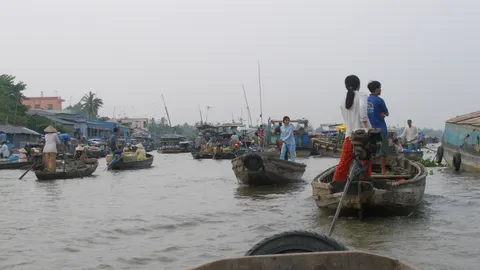 South Vietnam · Travel Mekong Delta in 2, 3 or 4 Days: Routes from Saigon Mekong Delta routes from Saigon for 2, 3 or 4 days: Can Tho and Cai Rang at dawn, Chau Doc and Tra Su in flood season, Soc Trang's pagodas, 2026 roads.
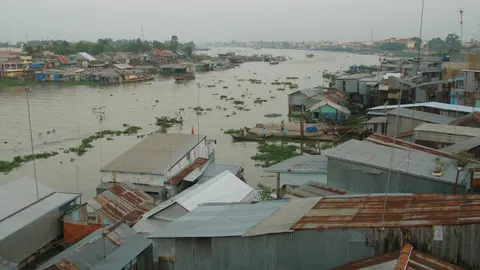 South Vietnam · Travel Chau Doc (Châu Đốc): What to See in 2 Days, and When to Go Plan Chau Doc by the Cambodian border: Sam Mountain and its UNESCO-listed Ba Chua Xu festival, Cham villages, Tra Su forest, bun ca, flood season.
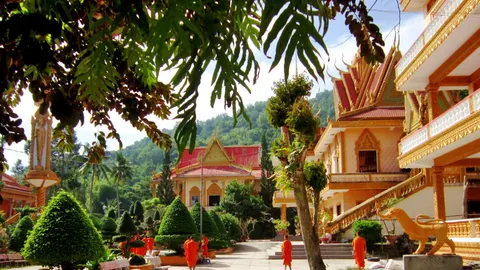 South Vietnam · Culture Ok Om Bok (Oóc Om Bóc): Khmer Moon Festival and Boat Races Ok Om Bok, the Khmer moon festival of the Mekong Delta: the flattened-rice moon rite, lanterns, ghe ngo boat races and 2026 dates in Can Tho and Vinh Long.