North Vietnam · Travel
Sapa Trekking: Do You Need a Guide, and Which Route?
Do you need a guide to trek in Sapa? What the rules say, which walks you can do alone, a route table from Cat Cat to Ban Ho, fees, seasons and safety.

As of November 2026 you do not need a guide by law to walk the short village routes around Sa Pa: we found no provincial rule that requires one, and the provincial tourism department’s safety guidance of August 2026 sets duties for tour providers, not for walkers. Plenty of visitors walk to Cat Cat (Cát Cát) or along the valley from Lao Chai (Lao Chải) to Ta Van (Tả Van) on their own. For anything longer, unmarked, overnight, in rain or up into the forest, hire a local guide: it is safer, you learn far more, and the money goes to the families whose fields you are walking through.
Vietnam’s national tourism authority puts it simply: some villages, such as Cat Cat and Ta Phin (Tả Phìn), “can be seen without a guide”, and the best experience is an overnight trek through the terraces (Vietnam Tourism). This page sets out what the rules say, compares the main routes, and explains how to choose a guide well. For the terraces themselves, the communities who farm them and how to behave in the villages, start with our Sa Pa guide.
Sapa trekking routes at a glance
Distances and times below are only those a named source gives; where we found none, the cell says so. Road distances from town are not the same as walking distances on village paths.
| Route | Distance and time (source) | Alone or guided? | Suits |
|---|---|---|---|
| Cat Cat | About 2 km from the town centre (Bao Lao Cai, VnExpress) | Fine alone; the busiest village | Half a day, families, arrival day |
| Lao Chai to Ta Van | About 5–6 km, 2–3 hours, mostly flat (VnExpress, Oct 2025); 7–12 km depending on the route (Vietnam Airlines) | Commonly done alone; a guide adds context | First-timers, the classic valley day |
| Ta Phin | About 12 km from town (Bao Lao Cai, VnExpress) | Village can be seen alone (national tourism authority) | Red Dao herbal baths, quieter terraces |
| Y Linh Ho | No reliable distance found | Guide advisable | Combined with Lao Chai on longer valley days |
| Ta Van to Ban Ho, or Sa Pa to Ban Ho | Ban Ho is about 30 km south-west of Sa Pa by road (Bao Lao Cai); one operator rates the trek “difficult”, 18 km, 7–8 hours (Local Vietnam) | Guide recommended | Fit walkers on a two-day trek with a homestay |
| Above the villages, into the forest | — | Guide needed in practice | Experienced hikers only |
Where these places are now. Since 1 July 2025 Sa Pa has been in a larger Lao Cai (Lào Cai) province that absorbed the former Yen Bai (Yên Bái) province and kept the Lao Cai name, under Resolution 202/2025/QH15. At commune level, the valley villages are now in Ta Van commune, while Ta Phin and Ban Ho are communes of their own, so newer signs and bookings may use those names.
Do you need a guide in Sapa?
Legally, for the village walks: no, as far as we can find. We found no provincial rule that requires visitors to hire a guide for the trails between Sa Pa’s villages (checked 20 November 2026), and the national tourism authority itself says Cat Cat and Ta Phin can be visited without one.
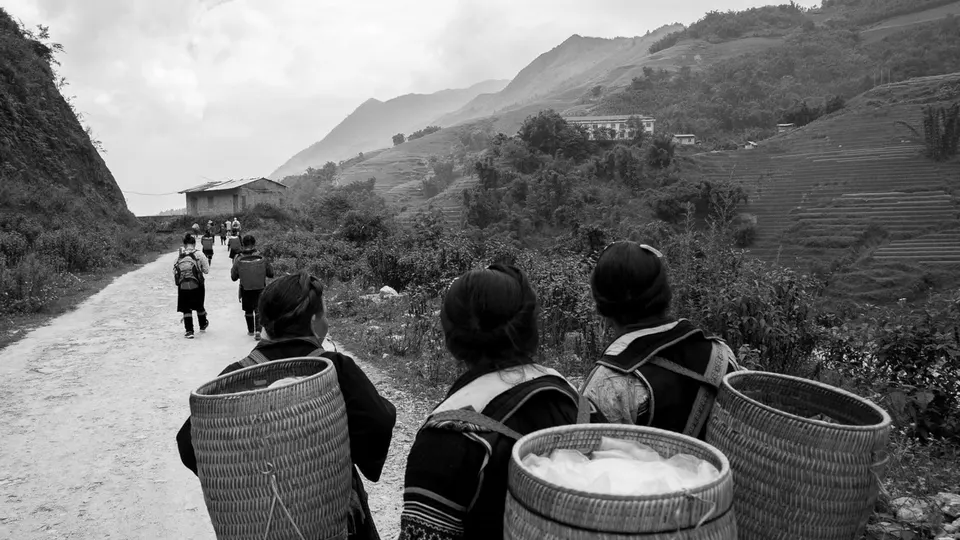
What the province regulates is the people who sell trekking. In August 2026 the Lao Cai Department of Culture, Sports and Tourism issued safety guidance telling providers of outdoor and adventure tourism to classify routes by difficulty, check the weather before running an activity, make sure their guides are competent, and have warning systems and incident plans (Bao Lao Cai). That is a reason to book with an operator who can tell you how they rate your route and what happens if it rains.
In practice, the line is the forest edge. Above the villages the paths run into Hoang Lien National Park towards Fansipan, and that is where people get lost. In late September 2025 two German tourists spent a night lost near Sin Chai (Sín Chải) hamlet in Ta Van commune on a route towards the summit and were found the next morning about 3 km from a rest stop at 2,200 m; the ward and the park then advised against climbing or trekking in the forest “without proper guidance”, Viet Nam News reported. If the summit is your goal, our guide to the Fansipan cable car and the guided climb explains the permit rules and the two-day route from Tram Ton.
So the honest answer depends on the route:
- Walk alone to Cat Cat, around Ta Phin, and from Lao Chai to Ta Van in dry weather, in daylight, with an offline map and a charged phone.
- Take a guide for Y Linh Ho, Ban Ho, any overnight trek, any day with heavy rain, and anything that climbs above the last village.
- Take a guide anyway if you want to understand what you are seeing. The terraces, the clothes, the house styles and who lives in which hamlet are hard to read on your own, and a guide from the valley is the person who can explain them.
Alone, with a day guide or overnight: what each costs. These are the latest dated figures we could verify (checked 20 November 2026); prices change, so treat them as a guide and carry cash.
| Option | What you pay | Time and effort | Suits |
|---|---|---|---|
| Walk alone | Village entry fees only: VnExpress’s Sa Pa guide (updated April 2026) lists 50,000 dong for Cat Cat and 70,000 dong for the Lao Chai–Ta Van area; other reports for Cat Cat run up to 150,000 dong | Half a day for Cat Cat; 2–3 hours for Lao Chai to Ta Van, plus transport to the start or back | Confident walkers on the busy routes in dry weather |
| Local guide for a day | About 200,000–300,000 dong per person for the Ta Van and Lao Chai walk (VnExpress, October 2025), plus entry fees | A full day; the guide sets the pace and the route | First-timers who want context, quieter paths, or a day with doubtful weather |
| Overnight trek with a homestay | Guide, food and a homestay night; most Ta Van homestays cost a few hundred thousand dong a room (VnExpress, October 2025) | Two days, often with a long second day, for example on to Ban Ho | Fit walkers who want village life as well as the view |
Cat Cat: the short walk you can do alone
Cat Cat is a Hmong village about 2 km from the centre of Sa Pa, close enough to walk down from town; it is the most visited village and the easiest to reach, known for its weaving and silver work, a waterfall where three streams meet, and, as Dan Tri noted, many shops renting traditional costumes for photos. Bao Lao Cai also describes a trek on from Cat Cat to Sin Chai, a quieter village further up the stream, which is where a guide starts to help.
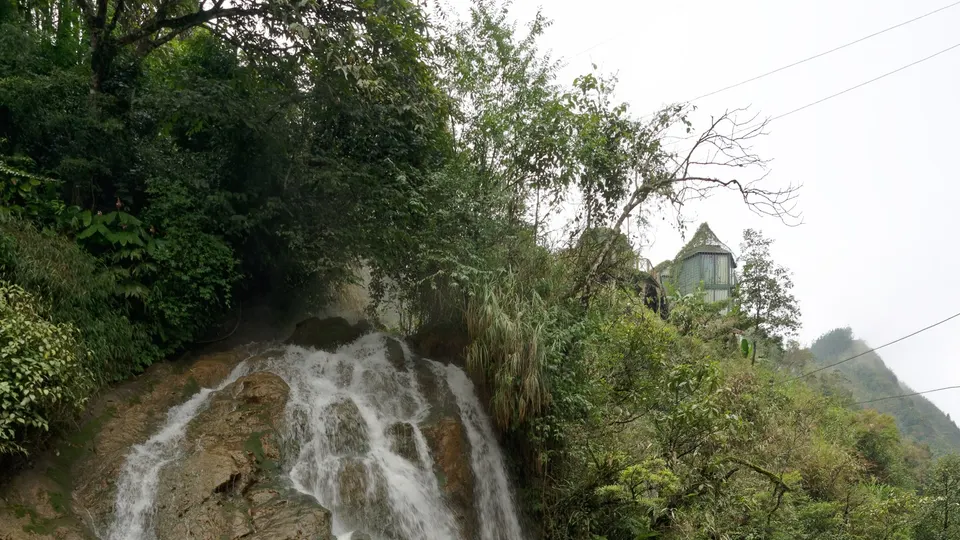
The entry fee, and why the figures differ. Cat Cat charges an entrance fee, but reports disagree on how much. Dan Tri (Dân Trí) gave 150,000 dong per adult and 70,000 dong per child in November 2023; VnExpress gave 90,000 dong in September 2025 (VnExpress); and VnExpress’s general Sa Pa guide, updated in April 2026, still lists 50,000 dong. The fee has clearly changed more than once, so take cash and check the price at the gate rather than trusting any single figure, including these.
Common practice vs the exception. Cat Cat is a living village, but its main path is now largely a visitor route of shops and photo spots. Treat it as an easy first walk on arrival day rather than a picture of everyday village life; for quieter villages, walk further.
Lao Chai to Ta Van: the classic valley walk
The walk most people mean by “trekking in Sapa” runs through the Muong Hoa (Mường Hoa) valley from Lao Chai to Ta Van, two villages among the terraces south-east of town. VnExpress describes it as about 5–6 km and 2–3 hours on paths that are mostly flat, and says you can walk it on your own or hire a local guide for about 200,000 to 300,000 dong per person (October 2025) (VnExpress).
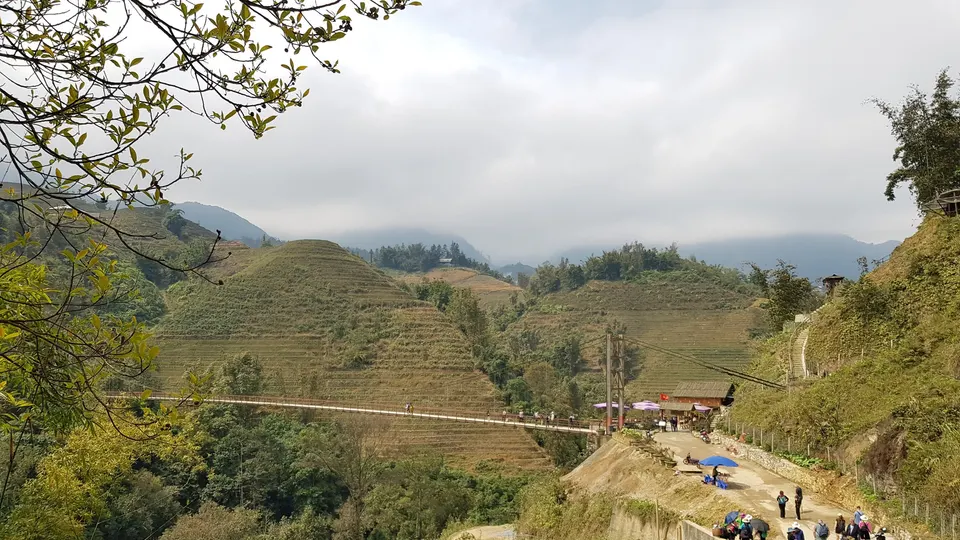
Distances vary with where you start. Ta Van is about 12 km from the centre of Sa Pa, roughly 30 minutes by road, and Vietnam Airlines’ travel guide puts Lao Chai about 7 km from town and the walk at 7–12 km depending on the route, suitable for beginners. You can keep the walking day comfortable by taking a car or motorbike taxi to the start, or back from Ta Van.
Fees. The Lao Chai–Ta Van area also charges an entry fee; VnExpress’s Sa Pa guide, updated in April 2026, lists 70,000 dong per person. Keep the ticket until you leave the valley.
Who lives here. Ta Van is home mainly to Giay and Hmong families, VnExpress notes. If you walk alone you will often be joined by local women offering to walk with you; that is explained in the hiring section below. Vietnam Airlines’ guide calls the golden-rice season the area’s busiest time of year, so expect company on the path then.
Ta Phin, Y Linh Ho and Ban Ho: longer and quieter
Beyond the classic valley walk, three names come up again and again, and they suit different walkers. Ta Phin is about 12 km from Sa Pa and is home to Hmong and Red Dao families, known for caves, festivals and Red Dao herbal baths; Ban Ho lies about 30 km to the south-west and is well known for homestays, according to Bao Lao Cai (Bao Lao Cai).

- Ta Phin is one of the two villages the national tourism authority says can be seen without a guide. At about 12 km from the centre most visitors go by road and walk around the village; the reason to come is the Red Dao community, its embroidery and its herbal baths, which our Sa Pa guide describes.
- Y Linh Ho appears in VnExpress’s September 2025 Sa Pa itinerary, which notes a coffee shop there offering jungle walks and waterfall crossings. We found no reliable distance for walking it, which is a good sign it belongs on a guided day.
- Ban Ho is the longest of these routes, and walkers often split it with a homestay night. One Sa Pa operator, Local Vietnam, rates the walk from Sa Pa to Ban Ho as “difficult”, about 18 km and 7–8 hours; treat that as a seller’s estimate. Take a guide: the route is long, partly unmarked and far from transport if the weather turns.
Overnight in a village homestay
The national tourism authority calls a night in a small ethnic-minority village “a must-do” and says staying with a family supplements the small income they receive from farming (Vietnam Tourism). It describes the usual shape of a guided overnight trek: you start at the market in town to buy food, walk through the hills, eat lunch cooked over an open fire, and stop at viewpoints, bamboo groves or waterfalls before reaching the village.
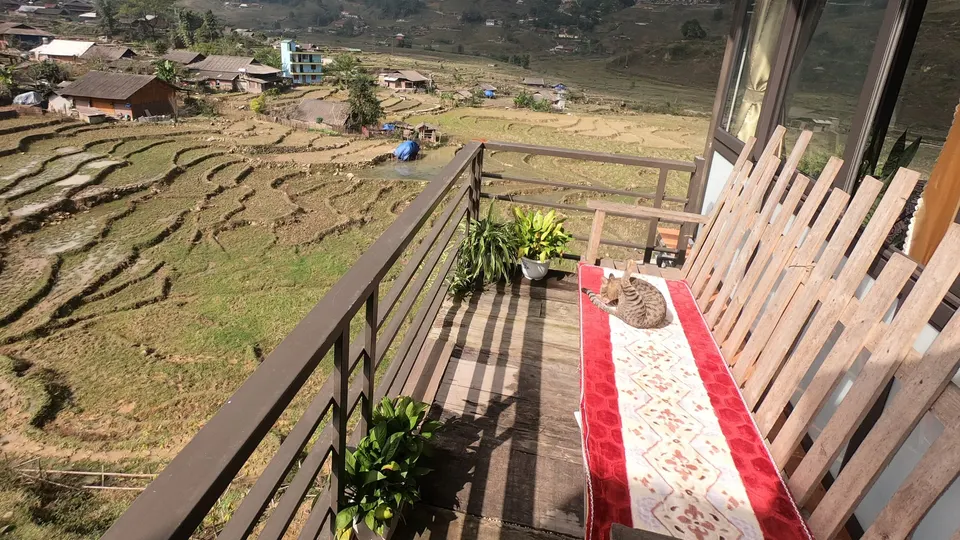
Why stay a night. The day walk shows you the terraces; the evening shows you the household, its cooking and its routine, and the next morning’s walk on to Ban Ho or back up the valley starts from the village rather than from town. VnExpress names Lao Chai and Ta Van as homestay villages and put most Ta Van homestays at a few hundred thousand dong a room in October 2025.
Tradition vs today. Our Sa Pa guide traces how Ta Van’s homestays grew from a few households in the early 2000s; today Vietnam Airlines’ guide lists everything from farmstays to eco-villas near the village, alongside cooking, batik and herbal workshops. A homestay with the family’s own guide keeps more of your money in the village than a lodge you reach by van.
Season, weather and landslides
Sa Pa’s trekking season follows its weather. VnExpress advises avoiding the stormy months from June to early August and names autumn, September to November, for golden rice and cool weather, and spring, roughly February to May, for flowers; the national tourism authority calls March to May mild. Winters are cold, damp and often misty, and the weather changes fast on any day, so carry rain gear and a warm layer whatever the month. If you are trekking in the coldest weeks, our Vietnam in January guide explains why frost is now far more likely than snow.
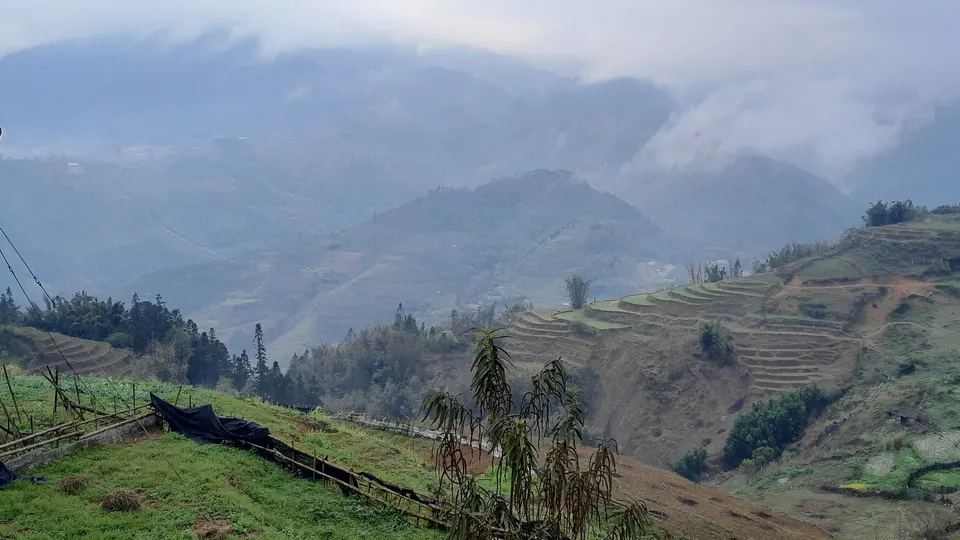
What rain does here. On 8 September 2024, during Typhoon Yagi, a landslide buried part of a residential area in Muong Hoa commune in the valley and killed six people, including an infant (Viet Nam News). The same day the authorities suspended all sightseeing and tourism activities in Sa Pa, and landslides damaged the roads from town down to Cat Cat, VnExpress International reported. Landslides also close the road up from Lao Cai in heavy rain, as our guide to getting from Hanoi to Sa Pa explains.
What that means for you:
- In heavy rain, do not trek; switch to a shorter walk or a day in town, and accept a guide’s decision to cancel.
- After rain, red clay paths on the terrace edges are very slippery; wear shoes with real grip and take a stick if offered.
- Check the forecast and local announcements the evening before; if a typhoon or tropical storm is forecast for the North, rearrange the trek.
- For the month you travel, our Vietnam weather by month guide and our best time to visit Vietnam by region set Sa Pa against the rest of the country.
How to hire a guide responsibly
Many Sa Pa trekking guides are Hmong or Red Dao women from the villages you walk through. Many started without any classes: in 2013 Bao Lao Cai counted about 80 Hmong and Red Dao women working as guides who had learned English by walking with tourists while selling crafts. Today some work through companies run by the community, such as Sapa O’Chau, founded by Shu Tan, a Black Hmong woman from Lao Chai, which by 2013 had become the first ethnic-minority-owned international tour operator in Vietnam and reinvested its profits in education (Travindy).

The national tourism authority advises choosing a company that is owned by locals and follows sustainable practices, and names Sapa Sisters among operators offering tailored tours led by local guides. Its profile of a Black Hmong part-time guide describes the kind of trip this makes possible: a two-hour walk to her own village and a night with her family. The Sapa O’Chau report dates from 2016 and the tourism authority’s pages are undated, so check that any company you pick still trades and read recent reviews before you pay.
The women who walk along with you. If you set off alone, women from the villages may fall in beside you, chat, help on steep sections and, at the end, ask you to buy embroidery. This is how many Sa Pa guides started. You can say no politely at the start; if you accept the company, buying something at the end is fair. Do not buy from or give money to children, which Sa Pa’s authorities have asked visitors not to do.
Before you book, ask:
- Who is my guide, which village are they from, and is the company or cooperative run by local people?
- Which route exactly, how far and how hard, and what is the plan if it rains?
- Is the entrance fee, lunch, the homestay and transport back included?
- How big is the group? Small groups walk at your pace and disturb the villages less.
- Will we keep to paths and stay off the terrace edges? Every terrace is someone’s field.
For how much to tip a guide and whether to pay in cash, see our guide to money and tipping in Vietnam. If you are weighing Sa Pa against other mountain trips, our Da Lat vs Sa Pa comparison covers a gentler hill-station break, Mai Chau is a gentler valley closer to Hanoi, and the Ha Giang Loop guide to easy riders and self-riding covers the North’s big motorbike trip. For more of the region, start at our North Vietnam hub, and for visas, transport and itineraries, our travel planning hub.
Frequently asked questions
How much does a local trekking guide in Sapa cost?
VnExpress put a local guide for the Lao Chai and Ta Van walk at about 200,000 to 300,000 dong per person in October 2025, on top of the village entry fee. Overnight treks cost more because they add food, a homestay and transport back.
Which Sapa trek should I do if I only have one day?
The Lao Chai to Ta Van walk through the Muong Hoa valley is the usual choice: about 5 to 6 km and 2 to 3 hours on mostly flat paths, according to VnExpress (October 2025). Take a car to Lao Chai or back from Ta Van to keep the day easy, and add a local guide if you want context or the weather looks doubtful.
Is an overnight homestay trek in Sapa worth it?
Vietnam's national tourism authority calls a night in a small ethnic-minority village a must-do, and the homestay income supplements what families earn from farming. VnExpress reported in October 2025 that most homestays in Ta Van cost a few hundred thousand dong a room.
Should I walk with the Hmong women who join trekkers in Sapa?
You can, if you are happy to buy some embroidery at the end, which is how the company is usually repaid; if not, say no politely at the start. Many Sapa guides began this way, and Bao Lao Cai counted about 80 Hmong and Red Dao women guiding visitors in 2013.
Key sources
- Sa Pa · Vietnam National Authority of Tourism (vietnam.travel)
- Lào Cai ban hành Hướng dẫn bảo đảm an toàn trong hoạt động du lịch · Báo Lào Cai, 7 August 2026
- 48 giờ ngắm mùa vàng ở Sa Pa · VnExpress, 5 September 2025
- Tả Van và Sa Pa: Trải nghiệm du lịch độc đáo tại thung lũng Mường Hoa · VnExpress, 12 October 2025
- 5 bản làng nhất định phải đến khi du lịch Sa Pa · Báo Lào Cai (from VTC News), 1 March 2025
- Sapa for sustainable travellers · Vietnam National Authority of Tourism (vietnam.travel)
- How Sapa O'Chau empowers ethnic minorities in Vietnam · Travindy, June 2016
- Landslide kills six including infant in Sa Pa Town · Việt Nam News, 8 September 2024
All 18 sources and further reading
- Sa Pa suspends tourism activities amid deadly landslides triggered by Typhoon Yagi · VnExpress International, 8 September 2024
- Two German tourists found safe after getting lost in Hoàng Liên National Park · Việt Nam News, September 2025
- Kinh nghiệm du lịch Sa Pa 2026 từ A-Z · VnExpress (updated 16 April 2026)
- Du khách Hà Nội tiết lộ kinh nghiệm đi chơi Sa Pa không sợ 'mất tiền oan' · Dân Trí, 4 November 2023
- Bản Tả Van (travel guide) · Vietnam Airlines
- Nghề hướng dẫn 'phụ' ở Sa Pa · Báo Lào Cai, 2 March 2013
- My Sapa: Ly Thy Ker · Vietnam National Authority of Tourism (vietnam.travel)
- Resolution 202/2025/QH15 on the reorganization of provincial-level administrative divisions · National Assembly of Vietnam, 12 June 2025 (LuatVietnam English)
- Toàn văn Nghị quyết số 1673/NQ-UBTVQH15 sắp xếp các ĐVHC cấp xã của tỉnh Lào Cai năm 2025 · Government of Viet Nam (xaydungchinhsach.chinhphu.vn)
- Sapa trekking routes – 5 best trails through rice fields · Local Vietnam (tour operator), updated June 2025
Keep exploring
 North Vietnam · Travel Sa Pa (Sapa): When to Go, How Many Days and What to See Sa Pa (Sapa) trip planner: when to see golden or flooded rice terraces, how many days to stay, which Hmong and Dao villages to visit, and Fansipan in brief.
 North Vietnam · Travel Hanoi to Sapa: Train, Sleeper Bus or Van – Which to Book? Hanoi to Sapa as of November 2026: night train to Lao Cai, sleeper bus, limousine van or car compared by time and fare, plus the transfer, road works and Tet.
 North · Central · South · Travel Da Lat vs Sa Pa (Sapa): Which Should You Visit? Da Lat vs Sa Pa: compare the two hill stations by season, cost, getting there and trip length, with November 2026 transport updates and 3-day plans.