All three regions · Travel
Vietnam E-Visa: Who Needs One, Cost and How to Apply
Who needs a Vietnam e-visa in 2026, what it costs (US$25 or US$50), how to apply on evisa.gov.vn, how long it takes and the mistakes that cause problems.
Do you need a Vietnam e-visa? As of November 2026, you do not if you hold a passport from one of the 24 countries on Vietnam’s two 45-day waiver lists, such as the UK, Germany, France, Japan or South Korea, and your trip lasts 45 days or less. Almost every other visitor, and anyone staying longer, needs the e-visa, which Vietnam’s national tourism authority says takes three to five working days to process.
If your passport is not on Vietnam’s visa-free list, or your trip is longer than the visa-free stay, apply for the Vietnam e-visa (thi thuc dien tu) yourself on the government portal at least a week before you fly: it costs US$25 for a single entry or US$50 for multiple entries and is valid for up to 90 days. Use only the official portal, evisa.gov.vn, or the government’s second address, thithucdientu.gov.vn: in July 2026 the authorities warned that not every site in search results is an official portal and advised using only addresses ending in .gov.vn (VietnamPlus).
This page is the paperwork step of a trip; our guide to getting around Vietnam covers the flights, trains and buses once you are in, and the travel planning hub has the rest. The rules below were checked on 7 November 2026. Vietnam has changed its visa rules several times since 2023, so treat this as a guide and confirm on the official portal before you book.
E-visa, visa exemption or visa on arrival at a glance
Start with your passport and the length of your stay. The exemption lists and durations come from the government resolutions and the national tourism authority’s visa page (Vietnam Tourism); the e-visa terms come from the official portal.
| Your situation | What you need | How long you can stay | What to check |
|---|---|---|---|
| Passport of Germany, France, Italy, Spain, the UK, Russia, Japan, South Korea, Denmark, Sweden, Norway or Finland | No visa | Up to 45 days per entry; the waiver runs until 14 March 2028 | Passport valid for 6 months; return or onward ticket |
| Passport of Belgium, Bulgaria, Croatia, the Czech Republic, Hungary, Luxembourg, the Netherlands, Poland, Romania, Slovakia, Slovenia or Switzerland | No visa | Up to 45 days per entry; the waiver runs until 14 August 2028 | As above; described as a tourism waiver |
| Passport of a Southeast Asian neighbour | No visa | 14 to 30 days, depending on the country | Your country’s agreement on the portal’s exemption list |
| Flying or sailing straight to Phu Quoc (Phú Quốc) from abroad and staying on the island | No visa | Up to 30 days on the island | Going on to the mainland needs a visa or e-visa |
| A visa-free passport, but a longer trip than the exemption allows | E-visa | Up to 90 days | Choose the dates to cover your whole stay |
| Any other passport | E-visa | Up to 90 days, single or multiple entry | Apply at least 3 working days ahead, better a week |
| Hoping for a visa on arrival | Only if a sponsor in Vietnam arranges it in advance, in specific cases | Depends on the approval | Not a walk-up option for tourists |
How to use the table. Find the first row that fits you. If you are on a 45-day list and your trip is shorter, you need nothing beyond a valid passport and a ticket out. If you plan to leave Vietnam and come back, for example to Angkor in Cambodia in the middle of the trip, check the visa-free row carefully or choose a multiple-entry e-visa.
How do you apply for the Vietnam e-visa, step by step?
The whole process happens online, from the application to the payment and the visa itself, which you print yourself; you do not need an invitation from anyone in Vietnam, the Immigration Department said when it opened the e-visa to all nationalities in August 2023.
These are the steps as the official portal describes them (Vietnam e-visa portal):
- Open the official portal and choose the application for foreigners applying in person. You must be outside Vietnam: the e-visa is issued to foreigners who are abroad, not to people already staying in the country.
- Upload two images: a portrait photo and the data page of your passport. The system reads your details from the passport image and fills in the form.
- Check every auto-filled field against your passport, then complete the required fields marked with an asterisk, including the dates the e-visa should run from and to, single or multiple entry, your intended border gates of entry and exit, your intended address in Vietnam and your expected trip expenses. The portal warns that any dishonest information leads to refusal.
- Add children if needed. Children under 14 who are on the same passport as you can be added to your application; a child with their own passport needs their own e-visa.
- Confirm, enter the verification code and pay the fee by card through the portal’s payment gateway. The fee is not refunded if the visa is refused. For paying once you arrive, see our guide to money, cards and tipping in Vietnam.
- Save your electronic profile code. You need it, with your email address and date of birth, to look up the result.
- Check the result and print the e-visa when it is approved, and carry the printout with your passport.
How long does the e-visa take, and when should you apply?
The Immigration Department says it processes applications and replies within three working days of receiving a complete application and the fee (VietNamNet). Vietnam’s national tourism authority gives three to five working days on its visa page.
Working days, not calendar days. Weekends and public holidays do not count, so an application sent on a Friday evening may not be answered until the middle of the next week, and the Tet (Lunar New Year) holiday in January or February adds several more days off. Apply at least a week before you fly; two weeks is safer around Tet. Our guide to the best time to visit Vietnam explains when Tet falls and how it affects travel.
Not too early, either. The e-visa has a start and an end date that you choose, up to 90 days, and the portal’s form does not accept an end date more than 90 days after the visa is issued. Applying months ahead gains nothing.
Ignore “same-day” offers. VietnamPlus warned in July 2026 that sites advertising express visas, same-day approval or guaranteed visas are a common sign of fraud. The official fee is the same whoever submits the form: the portal lists US$25 and US$50, and the Ministry of Finance’s fee circular in force since 1 April 2026 (Circular 28/2026/TT-BTC) still starts visa fees at US$25 for a single entry, its magazine Thue & Hai quan reported.
Fee and validity, rechecked. As of 17 November 2026, Vietnam’s national tourism authority still lists the e-visa at US$25 for a single entry and US$50 for multiple entries, each valid for up to 90 days, with processing in three to five working days, and says foreign nationals must apply directly through the government portal, evisa.gov.vn.
Which airports and border gates accept the e-visa?
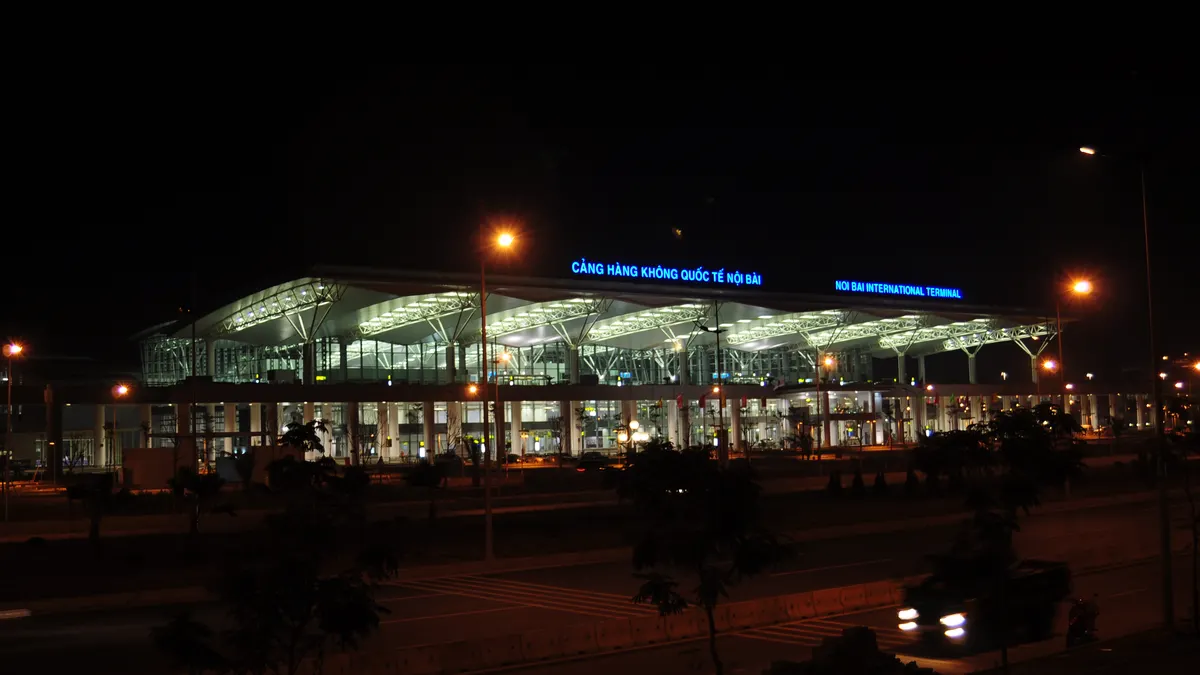
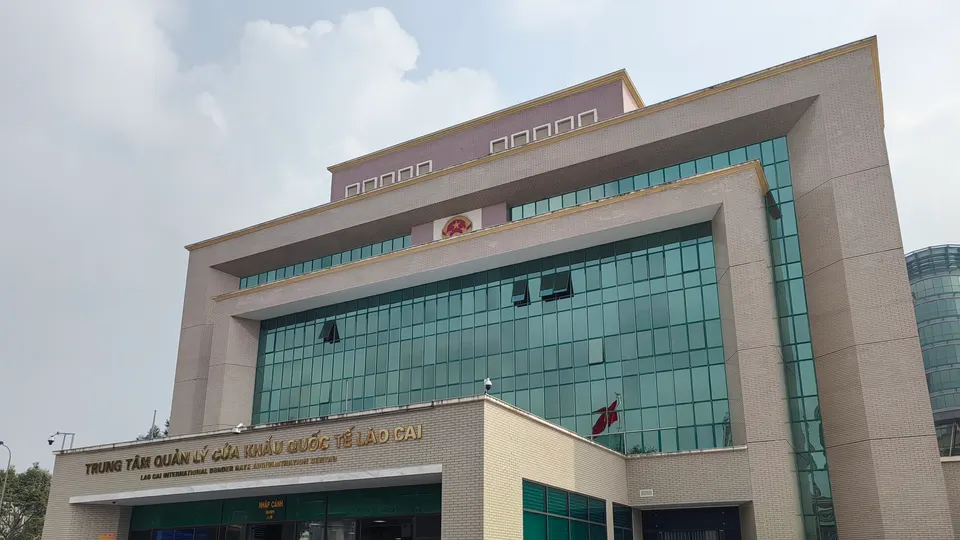
An e-visa is valid only at the international border gates the government lists, for entry and for exit, from Noi Bai (Nội Bài) in Hanoi and the airport of Da Nang (Da Nang) to Tan Son Nhat (Tân Sơn Nhất) in Ho Chi Minh City and land crossings such as Lao Cai (Lào Cai). In December 2025 Resolution 389/NQ-CP added 41 gates, 4 airports, 11 land crossings and 26 seaports, bringing the total to 83 (Bao Chinh Phu).
| Type | Listed since 2023 | Added in December 2025 | Total now |
|---|---|---|---|
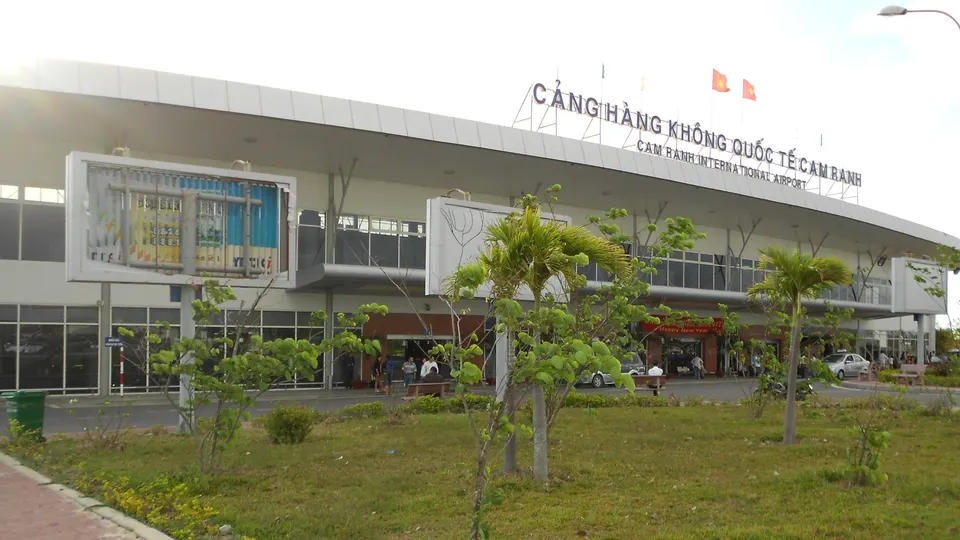
| Airports | 13: Noi Bai (Hanoi), Tan Son Nhat (Ho Chi Minh City), Da Nang, Cam Ranh, Phu Quoc, Can Tho, Cat Bi, Phu Bai, Van Don, Tho Xuan, Dong Hoi, Phu Cat, Lien Khuong | 4: Vinh and Chu Lai, plus Long Thanh and Gia Binh once they open | 17 |
| Land crossings | 16, including Lao Cai, Huu Nghi and Mong Cai (China), Tay Trang (Laos) and Moc Bai (Mộc Bài) and Ha Tien (Cambodia) | 11 | 27 |
| Seaports | 13, including Ha Long’s Hon Gai, Hai Phong, Chan May, Da Nang, Nha Trang and Ho Chi Minh City | 26 | 39 |
The 2023 list comes from Resolution 127/NQ-CP, as Nhan Dan reported, and the December 2025 additions from the government’s news site; the land and sea totals follow from the two lists. The full list with every gate is linked from the official portal. Long Thanh (Long Thành), the new airport for Ho Chi Minh City, is on the list but was still awaiting its opening when the list was published; our transport guide linked above has its expected opening date. Until it opens, flights to the Saigon area use Tan Son Nhat.
Which nationalities can visit Vietnam without a visa in 2026?
Twenty-four countries have a unilateral visa waiver of up to 45 days, granted by Vietnam without a reciprocal deal; the stay was raised from 15 to 45 days by Law 23/2023/QH15 on 15 August 2023, People’s Public Security newspaper reported.
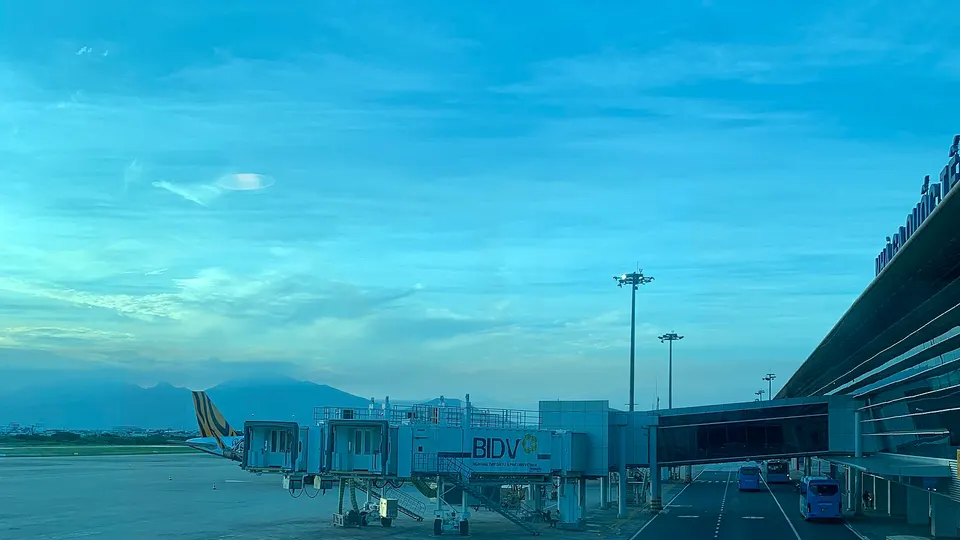
The two 45-day groups. Germany, France, Italy, Spain, the UK, Russia, Japan, South Korea, Denmark, Sweden, Norway and Finland are covered from 15 March 2025 to 14 March 2028, regardless of passport type or purpose of entry (VnExpress). Belgium, Bulgaria, Croatia, the Czech Republic, Hungary, Luxembourg, the Netherlands, Poland, Romania, Slovakia, Slovenia and Switzerland are covered from 15 August 2025 to 14 August 2028 under Resolution 229/NQ-CP, Viet Nam News reported; Vietnam’s embassy in Japan describes this second waiver as being for tourism. Poland, the Czech Republic and Switzerland had first been added for March to December 2025, Tuoi Tre News reported.
When we rechecked on 17 November 2026, the tourism authority’s visa page still gave 14 March 2028 and 14 August 2028 as the end dates of the two 45-day groups. The only new exemption we found in 2026 is the narrow Khanh Hoa pilot for Chinese tour groups described below.
Conditions. A passport valid for at least six months from the date of entry and a return or onward ticket, Bao Van Hoa and the tourism authority list; you must also not be barred from entering Vietnam.
Neighbours and agreements. Other exemptions come from agreements between countries. The tourism authority lists 30 days for Cambodia, Laos, Malaysia, Myanmar, Singapore and Thailand, 21 days for the Philippines, 14 days for Brunei and Indonesia, and 90 days for Chile and Panama; the portal has the full list of agreements.
Belarus: the sources disagree. The tourism authority’s page puts Belarus in the 45-day group, but a bilateral agreement in force since 30 January 2025 allows up to 30 days per visit and 90 days a year, Viet Nam News reported. If you hold a Belarusian passport, check the portal before relying on 45 days.
Two narrow exceptions. Visitors who arrive on Phu Quoc directly from abroad can stay on the island for up to 30 days; our Phu Quoc guide explains the rule. Since 12 October 2026 Chinese tour groups of two or more on a package tour to Khanh Hoa (Khánh Hòa) province through Cam Ranh airport are also exempt, under a pilot that runs to the end of 2027, VietnamPlus reported.
What are the most common e-visa mistakes?
Most problems come from the application form rather than the rules. These are the mistakes the official sources warn against, and why each matters.
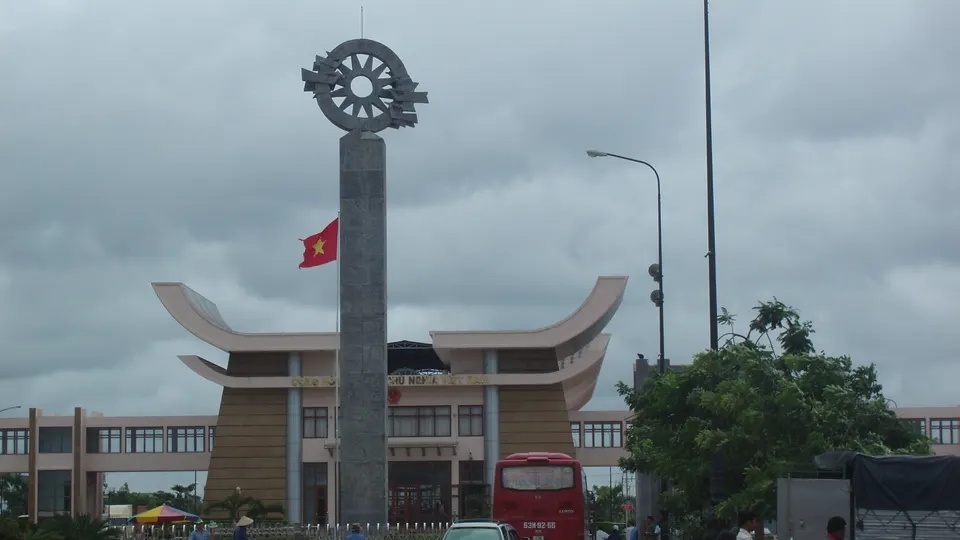
- Paying a look-alike site. Unofficial sites copy the look of the government portal, charge more and may steal passport and card details, VietnamPlus reported in July 2026. A site whose address does not end in .gov.vn is not the government’s, however official it looks. The Ministry of Public Security also found fake copies of its new pre-arrival website in 2026 that may be used to steal card details (Ministry of Public Security).
- A name that does not match the passport. The portal asks for your full name exactly as in the machine-readable lines at the bottom of the passport data page, in capital letters, with separate fields for surname and for middle and given names. A missing middle name is a mismatch.
- A photo that breaks the rules. The portal asks for a recent 4×6 cm photo in JPG or JPEG, under 2 MB, facing the camera, with no hat and no glasses, in neat clothes and against a white background, and a clear passport image with no cut-off corners. Its own checks warn that a photo that fails may lead to refusal.
- Single entry for a trip that leaves and comes back. A single-entry e-visa is used up when you leave. If your route goes to Cambodia or Laos and back, pay for multiple entry; our two-week Vietnam itinerary plans the Vietnam part of a longer trip.
- A gate that is not on the list. You must enter and leave through a listed gate. Check smaller land crossings in particular before you plan an overland route.
- Expecting a refund. The fee is not refunded if the visa is refused, so check the form before you pay.
What should you check before you fly?
A few minutes with the printout and the passport save problems at the immigration desk. Since April 2026 there is also a new online step at some airports.
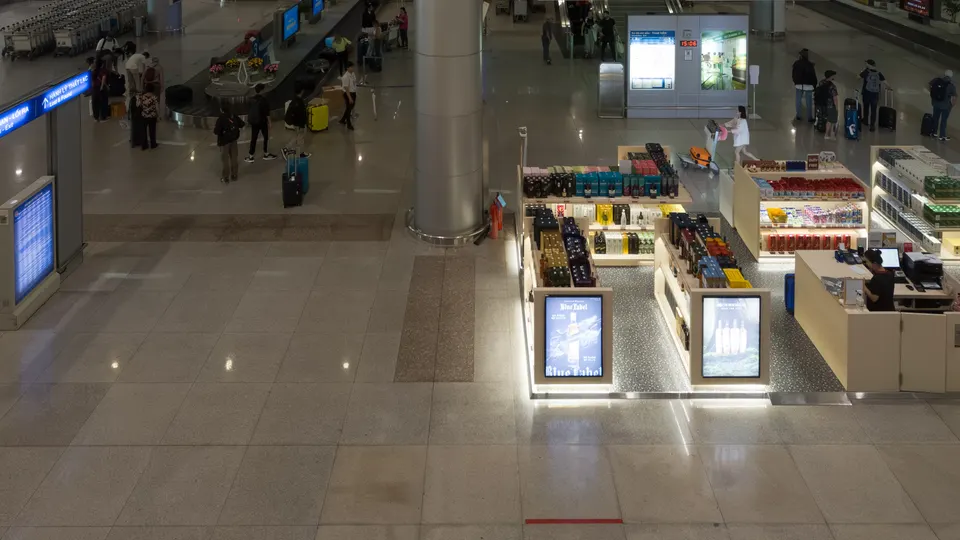
The pre-arrival declaration. From 15 April 2026, foreigners arriving at Tan Son Nhat on a visa were asked to declare their details in advance on the official site, prearrival.immigration.gov.vn, and show a QR code at immigration; those who had not done so could scan a code in the terminal (Viet Nam News). The Ministry of Public Security described the system in May 2026 as optional, open up to three days before entry, not a visa application, and due to be extended to other international airports. The two sources describe it differently, so fill it in on the official site if you land at a covered airport, and never pay a look-alike site for it.
Your checklist:
- The name, passport number, date of birth and nationality on the e-visa match your passport exactly.
- Your arrival and departure dates fall inside the e-visa’s validity dates, and the entry type (single or multiple) fits your route.
- Your entry and exit gates are on the official list.
- Your passport has at least six months left, which the visa-free rules require and which VietNamNet lists among the basic entry requirements in 2026.
- You have the e-visa printout or a saved copy, and your profile code in case you need to look it up again.
- Your passport is in your hand luggage: you also need it to register a local number, as our guide to SIM cards and eSIMs in Vietnam explains.
If this is a first visit, our one-week Vietnam itinerary suggests three routes by region, each starting from a listed airport. If you are moving to Vietnam rather than visiting, remember that the e-visa covers at most 90 days; our guide to living in Hanoi as an expat explains work visas, residence cards and the police address declaration.
Frequently asked questions
Can I get a visa on arrival in Vietnam?
Not as a walk-up option. A visa at the border is issued only in specific cases set out in law and has to be arranged in advance by a sponsor in Vietnam, such as a tour company; most travellers should get an e-visa on evisa.gov.vn instead.
Can I apply for a Vietnam e-visa if I am already in Vietnam?
No. The Vietnam e-visa is issued to foreigners who are outside the country, so you need to apply on evisa.gov.vn before you travel, not after you arrive.
Do I get my money back if my Vietnam e-visa is refused?
No. The US$25 or US$50 fee paid on the official portal is not refunded if the e-visa is refused, so check your name, passport details and photo before you pay.
Can I visit Cambodia or Laos and come back on a Vietnam e-visa?
Only if you choose a multiple-entry e-visa, which costs US$50 instead of US$25. A single-entry e-visa ends when you leave Vietnam, so you would need a new visa to come back.
Do I need to fill in a pre-arrival declaration for Tan Son Nhat airport?
Since April 2026, foreigners landing at Tan Son Nhat in Ho Chi Minh City on a visa have been asked to declare their details in advance on prearrival.immigration.gov.vn and show a QR code at immigration. The Ministry of Public Security describes it as optional and not a visa application, so use only the official .gov.vn site and never pay for it.
Key sources
- Vietnam National Electronic Visa system (official e-visa portal) · Immigration Department, Ministry of Public Security, checked 7 November 2026
- Vietnam steps up e-visa rollout to protect citizens, international visitors · VietnamPlus (VNA), 26 July 2026
- All e-visa procedures handled online: Immigration Department · VietNamNet, 19 August 2023
- Viet Nam expands list of ports for e-visa · Báo Chính phủ (VGP News), 3 December 2025
- Vietnam extends visa waiver for citizens of 12 countries until 2028 · VnExpress International, 8 March 2025
- Vietnam Visa Requirements · Vietnam National Authority of Tourism (vietnam.travel), last updated 2026
- Online declaration required for certain arrivals at Tân Sơn Nhất Int'l Airport · Việt Nam News, 23 April 2026
- Immigration Department launches Pre-arrival Information System · Ministry of Public Security, 13 May 2026
All 20 sources and further reading
- E-visa duration extends to 90 days · Công an Nhân dân (People's Public Security), 1 September 2023
- Cấp thị thực điện tử cho công dân tất cả các nước, vùng lãnh thổ từ ngày 15/8/2023 · Nhân Dân, 14 August 2023
- Quy định mới về chế độ thu phí và lệ phí xuất nhập cảnh · Thuế & Hải quan (Tạp chí Kinh tế - Tài chính, Ministry of Finance), 31 March 2026
- Visa exemptions for 12 more countries take effect tomorrow · Việt Nam News, 14 August 2025
- Vietnam exempts visas under tourism development stimulus program for citizens of 12 countries · Embassy of Viet Nam in Japan, August 2025
- Vietnam waives visa for Polish, Czech, Swiss nationals from March · Tuổi Trẻ News, 16 January 2025
- Miễn visa 45 ngày cho công dân 15 nước: chỉ cần thủ tục đơn giản · Báo Văn Hóa, 9 August 2025
- Việt Nam–Belarus visa exemption agreement to open up world of opportunities · Việt Nam News, 21 January 2025
- Visa issuance at Viet Nam's international border gates · Vietnam National Authority of Tourism (2025.vietnam.travel), 31 March 2025
- Thí điểm miễn thị thực cho công dân Trung Quốc đi du lịch theo đoàn đến Khánh Hòa · VietnamPlus (TTXVN), 12 October 2026
- What travelers need to know about Vietnam's 2026 entry rules · VietNamNet, 6 May 2026
- Visa policy of Vietnam · Wikipedia, accessed 7 November 2026
Keep exploring
 North · Central · South · Travel Getting Around Vietnam in 2026: Plane, Train, Bus or Grab How to get around Vietnam in 2026: plane vs train vs sleeper bus by route, Grab vs Green SM (Xanh SM), Long Thanh airport and motorbike licence rules.
 North · Central · South · Travel 2-Week Vietnam Itinerary: Route, Flights or Night Train 14 days in Vietnam from Hanoi to the Mekong: day-by-day route, which legs to fly or take by train, train times and fares as of November 2026, and what to drop.
 South Vietnam · Travel Phu Quoc (Phú Quốc) Travel Guide: Which Area to Stay In Phu Quoc travel guide: which area to stay in (Duong Dong, Ong Lang, Long Beach, Bai Sao), flights and ferries, getting around, visa rules and local food.
 North · Central · South · Travel Best Time to Visit Vietnam: Which Month for Which Region Which month to visit Vietnam: March–May for a whole-country trip, dry seasons by region, the November 2026 flood outlook for Hue and Hoi An, and Tet 2027 dates.